

The cantors and the oral tradition how the hymns were handed down by ear
For most of its history the Coptic Church kept its music in people, not in books. Its books give the words, and name the melody each hymn is sung to, but no notation of the melodies exists: they have passed “from one person to another, from one generation to the next, by oral teaching and rote learning.”1 The people who kept them were the cantors, in Arabic the ʿarif, “one who knows,” or the muʿallim, “teacher,” employed and trained by the Church “to be responsible for the correct delivery of the hymns and responses in all the services.”2 This page follows them from the first sources to the cantors of today. The history of the music itself is told in a history of Coptic music.
The singers of the early Church
From its first centuries the Church in Egypt set some of its people apart to sing. The Canons of Athanasius, a church order of the fourth or fifth century, count the singers among the seven orders of the church, with the readers and doorkeepers, and give them a double duty: to sing nothing but the Psalms, and to “teach others without grudging to sing, that God may make His dwelling in the whole people.”3 The two duties, to sing the service rightly and to hand it on, are the cantor’s still.
The singer was blessed, not ordained. In Cairo in 1672 Vansleb saw a chanter, “qu’ils appellent Psalmodiste” (whom they call a psalmodist), prostrate himself before the bishop, who read three prayers over him; for the first chanter the bishop prayed “afin qu’il devienne un de vos grands Chantres, comme étoit David” (that he may become one of your great chanters, as David was).4 Butler, two centuries later, found that the singer was signed with the cross and blessed by the bishop, “of course without imposition of hands.”5 The Coptic Encyclopedia gives the old prayer “Over One Who Shall Be Made a Singer,” which asks God to “illumine him for rendering sweetly Thy holy words.”6 In 1992 the Holy Synod judged that “يستحسن أن يرسم العرفاء إبصلتسين ويلبسوا التونية” (it is better that the cantors be ordained psaltoi and wear the tunic).7
Learning by ear
Very little is known about the cantors before 1850, as both the Coptic Encyclopedia and the Library of Congress say.89 What is known is how the hymns were learned. A Coptic child learned to read in the kuttab, the church school, “principally run by the church cantor, or ‘arif, who taught the children the church liturgies.”10 Lane, in Cairo in the 1830s, found that few could “do more than repeat what they have committed to memory, of the Scriptures and Liturgy.”11 The teaching, the Encyclopedia judges, “must have been very strict and rigid, as it is today”; the German musicologist Hans Hickmann believed the music was “purposely not transcribed lest it fall into the wrong hands.”12 Marian Robertson-Wilson describes the rule as the cantors kept it: “the melodies were carefully taught with no change allowed,” but “Tradition allowed the singer to embellish these melodies, each in his own way.”13
Most cantors were blind. The Encyclopedia explains the custom by “the popular belief dating from ancient times that the sensitivity of eyesight was transferred from the eyes of a blind person to his ears.”14 Moftah said in 1958 that “the Coptic Church still chooses it’s cantors among blinds.”15 A blind cantor carried the whole year’s services in his memory. Hickmann believed that the hand movements a cantor uses to lead his singers were a system of chironomy going back to the Fourth Dynasty of the pharaohs; Moftah held that each cantor’s gestures were “strictly individual,” and they seem to mark the rhythm more than the pitch.16
Abuna Takla
The line of cantors that the Church follows today begins in the 1850s. Patriarch Cyril IV found that “the music and texts had often been rendered incorrectly by untrained and/or careless cantors,” and set out to train a master who could teach others. He found “a blind young man who was teaching in the school adjacent to the patriarchal Church of Saint Mark,” with “a good voice and keen ear,” and made him teacher of the melodies. The young man was later ordained a deacon: Abuna Takla.17 Carolyn Ramzy, in her essay for the Library of Congress, adds that “much like a contemporary folklorist,” Takla “traveled between Upper and Lower Egypt, gathering and memorizing these hymns.”18
Takla fixed the order of the hymns in print. He “corrected the pronunciation of the language, demanding proper enunciation and delivery of the hymns,” and in 1859 published The Services of the Deacon “with the help of Deacon ʿIryān Jirjis Muftāḥ, teacher of Coptic in the Patriarchal College.”19 ʿIryān was the great-uncle of Ragheb Moftah,20 and the reform of the pronunciation that he led is told in how the reading was reformed. Takla also sang Coptic songs of his own in the homes of leading families, and a patriotic song he presented to the Khedive earned him the title of Bey. He taught seven students; among them were two cantors, Abuna Murqus of Maṭay and Muʿallim Armanyus.21
A 2011 post on a church forum, which tells the story from memory and gives no sources, says that with Cyril IV’s approval Takla added to the Coptic hymns a few old Greek ones, طون سينا, طوليثوس and إي بارثينوس, and that the patriarch ordained him a priest. The Coptic Encyclopedia, above, calls him a deacon.22
Muʿallim Mikhail al-Batanuni
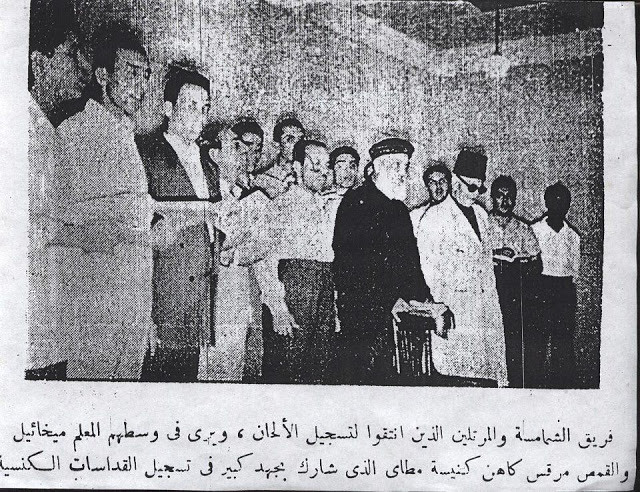
The cantor through whom most of the tradition reached the recordings was a blind boy from Cairo. Mikhail Girgis al-Batanuni was born on 14 September 1873, to a family from Batanun in the Delta,2324 and lost his sight in infancy.25 He learned the Psalms and hymns, Coptic and Arabic, in the kuttab of Abu al-Saʿd in the Azbakiyya quarter from 1879 to 1881,26 went on to the Great School that Cyril IV had founded, and from 1885 to 1891 attended al-Azhar to study Arabic.27 He was made a deacon in 1886 and in 1891 cantor of the patriarchal cathedral, at twenty-five piastres a month.28
He learned the hymns from Takla’s pupils and from the Church at large. Sulayman Nasim names his teachers as Muʿallim Armanyus and Muʿallim Ṣalib, “the tunes in which only two chanters specialized before him”;2930 Ramzy names Murqus of Maṭay and Armanyus.31 As a youth he “was sent to visit churches in many towns of Egypt to learn and collect hymns.”32 Nasim describes him as the one in whom the Church’s music was preserved, heard “from the older priestly masters of that art” and handed down “especially from the ancient monasteries.”33
He taught for sixty-four years. On 2 November 1893 he was appointed teacher of the hymns at the Clerical College,34 and about 1895 he also taught at a new school for the blind at Zeitoun, where he adapted Braille to the Coptic alphabet.35 The Theological Seminary opened by Cyril V in 1893 had a branch, the St Didymus Institute, where blind cantors came to train.36 With the archpriest Philotheos Ibrahim he translated the Coptic service into Arabic.37 In 1903 the Khedive ʿAbbas II greeted him as “Mikhail Bey,” and the title stayed with him.38 He sang for Newlandsmith’s transcriptions from 1928, led the first Coptic recordings at the Congress of Arab Music in 1932, and became the first professor of liturgical chant at the Institute of Coptic Studies in 1954, at eighty-one.3940 He died on 18 April 1957, the Great Cantor of St Mark’s Cathedral,41 “قضى في خدمة الألحان ٦٤ عاما” (having spent sixty-four years in the service of the hymns).42
His memory was famous, and the stories about it were told for decades. His father, a clerk in the Ministry of Finance, loved the hymns and had learned some from the learned monk Butrus Muftah; Cyril V was a friend of the family and sometimes stayed with them. Mikhail lost his sight at about three from an eye disease. He studied theology at the Clerical College and learned the hymns from Armanyus and Ṣalib, Takla’s pupils; when a hymn was hard to collect he is said to have paid small boys to sit with the old cantors while he listened unseen, and the account claims that the best-remembering cantor after him held about forty per cent of what he knew.43 The forum post tells it differently, that Cyril V hid him under his own chair while a cantor who would not teach a rare hymn was asked to sing it a few times; and that he brought from Minya the annual Catholicon response أبتجيك إيفول, which Cairo did not use. It adds that he woke from sleep when a pupil made a mistake in a melisma, and that the long تي أوي إن هيكانوس الكبيرة, which takes about thirty-five minutes to chant, is known now to only a few cantors, deacons and monks.44 He is also said to have made raised Coptic letters on the pattern of Braille and to have printed the Psalmody in Arabic and Coptic in them for blind cantors, to have worked from nine in the morning until nine at night, and to have taught for a monthly salary from the patriarchate of fifteen pounds, which he accepted without charging his pupils.45
His pupils
Mikhail taught a great many cantors. His pupils attended his classes of religious cantors, “some of them blind like himself.”46 From 1893 he taught the hymns at the Clerical College, where the Church trained its priests.47 The Coptic Encyclopedia names among the cantors and deacons he taught Muʿallim Tawfiq Yusuf of Dayr al-Muharraq, Muʿallim Ṣadiq ʿAttallah and Dr Yusuf Manṣur, “and many others in the churches of Cairo and the provinces,” acknowledged in their day “as the experts for the liturgical services and correct rendering of hymns.”48 Ramzy adds Muʿallim Fahim Girgis and Muʿallim Farag ʿAbd al-Masih.49 Laurence Moftah calls them the second generation: “Fahim Girgis Rizk (b. 1910-d. 1999), Sadiq Attallah (b. 1918-d. 2001), Farag Abdel-Messih (b. 1921-d. 2000), and others.”50
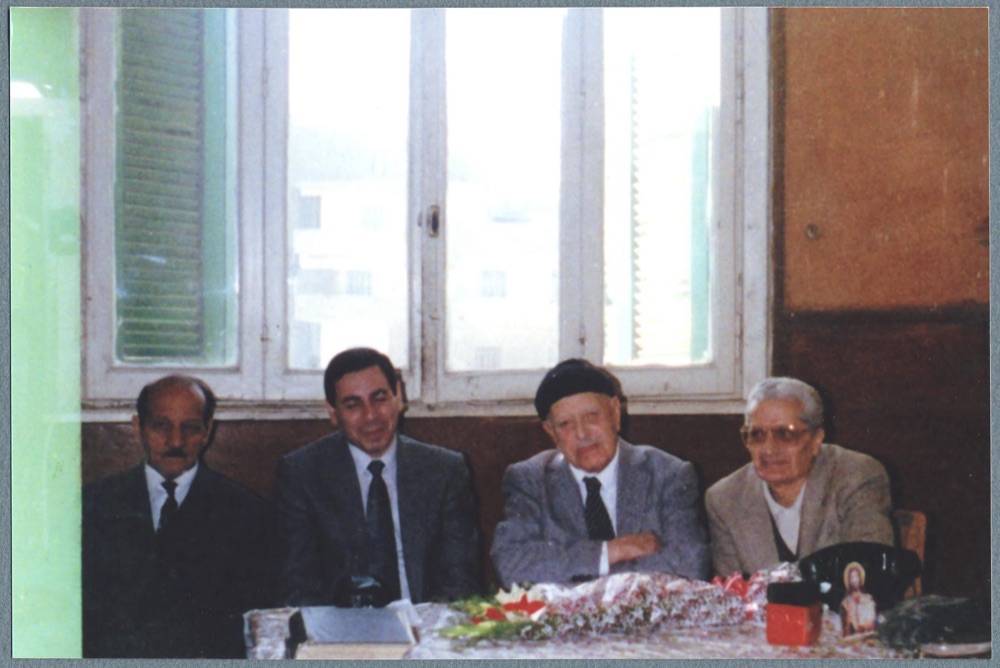
The pupils did not all sing like their teacher. Mikhail’s own recordings are plain. Ramzy, who studied them, writes that “the most widely celebrated muʿallim Sadik Attalah, sang in a richly ornamented and improvisatory style,” that Farag ʿAbd al-Masih “enjoyed a few ornaments, but certainly not as much as his colleague,” and that Ibrahim Ayad “sings in an especially ornate and improvisatory style.”51 It was Ṣadiq ʿAttallah’s Liturgy of St Basil that the Institute issued in 1968.52 On this site you can hear Ṣadiq ʿAttallah, Farag ʿAbd al-Masih, Fahim Girgis and Tawfiq Yusuf.
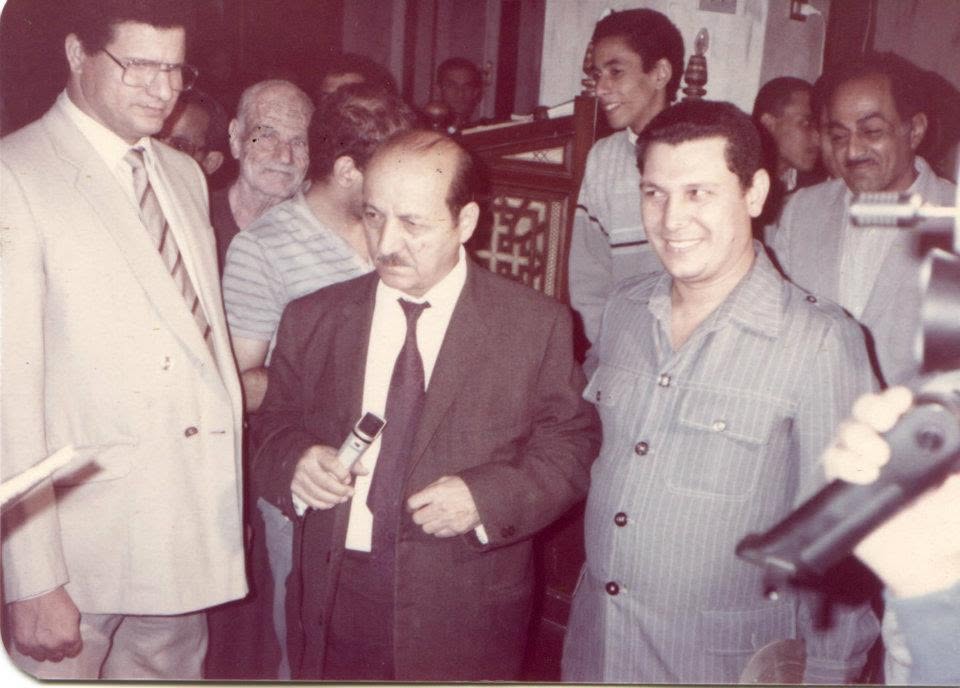
Cantors of the second generation
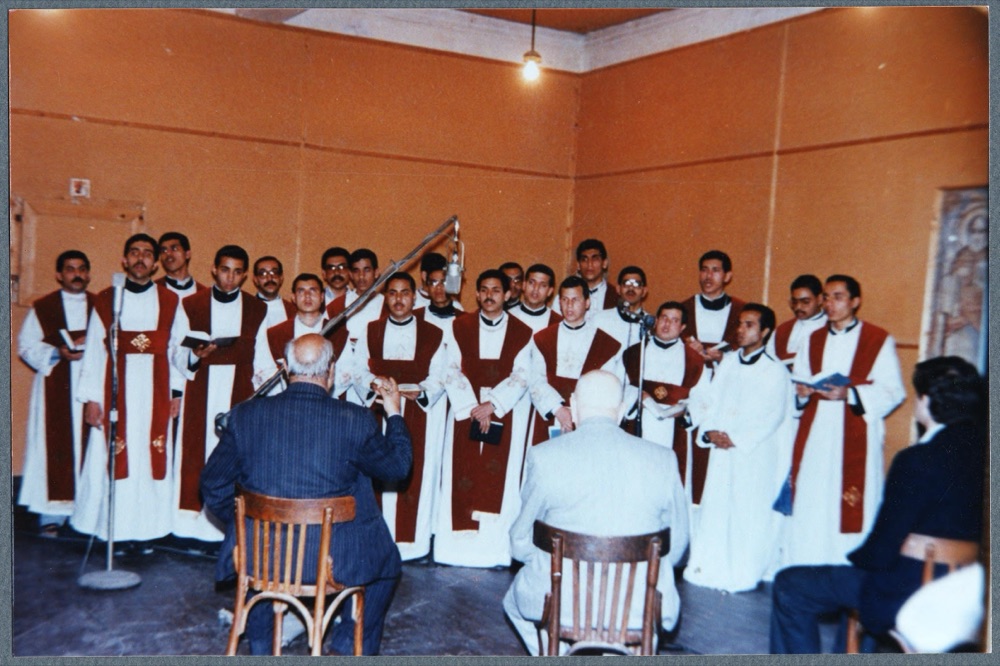
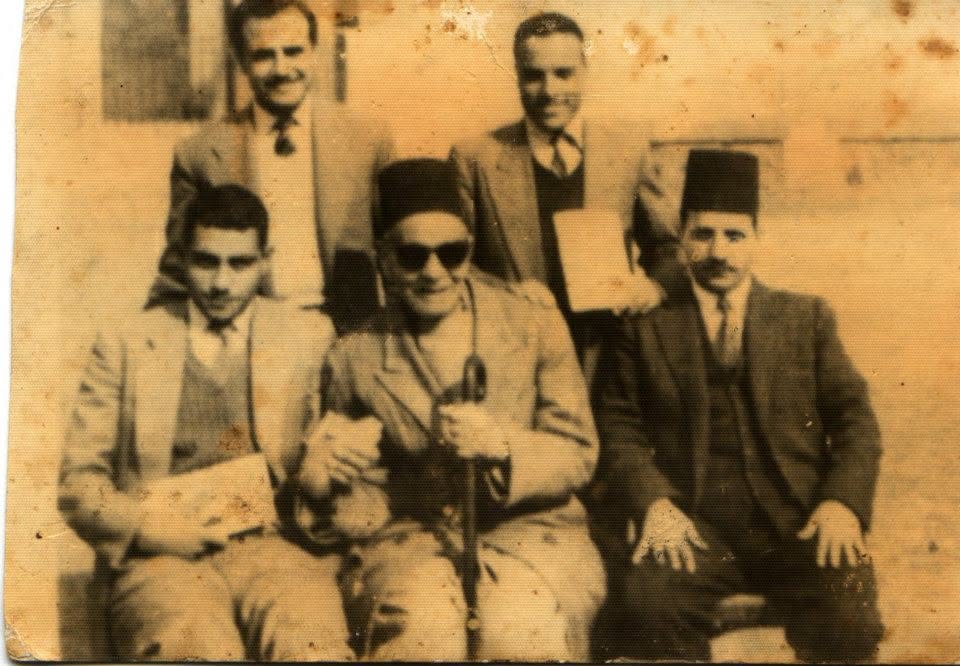
Fahim Girgis Rizk went from a village church to Jerusalem and then to the cathedral. He was born at Mit Ghamr in the Delta on 24 November 1910; an eye disease weakened his sight, and he left school in the third year. From 1922 he learned the Psalms, the hymns and the deacon’s service in the church of St George there, and was made a deacon in 1923. An orphan, he was brought to Cairo by his elder brother and studied with Mikhail al-Batanuni for about three years, to the end of 1925; later he taught the hymns and the liturgy at the Clerical College. In March 1937 he was appointed cantor of the Church of the Resurrection in Jerusalem, where in 1938 Metropolitan Theophilus made him head of the deacons. He stayed until 1948 and learned ancient and modern Greek there from the Orthodox. In October 1948 Pope Joseph II appointed him to the Great Church of St Mark in Azbakiyya, then the cathedral.53
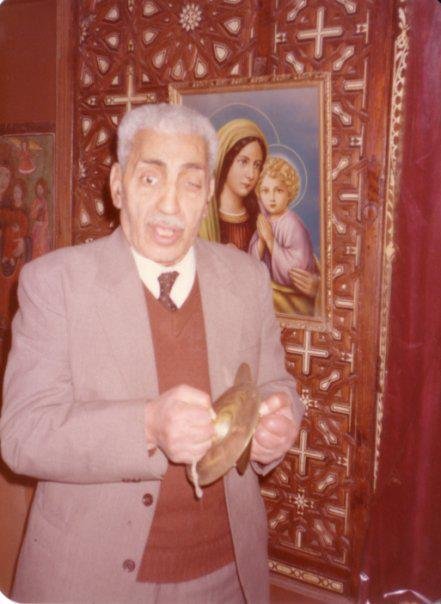
He recorded and taught the hymns for three patriarchs. The guide says that at St Mark’s he and the deacons set the hymns down in musical notation and recorded them on discs, and that he could play a hymn on the oud by ear after hearing it once. Cyril VI asked him to record the first teaching tape of the liturgy for the churches abroad that were then starting; Shenouda III charged him with teaching the liturgy to the priests he ordained, and sent him to teach the monks of St Mina’s monastery at Mariout, where at midday he sat before the monks at the shrine of Cyril VI and taught them for about three hours. He died on 5 February 1999, at eighty-nine, after about seventy-five years in the service of the church and its hymns.54
Naeem Hanna Boulos taught in the churches of Alexandria. Born in 1926 and raised in Cairo, he studied at the Clerical College, taught at the monks’ school at Helwan and then at Port Said, and about 1963 became cantor of St George’s church at Sporting in Alexandria. The guide notes that he served beside Fr Bishoy Kamel for eighteen years, and beside Fr Tadros Yaʿqub Malaty, and that he was interviewed on 18 May 1998.55
Some great cantors are now known only by recordings. Habib Hanna al-Mirahim was cantor of the Church of the Virgin at Muharram Bek; one site of his recordings names him among those “time has made forgotten” who kept the spirit of the Church, its rites and its hymns.56 The Hymns Guide gathers his recordings of the Kiahk hymns and of the Palm Sunday salutations.57 It gathers the recordings of Wissa Attia, among them the annual liturgy, Kiahk, Holy Week, the Resurrection and Pentecost, and marks some of them as sung with the oud.58 We found no biography of either that we can cite.
Ibrahim Ayad taught the choir with Tawfiq Yusuf. He was among the cantors who taught the choir with Tawfiq Yusuf in Ragheb Moftah’s time,59 and the Hymns Guide hosts his recordings for the Nativity, Great Lent, Lazarus Saturday, Palm Sunday and Kiahk.60
Every region its own way
Before recordings, each church sang as its cantor sang. Nicholas Ragheb, who studied how the hymns are handed down today, puts it plainly: “Historically, each church would model its style of recitation after the style of their local mu‘allim,” and this, with most Egyptians living their lives in one place, “led to the development of distinctive local and regional styles of recitation.” He adds that “regional variation in hymn performance has always been accepted as part of the tradition of Coptic hymnody.”61 Robertson-Wilson says the same of earlier times: communities “were separated with little constant contact one with another, so that each region developed its own local tradition for performing these melodies.”62
The regions left their names on the melodies. Some hymns are labelled Beheiri, from the north of Egypt, some Saʿidi, from the south, and some Maṣri, from the middle of the country.63 The Good Friday melody Idribi may be named after Atribi, near Sohag, and Sinjari after Sinjar, near Rosetta.64 In the fourteenth century Ibn Kabar already reported “certain local variations in the order and choice” of the melodies.65 Today, Ragheb notes, the Trisagion is sung one way in Alexandria and another in Cairo, and “variation also exists within recognized regional stylistic groups.”66
Upper Egypt kept its own teachers, and took from Cairo too. Tawfiq Yusuf, blind from the age of five, learned the hymns at Dayr al-Muharraq from the monks, among them “القمص ديمتري، والراهب جورجيوس، والقمص داود” (Fr Dimitri, the monk Georgios and Fr Dawud), and in 1928 learned more from Muʿallim Aghabius in Sohag. In 1936 the monastery brought Mikhail al-Batanuni from Cairo for a month to teach the monks the great hymns, and on his last visit, in 1952, Tawfiq received from him the Offertory Alleluia, the Sinjari Psalm and others. Tawfiq recorded hymns that the Institute keeps, and passed rare hymns in his turn to the Cairo cantors Fahim and Ibrahim Ayad.67 The Church now trains its cantors at two branches of the Didymus Institute, one in Shubra in Cairo and one at the monastery of al-Muharraq.68
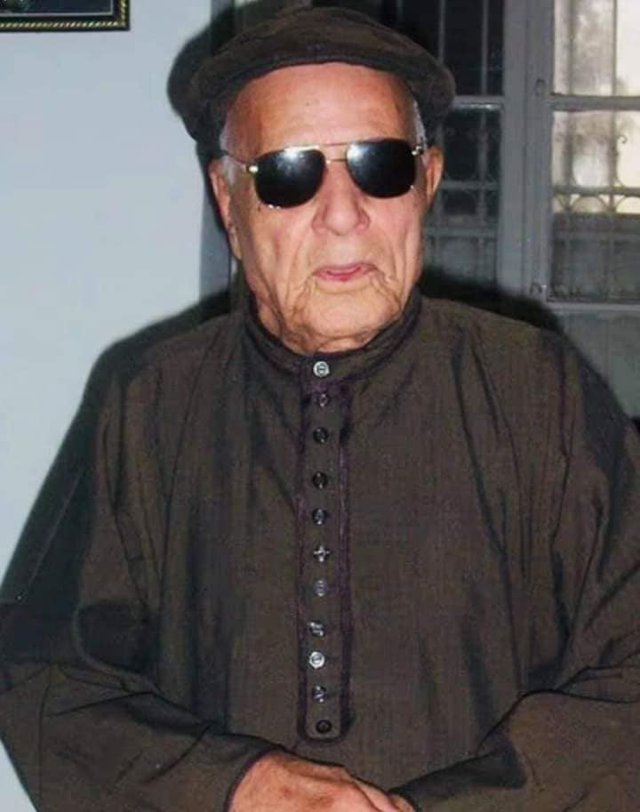
Tawfiq Yusuf was a monastery’s teacher for seventy years. The Didymus Institute’s blog, which tells his life, says he was born at Dayr al-Muharraq on 12 June 1917, the youngest of seven, learned the Psalms in the village kuttab before he was eight, and was ordained a reader by Bishop Pachomius I at Easter 1925. He came back from Sohag in January 1931, and the abbot, Fr Tadros Asʿad, asked him to stay and teach the monks; he learned the Liturgy of St Basil and the annual and Kiahk psalmody from Fr Dawud of al-Muharraq. Every year he also went for a month to al-Mandara in Alexandria to teach the choir, receiving hymns from Mikhail there as well, and in 1950 Moftah asked him to come to Cairo for fifteen days to record the Liturgy of St Gregory; from 1952 to 1998 he visited Moftah there each year for a month, and in 1955 Moftah gave him the leadership of the choir. The blog adds that Cyril VI sent him each year for three months to St Mina’s at Mariout, that he was the first to chant Maru tashaf in that patriarch’s presence, and that the monastery recorded all the hymns in his voice on more than a hundred cassettes. It reports that in tests by Ain Shams University for a doctoral thesis his voice measured 43.5 decibels against 26.5 for the next singer, a claim we could not check. He died on 30 January 2005.69
One way for the whole Church
The recordings made one way of singing the reference for all. Choosing Mikhail, Ragheb writes, “essentially canonized this particular cantor as the primary historical representation of Coptic hymnody,” and gave authority to his style and to “what many consider to be a regional Cairean style of cantillation.”70 In 1990 the Church said so in its own magazine. A notice in al-Kirāza announced the Institute’s cassettes:
حرصاً على سلامة الألحان، وتوحيداً لها فى جميع الكنائس، وفى جميع الإيبارشيات، وخوفاً من أن يقوم البعض بتسجيل ألحان حسب استلامه الخاص، وقد ينتشر ذلك بالتداول، بينما يقوم البعض بتسجيل نفس الألحان بطريقة أخرى، لذلك: حفاظاً للتراث الكنسى، أصدر قسم الألحان بمعهد الدراسات القبطية مجموعة من الكاسيتات، من أصول ترجع إلى المعلم ميخائيل جرجس.
Out of care for the soundness of the hymns, and to unify them in all the churches and all the dioceses, and for fear that some would record hymns as they themselves received them, which might spread as copies passed from hand to hand, while others recorded the same hymns another way: therefore, to preserve the Church’s heritage, the hymns section of the Institute of Coptic Studies has issued a set of cassettes from originals going back to Muʿallim Mikhail Girgis.71
The set covered the liturgies of St Basil and St Gregory, Holy Week, the evening and midnight praises, the feasts of the Nativity and the Resurrection, the marriage service, the praises of the Virgin and the hymns of the patriarch.72
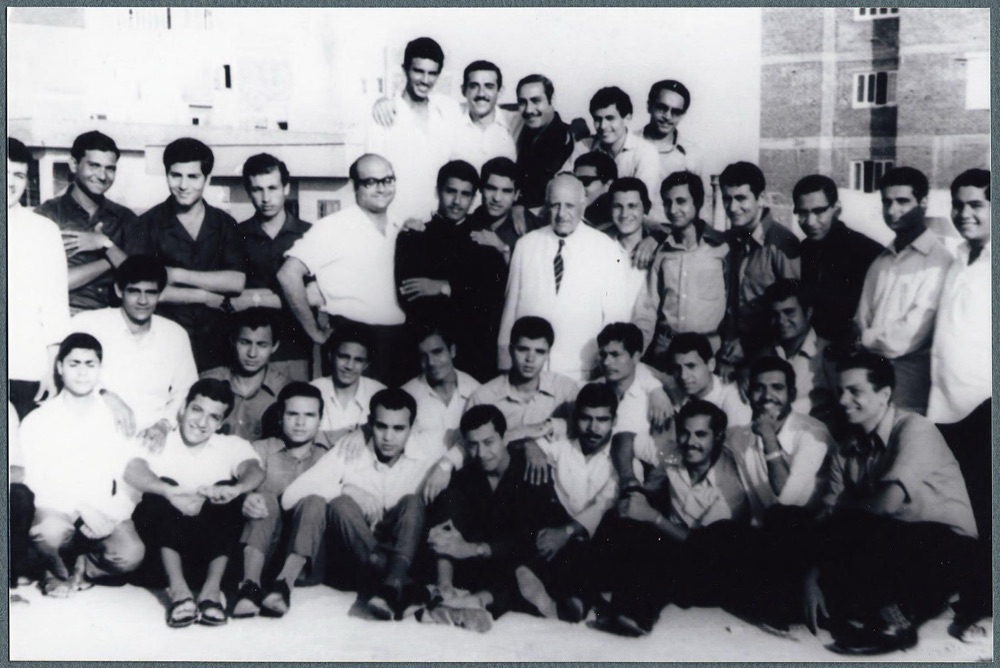
The Church’s leaders saw it as saving the hymns. At Moftah’s hundredth birthday in 1998, Pope Shenouda III asked what would have become of the hymns without him: “There have been many who chant the Coptic alhan, each with their own way. Many of these cantors are prone to tagwid [improvisation]…. Ustaz Ragheb Moftah has come to yizbit [to fix/to fasten/to anchor] the alhan in the church in a scientific, sound way.”73 The Holy Synod has since ruled that no one may “تغيير ألفاظ الصلوات الطقسية، أو إضافة جديد إليها” (change the words of the liturgical prayers or add anything new to them) without its approval,74 and in November 2014 its hymns subcommittee reported that it had agreed on “مصادر موحدة” (unified sources) for the hymns of the month of Kiyahk.75 In June 2017 it decided that no recording of the hymns is to be accepted as a reference “الا الصادر من لجنة الطقوس من المجمع المقدس” (except those issued by the Rites Committee of the Holy Synod).76
Scholars have also counted the cost. Ramzy writes that the recordings became “new archetypes of ‘correct’ singing,” and that singers now “emulate a similar homogeneous” and “less-melismatic singing style”;77 she saw a studio session in which, “any time the sound engineer heard an extra embellishment, he stopped the singers.”78 In her view the effort to purify the chant also cut away the “heterophony, improvisation, and the melismas of oral tradition.”79 Ragheb observes that cassettes sold at church bookshops from the 1970s, and then the internet, including this site, moved the authority over how a hymn is sung from the local cantor to a small canon of famous recorded voices.80 Both things are true: the Church gained one way of singing that its people share in Egypt and abroad, and some of the older variety of the regions is heard less than it was.
The cantors today
The cantor is still at the front of the church, but his place has changed. Ramzy writes that blind cantors are still “visible at the front of many churches in Egypt,” but that their role has been largely taken over by recordings of older singers and, in the churches abroad, by head deacons; that cantors have gained standing since Moftah’s work; and that there is “a growing number of singers who are not blind.”81 The Church confers the title of muʿallim only on graduates of the Didymus Institute’s five- to six-year course.82
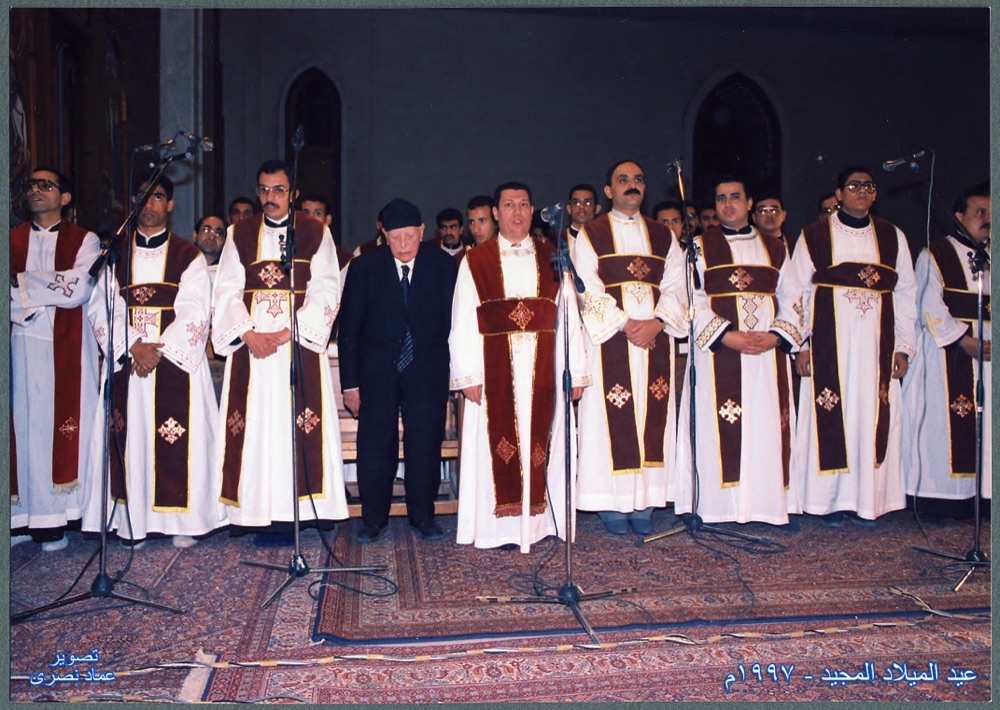
The best known of them is Muʿallim Ibrahim Ayad, who is not blind and is “the Great Cantor of St. Mark’s Cathedral in Cairo.”83 A graduate of the Didymus Institute who went on to the Clerical College, he was chosen by Pope Shenouda III as his own cantor and serves Pope Tawadros II in the same way.84 His way of singing became a model, informally among those who learned from him and more officially when he became a professor of the hymns at the Institute of Coptic Studies.85
Listen to them. The recordings on this site carry the voices of this line of cantors and their pupils: Ibrahim Ayad, Farag ʿAbd al-Masih, Ṣadiq ʿAttallah, Tawfiq Yusuf, Fahim Girgis, Gad Lewis, Zaher Andrawis, and the choir of the Higher Institute of Coptic Studies. Where your own church sings a hymn differently, the advice on the Coptic letters holds for the melodies too: follow your church, in the spirit of unity.
Notes
- Moftah, Robertson, Roy and Tóth, “Music, Coptic”, vol. 6, “The Oral Tradition”. ↩
- Moftah, Robertson, Roy and Tóth, “Music, Coptic”, vol. 6, “Cantors, Their Role and Musical Training”. ↩
- Canons of Athanasius, pp. xiv, 20, 39. ↩
- Vansleb 1677, pp. 180-181. ↩
- Butler 1884, p. 322. ↩
- Moftah, Robertson, Roy and Tóth, “Music, Coptic”, vol. 6, “Cantors, Their Role and Musical Training”. ↩
- Synodal Decisions under Shenouda III, p. 152, session of 13 June 1992, tr. ours. ↩
- Moftah, Robertson, Roy and Tóth, “Music, Coptic”, vol. 6, “Cantors, Their Role and Musical Training”. ↩
- Ramzy, “A Musical Inheritance”, para. 1. ↩
- Nasim, “Education, Coptic”, vol. 3, pp. 931-933. ↩
- Lane, p. 318. ↩
- Moftah, Robertson, Roy and Tóth, “Music, Coptic”, vol. 6, “The Oral Tradition”. ↩
- Robertson-Wilson 2008, “Brief Description,” para. 2. ↩
- Moftah, Robertson, Roy and Tóth, “Music, Coptic”, vol. 6, “Cantors, Their Role and Musical Training”. ↩
- Moftah 1958, Part I. ↩
- Moftah, Robertson, Roy and Tóth, “Music, Coptic”, vol. 6, “The Oral Tradition”. ↩
- Moftah, Robertson, Roy and Tóth, “Music, Coptic”, vol. 6, “Cantors, Their Role and Musical Training”. ↩
- Ramzy, “A Musical Inheritance”, paras. 2-3. ↩
- Moftah, Robertson, Roy and Tóth, “Music, Coptic”, vol. 6, “Cantors, Their Role and Musical Training”. ↩
- Ramzy, “A Musical Inheritance”, para. 3. ↩
- Moftah, Robertson, Roy and Tóth, “Music, Coptic”, vol. 6, “Cantors, Their Role and Musical Training”. ↩
- Church forum post 2011, post of 20 Jan. 2011. ↩
- Nasim 1958, p. 70. ↩
- Musique arabe 1992, “Les hommes”, pp. 361-386, para. 80. ↩
- Musique arabe 1992, “Les hommes”, pp. 361-386, para. 80. ↩
- Nasim, “Mikhāʾīl Jirjis”, vol. 5, pp. 1629-1630. ↩
- Nasim 1958, p. 70. ↩
- Nasim 1958, p. 71. ↩
- Nasim, “Mikhāʾīl Jirjis”, vol. 5, pp. 1629-1630. ↩
- Nasim 1958, p. 71. ↩
- Ramzy, “A Musical Inheritance”, para. 5. ↩
- Moftah, Robertson, Roy and Tóth, “Music, Coptic”, vol. 6, “Cantors, Their Role and Musical Training”. ↩
- Nasim, “Mikhāʾīl Jirjis”, vol. 5, pp. 1629-1630. ↩
- Nasim 1958, p. 70. ↩
- Nasim, “Mikhāʾīl Jirjis”, vol. 5, pp. 1629-1630. ↩
- Moftah, Robertson, Roy and Tóth, “Music, Coptic”, vol. 6, “Cantors, Their Role and Musical Training”. ↩
- Nasim, “Mikhāʾīl Jirjis”, vol. 5, pp. 1629-1630. ↩
- Nasim 1958, p. 71. ↩
- Musique arabe 1992, “Les hommes”, pp. 361-386, paras. 83, 85. ↩
- Ramzy, “A Musical Inheritance”, paras. 6-7. ↩
- Musique arabe 1992, “Les hommes”, pp. 361-386, para. 84. ↩
- Nasim 1958, p. 70, tr. ours. ↩
- Fakhry, Coptic Treasures, biography. ↩
- Church forum post 2011, post of 20 Jan. 2011. ↩
- Fakhry, Coptic Treasures, biography. ↩
- Nasim, “Mikhāʾīl Jirjis”, vol. 5, pp. 1629-1630. ↩
- Nasim 1958, p. 70. ↩
- Moftah, Robertson, Roy and Tóth, “Music, Coptic”, vol. 6, “Cantors, Their Role and Musical Training”. ↩
- Ramzy, “A Musical Inheritance”, para. 5. ↩
- L. Moftah, “Scholars of Music”, para. 34. ↩
- Ramzy 2015, p. 78. ↩
- Moftah, Robertson, Roy and Tóth, “Music, Coptic”, vol. 6, Bibliography: Recordings. ↩
- Hymns Guide, Fahim Girgis, biography. ↩
- Hymns Guide, Fahim Girgis, biography. ↩
- Hymns Guide, Naeem Hanna, biography. ↩
- tibarthenos.net, Habib Hanna, introduction, tr. ours. ↩
- Hymns Guide, Habib al-Mirahim, recordings. ↩
- Hymns Guide, Wissa Attia, recordings. ↩
- Didymus Institute blog 2010, biography. ↩
- Hymns Guide, Ibrahim Ayad, recordings. ↩
- Ragheb 2019, p. 248. ↩
- Robertson-Wilson 2008, “Brief Description,” para. 2. ↩
- Moftah, Robertson, Roy and Tóth, “Music, Coptic”, vol. 6, “Melody, Its Relation to Different Languages”. ↩
- Moftah, Robertson, Roy and Tóth, “Music, Coptic”, vol. 6, “Description of the Corpus”. ↩
- Moftah, Robertson, Roy and Tóth, “Music, Coptic”, vol. 6, “History: After the Arab Conquest”. ↩
- Ragheb 2019, p. 133. ↩
- Karas al-Muḥarraqī, tr. ours. ↩
- Ragheb 2019, p. 234. ↩
- Didymus Institute blog 2010, biography. ↩
- Ragheb 2019, p. 214. ↩
- al-Kirāza 1990, p. 18, tr. ours. ↩
- al-Kirāza 1990, p. 18. ↩
- Ramzy 2014, pp. 72-73, Ramzy’s translation. ↩
- Synodal Decisions under Shenouda III, p. 153, session of 5 June 1993, tr. ours. ↩
- Holy Synod, November 2014, recommendation 9, tr. ours. ↩
- Holy Synod, June 2017, decision 5, tr. ours. ↩
- Ramzy 2014, p. 34. ↩
- Ramzy 2014, p. 51. ↩
- Ramzy 2014, p. 77. ↩
- Ragheb 2019, pp. 248-249. ↩
- Ramzy, “A Musical Inheritance”, para. 8. ↩
- Ragheb 2019, p. 234. ↩
- Ramzy, “A Musical Inheritance”, para. 8. ↩
- al-Yawm al-Sābiʿ 2024, para. 3. ↩
- Ramzy 2014, p. 255. ↩
Sources
- Ragheb Moftah, Marian Robertson, Martha Roy and Margit Tóth, “Music, Coptic,” in The Coptic Encyclopedia, ed. Aziz S. Atiya, New York, 1991, vol. 6, pp. 1715-1747, cited by its sections.
- Sulayman Nasim, “Mikhaʾil Jirjis, Muʿallim,” in The Coptic Encyclopedia, vol. 5, pp. 1629-1630.
- Sulayman Nasim, “Education, Coptic,” in The Coptic Encyclopedia, vol. 3, pp. 931-933.
- Wilhelm Riedel and W. E. Crum, The Canons of Athanasius of Alexandria, London, 1904, pp. xiv, 20, 39.
- J. M. Vansleb, Histoire de l’Église d’Alexandrie, Paris, 1677, pp. 180-181.
- Alfred J. Butler, The Ancient Coptic Churches of Egypt, vol. II, Oxford, 1884, p. 322.
- Edward William Lane, An Account of the Manners and Customs of the Modern Egyptians, vol. II, London, 1836, p. 318.
- Ragheb Moftah, “Coptic Music: Value and Origins,” 1958, in an anonymous English translation from the Arabic posted on Copt-Net.
- Carolyn M. Ramzy, “A Musical Inheritance: Coptic Cantors and an Orally Transmitted Tradition,” Library of Congress, cited by paragraph.
- Sulayman Nasim, “al-Muʿallim Mīkhāʾīl,” Majallat Madāris al-Aḥad 12, nos. 4-5, Cairo, April-May 1958, pp. 69-73.
- Philippe Vigreux, ed., “Les hommes,” in Musique arabe : le Congrès du Caire de 1932, Cairo, CEDEJ, 1992, pp. 361-386, cited by the online edition’s paragraphs.
- Laurence Moftah, “Ragheb Moftah, Scholars of Music, Sound Engineer, Audio Recording Collection, and the Recording Equipment,” Library of Congress, 2006, cited by paragraph.
- Carolyn M. Ramzy, “Modern Singing Sons of the Pharaohs: Transcriptions and Orientalism in a Digital Coptic Music Collection,” Ethnologies 37, no. 1, 2015, pp. 65-88.
- Carolyn M. Ramzy, The Politics of (Dis)Engagement: Coptic Christian Revival and the Performative Politics of Song, PhD thesis, University of Toronto, 2014, pp. 34, 51, 72-73, 77, 255.
- Marian Robertson-Wilson, “Survey of Twentieth-Century Studies of Coptic Music,” Library of Congress, 2008.
- Nicholas Joseph Ragheb, The Transmission of Coptic Orthodox Liturgical Music, PhD dissertation, University of California, Santa Barbara, 2019, pp. 133, 214, 234, 248-249.
- Karas al-Muḥarraqī, “al-Muʿallim Tawfīq,” blog of a monk of Dayr al-Muharraq, 7 December 2018.
- al-Kirāza 18, nos. 33-34, Cairo, 28 September 1990, p. 18, “Ḥirṣan ʿalā salāmat al-alḥān.”
- The Holy Synod of the Coptic Orthodox Church, al-Qarārāt al-majmaʿiyya fī ʿahd ... al-Bābā Shinūda al-Thālith, 3rd edition, Cairo, 2011, pp. 152-153.
- The Holy Synod of the Coptic Orthodox Church, session of November 2014, recommendations, on the patriarchate’s website.
- The Holy Synod of the Coptic Orthodox Church, session of June 2017, decisions, on the patriarchate’s website.
- “ʿAndalīb al-kanīsa,” al-Yawm al-Sābiʿ, Cairo, 6 January 2024.
- “al-Muʿallim Tawfīq Yūsuf al-Muḥarraqī,” blog of the Didymus Institute for Cantors, Dayr al-Muharraq, 22 November 2010.
- “al-Muʿallim Fahīm Jirjis Rizq,” Dalīl al-alḥān al-qibṭiyya (Coptic Hymns Guide), 2012.
- “al-Muʿallim Naʿīm Ḥannā Būlus,” Dalīl al-alḥān al-qibṭiyya, 2012.
- “al-Muʿallim Ibrāhīm ʿIyād,” Dalīl al-alḥān al-qibṭiyya, 2012, the list of recordings.
- “al-Muʿallim Ḥabīb al-Mīrāhim,” Dalīl al-alḥān al-qibṭiyya, 2014, the list of recordings.
- “al-Muʿallim Wīṣā ʿAṭiyya,” Dalīl al-alḥān al-qibṭiyya, 2014, the list of recordings.
- “al-Alḥān al-kanasiyya li-l-mutanayyiḥ al-muʿallim Ḥabīb Ḥannā,” tibarthenos.net.
- “al-Muʿallim Mīkhāʾīl Jirjis al-Batānūnī,” by Bishoy Fakhry, Coptic Treasures project, updated 7 February 2021.
- “Muqaddima ʿan al-alḥān al-qibṭiyya,” a post of 20 January 2011 on the forum of the church of St George at Kafr Saqr.
Ready to sing? Start the lessons.