

The Institute of Coptic Studies معهد الدراسات القبطية · where the chant was recorded and is taught, from 1954
Since 1954 the Church’s hymns have had an academic home in Cairo. The Higher Institute of Coptic Studies was founded to revive the study of everything Coptic: its language, history, theology, art and music. Its department of music and hymns, founded and run for almost half a century by Ragheb Moftah, recorded the services in the voice of Muʿallim Mikhail al-Batanuni and of the choirs he trained, and those recordings became the model for how the hymns are sung across the Church.123
The founding
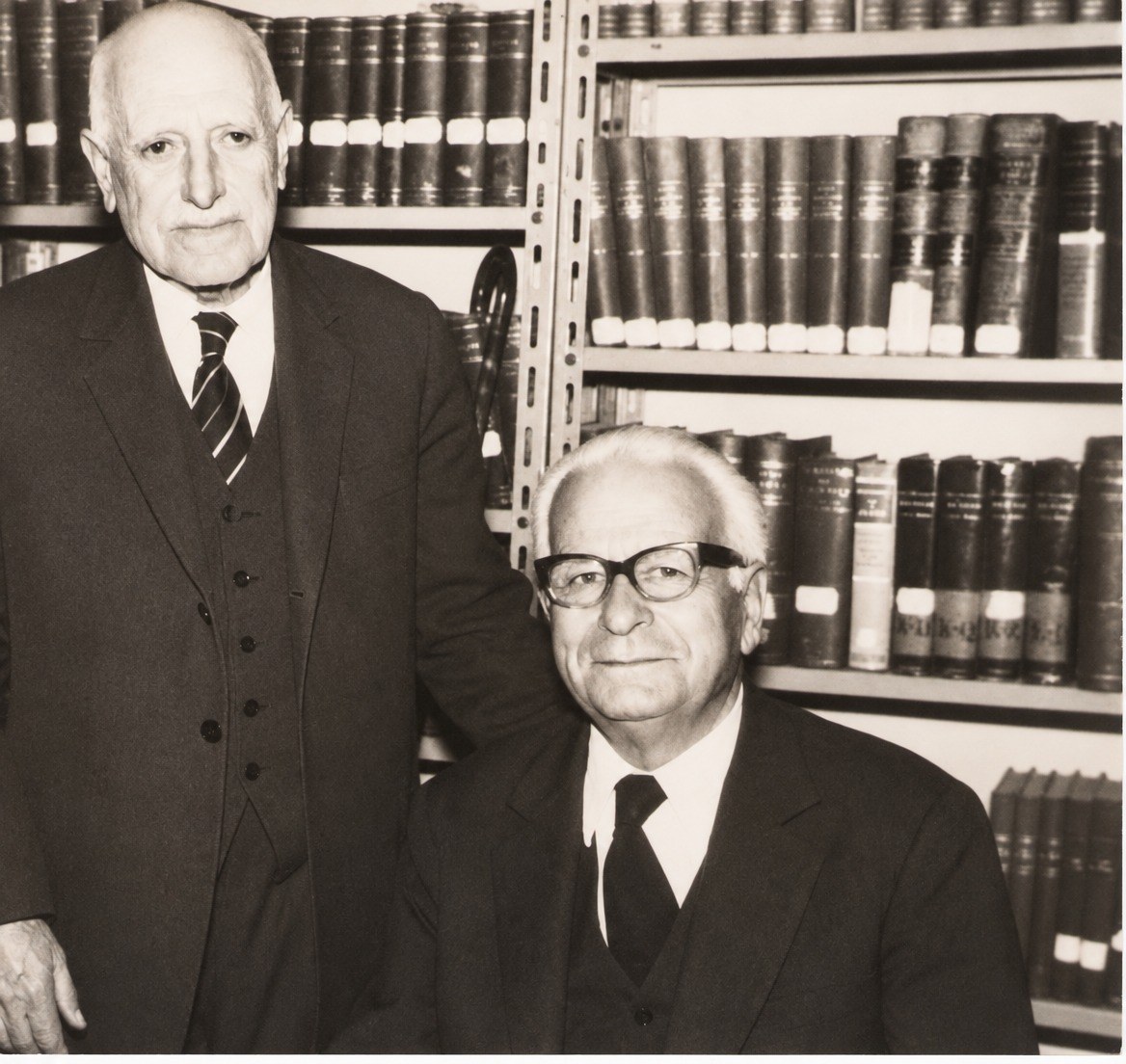
It began with a group of scholars and a modest budget. The idea took shape in the early 1950s among a group of Coptic scholars: Aziz Suryal Atiya, Murad Kamil, Sami Gabra, Pahor Labib, George Sobhy, Ramses Wissa Wassef, the artist Habib Gorgy, Zaher Riad and Ragheb Moftah. In October 1953 Atiya put a memorandum for the Institute to the deputy of the General Community Council, and the decision to found it was issued on 21 January 1954.4 The Community Council founded it “with a modest budget,” Atiya wrote, eked out by small private gifts; he served as its president and Murad Kamil and Sami Gabra as vice-presidents, all without pay, and they recruited noted scholars to teach as volunteers. Professors at Oxford, Liverpool, Michigan, Princeton and Hartford accepted honorary fellowships.5
The patriarch blessed it as a new School of Alexandria. On 7 June 1954 a papal circular gave the Institute the Church’s support, describing it as restoring to the Church the glories of the theological School of Alexandria. It was inaugurated on 17 December 1954, classes began on 24 January 1955, and the first graduates received their diplomas on 31 January 1961, at the centenary of Cyril IV, the father of the Church’s reform.6 The journal Speculum called the opening “a major event in the cultural history of modern Egypt,” and noted that besides its lecture halls the Institute had “an excellent auditorium installed with modern fittings and apparatus for the recording of Coptic music and divine liturgies.”7
It shared its building with the Clerical College. In 1952 the higher section of the Clerical College had been founded in the building at Anba Ruways in Cairo, with a select body of educated students, and the Institute was founded in the same building.8
Its first sections covered the whole of Coptic culture. They were theology, Coptic language and literature, Coptic history, archaeology, sociology, Coptic law, Coptic music and Coptic art. Its library was built from the collections of the Clerical College, of the Committee of Coptic History and of private scholars. The first classes were mostly Coptic enthusiasts, but there were Muslim and Jewish scholars among them, and students needed a university degree or the diploma of the Clerical College to enter.9
It was led by scholars and by bishops. After Atiya and Sami Gabra its heads included Bishop Shenouda, bishop of education, who became Pope Shenouda III; Bishop Gregorios, bishop of scientific research; Shafiq ʿAbd al-Malik; Zaki Shenouda; Nabil Subhi; Rasmi ʿAbd al-Malik; Anton Yaʿqub; and Metropolitan Bishoy of Damietta.10 Atiya wrote that the Institute went on “in a modest way, with severely limited financial resources,” and that only two of its sections “have flourished on their own self-sustaining resources”: Coptic music under Ragheb Moftah, and Coptic art under Isaac Fanous, “whose icons have filled most of the new churches in Egypt and some foreign countries.”11
The department of music and hymns
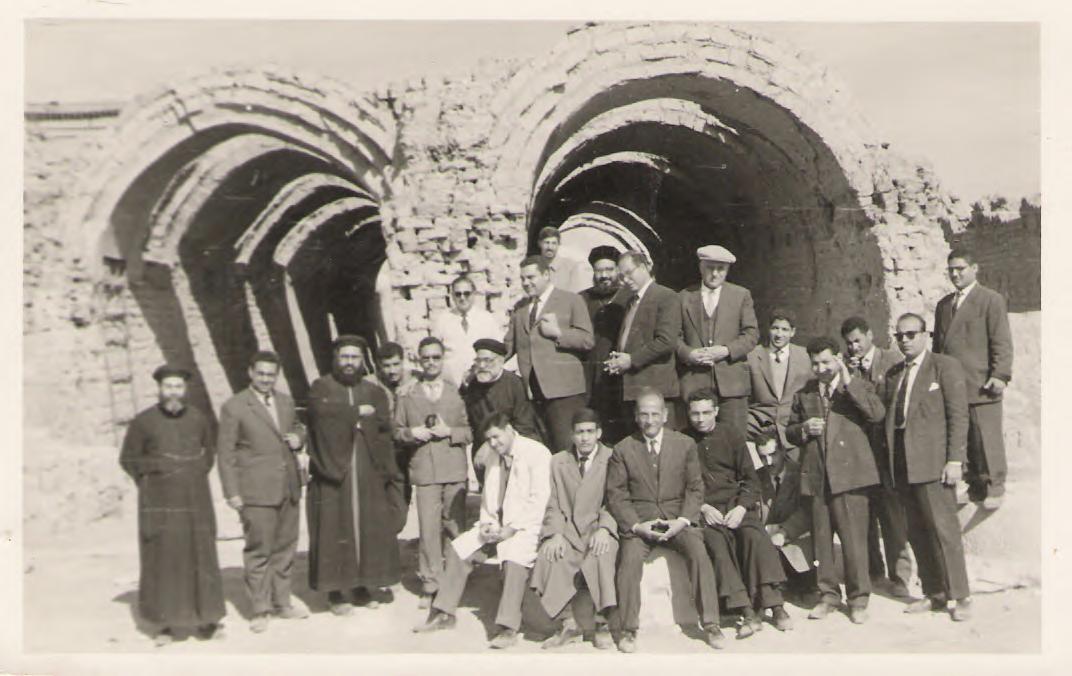
Moftah founded it and paid for it. He set up the music division in 1954 with his own money, and chaired it from then until he reposed in 2001 without asking for a title or a salary.12 He moved to the Institute the beginnings of the studio he had built at the church of the Virgin, Qasriyyat al-Rihan, in Old Cairo, and finished equipping it there.13 Mikhail al-Batanuni, then eighty-one, became its first professor of liturgical chant,14 and before he reposed in 1957, Atiya noted, the section had “completed his entire recording on tapes.”15
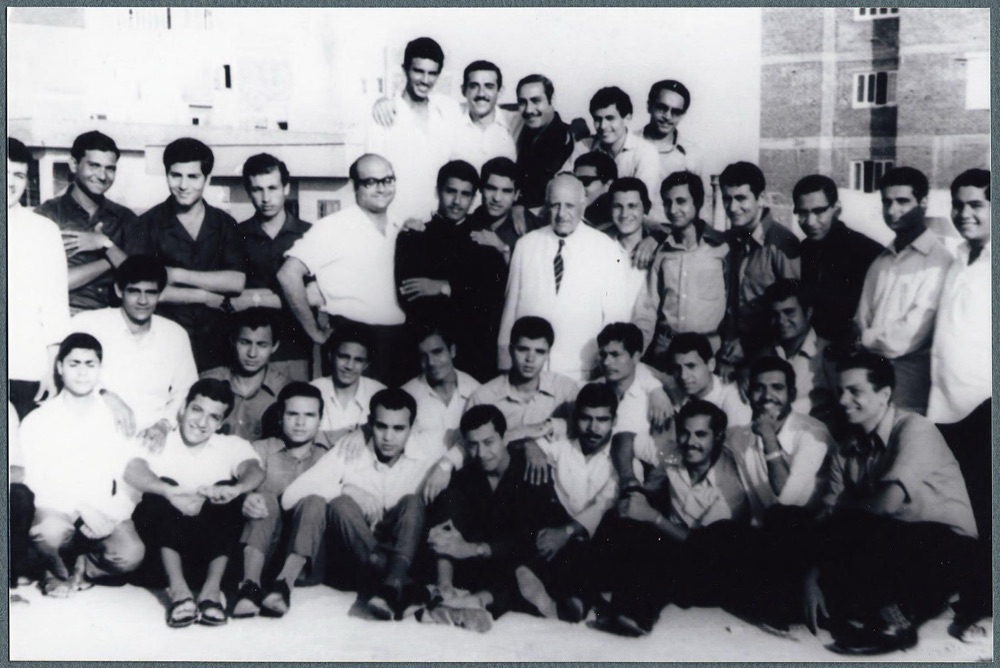
It trained the future priests by ear. The resident students of the Clerical College had their lessons in the hymns every day in Moftah’s office at the Institute, and every summer he took them to a study camp at Abu Qir, near Alexandria. Their teachers included Muʿallim Tawfiq of Dayr al-Muharraq, Muʿallim Ṣadiq ʿAttallah and Muʿallim Farag ʿAbd al-Masih, and later Muʿallim Ibrahim Ayad.16 “All instruction is done by rote, with the students repeating the melodies until they become note perfect.”17 In 1996 the department, still under Moftah, worked with the choir of the Clerical College and a staff of engineers and technicians.18
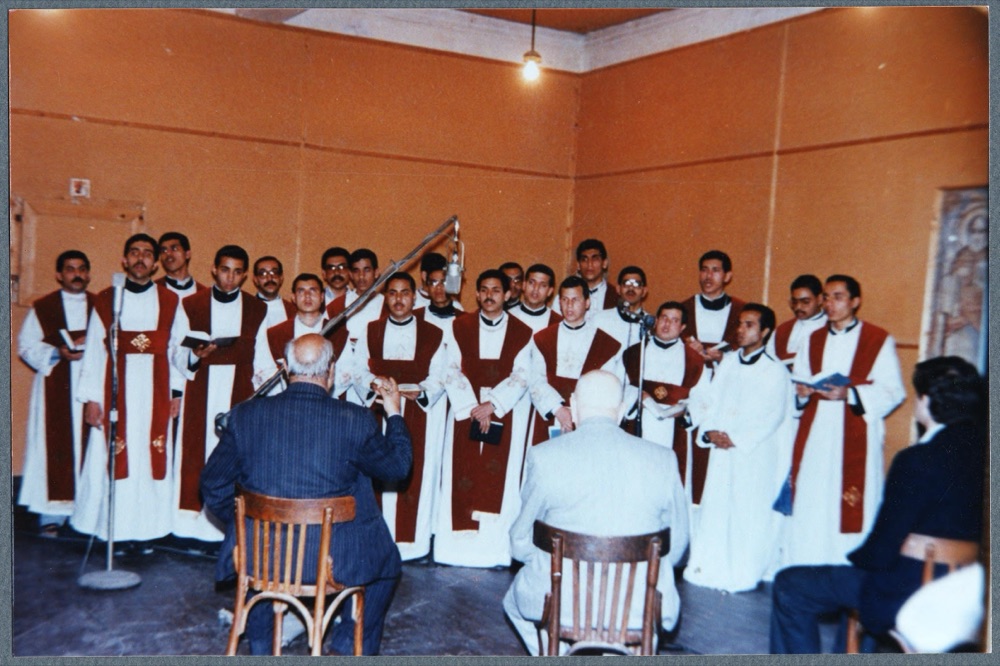
It recorded the services one after another. Following Mikhail al-Batanuni’s recordings, Moftah formed a choir of deacons from the students of the Clerical College and of the Institute to record the hymns again, and over the years from 1960 they recorded most of the rites and occasions of the Church. The recordings went out first on records and then on cassettes, printed by Sawt al-Qahira with the department named on the cover as their only publisher.19 The Coptic Encyclopedia lists the recordings issued under Moftah’s editing: selections from the Liturgy of St. Basil (1955), the complete Liturgy of St. Basil (1965), the Liturgy of St. Basil sung by Muʿallim Ṣadiq ʿAttallah (1968), Holy Week (1972), the Feast of the Resurrection (1974), the evening and midnight praises (1976 and 1978), the hymns for the patriarch and bishops (1980), and the Liturgy of St. Gregory, the marriage service and the doxologies (1984).20 In 1990 the hymns section issued them on cassette “from originals going back to Muʿallim Mikhail Girgis,” so that the hymns would be sung alike in every church.21
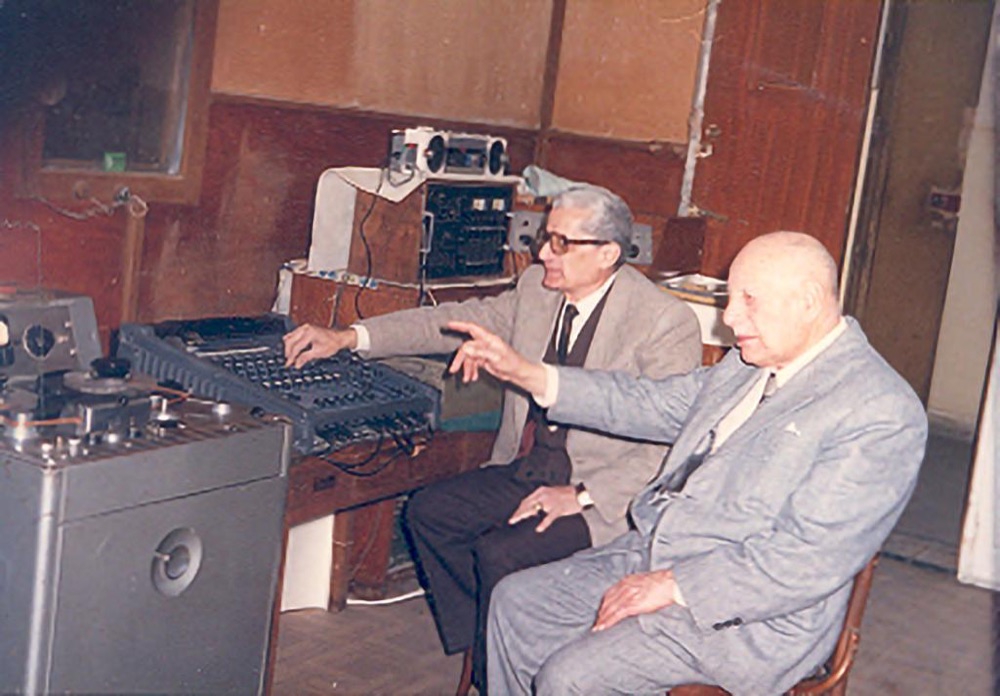
Its engineer worked with Moftah for thirty-seven years. Salib Bastawros, formerly director of the Cairo radio station, was the department’s sound engineer from 1964 to 2001, working long days on old reel-to-reel machines. Moftah, he remembered, had the singers repeat a chant until it was perfect.22 The department’s archive holds about 470 reels of the choirs and cantors Moftah recorded.23
It printed the hymns in notation for the first time. In 1985 al-Kirāza announced that the department was printing the music of the hymns “لأول مرة في تاريخ الكنيسة” (for the first time in the history of the Church).24 The Liturgy of St. Basil in notation was published with the American University in Cairo in 1998.25 How that score came to be is told on Ragheb Moftah’s page.
After Moftah
His assistants carried the department on. In 2002 Michel Badie ʿAbd al-Malik, one of Moftah’s assistants and a man he trusted, was made its head.26 The courses it gives to lovers of the church hymns run in Moftah’s name, at the Dr. Ragheb Moftah Center; in 2006 the ninth course taught the praises, the hymns of Lent and Holy Week, the great hymns and the hymns of the liturgies “according to the originals kept in the archive of the department and recorded in the voice of the late Muʿallim Mikhail Girgis al-Batanuni.”27
The old reels were copied for the future. In October 2008 a team from the University of Music and Drama in Hanover and from Berlin came to Cairo to agree on copying the department’s reels, which go back to 1954, onto CD; the expert from Berlin repaired one of Moftah’s old machines for the work, and found the tapes still in good condition.28 The copying was done with Hanover from August to October 2009, under Michel Badie, and from October 2010 to May 2011, with the European Union’s Manumed project, the department wrote down eighty-eight hymns both in sound and in notation.29
The Institute has grown. By 2014 it had nine departments: theology, the Coptic language, hymns and music, history, sociology and education, African studies, architecture, art and archaeology, with a language center named for Pope Shenouda and the hymns center named for Moftah. Between 1985 and 2013, 1,528 students took its postgraduate diploma, and it had awarded 29 doctorates and 36 master’s degrees. It helped found the International Association for Coptic Studies and host its first congress in Cairo in December 1976.30
Photographs
Notes
- Atiya, “Higher Institute of Coptic Studies”, vol. 4, p. 1230. ↩
- Badie, al-Kirāza 2003, p. 11. ↩
- al-Kirāza 1990, p. 18. ↩
- al-Kirāza 2014, the Institute at sixty, p. 18. ↩
- Atiya, “Higher Institute of Coptic Studies”, vol. 4, p. 1230. ↩
- al-Kirāza 2014, the Institute at sixty, p. 18. ↩
- L. Moftah, “Ragheb Moftah and Coptic Music”, sec. I. ↩
- Shenouda III, al-Kirāza 2001, p. 10. ↩
- Atiya, “Higher Institute of Coptic Studies”, vol. 4, p. 1230. ↩
- al-Kirāza 2014, the Institute at sixty, p. 18. ↩
- Atiya, “Higher Institute of Coptic Studies”, vol. 4, p. 1230. ↩
- L. Moftah, “Ragheb Moftah and Coptic Music”, secs. I-II. ↩
- Badie, al-Kirāza 1998, p. 17. ↩
- Ramzy, “A Musical Inheritance”, para. 7. ↩
- Atiya 1960, p. 3. ↩
- Shenouda III, al-Kirāza 2001, p. 10. ↩
- Moftah, Robertson, Roy and Tóth, “Music, Coptic”, vol. 6, “Cantors, Their Role and Musical Training”. ↩
- al-Kirāza 1996, the Institute, p. 11. ↩
- Badie, al-Kirāza 2003, p. 11. ↩
- Moftah, Robertson, Roy and Tóth, “Music, Coptic”, vol. 6, Bibliography: Recordings. ↩
- al-Kirāza 1990, p. 18, tr. ours. ↩
- L. Moftah, “Scholars of Music”, “Engineer Saleeb Bastawros”. ↩
- L. Moftah, “Scholars of Music”, “The Collection of the Master Cantor Mikhail al-Batanouni’s Recordings and Other Cantors’ Recordings”. ↩
- al-Kirāza 1985, notice, p. 10. ↩
- al-Kirāza 2014, the Institute at sixty, p. 18. ↩
- al-Kirāza 2002, the department, p. 4. ↩
- al-Kirāza 2006, notice, p. 6, tr. ours. ↩
- al-Kirāza 2008, the digital project, p. 11. ↩
- al-Kirāza 2014, the Institute at sixty, p. 18. ↩
- al-Kirāza 2014, the Institute at sixty, p. 18. ↩
Sources
- Aziz S. Atiya, “Higher Institute of Coptic Studies,” in The Coptic Encyclopedia, vol. 4, p. 1230.
- Michel Badie ʿAbd al-Malik, “Tasjīlāt alḥān qism al-mūsīqā wa-l-alḥān al-qibṭiyya bi-Maʿhad al-Dirāsāt al-Qibṭiyya bi-l-Qāhira,” al-Kirāza 31, nos. 7-8, Cairo, 21 February 2003, pp. 11-12.
ميشيل بديع عبد الملك، «تسجيلات ألحان قسم الموسيقى والألحان القبطية بمعهد الدراسات القبطية بالقاهرة»، الكرازة، السنة ٣١، العددان ٧-٨، ٢١ فبراير ٢٠٠٣ - Secretary-General of the Institute of Coptic Studies, “Maʿhad al-Dirāsāt al-Qibṭiyya: sittūn ʿāman fī khidmat al-kanīsa wa-l-mujtamaʿ, 1954-2014,” al-Kirāza 42, nos. 9-10, Cairo, 28 February 2014, p. 18.
الأمين العام لمعهد الدراسات القبطية، «معهد الدراسات القبطية: ستون عاماً في خدمة الكنيسة والمجتمع ١٩٥٤-٢٠١٤»، الكرازة، السنة ٤٢، العددان ٩-١٠، ٢٨ فبراير ٢٠١٤ - Laurence Moftah, “Ragheb Moftah and Coptic Music,” Library of Congress, 2007, cited by section.
- Pope Shenouda III, address at the funeral of Ragheb Moftah, al-Kirāza 29, nos. 21-22, Cairo, 29 June 2001, pp. 9-10.
البابا شنوده الثالث، «كلمة قداسة البابا في جناز الأستاذ راغب مفتاح»، الكرازة، السنة ٢٩، العددان ٢١-٢٢، ٢٩ يونيو ٢٠٠١ - Mina Badie ʿAbd al-Malik, “Duktūr Rāghib Miftāḥ .. wa-simfūniyyat al-ʿaṭāʾ al-kanasī,” al-Kirāza 26, nos. 47-48, Cairo, 11 December 1998, pp. 17-18.
مينا بديع عبد الملك، «دكتور راغب مفتاح .. وسيمفونية العطاء الكنسي»، الكرازة، السنة ٢٦، العددان ٤٧-٤٨، ١١ ديسمبر ١٩٩٨ - Carolyn M. Ramzy, “A Musical Inheritance: Coptic Cantors and an Orally Transmitted Tradition,” Library of Congress, cited by paragraph.
- Aziz S. Atiya, notes to Coptic Music, Folkways Records FR 8960, New York, 1960, p. 3.
- Ragheb Moftah, Marian Robertson, Martha Roy and Margit Tóth, “Music, Coptic,” in The Coptic Encyclopedia, ed. Aziz S. Atiya, New York, 1991, vol. 6, pp. 1715-1747, cited by its sections.
- “Maʿhad al-Dirāsāt al-Qibṭiyya,” al-Kirāza 24, nos. 3-4, Cairo, 2 February 1996, p. 11.
«معهد الدراسات القبطية»، الكرازة، السنة ٢٤، العددان ٣-٤، ٢ فبراير ١٩٩٦ - al-Kirāza 18, nos. 33-34, Cairo, 28 September 1990, p. 18, “Ḥirṣan ʿalā salāmat al-alḥān.”
«حرصاً على سلامة الألحان»، الكرازة، السنة ١٨، العددان ٣٣-٣٤، ٢٨ سبتمبر ١٩٩٠ - Laurence Moftah, “Ragheb Moftah, Scholars of Music, Sound Engineer, Audio Recording Collection, and the Recording Equipment,” Library of Congress, 2006, cited by paragraph.
- “al-Nūta al-mūsīqiyya lil-alḥān al-qibṭiyya,” al-Kirāza, no. 7, Cairo, 9 August 1985, p. 10.
«النوتة الموسيقية للألحان القبطية»، الكرازة، العدد ٧، ٩ أغسطس ١٩٨٥ - “Qism al-alḥān bi-Maʿhad al-Dirāsāt,” al-Kirāza 30, nos. 37-38, Cairo, 11 October 2002, p. 4.
«قسم الألحان بمعهد الدراسات»، الكرازة، السنة ٣٠، العددان ٣٧-٣٨، ١١ أكتوبر ٢٠٠٢ - “Maʿhad al-Dirāsāt al-Qibṭiyya: qism al-mūsīqā wa-l-alḥān,” al-Kirāza 34, nos. 7-8, Cairo, 3 March 2006, p. 6.
«معهد الدراسات القبطية: قسم الموسيقى والألحان»، الكرازة، السنة ٣٤، العددان ٧-٨، ٣ مارس ٢٠٠٦ - “Li-ajl tasjīlāt qism al-mūsīqā wa-l-alḥān,” al-Kirāza 36, nos. 27-28, Cairo, 26 December 2008, p. 11.
«لأجل تسجيلات قسم الموسيقى والألحان»، الكرازة، السنة ٣٦، العددان ٢٧-٢٨، ٢٦ ديسمبر ٢٠٠٨