

Muʿallim Fahim Girgis Rizk المعلم فهيم جرجس رزق · chief cantor of St. Mark’s Church in Azbakiyya, 1910-1999
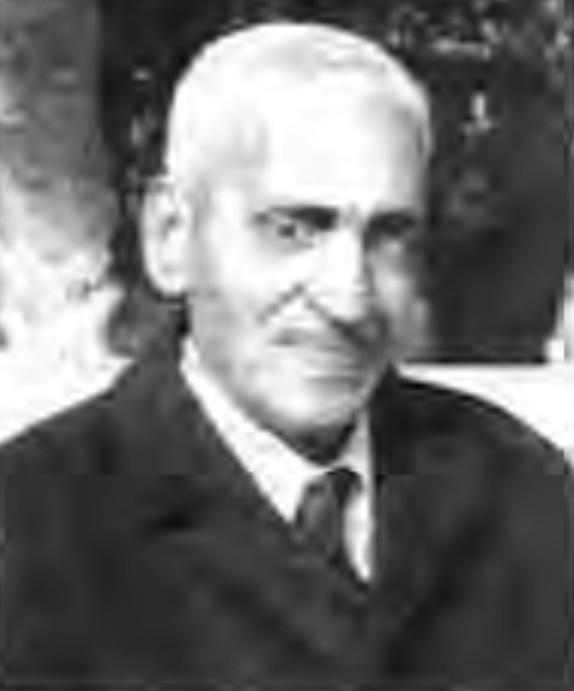
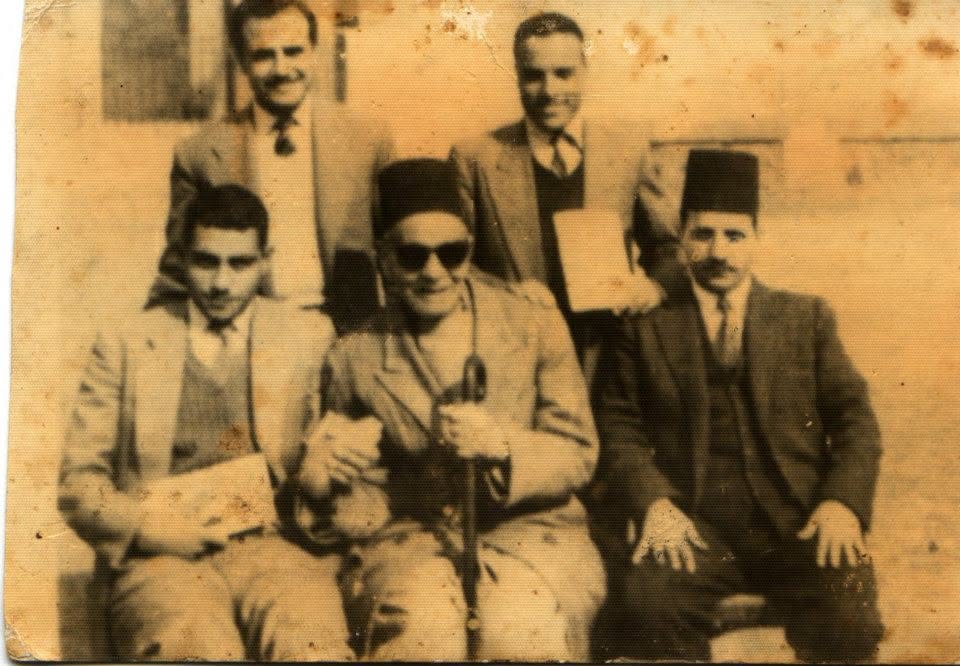
Fahim Girgis Rizk went from a village church to Jerusalem and then to the cathedral of Cairo. A pupil of Mikhail al-Batanuni, he was for half a century the cantor of the Great Church of St. Mark in Azbakiyya, taught the liturgy to the priests that two patriarchs ordained, and recorded the first teaching tape of the liturgy for the churches abroad.1 Laurence Moftah counts him first among the second generation of cantors, “Fahim Girgis Rizk (b. 1910-d. 1999).”2
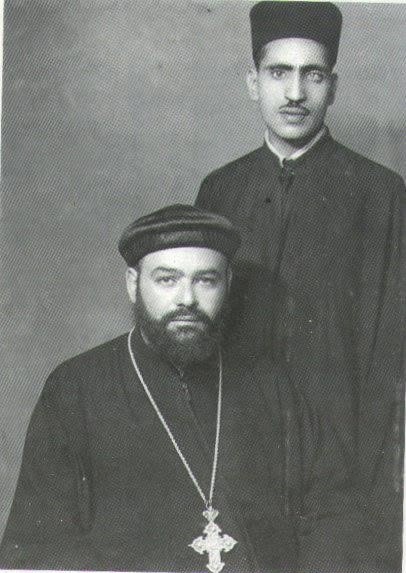
Mit Ghamr
He was born in the Delta in 1910. Fahim Girgis Rizk was born at Mit Ghamr, in Daqahliyya, on 24 November 1910. He went to the Coptic primary school there until the third year, when an eye disease weakened his sight, in 1922, at twelve. In the church of St. George at Mit Ghamr he learned the Psalms, the psalmody, the hymns and the rites from the church’s cantors, Hanna Sulayman, Girgis Gorgi and Wadiʿ ʿAzzuz, and he was made a deacon in 1923. His wish was to master the hymns and rites of the Church so as to serve as a cantor “according to the right tradition.”34
His brother brought him to Mikhail al-Batanuni. His parents had reposed when he was young, and his elder brother Nayruz Girgis took charge of him, brought him to Cairo and enrolled him in the school at Mahmasha, where he studied under Mikhail al-Batanuni from 1922 to 1925.5 Through 1926 he trained as a cantor in churches around Mit Ghamr and Minya al-Qamh; from 1927 he was cantor of St. George’s at Awlila, from 1932 to 1935 of St. George’s at Quwaysna in Menoufia, and early in 1937, for one month, of the Church of the Virgin at Faggala in Cairo.6
Jerusalem
He served eleven years at the Holy Sepulchre. In March 1937 he was appointed cantor of the Coptic church at the Church of the Resurrection in Jerusalem, and went there with his family; in 1938 Metropolitan Theophilus of Jerusalem made him head of the deacons of the see. He stayed until 1948.7 Living among the other Christian churches there, Yusuf Manṣur writes, he learned ancient and modern Greek, and scholars of the language bore witness to his Greek, among them Yassa ʿAbd al-Masih, Fr. Jacob Muyser, the psaltis Demetrios and M. Yanni Psaltopoulos.8
The cathedral in Azbakiyya
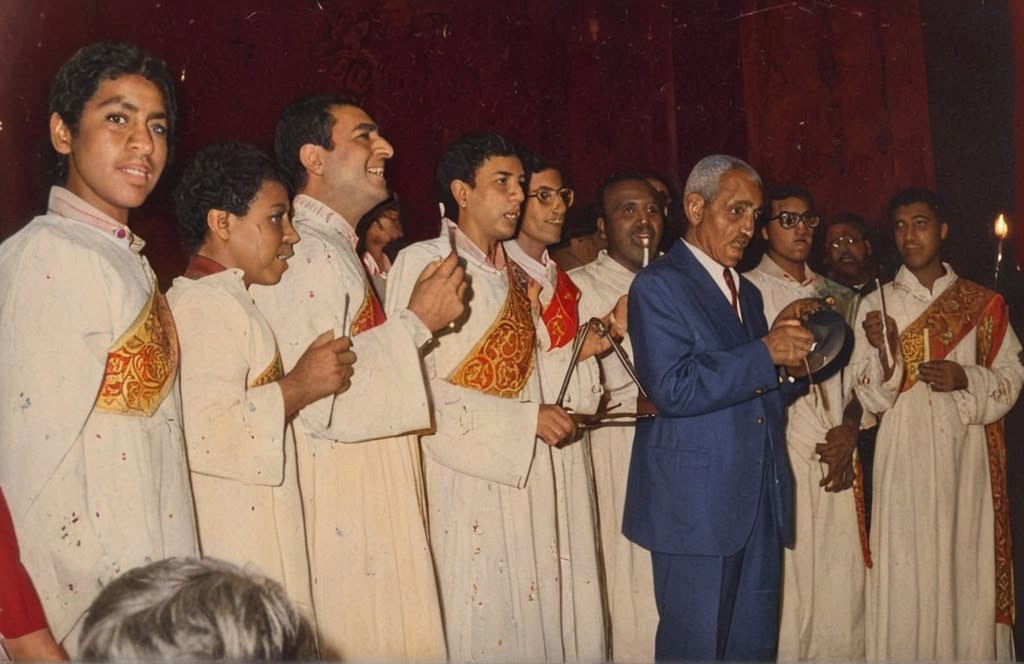
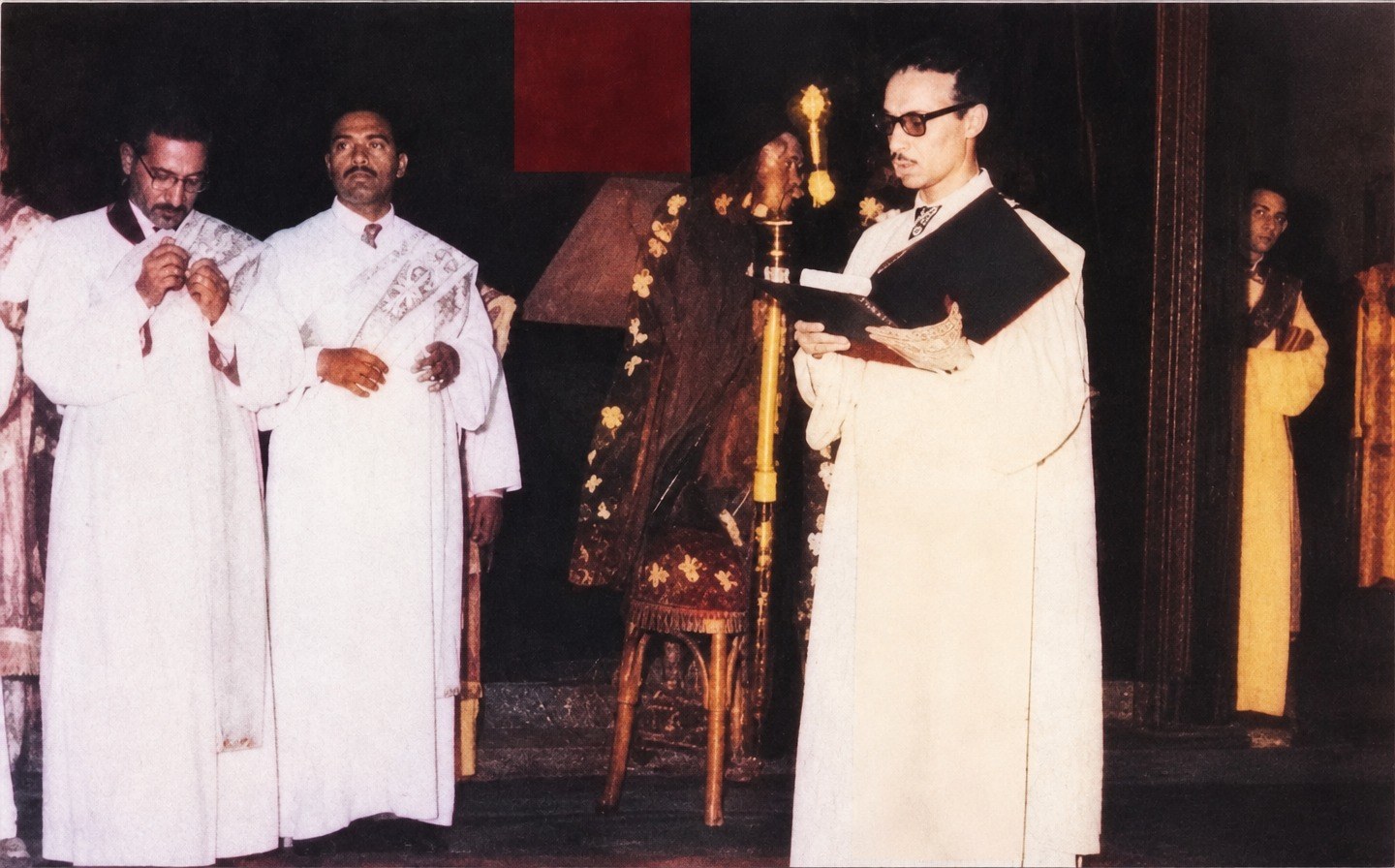
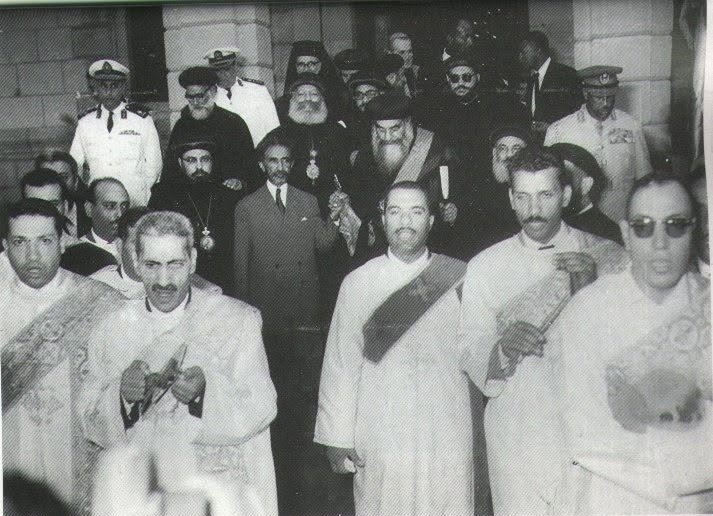
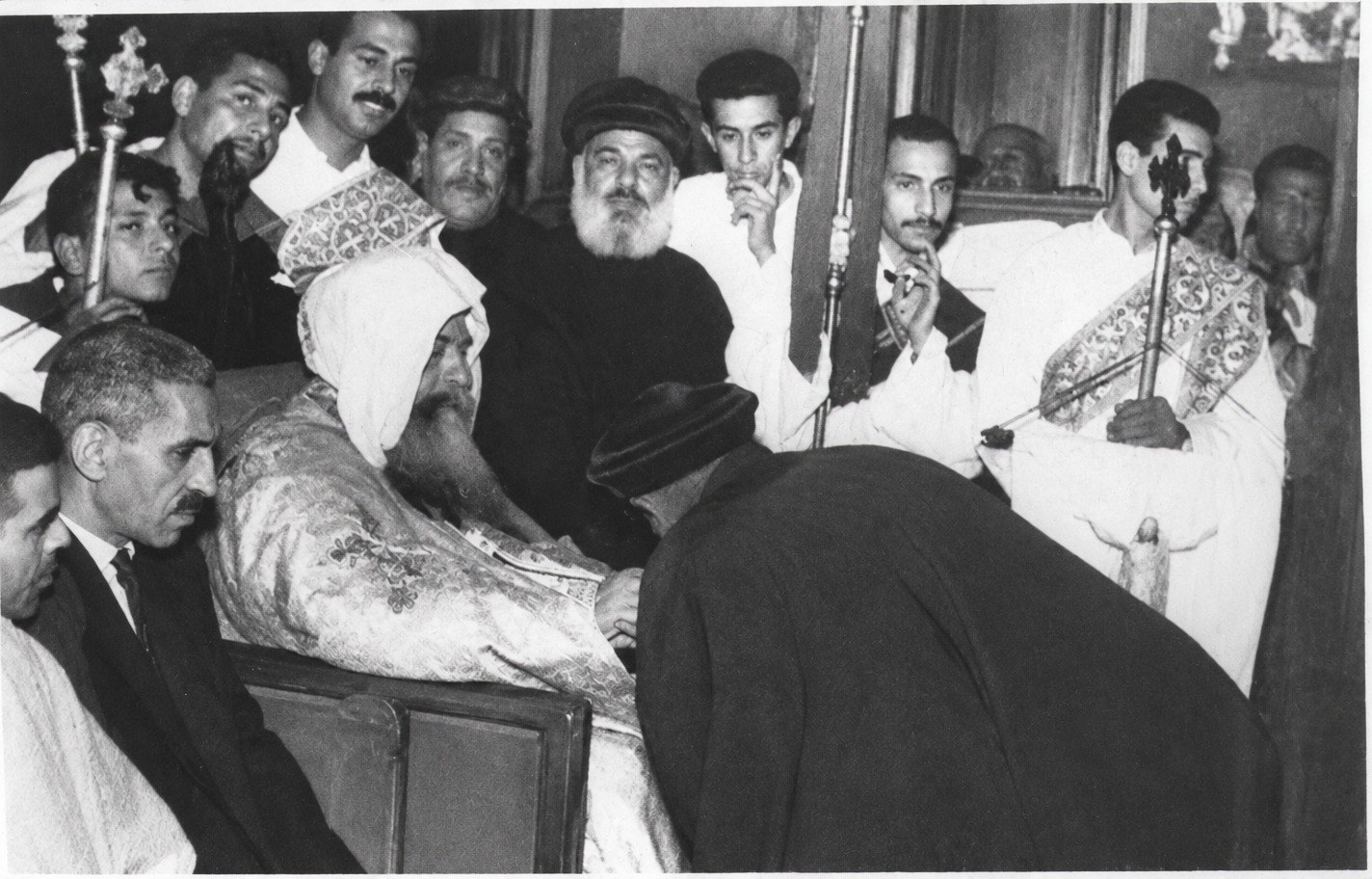
He came back to the patriarch’s church. In October 1948 Pope Joseph II appointed him cantor of the Great Church of St. Mark in Azbakiyya, then the patriarchal cathedral. In that patriarch’s time he and some of the deacons of the church set down the hymns in musical notation and recorded them on discs; he could pick out and play the hymns on the oud with great skill, and he handed the hymns of the church to three generations of deacons.9 Yusuf Manṣur, who wrote his obituary, says that he studied for a long time under Mikhail and after him taught the hymns and the liturgy at the Clerical College for several years; that he had a fine musical ear; that he led the deacons with great skill on the feasts broadcast on radio and at ordinations; and that he had “a rare gift for handing on the hymns and the liturgy.”10 Ramzy names him among Mikhail’s pupils.11
Three patriarchs gave him work to do. Pope Cyril VI asked him to record the first teaching tape of the liturgy for the churches abroad that were then being founded, and in his time Fahim helped to found the League of Cantors of the Coptic Orthodox Church.1213 Pope Shenouda III charged him with teaching the whole of the liturgy to the priests he ordained for Cairo and Alexandria: the new priests went with him to the Monastery of the Syrians in Wadi al-Natrun for their forty days, and when they had gone the monks kept him another week to learn the psalmody from him, which is why, his biographer writes, so many monks of that monastery sing the hymns exactly.14 The Coptic Hymns Guide adds that Shenouda III also sent him to teach the hymns and rites to the monks of the Monastery of St. Mina at Mariout, where he taught them at midday, seated before them at the shrine of Cyril VI, for about three hours.15
He prayed the hymns as he sang them. When he was asked to record hymns for the library of St. Mina’s monastery, he refused to sit and stood throughout. He kept the late fasting liturgies with Cyril VI although he was diabetic; when deacons begged him to take something sweet, he answered, “How can I pray the liturgy having eaten? I will keep the fast, and the Lord can give me health.”16
His repose
He sang at the cathedral until the week he reposed. He lived in a house facing St. Mark’s Church and went to the early daily liturgy there until Tuesday 26 January 1999, when he fell ill. He was taken to hospital on 1 February and reposed on 5 February 1999, at eighty-nine; the funeral was held at the church on 6 February, with five metropolitans and bishops present.1718 He had lived through six patriarchs, from Cyril V to Shenouda III.19 On this site you can hear his recordings.
Photographs
Notes
- Manṣur, al-Kirāza 1999, p. 16. ↩
- L. Moftah, “Scholars of Music”, para. 34. ↩
- Badie, al-Kirāza, 1 Feb. 2008, p. 17, tr. ours. ↩
- Hymns Guide, Fahim Girgis, biography. ↩
- Badie, al-Kirāza, 1 Feb. 2008, p. 17. ↩
- Badie, al-Kirāza, 1 Feb. 2008, p. 17. ↩
- Badie, al-Kirāza, 1 Feb. 2008, p. 17. ↩
- Manṣur, al-Kirāza 1999, p. 16. ↩
- Badie, al-Kirāza, 1 Feb. 2008, p. 17. ↩
- Manṣur, al-Kirāza 1999, p. 16, tr. ours. ↩
- Ramzy, “A Musical Inheritance”, para. 5. ↩
- Manṣur, al-Kirāza 1999, p. 16. ↩
- Badie, al-Kirāza, 1 Feb. 2008, p. 17. ↩
- Badie, al-Kirāza, 1 Feb. 2008, p. 17. ↩
- Hymns Guide, Fahim Girgis, biography. ↩
- Badie, al-Kirāza, 1 Feb. 2008, p. 17, tr. ours. ↩
- Badie, al-Kirāza, 1 Feb. 2008, p. 17. ↩
- Manṣur, al-Kirāza 1999, p. 16. ↩
- Badie, al-Kirāza, 1 Feb. 2008, p. 17. ↩
Sources
- Mina Badie ʿAbd al-Malak, “Min aʿlām murattilī al-kanīsa fī al-qarn al-ʿishrīn alladhīna akmalū al-saʿy,” al-Kirāza 36, nos. 3-4, Cairo, 1 February 2008, p. 17.
مينا بديع عبد الملك، «من أعلام مرتلي الكنيسة في القرن العشرين الذين أكملوا السعي: المرتل فهيم جرجس رزق»، الكرازة، السنة ٣٦، العددان ٣-٤، ١ فبراير ٢٠٠٨ - Yusuf Manṣur, “Niyāḥat kabīr murattilī al-kanīsa al-Murqusiyya bi-l-Azbakiyya,” al-Kirāza 27, nos. 7-8, Cairo, 26 February 1999, p. 16.
يوسف منصور، «نياحة كبير مرتلي الكنيسة المرقسية بالأزبكية»، الكرازة، السنة ٢٧، العددان ٧-٨، ٢٦ فبراير ١٩٩٩ - “al-Muʿallim Fahīm Jirjis Rizq,” Dalīl al-alḥān al-qibṭiyya (Coptic Hymns Guide), 2012.
«المعلم فهيم جرجس رزق»، دليل الألحان القبطية - Carolyn M. Ramzy, “A Musical Inheritance: Coptic Cantors and an Orally Transmitted Tradition,” Library of Congress, cited by paragraph.
- Laurence Moftah, “Ragheb Moftah, Scholars of Music, Sound Engineer, Audio Recording Collection, and the Recording Equipment,” Library of Congress, 2006, cited by paragraph.