

A history of Coptic music from the first churches to the recordings
The music of the Coptic Church has never been written down by the Church itself. Its manuscripts and printed books give the words and the order of the service, and say which tune each hymn is sung to, but not the tune: “There is no known notation now in existence designed specifically for Coptic music.” From the beginning it has passed “from one person to another, from one generation to the next, by oral teaching and rote learning.”1 It is sung by voices alone, by men, with the whole congregation joining in some responses, and small hand cymbals and a triangle accompany certain hymns.2 This page gathers what the sources say about that music across nineteen centuries. The people who carried it, the cantors, have a page of their own.
Where it came from
No one knows what the first Christians in Egypt sang, and scholars have looked for the roots of the chant in three places. The authors of the Coptic Encyclopedia’s article on the music name the Jewish, the Greek and the ancient Egyptian traditions. From the Jewish they point to the Psalter, “the oldest and most venerated song book,” but add that “no specific melodies have been identified as belonging to both traditions.” From the Greek they point to the music theorists of Alexandria. From the Egyptian they point to antiphonal singing, long vocalises on a single syllable, blind professional singers and percussion, all of which the German musicologist Hans Hickmann believed the Copts had inherited, while noting that “much more research needs to be done.”3
Antiphonal singing was known in Alexandria before Christianity. Eusebius, writing about 325, took Philo’s description of the Therapeutae, a community of ascetics near Alexandria, as a picture of the first Egyptian Christians. They “compose songs and hymns to God in every variety of metre and melody,” and when they sang together, “while one sings regularly in time, the others listen in silence, and join in chanting only the close of the hymns.”4 One voice leading and the others answering is still the shape of much Coptic singing.5
The first Christian hymns
The oldest Christian hymn with its music written down was found in Egypt. It is a strip of papyrus from Oxyrhynchus, written in the late third century on the back of a corn account. Its editors, Grenfell and Hunt, called it “by far the most ancient piece of Church music extant.”6 The words are Greek and call on all creation to join “in a chorus of praise to Father, Son, and Holy Spirit,” and the notes are written above them in the Greek letter notation of the time.7 The Coptic Encyclopedia says it “was probably once part of the Coptic repertoire, although it is not known to the church today,” and that its intervals are much wider than those of Coptic music now.8
The teachers of Alexandria wanted the singing plain. Clement of Alexandria, about 200, called the tongue “the psaltery of the Lord” and the one instrument Christians need: “The one instrument of peace, the Word alone by which we honour God, is what we employ.” He allowed the harp and lyre at home but wanted “chromatic harmonies” left “to immodest revels.”9 Athanasius, patriarch of Alexandria, describes a night in 356 when soldiers surrounded his church: “I sat down upon my throne, and desired the Deacon to read a Psalm, and the people to answer, ‘For His mercy endureth for ever.’”10 Augustine heard that Athanasius had the reader of the psalm sing it “with so slight an inflection of voice, that it was more like speaking than singing.”11
From the fourth century the Church in Egypt had singers as an order of its own. The Canons of Athanasius, a church order its editor dates between 350 and 500,12 count seven orders in the church: “bishops and presbyters and deacons and halfdeacons and readers and singers and doorkeepers.”13 The singers were to sing nothing but the Psalms, “and shall likewise teach others without grudging to sing, that God may make His dwelling in the whole people.”14 The bishop was to test the readers and singers often.15 The Arabic Canons of Basil, another church order of the Coptic Church, say the psalmists are blessed at the bishop’s command rather than ordained, and that those who sing the psalms at the altar must sing “not with pleasure but with wisdom,” while “the congregation shall answer after all the psalms with strength.”16
The monks
The desert monasteries of Egypt gave the whole Church its pattern of psalm singing. John Cassian, who lived among the Egyptian monks about 400, describes their night office: they sat, “as is still the custom in Egypt,” while one of them “rose up in the midst to chant the Psalms to the Lord,” eleven psalms “verse after verse being evenly enunciated,” and the twelfth ending “with a response of Alleluia.”17 The Coptic Encyclopedia adds that the Egyptian recitation of twelve psalms “was almost certainly the basis of the similar twelve-psalm series in the Gallic and Roman churches.”18 Not every monk approved of singing. Abba Silvanus felt that it “hardened the heart” and belonged outside the monasteries, and Abba Pambo was another who deplored it.19
The Church’s own memory puts the origin of its melodies in the desert. In 1672 the Copts told the traveller J. M. Vansleb that their chant had been invented by a holy man, once a potter, who became a monk in the Monastery of St. Macarius.20 The same story is told of the melodies of the Theotokia: a potter “who became a monk in the desert of Scetis,” whom one scholar has identified as Simeon the Potter, a Syrian poet of the early sixth century.21
A Church apart
After the Council of Chalcedon in 451 the Copts kept their worship to themselves. What that meant for the music is unknown, but the Coptic Encyclopedia finds signs that it stayed apart from the Byzantine: the History of the Patriarchs records the people rejoicing when Patriarch Isaac (686-689) restored their liturgies in churches from which they had been barred, and the monks of St. Macarius going out to meet an exiled patriarch “singing their traditional sacred songs.” Where Coptic and Greek churches share a text, as in the Trisagion and “The Only-Begotten,” the melodies are “entirely different.”22
The Arab conquest changed the language of the Copts but not their chant. Coptic stayed in general use in the church into the eleventh century, and Cyril II (1078-1092) still said the whole liturgy in Coptic. Manuscripts from the seventh century to the nineteenth keep the texts of the old hymns “in Greek, Greco-Coptic, and Coptic with little or no alteration,” and the Encyclopedia takes it that the music was kept as carefully. Where Arabic came in, “this did not seem to change the basic elements of the music.”23 A few Coptic manuscripts of the tenth or eleventh century carry signs that no one has yet read, which some scholars take for a lost system of notation.24 Why Coptic gave way to Arabic is told in how Coptic stopped being spoken.
The medieval writers
Three Copts of the thirteenth and fourteenth centuries wrote about the Church’s music. Abū Isḥāq ibn al-ʿAssāl gave a chapter of his Foundations of Religion to the growth of music in the church; Ibn Sibāʿ described the music of the services in The Precious Pearl; and Ibn Kabar, in The Lamp of Darkness, listed the melodies known to the church in Egypt. “Although he reported certain local variations in the order and choice of alḥan, the names of the songs and practices he discussed are virtually the same today.”25 Ibn Kabar named some twenty-six melodies, “most of which are still known today.”26
They asked for singers who could move a congregation. Ibn Sibāʿ, writing in Egypt toward the end of the thirteenth century,27 says of the one who chants:
وان كان مرتّلًا فليكن بصوت شجيّ ليحبّب الناس في الايمان كفيليمون الذي كان اذا تكلّم بترتيل تتساقط الاصنام من النغم الذي فيه وشجا صوته
If he chants, let it be with a moving voice, to make the people love the faith, like Philemon, at whose chanting the idols fell from the melody in it and the pathos of his voice.28
The reader, he says, sings from a raised place in the middle of the church whatever suits the day, a feast of the Lord or of a martyr.29 The Synaxarion remembers Patriarch Mark II (799-819) as one who “charmait par la beauté de son chant” (charmed all who heard him by the beauty of his chanting).30
They also described eight modes, which the Copts may never have used. Ibn al-ʿAssāl and Ibn Kabar set out a scheme of eight melody types like the Byzantine Octoechos, each suited to a mood: the first and fifth for joyful feasts, the second and sixth for times of humility such as Holy Week, the third and seventh for funerals, the fourth and eighth to lift the heart. But Ibn Kabar never mentions them again, “nor are they known or mentioned elsewhere in Coptic church music,” and whether they were ever “actually put into practice by Coptic musicians is an open question.”31
The poems kept the names of their tunes, but not the tunes. Medieval Coptic poems often name at their head the melody they were sung to, by the first words of a song everyone knew; about fifty such tunes are named in the surviving poetry, but “no actual tunes have come down to us.” In the Triadon of 1322 rhyme appears for the first time throughout a Coptic poem, “almost certainly under Arabic influence.”32
The melodies and the books
The Coptic unit of melody is the laḥn. The word is Arabic, and the Encyclopedia warns that “tone,” “air” or “melody” each miss part of it: a laḥn is “a certain melody or melody-type which is readily recognized by the people and known by a specific, often descriptive name.” The same text may be sung to different alḥān and the same laḥn carries different texts, and one laḥn may come in a short, an abridged and a long form. The two most often named are Adam and Batos, sung from Sunday to Tuesday and from Wednesday to Saturday, in the evening and in Holy Week. Some names point to places: Idribi may come from Atribi near Sohag, and Sinjari from Sinjar, near Rosetta.33 Adam takes its name from the first words of Monday’s Theotokion, “Adam again being sad,”34 and Batos, also called Watus, from the opening words of Thursday’s.35 Idribi is the mournful tone of Holy Week: from Palm Sunday through Good Friday “all prayers, readings, and chants are delivered in a mournful, subdued tone.”36
Each season of the year has its own melodies. Magdalena Kuhn sorts them by occasion rather than by mode: the annual melody (al-sanawī), the joyful one for feasts, weddings and baptisms (al-farāyḥī), the melodies of Kiyahk in Advent, of the fasts (al-ṣiyāmī), of Palm Sunday and the feasts of the Cross (al-shaʿānīnī), and the mournful melody of the week before Easter (al-ḥazāyinī).37 A melody opens with a fixed phrase that tells an experienced singer at once which melody and which feast it is; within it, a long vocalise on one vowel of an important word can last from one minute to twenty.38
The services are built from a few kinds of hymn. The Psalmody is “usually sung antiphonally,” by the two choirs that stand to the north and the south of the iconostasis and take four verses each in turn, though one voice and the congregation sometimes alternate instead; only in the monasteries is it sung every day.3940 An essential part of it is the Theotokia, seven sets of hymns to the Virgin, one for each day of the week; except on Sunday each ends with a lobsh, a “crown,” sung to Adam on Monday and Tuesday and to Watus from Wednesday to Saturday. In most churches all seven are now sung together with the Four Odes on Saturday night, which the Church calls “seven and four.”4142 The day’s laḥn governs the rest: the Theotokion of the day, its psali, the lobsh and the Difnar go to Adam on the days of Adam, while the third Ode, its psali and the doxologies are sung to Watus every day of the week.4344
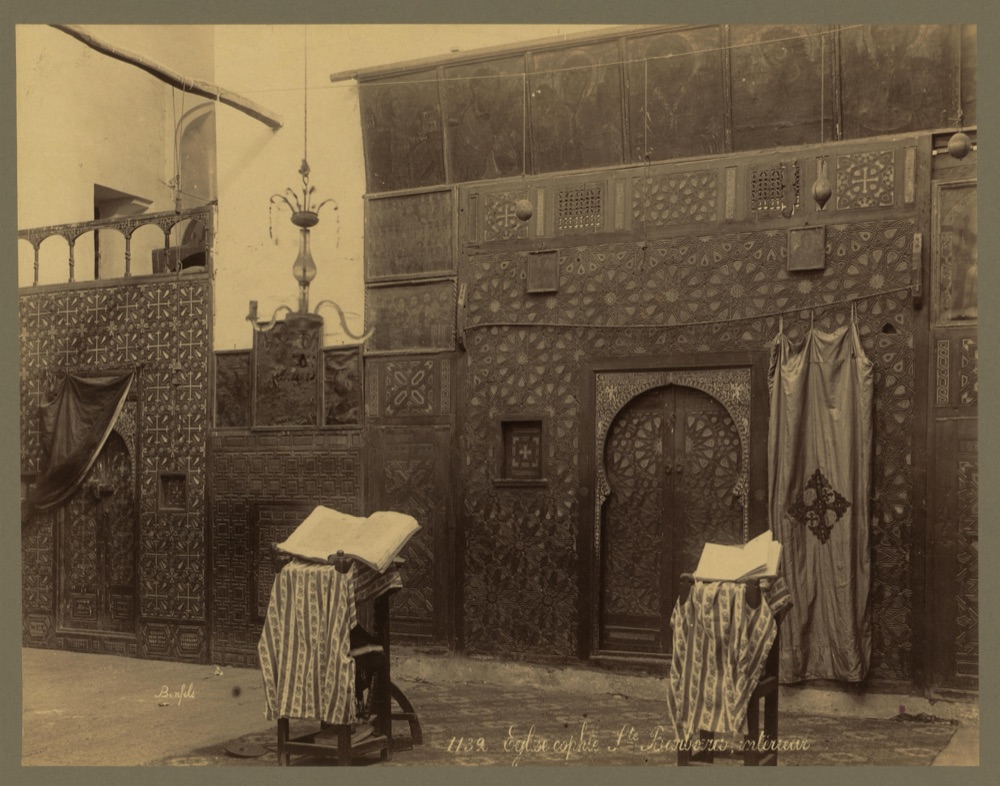
Vansleb heard the same names in 1672. The chant, he wrote, “est de huit différens tons, qu’ils changent selon la diversité des Fêtes, & des temps de l’année” (is in eight different tones, which they change with the feasts and the seasons of the year),45 and among them he lists the tone Adam, the tone Batos, the tone Sengari, the tone of Kiyahk and the tone Idribi. “Ils se servent ordinairement du ton Adam, les trois premiers jours de la semaine; & du ton Vates, les autres” (they usually use the tone Adam for the first three days of the week, and Batos for the rest).46 Three hundred years later the Coptic Encyclopedia describes the same rule.47
The words were kept in books; the tunes were kept in people. The Psalmodia, the night service of praise sung before the offering of incense, has its own book, and another for the month of Kiyahk.48 Vansleb knew both the Difnar, with “les Hymnes des Saints, & des Martyrs,” and “le livre des Psalmodies, & des Theodokies.”49 The oldest manuscript with Difnar hymns dates from 893.50 None of these books gives a note of music. They name the laḥn of each hymn and leave the rest to the singer who knows it.51
What travellers heard
European visitors found the chant long, strange and hard to follow, and said so. Vansleb called it “assez bizarre, fort long, & fort ennuyant” (rather strange, very long and very tedious), and found no instrumental music in the churches, only small bells, or little rods of ebony struck with small hammers.52 G.-A. Villoteau, the musician of Napoleon’s expedition, was harsher. He saw the Copts sing “pendant un quart d’heure” on a single vowel, “et il n’est pas rare de les voir prolonger pendant plus de vingt minutes leur chant sur le seul mot alleluia” (and it is not rare to see them draw out their chant for more than twenty minutes on the single word alleluia).53 He brought “un des plus habiles chanteurs Qobtes” (one of the most skilful Coptic singers) to his house to learn the chant, and was told there were ten different tones.54 He printed an alleluia in Western notation, the first Coptic melody ever written down that way.5556
They disagree about the cymbals. Villoteau, in 1809, says the cymbals were used only by the Coptic Catholics, and that the instruments of the Orthodox Copts did not accompany the chant but only announced the parts of the service.57 Edward Lane, in Cairo in the 1830s, saw “cymbals of various sizes and notes” beaten during the liturgy,58 and A. J. Butler in 1884 wrote of “the wild and somewhat barbaric clash of cymbals, which accompanies the chanting in every ancient church of Egypt.”59 Today the cymbals and the triangle accompany the hymns the rubrics mark for them.60
Lane saw how the chant was learned. Coptic boys, he wrote, were taught the Psalms, the Gospels and the Epistles in Arabic and then in Coptic, but not the language itself, “and there are very few persons who can do more than repeat what they have committed to memory, of the Scriptures and Liturgy.”61 Boys served in the choir “as acolytes and singers,”62 and the chanting, he noted, was “nearly in the same manner as the Moos’lims in reciting the Ckoor-a’n.”63 The Coptic Encyclopedia allows “some traces of similarity” between the two but says “it would be impossible to say who borrowed and who lent.”64
The nineteenth century
In the 1850s the patriarch set out to fix the chant, and it has been taught from Cairo ever since. Cyril IV, finding that “the music and texts had often been rendered incorrectly by untrained and/or careless cantors,” made a blind young teacher, Abuna Takla, teacher of the hymns.65 In 1859 Takla published The Services of the Deacon, which sets out for the whole year which hymn is sung when and to which laḥn, and marks where the cymbals play. It has been the deacon’s handbook ever since.66 The same years saw the pronunciation of Coptic reformed, which is told in how the reading was reformed, and the line of cantors that runs from Takla to the twentieth century is followed in the cantors and the oral tradition.
At the end of the century the first attempts were made to write the music down. Jules Blin printed the people’s and deacon’s chants in staff notation in Cairo in 1888, and Louis Badet published another collection in 1899; the Encyclopedia judges Blin’s “unreliable” and Badet’s “fairly accurate as to the general scheme of the melodies.” In 1916 Kamil Ibrahim Ghubriyal, an officer in the Egyptian army, published the first transcriptions by a Copt, arranged for piano for the young.67
Ragheb Moftah
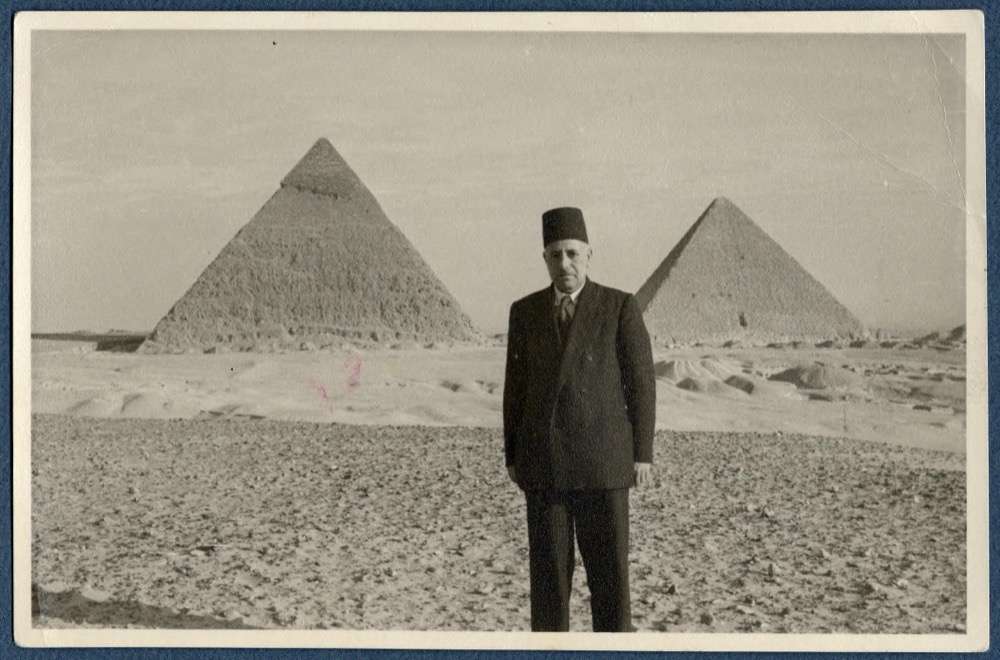
The man who saved the chant for the century of recordings was a layman trained in agriculture. Ragheb Moftah was born in Cairo on 21 December 1898.68 He went to Germany in 1919 and studied agriculture in Bonn for four years.69 ʿIryān Muftāḥ, the teacher of Coptic who helped Abuna Takla with The Services of the Deacon in 1859, was his great-uncle.70 He gave the rest of his long life to the Church’s music, and headed the music department of the Institute of Coptic Studies from 1954 until he reposed on Monday 18 June 2001, in his 103rd year.7172 His life is told in full on his own page.
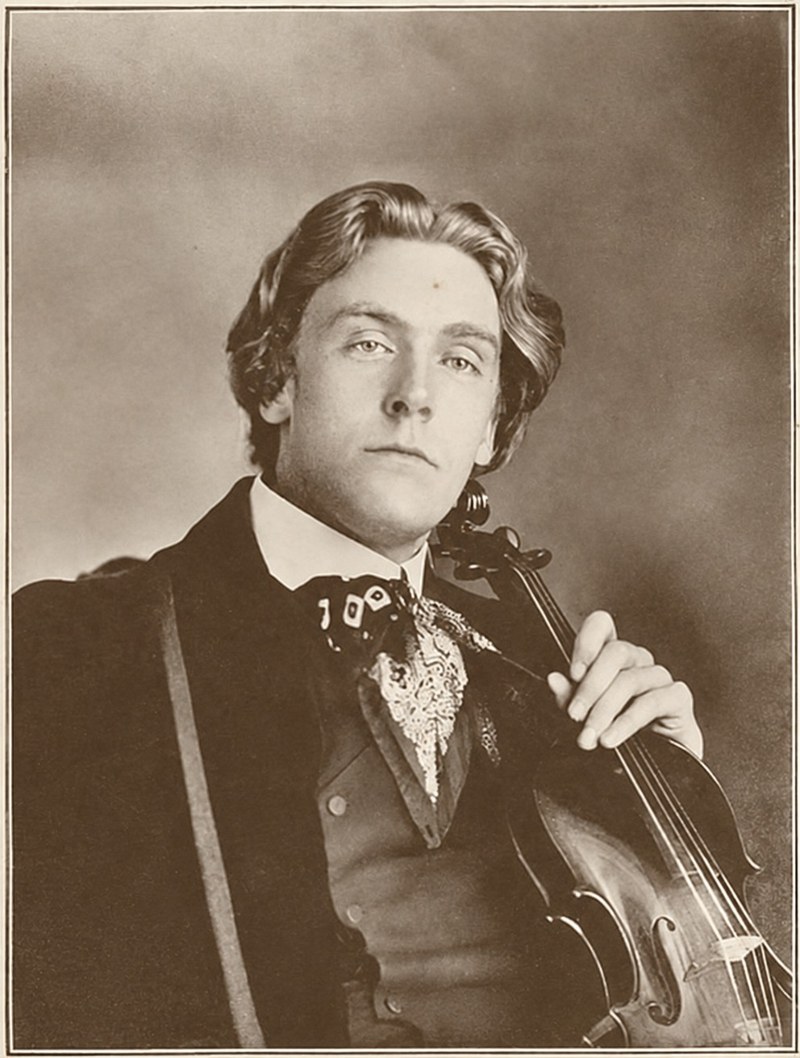
He began by having the music written down. In 1926 he met Ernest Newlandsmith, an English violinist and composer; the two men later told different stories of how.73 On 5 May 1927 they agreed in Cairo that Newlandsmith would compile “a book on Ancient Egyptian Music.”74 Moftah brought him to Cairo, and there, living on a houseboat on the Nile as Moftah’s guest, Newlandsmith took down the music as the cantors sang it “hour after hour, day after day,” chief among them the blind master cantor Mikhail Girgis al-Batanuni.75 Moftah dated the work from 1928 to 1933,76 and by 1934 it filled sixteen bound volumes,77 the whole Liturgy of St. Basil among them.78 He wrote down the bare line and left out most of the ornament, which he thought “an appalling debris of Arabic ornamentation,”79 so his volumes show the skeleton of the melodies, not the way they were sung.80 When a cantor on the houseboat asked whether it was safe to take the music to Europe, al-Batanuni answered: “Do not fear my brother, no one in Europe could possibly sing it!”81
The first recordings
The first recordings of Coptic chant were made in Cairo in 1932. That year the Egyptian government held a Congress of Arab Music, attended by Béla Bartók and Paul Hindemith among others,82 and Moftah was the secretary of its recording commission. Twelve cylinders of Coptic chant were recorded; two broke on the way to London, and the other ten were issued on disc by His Master’s Voice. Martha Roy, who worked with Moftah for decades, calls them “les premiers enregistrements de musique copte” (the first recordings of Coptic music).83 Al-Batanuni led them, with the choir of the Theological Seminary.84
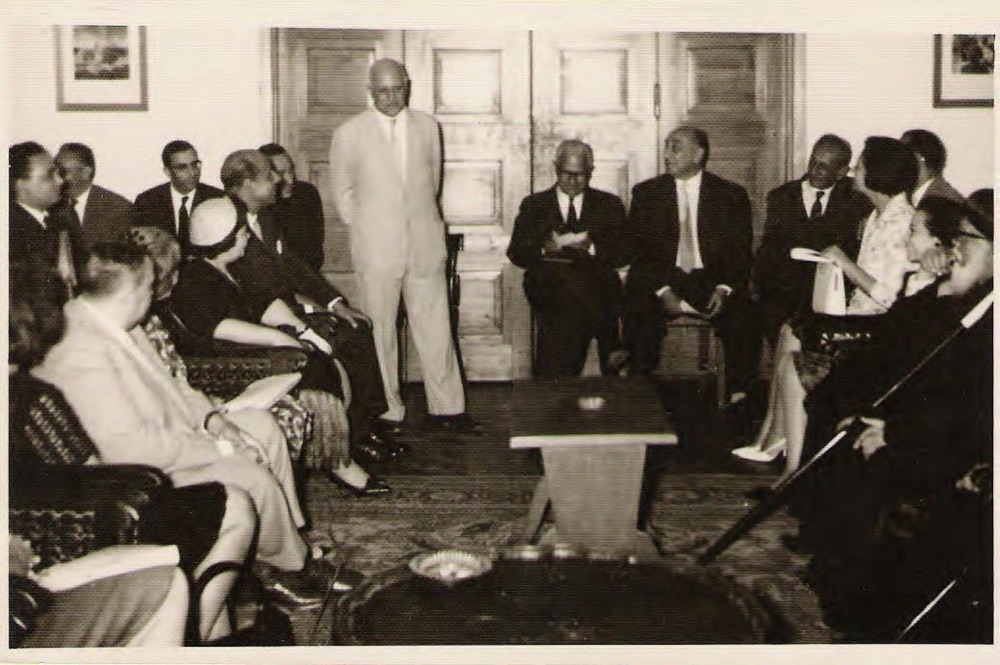
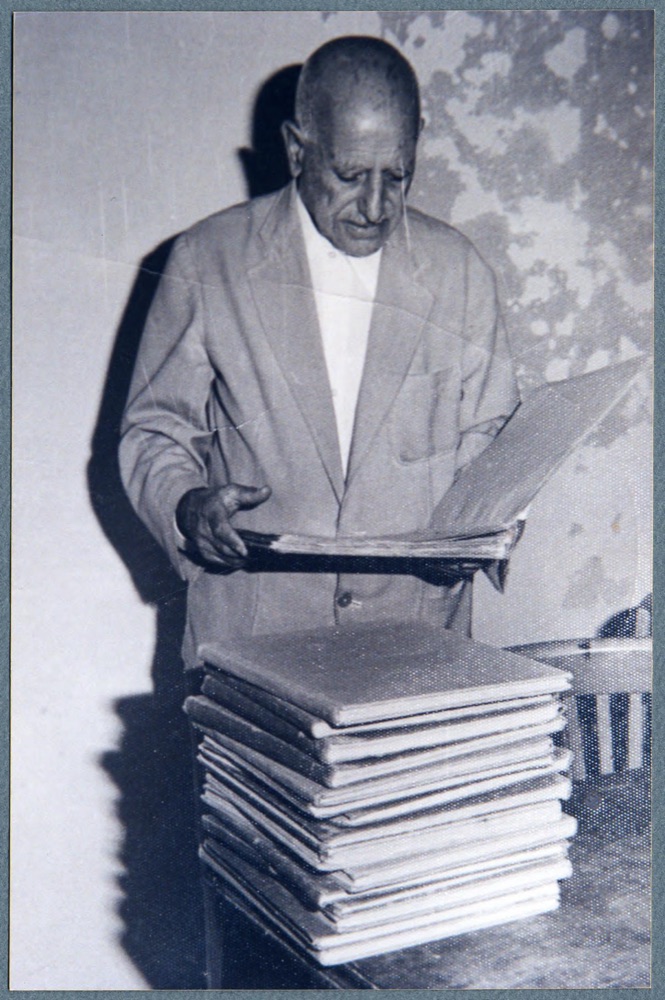
Then he recorded the whole tradition. He formed his first Coptic choir in 1940, and in 1945 opened two centres in Cairo to teach the chant, with summer camps in Alexandria.85 Sulayman Nasim, writing in 1958, says Moftah had been recording the hymns “منذ سنة ١٩٢٧” (since 1927) for nearly a third of a century, “حتى تمكن من تسجيلها جميعا تقريبا” (until he had recorded almost all of them), at a cost of some seven thousand pounds, and that the tapes numbered in the hundreds. He had each liturgy recorded more than once, by cantors and deacons who had learned it from al-Batanuni, until they had it right. Moftah said of al-Batanuni that “كان هو الواسطة الوحيدة في تسليم هذه الألحان إلينا” (he was the one channel through which these hymns were handed down to us).86 The recordings of al-Batanuni now in the Library of Congress date from 1940 to 1957.87 For the Liturgy of St. Gregory, Moftah said, the need was urgent: it was “going to be lost unless I did record it several times from Mlm. Mikhail who was the only one to have known it complete.”88
The Institute of Coptic Studies
In 1954 the work found a home. The Community Council founded the Higher Institute of Coptic Studies “with a modest budget” on 21 January 1954, with Aziz S. Atiya as its president. Of all its sections, Atiya wrote, two “have flourished on their own self-sustaining resources”: the section of Coptic art under Isaac Fanous, and the section of Coptic music under Ragheb Moftah.89 “Before Master Mikhail’s decease,” Atiya noted in 1960, the music section “completed his entire recording on tapes.”90 Al-Batanuni, then eighty-one, became its first professor of liturgical chant,91 and Moftah also taught the hymns to the students of the Clerical College next door, who would become priests. Every summer he took his best pupils to Alexandria to go over what they had learned and correct “their intonation and language.” “All instruction is done by rote, with the students repeating the melodies until they become note perfect.”92
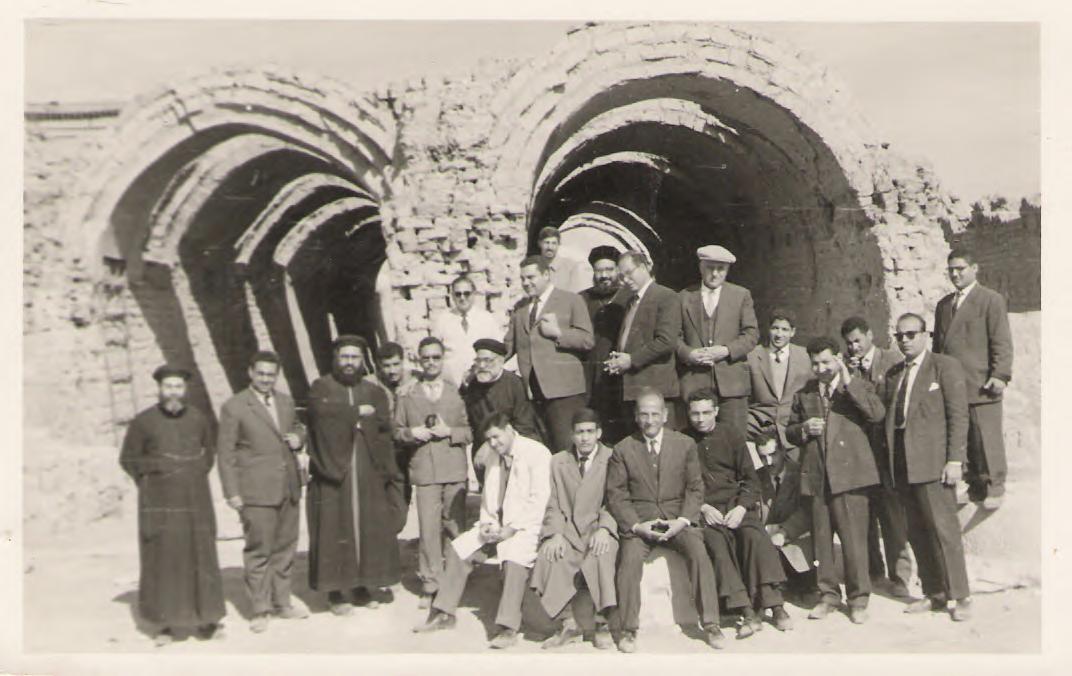
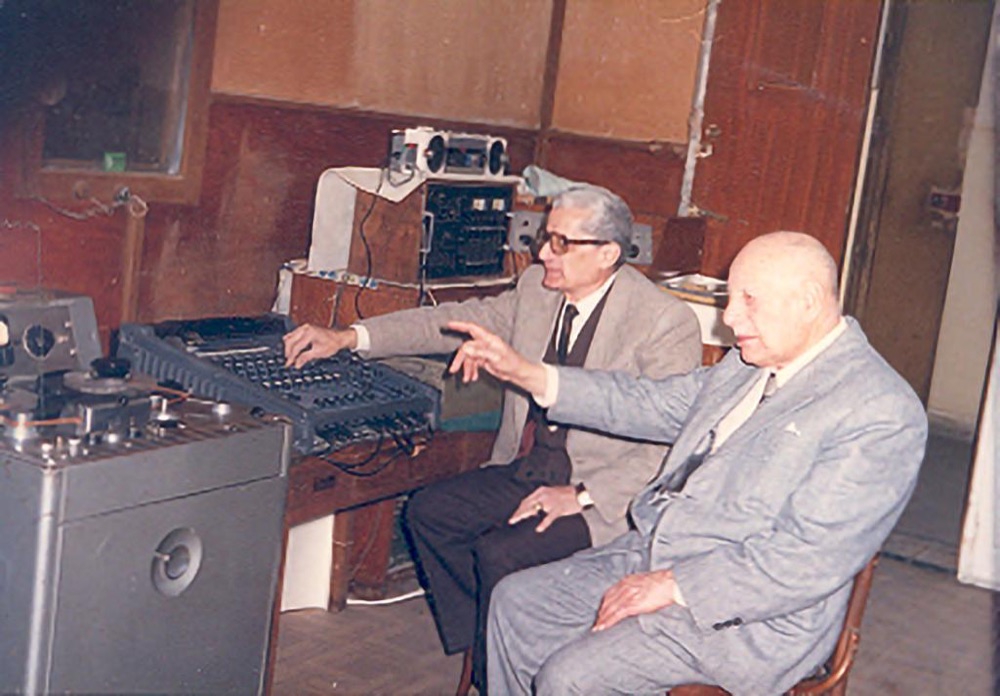
The Institute recorded the services one after another. A studio was built there, and Moftah’s singers, chosen for their voices, recorded the liturgy, the feasts and the other services.93 The Coptic Encyclopedia lists the recordings issued under his editing: selections from the Liturgy of St. Basil (1955), the complete Liturgy of St. Basil (1965), the Liturgy of St. Basil sung by Muʿallim Ṣadiq ʿAttallah (1968), Holy Week (1972), the Feast of the Resurrection (1974), the evening and midnight praises (1976 and 1978), the hymns for the patriarch and bishops (1980), and the Liturgy of St. Gregory, the marriage service and the doxologies (1984).94 In 1990 the Institute’s hymns section issued them on cassette “from originals going back to Muʿallim Mikhail Girgis,” to unify the hymns in every church.95 The department’s history is told in the Institute of Coptic Studies, and what it meant for the cantors in the cantors and the oral tradition.
The scholars and the transcriptions
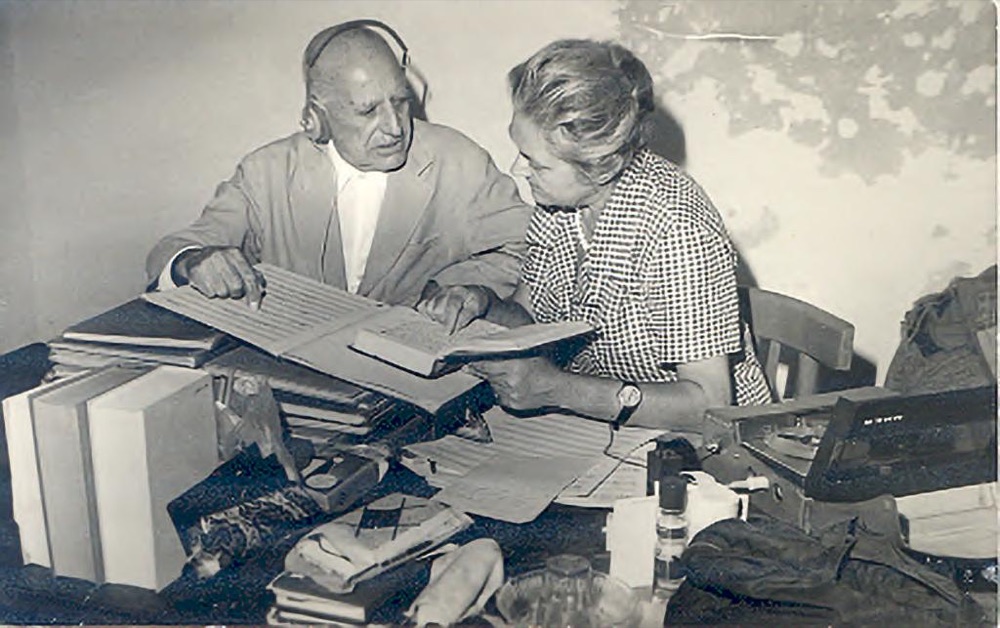
Recording made it possible to study the ornament for the first time. Earlier transcribers could not play back what they had heard. From the 1950s Hans Hickmann and René Ménard worked from tape, and Ménard, by slowing it down, could write the embellishments “with more exactitude than had been possible before.” The Hungarian Ilona Borsai came in 1967 to record and study the chant, and in 1969 Margit Tóth came to Cairo and, working from Moftah’s recordings, took down the whole Liturgy of St. Basil with every ornament she could hear.96 Martha Roy says she worked from a recording by al-Batanuni’s pupils;97 the Library of Congress names the cantors Ṣadiq ʿAttallah and Farag ʿAbd al-Masih.98 It was published with Moftah and Martha Roy by the American University in Cairo Press in 1998.99 The work took three decades; Tóth’s care for every ornament made her score “highly complicated for even trained musicians” to perform, while Marian Robertson’s transcriptions for the Coptic Encyclopedia kept only the outline of the melody and are “much simpler.”100
The recordings also let scholars ask how faithful the oral tradition had been. Marian Robertson compared transcriptions of the same pieces made decades apart, and recordings made years apart at the Institute. The basic melodies had not changed, and “even the embellishments, though varying slightly, occur in the same places,” most of all in the pieces sung by the choir; the solo singers vary more, “particularly in the embellishments and melismata, as may be expected.”101 Comparing melodies written down in 1916 with those sung in the late 1990s, she concluded that “the basic melodies have remained constant with no change for one hundred years.”102
The collection is now in Washington. Between 1991 and 2001 Moftah and his family gave his papers, Newlandsmith’s volumes and the tapes to the Library of Congress,103 which describes the collection as documenting his “75-year career” and holds his recordings of al-Batanuni and the Institute choir.104 Copies of many of his recordings circulate on Coptic websites, this one among them.105
The music today
The chant is still learned by ear. The Church never adopted a written notation. The historian of its transmission Nicholas Ragheb notes that even Tóth’s transcription “never recognized as authoritative” as a model for singing, and that what serves instead are recordings: first the cassettes of particular priests and cantors sold at church bookshops from the 1970s, then the internet, which made collections like this site places where “laypeople, mu‘allimūn, and clergy” go to hear how a hymn should be sung.106 The recordings did what no notation had done: they let one way of singing be heard everywhere. Whether that was a gain or a loss, and for whom, is taken up in the cantors and the oral tradition.
Old local ways survive in the monasteries. At Dayr al-Muharraq the hymns are called luḥūnāt rather than alḥān, and the monks keep “some oral traditions that had never been recorded before and are unique to this monastery.” The monastery long kept Greek in its services; its Kiyahk ode and its hymn for the eve of the Nativity have stanzas in Greek and in Sahidic Coptic.107
Notes
- Moftah, Robertson, Roy and Tóth, “Music, Coptic”, vol. 6, “The Oral Tradition”. ↩
- Moftah, Robertson, Roy and Tóth, “Music, Coptic”, vol. 6, “Description of the Corpus”. ↩
- Moftah, Robertson, Roy and Tóth, “Music, Coptic”, vol. 6, “History: Possible Sources and Antecedents”. ↩
- Eusebius, Church History, II.17, pp. 118-119. ↩
- Moftah, Robertson, Roy and Tóth, “Music, Coptic”, vol. 6, “Description of the Corpus”. ↩
- Oxyrhynchus Papyri XV, no. 1786, p. 21. ↩
- Oxyrhynchus Papyri XV, no. 1786, p. 22. ↩
- Moftah, Robertson, Roy and Tóth, “Music, Coptic”, vol. 6, “History: Possible Sources and Antecedents”. ↩
- Clement, Paedagogus, II.4, pp. 248-249. ↩
- Athanasius, Defence of his Flight, § 24, p. 263. ↩
- Augustine, Confessions, X.33, p. 156. ↩
- Canons of Athanasius, p. xiv. ↩
- Canons of Athanasius, p. 20. ↩
- Canons of Athanasius, § 59, p. 39. ↩
- Canons of Athanasius, § 18, p. 28. ↩
- Canons of Basil, canons 48 and 97, pp. 262, 274-275, tr. ours. ↩
- Cassian, Institutes, II.5, p. 207. ↩
- Moftah, Robertson, Roy and Tóth, “Music, Coptic”, vol. 6, “History: From the Beginning of the Church to the Council of Chalcedon”. ↩
- Moftah, Robertson, Roy and Tóth, “Music, Coptic”, vol. 6, “History: From the Beginning of the Church to the Council of Chalcedon”. ↩
- Vansleb 1677, p. 57. ↩
- Moftah, Robertson, Roy and Tóth, “Music, Coptic”, vol. 6, “Description of the Corpus”. ↩
- Moftah, Robertson, Roy and Tóth, “Music, Coptic”, vol. 6, “History: After the Council of Chalcedon”. ↩
- Moftah, Robertson, Roy and Tóth, “Music, Coptic”, vol. 6, “History: After the Arab Conquest”. ↩
- Moftah, Robertson, Roy and Tóth, “Music, Coptic”, vol. 6, “History: After the Arab Conquest”. ↩
- Moftah, Robertson, Roy and Tóth, “Music, Coptic”, vol. 6, “History: After the Arab Conquest”. ↩
- Moftah, Robertson, Roy and Tóth, “Music, Coptic”, vol. 6, “Description of the Corpus”. ↩
- Ibn Sibāʿ, p. 593. ↩
- Ibn Sibāʿ, ch. XLIV, p. 739, tr. ours. ↩
- Ibn Sibāʿ, ch. XLV, p. 740. ↩
- Basset, Synaxaire, p. 322 [964], tr. ours. ↩
- Moftah, Robertson, Roy and Tóth, “Music, Coptic”, vol. 6, “History: After the Arab Conquest”. ↩
- Kuhn, “Poetry”, vol. 6, pp. 1985-1986. ↩
- Moftah, Robertson, Roy and Tóth, “Music, Coptic”, vol. 6, “Description of the Corpus”. ↩
- Ishaq, “Adam”, vol. 1, p. 63. ↩
- Ishaq, “Watus”, vol. 7, pp. 2320-2321. ↩
- Basilios, “Holy Week”, vol. 4, pp. 1251-1252. ↩
- Kuhn, “Coptic Melodies”, “Modus or Formulae”. ↩
- Kuhn, “Coptic Melodies”, “Modus or Formulae”; “Melody Styles”. ↩
- Ishaq, “Psalmodia”, vol. 6, pp. 2024-2025. ↩
- Basilios, “Antiphon”, vol. 1, pp. 148-149. ↩
- Ishaq, “Theotokion”, vol. 7, pp. 2254-2255. ↩
- Ishaq, “Lobsh”, vol. 5, p. 1479. ↩
- Ishaq, “Adam”, vol. 1, p. 63. ↩
- Ishaq, “Watus”, vol. 7, pp. 2320-2321. ↩
- Vansleb 1677, p. 57. ↩
- Vansleb 1677, p. 58. ↩
- Moftah, Robertson, Roy and Tóth, “Music, Coptic”, vol. 6, “Description of the Corpus”. ↩
- Moftah, Robertson, Roy and Tóth, “Music, Coptic”, vol. 6, “Description of the Corpus”. ↩
- Vansleb 1677, p. 62. ↩
- Moftah, Robertson, Roy and Tóth, “Music, Coptic”, vol. 6, “Description of the Corpus”. ↩
- Moftah, Robertson, Roy and Tóth, “Music, Coptic”, vol. 6, “Description of the Corpus” and “The Oral Tradition”. ↩
- Vansleb 1677, pp. 56-57. ↩
- Villoteau, p. 755. ↩
- Villoteau, pp. 755-756. ↩
- Villoteau, p. 756. ↩
- Moftah, Robertson, Roy and Tóth, “Music, Coptic”, vol. 6, “Transcriptions in Western Notation”. ↩
- Villoteau, pp. 1008-1009. ↩
- Lane, p. 322. ↩
- Butler 1884, p. 82. ↩
- Moftah, Robertson, Roy and Tóth, “Music, Coptic”, vol. 6, “Musical Instruments”. ↩
- Lane, p. 318. ↩
- Lane, p. 320. ↩
- Lane, p. 321. ↩
- Moftah, Robertson, Roy and Tóth, “Music, Coptic”, vol. 6, “History: After the Arab Conquest”. ↩
- Moftah, Robertson, Roy and Tóth, “Music, Coptic”, vol. 6, “Cantors, Their Role and Musical Training”. ↩
- Moftah, Robertson, Roy and Tóth, “Music, Coptic”, vol. 6, “Description of the Corpus”. ↩
- Moftah, Robertson, Roy and Tóth, “Music, Coptic”, vol. 6, “Transcriptions in Western Notation”. ↩
- Library of Congress, Moftah finding aid, p. 3. ↩
- Stock 2008, p. 84. ↩
- Ramzy, “A Musical Inheritance”, para. 3. ↩
- Library of Congress, About this Collection, para. 2. ↩
- al-Kirāza 2001, Moftah’s repose, p. 1. ↩
- Ramzy, Timeline of Coptic Music, s.v. 1926. ↩
- Moftah papers, Library of Congress, agreement of 5 May 1927, ihas.200155832. ↩
- Moftah, Robertson, Roy and Tóth, “Music, Coptic”, vol. 6, “Musicologists: Newlandsmith”. ↩
- Moftah papers, Library of Congress, Moftah to Wordsworth, [1936], ihas.200155687. ↩
- Moftah papers, Library of Congress, Newlandsmith to Moftah, [1934], ihas.200155770. ↩
- Moftah, Robertson, Roy and Tóth, “Music, Coptic”, vol. 6, “Transcriptions in Western Notation”. ↩
- Stock 2008, p. 85. ↩
- Moftah, Robertson, Roy and Tóth, “Music, Coptic”, vol. 6, “Transcriptions in Western Notation”. ↩
- Stock 2008, pp. 84-85. ↩
- Ramzy, “A Musical Inheritance”, para. 7. ↩
- Roy 1992, pp. 37-39, paras. 4-5. ↩
- Musique arabe 1992, “Les hommes”, pp. 361-386, para. 85. ↩
- Ramzy, Timeline of Coptic Music, s.v. 1940, 1945. ↩
- Nasim 1958, p. 72, tr. ours. ↩
- Library of Congress, About this Collection, para. 2. ↩
- Moftah 1958, Part II. ↩
- Atiya, “Higher Institute of Coptic Studies”, vol. 4, p. 1230. ↩
- Atiya 1960, p. 3. ↩
- Ramzy, “A Musical Inheritance”, para. 7. ↩
- Moftah, Robertson, Roy and Tóth, “Music, Coptic”, vol. 6, “Cantors, Their Role and Musical Training”. ↩
- Roy 1992, pp. 37-39, para. 6. ↩
- Moftah, Robertson, Roy and Tóth, “Music, Coptic”, vol. 6, Bibliography: Recordings. ↩
- al-Kirāza 1990, p. 18, tr. ours. ↩
- Moftah, Robertson, Roy and Tóth, “Music, Coptic”, vol. 6, “Transcriptions in Western Notation”. ↩
- Roy 1992, pp. 37-39, para. 7. ↩
- Library of Congress, Moftah finding aid, p. 4. ↩
- Library of Congress, Moftah finding aid, p. 4. ↩
- Henein, “Notation of Liturgical Music”, “2. Twentieth-Century Attempts to Notate Coptic Music”. ↩
- Moftah, Robertson, Roy and Tóth, “Music, Coptic”, vol. 6, “The Oral Tradition”. ↩
- Robertson-Wilson 2008, Conclusion. ↩
- Library of Congress, Moftah finding aid, p. 5. ↩
- Library of Congress, About this Collection, para. 2. ↩
- Stock 2008, p. 87. ↩
- Ragheb 2019, p. 249. ↩
- Youssef, “Dayr al-Muharraq, Liturgy of”, “The liturgy in this monastery is characterised by four features”. ↩
Sources
- Ragheb Moftah, Marian Robertson, Martha Roy and Margit Tóth, “Music, Coptic,” in The Coptic Encyclopedia, ed. Aziz S. Atiya, New York, 1991, vol. 6, pp. 1715-1747, cited by its sections.
- Wilhelm Riedel and W. E. Crum, The Canons of Athanasius of Alexandria, London, 1904, pp. xiv, 20, 28, 39.
- Wilhelm Riedel, Die Kirchenrechtsquellen des Patriarchats Alexandrien, Leipzig, 1900, the Arabic Canons of Basil, pp. 262, 274-275.
- Bernard P. Grenfell and Arthur S. Hunt, The Oxyrhynchus Papyri, part XV, London, 1922, no. 1786, pp. 21-22.
- Clement of Alexandria, The Instructor, tr. William Wilson, in The Ante-Nicene Fathers, vol. II, Buffalo, 1885, pp. 248-249.
- Athanasius, Defence of his Flight, in St. Athanasius: Select Works and Letters, ed. Archibald Robertson, Nicene and Post-Nicene Fathers, 2nd series, vol. IV, 1892, p. 263.
- Augustine, Confessions, tr. J. G. Pilkington, in Nicene and Post-Nicene Fathers, 1st series, vol. I, Buffalo, 1886, p. 156.
- John Cassian, Institutes, tr. Edgar C. S. Gibson, in Nicene and Post-Nicene Fathers, 2nd series, vol. XI, 1894, p. 207.
- Eusebius, Church History, tr. A. C. McGiffert, in Nicene and Post-Nicene Fathers, 2nd series, vol. I, 1890, pp. 118-119.
- Ibn Sibāʿ, La Perle précieuse, ed. and tr. Jean Périer, Patrologia Orientalis 16, Paris, 1922, pp. 593, 739-740.
- René Basset, Le Synaxaire arabe jacobite, in Patrologia Orientalis 16, Paris, 1922, p. 322 [964].
- J. M. Vansleb, Histoire de l’Église d’Alexandrie, Paris, 1677, written in Cairo in 1672-1673, pp. 56-58, 62.
- G.-A. Villoteau, “De l’état actuel de l’art musical en Égypte,” in Description de l’Égypte, État moderne, vol. I, Paris, 1809, pp. 755-756, 1008-1009.
- Edward William Lane, An Account of the Manners and Customs of the Modern Egyptians, vol. II, London, 1836, pp. 318-322.
- Alfred J. Butler, The Ancient Coptic Churches of Egypt, vol. II, Oxford, 1884, p. 82.
- Library of Congress, Music Division, Ragheb Moftah Collection of Coptic Orthodox Liturgical Chants and Hymns, finding aid, biographical note by Laurence Moftah, pp. 3-5.
- Library of Congress, “About this Collection,” Coptic Orthodox Liturgical Chant and Hymnody, cited by paragraph.
- Carolyn M. Ramzy, “Timeline of Coptic Music: 1925 to Present,” Library of Congress, cited by year.
- Carolyn M. Ramzy, “A Musical Inheritance: Coptic Cantors and an Orally Transmitted Tradition,” Library of Congress, cited by paragraph.
- Raymond Stock, “Preserving Pharaonic Psalms for Christ,” Turath: Egypt’s Heritage Review, August 2008, pp. 82-87.
- Martha Roy, “Liturgie copte et enregistrements du Congrès du Caire,” in Philippe Vigreux, ed., Musique arabe : le Congrès du Caire de 1932, Cairo, CEDEJ, 1992, pp. 37-39, cited by the online edition’s paragraphs.
- Philippe Vigreux, ed., “Les hommes,” in Musique arabe : le Congrès du Caire de 1932, Cairo, CEDEJ, 1992, pp. 361-386, cited by the online edition’s paragraphs.
- Sulayman Nasim, “al-Muʿallim Mīkhāʾīl,” Majallat Madāris al-Aḥad 12, nos. 4-5, Cairo, April-May 1958, pp. 69-73.
سليمان نسيم، «المعلم ميخائيل»، مجلة مدارس الأحد، السنة ١٢، العددان ٤-٥، أبريل-مايو ١٩٥٨ - Ragheb Moftah, “Coptic Music: Value and Origins,” a lecture at the Institute of Coptic Studies, 1958, in an anonymous English translation from the Arabic posted on Copt-Net.
- Aziz S. Atiya, “Higher Institute of Coptic Studies,” in The Coptic Encyclopedia, vol. 4, p. 1230.
- Aziz S. Atiya, notes to Coptic Music, Folkways Records FR 8960, New York, 1960, p. 3.
- al-Kirāza 18, nos. 33-34, Cairo, 28 September 1990, p. 18, “Ḥirṣan ʿalā salāmat al-alḥān.”
«حرصاً على سلامة الألحان»، الكرازة، السنة ١٨، العددان ٣٣-٣٤، ٢٨ سبتمبر ١٩٩٠ - Marian Robertson-Wilson, “Survey of Twentieth-Century Studies of Coptic Music,” Library of Congress, 2008.
- Nicholas Joseph Ragheb, The Transmission of Coptic Orthodox Liturgical Music, PhD dissertation, University of California, Santa Barbara, 2019, p. 249.
- “Niyāḥat al-ustādh al-duktūr Rāghib Miftāḥ rāʾid al-mūsīqā wa-l-alḥān al-qibṭiyya,” al-Kirāza 29, nos. 21-22, Cairo, 29 June 2001, p. 1.
«نياحة الأستاذ الدكتور راغب مفتاح رائد الموسيقى والألحان القبطية»، الكرازة، السنة ٢٩، العددان ٢١-٢٢، ٢٩ يونيو ٢٠٠١ - K. H. Kuhn, “Poetry,” in The Coptic Encyclopedia, ed. Aziz S. Atiya, New York, 1991, vol. 6, pp. 1985-1986.
- Emile Maher Ishaq, “Adam,” in The Coptic Encyclopedia, ed. Aziz S. Atiya, New York, 1991, vol. 1, p. 63.
- Emile Maher Ishaq, “Watus,” in The Coptic Encyclopedia, ed. Aziz S. Atiya, New York, 1991, vol. 7, pp. 2320-2321.
- Archbishop Basilios, “Holy Week,” in The Coptic Encyclopedia, ed. Aziz S. Atiya, New York, 1991, vol. 4, pp. 1251-1252.
- Magdalena Kuhn, “Coptic Melodies: Structure and Significance,” in the Claremont Coptic Encyclopedia, online.
- Emile Maher Ishaq, “Psalmodia,” in The Coptic Encyclopedia, ed. Aziz S. Atiya, New York, 1991, vol. 6, pp. 2024-2025.
- Archbishop Basilios, “Antiphon,” in The Coptic Encyclopedia, ed. Aziz S. Atiya, New York, 1991, vol. 1, pp. 148-149.
- Emile Maher Ishaq, “Theotokion,” in The Coptic Encyclopedia, ed. Aziz S. Atiya, New York, 1991, vol. 7, pp. 2254-2255.
- Emile Maher Ishaq, “Lobsh,” in The Coptic Encyclopedia, ed. Aziz S. Atiya, New York, 1991, vol. 5, p. 1479.
- Michael Y. Henein, “Coptic Music: Notation of Liturgical Music,” in the Claremont Coptic Encyclopedia, online, 2026.
- Youhanna Nessim Youssef, “Dayr al-Muharraq, Liturgy of,” in the Claremont Coptic Encyclopedia, online.
- Library of Congress, Music Division, Ragheb Moftah Collection: letters and papers, 1927-1976, cited by item.
Ready to sing? Start the lessons.