








The Life of Repentance
and Purity
BY
His Holiness Pope Shenouda III
Published by
C.O.P.T
2
Copyright � 1990 by. C.O.P.T.
Coptic Orthodox Publication and Translation
Postal Address.
P.O. Box 63
BEXLEY N.S.W. 2207
SYDNEY AUSTRALIA
ISBN 0 908000 09 X
All rights reserved.
Translated by.
Mr Nabil Guirgis
St Mary's & St Mina's Church
SYDENHAM N.S.W.
SYDNEY AUSTRALIA
First Edition 1990
3
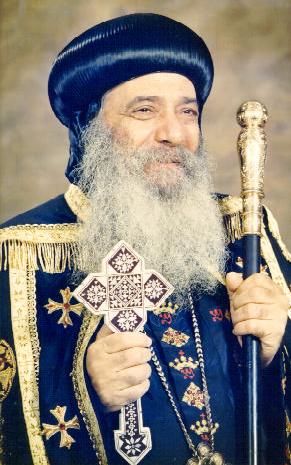
This book was printed on the occasion of
The 19th Anniversary of the Enthronement of
His Holiness Pope Shenouda III
14 November 1990
4
CONTENTS
FOREWORD
PART ONE
WHAT IS REPENTANCE?
1. What is Repentance?
2. Repentance: Its Progression and Perfection.
3. An Invitation to Repentance.
4. Do Not Despair.
5. Repentance between struggle and grace.
6. The importance of repentance.
7. The obstacles of repentance.
8. Repentance and the church.
PART TWO
THE INCENTIVES FOR REPENTANCE
CHAPTER ONE
If you know who you are, you will rise above sin.
You are a holy breath which proceeded from the mouth of God.
You are the son of God, you are His Image and likeness.
You are the dwelling of God, and a temple for the Holy Spirit.
You are a brother to the Messiah, a companion to Christ, and an
inheritor with Him.
You are a partner to the Holy Spirit, a partner in the Divine
nature.
You are a member in the body of Christ, of His body and bones.
You are the one who partakes of the Lord's body and blood.
CHAPTER TWO
If you know what is sin, you will escape from sin.
Sin is Death.
5
Sin is delusion and loss.
Sin is defeat and not victory.
Sin is separation from God.
What a great difference between favour and animosity.
Sin is deprivation from God.
Sin is opposition to the Holy Spirit.
Sin is corruption of the human nature.
Sin is impurity, fornication and disgrace.
CHAPTER THREE
If you know the results of sin, you will flee from sin.
Fear and Unrest.
Torment of the Conscience.
Other results of sin.
CHAPTER FOUR
If you know the punishment for sin, you would be afraid of sin.
God's goodness and severity.
God's Fearful Punishments.
The terrifying torture of eternity.
Two punishments for sin: Earthly and Eternal.
Punishments for God's beloved saints.
CHAPTER FIVE
Other incentives for repentance.
PART THREE
MEANS OF REPENTANCE
(HOW TO REPENT)
1. Be with yourself.
2. Avoid justifications and excuses.
3. Do not delay repentance and do not lose the chance.
4. Do not harden your heart *
5. Avoid the first step, and beware of the small foxes.*
6
6. Avoid stumbling blocks, and escape from the
sources of sin.*
7. Do not be tolerant with sin.*
8. Reassess your behaviour and beware of those disguised
as lambs*
9. Flee from your beloved sins and treat your points
of weakness.*
10. Be concerned with your eternity and calculate the cost.*
11. Keep God's love in order to cast out the love of sin.*
12. Wrestle with God and obtain help from Him.*
PART FOUR
THE SIGNS OF REPENTANCE
FRUITS WORTHY OF REPENTANCE
1. Confessing the fault.*
2. Embarrassment and Shame.*
3. The regret, the suffering and the tears.*
4. The Tears.
4. Contrition and humility.
5. Repairing the results of the fault.
6. Compassion for the sinners.
7. Other feelings.
8. Spiritual fervour.
9. Proceeding in the virtuous life.
10. Purity.
PART FIVE
THE PURITY OF HEART
Purity from sin.
Testing purity.
Purity from thoughts and dreams.
Purity from vain glory.
7
The positive side of purity.
The purity of heart from knowing sin.
The Poem: `I drenched my couch with my bitter tears'.
PART SIX
PROTECTING REPENTANCE
The ability to return.
They started in the Spirit and completed in the flesh.*
The Canaanites on earth.*
Do not falter between the two opinions.*
The separation between light and darkness.*
Some Questions on Repentance
BIBLE REFERENCES
FINAL MESSAGE
8
FOREWORD
Repentance, my brethren, is not only for those
beginning their life with God, but is for everyone, even the
saints. It is part of our daily prayers. Every person needs
repentance, no matter how great his position or his spiritual
level. We are all in need of repentance, in need of it everyday,
since we sin everyday. For there is no person without sin, even
if his life was one day on earth. With repentance, we prepare
our hearts for the dwelling of God, and with purity, we will see
God (Matt 5:8). Repentance is the beginning of the path
towards God, it is a friend along the path till the end.
Repentance was therefore one of the fundamental
topics, on which I lectured frequently since the beginning of
my work as a Bishop of Christian Education approximately
twenty years ago. I delivered many lectures on repentance in
St. Mark's Hall in the Monastery of Anba Rewais, in the youth
meetings and in university groups. Also, I presented other
concentrated lectures at the Angel Church in Damanhour, at St.
George's Church in Al-Mahala Al-Kobra and in other cities,
especially between the years 1965 and 1969.
It was my wish for many years to publish a book on
the life of repentance. I actually collated the lectures for it and
presented them to the printers in August 1971 and three parts of
it were published. But responsibilities of the Patriarchate
preoccupied me from the book and from publishing any other
book for a long time, in which the workload was great and did
not give me a chance to write during these years. The time then
9
came finally after 12 years when God willed for the book to be
published.
Because of the delay of publishing the book (The Life
of Repentance), many of my beloved friends hastened me gently
saying: `Our repentance has been delayed by the delay in
publishing the book, shall we assume you will take this
responsibility for the delay in front of God? I would answer
them with this phrase which I repeated regularly: `Pray so that
the Lord may give me time'. The Lord then gave me time and I
presented the book for printing and here it is finally in your
hands. Its delay was an opportunity to add to it other lectures
that I presented later in the great Cathedral during the seventies.
After all, do you think I had collected all of what
was said about repentance? This is undoubtedly not the case.
The topic of repentance is huge and has many branches, it
mingles with many other topics from the spiritual life, it mingles
with contemplations on the psalms and the sections of the
Agbia, the book of Revelation, the book of the Song of
Solomon, Romans 12, the characters of the Bible and into the
lectures on salvation.
We have published other small books, other than
this book under the heading: `A Series on the Life of
Repentance and Purity'. From this series came the books:
`The Spiritual Awakening', `The Spiritual Vigil', `Returning to
God' and the book `The Fear of God', which is on the way to
be printed.
10
To complete this on the life of repentance, I will
shortly publish a book called: `The Spiritual Wars'. This
will probably first appear as a series of small books to be
collected later in general into a large book. It will cover spiritual
wars and then the war of each sin that delays repentance
individually. It remains to say that the topic of repentance and
purity is open.... It is a whole life....
SHENOUDA III
11
PART ONE
What is Repentance?
1.
What is repentance?
2.
Repentance: Its progression and perfection.
3.
An invitation to repentance.
4.
Do not despair.
5.
Repentance between struggle and grace.
6.
The importance of repentance.
7.
The obstacles of repentance.
8.
Repentance and the Church.
12
1. What is Repentance?
�
As sin is separation from God, repentance then is
returning to God.* God says: "Return to me, and I will return
to you" (Mal 3:7). When the prodigal son repented, he
returned to his father (Luke 15:18-20). True repentance is a
human longing to the origin from which it was taken. It is the
desire of a heart that stayed away from God, and felt that it
cannot go any further away.
�
For as sin is disputing with God, so repentance is
reconciliation with God. * This is what our teacher Saint
Paul stated about his apostolic work, saying: "Therefore we are
ambassadors for Christ, as though God were pleading by us:
we implore you on Christ's behalf, be reconciled to God" but
through it God returns and dwells in the human heart
transforming it to a heaven. As for those non-repentant, how
can God dwell in their hearts while the sin is dwelling therein?
The Bible says, "What communion has light with darkness?"
(2 Cor 6:14).
�
Repentance is also a spiritual awakening. *
The sinful person is unaware of his state. The Bible says to
him: "that now it is high time to awake out of sleep"(Rom
13:11). By this context, repentance is the return of a person
* See the books "Return to God" and the " Spiritual Awakening" all of
their topics are concentrated on these points only.
13
to himself. Or the return of ones self to its original sensitivity,
the return of the heart to its fervour and the return of the
conscience to its work. It is justly said about the prodigal son
in his repentance: "He came to himself" (Luke 15:17). He then
came back to his alertness, to his correct thinking and to his
spiritual understanding.
�
For as sin is regarded as spiritual death, just as the
Bible says about sinners that they are: "dead in trespasses"
(Eph 2:5), then repentance is transfer from death to life
according to the expression of St. John the Evangelist (1 John
3:14). St. Paul the apostle says about this: "Awake, you who
sleep; Arise from the dead, and Christ will give you light"
(Eph 5:14). St. James the apostle confirms the same meaning
by saying: "he who turns a sinner from the `error' of his way
will save a soul from death and cover a multitude of sins"
(James 5:20). Repentance is resurrection for the spirit, because
the death of the spirit is separation of the spirit from God, just
as St. Augustine said:
�
`Repentance is a new pure heart, which God gives to
the sinners to love Him with'. It is a divine act performed by
God inside the person, according to His divine promise which
says, "Then I will sprinkle clean water on you, I will cleanse
you from all your filthiness.... I will give you a new heart and
put a new spirit within you.... and cause you to walk in My
statutes, and you will keep My judgements and do them" (Ezek
36:25-27).
14
�
Repentance is freedom from the slavery of sin and
the devil.
It is also from the most sinful habits and from running after
lusts. It is impossible for us to partake of this freedom without
the work of the Lord in us. Therefore the Bible says: "If the
Son makes you free, you shall be free indeed" (John 8:36). It is
true freedom because: "whoever commits sin is a slave of sin"
(John 8:34). We receive this freedom if by repentance, we stand
firm in the truth - and not through vanity. "And the truth shall
make you free" (John 8:32).
� Repentance then, is forsaking sin because of the
love of God and the love of righteousness.
Not all forsaking of sin is considered repentance. Other reasons
are fear, embarrassment, inability, preoccupation (with the
remainder of its love in the heart) or as a result of unsuitable
situations are not considered repentance. As for true
repentance, it is the discarding of sin practically, mentally and
from the heart, out of love for God, His commandments and His
kingdom and the repentant's care for his eternity.
�
True repentance is forsaking sin without return.
Thus have been the stories of the saints whom have repented,
for example: St. Augustine, St. Moses the Black, St. Mary the
Egyptian, Pelagia, Thais and Sarah. Repentance was in the lives
of all of these and others, it is a turning point towards God,
continued throughout life without return to sin. This reminds us
of the sayings of St. Shishoy: `I do not remember that the devil
15
has tempted me into the same sin twice'. It is possible that the
first sin was as a result of ignorance, negligence, weakness and
unawareness of the tricks of the devil or a lack of cautiousness.
But, after repentance and awakening, there is precision in life
and caution of sin. As for the one who discards sin and returns
to it, therefore sometimes leaving it and sometimes returning....
he has not yet repented. This is only an attempt towards
repentance.... every time the sinner arises, sin drags him lower.
If his freedom is struck down, he will not repent.
�
Repentance is a cry from the conscience and a
revolution against the past.
It is repulsion from sin, great regret and rejection of the old
state with embarrassment and shame. It is therefore said about
repentance that it is `a daring judge'.
�
Repentance is a complete change in the person's
life, not a temporary emotion.
It is a real and fundamental change felt by the person, as well as
everyone that deals with him. His thoughts change, so also do
his principles and values, his outlook on life and his manner of
speech, his habits and dealings with people, and most
importantly, his dealings with God. The person also changes
from within with a heart refusing the former loved sins. The
love of God enters his heart and he becomes spiritually revived,
a state of spiritual ecstasy which makes it very true to say that.
16
� Repentance is the exchange of one lust for another.
It is the lust to live with God, instead of sinful and bodily lust.
Apart from the negative side which is forsaking sin and its love,
repentance has also a positive side which leads the person to the
love of God, His kingdom and His ways. It is a warm feeling,
making the person desire a pure life.
�
Repentance is renewal for the mind.
The renewal of the nature occurs in baptism (Rom 6:4). But the
renewal of the mind occurs in repentance, practically as the
apostle says: "be transformed by the renewing of your mind,
that you may prove what is that good and acceptable and
perfect will of God" (Rom 12:2).
� Repentance is the golden key that opens the door
of the kingdom of heaven.
Or it is the true door that leads to heaven because without
repentance, God does not reign in our hearts. Repentance is the
oil in the lamp stands of the virgins, granting them the right to
enter into the wedding feast (Matt 25).
�
Repentance is the canal which delivers the
worthiness of the blood from the cross.
This is the only way for our sins to be removed after baptism,
and so some have called it: `a second baptism'. It is a strong
rebuke to Satan. It is a dissolution of the communion between
17
the sinner and the devil, so as to enter into communion with the
Holy Spirit (2 Cor 13:14).
�
Repentance is a fire, picked by the Seraphim from
the top of the altar.
With it He eliminates the inequity of the sinner, while saying to
him: "Your inequity is taken away, and your sin purged" (Is
6:7). It is the only way for eliminating our sins from the book of
our judgement. How beautiful are the Lord's words: "their sin I
will remember no more" (Jer 31:34). The importance of
repentance for receiving forgiveness shows in the Lord's saying:
"Unless you repent you will all likewise perish" (Luke 13:3).
�
Repentance is the way of escaping from the coming
anger.
This is under the condition that it is true repentance and is
appropriate to the seriousness of the sin. The repentance of the
people of Ninevah, made God relent from the disaster that He
had said, He would bring upon them and He did not do so
(Jonah 3:10). Similarly for other judgements of God, (Jer 26:13,
Ex 18:21,22). The lovely saying of one of the saints is: `God
will not ask you why did you sin? But He will ask you, why did
you not repent?'.
�
Repentance is then, God's preservation of you and
His pardon of your sin.
God, from the depth of His love, gave everyone the chance for
salvation, no matter how great his sins were, God does not take
18
anyone while in sin, before giving him a chance to repent.
Repentance is a divine privilege which God has given to the
sinners, to purify them, and to rest their consciousness giving
them the inner peace, and ensuring their return to their original
nature before the first sin.
�
It is God's outstretched hand, asking to be
reconciled with you.
It is a chance for starting a new page, which God opens in His
relationship with you and forgives you for the past and He shall
wash you and you shall be whiter than snow (Ps 50). It is a
chance for building up your hope, and ridding yourself of
despair. It has been said about repentance that it is the door of
mercy, forgiveness and life and it is a bridge linking heaven and
earth.
The previous points showed God's role in forgiveness, the
following is the human role.
�
Repentance is a reply from mankind to God's
invitation to him.
It is the reply of the conscience, to God's voice in him. It is a
reply from the will, to the work of grace with it. It is a stop to
the Spirit which works in us for our salvation (Acts 7:51), it is
non-grievance of the spirit (Eph 4:30), it is non-quenching of
the spirit (1 Thess 5:19).
�
When St. Isaac was asked about repentance, he
said: `It is a contrite heart'. It is the contrite heart returning to
19
God. It is the bent knees, weeping eyes, and the broken hearts.
It is the mother of tears, contrition and humbleness, because
repentance gives birth to all of these.... It breaks the sinner's
pride softening his hard heart and leading him into the life of
humbleness. St. Isaac also said: `The sacrifice of repentance
that we present to God, is the heart which has repented and
contrited, and has been broken by the tears of prayer in front
of God, asking his forgiveness for his weak nature'.
As said in Psalm 50, the psalm of repentance: "The sacrifices of
God are a broken spirit, a broken and a contrite heart - these,
O God, you will not despise".
� Saint John Saba said: `Repentance is a great torment
to the devil who tries to stop it'. For it saves and releases those
whom the devil captured with his evil. Many years of the devils
hard work are lost in one hour of repentance. All the thorns he
has planted in our land and grown with great care over many
years, gets burnt in one day and our land is purified.
Repentance makes virgins out of adulterers. Who does not
love you O repentance, O you who carries all the blessings,
except the devil, whom you have captured all his riches and
wasted all his possessions.
O mother of forgiveness, the Father who is filled with
mercy, will not be angered by your pleadings.... since He
granted you to be a intercessor for the sinners and He gave
you the key to His kingdom.
After Youhanna El Daragy visited the repentant's
monastery and saw the contrition of their souls by repentance,
20
the intensity of their struggle and the fervour of their prayers, he
said, `I blessed those who sinned, and repented weeping, more
than those who did not fall and did not weep for their souls'.
Repentance is joy in heaven and on earth. It is written:
"There will be joy in heaven over one sinner who repents"
(Luke 15:7,10). So if you wish to make heaven joyous, repent.
It is joy on earth also. it is joy for the repentant, the pastor and
for all the church. Repentance is joy since it is an invitation to
the captives, to liberty (Is 61:1). It is joy for the freedom from
the slavery of Satan and sin, a joy in the new pure life and a joy
in forgiveness.
�
It is a joy, for repentance is the life of victory or the
song of the victorious.
The repentant praises with David: "Blessed be the Lord, who
has not given us as prey to their teeth. Our soul has escaped as
a bird from the snare of the fowlers; the snare is broken, and
we have escaped" (Ps 124:6-7). But repentance is not the
objective of the spiritual life, but:
�
Repentance is the beginning of a long journey
towards the life of purity.
Repentance is the beginning of the relationship with God. It is
the beginning of a long path whose aim is holiness and
perfection so the person who has not started repentance till
now, how can he reach the end? How will the person who
delays the first step until his elderly years or until the hour of
death reach the Lord's saying. "You shall be perfect, just as
your Father in heaven is perfect" (Matt 5:48).
21
2. Repentance: Its Progression and Perfection.
A person progresses in repentance and advances in
it, like in any other virtue.
He keeps progressing until he reaches its perfection. So then,
what is the starting point in repentance? Is it leaving sin for the
fear of God?
There is a point before leaving sin, and that is the
desire for repentance.
Since many do not want to repent because they enjoy sin, and
want to remain in it, their character is beautiful in their own
eyes and they do not wish to change. So just the desire to
repent is a good point, which is taken by His grace that asks:
"Do you wish to be made well?" and this starts its work in the
person. The next step is then actually leaving sin.
More importantly than leaving sin, is to remove it
from the heart and mind.
There is a person who leaves sin practically, but its love is still
in his heart, he yearns for it and he regrets certain opportunities
in which he could have sinned and did not. Such a person for
example, has left sin for the sake of God's commandments and
not because he hates sin. He should progress in repentance until
sin is removed from his heart.
22
The perfection of repentance is the hatred of sin.
That means a person reaches the stage that he hates sin from all
his heart, is disgusted by it and does not need any effort to
overcome it, since it no longer agrees with his nature. Here the
person reaches the edge of purity. The purity of heart is a long
topic and so we will set aside Chapter Four (The Signs of
Repentance), to deal with it, or maybe even Chapter Five as
well.
But leaving the most prominent sin in one's life comes after the
next step up which is: Leaving the sins which are revealed
through spiritual progression. Through God's compassion for
us, He does not reveal to us all of our sins and weaknesses at
once so that we don't feel worthless. Every time we have
spiritual sermons, read God's book and other spiritual books,
our weaknesses and shortcomings which need treatment,
struggle and repentance, are revealed to us. Here we enter into
an operation of cleansing and purifying which continues
throughout life.
For the devil leaves one battleground and fights in
another.
We should be ready for him in all battlefields. Even from the sin
in which we were relieved from for a period, we may be
tempted by it again. In this way repentance will remain with us
throughout life. Also repentance is not only for resisting
negative things which is sin, but:
23
There is repentance for shortcomings in spiritual
progression.
The repentant should bear fruits worthy of repentance (Matt
3:8). With this he will enter into the fruits of the spirit (Gal
5:22). If he does not bear fruits, then he needs repentance for
the sin of not bearing fruits, because the Bible says: "To him
who knows to do good and does not do it, to him it is sin"
(James 4:17).
Repentance then is not just a stage which passes,
but remains with us.
There is no one without sin, not even if his life was only one day
on earth. For we all sin and need repentance. Therefore,
repentance becomes a daily work, since we sin everyday. "If we
say that we have no sin, we deceive ourselves, and the truth is
not in us" (1 John 1:8).
There is a difference between the repentance of
sinners and the repentance of saints.
Sinners repent from sins which are an obvious breach of the
commandments, which shows their lack of love to God. As for
the saints, they repent from minor shortcomings which are
caused by human weakness. Because of their desires towards
the life of perfection, they see in front of them stages to be
overcome before they are perfected and during all of this their
hearts are protected in the love of God.
24
The Church laid down for us daily prayers in
which we can ask for repentance. In the segments and psalms
of the Agbia (daily prayer book) we note the following prayers :
I. The confessing of sin and the worthiness of punishment
as in (Ps 6,50) and in the segments of the sunset
prayer.
II.
The asking for forgiveness, as in the segments and
Absolution of the sixth hour and in the rest of the
prayers.
III.
Asking the Lord to save the person who is praying
from sin itself, as in the Absolution of the third hour.
IV.
Asking for guidance for forgiveness along the path as
in (Ps 119) and the segment (Lord by Your grace.....)
V.
Blaming oneself and rebuking it for its falling and
carelessness as in the segments of the prayer before
sleeping.
VI.
Awakening the soul to repentance, reminding it about
death, the Judgement and Christ's Second Coming as
in the segments of the prayer before sleeping and in the
Gospels and segments of the midnight prayer.
25
This demonstrates that we ask for repentance every
day and every hour.
As an example of this the person praying says in the segments
of the prayer before sleeping: `behold, I am about to stand
before the Just Judge in fear because of my numerous sins....
Repent therefore, O my soul, so long as you dwell on earth', `
What answer would you then give? You are lying on the bed of
sin and slow to control the body'. In the sunset prayer: `If the
righteous through toil are saved, where shall I, a sinner,
appear?'. In the midnight prayer: `Give me, Lord, fountains
of tears as You did in the past to the sinful woman'. In the
sixth hour prayer: `Break the bonds of our sins, Lord Christ,
and save us'. In the third hour prayer: `Purify us from the
iniquities of the body and soul, lead us to a spiritual life so that
we may proceed in the spirit and not to complete the desire of
the flesh'. More time is required if we were to enter into the
details about repentance in the prayers of the Agbia and this
would require a separate book. After all of this, does anyone
have the courage to say that repentance is a stage we have
passed and completed and have now entered into the
heavenliness and can ask for virtues and miracles?
He who thinks that he has passed the stage of
repentance, has not examined himself well.
In other words, he has not examined himself in the light of the
commandments and with the spirit of humility. For example,
who among us has reached loving his enemies? (Matt 5:44), or
enjoying reading the law of the Lord day and night? (Ps 1), or
praying at all times and not losing heart? (Luke 18:1). The
26
commandments are many and we have not fulfilled any of them.
I'm embarrassed to talk about the details, since some people
might fall into humiliation, and so silence is better.
So repentance is a must for all of us, in everyday of
our lives.
If only everyone of us reads and contemplates in the spiritual
stages that were reached by the saints, then we would know
that we are sinners! Amazingly, the saints who reached these
stages, used to say that they were sinners and required
repentance and wept over their sins.... Then what should we
do?
3.
An Invitation to Repentance.
The Lord who loves mankind, with a push from
His love to His children, calls them to repentance.
This is because: "He desires all men to be saved" (1 Tim 2:4).
It is not His will that any should perish but that all should come
to repentance (2 Peter 3:9), for the sake of their salvation, He is
prepared to overlook their times of ignorance (Acts 17:30). He
says in His amazing love:
"Happiness does not occur at the death of the wicked
....but at his return .his return to life" (Ezek 18:3). He loves
us and through repentance He wants us to enjoy His love.
27
He wants through repentance to share His
kingdom with us and to satisfy us with His love.
It is not just simply orders which God gives through the tongues
of His prophets and saints, but it is an invitation of love for
salvation: "Repent therefore and be converted, that your sins
may be blotted out" (Acts 3:19).
"He who turns a sinner from the error of his way will
save a soul from death and cover a multitude of sins"
(James 5:20). So this commandment is for our sake and for our
salvation, which made Him incarnate and suffer for us and we
cannot partake of this without repentance.
So we can see in His invitation to us to repent
feelings of love.
He said: "Return to Me and I will return to you" (Mal 3:7),
"Repent and return" (Ezek 14:6), "Turn to Me with all your
heart....return to the Lord your God" (Joel 2:12-13). He also
says in His love on the tongue of Jeremiah the prophet: "I will
put My law in their minds, and write it on their hearts, and I
will be their God, and they shall be My people....For I will
forgive their iniquity, and their sin I will remember no more"
(Jer 31:33-34).
In His invitation to us to repentance, He promised
our purification and washing.
He said: "Wash yourselves, make yourselves clean:
Put away the evil of your doings....Come now, and let us
reason together, says the Lord: though your sins are like
28
scarlet, they shall be as white as snow...." (Is 1:16-18). He also
said: "I will sprinkle clean water on you, and you shall be
clean; I will cleanse you from all your filthiness and from all
your idols. I will give you a new heart...." (Ezek 36:25-26).
He calls us to repentance, because we are in need of
it.
He said: "For I did not come to judge the world but to save the
world" (John 12:47), "Those who are well have no need of a
physician, but those who are sick. I did not come to call the
righteous, but sinners, to repentance" (Mark 2:17). Indeed
that: "The Son of Man has come to save that which was lost"
(Matt 18:11).
Repentance then, is for our own good and it is not
an order forced upon us.
We have the complete freedom to choose. God calls us to
repentance and says: "If you are willing and obedient, You
shall eat the good of the land; But if you refuse and rebel, You
shall be devoured by the sword" (Is 1:19-20). So it is
better for us to listen and do, for the sake of our purity, eternity
and to be happy with God. The apostle calls His invitation to
us: "a service of reconciliation" and says: "be reconciled to
God" (2 Cor 5:18,20). So do we then refuse to be reconciled to
God? Is it for our own good to refuse reconciliation?
29
Repentance is useful, whatever its method, whether
by leniency or harshness.
Saint Jude the apostle says: "On some have compassion,
making a distinction; but others save the garment defiled by
the flesh" (Jude 22,23). Saint John the Baptist was strong in his
call to repentance (Matt 3:8-10). Saint Paul the apostle says to
the people of Corinth: "Now I rejoice, not that you were made
sorry, but that your sorrow led to repentance" (2 Cor 7:9).
That is why the sermons of some of the saints made the people
weep and this was useful to them. Also the church's
punishments were useful for repentance and salvation.
Therefore the invitation to repentance was the
most important topic in the Bible.
So that the people could be purified and saved. When
repentance became necessary for salvation, the Lord Jesus
Christ sent before him, John the Baptist, to prepare the path in
front of him to repentance, and he called for repentance saying:
"Repent, for the kingdom of heaven is at hand" (Matt 3:2).
This kingdom cannot be gained, except through repentance. He
then presented the baptism of repentance to the people.
So the work of repentance preceded the work of
redemption and the baptist preceded the Messiah.
The Lord Jesus Himself called the people to repentance: "From
that time Jesus began to preach and to say, Repent, for the
kingdom of heaven is at hand" (Matt 4:17). He said: "The time
is fulfilled, and the kingdom of God is at hand. Repent, and
believe in the gospel" (Mark 1:15). When He sent out the
30
twelve: "So they went out and preached that people should
repent" (Mark 6:12). Before His Ascension He commanded:
"that repentance and remission of sins should be preached in
His name to all nations, beginning at Jerusalem" (Luke
24:47).
The first to preach repentance was Noah and many
other prophets joined him in this.
For example, Isaiah (Is 1), Ezekiel (Ezek 18), Jonah (Jonah
3), Joel (Joel 2) and Jeremiah (Jer 31), it is completely clear in
the books of the New Testament. The invitation to repentance
is the work of all the shepherds, teachers, preachers, priests and
all spiritual advisers. It is also clear in the sayings of the fathers.
The fathers were very concerned with the
invitation to repentance.
Saint Anthony said: `Ask for repentance during every moment'.
Saint Basil the great said: `It is good that you do not sin. If you
do sin, then it is good that you do not delay repentance. If you
repent, then it is good that you do not return to sin. If you do
not return, then it is good that you know this is with God's help.
If you know, then it is good that you thank Him for the state
that you are in'. Saint Isaac said: `All the time during the
twenty four hours of the day, we are in need or repentance'. He
also said: `Everyday that you do not sit for one hour with
yourself and think about the day's sins and your shortcomings
and to help yourself up again, then do not count the day as
part of your life'. So the invitation to repentance is a must for
every person. Our attention is directed also:
31
That the invitation to repentance was directed to
the angels of the seven churches.
The Lord says to the angel of the church of Ephesus:
"Remember therefore from where you have fallen and repent"
(Rev 2:5). The word "repent", He also said to the angel of the
church of Pergamos (Rev 2:16), Sardis (Rev 3:3), Laodicea
(Rev 3:19) and He also sent Nathan the prophet to call to
repentance, David the prophet the anointed one of the Lord.
God's invitation to repentance carries His feelings
of compassion towards His children.
He wishes that all who have strayed, to return to Him, so that
they may share in the kingdom, in the inheritance of the saints
and in the fellowship of the church. Walking in darkness,
prevents us from the fellowship with God (1 John 1:6), and
prevents our fellowship with one another: "But if we walk in
the light as He is in the light, we have fellowship with one
another, and the blood of Jesus Christ His Son cleanses us
from all sin" (1 John 1:7).
God accepts the sinners. There are many examples
of this in the Bible.
The prodigal son was accepted in his poor state (Luke 15). The
Samaritan woman who had more than five husbands, was
accepted (John 4). The right thief was accepted on the cross
(Luke 23:43). Jesus prayed for the sake of His crucifiers for the
forgiveness of their sins (Luke 23:34 ). Zacchaeus, the chief tax
collector was accepted (Luke 19:9),and the Lord gave him and
his household, salvation. Also Matthew the tax collector was
32
accepted and Jesus made him one of the twelve apostles (Matt
10:3). The following Lord's saying is enough:
" The one who comes to Me I will by no means cast
out" (John 6:37). But even more so, it is the Lord who stands
at the door knocking, waiting for whoever opens. (Rev
3:20). So if Jesus does this, then He would hurriedly open to
whoever knocks on the doors of His divine mercy. With regards
to God's mercy towards sinners, it is true what is said that:
God's mercy is mightier than all blemishes of sin.
The worst and greatest sin, in comparison to God's mercy, is
like a fragment of dirt which you throw into the sea. It does not
discolour the sea, but the sea takes it and spreads it into its
depth and gives you pure water. God's acceptance of
repentance shows the depth of His divine love.
We should not then think that our numerous sins
are too much for the effect of his blood.
We should not then over value our sins over His great love and
mercy. One of the elderly saints said: `There is no sin which
defeats God's love to mankind'. It is He who justifies the
ungodly (Rom 4:5). I say this so that if the sinners look at their
sins, they would not lose hope.
33
4.
Do Not Despair.
At this point, I remember a letter which I received
from a youth 22 years ago.
When I read it I was deeply affected by it to the stage that I
wept. I replied to his letter, in which I said to him: `I have
received your letter, O beloved brother, and I imagined that I
had read it many times before I had actually seen it, it is the
picture of a life that I know, and the story of many hearts'.
Yes, it is a war which tires many. Its thoughts are known, and
repeated in the people's confessions and in their spiritual
questions. Here we will try to deal and answer each of these
thoughts about despair.
A.
The first complaint: I have lost hope. I am useless.
Know my brother, that every thought of despair, is warfare
from the devil. He wants you to despair from repentance, either
from its capabilities or its acceptance, so that you feel that there
is no use in struggling and you give in to sin and remain in it
until your soul perishes. So do not listen to the devil, no matter
what he says to you. When you are struggling with one of the
thoughts of despair, answer it with the saying of Micah the
prophet:
"Do not rejoice over me, my enemy; When I fall, I
will arise" (Mic7:8).
Know that if you despair from repentance, that this is more
dangerous than falling into sin. Through despair Judas perished
34
and died. Despair leads into deeper involvement in sin and the
sinner progresses from bad to worse. In despair the devil battles
with the sinner to keep him away from his Confession Father,
from every spiritual advice and from all of the church, so that he
will be alone with him, leaving the sinner without any help. The
prophets and saints were in warfare with the battle of despair,
and so the prophet David said:
"Many are they who say of me, there is no help for
him in God" (Ps 3). He answers this saying: "But You, O
Lord, are a shield for me, My glory and the One who lifts up
my head" (Ps 3:3). David did not despair at his falling but he
wept for it and repented. So God returned him to his original
rank. God performed many good things for numerous people
and He said: "For the sake of My servant David" (1 Kin
11:32,34,36). So do not despair but remember those who
previously repented.
If you have lost hope in yourself, the Lord has not
lost hope in your salvation.
He has saved many and you are not more difficult than all of
them. When grace works in you, there is no room for despair.
Enter into repentance with a courageous heart and do not
belittle yourself.
B.
He says: `How can I repent while I am completely
unable to arise from my fall?'
Do not be afraid. God will fight for you, for the battle is the
Lord's (1 Sam 17:47). Your resistance, whether it is weak or
strong is not important. God can save with much or with little.
35
God is more powerful than the devil who fights with you and
He can drive the devil away. So do not look at your power, but
at the power of God. Cry and say if you allow me, I will repent
for you are the Lord my God (Jer 31:18).
C.
You will say: `My state has deteriorated immensely
and has lost hope'.
Can you see that it has lost hope, more than the barren woman
to whom the Lord said: "Sing, O barren, You who have not
borne..." (Is 54:1)? He gave her more than the other that had
children. Your state seems to have lost hope from your point of
view, but as for God, He has hope in you.
Do not place your hope according to your state, but to
the richness of God, who gives in abundance, and in His love
and ability.
D.
You will say: `But I do not want repentance or strive
for it'.
Of course, this is the worst part of your state, but still do not
despair. It is enough that God is striving for your salvation. He
wishes for your salvation. The prayers of many saints are raised
for your sake along with the pleadings of angels. God can make
you want this repentance. Remember the saying of the apostle:
"for it is God who works in you both to will and to do for His
good pleasure" (Phil 2:13). Just pray and say, `Please God,
give me the desire to repent'. The lost sheep was not searching
for the way back, but it was its owner who searched for it and
returned it to himself. A similar situation occurred with the lost
coin (Luke 15).
36
E.
You may say: `Is it possible for me to live the rest of
my life away from sin, even though my heart loves it? If I
were to repent from it, I will return back to it'.
The error is that the devil makes you think in despair that you
will live in repentance with the same heart that loves sin. On the
contrary, the Lord will give you a new heart (Ezek 36:25). He
will remove from you the love of sin, and you will not think
about returning to it. But on the contrary, in your repentance,
God will make you hate sin and be disgusted with it. Your
present feelings will change.
F.
You will say: `Even if I repent, my thoughts will
remain stained by old visions'.
Do not be afraid. In repentance, God will purify your thoughts.
You will reach "the renewal of mind", in which the apostle
spoke about (Rom 12:2). How many bad visions were in the
memories of Augustine and Mary the Egyptian? The Lord
erased these visions so that their minds would be sanctified by
His love. Be certain that those who returned to repentance,
were in a more powerful state. Many of them received from the
Lord virtues and miracles. For example, Jacob the struggler,
Mary the Niece of Abraham and Mary the Egyptian. The love of
the repentant is greater, just as the sinner woman who loved
much, because He forgave her for much (Luke 7:47). David
also in his repentance was deeper in his love and humbleness.
37
G. You will say: `Will God forgive me? Will He accept me?'.
Be at ease, for He says, "the one who comes to Me, I will by no
means cast out" (John 6:37).
David the prophet said: "He has not dealt with us according to
our sins, nor punished us according to our iniquities....As far
as the east is from the west, so far has He removed our
transgressions from us....For He knows our frame, He
remembers that we are dust" (Ps 103). He doesn't only
accept us, but He washes us and we become whiter than snow
(Ps 50).
He does not again remember our sins (Jer 31:34), (Ezek 33:16,
Heb 8:12). Remember that your soul is precious to God, for its
sake, He incarnated and was crucified.
H.
You will say: `But my sins are very disgusting'.
I will answer you with the saying of the Bible: "every sin and
blasphemy will be forgiven men" (Matt 12:31). Even those
who left the faith and then returned to it, God forgave them.
Similarly those who fell into heresies and then repented, were
forgiven. Peter who denied Christ, swearing and cursing, saying
"I do not know the man", was also forgiven. Not only this, but
he was returned to his rank of pastoral care and apostleship.
Even those who were in a position of leadership, for
example, Aaron the chief priest, who shared with the people of
Israel, in making the golden calf to worship (Ex 32:2-5), was
forgiven when he repented. The Lord rebuked the devil for the
38
sake of Joshua the great priest and clothed him with a new
garment (Zech 3:1-4).
I.
You will say: `But I have delayed too long and so is
there still a chance?'
Augustine said in his confessions: `I have delayed too long in
your love', but the Lord accepted him. He accepted those of the
eleventh hour, and gave them the same reward (Matt 20:9). He
accepted the right hand thief on the cross, during the last hours
of his life. As long as we are in the flesh, then there is a chance
for repentance. We say in the prayer before sleeping: `Repent
therefore, O my soul, so long as you dwell on earth', because
hope in repentance will not be eliminated except in the abyss
(hell), just as our father Abraham said to the rich man,
"between us and you there is a great gulf fixed" (Luke
16:26). So long as you are in the flesh, there is an opportunity
for repentance, so take it.
J.
You will say: `I am frightened that my sin could be a
blasphemy to the Holy Spirit'.
I say to you, that blasphemy to the Holy Spirit is a continual
complete refusal, throughout life, of all the work of the Holy
Spirit in the heart, and so there will be no repentance or
forgiveness. If you repent, then you have responded to the work
of the Spirit in you, and your sin will not be a blasphemy to the
Spirit *
* See our Book (Years with the People's Questions).
39
5. Repentance between struggle and grace.
Our words about the work of God in repentance and
the assistance of grace, does not mean that the person becomes
lazy and relaxed, waiting for God to raise him, and so the
apostle reprimands such people saying: "You have not yet
resisted to bloodshed, striving against sin" (Heb 12:4). It is
necessary then for a person to resist until bloodshed, all
thoughts of sin, its lusts, its paths and to keep away from
stumbling blocks and to use all the spiritual means that
strengthen the love of God in his heart.
Also he enters into a spiritual war against the hosts of
wickedness (Eph 6).
In this war he fights and endures and does not give in to the
enemy. He puts on the complete armour of God, so that he may
overpower the wiles of the devil (Eph 6:11). In all of this he is
also watchful for his own salvation (Eph 6:18). The apostle
says: "Be sober, be vigilant, because your adversary the devil
walks about like a roaring lion, seeking whom he may devour".
So resist him, steadfast in the faith (1 Pet 5:8-9).
God wants you to resist, and in your resistance, grace will
support you with power. So show your love to God by your
resistance to sin. Pray so that the Lord will grant you power to
resist it.
40
In this way you will share with God in the work.
The prodigal son did not wait for his father to come to him in
the far country, to take him back, but he came to himself, felt
his terrible condition, knew the solution, he carried it out and
returned to his father who accepted him (Luke 15). The people
of Ninevah fasted, were humiliated, sat in the ashes, cried
mightily to the Lord and turned from their evil, so God
accepted them (Jonah 3). God reminds us of our duty in
repentance, saying:
"Return to Me, and I will return to you" (Mal 3:7).
He says, in the words of Isaiah the prophet: "Wash yourselves,
make yourselves clean; Put away the evil of your
doings....Come now, and let us reason together, says the
Lord...." (Is 1:16). He also says in the book of Joel the prophet:
"Turn to Me with all your heart, with fasting, with weeping,
and with mourning. So rend your heart, and not your
garments" (Joel 2:12-13).
Therefore there is a duty to be done by each person
in the work of repentance.
He should not be satisfied by casting himself at the feet of the
Lord, without inner and outer struggle. Or as some say: `Your
work is, to simply accept the work of grace in you'. Does this
opinion agree with the reprimand of the apostles: "You have not
yet resisted to bloodshed, striving against sin" (Heb 12:4)?
Therefore we should struggle. However we should not rely on
ourselves, but we should ask for God's working hand to help us.
41
With our struggle we then, confirm our wish for repentance and
the seriousness of it.
6.
The importance of repentance.
The most important thing in repentance, is that,
without it, there is no salvation.
The Lord says: "unless you repent you will all likewise
perish" (Luke 13:3). He: "has given to the Gentiles the
opportunity to repent and live" (Acts 11:18). Some say that the
Lord gave us His blood for salvation and forgiveness, and so
what is the need for repentance? Isn't the blood of Jesus
enough? We answer them saying:
Repentance is what transfers the merits of the
blood of Christ in forgiveness.
Salvation is presented to everyone, and the blood of
Christ is sufficient for all, but only the repentants can receive it.
Truly, the blood of Christ: `purifies us from every sin'. But it
only purifies the sins from which we repent. The apostle
stressed two conditions for this purity to occur, and they are:
"if we walk in the light" (1 John 1:7), and also "if we confess
our sins" (1 John 1:9). These two conditions are connected to
the life of repentance.
42
Therefore repentance precedes baptism, for in it
there is forgiveness of sins.
Saint Peter the apostle said to the Jews about this on the Fiftieth
day: "Repent, and let everyone of you be baptized in the name
of Jesus Christ for the forgiveness of sins" (Acts 2:38). The
church also, when baptizing grown-ups, stipulates faith,
repentance and Confession. The canons of the church prohibit
the baptism of non-repentants. With respect to children
however, the rite of (renouncing the devil) is sufficient instead
of repentance.
One of the important points about repentance is
that, it accompanies faith or precedes it.
Saint Mark the Evangelist said that the Lord used to preach
saying: "The time is fulfilled, and the kingdom of God is at
hand. Repent and believe in the gospel" (Mark 1:15). Faith
without repentance will not save anyone, because a person will
perish without repentance (Luke 13:3).
Repentance precedes partaking of the holy
sacraments.
In the Old Testament, Samuel the prophet said: "Sanctify
yourselves, and come with me to the sacrifice" (1 Sam 16:5).
As for the New Testament, Saint Paul the apostle said: ".... let
a man examine himself, and so let him eat of that bread and
drink of that cup. For he who eats and drinks in an unworthy
manner eats and drinks judgement to himself, not discerning
43
the Lord's body.... For if we would judge ourselves, we would
not be judged" (1 Cor 11:27-31).
Repentance precedes all of the holy sacraments of
the church.
This is so that the person will be worthy of the work of the
Holy Spirit in him. The person receives forgiveness with
repentance, which will qualify him for the grace of the Holy
Spirit which works in the sacraments. The repentance of the
prodigal son, preceded his entry into his father's house (Luke
15).
Repentance is a necessary condition for the
remission of sins.
Saint Peter the apostle says about this: "Repent therefore and
be converted, that your sins may be blotted out" (Acts 3:19).
Saint Isaac has a nice saying: "There is no sin without
forgiveness except the one without repentance". Repentance is
then necessary before and after baptism. Before baptism to
qualify for baptism, and after baptism for the remission of sins
that occur after baptism.
7.
The obstacles of repentance.
There is nothing which the devil fights more, than
repentance, because it wastes all of his previous labor.
Therefore it seems to be difficult, for when the person wants to
repent, the devil places in front of him every stumbling block
44
and obstruction that prohibits or delays his repentance. These
are:
A. The stumbling blocks, whether they were temptations
or chances which did not previously exist, where a person's will
weakens in front of them. It is also possible that the person's
surroundings delay his repentance by stumbling blocks and
wrong concepts.
B.
The sinner compares himself with weak levels. With
these levels he thinks that he is in a good state which does not
need repentance, as if he says: `all people are like this....should
I be different?'. Of course this is not an excuse, that the
majority are sinners. Noah protected his righteousness in a
world full of evil. Similarly were, the righteous Joseph, Moses
the prophet in the land of Egypt and Lot in Sodom.
C.
The weak personality allows the person to be led by
the surrounding environment. A person should have a firm
personality which is not swept away with the direction of the
world. For a little fish is capable of resisting the current and
swimming against it because it has life. Whereas a great block
of timber, which is hundreds of times bigger than this fish can
be washed away with the current, since it has no will. So, have a
strong personality, that will help you to repent. The apostle
says: "do not be conformed to this world" (Rom 12:2).
D.
Delaying: For the devil will not fight an open war,
prohibiting you from repentance, but he will tell you to delay,
by presenting certain temptations. Delaying has dangers. One of
them is, losing the chances of repentance. If sin continues, it
45
takes authority and establishes it's feet. For with delaying, even
the desire for repentance will not be present and spiritual
influences will lose their effects.
E. Despair: It is a feeling that repentance is difficult and
impossible. Youhanna El Daragy says: `The devils, before the
fall say to you that God is kind and merciful, but after the fall
they say that He is the Just Judge and they will frighten you to
lose hope in the forgiveness of God and not repent'. We have
already discussed in the previous pages the obstacle of despair
and it's cure.
F.
Self-righteousness, in which the person does not
feel that he is a sinner. Repentance is the change from one life
to another. How can a person whose life is beautiful in his own
eyes, change it ? For if he cannot feel his bad state, then he
cannot repent and change his life.
Therefore he who does not reproach himself and
refuses the reproach of others towards him, cannot repent.
Who can continuously think that he is right and that the words
(repent and return) are directed towards another ? Also who
can leave his ears to hear the words of praise and believe them,
and explain God's commandments as he likes and refuse the
reproach of his conscience because of it ?
46
Repentance is easy for the meek, but is difficult for
those who are righteous in their own eyes.
It is easy for the humble tax collector who feels his
sins, but is difficult for the Pharisee who boasts in his prayer
saying: "God, I thank You that I am not like other men -
extortioners, unjust, adulterers....". Repentance is easy for the
sinful woman who wet the feet of Jesus with her tears, but is
difficult for Simon the Pharisee who thought that he was not a
sinner like her. Therefore it is good that the Lord revealed to
him that both of them were in debt. He does not have the same
love as her, as he sees his debt to be much less (Luke 7).
Repentance is easy for those who know and confess that they
are sinners. As for those who are righteous in their own eyes,
what will they repent from, as long as they do not confess that
they have sinned in anything ? Truly, those who are (well) have
no need for a physician, that is those who think to themselves
that they are well. These people, even if someone accused them
of a sin would either deny it, or would explain it in a distorted
manner, or give it's responsibility to someone else, or argue and
justify themselves. They will not confess their sin, and therefore
they will not repent.
It could be difficult for those who stand in front of
people as a good example to say that they are in need of
repentance.
It would be good if these people are a good example also, in
confessing their wrong doings, and in their need for repentance.
47
We can also say that repentance is easy for the catechumen, but
difficult for the preacher, servant, adviser and for whoever is at
this level.
G.
From the obstacles of repentance also is the lack of
fear of God in the heart.
As Saint Isaac said: `If there is no fear, then there is no
repentance also'. Some avoid fear in the name of love. Their
remoteness from fear, makes them fall into carelessness and
they fall into sin. With this sin, they prove that they do not have
the love which casts out fear (1 John 4:18). The fear of God
makes a person realise his sin and pushes him to repent. We will
present a separate book to you on this topic, God willing.
8.
Repentance and the church.
The church plays an important role in the repentance of
every person. This involves the work of teaching, giving advice,
pastoral care, visiting and searching, transferring the work and
gifts of the Holy Spirit for the sake of the salvation of every
person and transferring the worthiness of the honoured blood.
So the church invites the sinners to repentance.
It performs what Saint Paul calls: "the ministry of
reconciliation" and "the word of reconciliation" calls sinners
to "be reconciled to God" (2 Cor 5:18-20). This occurs
through preaching, the word of God to the people. Without the
church's efforts, there may have been no repentance.
48
The church calls for repentance in all of its
pastoral ministries.
By visiting people, solving their different problems,
both spiritual and social. As a compassionate father who cares
for his children, bringing them closer to the fatherhood of God.
The church in the spiritual surrounding which
assists in the life of repentance.
Segregated from the world full with stumbling blocks, every
repentant finds, that the church is the proper surrounding where
he can live a spiritual life. It is possible that if it wasn't for the
church that every spiritual feeling which grows inside a person
would be choked by the thorns of the world, wither away and
dry.
The church offers to the repentant the sacrament
of Confession and grants him the Absolution and
forgiveness.
In the sacrament of Confession the repentant opens his heart
and is comforted from his suppressed secrets in front of God he
presents all of his weaknesses and falling in the presence of the
priest, in order to receive Absolution from God from the mouth
of the priest. This is through the command of authority, in
which the Lord said: "If you forgive the sins of any, they are
forgiven them; if you retain the sins of any, they are retained"
(John 20:23). Also by the command of His saying. "Whatever
you bind on earth will be bound in heaven, and whatever you
loose on earth will be loosed in heaven" (Matt 18:18).
49
In this way, the repentant goes away after
Confession with a clear conscience.
He has heard the word of Absolution and forgiveness from the
priest, who has the authority to say it, according to the
authority given to him by God. Therefore he feels peace in his
heart and starts a new beginning.
The church in the sacrament of Confession offers
spiritual advice.
As it says in the Bible: "Ask the priests concerning the law"
(Hag 2:11), in this way the father explains to his son in
confession, the right spiritual path which he should persue, for
there is no one who does not need advice, and the Bible says:
"There is a way which seems right to a man, but its end is the
way of death" (Prov 14:12), as it says: "lean not on your own
understanding" (Prov 3:5).
In the church the repentant finds a heart to trust
personal secrets relating to one's spiritual life as well as
weaknesses which cannot be trusted to just anybody. Suppressing
secrets completely, on the other hand, can be very tiring and
sometimes impossible. But with the priest one finds trust,
spiritual solutions to problems and a sincere helping hand which
guides with sincere love.
The church offers to the repentant, all the blessings
of the sacrament of the Eucharist.
The Lord said about this great sacrament: "He who eats My
flesh and drinks My blood abides in Me, and I in him" and
50
"will live because of Me" (John 6:56-57). Outside the church,
he will not find the blessing of this great sacrament which
strengthens him in his repentance, fills him spiritually, as it is
said: "To be given for our salvation and for the forgiveness of
sins and everlasting life for those who partake of them" (John
6:54). Just in case someone says. `Since repentance grants
forgiveness, then why do I need the church, Confession, Holy
Communion and the Absolution'? My answer is:
With repentance you are worthy of forgiveness,
and with Confession and Holy Communion you receive it.
There is a difference between worthiness of forgiveness and
receiving grace. For repentance also contains within it,
Confession. The Absolution is a part of the sacrament of
repentance. Holy Communion is an extension of the
effectiveness of the sacrifice of Christ. He says: `If I repent and
die before the reading of the Absolution, what will happen to
me' ? If you die in this way, God will have mercy upon you.
The Absolution will be read on you during the funeral prayers.
EEE
51
PART TWO
The Incentives for Repentance.
Chapter 1: If you know who you are, you will rise above sin.
Chapter 2: If you know what is sin, you will escape from sin.
Chapter 3: If you know the results of sin, you will hate sin.
Chapter 4: If you know the punishment for sin, you would be
afraid of sin.
Chapter 5: Other incentives for repentance.
52
CHAPTER ONE
Our repentance needs to be built on a sound foundation, and on
a true understanding of the spiritual life and the relationship
with God. The most important incentive for us to repent is to
know the worth of ourselves and for each one of us to know his
capabilities and who he is. So my brother, know yourself. Who
are you?
If you know who you are, you will rise above sin.
For if you know your great capability and your great position,
then you would not allow your exalted self to come down to the
level of sin. Therefore, you would not fall. So, who are you?
� You are a holy breath which proceeded from the
mouth of God.
You, my brother, are not a scoop of dust as some think. You
are a holy breath which proceeded from the mouth of God and
descended into the dust. So you became: "a living being" (Gen
2:7). You are not just dust or dirt. You should then sing with
joy saying:
I am not dirt but, In dirt I live.
I am not dirt, But a spirit.
From the mouth of God, I proceeded.
53
I will return to God,
To live, where I originally came from.
Your presence in this dust - O blessed brother - is just a short
period of alienation, in which after it you will return to God and
be confirmed in Him to eternity. So know your alienation and
live as a spirit, rising above matter, the world and the works of
the body.
� You are the son of God, you are His Image and
likeness.
You, my brother, are the image of God. The Bible said in the
story of Creation: "Then God said, Let us make man in Our
image, according to Our Likeness....So God created man in His
own image; in the image of God He created him" (Gen 1:26-
27). For if you are the image of God and His likeness, then how
can you sin? If you are defiled by sin, will you still keep your
divine image? Of course not. For it is not possible for a person
to see you in impurity and falling and say: `this is the image
of God'.
Saint Athanasious the apostolic, in his book `The Incarnation of
the Word', said when man `fell' disfigurement occurred and he
lost his divine image. Jesus Christ came to give us back our
original image. If you know my brother that you are the image
of God, you could not sin.
54
For if you know that you are the son of God, then
you will not sin, for the son should be like His father.
Or there is nothing easier than to wrongly boast saying: `we are
the children of God', whereas our deeds do not show this. Just
as the Jews boasted in vain, that they were the children of
Abraham and the Lord embarrassed their proudness by saying:
"If you were Abraham's children, you would do as Abraham
did" (John 8:39). For if Abraham's children are required to do
the work of Abraham, then what about the duties of God's
children, who are in His image and likeness?
Do we live as children of God in order to be called
His children?
How easy for us to call the Lord in our prayers saying: "Our
Father who art in Heaven", whilst we do not behave as
children of this heavenly Father.
Remember always my brother, that you are the son of God and
walk in the life of righteousness to become worthy to be called
the son of the Righteous, placing in front of your eyes the
saying of the Bible: "If you know that He is righteous, you
know that everyone who practices righteousness is born of
him" (1 John 2:29). For if you do not perform righteousness,
then you are not worthy to be called a son of God.
I am afraid that the words `children of God' could be a
reproach for us, here and in the last day....Saint John the
apostle, explains this matter to us saying: "Children, let no one
deceive you. He who does right is righteous, as God is
righteous. He who sins is a child of the Devil, for the Devil has
55
sinned from the beginning" (1 John 3:7-8). He who practices
sin, is a son of the Devil, he is of Satan and not of God....how
frightening! The apostle records for us a fundamental principle
in which he says. "Whoever has been born of God does not
sin, for His seed remains in him; and he cannot sin, because
he has been born of God" (1 John 3:9).
By this standard my brother, you can measure yourself when
you say that you are the son of God. Here the apostle concludes
his words by saying: "In this, the children of God and the
children of the Devil are manifest" (1 John 3:10). Your
feelings of being the son of God, reminds you of the heavenly
nature which God placed in you and in which the apostle
laboured by his saying about the one born of God that. "His
divine seed remains in him". He also said: "he who has been
born of God keeps himself, and the wicked one does not touch
him" (1 John 5:18).
For every time you sin, you must feel humiliated in
the depth of your soul and unworthy to be the son of God.
Therefore, the Holy Church makes the person say to God
everyday in the sunset prayer, `I have sinned against You and
against Heaven, I am no longer fit to be called Your son'. Why
`am I no longer fit to be called Your son?'. Because I have
sinned, and whoever has been born of God does not sin.
We must understand very well the practical
meaning of being sons of God.
We enter into the depth of this title. We ask ourselves in every
work we do, in every word we say and in every thought we
56
accept, do we work, talk and think in a way suitable for the
children of God? Being sons to God is not a mere title. We
should possess the true likeness of the son to His father.
For: "God is Spirit" (John 4:24). "And that which is
born of the Spirit is spirit" (John 3:6).
For if my brother, you are living according to the flesh and not
according to the Spirit, then how can you be a son of God, who
is Spirit? Also, how can you be born of the Spirit? He who lives
in sin, can by no means say that he is the son of God, nor can he
say that he knows God as a mere acquaintance. This becomes
clear by the frightening words of the apostle, in which he says:
"Whoever sins has neither seen Him nor known Him"
(1 John 3:6).
For: "He who says, I know Him, and does not keep His
commandments, is a liar, and the truth is not in him" (1 John
2:4). Can you in the life of sin say: `I know God'? Certainly not,
for He will answer you and say: `Depart from Me, I do not
know you, and you do not know Me'.
So my brother, if you remember that you are the son of
God, then live a life that measures up to the standards God set
when He called you (Eph 4:1). Walk like Him, in His path. "He
who says he abides in Him ought himself also to walk just as
He walked" (1 John 2:6). Just as Christ lived on earth, you
should live. In complete holiness, purity and blessing, for He has
given you an example to follow (John 13:15). If you live in sin,
be sure within yourself that you are not worthy to be sons of
God because this is not the image of God's children.
57
Every time you say to Him: "Our Father who art in
Heaven", your conscience should reprimand you and you
should be contrited within yourself, and you will say to Him:
`It is because of your humbleness O Lord and your love, that
you called me to be your son. For with my works I have
demonstrated that I am not worthy to be called your son....treat
me as one of your hired servants....Your fatherhood, even
though it honours me greatly, but also reproaches me greatly,
making me feel the great difference between what I am and
what I should be....'
� You are the dwelling of God, and a temple for the
Holy Spirit.
You my brother, are not only the son of God and a holy breath
which proceeded from the mouth of God, but you are also a
temple for God and God dwells in you. The apostle says to us:
"Do you not know that you are the temple of God and that the
Spirit of God dwells in you? If anyone defiles the temple of
God, God will destroy him. For the temple of God is holy,
which temple you are" (1 Cor 3:16-17). "For you are the
temple of the living God. As God has said: I will dwell in them
and walk among them" (2 Cor 6:16).
God's desire from the beginning is to dwell in you and to look at
your heart and say: "This is My resting place forever; Here I
will dwell, for I have desired it" (Ps 132:14) You will say to
Him: `O Lord you have the churches, temples and altars. You
dwell in Heaven and the Heaven of Heavens is Your throne'.
He will say to you: `I prefer to live in your heart, rather than in
any of these'. "My son, give me your heart" (Prov 23:26).
58
You O blessed brother, are more important to God
than a built church.
If one of the churches is destroyed, it can easily be rebuilt by
people, through the collection of money it can be built....But if a
person like you is destroyed, he cannot be rebuilt except
through the blood of Christ. No angel or archangel or Patriarch
or prophet, can return you to your original rank, nothing but the
blood of Christ, for without it there is no salvation for
you....You my brother, are more important to God than a built
church. You are a living church, more important than bricks and
stones, you are a temple for the Holy Spirit.
God permitted the destruction of the temple of Solomon and
did not leave one stone without demolition. But for your sake,
God sent the apostles, prophets and angels and appointed
pastors, priests and teachers and organised all the means of
grace and presented the worthiness of the great redemption so:
"that whoever believes in Him should not perish but have
everlasting life" (John 3:16).
If you are then a house for God and God dwells in
you, then remember the saying of the Bible: "Holiness
adorns Your house" (Ps 93:5). Know that by sin you defile
the house of God, which is you.
Remember also the saying of the apostle: "You also, as living
stones, are being built up a spiritual house, a holy priesthood,
to offer up spiritual sacrifices acceptable to God through Jesus
Christ" (1 Pet 2:5). Jesus Christ searches for a place to live in,
and that place is you. When the Lord said about Himself that
59
He: "has nowhere to lay His head" (Luke 9:58), He did not
just mean materialistic houses, but even more so, the hearts of
the people.
Your heart is the place which the Lord seeks to lay
His head.
Truly, His delight is with the sons of men(Prov 8:31). He
remains knocking at your door and waiting for you to open. In
His yearning for your heart, He says: "If anyone loves Me, he
will keep My word; and My Father will love him, and We will
come to him and make Our home with him" (John 14:23). In
this way, the Father and the Son will come and live in your
heart, and you from before are a temple for the Holy Spirit.
In this way, your heart becomes a dwelling for the
Holy Trinity.
Here I loose my speech in awe and reverence in front of this
holy heart. "How awesome is this place! This is none other
than the house of God, and this is the gate of Heaven!" (Gen
27:17). This is the amazing divine dwelling, which God comes
to from afar. "Leaping upon the mountains, skipping upon the
hills" (Song 2:8), calling your precious soul in love: "Open for
me, my sister, my love, my dove, my perfect one; For my head
is covered with dew, my locks with the drops of the night"
(Song 5:2). So, till when, my brother, will you wait and not
open?
Imagine my brother, that God whom the heavens cannot
contain, or the universe, God about whom David said: "The
earth is the Lord's, and all its fullness, the world and those who
60
dwell therein" (Ps 24:1), this God knocks on your door and
desires you as dwelling for Himself. He wants to live in your
heart, and for you to live in His heart, to be confirmed in you
and you in Him and for you to become a holy church for Him.
I remember one day sending a letter to one of the blessed
brethren, saying to him: `Greet the holy church which is in your
heart'. For I knew that in his heart was a church from which
ascends the smell of incense, and from it proceeds hymns and
praises and in it, spiritual sacrifices are raised. Doesn't the
psalmist say: "Let my prayer be set before You as incense, the
lifting up of my hands as the evening sacrifice" (Ps 141:2)? If
you know this my brother, that you are a temple for the Holy
Spirit, then do not sin, in case you grieve the Spirit of God
which is in you and extinguish it's fervour.
If the devil comes to you one day with a sin, say to
him:
-
Go far away from me, I am not for you.
-
I am the house of God, I am a dwelling for
God, I am a holy place for the Lord.
-
I am the one whom God knocks on his door,
for me to open unto Him.
-
I am a temple for the Holy Spirit, I am a
holy church.
- I am the one to whom the Father and the Son come to
make a dwelling place.
-
I am a dwelling for the Holy Trinity.
-
Am I so insignificant that the devil can defile? No, I am
a second heaven, a throne for God to reign on.
You my brother, are not just all of these only, but also:
61
� You are a brother to the Messiah, a companion to
Christ, and an inheritor with Him.
It is an amazing humbleness from the Lord to call
us His brothers. We do not dare to call Him by this title,
because we have not reached the level of the unprofitable
servants who did all of those things of which they were
commanded (Luke 17:10). But as He honours us we should
measure up to the standards God set when he called us.
It is amazing what is said about the Lord God, that He is: "the
firstborn among many brethren" (Rom 8:29). Many brethren?
How amazing! It is also amazing that: "He is not ashamed to
call them brethren" (Heb 2:11). More amazing than all of this,
is what is said about Him that: "in all things He had to be made
like His brethren" (Heb 2:17). We also see the Lord saying to
the two Mary's: "Go and tell My brethren to go to Galilee, and
there they will see Me" (Matt 28:10). He repeats the same
expression to the Magdalene: "go to My brethren and say to
them"(John 20:17).
He did not say this expression about the apostles
only, but He said it about everyone.
"For whoever does the will of My Father in Heaven is My
brother and sister and mother" (Matt 12:50). He said about the
good that is done for the poor and needy: "Assuredly, I say to
you, in as much as you did it to one to the least of these My
brethren, you did it to Me" (Matt 25:40).
62
So my brother, you are a brother to Christ and you
are also an inheritor with Him....in the promises and eternal
glory. It was said about Him in the parable of the evil earthly
vineyard tenants that He is the Inheritor (Matt 21:38). It was
therefore said: "then heirs - heirs of God and joint heirs with
Christ" (Rom 8:17).
So my brother, get to know the importance of who
you are. you are a brother to Christ and a heir with Him,
not only that, but you are also a partner with Him.
"If we say that we have fellowship with Him" (1 John 1:6). He
partook with us in flesh and blood (Heb 2:14). We need to be
chastened: "that we may be partakers of His holiness" (Heb
12:10). We partake with Him in His sufferings, in order to
partake in the joy of the revelation of His coming (1 Pet 4:13).
We were buried with Him (in Baptism) in order to be raised
with Him (Rom 6:4-5). We will live our lives working with Him
(1 Cor 3:9). We will suffer with Him in order to be glorified
with Him (Rom 8:17). We will come with Him on the cloud
(Jude 14). We will be with Him at all times (1 Thessalonians
4:17), for wherever He is, we will be there also (John 17:24). It
is a partnership for you with Christ, in which you start now, O
blessed brother, and continue in it till eternity. So protect this
holy partnership, for with sin you will lose it.
63
You will not be able to remain as a partner to
Christ if you walk in sin.
For the Bible will reproach you with its saying: "What
fellowship has righteousness with lawlessness? And what
communion has light with darkness? And what accord has
Christ with Belial?" (2 Cor 6:14-15). When you do sin, it is
just like saying to the Lord: `the partnership between me and
You has been dissolved. I have searched for another partner
other than you. I am now a partner with the devil and I will not
return to be Your partner again!' Look at the glory we would
have when we walk in the path of God, and the decline and
falling when we are far from Him. Then how can you commit
sin, you who are a partner with Christ, His partner in work,
sufferings and glory? You who put on Christ in baptism (Gal
3:27), and live, not you, but Christ who lives in you (Gal 2:20).
You are not just only a partner with Christ, but also:
� You are a partner to the Holy Spirit, a partner in
the Divine nature.
In this way the blessing that Saint Paul the apostle gives us is
that: "the communion of the Holy Spirit be with us all" (2 Cor
13:14). This blessing we receive from the church at the end of
every meeting and at the beginning of the Liturgy also.
64
You are a partner to the Holy Spirit, not in essence,
but in the work.
He works in you, with you and through you, for the sake of
your salvation and the salvation of the people, in spreading the
kingdom of God and in building the body of Christ. You do not
work alone, otherwise you would be relying on your human
capabilities: "Unless the Lord builds the house, they labor in
vain who build it" (Ps 127:1). The Holy Spirit partakes with
you in the work. He does not work alone, but partakes you with
Him, so that you may receive blessing. So you are a partner to
the Holy Spirit, a partner in the Divine nature, in work.
The Holy Spirit works with you always for the
good. When you do evil or sin, then you work alone
refusing the partnership with the Holy Spirit.
The Bible says then about the state of sin: "Do not grieve the
Holy Spirit of God, by whom you were sealed" (Eph 4:30), it
also says: "Do not quench the Spirit" (1 Thess 5:19). If the
person continues in the state of sin, he might be exposed to
what David the prophet was afraid of when he said: "Do not
take Your Holy Spirit from me" (Ps 50:11).
My brother, what is more amazing than to be said of you that
you are a: "partaker of the divine nature" (2 Peter 1:4). More
amazing is that the Lord rebukes us with His saying: "I said,
You are gods* , and all of you are the children of the High" (Ps
* It does not mean that we are gods, of His nature, but in that we are in His
image and likeness. Gods here, mean masters, just as God said to Moses: "I
65
82:6). O what a great position and witness this is! Can we sin
after all this? Is it proper for a god to sin? And indulge in filth
and dirt.
When you sin, are you a partner in the divine
nature?
Certainly not, but a partner to Satan, for the Bible says: "He
who sins is of the devil, for the devil has sinned from the
beginning....In this the children of God and the children of the
devil are manifest" (1 John 3:8-10). When we sin, we forget
our great glory and lose our positions. For when God said to us.
"I said, You are gods", continued saying: "But you shall die
like men, and fall like one of the princes" (Ps 82:7). Who is
this prince who fell? It is Satan, who previously was an
archangel!
The person who sins, is a person who does not
know his capabilities.
As it has been said about the sinner that he is ignorant, it is
amazing that after he ate from the tree of knowledge, he
became ignorant! For he sought knowledge far away from God,
or sought knowledge which separated him from God. So he did
not know himself, or God, or the relationship between them.
My brother, get to know yourself, who you are, so that you
would not sin.
have made you as God to Pharaoh" (Exodus 7:1). Not as his creator, God
forbid, but as his master.
66
� You are a member in the body of Christ, of His
body and bones.
The church is the body of Christ, and Christ is its head, and we
the congregation of believers, are the church. So then, we are
the body of Christ (Eph 4:11). We are: "members of His body,
of His flesh and of His bones" (Eph 5:30).
Every organ in you, is a member of Christ.
Therefore, the apostle said about the sin of adultery: "Do you
not know that your bodies are organs of Christ? Shall I then
take the members of Christ and make them members of a
harlot? Certainly not!" (1 Cor 6:15). Then how can we sin,
when we are the body of Christ? How can we sin to the Lord
who considers us exactly as Himself, whoever touches us,
touches Him? When rebuking Saul of Tarsus, He did not say to
him `Why are you persecuting the faithful?', but He said to
him: "Why are you persecuting Me?" (Acts 9:4), for He
considers us as Himself exactly. When He blesses the merciful
on the last day, He will not say to them: `You fed the hungry
and gave the thirsty to drink', but He will say to them. "I was
hungry and you gave Me food; I was thirsty and you gave Me
drink" (Matt 25:35). Our beloved Lord, who considers us as
Himself exactly, how can we sin against him and hurt His
sensitive and compassionate heart? For the sinful person cuts
himself from the body of Christ, because all of the body of
Christ is holy.
67
Our membership in the body of Christ, is made
clear by His saying: "I am the vine, you are the branches"
(John 15:5), for the juice of the vine ascends and flows to the
branches, giving them life. Every branch in the vine will have
the image of the vine itself, since the branch and the vine are
one thing.
Are you then a true branch in this divine vine? Do
you produce fruits as live branch would?
The branches of the vine should give fruits representing the
vine, producing a vine joyful to the Lord in which He can drink
it new in the Father's kingdom (Matt 26:29). What do you think
He meant when He said to the Samaritan woman: "Give Me a
drink" (John 4:7)? Do you think He wanted water from her, or
did He want to give her to drink? He was thirsty for her soul, to
unite it to His kingdom. He wished to drink of the produce of
the vine, from the juice which He poured into the heart of this
woman.
So does the juice of the vine flow in you O blessed brother?
Does its juice flow in all of your veins, making you produce and
bring forth leaves and fruit? Do you produce a vine or a thorn?
For if you bring forth a thorn, then you are not a member of the
vine, and surely the juice which flows in you, is not of the vine.
You should know then that the branch which does not produce
fruit, is worthless and useless and is cut off and thrown into the
fire (John 15:6). If he is cut off, he can no more be a member of
the vine, for it's all over for him.
68
So the person who walks in sin, is a stubborn
branch, who has refused the juice of the vine, he has
refused the flow of the juice in his veins and so withered
away and fell, or was cut and thrown into the fire. On the
contrary, the righteous opens wide his veins for the juice of the
vine to enter and in this way produces fruits and the Lord
purifies him to produce more fruits.
What is the produce of the vine that You wish to
drink from us O lord?
It is your fruits, I wish to be nourished with, by the fruits of the
Spirit in you (Gal 5:22). This fruit is the work of God in you. It
is the result of the flow of My juice in your veins. If you then,
remember always that you are branches in My vine and
members in My body, then you will never sin and even more so,
you will be fruitful and I will be happy with your fruits. Do you
now know my brother, your great position. You are not just a
member in the body of Christ, but also:
� You are the one who partakes of the Lord's body
and blood.
You eat the body of Christ and drink His blood and are
confirmed in Him and the pure holy blood of Christ will run in
your veins. Who is exalted and purified like you? One person
wrote in his memoirs, after receiving Holy Communion:
`This holy mouth which received the body
and blood of Christ.
69
An unnecessary word will not come out of
And no more than enough will enter into it...'
Remember always my brother, that your mouth receives the
body and blood of Jesus Christ, therefore no abuses can come
out of it, or worldly songs, or rude jokes, or lies, or swearing or
anger, or the remainder of the sins of the tongue. Remember
also that in your body dwells the body of Christ, therefore you
will be afraid to defile this body or to make it a tool for sin.
My blessed brother, do not forget yourself, remember who you
are and what is suitable for you, so that you will not sin. One of
the saints said: `Every sin is preceded by either negligence or
lust or forgetfulness'. Truly forgetfulness precedes sin. For we
forget that we are the image of God, His resemblance and
likeness, His children, His dwelling and a temple for the Holy
Spirit. We forget that we are the brothers of Christ, the partners
of the Holy Spirit, the partners of the divine nature, the blood.
This is why we sin, and if we remember our true state, we
would not have sinned. You would have forgotten your glories,
or you would have lost them, and lost yourself.
EEE
70
CHAPTER TWO
For a person to repent, it is not enough for
For a person to repent, it is not enough for
him to know who he is, but he must also
know what is sin. Its wrong nature, its
punishment, its results and its harms.
Therefore we say to you:
If you know what is sin, you will escape from sin.
� Sin is Death
It is true that: "The wages of sin is death" (Rom 6:23), "and
sin, when it is full-grown, brings forth death"(James 1:15). In
addition to the punishment of sin being death, we can say that
sin itself is a state of death, a moral and spiritual death.
The references to this are many:
In the parable of the prodigal son, the father said: "for this son
of mine was dead and is alive again; he was lost and is found"
(Luke 15:24). He described him in his state of sin as "was
dead". He was not alive until after his return. Saint Paul the
apostle says about the widow who lived in pleasure that she: "is
dead while she lives" (1 Tim 5:6). As he also says about all of
us: "you were dead in trespasses and sins" (Eph 2:1). "We
were dead in trespasses" (Eph 2:5). When the angel (pastor) of
71
the church of Sardis sinned, the Lord sent him a letter through
the mouth of Saint John the revealer, saying to him: "I know
your works, that you have a name that you are alive, but you
are dead" (Rev 3:1).
The sinful person is a dead person, because he has
been separated from the true life by his separation from
God, and God is life.
Didn't the Lord Jesus say: "I am the resurrection and the life"
(John 11:25). "I am the way, the truth, and the life" (John
14:6). Truly: "In Him was life, and the life was the light of
men" (John 1:4). For whoever is separated from Christ by sin,
is separated from life and is considered dead, even though he is
still breathing. Saint Augustine was right in saying that:
`The death of the body is the separation of the
spirit from the body, and the death of the spirit is the
separation of the spirit from God'.
So the sinner then is a dead person, no matter how much he
thinks that he is alive and enjoying life. Sinners do not
understand the proper meaning of life. They think that it is
merely enjoying the world and its pleasures. When you discuss
repentance with a sinner, he will reply saying: `Leave me to
enjoy life'. He thinks that this worldly pleasure, is life, when it
is death! Just as was said about the widow who lived in
pleasure, that she was dead while she was still alive. So if sin is
death, then it is appropriate to ask ourselves:
72
Are we truly alive? and what is our age on earth?
More than likely we will answer this question with the same
answer that our father Jacob gave when he said to Pharaoh:
"The days of the years of my earthly sojourn.... are few and
evil.... and they have not attained to the days of the years of the
life of my fathers" (Gen 47:9).
Our lives are measured only by the days in which we spent with
God, confirmed in His love. For the periods of sin in our lives,
are periods of death. Do not say then: `I am forty years old!'
For all of your life may not be more than ten years with God.
My brother ask yourself. Are you alive or dead?
It alarms me that the phrase which the Lord said to the angel of
the church of Sardis, could be applied to one of us: "that you
have a name that you are alive, but your are dead" (Rev
3:1). Imagine if an angel was to descend now from heaven to
count the living which are present in the church, which of us
will he find alive and which of us will he find dead? What a
shame at knowing our reality, truly are we alive or dead by sin?
In this each one of us can judge himself:
Every fruitful day in which you are confirmed in
Christ, is a day of living, and everyday you spend in sin, is
a day of death.
In this way you can know your age and how old you are. So my
brother, do not allow one day of your life to be lost, dead and
buried forever. For the days that have passed cannot return, but
the counted days are eternal. There are moments in the life of a
person which are very valuable. One moment could be worth
73
years or even generations. Therefore, live your life completely,
abundantly, richly and fruitfully. Imagine one hour in the life of
Paul the apostle, it has undoubtedly its worth and power and it
could be longer than the complete life of another person.
My brother, do not boast in vain, and do not say without truth.
`I am the son of God, I am His image and likeness. I am a
temple for the Holy Spirit, I am a partner to the divine nature,
I am a member in the body of Christ....!' This is not so, for if
you have sinned then you are dead and you are none of these.
You will say to God: `I am your son' and He will say to you:
`Depart from Me, I do not know you'. For sin is death and also
delusion, loss and straying.
� Sin is delusion and loss.
In the fifteenth chapter from the Gospel of our
teacher Luke the Evangelist, are three parables explaining
to us how `sin is delusion, loss and straying'. They are the
parables of the prodigal son, the lost sheep and the lost coin.
The prodigal son was lost as a result of his heart's lusts,
intentionally with knowledge and planning. The lost sheep,
strayed due to ignorance and lack of knowledge and experience.
As for the lost coin it was lost by another person, or it fell and
remained down without moving.
It is a regrettable matter, that God looks into His
purse and does not find you.
It is regrettable that God counts His coins and does not find you
among them. God then remains looking for you in His purse
74
and everywhere, to see where you have fallen, but He does not
find you. Finally He declares the painful truth: `I had a coin, but
now it is lost'. Truly it is lost and missing and no longer exists.
It would embarrass me, if God were to count His people and
not find any names written in the book of life, because sin has
lost them.
Do you know my brother, that if you walk in the
path of sin, that you are lost and no longer in the hand of
God?
Yes, sin is loss, it is delusion and straying. The sinner is a lost
person, whether he was lost by his will, or ignorance, or by
someone else. When the prodigal son left his father's house, he
thought that he had found himself and had found freedom,
wealth, enjoyment and friends. In actual fact, he did not find
himself, but lost it. The lost sheep might have felt that he left the
small closed field for the empty wide open space. Finally,
though, he found that he was lost and had departed from his
shepherd and from his beloved. The sinner understands freedom
and enjoyment in a wrong way. In the same way in which he
thinks that sin is victory, it becomes a defeat for him.
EEE
75
� Sin is defeat and not victory.
Let us assume that a person insulted you and you insulted him,
and you argued with him and won, silenced and quietened him,
he assaulted you so you assaulted him for example, or perhaps it
got worse, so do you think that you won?
No, you were defeated because you were stirred up
not able to control yourself and sin defeated you.
You might say: `I defended my honour, I will not leave this
person to dominate me, but I stopped him at his limit and
defeated him'. In this way you are victorious in your own eyes,
but actually you are defeated: The sins of anger, vain glory,
judgement and fighting back have defeated you and also lack of
love and perseverance. The Bible therefore says in (Rom
12:21):
"Do not be overcome by evil, but overcome evil with
good".
The sinful person, is a person defeated by sin, which could be
one of many kinds, there is a person who is defeated by the
flesh, another by honour, a third by the lust of food, a fourth by
money, another in front of anger and another in front of
malice....etc. One person looks at a woman and lusts for her and
commits adultery with her in his heart. In all of this he thinks
that he has enjoyed himself by this vision. Whereas actually he
has been defeated in front of sin and fallen. One look defeated
76
him and made him fall into lust and makes the angels look from
heaven at him, saying:
`This person is poor and weak, and cannot withstand
just one look and fell....He sold the kingdom and lost it for
the sake of one worthless look'.
So the sinful person is a defeated person, no matter how he
surrounds himself with appearances of fake power. The
righteous person in his nobleness and exaltation, seems to be
defeated in front of the people, whilst he is at the peak of his
victory. There are many examples of this....
Cain for example, when he arose and killed Abel,
was he in killing his brother, victorious or defeated?
He might have thought to himself at the beginning of the matter
that he was victorious over his brother, for he was able to hit
him, throw him to the ground and kill him. But in actual fact, he
was defeated. He was defeated in front of jealousy and zeal. He
was defeated in front of anger and malice and lost his love, and
the devil of harshness defeated him as also the sin of killing.
This person who thought that he was strong, when he stood in
front of God, he became shaken and afraid, and Cain then said
to God: "My punishment is greater than I can bear. Surely You
have driven me out this day from the face of the ground; I shall
be hidden from Your face; I shall be a fugitive and a vagabond
on the earth, and it will happen that anyone who finds me will
kill me" (Gen 4.13-14).
77
Poor Cain....a weak person defeated by sin. Herod
the king, was in a similar position, when he arrested John the
Baptist, and put him in prison, he wanted to silence this voice
crying in the wilderness but couldn't and so he cut his head off.
Was Herod then powerful when killing John, or was he weak in
front of his lust, boastfulness, honour and submittance to
women? The biggest indication to his weakness was that he
remained frightened from John, even after his death. When
Jesus appeared, Herod thought that He was John, risen from the
dead (Matt 14:2).
It is similar for you, when you try to dominate
another, insulting, abusing, hurting and overuling him, and it
seems that he is weak and despicable infront of you, not able to
stand up to you. I guess you think that you have won? No, but
you have been defeated by all of those sins and by evil also.
The sinner imagines victory when it is defeat,
pleasure when it is loss and power when it is weakness.
For the Bible said: "because seeing they do not see, and
hearing they do not hear, nor do they understand" (Matt
13:13). Some looked at the cross of Christ, to whom is the
glory, with this same wrong measure. Those who did not
understand, thought that His crucifixion was an indication of
His weakness, defeat and the victory of His enemies over Him,
whereas actually it was the complete opposite.
The crucifiers of Christ were in a situation of defeat and not
victory. They were defeated because of their jealousy and envy
of Him. They were defeated in front of the devils of lying,
harshness, cowardice and the denial of favours. As for the Lord
78
Jesus Christ, He was victorious in His love and efforts, and He
presented salvation to us, and demolished the devil's kingdom
and for those waiting, He opened the Paradise and completed
the great work of redemption. He was victorious all along the
way, in contrast to His crucifiers, some of whom returned and
regretted what they had done. The judgements of the people
were incorrect and so sin is weakness and defeat. What else can
we say about sin?
� Sin is separation from God.
Sin is separation from God: "For what fellowship has light with
darkness, and what accord has Christ with Belial" (2 Cor
6:14-15). It can be seen that the prodigal son in his sin, left his
father's house and was separated from him.
Sin is not just separation from God, but also
animosity with Him.
When the world sinned, it fell into animosity with God, which
was expressed ritually by the middle veil which separated the
believers from the Holy of Holies. When Christ came however,
He made reconciliation between us and God, and removed the
middle veil and in the liturgy it is said about Him: `You
reconciled the earthly with the heavenly'. He reconciled them,
because sin had caused animosity between them and God. For
this reason, we pray the prayer of reconciliation before we start
the Liturgy. Before we receive Holy Communion, we are first
reconciled with God.
79
Between the sinful person and God is animosity.
He has angered God and grieved him and was separated
from Him: He left His house and priests, His Bible and
commandments, His body and blood and also left
conversing with Him, and so animosity is present.
When sin increases animosity increases and the separation from
God increases. This animosity between God and man reached a
fearful state in the days of Jeremiah the prophet, to the stage
that God said to His prophet: "Do not pray for this people, nor
lift up a cry or prayer for them.... for I will not hear you" (Jer
7:16). The animosity reached the stage in which God said.
"Even if Moses and Samuel stood before Me, My heart would
not be favourable toward this people" (Jer 15:1).
The animosity reached the stage in which God said
to the foolish virgins: "Assuredly, I say to you, I do not
know you" (Matt 25:12).
He said to others: "I never knew you; depart from Me, you
who practice lawlessness" (Matt 7:23). "I tell you I do not
know, where you are from. Depart from Me, all you workers of
iniquity" (Luke 13:27 ) .... "I do not know you", how shameful
and terrifying ...? God denies knowing man and His relation
with him, and exonerates Himself from man and his company,
and moves him away. What a great pain and disgrace this is !
80
In animosity, sin reaches the disgusting stage of
enmity with God.
Saint James the apostle says: "Do you not know that friendship
with the world is enmity with God ? Whoever therefore wants to
be a friend of the world makes himself an enemy of God"
(James 4:4). Saint John the apostle agrees with this meaning by
saying. "If anyone loves the world, the love of the Father is not
in him" (1 John 2:15).
Contrary to this, the lovers of God show their love by their
friendship and familiarity with God.
� What a great difference between favour and
animosity.
If we know the effect of favour between God and his beloved,
we would be overcome with zeal and our hearts would be
inflamed and we would wish to be like them. Here we will try
to show some examples:
It has been said about our father Abraham that he
is the lover of God and we ask of him in our prayers, saying
to God in the ninth hour prayer: `for the sake of your
beloved Abraham ...'. He is the lover of God, His friend,
between him and God there is favour. When God was going to
burn Sodom, He said: "Shall I hide from Abraham, what I am
doing?" (Gen 18:17). How amazing, that God did not burn
Sodom before telling Abraham first and discussing the situation
with him! Who is this Abraham, O lord? Isn't he a scoop of
81
"dust and ashes" (Gen 18:27) ? No, answers the Lord: `he is
My beloved and My friend, I must tell him first and take his
opinion, it is not right for him to be surprised by the situation
like the rest of the people'.
So God told Abraham, and Abraham discussed it with God with
favour: "Would You also destroy the righteous with the
wicked? ... far be it from You to do such a thing... far be it
from You. Shall not the Judge of all the earth do right ?" It
was a method which we would not use to talk with some
people, for fear of them, but Abraham used it to talk with
God , with all courage and favour. He continued to discuss:
"suppose there were fifty righteous within the city ... suppose
there were five less than the fifty righteous ... suppose there
should be forty found there ... thirty ... ten". God answers
saying: "I will not destroy it for the sake of ten" (Gen 18:32).
It is a friendship with God ... It is amazing to find people
with such a friendship with God, who can communicate
with God, and God can communicate with them.
�
The same situation which occurred to Abraham
with God, occurred to Moses also.
The Jews made a calf out of gold and worshipped it. The Lord
was very angry with this betrayal which they betrayed Him with,
after a series of miracles He performed with them, and after a
series of good deeds which He presented to them. God thought
of destroying these people, but He sought to tell Moses first.
After God explained to Moses how the people have become
stiff-necked, He said: "let Me alone... that I may put an end to
them" (Ex 32:10).
82
We stand in awe in front of the words: "let Me
alone". What is the meaning of these words, O Lord our
God who is capable of all things. Do you require Moses to
leave You, to be able to do? Is he holding You back from
doing? Is he capable of that?
Our amazement increases, not just from God's words, but more
from Moses' answer. Just as Jacob said to the Lord whilst
pleading with Him: "I will not let you go" (Gen 32:26), Moses
also said to the Lord in courage and loving favour. "Turn from
your fierce wrath, and relent from this harm" (Ex 32:12)
.These amazing courageous words, who can say them to one of
the leaders of the world, let alone to God? Moses makes an
excuse for his protest. that they might say, he brought them out
to harm them, to kill them in the mountains.
The amazing thing is that God was not upset with Moses, but
agreed with him, and carried out for him what he wanted. The
Bible says about this: "So the Lord relented from the harm
which He said He would do" (Ex 32:14). What is this Lord? He
answers, that they are my friends, they have favour with Me. It
is amazing! Who is this Moses? What is this favour between
God and His beloved? If a sinner reads about it, he will feel the
fervour of jealousy inflames his heart, to change himself and
follow these examples.
� Another example we read about Moses :
The Bible says that he was on the mountain with God: "Forty
days and forty nights" (Ex 34:28), do you think that the writing
of the ten commandments on the two tablets, took all of that
83
time from God? Does its writing require a day from God, an
hour or a few minutes, or an instant?
But God left Moses forty days on the mountain
because he is His friend, beloved and His speaker.
God was happy with the presence of Moses with Him because
he is His son, and Moses was happy and was enjoying the
presence of the Lord. Just tell me, what mission would have
taken forty days? All of the commandments that Moses took
from God, would not have taken more than one day. As for the
rest, it was a period of favour, friendship and love.
God has friends and loved ones, He said to them openly: "No
longer do I call you servants... but I have called you friends"
(John 15:15). It is said that He: "loved Martha and her sister
and Lazarus" (John 11:5). When He wept for Lazarus the
people said: "See how He loved him" (John 11:36). It was said
repeatedly about Saint John the Evangelist: "The disciple whom
Jesus loved".
�
God has loved ones, who have a great favour with
Him and in their hands He places the keys of heaven, and
they can open heaven and close it as they like.
An amazing word we hear from Elijah the prophet who said:
"there shall not be dew nor rain these years, except at my
word" (1 Kin 17:1). The phrase, (except at my word), is an
amazing and powerful phrase. Elijah did not say: `When God
wills' or `when God permits', but said confidently and firmly:
"except at my word". Indeed, the heavens were closed
according to his word, and remained closed three years and six
84
months. This caused hunger and toil for all the people, however
the heavens remained closed awaiting the word of Elijah, and
when he spoke, the heavens rained.
These keys of heaven which are in the hands of the saints, were
talked about by Saint John Saba in his conversation about their
prayers and its effect and he said about them that they are: `Not
like those who pray, but like those who accept prayer, just
like a son who was entrusted with his fathers' treasures, to
open and give to the people'. As an example of this we hear
about the reposed Saint, Anba Abraam the bishop of Fayoum,
who when someone came to him with a problem would say:
`Go my son, you will find it has been solved', and to the
childless woman he would say: `next year you will have a
child', he would say this even without praying, and what he
would say would happen. These are blessings which he
distributes to the people, gifts he received from the heavenly
Father, which He gives with compassion to whoever asks.
Aren't we taken by jealousy when we hear of such examples and
their closeness to God?
�
These loved ones of God, He is not satisfied by
giving them gifts only, but He defends them and He does
not accept any bad word spoken against them.
An example of this is Moses the prophet. He married a Cushite
woman, whilst this was against the law, for the Lord did not
allow marriage to woman strangers. Aaron, Moses' brother and
Miriam his sister were upset by this marriage, and they talked
about Moses. Moses kept quiet for he was very patient. The
Lord however did not keep quiet and He did not accept bad
85
words against His beloved Moses, even if the speaker was
Aaron the high priest and Miriam the prophetess, the sister of
Moses and Aaron.
The Lord then called all three of them, and rebuked Miriam and
Aaron with a great rebuke and said to them: "If there is a
prophet among you, I the Lord, make Myself known to him in
a vision, and I speak to him in a dream. Not so with my
servant Moses; he is faithful in all My house. I speak with
him face to face ... Why then were you not afraid to speak
against My servant Moses?" (Num 12:1-8). Then God struck
Miriam with leprosy and she became leprous, as white as snow
and He shut her out of the camp seven days. What is this Lord
that you do? He says: `This is Moses My servant, My beloved
whom I entrusted over all of My house, I speak with him face to
face. How can I allow these to insult him and I remain
quiet? They must receive a punishment in order to respect
him, and everyone that hears will respect him also'. Perhaps
now people such as these will understand the word of God to
our father Abraham: "I will bless those who bless you, and I
will curse him who curses you" (Gen 12:3). It is an amazing
honour which God gives to his beloved. Not only to be blessed
but even more to be themselves a blessing (Gen 12:2). Just as
Elijah was a blessing in the house of the widow, Joseph in the
house of Potiphar and in the land of Egypt and Elisha in the
house of the Shunamite.
86
�
One of the amazing honours which God gives to
His children, is performing miracles through their hands.
Miracles which God would have performed Himself, but
instead He bestows them to His beloved, to honour them in
the eyes of the people.
For example, a sick person prays to God, to heal him. Instead of
God healing him, he sends to him one of His saints to heal him.
He sends our Lady the Virgin or Saint George or Saint
Demiana. The people then praise the Virgin, Saint George and
Saint Demiana, and the Lord is joyous, reciting in the ears of
these saints: "whoever honours you, honours Me... I honour
those who honour Me".
We ask the Lord: To what limit will You honour
them? He says: They will sit on twelve thrones around Me,
judging the twelve tribes of Israel (Matt 19:28). We say to Him,
O Lord how can they sit with You in Your glory, You whom
stand infront of You the angels and archangels? He says: "I
honour those who honour Me". We ask Him: How can they sit
on the thrones of the judges in the Day of Judgement, whilst
You are the only Judge, the Judge of all the earth, judging the
living and the dead, all judgement being given to You from the
Father (John 5:22)? He answers, My delight is with the sons of
men, for I love them and will honour them more.....
If I am the Judge of all the earth, they will judge
the earth.... If I am the King of kings, they will rule with
Me.... If I am coming in My glory on the cloud, they will
come on the cloud with Me, they will be with Me at all
times, where I am, they will be there also...
87
God honours all of these people by loving them, by living with
them, by defending them, by giving them the keys of heaven and
earth, by announcing their honour to the people, so that they
can honour them also and by the favour which He gives them in
order to talk to Him with respect to His judgements. This is a
concise idea about the favour which the righteous find with
God, and about the honour which He gives them.
On the other hand, we find that sin is contrary to
this...Sin is deprivation from God, the angels, and from the
council of saints.
� Sin is deprivation from God.
The sinful person deprives himself from God by
separating himself and his heart from God. So sin, before all
things, is lack of love to God. For the Lord's saying is clear:
"If anyone loves Me, he will keep My word" (John 14:23-24).
The saying of the apostle is also clear: "If anyone loves the
world, the love of the Father is not in him" (1 John 2:15).
Whoever loves God, clings to Him and to whatever makes him
closer to God. As for whoever leans towards sin, he removes
himself from the love of God, for he cannot love God and sin at
the same time.
Sin is also disobedience to God, a revolution
against God and defiance of Him:
It is a lack of fear of God, which stops the person from taking
God's commandments seriously and is breaking them in front of
88
God, who sees the person whilst committing the sin with such
ease. This is then lack of shame from God.
The righteous however are not like this. The righteous Joseph
for example, when he was offered sin, he said with strength and
fear: "How can I do this great wickedness, and sin against
God?" (Gen 39:9). God was in front of him, when sin was
offered to him. He regarded sin to be against God Himself, and
not just against the woman and her husband. With this same
meaning, David the prophet said to God: "Against You, have I
sinned and done this evil in Your sight" (Ps 50:4).
As long as sin is directed towards God and in front of God, then
it is defiance of God. It is a revolution against His kingdom, His
Holiness and Righteousness, and an attempt to remove Him
from the heart, so that another could rule in His place. As God
is unlimited, the sin directed towards Him is unlimited, and
its punishment is unlimited like it. If an atonement is to be
offered for it, it had to be an unlimited atonement. Its
forgiveness then cannot occur without the sacrifice of Christ,
where He takes this sin on His shoulders and carries it from us,
with all of its impurity and shame. So sin is defiance of God,
and it is also opposition to His Holy Spirit.
� Sin is opposition to the Holy Spirit
The Spirit of God which is in you, wants you to live in holiness
which is appropriate to the sons of God and He works in you
for good and righteousness. If you walk in sin then you are
opposing the Spirit. The Bible says: "And do not grieve the
89
Holy Spirit of God, by whom you were sealed" (Eph 4:30).
Therefore, everyone who commits a sin, grieves the Spirit of
God. The Bible says also: "Do not quench the Spirit" (1 Thess
5:19). When the Spirit of God works in the heart of a
person, He inflames him with love, enthusiasm towards
doing good, and holy zeal in spreading the kingdom of
God... For our God is a consuming fire (Heb 12:29).
Everyone who keeps God inside of him, keeps an inflamed fire.
Therefore it has been said about God: "Who makes His angels
spirits, His ministers a flame of fire" (Ps 104:4). The apostle
commanded us to be "fervent in spirit" (Rom 12:11). For
everyone in whom the Spirit of God works, must be inflamed by
spiritual fervour. Did not the Spirit of God when descending on
the pure disciples, descend on them with tongues: "as of fire"
(Acts 2:3)?
In all of this, we say that whoever commits sin
quenches the Spirit according to the saying of the Bible.
The quenching of this fervour, leads the person to laxity. If he
remains in laxity he will reach spiritual coolness, and spiritual
means that inflame other people, will have no influence on him.
Through all this, the Spirit of God still remains in him, even
though He is grieved and His fervour is quenched. The greatest
fear we hold for the sinner, is the departure of the Spirit of God
from him. Just as He left King Saul, and a distressing spirit from
the Lord troubled him (1 Sam 16:14). It is this grievous state
which made David cry out in his prayers saying: "Do not cast
me away from Your presence, and do not take Your Holy Spirit
from me" (Ps 51:11).
90
This dangerous state is what is called. `Blasphemy
against the Holy Spirit'.
Blasphemy against the Holy Spirit is the complete, continual
refusal of the work of the Holy Spirit in the heart. From the
intensity of evil, the person reaches a stage of harshness of heart
which refuses every work of the Spirit, till death. Therefore he
cannot repent, because repentance only comes to him as a result
of the work of the Holy Spirit in him, for the Spirit convicts a
person of sin (John 16:8). If he does not repent, he cannot gain
forgiveness. For the saints said: `there is no sin without
forgiveness, except that which is without repentance'. It has
been said that there is no forgiveness for the sin of blasphemy
against the Holy Spirit.
We have not yet reached the stage which is filled
with despair...The Spirit of God still works in us towards
repentance, and we should submit to the work of the Spirit
without refusal or stubbornness.
If we have previously grieved the Spirit of God, let us not
continue to grieve Him. If we have quenched His fervour in us,
let us not continue to quench it. It is not right for us to continue
in our stubbornness, in case the Spirit leaves us and we become
like those who have fallen in the pit. I wish that we would hate
sin, that resists the work of the Spirit of God in us. So sin is
very dangerous, for it is corruption of the human nature.
91
� Sin is corruption of the human nature.
It is said about sinners that: "They have all turned
aside, they have together become corrupt" (Ps 14:3).
For a person is, God's image and likeness, except when he is in
the state of sin, in which he is corrupted and has lost God's
image. I do not agree with the one who falls and defends his fall
by saying: `This is the human nature...I should be excused, this
is my nature!' No, this is not the human nature which the good
Lord created, who after creating everything saw that it was very
good (Gen 1:31).
Your human nature, my brother, in its original
state is very good, but you complain from your present
nature after it has been corrupted by sin.
This is the corruption which the apostle complained about
saying: "But I am carnal, sold under sin... O wretched man
that I am! Who will deliver me from this body of death?" (Rom
7:14, 24). Sin ruins our nature and puts it down from its
heavenly level.
Sin is degradation... Imagine a person in his
position as a son to God, degrading himself to the level in
which he becomes a son to Satan.
By this degradation, the light which is in him becomes darkness.
He forgets his high position and does as one of the children of
people. The sinner is degraded in his own eyes and his level is
92
lowered or destroyed in his own eyes. I will give you an
example: Can a son of a king sit on a heap of rubbish? Certainly
not...How much more is, the son of God?
The sinner also is not only degraded in his own
eyes, but also in his look towards people.
An example of this is a youth who looks at a young woman
with a lustful look. No doubt, if he was heavenly in his
thoughts, he would have said to himself: `This young woman is
a temple for the Holy Spirit, how can I touch or defile Him? I
cannot at all destroy the temple of God'. For "if anyone defiles
the temple of God, God will destroy him. For the temple of God
is holy" (1 Cor 3:17). But the youth looks at the young woman
with lust because her level has been degraded in his sight. This
is the sin which corrupts human nature and changes it from
being a temple for God to a tool for corruption.
It does not only corrupt human nature, but all of
the earth.
Therefore it was said in the book of Revelation about the great
harlot that she: "corrupted the earth with her fornication" (Rev
19:2). What else of sin?
93
� Sin is impurity, fornication and disgrace.
�
Sin is impurity:
That is why the angels who fell were given the title of unclean
spirits (Mark 6:7). The diseases which symbolised sin such as
leprosy, were considered an impurity and also the impure
animals.
We see the examples in the Holy Bible about the impurity of sin,
the divine inspiration says through Ezekiel the prophet: "When
the house of Israel dwelt in their own land, they defiled it by
their own ways and deeds; to Me their way was like the
uncleanness of a woman in her customary impurity" (Ezek
36:17), and on breaking the Sabbath He says. "they greatly
defiled My Sabbaths" (Ezek 20:13). About the sins of the
priests, He says in the book of Nehemiah: "they have defiled
the priesthood" (Neh 13:29). With respect to murder, the Bible
says: "For your hands are defiled with blood, and your fingers
with iniquity" (Is 59:3). About fornication it says: "and you
have polluted the land with your harlotries... therefore the
showers have been withheld" (Jer 3:2).
The description of sin as impurity does not only
apply to the sins of fornication and murder, but also the
sins of the mouth and tongue.
About the sins of the tongue, the Lord Jesus Himself says: "Not
what goes into the mouth defiles a man; but what comes out of
the mouth, this defiles a man" (Matt 15:11). The Lord used
94
the word defilement to represent sin generally. He said about
the righteous: "You have a few names...who have not defiled
their garments; and they shall walk with Me in white, for they
are worthy" (Rev 3:4). About the sinners He says: "But when
you entered you defiled My land and made My heritage an
abomination" (Jer 2:7).
If you know all this my brother, that sin is defilement, then no
doubt you would flee from it. You will feel in the state of sin
that you are a `defiled person!' You will feel that every sinful
word which proceeds from your mouth, defiles you. For
whatever comes out of the mouth is what defiles a man.
�
As fornication was the outstanding feature of
defilement, then sin was regarded as fornication.
The Bible says about the sins of the sons of Israel: "Judah has
fornicated", "Israel has fornicated" (Ezek 16). That is, all
who are in these two kingdoms have sinned.
�
What else was said about sin ?
It was said that it is disgrace: "Sin is a reproach to any people"
(Prov 14:34). It is also a sickness. Isaiah the prophet said
about this: "They have forsaken the Lord, they have provoked
to anger the Holy One of Israel... The whole land is sick, and
the whole heart faints. From the sole of the foot even to the
head, there is no soundness in it, but wounds and bruises and
putrefying sores; they have not been closed or bound up, or
soothed with ointment" (Is 1:5-6).
95
Sin is also ignorance. Ignorance of God, faith,
goodness and of whatever should be. The Lord said: "The ox
knows its owner and the donkey its master's crib; But Israel
does not know, My people do not consider" (Is 1:3).
What is sin also? Sin is also deficiency, a defect,
delusion, blindness, darkness and forgetting God. It is darkness
because it has departed from the light which is God. It is right
what was said about sinners that they: "loved darkness rather
than light" (John 3:19), it was said also: "But the fool walks in
darkness" (Eccl 2:14). Two things will make us flee from sin,
which are. the disgusting nature of sin and the frightful results
of sin. - So what are the results of sin?
EEE
96
CHAPTER THREE
If you know the results of sin, you will flee from sin.
For the results of sin are fear and unrest:
�
Fear and Unrest
Sin makes you lose your inner peace and fills the heart with fear
and anxiety. The saint does not fear. David the prophet said:
"though an army should encamp against me, my heart shall
not fear; though war should rise against me, in this I will be
confident" (Ps 26). As for the sinner, he is continuously fearful,
losing his peace: "There is no peace, says the Lord, for the
wicked" (Is 48:22). He also said: "the wicked are like the
troubled sea" (Is 57:20).
Fear started with the first sin, the sin of Adam and
Eve.
We did not hear about Adam that he feared God before sin. On
the contrary, when God used to come down to the Paradise,
Adam and Eve greeted Him with joy, and enjoyed talking with
Him. As for after the sin, we read that Adam hid because of fear
from the face of God in the midst of the trees of the Paradise.
When the Lord called him, Adam cried with fear saying: "I
heard Your voice in the garden, and I was afraid because I was
naked, and I hid myself" (Gen 3:10).
97
Imagine that the beloved God, who everyone
desires to see, becomes fearful to the sinner, who escapes
from His vision!
God who is "fairer than the sons of men", "His mouth is
most sweet, yes, he is altogether lovely", becomes fearful to the
sinner! When the sinner sees Him, he fears, or escapes from
Him and hides in order not to see Him. The soul which loves
God says with the bride of the Song: "I will rise now, I said,
and go about the city; in the streets and in the squares, I will
seek the one I love". If she finds Him, she says: "I held him and
would not let him go" (Song 3:2-4). As for the sinful soul, it
does not put in front of it other than the verse which says: "It is
a fearful thing to fall into the hands of the living God" (Heb
10:31).
So God is fearful with regard to the wicked. As for
the righteous, they are the friends of God, who rejoice with
Him.
Saint Anthony the Great said to his disciples: `My sons, I do not
fear God', they were amazed at this statement, and answered:
`Our father, these are difficult words', he then said to them.
"This is because I love Him, and there is no fear in love, for
love casts our fear" (1 John 4:18).
Imagine with me, my brothers, if God has now
come amidst us. How many of us do you think would
rejoice at His coming, and embrace Him? And how many
would be afraid and escape? Sinners fear meeting God,
therefore they are afraid of death and tremble from it. They
98
fear the great hour of judgement in which they will be
exposed in front of everyone.
In front of the enemies who become malicious towards them
and in front of their friends who thought that they were pure
and righteous. When this hour comes then: "they shall say to
the mountains, cover us, and to the hills, fall on us" (Luke
23:30, Hos 10:8). These people will seek death and will not
find it; they will desire to die, and death will flee from them
(Rev 9:6).
Truly, when Adam sinned he began to fear. A new frightful
thing crept into him, which was not present before. It was fear,
alarm and loss of peace. This fear which Adam feared from
God, was the beginning of the psychological diseases which
were inflicted on humanity as a result of sin, for it is with this
fear that the soul began to be sick. The righteous person keeps
his peace in quietness and joy. The sinner however, loses his
inner and outer peace. From the inside, his conscience revolts
against him and the Holy Spirit rebukes him. From the
outside he is afraid that his sin will be revealed, just as he
fears from its results and punishments. We have never seen a
sinful person living continuously in peace of mind, no matter
how asleep his conscience is. There is no doubt that this
conscience will wake up after a while and will revolt against him
and trouble him.
99
� Torment of the Conscience
An example of torment of the conscience is a story
told about Pilate:
Pilate knew that Jesus was innocent, therefore he said: "And
indeed, having examined Him in your presence, I have found
no fault in this Man concerning those things of which you
accuse Him" (Luke 23:14). While he was sitting on the
judgement seat, his wife sent to him, saying: "Have nothing to
do with that just Man, for I have suffered many things today in
a dream because of Him". Inspite of this, he passed the
sentence of death, against his conscience. But to satisfy his
conscience falsely, he took water and washed his hands before
the multitude, saying: "I am innocent of the blood of this just
person" (Matt 27:24).
The story says that when Pilate was alone in his house, he found
his hands stained with blood, so he washed them a second time,
but the blood did not leave them. So he washed them for the
third time, while saying: "I am innocent of the blood of this just
person". He still however, found the blood staining his hands.
He continued to wash his hands repeatedly, crying with fear: "I
am innocent of the blood of this just person". It is a story that
demonstrates to us the degree of fear and loss of peace which is
inflicted on the sinner as a result of his sin.
100
Sin is tiresome. The person does not feel its danger
until he falls in it, or perhaps a while after, when his
conscience wakes up by itself or by an outside influence.
As an example of the torment due to the late
awakening of the conscience, is the story of Judas Iscariot.
Judas did not feel the enormity of his betrayal at first. He was
busy with consultations, meetings and agreements. He was busy
with money and the method of receiving it, and with the time
and place of handing over his master. He did not feel the Lord's
warning to him. Finally when the Lord Jesus was judged and
sentenced to be crucified, Judas' conscience awakened and kept
tormenting him and so he found himself in front of a repugnant
and fearful sin. He then began to remember the words of the
Lord to the disciples: "You are clean, but not all of you", "one
of you will betray Me" ..."The son of Man goes as it has been
determined, but woe to that man by whom He is betrayed"
(Luke 22:22). Judas also remembered the saying of the Lord to
him: "What you do, do quickly". Also, the last word of Jesus
to him. "Friend, why have you come?" (Matt 26:50), "Are you
betraying the Son of Man with a kiss?" (Luke 22:48).
Judas could not bear all of this and his conscience troubled him
greatly, so he got up and went to the chief priests. and gave
back the thirty pieces of silver saying: "I have sinned by
betraying innocent blood". And they said: "what is that to us?
You see to it!" Then he threw down the pieces of silver in the
temple and departed (Matt 27:3).
Through all this, Judas' conscience continued to trouble him
without easing. The vision of his sin was nailed with all of its
101
ugliness, in front of his eyes and finally he: "went and hanged
himself" (Matt 27:5).
My brethren how repugnant sin is and how great is
its fright, when the conscience wakes up the person may not
feel its bitterness if he is still in a whirlpool of sins or
preoccupations. However, as soon as he becomes aware or
returns to himself, he becomes troubled and tortured by the
vision of his sin.
That is why some criminals give themselves in, to
justice, confessing their crimes.
For they cannot bear the rebuke of the conscience or the inner
unrest which troubles them, and the loss of peace which results
from their feelings of sin. The Bible is correct in saying: "There
is no peace, says the Lord, for the wicked" (Is 48:22).
The psychologists have a principle which says that the criminal
keeps hovering around the place of the crime during the first
couple of days after its occurrence because he is uneasy and
afraid of its discovery. He says to himself: `I wonder if I left any
traces or not, and has the police found out or not?' Therefore,
when the detectives and police discover a crime, they surround
the area secretly in order to discover all the suspects who
revolve around the area of the crime.
An example of fear, unrest and loss of peace, is
what occurred to Cain after his sin:
He lived as a lost man and a fugitive on earth, frightened that
someone might kill him, just as he killed his brother. He felt that
102
God had banished him from the face of the earth and from in
front of His face (Gen 4:13-14). With this unrest, Cain spent
his life in fear. He did not gain anything from his sin, he was
continuously reminded of his sin and of the voice of his brother
crying from the ground. This is how psychological diseases are
inflicted on the sinner as a result of unrest, fear, confusion,
disturbance and the continual expectancy of evil.
In contrast to this, the righteous live in joy and
peace.
They are continuously joyful, not disturbed or uneasy or
confused from within. The Holy Bible says: "But the fruit of the
Spirit is love, joy, peace" (Gal 5:22). Therefore, the person
who does not live in peace, does not have the fruits of the Holy
Spirit in him. It was said about Saint Anthony, in the story
written about him by Saint Athanasious, the apostolic: `anybody
with a disturbed soul or a confused heart, after seeing the face
of Saint Anthony, was filled with peace'. Just the vision of the
face of Saint Anthony, in his quietness and joy, filled the heart
with peace. The sinners are not like this, for they are in grief
and torment, especially when their conscience wakes up and
inflames them with its whips. We have taken an idea about the
torment of the wicked, such as Judas and Cain.
We would like to take an example of the torment of
the conscience of the saints, of which the best example is the
story of David the prophet:
During sin, David the prophet was elated by fleshly pleasure. So
he did not feel the danger of what he was doing, to the extent
that he followed the sin of fornication by the sin of murder,
103
without his conscience moving or being embarrassed. But when
Nathan faced him with his sin and David started to feel the
danger of what he had done, then his conscience woke up and
started to trouble him, even though the prophet said to him:
"the Lord also has put away your sin; you shall not die" (2
Sam 12:13).
When his conscience was awakened, David wet his couch with
his tears. His tears became his food, day and night, and his soul
clung to the dust, he lived in humiliation from himself and cried
out to the Lord saying: "for my bones are troubled. My soul
also is greatly troubled" (Ps 6). He accepted humiliation for
the sake of the salvation of his soul and he said about this: "It is
good for me that I have been humiliated, that I may learn Your
statutes" (Ps 118). Truly when a person's sins are revealed to
him, his tormented soul makes him feel as if he is in hell.
Do you think that there will only be: "weeping and
gnashing of teeth" in the lake of fire, burning with
brimstone? No, but there will be on earth also, when man
will be tormented in his heart from the horror of his sin.
This happens at the times of repentance, when the repentant
feels the extent of the ugliness of his sin and weeps for it with
tears and burning of heart and he blames himself saying: `where
were my mind and thoughts when I did this?' His conscience
keeps reprehending him, and his teeth shudder from the pain,
regret, shame, disgrace and the feeling of contempt of self.
104
Actually it is good for the sinner to suffer:
"weeping and gnashing of teeth" here on earth, rather than
to suffer it there in eternity without hope.
We saw some of the results of sin which were fear, loss of
peace, bitterness and torment of the conscience. There are also
other results of sin.
� Other results of sin.
Sin changes a person completely. Some of its results are:
1. Loss of the Divine image.
Man was created on God's image and likeness. In the state of
sin, man does not preserve this divine image, but loses it. He
loses it from within and from the outside also, where sin leaves
its impression on his face and features, on his voice, gestures,
appearance and attire. Even his words, his manner and language
express the sin which is concealed in him, just as was said:
"Your speech shows it" (Mark 14:70). Therefore, our teacher
Saint John the beloved said: "In this the children of God and
the children of the devil are manifest" (1 John 3:10). So you
O brother, whom sin changed your appearance and manners,
and you, O sister, whom sin changed your face, attire and voice,
return to God with repentance. Repentance will
105
change you and will return to you the divine image which you
lost. Just as man loses his divine image by sin, likewise he loses
his honour.
2. Loss of Honour
Man before sin was a holy breath which proceeded from the
mouth of God, he was God's image and likeness. After sin,
however, the Lord says to him: "you are dust and to dust you
will return". He returned to dust, just as he was, not worthy of
being called the image of God. He desired to have the divine
glory instead he lost the human glory that was given to him.
For, just as animals, he desired to eat, therefore the Lord gave
him herbs to eat (Gen 3:18), which previously was the food of
animals (Gen 1:30).
He lost his awe over animals and he became afraid of
them and they were given the capability to eat him, after, he was
the master of them all (Gen 1:26). Even the serpent had the
capability to bruise his heel (Gen 3:15).
Even the earth rebelled against him, and brought
forth for him thorns and thistles (Gen 3:18). The harshest
phrase about the rebellion of the earth against man appears in
the saying of God: "When you till the ground, it shall no longer
yield its strength to you" (Gen 4:12).
106
The sinful person is a person who has lost his
honour and respect. He is a toy in the hands of the devils
and the wicked, he has no dignity. He has lost the respect of
himself to himself.
Look at the prodigal son and how he desired the pods which the
swine ate and how he wished to be like one of the hired servants
in his father's house! Also look at Nebuchadnezzar the king and
how they stripped him of his majesty and he became like an
animal (Dan 5:2-21). Also Samson the great and how by sin he
lost his power and honour, and the people of Palestine despised
and ridiculed him (Judg 16:19-25).
Do not let the devil deceive you my brother, for he
pictures the sin to you as enjoyment and desires, and
promises you of honours and enticements. Whereas when
you taste sin, you find at the end that it is bitter, leading you
to humiliation and makes you lose everything. You inherit
depression and are lead to despair, and you hide your face in
shame. As you lose your divine image and honour, you also lose
your simplicity and purity.
3. Loss of simplicity and Purity.
The righteous person is a pure person, he knows nothing but
good. When he begins to sin, he begins to know evil also and
loses his simplicity. He looks at things without his original look.
His knowledge of new things, deteriorates his condition and he
wishes this knowledge to disappear from his thoughts. Adam
and Eve were naked in the garden before sin, and were not
embarrassed. They were living in simplicity not knowing
107
uncleanliness. However with sin, they lost their simplicity and
had to make clothing for themselves.
You also O brother, what has sin done to you? Has it made you
lose your simplicity of thought and your purity of heart? Has it
made you change your look towards people, your look towards
yourself and your look towards things. This change is horrifying
and I wish that you do not continue in it, so that you do not lose
what remains in you of simplicity and purity. I wish that you
would return to God with repentance, so that your original
purity would return to you, and the Lord grants you a new
white robe.
EEE
108
CHAPTER FOUR
In the previous chapter you
found out about the results
of sin and how it can shatter
the inner soul of mankind
and make it lose its divine
image, simplicity and purity.
It will make the soul inherit
fear, unrest, torment, shame
and carelessness. It remains
then for you to have an idea
about the punishments.
If you know the punishment for sin, you would be
afraid of sin.
We must know very well that just as God is merciful and there
is no limit to His mercy, that He is also just and there is no limit
to His justice, and just as He is compassionate and forgives, He
is also Holy and hates sin.
There are some, who unfortunately, exploit God's
mercy with a malicious exploitation which leads them to
carelessness and sin, relying with a fake reliance on God's
mercy.
109
This type of person, sins as he likes, and if you rebuke him, he
will say to you: `God is merciful, compassionate and kind, He
will not deal with us according to our sins, and will not punish
us according to our offences. He who forgave the adulteress
will forgive me also. He who forgave Augustine, will forgive
and pardon me. He who accepted Mary the Egyptian and
Moses the black, will accept me also with them'.
He says this forgetting the amazing deep repentance which
these saints went through, by which God accepted them. This
repentance which was a turning point in their lives and a
complete change to their biography. They never returned to sin
any more. Everyday they increased in grace and progressed in
the love of God. God's mercy to them was not an opportunity
for carelessness or continuity in sin, God forbid.
We need to understand God's justice and mercy
with a correct understanding which leads us to repentance.
At this opportunity it is nice to mention what Saint Paul said
about: "The goodness and severity of God".
� God's goodness and severity
The great apostle taught us saying:
"Therefore consider the goodness and severity of God: on
those who fell, severity; but towards you, goodness if you
continue in His goodness. Otherwise you also will be cut
off" (Rom 11:22).
110
It is not right then to rely on God's goodness and to forget His
severity. It is not right also to rely on God's mercy and to forget
His justice.
� God's Mercy is just:
God's attributes are not separated from each other, so that one
stands out separate from the other. Sometimes we mention
them separately for the purpose of the details and not for
separation, so that people will understand them, but they are
divinely united.
God is just in His mercy, and merciful in His
justice. His justice is merciful and His mercy is just. His
justice is filled with mercy and His mercy is filled with
justice. We cannot separate His mercy from His justice.
This unity between mercy and justice is the foundation of the
act of redemption. If God's mercy stood by itself, without
justice, His mercy would have been enough to say to man: `your
sins are forgiven', and the matter would have been finished
without crucifixion. Whereas, with mercy He forgave sin and
with justice He paid the price of sin.
Since God is just, He was incarnated and died for
us, to pay the price of our sin.
Justice must fulfil its rights, even if the matter reaches the stage
that God takes on flesh and becomes like a man in appearance
and takes the appearance of a slave and is insulted, crucified,
111
tortured and dies. If God's justice is like this, where can we
escape from His justice?
It is possible to understand God's treatment
towards you sometimes like looking through the mirror:
When you look into the mirror at times, you see a smiling happy
face and when you look at it at other times, you see a sad, angry
face, although it is the same mirror. So then, God shows you
your condition, just like a mirror does. When you look at the
face of God, you see your inner condition. If you have repented,
you will see God in His goodness. But, if you are reckless, you
will see God in His severity.
Both God's goodness and severity are represented
in the angel who appeared to the two Marys at the tomb of
Jesus.
This angel caused both fear and joy. He frightened the guards:
"who shook for fear of him, and became like dead men" (Matt
28:4). This same angel was the cause of joy to the two women
and an announcer of good news. In this way, God is fearful to
some and joyful to others.
God's goodness and severity appear, generally, in
the work of the angels:
We all know about the angels of mercy. We must not forget
that they are also angels of punishment and annihilation. We
know how an angel awoke Elijah the prophet when he was
hungry and gave him food to eat. Elijah walked: "in the strength
of that food, forty days and forty nights" (1 Kin 19:8). When
112
Hagar's son was on the verge of dying from thirst, God sent her
an angel. He opened her eyes to see a well of water. Her son
drank and lived (Gen 21:15-19). We know that an angel went
down to the den and shut the lions' mouths so that they did not
hurt Daniel (Dan 6:22). Also, an angel went to the prison and
released Peter from it, after breaking the two chains from his
hands (Acts 12:7-10).
We need more time to explain the work of the
angels who surround the believers and rescue them from
evil.
There are angels who bring good news and angels who are:
"ministering spirits sent forth to minister for those who will
inherit salvation" (Heb 1:14). However, the merciful nature of
the angels does not prohibit them to carry out striking,
punishment and destruction.
We will now give examples of angels whom God
sent to destroy and punish:
One example is the angel of destruction who struck every first-
born of the Egyptians. They all died in one night "from the first
born of Pharaoh who sat on his throne to the first-born of the
captive who was in the dungeon, and there was a great cry in
Egypt, for there was not a house where there was not one
dead" (Ex 12:29-30). Likewise, the angel raised his sword
towards Jerusalem when David the prophet sinned and counted
the people. On that day seventy thousand men had died (1 Chr
21:14). Other examples are the seven angels carrying trumpets,
whose fearful strikes were mentioned in the book of Revelation
(Rev 8:9). It is noteworthy that the first mention of angels in the
113
Holy Bible was frightening. It was when God evicted man from
the garden of Eden and sent the Cherubim with a flaming sword
to guard the way to the tree of life, so that man would not eat
of it (Gen 3:24).
Goodness and severity have manifested themselves
simultaneously in the two angels who were sent to Lot.
They rescued him and at the same time struck the people with
blindness (Gen 19:10-11). They were also manifested
concurrently in the story of Elisha the prophet with Naaman the
Syrian. When Naaman was healed from his leprosy, Elisha
made the leprosy of Naaman cling to Gehazi: "and he went out
from his presence leprous, as white as now" (2 Kin 5:14-27).
This is how God is in His goodness and severity
and how His angels and prophets are. We should then
beware of God's severity because of our sins.
� God's Fearful Punishments.
God's unlimited mercy did not prevent the passing of
fearful punishments by divine justice on humanity because of
man's sin. By sin, man defied God's holiness, resisted His
righteousness and broke His commandments. Man deserved to
be punished. Some examples are:
114
� The great flood in which God destroyed man from the
face of the earth (Gen 6:7).
� The burning of Sodom and Gomorrah.
The Lord rained brimstone and fire on them. "So He overthrew
those cities, all the plain, all the inhabitants of the cities and
what grew on the ground. But his wife looked back behind him
and she became a pillar of salt" (Gen 19:24-26). When we
contemplate both incidents of the flood and the burning of
Sodom and Gomorrah, we ask ourselves: `Are our sins less
sinful than Sodom? Are they less sinful than the sins of the
people at the time of the flood? Are they less sinful than the
sins of Lot's wife who became a pillar of salt?'
� Has God, who placed these punishments of old, changed
in the New Testament? Isn't He: "the same yesterday, today
and forever" (Heb 18:8), "with whom there is no variation or
shadow of turning"? (James 1:17).
� Indeed, He is the One who made Ananias and Sapphira
of the New Testament fall dead, because they lied in their
conversation with Peter the apostle. How many people lie in
their conversation with the priests, bishops or even the
Patriarchs?
� He is the One who permitted Paul, His servant, to say about
the sinner of Corinth: "I have already judged... deliver such a
one to Satan for the destruction of the flesh, that his spirit
may be saved in the day of the Lord Jesus" (1 Cor 5:5).
115
Some of the most terrifying things mentioned in the Holy Bible
about God's punishment to sinners are: the curses which God
pours on whoever defies His commandments.
A list of these curses is mentioned in the book of Deuteronomy,
in which the Lord says: "If you do not obey the voice of the
Lord your God, to observe carefully all His commandments
and His statutes... all these curses will come upon you and
overtake you: Cursed shall you be in the city, and cursed shall
you be in the country. Cursed shall be your basket and your
kneading bowls. Cursed shall be the fruit of your body and the
produce of your land, the increase of your cattle and the
offspring of your flocks. Cursed shall you be when you come
in, and cursed shall you be when you go out. The Lord will
shed on you cursing, confusion, and rebuke in all that you set
your hand to do, until you are destroyed and until you perish
quickly, because of the wickedness of your doings in which you
have forsaken Me... And your heavens which are over your
heads, shall be bronze, and the earth which is under you shall
be iron... The Lord will cause you to be defeated before your
enemies; you shall go out one way against them and flee seven
ways before them; and you shall become troublesome to all the
kingdoms of the earth... you shall not prosper in your ways;
you shall be only oppressed and plundered continuously, and
no one shall save you... Also every sickness and every plague,
which is not written in the book of this law, will the Lord bring
upon you until you are destroyed... Your life shall hang in
doubt before you; you shall fear day and night, and have no
assurance of life. In the morning you shall say, Oh, that it were
evening! And at evening you shall say, Oh, that it were
morning! Because of the fear which terrifies your heart and
because of the sight which your eyes see..." (Deut 28:15-68).
116
Truly fearful and terrifying are these curses.
Because of the terrifying hardships which they contain, I
refrain from recording all of them.
They give us an idea of God's holiness which does not tolerate
sin whatsoever, we also learn from them about God's justice
which punishes sin according to what it contains from
repugnance, I wish that we read all of this and learn and repent,
leaving behind sin which caused all of these curses.
� Truly the curse entered the world as a result of sin.
When Adam sinned, God said to him: "cursed is the ground for
your sake" (Gen 3:17). The matter then developed and the
curse advanced to man himself, and the Lord said to Cain: "So
now you are cursed from the earth, which has opened its mouth
to receive your brother's blood from your hand" (Gen 4:11),
"you are cursed", this is exactly what was said to the serpent
beforehand: "you are cursed" (Gen 3:14). In this way the sinful
person resembled the devil: `the old serpent', and it is right to
call sinners: "the children of the devil" (1 John 3:10), or that
they are a "brood of vipers" (Matt 3:7). The curse of the flood
was the curse of destruction (Gen 8:21). So was the curse of
the bondage which first fell on Canaan, when He said to him:
"cursed be Canaan; a servant of servants, he shall be to his
brethren" (Gen 9:25).
117
Also the curses of the law (Deut 28) included many
punishments. Some of them were death, disease, plague,
poverty, failure, injustice, unrest and defeat.
In the New Testament, the Lord Jesus cursed the leafy fig tree
that did not produce fruits (Mark 11:21), which refers to
hypocrisy without piety. It was a symbol to everyone who
walked in this path. Truly who can read all of this and not fear?
Who can bear God to curse him? Who can bear to lose the
blessing which he originally received from God? We should then
repent my brothers, because all of these matters have left an
example for us. They were written for us, on whom the ends of
the ages have come (1 Cor 10:11), to warn us.
We need to wash our sins with the tears of
repentance, before the fearful day of judgement catches up
with us, when weeping and repentance have no use.
� The terrifying torture of eternity
Just thinking about the day of death and the day of judgement,
sends a shiver to the sinful heart, leading it to humility and
repentance.
It is a terrifying fearful day:
Isaiah the prophet describes it, saying: "Behold, the day of the
Lord comes, cruel with both wrath and fierce anger, to lay the
land desolate; and He will destroy its sinners from it" (Is
13:9). "In that day, a man will cast away his idols...to go into
the clefts of the rocks, and into the crags of the rugged rocks,
from the terror of the Lord. And the glory of His majesty,
when He arises to shake the earth mightily" (Is 2:20-21).
118
About this day Malachi the prophet says: "For behold, the day
is coming, burning like an oven, and all the proud, yes, all who
do wickedly will be stubble. And the day which is coming shall
burn them up, says the Lord of Hosts, that it will leave them
neither root nor branch" (Mal 4:1).
Truly the day of the Lord's coming is terrifying. The psalmist in
the psalm said about it: "Clouds and darkness surround Him;
Righteousness and justice are the foundation of His throne. A
fire goes before Him, and burns up His enemies round about.
His lightnings light the world; the earth sees and trembles.
The mountains melt like wax at the presence of the Lord, at
the presence of the Lord of the whole earth" (Ps 97).
This terrifying day was explained by Saint John the apostle in
his revelation saying: "I looked when He opened the sixth seal,
and behold, there was a great earthquake; and the sun became
black as sackcloth of hair, and the moon became like blood.
And the stars of heaven fell to the earth, as a fig tree drops its
late figs when it is shaken by a mighty wind. Then the sky
receded as a scroll when it is rolled up, and every mountain
and island was moved out of its place. And the kings of the
earth, the great men, the rich men, the commanders, the mighty
men, every slave and every free man, hid themselves in the
caves and in the rocks of the mountains, and said to the
mountains and rocks, fall on us and hide us from the face of
Him who sits on the throne and from the wrath of the Lamb!
For the great day of His wrath has come, and who is able to
stand?" (Rev 6:12-17).
119
This is the condition of the sinners and the wicked on this day.
As for the righteous they will ascend to the Lord upon the
clouds, and they will be with the Lord at all times, in His glory.
On the other hand, the righteous are in: "joy inexpressible and
full of glory" (1 Pet 1:8), the hymns of the saints are raised
having harps of God (Rev 15:2-3), and these people enjoy the
friendship of God and His saints in the heavenly Jerusalem.
While these people are in paradise, the wicked are in unbearable
torment, not knowing the taste of tranquillity forever.
The torment of the wicked and their pain:
The Lord says about them: "and these will go away into
everlasting punishment, but the righteous into eternal life"
(Matt 25:46). He also says: "The Son of Man will send out His
angels, and they will gather out of His kingdom all things that
offend, and those who practice lawlessness, and will cast them
into the furnace of fire. There will be wailing and gnashing of
teeth, then the righteous will shine forth as the sun in the
kingdom of their Father" (Matt 13:41-43).
How harsh this eternal torment is, in wailing and
gnashing of teeth, in the outer darkness and in the inflamed
fire, the pain is augmented when comparison is made
between the condition of the wicked and the condition of
the righteous.
Paul describes their condition saying: "These shall be punished
with everlasting destruction from the presence of the Lord and
from the glory of His power when He comes in that Day, to be
glorified in His saints and to be admired among all those who
believe" (2 Thess 1:9-10). He also says. "Indignation and
120
wrath, tribulation and anguish, on every soul of man who does
evil, of the Jew first and also of the Greek; but glory, honour,
and peace to everyone who works what is good..." (Rom 2:8-
10).
There is no doubt that we fear and tremble when we hear this
apostle and saint saying: "For if we sin wilfully after we have
received the knowledge of the truth, there no longer remains
a sacrifice for sins, but a certain fearful expectation of
judgement, and fiery indignation which, will devour the
adversaries" (Heb 10:26-27). The apostle justifies this saying:
"Anyone who has rejected Moses' law dies without mercy on
the testimony of two or three witnesses. Of how much worse
punishment, do you suppose, will he be thought worthy who has
trampled the Son of God underfoot, counted the blood of the
covenant by which he was sanctified a common thing, and
insulted the Spirit of grace? For we know Him who said,
`Vengeance is Mine; I will repay, says the Lord', and again,
the Lord will judge His people. It is a fearful thing to fall into
the hands of the living God" (Heb 10:31).
Saint John the beloved, famous for his detailed conversation
about God's love, talks in his revelation about: "the lake which
burns with fire and brimstone" (Rev 21 . 8:) He describes the
punishment of the sinner saying: "he himself shall also drink
of the wine of the wrath of God, which is poured out full
strength into the cup of His indignation. And he shall be
tormented with fire and brimstone in the presence of the holy
angels" and in the presence of the Lamb. "And the smoke of
their torment ascends forever and ever; and they have no rest
121
day or night" (Rev 14:10-11;). "And they will be tormented
day and night forever and ever" (Rev 20:10).
He explains as an example of this torment, the punishment of
Babylon the fornicator saying: "In the measure that she
glorified herself and lived luxuriously, in the same measure
give her torment and sorrow... And the kings of the earth who
committed fornication and lived luxuriously with her will weep
and lament for her, when they see the smoke of her burning,
standing at a distance for fear of her torment, saying, alas,
alas" (Rev 18:7-10). How fearful this judgement is. For this
sake, the holy church has set down to be said in the prayer of
`al-settar' (veil): `Oh Lord, how fearful Your judgement is, the
people assemble the angels stand. The scrolls are opened, the
deeds are revealed, and the thoughts are examined. What type
of judgement will my judgement be, I who is subdued in sin.
Who will extinguish the inflamed fire for me, unless You have
mercy upon me, Oh lover of mankind'. God will not have
mercy on the sinner, unless he repents.
Truly, it will be absolutely shameful when all of the
deeds and thoughts will be revealed in front of all the
people and the angels. Who will be able to bear this
disclosure at that hour?
It is also terrifying and shameful for the sinners to be separated
from the righteous. Here on earth, all are assembled together,
the most defiled fornicator with the most holy and righteous
person. But there, this is not so. God begins separating the tares
from the wheat, the goats from the sheep, and the left group
from the right group. He prohibits forever the sinners from the
companionship of the saints, the angels and from God. Imagine
122
the righteous person when he passes away, the angels will carry
him just as they carried Lazarus (Luke 16:22). They will take
him into the bosom of the saints, and introduce him to
everyone.
This is Noah, this is Abel, this is Seth, and the rest of the fathers
the patriarchs. These are Moses, Samuel, Jeremiah, Isaiah,
Daniel, and the rest of the prophets. Here are Saint Anthony,
Saint Macarius, Saint Pachomius and the rest of the fathers the
monks. Come let us show you Saint Paula, Saint Nofr, Saint
Misael and the rest of the fathers who are spirit- born. Look,
here is Saint Athanasious, Saint Cyril, Saint Dioscorus and the
rest of the heroes of the faith. Here is Saint George, Saint Mina,
Saint Demiana and the rest of the martyrs. They are the angels,
the Powers, the Dominions, the Principalities, the Cherubim, the
Seraphim and all the uncountable gatherings which are for the
heavenly powers. It is an amazing acquaintance festival, in
which the righteous spirit becomes acquainted with the synod
of angels and saints.
As for the sinners, they will be standing from afar,
in the outer darkness, separated from the righteous by a
great gulf. They are prohibited from the synod of the
righteous, and from enjoying their company.
There is no doubt that the words which explain the condition of
the rich man in Hades are very moving. The Bible says:
"And being in torments in Hades,
he lifted up his eyes and saw
Abraham afar off, and Lazarus
in his bosom. Then he cried and
said, Father Abraham, have
123
mercy on me, and send Lazarus
that he may dip the tip of his
finger in water and cool my
tongue; for I am tormented in
this flame".
(Luke 16:23-24)
How amazing! Isn't this poor Lazarus whom the dogs used to
lick his sores and whom this rich man used to look at in disgust.
Now though, the situation has changed and the great rich man
desires Lazarus to come to him, but he is denied his desire. Sin
is deprivation from the saints and moreover it is deprivation
from God. Now, besides all the above-mentioned eternal
punishment, there are other punishments for sin on earth.
� Two punishments for sin: Earthly and
Eternal.
Besides all the aforementioned eternal punishment, there are
other punishments for sin on earth. Man can escape eternal
punishment by repentance. In contrast, man has to suffer the
earthly punishment which God imposes on him even if he
repents.
Our first parents as an example:
When Adam and Eve sinned, their punishment was death. Jesus
saved them from it by His death. But the matter does not stop
there, God placed on them another earthly punishment.
124
What was Adam and Eve's earthly punishment?
The eviction from the Garden was a joint punishment to both of
them. What else? The Lord said to Adam: "Cursed is the
ground for your sake; In toil you shall eat of it, all the days of
your life... In the sweat of your face you shall eat bread..."
(Gen 3:17-19). The punishment of toil and the sweat of the face
remained clinging to all of the sons of Adam till this day inspite
of the great work of redemption on the cross. The Lord said to
Eve: "I will greatly multiply your sorrow and your conception;
in pain you shall bring forth children". The Lord Jesus came
and forgave the woman her sin. Despite this, she still
conceives and gives birth in toil and pain. This earthly
punishment, which fell on Adam and Eve, is a clear example of
what man suffers on earth as a result of his sin, even if God
forgives him for it in heaven.
The example of the adulteress woman:
It is known that the Lord Jesus forgave many harlots, for
example, the adulteress who washed His feet with her tears and
wiped them with the hair of her head. Another example is the
woman who was caught in this act. The Lord rescued her from
being stoned saying to the people complaining about her: "He
who is without sin among you, let him throw a stone at her
first" (John 8:7).
125
With this forgiveness, the Lord punished the
adulteress by divorcing her and depriving her of a second
marriage (Matt 5:32, Matt 19:9, Luke 16:18).
Many people ask why an adulteress is not permitted to re-
marry, since the Lord has forgiven her? The answer is simple. It
is possible for the Lord to forgive the adulteress if she repents,
and in this way she does not lose her eternity. But she has to
suffer earthly punishment as well. Because of her disloyalty to
her husband, the Lord cannot trust her with another marriage.
She becomes a lesson for others.
There are different types of earthly punishments.
It can be a natural result of sin, a plague from God, or a
punishment from society, from civil law or from the church.
The earthly punishment as a natural result of sin.
There are many sins which carry their punishment in
themselves. The adulterer for example is afflicted with weakness
or anaemia or some other venereal diseases. Whoever takes
drugs for example, is afflicted by losing his personality and his
temper. Whoever smokes is afflicted with cancer or lung disease
or high blood pressure or other diseases. The student who
neglects his studies has a punishment on earth which is failure.
Whoever gambles is afflicted with poverty and need. The
mother who does not upbringing her son properly, will suffer
doubly on earth as a result of the bad behaviour of this son.
126
All of these punishments on earth are different to
the eternal punishment. The eternal punishment is
eliminated by repentance and the earthly punishment
remains intact.
So the mother who does not upbringing her son properly,
repents and her sins are forgiven, but her son remains as a
bitterness of heart to her on earth. The student who does not
study and fails can repent and the Lord will forgive him for his
negligence, but this does not bring back a year of his life lost on
earth in vain. The person for whom sin causes disease, can be
forgiven his sin by repentance, but the disease remains with him
as an earthly punishment as a natural result of sin.
.
The earthly punishment as a plague from God.
For example, the plague of leprosy which afflicted Gehazi,
Elisha's servant. This was his punishment for his love of money
and his lying to his teacher (2 Kin 5:27). The plague of leprosy,
which afflicted Miriam the sister of Aaron and Moses, was her
punishment for what she said against Moses (Num 12:10). The
plague of boils which afflicted Egypt, was a punishment for the
harshness of Pharaoh's heart (Ex 9:10). The plague which
afflicted the sons of Israel, was a punishment for king David's
sin. In one day, seventy thousand died (2 Sam 24:15). About
this plague the Lord says in His condemnation of the sinner:
"The Lord will make the plague cling to you until He has
consumed you from the land which you are going to possess.
The Lord will strike you with consumption, with fever, with
inflammation, with severe burning fever, with the sword, with
scorching, and with mildew; they shall pursue you until you
perish... The Lord will strike you with the boils of Egypt, with
127
tumours, with the scab, and with the itch, from which you
cannot be healed" (Deut 28:21,22,27).
There are other plagues from God other than
disease. Failure, for example...can be a natural result of man's
carelessness and shortcomings, or a plague from God to remove
the blessings (Deut 28). Other examples also of these plagues
are defeat, bondage and even death. Sin is death and the
punishment of sin is death. An example of this, is what
happened to Eli the priest when he did not instruct his children
(1 Sam 4:18). Meditate on your life my brother. Look to all that
you have done and failed in, in case there is a sin which is the
cause of all the plagues which have inflicted you.
.
Punishments for sin from the society, the civil law
and the church.
There are punishments for sin which inflict man on earth that
are not placed by God directly. The sinful person receives from
society disgrace, shame and dishonour. This can develop into
contempt or rejection and isolation of the person from this
society. There are earthly punishments which proceed from the
civil law, such as imprisonment, hard labour, execution or exile,
which are passed by judges on criminals. Punishment can be
dismissal from work or monetary penalties...etc. All punishment
may be single or multiple.
There are also many punishments from the church, these are
listed in the books of church canons. Examples are the
prohibition from Holy Communion for a certain period, or the
prohibition from entering the church, or suspension from
priesthood or divestment, or other punishments which we will
128
not mention in detail now. I say however, that when the church
was severe and strict in its punishments, the congregation of
believers were more holy, watchful, precise and feared God.
Ask yourself, my brother: have you committed a sin which
imposes on you a church judgement which has not been placed
on you? Maybe you have fled from such a judgement and are
not worthy to enter the church, according to the canons. The
earthly punishment is an order which God permitted to be
placed even on His beloved saints who struggled for His sake
and performed miracles in His name.
Punishments for God's beloved saints.
1.
The example of David the prophet.
David the prophet committed adultery and murder. He then
confessed his sins to Nathan saying: "I have sinned against the
Lord" and he heard the divine pardon through Nathan's words
to him: "The Lord has put away your sin; you shall not die" (2
Sam 12:13). In this way the Lord removed from David the
eternal punishment. The earthly punishment however,
remained. How did this occur?
David repented with an amazingly deep repentance, and his
tears became his bread night and day until he said: "All night I
make my bed swim; I drench my couch with my tears" (Ps 6).
He contrited himself in the dust and humbled himself in front of
God. Nevertheless, the judgment of the Lord keeps pursuing
him: "Now therefore, the sword shall never depart from your
129
house, because you have despised Me, and have taken the wife
of Uriah the Hittite to be your wife. Thus says the Lord:
Behold, I will raise up adversity against you from your own
house; and I will take your wives before your eyes and give
them to your neighbour, and he shall lie with your wives in the
sight of this sun" (2 Sam 12:10-11). All this came true.
Fornication did not leave his house being exemplified by the sins
of his sons Amnon and Absalom. The sword did not leave his
house because Absalom stood against him. David left Jerusalem
barefooted, crying, disturbed and fearful of his son. He spent
periods of humiliation, and toil on earth as a result of his sin.
Even when David wanted to build a house for the Lord, and
prepared everything, stones and steel: "and bronze in
abundance beyond measure, and cedar trees in abundance"
the Lord did not forget the blood that David shed. The word of
the Lord came to him saying: "you have shed much blood...you
shall not build a house for My name, because you have shed
much blood on the earth in My sight" (1 Chr 22:3-8).
Therefore the Lord prohibited him from building the
temple and the earthly punishment remained inspite of the
forgiveness in heaven.
The matter was repeated later when David sinned and counted
the people and the Lord was angered against him. David
regretted it, his heart stirred him and he realised his sin and
repented from it and confessed it whilst crying out to the Lord:
"I have sinned greatly in what I have done, but now, I pray, O
Lord, take away the iniquity of Your servant, for I have done
very foolishly" (2 Sam 24:10).
130
Did the Lord accept this repentance from him and this
confession and prayer? Yes, He accepted his repentance and
forgave him his sin and deleted the eternal punishment.
However, the earthly punishment remained. Therefore, the
Lord proceeded in His punishment to His servant and
offered him three harsh plagues which carry within them
annihilation and destruction. They were famine, epidemic
and the sword of the enemies.
David said submissively: "I am in great distress. Please let us
fall into the hand of the Lord, for His mercies are great; but do
not let me fall into the hand of man". The Lord, however,
inspite of this humiliation, did not want to pardon him. He sent
an angel of destruction who raised his sword on Jerusalem and
killed seventy thousand men, until David cried out to the Lord
with unbearable pain: "Surely I have sinned, and I have done
wickedly; but these sheep, what have they done? Let Your
hand, I pray, be against me and against my father's house" (2
Sam 24:11-17).
What is this Lord that you have done with your servant David?
Isn't he the one whom you said about: "I have found David the
son of Jesse, a man after My own heart" (Acts 13:22) ? Why
don't you have pity and forgive? He says: `Yes, I will forgive in
heaven, but on earth he will receive his punishment'. How
frightening! Even with David O Lord?
Didn't David love You, when he said to You: "Oh how I love
your name O Lord! It is my meditation all day" (Ps 118)? He
awoke at midnight to thank You for Your righteous
judgements, and used to say: "My eyes are awake through the
night watches, that I may meditate on Your word" (Ps 118)?
131
and "Oh God, You are my God; Early will I seek you; My soul
thirsts for You.. My soul follows close behind You" (Ps 62).
David is a man of praise and prayer, a man of the flute, lyre and
the ten strings. Why do You do this to David?
If this is the case with David the beloved prophet,
then what can we say about ourselves? We do not have the
favour that he has, nor his holiness or repentance?
We need then to be alert and awake to ourselves, because our
Lord is just and will judge everyone according to one's deeds,
no matter what one's spiritual position is with God Himself.
2.
The example of Moses the prophet.
This is even a harsher example in its meaning than David's. Who
can describe the love which was between God and His servant
Moses? Moses is the beloved of God and His speaker. He is the
man of wonders and miracles, who split the Red Sea, who
struck the rock and it brought forth water. Through his prayers
the Lord changed the bitter waters to sweet waters, and the
manna and quail descended. His raised hands were mightier than
the army of Joshua. Moses whom the Lord himself defended
when Miriam and Aaron spoke against by striking Miriam with
leprosy saying Miriam and Aaron: "If there is a prophet among
you, I, the Lord, make Myself known to him in a vision, and I
speak to him in a dream. Not so with My servant Moses; he is
faithful in all My house. I speak with him face to face, even
plainly, and not in dark sayings; And he sees the form of the
Lord. Why then were you not afraid to speak against My
servant Moses?" (Num 12:5-8).
132
Moses sinned when he struck the rock twice saying to the
stubborn, rebellious people: "Hear now, you rebels! Must we
bring water for you out of this rock?" the result was that God
ordered him not to enter the promised land. (Num 20:7-12).
What is this Lord that you do? Do you forget this
long acquaintance for the sake of one sin which happened
during difficult circumstances?
God insists however that Moses does not enter the land. What
is this that you say O Lord? As the saying goes (the cook of the
poison, tastes it). You know how I laboured for the sake of
these people for tens of years and endured their stubbornness
with patience and I led them in the wilderness whilst they were
rebellious and unyielding. I am Moses Your servant, Your
beloved friend to whom you spoke face to face. All of this was
disregarded for the Lord insisted on punishing him. Moses
entreated the Lord: I have sinned, O Lord pardon, O Lord
forgive, O Lord forget this sin: "I pray, let me cross over and
see the good land". God is consistent in His principle: `I
forgive in My kingdom'. As for here, the punishment will be
enforced, even on Moses. When the begging of Moses the
prophet increased, God was angered and said to him:
"Enough of that! Speak no more to Me of this matter"
(Deut 3:26). Finally after many requests, beseechings and
implorations, He permitted him to see the land from afar,
from the mountain, but not to enter into it. God in His
justice did not show gratitude to His beloved Moses inspite
of his favour with God. And you my brother, what is your
favour? Is your position with God higher than that of
Moses?
133
If this is the case, won't you sympathize with yourself and
repent, in case you are subjected to God's justice as a result of
your sin, and no previous holy life will plead for you? If Moses
and David did not escape punishment, would you?
3.
The example of Jacob, the father of fathers.
God loved Jacob when he was in the womb, before he was born
and before he did any good, the Lord said: "Jacob, I have
loved, but Esau I have hated" (Rom 9:13). He gave him
leadership over his older brother whilst he was in the womb,
and He said to Rebecca: "Two nations are in your womb, two
peoples shall be separated from your body... And the older
shall serve the younger" (Gen 25:23). Jacob sinned and
listened to his mother's advice who loved him more than Esau.
He deceived his father and took the blessing.
God then, did not leave him without punishment,
inspite of His appearance to him face to face (Gen 32:30)
and inspite of the promises, the blessing and the revelation
God bestowed upon him.
God appeared to him on the ladder which was connected
between heaven and earth and said to him: "Your descendants
shall be as the dust of the earth...and in you and in your seed
all the families of the earth shall be blessed. Behold, I am with
you and will keep you wherever you go" (Gen 28:14-15).
Despite all of this, as Jacob deceived his father, the Lord
permitted his children to deceive him also. They sold Joseph,
dipped his tunic in the blood of the goat which they had killed
and they informed their father that a wild beast had devoured
134
Joseph. Jacob tore his clothes and mourned for his son many
days (Gen 37:31-34). Also his uncle Laban deceived him, and
made him marry Leah instead of Rachel whom he loved in his
heart and laboured many years for her sake. His uncle also
deceived him in his wage and changed it many times.
The hardships continued to pursue Jacob. In his speech with
Pharaoh, Jacob summarized his life in a concise phrase in which
he said: "the days of the years of my pilgrimage are...few and
evil" (Gen 47:9). Truly his sin was forgiven and God revealed
His acceptance by the blessing, the revelation and the promises.
However, inspite of His love for him, He did not delete the
earthly punishment.
Are you convinced, my blessed brother, of the danger of the
punishment for sin. I need more time if I am to give you many
other examples from the Holy Bible, but I will leave this matter
for your personal meditations. I will now give you an example
or two from the history of the fathers.
4.
The example of Saint Moses the black.
In the beginning of his life, he was a merciless murderer. He
then repented and went to the monastery and became a monk.
He progressed in the life of grace until he became an example of
meekness, kindness and the love of the brethren. He used to
sometimes pass by the monks' cells and carry their jars secretly
to the well and fill them with water for them. God then gave
him the gifts of visions and performing miracles. He advanced in
holiness and became a spiritual adviser for many. He was then
ordained as a priest. He became one of the few pillars of the
desert.
135
Inspite of all this repentance, holiness and gifts, did
God forget his previous sins which deserve punishment?
We hear that when the barbarians attacked the monastery, the
monks escaped and called Saint Moses to escape with them. He
said to them: `I know my children that the barbarians will kill
me, because I killed many people in my youth'. The Bible says.
"all who take the sword will perish by the sword" (Matt
26:52). This actually happened, the barbarians attacked Saint
Moses and killed him and the prophecy was fulfilled. People
question why such a great saint needed to die this horrific death
even after he has repented of his sins which he committed in
ignorance when he was young? However, this is God's way.
5.
The example of Saint Beeman.
I read a story in one of the precious manuscripts in the
monastery about a saint called Saint Beeman. He was very
ascetical; he used to live the life of poverty and want, and his
cell lacked any coverings to protect him from the cold at night.
This saint was visited by a youth who spent the night in a
nearby cell. When he woke up in the morning, Saint Beeman
asked him how he spent the night, the youth answered: `I was
weary from the intensity of the cold due to the lack of
coverings'. The saint then said in embarrassment: `As for me, I
slept in warmth'. The youth then asked him how was this, he
answered: `A lion came at night and slept next to me, and
warmed me by his body'.
The youth was astonished at what had happened to the saint
and how a lion could lie next to him and not devour him. The
136
saint then said: `I know my son that the beasts must devour me
one day. This is because a youth came to me one night and I
did not open to him. He was afraid and the beasts devoured
him according to what I was told'. What Saint Beeman
expected, actually happened. These are examples of the earthly
punishment. There are many such examples for whoever reads
the Bible and studies the stories of history which were written
for our learning.
.
Because of all this, it is not right for us to
understand God's extensive mercy separate from His
justice, in case we hide behind God's mercy, compassion
and affection to insult, neglect and commit sin without
realizing its danger. While we believe in God's love for us,
we might forget to fear Him.
Some people are shameless of sin and think that the matter is
very easy. It only takes them a few minutes with their
confession father, confessing and receiving the Absolution.
Then nothing has ever happened, God's commandments were
never broken and God's heart was never hurt.
Truly my brother, when the priest reads for you the prayer of
Absolution, he adds your sin to the bitter cup which the Lord
drank; You will be rescued from the eternal punishment by the
blood of Christ if you have repented. The earthly punishment
however has another account which you might have to pay. Be
careful then, for the matter is not as easy as you think.
However, for your comfort, and so that you do not fall into
despair and fear, I say to you that God does not punish us for
every sin with an earthly punishment. This is because the
137
sins of man are innumerable: "For we all stumble in many
things" (James 3:2). If God punished us for every sin with an
earthly punishment, the punishments would continue without
end and without restriction to match the number of sins.
However, God abandons many, and in the midst of the
hundreds of sins, He punishes for one of them, so that man will
not be negligent and fall into carelessness. He will then be
humble and benefit spiritually, just as in the case of David the
prophet.
God in His mercy allows earthly punishment to call
us to awakening and rise from our deep. He also uses it to
lead us to contrition.
We feel then that we have sinned and that we have angered
God, consequently, repent and return to Him. Therefore, we are
rescued from the eternal punishment, this is not because the
earthly punishment has taken its place, God forbid, but because
it awakened us to repent and so we become worthy of
forgiveness through the blood of Christ.
Our suffering here on earth is better than that in eternity and
better than its shame. The eternal judgements are fearful, but
it is up to us to avoid them. At this present moment, it is in
our hands to decide our destiny. Saint Paul the apostle could
say with all courage: "Finally, there is laid up for me the crown
of righteousness, which the Lord, the righteous Judge, will give
to me on that Day" (2 Tim 4:8). Would you be able to say this
same phrase as Saint Paul? I wish you could. Even when the
crown of righteousness is given to you, watch out and: "Hold
fast what you have, that no one may take your crown" (Rev
3:11). Live the life of repentance and awareness all your days.
138
Fear of punishment due to sin, motivates you to repent.
Doubtlessly there are other incentives, as will be explained in
the next chapter.
EEE
139
CHAPTER FIVE
Other incentives for repentance
So far, we dealt with incentives for repentance which emanate
from within a person, from the feelings of his heart. There are
other incentives for repentance, which are external; they come
to man without him even asking. Among these incentives are
the following:
The visits of grace:
God: "desires all men to be saved and to come to the
knowledge of the truth" (1 Tim 2:4). Therefore, He strives for
the salvation of all. His grace works in sinners so that they
repent, will, and do (Phil 2:13). The visits of grace must come
to every person.
Saul of Tarsus as an example:
He witnessed about himself that he was formerly a blasphemer,
an insolent man and a persecutor of the church (1 Tim 1:13).
Goads used to prick his conscience so that he may leave this
harshness and this severity. However he used to kick these
goads and not respond. Finally the Lord appeared to him on the
road to Damascus and rebuked him by His saying: "Saul, Saul,
why are you persecuting Me?... It is hard for you to kick
against the goads" (Acts 26:4 , 9:5). It is clear that Saul's
guidance to repentance and to abandoning his persecution of the
140
church, did not start from within himself, but it came from the
outside, from the visit of grace, through the encounter of the
Lord with him. Jesus reconciled with him, restored him and
called him to His service.
The same situation happened to Jonah the prophet.
He was escaping from the Lord. He disagreed about the calling
of Nineveh, in case God's mercy would spare it, and his word
would not come true* . Indeed, when God accepted the
repentance of Nineveh and this city was saved, Jonah sat on the
east side of the city and: "became angered even unto death"
and said: "it is better for me to die than to live" (Jonah 4:1-3).
Whilst he was in this state, the Lord's grace visited him to save
him from his sinful grief. The Lord talked to him personally to
be reconciled with him, to explain to him, to change his heart
and to lead him to repentance. In this way, the grace through
the voice of God was received by the prophet, as it was by Saul.
However, grace does not stipulate for God, to talk to man.
However, God may send a person to rebuke the
sinner so that he may repent.
For example God sent Nathan to rebuke David to repent. David
did not feel what he was in, but progressed from one sin to
another: from lust to fornication to murder. Grace visited him
through Nathan telling him the danger of what he had done.
Only then did he awake to himself, and said: "I have sinned
* See Our Book. `Meditation on the book of Jonah the Prophet' (Arabic).
141
against the Lord" (2 Sam 12:13). He then started an act of
deep repentance, where he drenched his couch with his tears (Ps
6).
Therefore David's repentance did not start from his inner
incentives, for he was in a continual slumber in sin. But
repentance started through an outside incentive; a reprimand
received externally. This initiated the feelings of repentance
within him and the inner work began.
And you O dear reader, are you aware that
perhaps the person who rebukes you about your sin is sent
from God's grace to you, to lead to you to repentance?
If you refuse him and refuse his reprimand, as harsh as it is, then
you are refusing God's grace which is working in you. As a
result, you do not benefit from the visit of grace. The visit of
grace is not restricted to superior methods such as hearing the
voice of God or the voice of a prophet or to dreams and
revelations. The matter can be much simpler than this.
Grace can visit you through sickness and this
would be God's voice to you.
Saint Oghris had a disease which not only led him to repentance
but to monasticism also. The disease of Saint Timothy the
anchorite, and many other diseases mentioned in the Bible and
in history, are all examples of visits of God's grace. This type of
disease may not inflict you. It may inflict one of your very close
loved ones. It pulls your knees down and makes you raise your
hands up. You cry from within yourself to the Lord. This
disease squeezes your heart well and makes you look up to the
142
Lord and be reconciled with Him for the sake of this person that
you love.
The visit of grace could be in the form of a
tribulation or a problem.
This also could be God's voice to you, He calls you to repent.
Then the Lord may have compassion upon you and remove you
from this tribulation* . The Lord may allow that your enemies
overpower you. You return to God and ask Him to rescue you.
There are many such examples in the book of Judges.
It is important then that your spiritual senses be
trained to recognize God's voice calling you to return to
Him.
Therefore, correlate whatever you go through, whether it is
disease, troubles or problems with your relationship with God.
Make them all strengthen your fellowship with Him, deepen
your prayers and increase your love to God.
The visit of grace may come to you during your
reading of a spiritual book, or listening to a spiritual
sermon or a touching hymn.
You will find a feeling within yourself which urges you to do
something with regards to your relationship with God. You will
* See our Book. `The Spiritual Awakening' for actually it contains a section
from the topic: `the life of repentance and purity' and it has a chapter on
(the incentives of the spiritual awakening) which is 28 pages, it should be
added to our topic here, which we will leave for now.
143
find your heart in an unnatural state, moving within you, or the
work of the Spirit moving within it. The Holy Spirit rebukes
you for a sin, you feel eager to live with God and to reconcile
with Him. It is a visit from grace. Care for it and do not miss it.
The visit of grace came to Felix the governor, when Saint Paul
the apostle was talking about righteousness, self-control and the
judgement to come, and Felix was frightened (Acts 24:25).
Unfortunately he did not utilize the visit of grace to his
advantage. He said to Paul: "go away for now; when I have a
convenient time I will call for you".
But as for you, if grace visits you, do not put your
heart aside and do not delay repentance.
Benefit from every spiritual feeling which grace initiates within
you, especially when you feel a revolution within you against
the life of sin, and when you feel spontaneous love towards
God; feelings may not have been present within you previously.
Grace visited Agrippa the king when Saint Paul was talking, and
Agrippa said to Paul: "You almost persuade me to become a
Christian" (Acts 26:28). Agrippa was content with the
convincing without taking another step.
But as for you, if grace visits you, do not be content
with just being convinced.
For what benefit do you receive in being convinced that your
way is sinful, without practically overcoming and changing this
way? Do not let the visit of grace work in your mind only, or
even in your heart only, but it must work in your will also, so
144
that you will arise and act accordingly. The visits of grace reveal
to us a beautiful and comforting truth, which is:
Even if you do not proceed towards the salvation of
your soul, God who loves, proceeds with His grace to save
you; He is the one who begins.
God only asks you to respond to His voice within you. He
wants you to work with Him when He starts to work in you. He
wishes that when you hear His voice you do not harden your
heart. Hence the visit of grace will lead you to repentance, as it
led many.
The visits of grace give every sinner a burst of
hope.
He is assured that God loves him, and that He will care for him,
and He will search for him just like the Good Shepherd
searched for His lost sheep. If, as a result, there are no feelings
in the heart of this sinner, to lead him to repentance, then God
will plant in his heart these feelings by the work of His grace.
He will prepare all of the means which make his heart move
towards repentance.
EEE
145
PART THREE
Means of Repentance
(How to Repent)
146
Introduction:
For every person there is a way which leads him to repentance
as grace sees is suitable to him or suitable to his circumstances.
There are general principles along the path to
repentance which are suitable for everyone. The most
important of these principles are given in the following steps:
1.
Be with yourself, examine it and come out with a
conclusion regarding your need for repentance.
2.
Do not give excuses and justifications for yourself.
3.
Do not delay repentance, start now and grab the
chance.
4.
Be concerned with your salvation, and discover what
God asks of you.
5.
Avoid the first step which leads to sin.
6.
Do not harden your heart, when grace works in you.
7.
Reassess your behaviour and keep away from sins.
8.
Depart from the small foxes which destroy the vines
and proceed with precision.
9.
Be concerned with confession and Holy Communion.
10.
Be concerned with the treatment of your weak points
and especially your loved sins.
11.
Be concerned with the love of God, to cast out the
loved sin from you.
12.
Wrestle with God and obtain power from Him to help
you repent.
We will try to explain each of these points one by one, in order
to meditate on their uses in the life of repentance.
147
1.
Be with yourself.
It is your own will to repent, well, it is also God's will that you
repent, that is because: "He desires all men to be saved and to
come to the knowledge of the truth" (1 Tim 2:4).
Then the question occurs, to repent of what and how?
Therefore, you need to be with yourself because you are
either one of two:
I -
You may not feel the wrong you are in. You do not
know exactly your condition, and you do not realize your faults
nor their depth and ugliness. The whirlpool of preoccupations
and concerns captivate you continuously and you are drowning
in them completely... you have no time to think of yourself and
your spirituality, perhaps this matter never crossed your mind.
Therefore, you need to be with yourself to assess it and
recognise your faults.
II -
You know your faults at least the ones which stand
out, but you have no time or chance to think how to refrain
from these faults or how to treat them, before you think of
treating a particular fault you find yourself committing it again
or have fallen into a different one or maybe a worse one... so
you are surrounded from every direction by your faults and sins
and there seems no chance to get rid of them.
148
Again, you need to be with yourself and treat it.
You resemble a sick person who either does not feel his
sickness or he realizes his sickness but he needs precise
examination and diagnosis, then the proper treatment.
A repentant needs to sit with the analysing apparatus to know
what is happening within himself exactly, and the type and
extent of the danger of his sickness. He needs also to know the
treatment and how to use it properly to be cured. He should
pursue this treatment with a wise practitioner who is an expert
with these sicknesses and their treatment. The sick person will
not gain all these unless he deprives himself from all his
preoccupations no matter how important they are, and assess
himself far away from people. Here, the importance of being
with oneself spiritually is manifested.
What is the programme for this spiritual session
and how does man participates in it?
Repentance and purification of spirit are the aim of this session.
You have to discover your sins and weaknesses and blame
yourself for them. You have to identify the reasons for your
falling; either they are external and forcing you, or internal
reasons, which you pursued to sin. They may be habits, or other
people's influences. Try to avoid all of these and to refrain from
them or treat them.
149
In this session you will reveal to God your
weaknesses and sins.
You reveal your weaknesses to obtain power from him. You
reveal with regret all your sins, then He will grant you
Absolution and forgiveness. Reveal it when you pray with a
contrite heart as David did previously: "Purge me with hyssop,
and I shall be clean; wash me and I shall be whiter than snow"
(Ps 50). You will then come out of this session ready to
confess these sins in front of the priest, so that he may read for
you the prayer of Absolution, and advise you of what is
required and allow you to partake of the Holy Communion.
In your spiritual session with yourself, you
determine in your heart to abandon sin, with full
acceptance and inner content.
Do not limit your session on searching in the past, regretting,
blaming and rebuking yourself for its fall. Instead, in this session
it is better that you set up a wise plan for the future through
your actual condition and experiences. Determine honestly to
proceed in it with great precision, with seriousness and
obligation. With this determination for having a pure life in the
future, do not get lost amongst many details but give priority to
your clear weak points and to the mother virtues which contain
within them the rest of the virtues, such as if you pursue God's
love, then you have realized all of the spiritual life.
150
Show your holy determination to God so that He
may bless it and strengthen you.
I advise that this does not become a vow which you dedicate as
some people do, not to be a cause to descend disasters on
yourself as some people say: `May God punish me and do more
if I ever do this again in the future'.
These vows and woes contain within themselves reliance on
your human ability, as if you had the personal power with which
to implement what you promised God with, regardless of the
obstacles and the wars which you meet. Many have promised
God but they do not implement their promises, then they return
in grief saying: `how I promised God with a broken promise, I
wish that from the fear of my weaknesses that I did not
promise'. The whole matter is not more than a holy desire
through which you reveal your will and determination to God,
so that He grants you power to implement it, for without Him
you can do nothing (John 15:5). Thus, you convert your session
with yourself to a prayer in which you ask for power to
continue on the life of repentance and the purity of heart.
There is no doubt that the devil will resist with all
his power, your sessions with yourself as he does not want
you to escape from his control, that is by means of two
matters:
A -
He fears that when you assess yourself you will
realise your bad spiritual condition and so you will think
seriously about repentance, in this way you will slip from
his hands.
151
B -
He fears that if you assess yourself then you will
also be with God and you gain spiritual power from Him,
which the devil cannot resist and you conquer him with this
divine power.
The devil has seen that many who assessed
themselves have repented, for example the prodigal son
(Luke 15:11-24). When this young man was busy with his
friends, he remained in his delusion. He did not have any time or
any desire to be with himself. This story of his repentance was
worthy to be recorded in the Bible from the mouth of the Lord
Himself. When he sat with himself, examined his condition and
thought of his life and the position he had reached, then he
realised the bitter truth.
He realised in his session with himself, the extent of
his bad condition which he had deteriorated to.
He said: "How many of my father's hired servants have bread
enough and to spare, and I perish with hunger". However, is it
not enough to just realise the bad condition? No, a solution
must be found. He said: "I will arise and go to my father, and
will say to him `father, I have sinned against heaven and
before you, and I am no longer worthy to be called your son.
Make me like one of your hired servants' " (Luke 15:17-19).
He realised his bad condition, knew the solution,
reached a decision and implemented it straight away.
The Bible stated: "And he arose and came to his father..."
(Luke 15:20). He began a new life in which he was reconciled
with the father. If he had not been with himself in this session of
152
destiny he would not have reached a decision, or repentance, or
contrition, or returning and reconciliation, and released from the
grasp of the devil, where he put on the best robe.
Another example is Saint Augustine. He was not
able to repent whilst he was in the whirlpool of preoccupations,
the whirlpool of friends, sin and pleasures and also the
whirlpool of philosophy and thought... but when he sat with
himself, in the deep session, he was able to reach faith and
repentance to return to God, escape forever from the grasp of
the devil and become a blessing for many.
It is not just a normal session, but it is a session of
destiny.
Believe me, the most important work of the fathers, advisers
and preachers is the invitation of every sinful person to assess
himself in the presence of God, and in the light of his
commandments like Augustine or the prodigal son of whom
was rightly said: "he returned to himself" (Luke 15:17).
Therefore, the devil endeavours to prevent man
from being with himself in two ways:
A .
He prevents you to be with yourself by presenting
to you tens of preoccupations and hundreds of thoughts. He
reminds you of matters which you think are very important and
to which you should be devoted. All that will lead you back to
your whirlpool, for example, on occasions such as birthdays or
new year, the devil can create parties, in order to preoccupy you
with them, so that you do not retreat to think about yourself
and the goals of your life.
153
If you wish to be with yourself on the new calendar year of the
Coptic year, the devil will prevent you by involving you with
spiritual activities, meetings and talks. It is so easy in the feast
of El Nayrouz (Coptic New Year) to talk about the martyrs,
their suffering, tolerance, bravery and their glories, so that we
forget ourselves. We talk about history and forget the reality in
which we live. We talk about our great grandparents, but we do
not think about how to resemble them. Doubtlessly, the stories
of the martyrs are enjoyable but with them we should think
about ourselves because they left for us an example to follow.
However, it is an attempt, even if it is with spiritual manner, to
prevent man from sitting with himself. If you insist on sitting
with yourself and do the other activities as well, then the devil
will resort to his second trick.
B .
The devil will try to enter into your session with
yourself, to make it lose its benefits. He never loses hope. As
long as he cannot prevent you from sitting with yourself, he
then denies you its spirituality. He does this by giving you
thoughts and feelings, and he prevents you from rebuking
yourself and he eases your feelings of regret. So how does this
happen?
If you remember any sin, then instead of your
heart being contrite by it and you rebuke yourself for it
with tears of repentance, the devil presents you with
excuses and justifications.
But you know very well that your aim of this spiritual session is
to purify yourself not to justify it. Purifying the self is obtained
154
by identifying the sins and rebuking yourself for them, not by
pampering the self, or by easing its responsibility by casting it
on other people.
Therefore, in your session with yourself, be honest
as much as possible.
Do not be amiable with yourself and do not pamper it, for this
will not benefit you spiritually and will not lead you to
repentance. However, reveal to it all of its errors and
weaknesses with all of its defilement and repugnance. Do not
try to present it with excuses and justifications, instead offer
repentance, regret and contrition of heart. You know that the
tax collector went out justified rather than the Pharisee, because
he was humble in front of God and asked for mercy, since he
was a sinner (Luke 18:13). The Bible states: "you are
inexcusable, O man" (Rom 2:1). It is stated also. "they have
no excuse for their sin" (John 15:22).
You will not receive forgiveness by justifications
but by repentance you will be qualified for forgiveness.
The tax-collector is distinguished from the Pharisee by self-
judgement, in the same way you can distinguish the thief on the
right hand from his companion, by his saying: "and we indeed
justly, for we receive the due reward of our deeds" (Luke
23:41)... Happy is the man who reveals his sins when he sits
with himself. More happy is he who presents his sins to the
Lord with contrition and tears. Condemn yourself, as this will
lead you to repentance and will gain you humbleness and
contrition of heart, which enables you to confess and will bring
you close to the Lord. The Bible says: "The Lord is near to
155
those who have a broken heart", Saint Anthony rightly said in
this matter: "If we judge ourselves, the Lord will be pleased
with us". So, if you sit with yourself and remember your sins,
then do not excuse yourself and do not bring the blame on
someone else, whilst forgetting what you have done, just like
Adam and Eve did.
Blaming others does not make you self-righteous,
even if they deserve the blame. Therefore, you must
concentrate on what you have done, because you are
responsible for it.
Doubtlessly it is a trick from the devil to make you instead of
accounting for yourself, to be concerned with other's
responsibility for your sins forgetting your own responsibility.
Even trickier is to lessen its seriousness.
He does not make it appear in its true repugnance as if it is a
simple matter, which is not worthy of your grief and regret. He
would give sins other names or philosophise it and he would
hide behind good intentions.
In this way he stretches your conscience, in order
to hide sins for which you refuse to bear responsibility, or
the results.
Doubtlessly, all these will lead you to negligence and
carelessness, and will not help you to repent, but perhaps will
push you to continue with what you are in, and will cast away
from you the humility and contrition of heart. As for you then,
be strict with yourself and rebuke it. If you cannot sometimes
156
withstand others talking to you frankly about your faults, then
at least you can rebuke yourself on your own. Be frank with
yourself where people avoid confronting you to spare you
embarrassment or because of manners and decency or when
they are unwilling to hurt your feelings. Just as Saint Macarious
the great said: `judge yourself, my brother, before they judge
you'.
If there is in your nature any hardness or severity then use it
against yourself. Do not use it against others. It is yourself
which needs severity to be deterred and not return to sin.
Discipline it then, with a rod of steel and raise it in the fear and
obedience of God. So, if you need to examine yourself
regularly, then you also need to punish yourself, instead of God
punishing you.
In your judgment of yourself, remember, the saying of the great
Saint Anthony: `If we remember our sins, God will forget
them, and if we forget our sins, then God will remind us of
them'. When David the king did not feel his sin or remember
it, God sent him Nathan the prophet who explained the
repugnance of his sin and said to him: "You are the man" (2
Sam 12:7). When David judged himself and said: "I have
sinned against the Lord", straight afterwards he heard the
phrase. "The Lord also has put away your sin; you shall not
die" (2 Sam 12:13). As for you, do not wait for God to send
you another Nathan to expose you, sit then with yourself in
order to judge it, repent to be qualified for forgiveness. Some
people are used to sitting with themselves in serious sessions at
the beginning of a new year, or during fasts or at important
occasions in their lives.
157
Then you sit every day with yourself and reckon it. Examine it,
and be reassured continuously of its purity. Be vigilant toward
the safety of its orientation, pursue it in the life of repentance, it
started previously, be aware that it does not lose the fervour
with which it started the path of God.
2.
Avoid justifications and excuses:
If you wish to live in the life of repentance, then do not try to
continue excuses or justifications for every sin that you fall into.
Excuses will never be in accordance with the life of
repentance, nor with the life of humility.
Justifications mean that a person sins and does not want to
admit the responsibility of his fault. He sins and presents the
matter as if it was something completely natural and he gives
reasons for its cause, as if there was no fault in the matter. How
can this type of person who finds a justification, for his sin,
repent from it?
Justifications are an attempt to cover sin and not
repent from it. By finding justification for sin what is easier
for the sinner than to continue in it, whilst he has an
excuse?
One person covers sin with an excuse, whilst another covers it
with a lie. He wants with this justification to come out of a sin
unhurt, faultless, blameless and covered with a robe of glory.
158
However, sin is sin inspite of the reasons surrounding it, or the
circumstances accompanying it. In the prayer of the three
Holies, we ask for Absolution and forgiveness even for the
hidden sins, and for the ones which we did without knowledge,
or without our will, and we do not regard all of those as
justifications. Whoever said that the path of hell is furnished
with excuses and justifications was right.
The history of justifications is old:
The sin of justifying is as old as humanity, ever
since the time of our parents Adam and Eve.
Adam tried to justify his sin by saying the woman gave him the
fruit to eat. Eve also said that the serpent deceived her.
However, God did not accept any excuses from Adam or Eve.
He did not even find that these excuses were worthy of a reply
or worthy of discussion. On the contrary, He punished Adam
for the excuse which he presented by saying: "Because you
have heeded the voice of your wife, and have eaten from the
tree..." (Gen 3:17). Unfortunately, we have inherited the sin of
justifying from Adam and Eve, along the generations.
A great saint, such as Abraham, the father of fathers, fell in
this exact sin when he said that Sarah was his sister (Gen
20:2-11). For this reason, Abimelech the king of Gerar, took
her to his house. He could have come closer to her, if the Lord
had not prevented him in a dream and warned him of death as a
result of this. Abimelech reprimanded our father Abraham
saying to him: "How have I offended you, that you have
brought on me and on my kingdom a great sin? You have done
deeds to me that ought not be done". Our father Abraham
159
answered with an attempt to justify his actions and said:
"because I thought surely the fear of God is not in this place
and they will kill me on account of my wife" (Gen 20:11).
The reply to this justification in which, he placed
the responsibility on someone else, is very easy.
We can say: `our father, why did you come to this place which
does not have the fear of God? Did you enter this place with
God's guidance, who said to you from the beginning of your
calling "Get out...to a land that I will show you" (Gen 12:1). Is
it possible for you father to sacrifice your wife for the sake of
your safety, to subject her to this danger of being wife to a
strange man and to subject this stranger to God's wrath? Why
do you resort to these human methods for your protection
without resorting to God's assistance?'
It appears that when our father Abraham found
the justification, he continued in it and made it a firm
policy.
Therefore, he said to his wife with complete sincerity: "This is
your favour that you should do for me in every place, wherever
we go, say of me, he is my brother" (Gen 20:13). In this way, it
was possible, at every place in which he dwelt for the same
problem to be repeated, because Abraham found a justification
for this (Gen 20:12), and he did not say: `she is my wife'. It is
unlikely for a person to admit: "I have sinned" as long as the
method of justification is possible.
160
Though the sin is very clear, needless of any
discussion yet one would present justification and excuses.
An example of this is the man who was given one talent. He
took it and buried it in a hole in the ground, without trading
with it or profiting from it like his friends did. When his master
reckoned with him, he was not embarrassed to present
justification and excuses and as the saying goes: `an excuse is
fouler than an offence'. So he said: "Lord, I knew you to be a
hard man, reaping where you have not sown, and gathering
where you have not scattered seed. And I was afraid, and hid
your talent in the ground" (Matt 25: 24-25). Of course, his
master did not accept his excuse, and ordered that he be thrown
into the outer darkness.
The disobedience of Jonah the prophet to the Lord,
was clear, but also had a justification.
Jonah escaped from the Lord, and he refused to go to Nineveh,
according to the Lord's command, but went to Tarshish in a
ship. Later, when the people of Nineveh repented: "it
displeased Jonah exceedingly and he became angry". Inspite
of this, he presented a justification for his attitude, to prove that
he was right, and said: "Ah, Lord, was not this what I said
when I was still in my country? Therefore I fled previously to
Tarshish; for I know that you are a gracious and merciful God,
slow to anger and abundant in loving kindness, one who relents
from doing harm. Therefore now, O Lord, please take my life
from me, for it is better for me to die, die than to live" (Jonah
4:1-3). This is the excuse which the prophet presented to
justify his disobedience to the Lord, and his grief at the
salvation of 120 thousand souls. Who can accept these words?
161
Another obvious sin was that of king Saul, who
offered a burnt offering to the Lord, whilst he was not a
priest, and despite of the clarity of the sin, he gave
justification for it.
When Samuel the prophet reprimanded him for this, he did not
say: "I have sinned" and he did not regret it or repent, but
presented excuses and justifications. He said to the prophet:
"When I saw that the people were scattered from me, and that
you did not come within the appointed days, and that the
Philistines gathered together at Mickmash... therefore I felt
compelled and offered a burnt offering" (1 Sam 13:11-12). Of
course the prophet did not accept these excuses. He made him
hear God's punishment to him that his kingdom would not
continue, and that the Lord had chosen another commander for
the people instead of him.
Elijah the mighty prophet, also found an excuse,
when he was afraid of Jezebel and escaped!
He received her threats (1 Kin 19:2), feared and escaped. When
God asked him about his escape by saying: "What are you
doing here, Elijah?" he found a justification. He said twice:
"they have killed your prophets with the sword. I alone am left
and they seek to take my life" (1 Kin 19:10,14). In this
justification, he forgot all of God's amazing works with him, and
how He strengthened him when meeting and rebuking Ahab the
king (1 Kin 18:18), and how he strengthened him in killing 450
prophets of Baal (1 Kin 18:22,40). Therefore, there was no
need for fear and escaping as long as God's hand was with him.
162
God of course did not accept this excuse from Elijah. He
ordered him to carry out a number of important matters, one of
them was, to go and anoint Elisha the son of Shaphat as prophet
in his place (1 Kin 19:16). As for the phrase: "I alone am left",
the Lord answered him by saying that He has reserved 7000
knees who have not bowed to Baal (1 Kin 19:18). Truly, there
are many justifications, all of them are unacceptable and
therefore pointless.
With these justifications, man wants to be without
blame in front of people, and perhaps in front of himself
also; so that he will ease his conscience if it protests against
him. Even if the people accepted these excuses, and even if
man could deceive himself and anaesthetize his conscience
to accept these justifications, God will not accept them.
God is all-knowing and has refused all of the above
examples of justification. In front of God, every mouth may
be stopped (Rom 3:19). While justifications are not suitable
with God, submission and confession of sin are in order.
There are other justifications which appear as a
shade of evidence for the soul.
An example of this is the virgin in the Song of Solomon whom
the Lord knocked on her door. He remained at her door step all
night until His head was covered with dew, and His locks with
the drops of the night, whilst He was calling her with the most
tender expressions. Inspite of this she excused herself from
opening to Him with her saying: "I have taken off my robe;
how can I put it on again? I have washed my feet; how can I
defile them?" (Song 5:2-3). Did the Lord accept her excuses?
No, but He turned away and was gone, and He made her suffer
163
the bitterness of abandonment by her saying: "I sought him, but
I could not find him; I called him, but He gave me no answer".
The excuses for not serving the Lord are an
example of the justifications that are not acceptable.
Moses, who excused himself from serving by his saying to the
Lord: "I am not eloquent, neither before nor since.. but I am
slow of speech and slow of tongue" (Ex 4:10). God did not
accept this excuse from him, and treated the matter of slow
tongue for him. Jeremiah also excused himself from serving by
his saying: "I cannot speak, for I am a youth" (Jer 1:6). The
Lord did not accept this excuse from him, but rebuked him
saying. "Do not say `I am a youth' for you shall go to all to
whom I send you, and whatever I command you, you shall
speak. Do not be afraid... for I am with you to deliver you"
(Jer 1:7-8).
In the same way the Lord also did not accept the excuses of the
one who said to Him: "let me first go and bury my father" but
He said to him: "Follow Me, and let the dead bury their own
dead" (Matt 8:21-22). However, how amazing is the young
shepherd, whose flock is attacked by a lion. So, he does not
consider his weakness in front of the fierceness of the lion a
good excuse. Young David acted similarly in (1 Sam 17).
Such weak justifications and excuses would be
challenged by examples of saints who rejected the method
of justification.
When will the sinner get rid of the justification for
his deeds? David the prophet, after he had numbered the
164
people, did not try to give a justification for this but his heart
condemned him and he said to the Lord: "I have sinned greatly
in what I have done; but now, I pray O Lord, take away the
iniquity of your servant, for I have done very foolishly" (2
Sam 24:10). This is the way a humble repentant, who confesses
his sins, talks in front of God.
As for the non-repentant and unmodest, he tries to
find a justification when committing a sin, after its
committal and in speaking about it generally.
I would say with sorrow that the continual excuses and
justification by such a person will shake his principles. For as
long as every sin has its justification, then there are no principles
to be followed or spiritualities to persist in. We will try to
mention here four general excuses that some people use when
they do not proceed correctly in their lives.
I. They say: `Every body is like this'. Shall we deviate
from society?
As if they consider that if the fault is common, then the
individual should not be blamed. It means that the short-
comings of the society are no longer short-comings or a
common fault becomes an excuse for the individual fault.
Certainly not, an error is an error, whether it is common or
individual. Because of this, the social workers try to reform the
corruption of the society as well as the pastors, the priests, the
Bible and the upholders of principles attack these excuses.
When we look at the Holy Bible, we see the extent of
judgement for this excuse.
165
Noah, the father of Fathers, used to live in
righteousness in an age full of corruption.
In those days the corruption of people reached a stage that led
God to drown all the earth with the flood as He said: "the
wickedness of man was great in the earth, and that every intent
of the thoughts of his heart was only evil continually" (Gen
6:5). "So He destroyed all living things which were on the
face of the ground" (Gen 7:23).
Was that general corruption, an excuse for Noah and his family
to proceed like them and say: `Everyone is like this, shall we
deviate from society'? But he proceeded with perfection in
front of God and people. It was inevitable for him to deviate
from that corrupted society. If the phrase: `deviate from
society' troubles you, we will use a better phrase: `stand out
from society' . The Bible advises us: "do not be conformed to
this world" (Rom 12:2). That is, do not be like it.
The same words can be said also about Lot in
Sodom.
The whole city was corrupted and for this reason the
Lord burnt it with fire (Gen 19). There was not even ten
righteous people in it, so that God would not burn the city for
the sake of the ten (Gen 18:32).
Was this an excuse to permit Lot to proceed like them, so that
he doesn't (deviate) from the society? The righteous keep their
high principles, no matter how common the error is. On the
contrary, it can be said: If the error was widespread, then this
166
needs more caution. Only three were saved from Sodom, Lot
and his two daughters. The rest perished.
Another example is the righteous Joseph in the land
of Egypt.
He was the only one in the Land of Egypt, who worshipped
God, whereas everyone worshipped the old Egyptian gods. Raa,
Amon, Isis, Osiris, Ptah and Hathor.. etc. Joseph did not permit
himself to follow society.
Daniel and the three young men also were like this
in the land of captivity.
They were even distinguished in their food, even though they
were prisoners of war, enslaved and under abiding laws. The
Bible beautifully tells us: "purposed in his heart that he would
not defile himself with the portion of the kings' delicacies, nor
with the wine which he drank" (Dan 1:8). You also, live with
your sound spiritualities, even if you live with them by yourself.
If you cannot influence society with your
spirituality, then at least do not assimilate or submit to it.
Do not let the common errors influence you.
God's children should obey their consciences, and not be swept
away by the current, making excuses that the general
atmosphere of the world is like this. It is the weak heart which
hides behind excuses. It is the same for the lovers of sin, and for
those who falter between two opinions (1 Kin 18:21). However,
the heart which loves God is strong, no matter how many
167
difficulties it finds along the path to repentance, it tries to
overcome them.
Why then do you take a weak stand in front of
those who insult you for your religiousness?
Those who ridicule the spiritual methods, by trying to weaken
your moral, withdraw you to their ways, and try to make you
lose the fruitfulness of your repentance. So, if you have truly
repented, then don't let them be the cause for your relapse. So
either you become very strong in speaking convincingly and
prove to them the exaltedness of the spiritual life, or you better
keep silent and remain firm in your spiritual path, without
hesitation.
II.
Some people use obstacles as excuses. You may say
it is suitable for the powerful, to overcome obstacles. We
will present the thief on the right-hand as a magnificent
example, who refused obstacles as a justification.
There were many obstacles which stood in front of the faith of
this thief, even if he did not believe like his companion, he
would have had more than one excuse. Who does he believe in?
He did not see the Lord in His power, transfiguration and
miracles. Those, who saw many of Jesus' magnificent miracles,
weakened at that time and one of his most prominent disciples
denied Him. Also, the voices of the crowds echoed in the ears
of the thief: "Crucify Him, crucify Him". So will the thief
believe in a person who is crucified in front of him, in weakness,
bleeding, and is surrounded by expressions of ridicule, reproach
and defiance, from every direction whilst He is silent? The
priests and chief priests were against Him. The elders of the
168
people, the leaders and the teachers of the law were against
Him. The rulers were against Him. Even the other thief who
was crucified next to Him ridiculed Him also.
Those who carried the paralytic are another
example for overcoming obstacles (Mark 2:1-11).
It would have been very easy for these people to excuse
themselves to the paralytic and tell him that they could not help
him or take him to Jesus. For the house where Jesus was
staying, was full of people and very crowded. All the paths were
blocked, there was no outlet or any entrance and there was no
way to get to the Lord. As for them, they did not admit all of
these obstacles, because their love of doing good was stronger
than the obstacles. They carried the paralytic on a stretcher,
uncovered the roof of the house and let down their sick person
in front of the Lord to cure him. How great is this good
intention, how powerful is this will. Truly the saying goes:
`where there is a will, there is a way'.
The strong heart finds a hundred ways for the
thing it wishes to do.
The fathers said: `Virtue only asks you to desire it and nothing
else'. It is enough for you to desire, then you will find, that
grace will open all the doors which were closed in front of you.
The Holy Spirit of God will strengthen you, and the spirits of
the angels and the saints will surround you. Therefore do not let
obstacles be an excuse, but think correctly, in how to overcome
them.
169
Zacchaeus the tax collector also, found in front of
him obstacles in arriving to the Lord.
Even just seeing the Lord was impossible for him. Jesus was
surrounded by the crowd, and he was short in stature. He was
also a chief tax collector, that is a person hated by everyone far
from spiritualities, and they ridiculed him when he asked to
meet the Lord. So he thought of climbing up a sycamore tree to
see Him. Another obstacle in front of him was his great
position. However, he overcame all of this. Therefore, he was
worthy of the Lord talking and saying to him: "for today I must
stay at your house" (Luke 19:5). Truly, if the inner drive in the
heart of Zacchaeus was weak, he would have found a
justification for the obstacles which were in front of him, and
would not have reached the Lord.
How strong are your inner drives and would
obstacles become your excuse?
In front of us, is an example which occurred in the age of
martyrdom: That of a youth with whom every method of torture
did not work. They wanted him to fall by enticing him with
respect to his chastity, but they failed. They tied him to a bed so
that a woman would come and sin with him. So, when the youth
saw there was no way out, he bit his tongue until he bled and
spat it in her face. She was terrified and left him, and the youth
saved his chastity. If he was weak from within, he would have
found a justification for falling. However, his inner power made
him victorious and he did not give any weight to obstacles or
justifications.
170
III. Some make excuses for the severity of outside pressures,
or the severity of outside enticements.
The heart which is firm from within cannot submit to outside
pressures, will not fall on account of it, and will not take it as a
justification for his fall. The one who justifies his position by the
outer pressures, is the person whose love for God and His
commandments is not firm. In his heart is a betrayal from
within, and he is not truly faithful to God nor to the
commandments.
Take the righteous Joseph as a magnificent
example of victory over outside pressures.
There is no doubt that the outside pressure was very harsh on
him. He was a servant enslaved to a woman. It was the woman
who asked of him to sin. She persisted in this, and he refused.
She continued to persist. He was under her authority, she could
ruin his reputation, and throw him into prison, as she finally did.
If he was weak from within, he would have found something to
justify his fall. However, he said: "How then can I do this great
wickedness and sin against God" (Gen 39:9), and he endured
for the sake of his righteousness.
The pure heart which is firm in its righteousness
does not recognize justifications, and does not submit to
outside enticements. An example of this is the story of
David with king Saul.
Saul tried many times to kill David who was without offence,
and pursued him from one desert to another. Finally, he fell into
the hands of David. He saw him sleeping in a cave. David's men
171
said to him: "This is the day of which the Lord said to you,
`behold, I will deliver your enemy into your hand, that you may
do to him as it seems good to you' " ( 1 Sam 24:4).
The enticement was great, with which David could get rid of his
enemy by whom he was threatened and become king. However,
David refused all this saying: "The Lord forbid that I should do
this thing to my master, the Lord's anointed to stretch out my
hand against him, seeing he is the anointed of the Lord". So
David rebuked his men (1 Sam 24:6-7). There were many
justifications. Who said that he was the Lord's anointed? The
Lord had announced His rejection of Saul (1 Sam 16:1). "The
Spirit of the Lord department from Saul, and a distressing
spirit from the Lord troubled him" (1 Sam 16:14).
David knew this, for he was the one who played the harp to
refresh Saul so that the distressing spirit would depart from him
(1 Sam 16:23). Saul was a rejected and sinful person. If you
David got rid of him, you would have saved the people from his
evil. No, for he is the Lord's anointed one.
You O David, you were the true anointed one of the Lord.
Samuel the prophet anointed you as king, and the Spirit of God
came upon you (1 Sam 16:12-13). So you became the official
replacement to this wicked man. If you captured the king, then
you would not have defied him, for this was your right, and all
of the people would be happy with you. It was the Lord who
drove him into your hands. It would be only the nature of war
between the two of you if you killed Saul.
However, David did not accept any of these justifications. He
said: "How can I stretch out my hand against the Lord's
172
anointed?" He is a sinner and an evildoer, he is rejected, he is
my enemy, he is what he is, but still he is the Lord's anointed, I
will not stretch out my hand against him. This is an ideal picture
of the pure heart which rejects justifications and enticements.
IV. Some make excuses and say: `I am weak and the
commandments are difficult'.
You say that you are weak, if you do not consider God's
assistance. You are not alone. You might be weak, but you can
say: "I can do all things through Christ who strengthens me"
(Phil 4:13). As long as your prayers exist, then you are not
weak because the power of God works in you. It gains you
victory over every sin, and lifts you up from every fall.
If David had looked upon himself as being weak, he
would not have fought against Goliath.
This feeling of being weak, was a justification for all the men in
the army, to remain in their places, and not to stand and fight
Goliath. David however, did not permit justifications to protect
him from God's commandments and the work of the Spirit.
There were justifications in front of David which would exempt
him from fighting with Goliath, but he did not use them. Firstly,
he was not one of the soldiers in the army, but he came to bring
food for his brothers, and he could have shortened his mission
and departed wishing them all the best.
Secondly, Goliath was a man to be feared, in his magnificent
body and his powerful weapons. No one would blame then, a
young boy like David refusing to fight with him. Thirdly, no one
asked him to carry out this matter, or even to think about it.
173
Fourthly, all of the army leaders were afraid of the man, even
king Saul himself did not come forth to fight him. So then, it
would have been easy for David to rely on these justifications,
and say: `What have I got to do with this matter, and why
should I enter into someone else's responsibilities?', and to
depart. However, David's zeal drove him to go forth to meet
Goliath, and save the people from him. The excuses were
present, but he refused to use them and to be protected by
them. Everyone witnessed the difficulty of the deed, but he was
victorious over it, with faith.
The Lord punished those who weakened the
people's morale by talking about the difficulties.
Those who saw the land which flows with milk and honey, said
however: "nevertheless, the people who dwell in the land are
strong; and the cities are fortified.... we are not able to go up
against the people, for they are stronger than we... There we
saw the giants, the descendants of Anak... and we were like
grasshoppers in our own sight, and so we were in their sight"
(Num 13:27-33). With this conversation which shatters morale:
"all the congregation lifted up their voices and cried, and the
people wept that night" (Num 14:1). The Lord rejected these
people who made the matter difficult and impossible.
Therefore, do not say that the Lord's
commandments are difficult. For if it was difficult, the
Lord would not command us to do it. How can He
command us to do something which cannot be carried out?
God cannot command us to do the impossible. He gives the
commandment, no matter how difficult it seems and at the same
174
time He gives the capability for its execution. He gives the
commandment and with it He gives grace. The Holy Spirit
works within the heart in order to qualify it for work, and
participates with it in the work. Otherwise no one would have
been capable to overcome Satan who is like a roaring lion,
seeking whom he may devour (1 Pet 5:8).
Abraham the father of fathers did not prevent
himself from performing a commandment which seemed
very difficult.
The Lord said to him: "Take now your son, your only son
Isaac, whom you love... and offer him there as a burnt
offering..." (Gen 22:2). Our father did not use as an excuse the
difficulty of the commandment that was above the standard of
nature. This was the son of promises, the son of his old age, and
what would he say to his mother? However, he woke up early
and proceeded to execute God's commandment. God who gave
Abraham the power to carry out, can also give you power. He
made young Jeremiah a fortified city and walls of brass on all
the earth (Jer 1:8). Along the path of repentance, do not be
afraid from any sin, nor from any habit or particular
characteristic, nor from a devil, but say: "I can do all things
through Christ who strengthens me". Do not let this fear be a
justification for you along the paths of spiritual labour. Abraham
did not withhold his son from God and he did not try to find
justifications to restrain himself. How about you, what is the
difficult thing which the Lord asks from you and you cannot
do? Does He ask you to sacrifice your only son? Is what is
asked from you very simple?
175
Blessed are those giants who were victorious over
their hearts from within, and they did not excuse
themselves with the difficulty of the commandment, as we
do in justifying ourselves.
Truly, the kingdom of heaven needs hearts like a rock, not
softening in front of obstacles, and not weakening in front of
difficulties. Carry out the commandment of the Bible which
says: "be strong, therefore, and prove yourself a man" (1 Kin
2:2). Here, true manhood appears in the life of purity.
Those who do not want, adopt justifications.
With some people, as long as they have an excuse which they
can present, then sin and shortcomings become easy. Those
who turn from His love, without honesty towards the
commandment or being obliged with it, do not take into
consideration the Lord's feelings. During the excuse, the person
deceives himself, the conscience becomes shaken and not firm.
The gate of excuse is wide in which both
truthfulness and lying enter.
Excuses may be untrue, or easy to overcome. There is not a
true obstacle which has the power to defeat the will. Excuses
become a chance for carelessness or for the love of sin. They
become a veil for pride, which refuses the recognition of errors.
So they become secondary and not the true reasons. In general,
justifications and excuses, show the lack of repentance.
176
The amazing thing, is that the unrepentant person,
despite of his errors, sees his beautiful self as it appears in
his own eyes.
Everything he does, has, in his view, its reasons and wisdom.
Every sin has its justification. Every shortcoming in carrying out
the virtues, also has its justification. He does not find any error
in anything which he does. He talks as if he was infallible, not
sinning. He defends and justifies. It is difficult for the words: `I
have sinned' to proceed from his mouth. If you increase the
pressure on him, the most he would say is: `what... maybe some
people understand this deed in a different way to what was
meant by it... But I meant...' . So another series of justifications
take place.
As if he was a god...not sinning! "I said, you are
gods" (Ps 82:6). These (gods), who do not sin, cannot repent.
What will they repent from? Truly, those who are well have no
need of a physician. These people are in no need of Christ, the
Forgiver and Saviour. What sin can you see Him, forgiving or
saving them from? Even those who have shortcomings in all of
the spiritual duties, such as prayer, fasting, attending church and
Holy Communion, also find justifications for their
shortcomings, and it is as if they have not sinned.
You ask one of them, why don't you pray? Why
don't you attend church?
He will definitely not say to you: `I am a sinner'. But he
justifies his shortcoming by saying that he has no time on his
hands. If you discuss this with him, he will place in front of you
a long list of preoccupations. If you ask him: `why isn't God
177
amongst your preoccupations? Why don't you include Him in
the organization of your time?' He then enters into another
justification, to try to philosophise the error and says:
`What is in the heart, is most important. So, as long
as my heart is pure, then there is no need for prayer! For
God is the God of hearts'.
Of course the reply is clear. The pure heart cannot dispense
with prayer, but helps in prayer. The pure heart contains the
love of God. Whoever loves God speaks with Him and prays.
The spiritual person, unites the two matters, the purity of heart
and prayer. As the Bible said: "Do this and do not leave that".
The purity of heart is necessary for prayer, for the prayer that
proceeds from a pure heart, is the one which is accepted in front
of God. Therefore, the person who answers by the above
phrase, does not understand the meaning of the phrase (purity
of heart). For, if the heart is pure, then it is impossible for him
to say that he is in no need for prayer. So, he who is in no need
for prayer, does not have the purity of heart.
So, you ask another person: `why don't you fast?'
He says to you: `Are all the people who fast, saints? So and so
fasts and does this... so and so fasts and does that!' If you say
to him: `what have you got to do with them? God will not ask
you about them, but will ask you about yourself'. He will then
return to the same justification, philosophise the matter and say:
`The life with God does not rely on eating and drinking certain
foods. What is important is the purity of heart'. As if fasting
does not assist towards the purity of heart. It is in vain that you
talk with such a person about the spirituality of fasting, that
178
whoever proceeds in it in a spiritual way will grow in the life of
the spirit. God commanded us to fast because of its benefits,
and the prophets used to fast along with the purity of their
hearts. The Lord Jesus Himself also fasted. So, here you do not
find any logic, but mere justifications for the disposing of
responsibility.
Another makes the excuse of the lack of spiritual
advisers and the lack of good examples.
It seems that his excuse, also, is exaggerated. Whoever is in
need of advice, undoubtedly, will find it. If he does not find
advisers, there are books which fill the world, and they contain
everything. In prayer when he asks of the Lord, He will advise
him. He has his conscience and also the Holy Bible. Saint
Anthony who lived alone in the desert, who did not have a
monk preceding him to advise him, did not make excuses for
the lack of advisers, but opened the way alone and with the
grace of God he made it and advised others. As for good
examples, there are many. At least, do not ask for all of the
ideal qualities from one person, but take each person as a model
in a certain point. There are also the stories of the saints and the
righteous who passed away. The essence of the saying is that
whoever wants to arrive to God, will find the means. So, the
only question remaining is: Do you want? It was nice of the
Lord to ask some of the sick who came to Him, for healing, His
immortal and deep question:
"Do you want to be made well?" (John 5:6).*
* Read the book (The return to God), for it is from: `the series on the life of
repentance and purity'. It will complete the understanding of repentance
for you, and the means towards it.
179
Yes, if you want, God is willing to work with You and
strengthen you. He is the one who washes you and you become
whiter than snow. He is the One who purifies you from every
sin, and every defilement of the body and spirit. However, most
importantly, you must want. But if you do not want, then
there is no need for justifications. Be honest with yourself.
3.
Do not delay repentance and do not lose the
chance.
Some have lost the chance for repentance:
It is God's mercy towards sinners, that He offers to
every sinner many chances in which grace visits him and
works in his heart to help him repent.
As a result of God's work within him, he finds his heart ignited
with a holy desire towards repentance and returning to God. He
might have been influenced by a sermon, or a book, or a
spiritual meeting, a good example, or by an occurrence of
death. A disease may have shaken him from within, or
circumstances could have led him to repent.
The wise person is the one who utilises these
influences, and does not let the chance slip from him.
Just like what happened with the prodigal son, who, when grace
visited him, and influenced his heart and thought, said: "I will
arise...", and he arose and went to his father and repented. The
180
ignorant, however, lets the chance pass by without benefiting
from it. He looks for it later but in vain. Hence, the dangerous
phrase which was said about Esau:
"He found no place for repentance, though he
sought it diligently with tears" (Heb 12:17).
He was late in coming to his father, after the blessing was
transferred to Jacob, who became the chosen one, and through
his descendants, all of the nations of the earth would be blessed.
Esau wept and: "he cried with an exceedingly great and bitter
cry" (Gen 27:34, 38). After the passing of time, however, and
after the crying was over, he did not gain anything.
Look at the virgin in the Song of Songs, and what
happened to her, and learn a lesson.
She was asleep, like any sinner, but her heart was awake to the
call of the Lord. She heard His voice calling to her: "Open for
me...", but she was slow and made excuses. She finally arose
to open, but after the chance had passed, and after her beloved
had turned away and gone. She then cried and said: "my heart
went out to him when he spoke. I sought him, but I could not
find him; I called him, but he gave me no answer" (Song 5:6).
The poor virgin was exposed then to many sufferings. Later, the
Lord, for the sake of her love, gave her another chance.
But you may lose the chance for good. This
happened to Felix the governor and to king Agrippa.
Each of them had the chance, when Saint Paul the apostle stood
in front of them defending himself. With regards to Felix, the
Bible says: "Now as he (Paul) reasoned about righteousness,
181
self-control, and the judgement to come, Felix was afraid"
(Acts 24:25). Grace worked within his heart, and moved him
towards faith and repentance. However, he did not utilize the
chance, and delayed it to another time, and he said to Saint
Paul: "Go away for now; when I have a convenient time I will
call for you" (Acts 24:25).
With great regret though, the book of Acts did not say that
Felix found the time to call Paul. In this way, he lost the chance
of a lifetime. The great Saint Paul spoke in front of king
Agrippa in the same way also, in his deep and convincing style
with every work of the Spirit that was within him. Agrippa was
greatly influenced, and grace worked within his heart, and he
said to Paul: "You almost persuade me to become a Christian"
(Acts 26:28). The poor king however, did not grab the chance.
He stood up from the judgement platform and left. He left
behind, repentance and faith, and the chance was lost. The Bible
did not say anything after that about Agrippa. Between him and
God was just this little incident.
I wish he had done something like the Ethiopian
eunuch, who grabbed the chance and gained salvation.
The grace of God arranged with Phillip to meet this eunuch
along the road. Phillip explained to the eunuch what he had read
in the book of Isaiah. The man was influenced and God worked
within his heart. He believed. He did not let the chance slip and
said to Phillip: "See, here is water. What hinders me from being
baptised?" (Acts 8:36). So straight away he went down into
the water and was baptised: "and he went on his way
rejoicing". This is a brilliant example of capturing the chance.
How about you my brother: How many like Phillip did God
182
send you along the way, by whom you were influenced, but let
the chance slip from your hand and did not benefit?
Therefore, do not delay repentance. For many who
delayed repentance, never repented and their life was lost.
Look at how many times the Jews rejected the Lord and
followed other gods. Also, how the Lord sent prophets and
apostles to them to attract them, but they lost all of these
chances. The Lord then placed them into the hands of their
enemies, rejected their prayers and sacrifices. He said to them:
"when you spread out your hands, I will hide My eyes from
you; even though you make many prayers, I will not hear" (Is
1:15). He also said to Jeremiah the prophet: "therefore do not
pray for this people, nor lift up a cry or prayer for them, nor
make intercession to Me; for I will not hear you" (Jer 7:16).
Do you want, with your continual delay, to reach a similar
condition?
The continual delay of repentance means the
rejection of repentance. This is what happened to Pharaoh,
until he perished.
How many times did Pharaoh say to Moses and Aaron: "I have
sinned. Entreat the Lord for my sake...". Inspite of this, he did
not repent. Look at his saying after the plague of hail and
thunder: "I have sinned this time. the Lord is righteous, and my
people and I are wicked. Entreat the Lord, that there may be
no more mighty thundering and hail, for it is enough. I will let
you go" (Ex 9:27-28). Inspite of this, Pharaoh did not repent
and did not keep his promise. He resorted to delaying. After the
plague of the locusts, he said to Moses and Aaron: "I have
183
sinned against the Lord your God and against you. Now
therefore, please forgive my sin only this once, and entreat the
Lord your God, that He may take away from me this death
only" (Ex 10:16-17). The Lord removed from him this plague,
as He removed others, but Pharaoh did not repent.
The expressions of repentance were in his mouth,
but repentance was not in his heart.
He screamed out of fear, whilst not being convinced. He
promised he would repent, but did not fulfil it. He kept delaying
his promises to the Lord day after day, and plague after plague,
until divine anger caught up with him. He drowned in the Red
Sea and perished. The delaying of repentance in his case, was a
practical rejection of repentance. They were chances which the
Lord presented to him, through the ten plagues. He was
influenced by them, and he would decide to repent definitely.
He did not, however, utilise these chances for the salvation of
his soul. The love of the world was in his heart more than the
love of repentance and so he perished.
An example of those who lost the chance of
repentance, are the vinedressers (Matt 21).
To these, the landowner sent to many times his servants. They
did not listen, and did not turn from their evil. Finally, he sent
his son. It was a chance for repentance. But they did not repent.
What happened then? He said to them: "the kingdom of God
will be taken from you and given to a nation bearing the fruits
of it" (Matt 21:43).
184
Let us take the mighty Samson as an example for
the delaying of repentance.
He started well, and hence the Spirit of God descended upon
him. His sin began when he knew Delilah, gave her his
leadership and submitted to her advice. This woman deceived
him more than once. She handed him over to his enemies. Even
though he knew this, he did not repent (Judg 16), and continued
in what he was doing. Finally, he broke his vow. His enemies
took him and plucked out his eyes. They bound him with bronze
fetters and he became a grinder in the prison (Judg 16:21). This
is what sin and the delaying of repentance did to him. God gave
him another chance on the day of his death, as one of the men
of faith (Heb 11:22-23).
Slowness in repentance makes a person perish, just
like what happened to Achan, the son of Carmi.
He took of the accursed things and hid them. As a result of his
sin, the people were defeated in front of the small town of Ai.
Nevertheless, his conscience was not moved and he did not
confess his error. The Lord said: "There is an accursed thing in
your midst, O Israel". Joshua then announced this truth, but
Achan did not move. Joshua then began to cast lots in order to
find out who was responsible for God's anger. Even then,
Achan did not come forth to confess. The lot fell on his tribe of
Judah, and on his family of the (Zarhites). Inspite of all of this,
Achan did not come forth, until God pointed towards him by
name. So, he confessed what he had done, after the chance for
repentance had passed. He confessed as one who was revealed
by the Lord, and not as one who reveals himself. They stoned
him (Josh 7:25).
185
Lot was lucky when the two angels did not permit
him to slow down.
This happened when God wanted to burn Sodom. The Bible
says: "the angels urged Lot to hurry....". When he lingered,
they took hold of his hand, his wife's hand, and the hands of his
two daughters, and they brought him out and set him outside
the city. They then said to him: "Escape for your life" (Gen
19:15-17). Lot had to flee quickly from the place of evil, in
order not to perish. There are many dangerous matters which
require haste, and one of them is repentance. Sluggishness and
delay do not fit.
The foolish virgins came late, after the door was
closed.
That is why they lost the kingdom of heaven. They stood in
front of the closed door saying with grief and despair: "Lord,
Lord, open to us". But, they could only hear the fearful phrase:
"Assuredly, I say to you, I do not know you" (Matt 25:12).
They had come after the chance had passed, after the door was
closed. Truly, how dangerous is what the Lord said of sinful
Jezebel in the book of Revelation:
"And I gave her time to repent of her sexual
immorality, and she did not repent" (Rev 2:21).
The heart stands in awe in front of the statement: "I gave her
time", and keeps quiet. As this sinful woman did not repent in
the time that the Lord gave her. He explained the plagues that
would be placed on her. He said about this also, that He: "will
186
give to each one according to his works" (Rev 2:23). God, in
His prolonged patience, gave this sinful woman time in which to
repent.
Man should not then delay his repentance,
despising God's prolonged patience.
The apostle rebukes us about this saying: "or do you despise the
riches of His goodness, forbearance, and long suffering, not
knowing that the goodness of God leads you to repentance?"
(Rom 2:4). The apostle sees that such a person demonstrates
that in his heart is hardness, he is impenitent and that he is
treasuring up for himself wrath in the day of wrath (Rom 2:5).
Examples of those who did not delay.
I like in David the prophet, his haste in repentance.
He was human like us, capable of sinning. However, his heart
was gentle and sensitive, responding to the voice of God
quickly. His repentance was a true one, without delay or
slowness. This appeared when Abigail rebuked him gracefully,
as he wanted revenge for himself from Nabal the Carmelite. He
did not argue with her and did not justify his position, but he
said to her: "blessed is your advice and blessed are you,
because you have kept me this day from coming to bloodshed
and from avenging myself with my own hand" (1 Sam 25:33).
His repentance was very quick, when he counted the people.
His heart struck him, and he said: "Surely, I have sinned, and I
have done wickedly" (2 Sam 24:21,17).
187
When Nathan alerted him to his sin towards the wife of Uriah
the Hittite, he did not argue, but said: "I have sinned against
the Lord" (2 Sam 12:7-13). His psalms were filled with phrases
of true repentance and contrition, and he drenched his couch
with his tears (Ps 50, Ps 6).
Likewise, was the repentance of the people of
Ninevah and the repentance of Saint Baeesa.
Jonah the prophet gave Ninevah a long chance to repent, and he
called out saying: "yet forty days, and Ninevah shall be
overthrown" (Jonah 3:4). This great city did not delay its
repentance till near the end of this period, but repented
immediately with sackcloth and sat in ashes. It was a deep
repentance which included everyone. The Lord, then, removed
His anger from them.
Saint Baeesa's, soul was taken by the Lord on the same day of
her repentance, in the same evening that Saint John the Dwarf
visited her. If she had delayed her repentance, what do you
think her destiny would have been?
Happy then, is the person who utilizes the chance
that God sends him for his repentance, and does not harden
his heart. Who knows, maybe this chance will not recur.
The Philippian gaoler, was guarding the prison, when the Lord
sent an earthquake at midnight. The doors of the prison were
opened and the chains were loosened for the rescue of Paul and
Silas. This gaoler did not delay, but said to Paul and Silas:
"Sirs, what must I do to be saved?" (Acts 16:30). He believed.
He took Paul and Silas to his house: "the same hour of the
188
night". This was done without any slowness: "And immediately
he and all his family were baptised". (Acts 16:33).
Isn't there a lesson for us in the story of the
Philippian gaoler, when we read the word. "immediately",
or the phrase: "the same hour of the night?" This was: "at
midnight" (Acts 16: 25). Why then, should we delay our
repentance?
We read about a similar situation that occurred, in
the repentance of Zacchaeus.
The Lord said to him: "make haste and come down".
Zacchaeus did this immediately and took the Lord to his house.
The Bible tells us that: "he made haste and came down, and
received Him joyfully" (Luke 19:6). So, the Lord then said:
"Today salvation has come to this house". Procrastination
does not align with repentance. The phrases which suit it are: "I
will", as in the story of the prodigal son (Luke 15).
"Immediately", " the same hour", as in the story of the
Philippian gaoler (Acts 16). "Make haste", "today", as in the
story of Zacchaeus (Luke 19).
All of the stories of repentance in the lives of the
saints show clearly also lack of postponement.
Mary the Egyptian, when was able to enter into the church of
the resurrection to take blessing from the icon, immediately
carried out what she had decided upon for her repentance.
Consequently she became a saintly anchorite. When Pelagia was
influenced by Saint Nonious' sermon, did not leave him until he
189
gave her the grace of baptism. You can check the details of the
examples through history.
� Examples of people who met the Lord and did not
benefit.
The first man in the world who lost the chance of
repentance, perished.
It was Cain. The Lord Himself spoke to him, and warned him
regarding his sin, before he becomes entangled in it. He said to
him: "sin lies at the door... but you should rule over it" (Gen
4:7). He advised him to repent: "If you do well, will you not be
accepted?". However, Cain lost the chance and did not listen
to the advice. He let his thoughts and feelings control him. So,
he fell and his fall was great.
It is amazing that there were many who met with
the Lord, and lost this chance.
The rich young man, had a chance to meet with the Lord and to
hear advice for his salvation. Regretfully however, he went
away sorrowful (Matt 19:22). The Lord said: "and come,
follow Me". He did not do it. In this way he lost the chance.
The Pharisee who invited the Lord to his house (Luke 7:36),
did not benefit also from this chance. It was the same also for
many others who lived at the time of Christ and met with Him.
As for you, if the Spirit of God speaks in your heart, do not lose
the chance.
190
Millions of people who are in hell, wish for a few
moments of life, that you have, in which to repent, but
cannot find them.
They have lost the chance, and the door has been closed. How
about you my brother, you have all of this life, don't you think
about repentance, and grab the chance? As the apostle said:
"redeeming the time, because the days are evil" (Eph 5:16).
Know that the postponement of repentance is one
of the works of the devil, who does not want repentance.
He knows that preventing you from repentance in a direct way,
is a matter which your conscience will not accept. Therefore, he
will never say to you: `do not repent', but every time your
heart moves towards God, he says to you: `that's okay but not
now. We have a long chance in front of us'. He keeps then
leading you in a series of never ending postponements until your
life ends.
� The outcome of postponement is not for your own good.
If you are influenced spiritually and have decided to
repent, then do not delay:
1.
You cannot guarantee yourself. You cannot guarantee
that these spiritual feelings will remain with you. For
you might search for this desire to repent, and not find
it.
191
2.
You cannot guarantee the circumstances which
surround you.
3. You cannot guarantee the morning, and what might
come with It. So, utilise your present condition.
4.
You cannot guarantee what obstacles the enemy will
put in your way, for he has known of your decision to
repent, and of the visit of grace to you.
5.
If you remain in sin, awaiting another chance, your
condition might become worse. Sin increases, and is
transformed from just a fall or a practice, to a habit. It,
then completely controls you, and binds you with
chains which are not easy to loosen. You then enter
into a series of falls of which you will not know the
end of.
The devil postpones your repentance, until he
dominates you completely.
You end up in a state, in which you do not know how to repent,
or in which you do not want to repent, for he has entered sin
into the depth of your heart, and at the same time he has
paralysed your will. At this time, he makes you fall into despair.
Here we will discuss another point:
� What does postponement demonstrate?
It demonstrates your lack of love to God, in breaking His laws
and rejecting life and reconciliation with Him. It also
demonstrates that the love of sin still remains in the heart. It
demonstrates the lack of seriousness in the desire to repent, the
serious desire enforces. It also demonstrates that your mistaken
192
concern with yourself is more profound than your concern with
God's feelings and His relationship with you. I say, your
mistaken concern with yourself, because whoever is concerned
with himself, is concerned with his eternity and salvation and
hence with his repentance. Therefore, do not postpone your
repentance at all, but as the apostle says: "if you will hear His
voice, do not harden your hearts" (Heb 3:7,15).
4.
Do not harden your heart *
The extent of compliance to the voice of God:
God calls everyone to repentance, but the hearts
differ in their extent of compliance.
Because of His excessive love to mankind God: "desires all
men to be saved" (1 Tim 2:4). He, Himself strives for their
salvation. For the sake of their salvation, He sent the prophets
and the apostles, and He sent His divine inspiration to call us in
His Holy Book to return to Him and repent as: "these times of
ignorance God overlooked" (Acts 17:30). He placed in us the
conscience to reproach us. He sent to us His Holy Spirit to
work in us. He gave us pastors, priests, preachers and teachers,
so that we can hear God's voice through their teachings. What
is important however is: Who listens? Who accepts? What is the
extent of our compliance to the voice of God? Here, the types
of hearts differ in the same way as:
* This section was taken from three lectures about (the hardening of the
heart), which were given on 28/11/1969, 29/7/1977, 5/8/1977.
193
The flexible branch and the dry branch differ.
The flexible branch, complies with you: You straighten it and it
becomes straightened, you stand it upright and it remains, you
change its position and it changes. It is obedient in your hands.
The dry branch however, does not respond to you, and if you
wanted to straighten it, it resists. As the poet says: `The
branches will be straightened if you straighten them, but if you
try to straighten wood, it will not comply'. Such harsh hearts of
this kind, the Lord works with, but they do not respond.
They are exactly the same as a sick person who
does not respond to treatment.
The doctor gives him the medicines which suit his disease; the
medicines which others have responded to. His body however,
does not respond to them. These treatments do not affect him.
So, the disease continues as it is, inspite of the treatment. Or the
condition becomes worse than before. So, the means of grace
do not result in any change with a harsh heart. His
characteristics continue as they are, along with his sins.
Certainly, this harsh heart does not wish to be
made well.
Or he, because of the harshness of his heart, does not want to
confess that he is sick and is in need of healing. He then,
remains in his disease as he is. Just like the harsh Pharisees who
lived at the time of Christ and had dealings with Him. They saw
His miracles and did not benefit, but afterwards they said that
He was a sinner. They heard His teachings and did not respond.
194
Instead they said He was a deceiver and a violator of the law.
Solomon the wise man, said:
"Though you grind a fool in a mortar.... Yet his
foolishness will not depart from him" (Prov 27:22).
This is because the harshness of heart, does not permit the
sinner, who is attached to his ways, to change his ways or to
leave his sin. He rejects God no matter how God strives
towards him to save him.
It is amazing how the compassionate Lord, strives
towards man, and man rejects God!
The great God strives towards the dust and ashes, and the dust
and ashes closes his heart in front of God. God speaks and calls,
and this poor creature closes his ears, his heart, and refuses to
open to the Lord. God knocks on the door, until His head is
covered with dew, and His locks with the drops of the night
(Song 5:2). However, man closes his door, and does not pay
attention to this great heart which has come to him: "Leaping
upon the mountains, skipping upon the hills" (Song 2:8). It is
harshness of heart. Sometimes we see a person being harsh
towards a fellow man, and we feel uncomfortable.
Many people however, become harsh towards God
Himself.
It is amazing how man can be harsh in his dealings with God,
the compassionate and kind God in whose hand is the spirit of
this person, and who deals with everyone with complete
gentleness. However, not all of the hearts are like this. There
195
are kind hearts, which cannot withstand leaving God at its
doorstep, but gets up to open to Him without delay, dreaming
of hearing His divine voice .
Examples of kind hearts:
The gentle and kind hearted Saint Augustine spent a long period
away from God, because the divine voice was not clear to him.
When he realized it, he complied to it in the same night, with all
the heart and feelings, and he became a saint. Mary the Egyptian
remained far from God for a long time, and far from His voice.
But, when she felt the voice of God calling her at the holy icon,
she was completely changed. She complied to the Lord, and
spent the rest of her life in His love. In the same way Pelagia
was influenced by the mere sight of the saints, and by a mere
sermon which she heard. She had a gentle heart which was
easily influenced. Inspite of her fornication and wealth, she
repented quickly. Her compliance was amazing.
What is amazing in the stories of repentance, is
that fornicators comply to the Lord quickly.
In fact , this is not amazing, because most of these fornicators
did not have harsh hearts. They had instead, emotional hearts,
which complied to love quickly. However, these hearts went
astray when they directed their feelings towards the body. The
body defeated them. When they found true love from God, or
from His saints they would return quickly. Compassion and love
were already there, but lacked guidance and direction. This is
contrary to the owners of the harsh hearts who do not respond
quickly, and they might never respond at all. Therefore, the
Lord rightly said to some of the elders of the Jews who were
196
harsh: "Assuredly, I say to you that tax collectors and harlots
enter the kingdom of God before you" (Matt 21:31).
How wonderful that many fornicators were
transformed from sinners into saints.
When the burning compassion they had, was directed to God,
there heart was inflamed with His love. They were capable of
reaching the life of holiness quickly. Besides Augustine, Mary
the Egyptian and Pelagia, we need more time to talk about
other sinners who responded to the Lord quickly, and were
transformed into saints. For example Baeesa, Saint Thais, Saint
Martha, Saint Mary the niece of Saint Abraham the solitary, and
Saint Avdokia, and many others.* Male examples are: Saint
Jacob the struggler, Saint Timothy the anchorite, and the start
of the life of Saint Oghris. All of them did not require much
effort from God, in their return to Him.
God did not have to beseech them, or call them
with persistence.
Just one session with Jesus, changed all of the Samaritan
woman's life. She was transformed from a sinful woman: "for
you have had five husbands, and the one whom you now have is
not your husband", to the saint of Samaria. She had a gentle
heart which could respond quickly to the Lord, more than the
severe Pharisees who spoke about high principles but did not
carry them out. David the prophet, after his sin and fornication,
could not withstand the one sentence from Nathan: "You are
* See the book "The Spiritual Awakening", to gain an idea about these
saints.
197
the man". So, he cried out that night saying: "I have sinned
against the Lord". He repented with an amazing repentance, in
which, every night he made his bed swim, and drenched his
couch with his tears (Ps 6).
The gentle heart may only need a word to change
its life style.
Thais heard one phrase from Saint Besarion, which made her
fall to the ground, and break out in tears. Then she went out
from the place of sin with him, to live as a saint. Baeesa heard
one phrase from Saint John the Dwarf, which influenced her
together with his tears for her. She went out with him,
repenting. The angels lifted her spirit that night, pure as a beam
of light.
The stories are many, all rotating about one orbit, which is the
gentle heart that responds quickly. This does not only occur
with fornicators but with many others as well.
Saul of Tarsus was changed by one phrase from the
Lord.
Saul was very harsh in carrying out the law. He was persecuting
the church. But his heart was not harsh. It had a zeal which he
counted as holy, and he did what he did in ignorance (1 Tim
1:13). When the Lord Jesus appeared to him, and said but one
statement, he accepted the word with joy. He was changed to
the opposite. He believed and suffered for the sake of the Lord.
198
Peter the apostle, cried bitterly at the mere sound
of the cock's crow.
He did not require much rebuke. It is enough that he heard the
cock crow. Then a revolution broke out within him. It squeezed
his heart and eyes. A little is enough to make a kind heart
repent. Jesus looked up to Zacchaeus the tax collector and
spoke to him. Zacchaeus could not withstand, and proclaimed
his repentance in front of everyone (Luke 19:5). Jesus spoke to
many Scribes, Pharisees and priests, but they did not benefit.
Zacchaeus' heart was not hard to repent like theirs, despite of
what was known about the injustice of tax collectors.
Matthew the tax collector also, only needed one call
from the Lord to change his life: "Follow me" (Matt 9:9). He
then, left everything, arose and followed Him. Peter and
Andrew the fishermen acted similarly when the Lord called
them: "Come after me , and I will make you become fishers of
men" (Mark 1:17). The sensitive heart does not only obey the
voice of God , but responds to any sign from Him, even from
afar, since it is opened to God regularly.
The matter then depends on whether the heart is
hard or soft. Both types appear together in the story of
David and Nabal the Carmelite.
David requested some sheep from Nabal the Carmelite ,
because he and his men were in need of food. Nabal did not
respond, due to the harshness of his heart. David warned him,
but he did not take notice, again because of the harshness of his
heart. Neither requesting nor threatening worked with Nabal.
When Abigail, his wife learnt of the incident her heart was
199
moved quickly and she responded. She met David and
presented to him the food which his men needed. David's heart
was moved by her and she could rebuke him in a decent manner
for trying to avenge himself. David in this story, though firm but
strong, presents an example of the kind heart which accepts
reproach quickly and turns from his errors. He said to her:
"blessed is your advice and blessed are you, because you have
kept me this day from coming to bloodshed and from avenging
myself with my own hand" (1 Sam 25:33) .
The kind heart accepts reproach, but the harsh
heart revolts.
David accepted the reproach from a woman. In the same way
Saint Anthony accepted the reproach from that woman who
said to him: `if you were a monk, you would have lived in the
mountain'. He did not just accept the word and carry it out,
but even considered it to be God's voice to him. Contrary to this
was Saul the king, who was known for the harshness of his
heart. When his son Jonathan talked to him for David saying:
"Why should he be killed? What has he done?" (1 Sam
20:32), Saul's anger increased against his son Jonathan, and he
cast a spear at him to kill him. He swore at him with abusive
language and he disgraced him (1 Sam 20:30-34). The harsh
heart does not accept guidance nor advice. It does not change
its thoughts, but its pride convinces it to stay firm. Therefore
the Bible rightly said:
"God resists the proud" (James 4:6) The Lord did
not ever stand against the poor tax collector, but He stood
against the harsh and proud Pharisee, and against the harsh
Scribes and Pharisees, who in their harshness laid heavy burdens
200
on men which were hard to bear (Matt 23). These harsh people
lose themselves, lose the people and lose God.
The harshness of heart delays repentance.
Pharaoh might be the most prominent example of
this harshness.
All of the plagues were not able to soften his heart. If he
sometimes had said: "I have sinned against the Lord" (Ex
10:16), he would return after that with his heart hard as ever.
Every time he made a promise, he would go back on his
promise after God had removed His anger. As the Bible says:
"But when Pharaoh saw that there was relief, he hardened his
heart and did not heed them (Moses and Aaron)" (Ex 8:15).
Pharaoh remained in his harshness of heart until he perished.
God wanted to attract him to Himself through these plagues.
But he refused listening to the Lord, inspite of all of God's
wonders which he himself had experienced.
Another example is the rebellious people in the
wilderness.
All of God's wonders were with them in the land of Egypt, as
well as in the wilderness, all of His great charity was for them.
All of this did not soften their hearts. The ten plagues, the
splitting of the Red Sea, the manna and quail for food, the water
which God burst open to them from the rock, the pillar of fire
which gave them light at night, the cloud which sheltered and
led them during the day did not make them repent.
201
The Lord described them many times as: "stiff -
necked people". (Ex 32:9; 33:3,5; 34:9 Deut 9:6). "They are
impudent and stubborn children" (Ezek 2:4) and: "impudent and
hardhearted" (Ezek 3:7). Because of their harshness, they did
not respond to the Lord and did not obey Him. Instead they
were continually complaining to Him. They did not repent at all,
no matter how good He was to them. He even said about them:
"All day long I have stretched out my hands to a
disobedient and contrary people" (Rom 10:21).
Imagine, God stretches out His hand to reconcile the people,
and the people reject God's hand which is outstretched
continuously all day. They did not stretch their hand out for
pardon or reconciliation. What did they benefit then, from their
hard heartedness? They lost the Lord, did not enter the
promised land, and all of their complaining generation perished
in the wilderness. God was angry with them and was going to
destroy them if it wasn't for Moses' intercession on their behalf
(Num 32). The harshness of their heart clouded their minds.
They could not remember any of God's good deeds. They did
not soften, and return to Him. All of the sayings and warnings
of the prophets did not bring about any change.
As if God's seeds for them have fallen on a rock.
Water, fertilizer, a working hand, or agricultural experience
cannot be of benefit to seeds on a rock. By the same token a
hard heart does not feel the sting of the conscience, and does
not respond to the voice of the Spirit within him. He may listen
or read the word of God, but doesn't benefit. He may go to
church but remain unchanged, even partake of the sacraments
202
of Confession and Holy Communion, counting God's blessings
or learning of God's warnings do not make a difference. He is a
rock, a harsh heart which is not influenced. The saying of our
father Abraham, the father of fathers, fits him: "neither will they
be persuaded though one rise from the dead" (Luke 16:31).
For this sake, the Bible alerts us saying:
"If you will hear His voice, do not harden your
hearts" (Heb 3:7).
God's voice comes to us from many sources. God talks to us
through His Bible, sermons and spiritual advice, we may hear it
through incidents where God's hand is very clear, or through the
quiet session with the self. The most important thing in all of
this, is for us to meet the voice of God with attentive ears and
with an open heart, a soft and non-resisting heart.
In this way even if we harden our heart once we
will not continue to do so.
The virgin in the Song of Songs did not open the door to the
Lord the first time, and her heart was hardened towards Him.
But the second time her heart softened . She said: "My beloved
put his hand by the latch of the door, and my heart yearned for
him" (Song 5:4). She got up to search for this beloved
everywhere, saying: "I charge you, O daughters of Jerusalem,
if you find my beloved, that you tell him I am lovesick" (Song
5:8). I wish we would fight the hard heart within us . If our
heart is kind, all of the spiritual means will influence us, leading
us to repentance and to the love of God.
203
The sensitive kind person, will be influenced by
every spiritual matter.
If he hears the Liturgy, some hymn, or a sermon, or reads a
spiritual book, he is influenced. He is also influenced in
remembering his beloved who have departed. If he sins, he says:
`In case the spirit of so and so might have seen me now'. In
this way, he turns from his sin instantly. Looking at a picture of
Jesus crucified, affects his feelings and he weeps, joining Saint
Mary the virgin at the cross: `but my heart burns when I gaze at
you hanging on the cross which you endured for the sake of
all; O my son and my God'.
The eyes of a sensitive person, I compare to a
sponge filled with water.
The slightest touch or pressure makes it hard for it to hold the
water. In the same way, a kind hearted person finds it hard to
hold his tears. If he sins, he returns quickly, and he does not
continue in the error. This was evident with David the prophet,
and Peter the apostle after his denial. Reject then my brother the
harshness of heart, so that your heart becomes kind and
sensitive, responding to every spiritual influence without delay.
Know that the harshness of heart has dangerous
hazards.
It leads to spiritual laxity, falling into sin and non- productivity.
If the harshness of heart continues as a way of life, it will make
life dry out completely, to be burned finally (Heb 6).
204
Do not say: `What can I do? This is my nature'.
No, your nature originally was in God's image and likeness (Gen
1:26). Every error which follows is an artefact which you can
get rid of by repentance and by accepting the work of the Holy
Spirit within you. Many harsh people were transformed to meek
people. For example, Saint Moses the black, was transformed
from a murderer to a meek monk with a very kind heart. He
became an adviser to many, and his heart was completely free of
every harshness towards God and people.
We will explore then, the reasons for the harshness
of heart, and we will investigate how to treat it.
The Reasons for the harshness of heart and its
treatment.
Common reasons for the harshness of heart are listed below:
I.
The practice of sin
Sin hardens the heart. Continuance in the practice of sin hardens
the heart even more. For as long as a person lives in sin, he
forgets God, His commandments, His death and His
redemption. Forgetfulness hardens his heart. Sin becomes an
easy and simple practice to which he does not hear the voice of
his conscience, nor the voice of the Spirit. Repentance from sin
removes this harshness. Meditating on the repugnance of sin,
removes this harshness from the heart. We have discussed this
in detail in chapter one of this book.
205
II.
The pleasure of sin
If a person enjoys sin, it will be easy for him to forget God's
love and commandments. His heart becomes hardened. The joy
of sin overcasts the mind and heart .
When Eve saw that the tree was appetising to eat
her heart was hardened.
She forgot God's commandment, and the judgement of death.
She overlooked the life of purity and the love of God. The
desire for the tree was overwhelming.
In the same way, Samson forgot his vow and the
pleasure of sin anaesthetized him.
When he was with Delilah, he was not with God. The sinful
desire made him forget everything. The Spirit of God which was
in him called, but it no longer influenced him. He forgot that
Delilah was not faithful to him, and handed him over to his
enemies more than once. However, the heart through the desire
was hardened even from hearing the voice of the mind. He
became stubborn. Nothing affected him. Samson lost his honour
and his vow (Judg 16).
For the same reason, the rich young man rejected
the Lord's commandment.
He was searching for the everlasting life. He used to learn the
commandments from a young age. However, the love of money
was in his heart. The pleasure of having money hardened the
206
heart of that youth. So, when he heard the commandment from
the Lord, he went away sorrowful, for he had great possessions
(Matt 19:22).
The pleasure of sin hardened the heart of Pharaoh.
In front of him were hundreds of thousands whom, he could
utilise in his works. How can he let these people leave, and lose
their free labour? The pleasure of the sin of exploitation and
lordship, hardened his heart. He did not benefit from all of the
plagues which fell upon him and on all of Egypt. Every time his
heart responded, the joy of sin would retract him.
Ahab acted in the same way, when he desired the
vineyard of Naboth the Jezreelite.
The possession gave him a great pleasure. He broke God's
commandment and submitted to Jezebel's advice. He killed
Naboth unjustly after he devised an accusation around him, and
he called upon false witnesses. The pleasure of having that
vineyard, blinded his conscience completely. His heart was
hardened and could accept injustice and murder.
The pleasure of sin makes the voice of the
conscience lose its influence and hardens the heart.
Man either forgets God's commandment, or delays its execution
in order to harbour a desired sin for a longer period. During
this, he blocks his ears to hear any inner voice which rebukes
him, and any external voice which advises him. His heart
becomes stubborn, resisting change. The mind calls him to stay
away, his conscience and all of the spiritual influences call him
207
too. However, the heart which has been hardened by sin says:
`Yes I will stay away, but not now'. He delays repentance.
Delaying hardens the heart, and makes it less responding
towards the spiritual call. The harshness of heart makes man
delay repentance. The delaying of repentance, hardens the heart
even more. Every time man delays his repentance, and continues
feeling that he is enjoying sin, his condition increasingly
worsens. His practice of sin makes him realise its joy and
benefits. The pleasure of sin invites him to increase his practice.
In all of this, the heart is hardened and is not influenced by
spiritualities.
There is no solution but for him to stop enjoying
sin.
He is either convinced that he is in a state of loss, and that sin
harms him here and deprives him of his eternity. Or some
outcomes of sin shake him greatly. God may strike him with a
plague and he collapses. He is bored with sin and becomes tired.
Now he thinks differently. There is still another important
treatment which is:
The increase in nourishment of the spirit, until sin
loses its pleasure.
Man's view of sin must change. This might be what the apostle
meant by his saying: "be transformed by the renewing of your
mind" (Rom 12:2). With the renewing of the mind, he no
longer enjoys sin.
208
III.
The external harmful influence also causes
hardening of the heart.
The association, friendship and surrounding, have a great
influence on the condition of the heart. If you associate with
people who have a sensitive heart towards God's
commandments, then their attitude will be reflected upon you
and you will learn precision in spiritual conduct.
If you associate with people who are careless, they will teach
you harshness of heart. If it wasn't for the association with
Jezebel, King Ahab's heart might not have been hardened to kill
Naboth the Jezreelite (1 Kin 21). Jezebel was the one who
presented to him the sinful thought. She helped him to execute
it. She planned everything for him, simplifying the punishments.
She hardened his heart and he responded.
Similarly, the advice of the young men succeeded to
harden Rehobam's heart.
They advised him to say to the people: "My little finger shall
be thicker than my father's waist . . . my father chastised you
with whips, but I will chastise you with scourges" (1 Kin 12:8-
11). They explained honour, in a way, which ruined him. His
heart was then hardened, and he carried out their advice.
There are those who simplify sin to others, and
assist them to do it.
There are things which the heart naturally rejects. However,
some encouragement or an offer to guide usually help overcome
the natural obstacle. The person then submits and falls into sin.
209
A simple example is the person who is encouraged to smoke for
the first time, the groups of hippies used to do horrific things,
such as nudity in front of people, or practicing sex in front of
friends, or other kinds of rude things including murder and
drinking blood. Their followers used to be disgusted with this at
first, but they were finally led, and practiced these things, as
they appeared at the back of their minds. Their heart was
hardened. The saying:
`Tell me who your friends are, and I will
tell you who you are', is quite correct.
The hardest heart is that with a vast conscience. It justifies
every error, finds an excuse for every sin, and makes the mind
be at service to the wishes of the self. If you come across this
type of person, stay away from him. He may implant in your
heart thoughts and desires which were not originally yours. He
may harden your heart by justifying sin, or by regarding it as a
natural thing, or at least mocks your precision in the spiritual
life, regarding this as an extravagance or a difficulty. Your heart
hardens.
Evil company may be books or dirty advertisements.
Sound recordings, films, or illustrations. Any of this leaves in
you an influence in a certain direction, and leads you where God
does not wish you to be. The acquired knowledge will develop
in you thoughts which change your spiritual view. Your heart is
hardened. They present to you new aspects of freedom, power,
personality and happiness, which might confuse your principles
and beliefs. Be cautious then, and be careful in choosing what to
read and view. Examine what you hear, even inside your home.
210
Examine every new thought that occurs to you.
Practice differentiating the spirits.
Do not accept every advice, thought and opinion, but be strong
from within. Thus, you will acquire the virtue of differentiating,
and testing the spirits (1 John 4:1). Do not lose your spiritual
principles. Be very careful in choosing your friends. Seek much
guidance in every new thing you meet. Examine everything in
the light of the Bible's teaching, in the lives of the saints, and in
the firm spiritual principles.
IV.
Submitting to obstacles assists in hardening the
heart.
We should overcome obstacles, and not submit to
them.
Nothing is easier for the devil than for him to place obstacles in
front of you in every detail of your spiritual life. The fear for
health stands as an obstacle in front of prayer, spiritual readings,
meetings and serving. Monetary needs might stand as an
obstacle in front of giving tithes to God. Preoccupation stands
as an obstacle in front of sanctifying the Lord's day. What is
called wisdom, appears to cover every wrong action. So, the
worldly wisdom becomes an obstacle in front of your spiritual
progression. With such wisdom you learn to lie and practice
adulation, favouritism and fear.
211
Your submission to obstacles, teaches you
carelessness, and hardens your heart.
The strong heart does not acknowledge that there is an obstacle
which can stand in front of it. He also, does not permit these
obstacles to harden his heart, but he lives a life of continual
victory. He finds, in the victory over every obstacle, a spiritual
joy. When confronting obstacles placed by the devil he
remembers the saying of the apostle: "Resist him, steadfast in
the faith" (1 Pet 5: 9).
V.
Disregard of God's kindness usually leads to the
harshness of heart.
A person sometimes sins, and because he does not find
a divine, deterring punishment, he despises God's
commandments, and loses fear of Him. His heart is hardened.
Whereas, we see a person being precise in his formal actions for
which he can be blamed, questioned or punished. This reminds
us of the apostle's saying: "Or do you despise the riches of His
goodness, forbearance, and long suffering, not knowing that
the goodness of God leads you to repentance? But in
accordance with your hardness and your impenitent heart you
are treasuring up for yourself wrath in the day of wrath" (Rom
2:4-5).
Talking about the fear of God sometimes benefits a
harsh heart.
The one who is moved by love, can benefit from a speech about
God's love. In contrast, the contemptuous might benefit when
reminded of God's fear. The apostle says: "Do not be haughty,
212
but fear" (Rom 11:20). He also asks for: "perfecting holiness
in the fear of God" (2 Cor 7:1). This might remind us, that
pride, is one of the reasons for the harshness of heart.
VI. Pride.
Pride hardens the heart. The proud person only thinks
about himself and his honour. He does not place God nor
people in front of himself. For the sake of executing his will, he
could do anything, and would not care less. In this way, he
attains a hard heart. The humble person, on the contrary has a
contrite heart in front of God. He obeys and is not hard. If man
could evaluate himself as dust, he would be led to repentance,
then the harshness of heart would leave him, and grace would
join him instead.
VII.
The loss of reverence of the spiritual means leads to
a hardened heart.
Whoever practices the sacraments without spirit,
loses their reverence.
Hence, they no longer influence him. In this way, he does not
benefit from them, and his heart is hardened. Formerly, when he
used to enter the church, his heart was humbled and fearful. He
felt that he was in front of God in His house. As for now, he
enters the church, with continuance in his sin, roaming in it,
talking and discussing, and it does not leave any influence on
him. It is the same for the altar. He is used to partaking of Holy
Communion and Confession recklessly. Similarly, his prayer and
reading are without spirit. His fasting is a bodily act. Because
213
his heart has been hardened by continuation in sin, these
spiritual means no longer change him.
When a sick person becomes addicted to certain
medicines, these lose their effect on him.
For example too many pain killers very soon lose their effect on
the pain. An employee who meets his boss regularly and
associates with him, no longer fears or reveres him as the other
employees do. A person who has lived in holy places and visits
them regularly is no longer influenced by them, like a person
who visits them for the first time. Therefore, whoever practices
the spiritual means, needs to practice them with spirit, depth,
understanding and humility, so that he would regain their
reverence. He would then benefit from them to turn his heart to
God.
EEE
5.
Avoid the first step, and beware of the
small foxes.*
If you want to repent, then beware the first step
leading to sin. In most cases, sin does not attack you all at once
*The topic of: ` the first step', was given in saint Mark's hall at Anba
Rewais on Friday 10/6/1966, it was also discussed at the church of the
Angel at Damanhour amongst a series of lectures about the life of
repentance. As for the topic of the:` small foxes', it was given in the great
Cathedral on Monday 6/7/1980 amongst a group of lectures about the book
of the Song of Songs.
214
with all of its strength, but creeps towards you over a long
period of time until it reaches you after many progressions. So
then, detect where sin initiates and observe its stages.
Sin usually starts with contact, then with
stimulation, and then with kindling.
Sin contacts you firstly through stumbling blocks, recklessness,
or through wicked acquaintances. If you give it a chance, it will
influence your thoughts or emotions. So, if you do not trust this
inner stimulation, accordingly it will then increase and be
transformed into kindling. In these two stages, the influences of
sin are internal. This is more dangerous, and the matter may
become worse.
The matter develops into an inner struggle, which
might end up in submission and falling into sin.
It is a struggle between the conscience and sin, or between the
spirit and matter. Struggle indicates that the person is rejecting
and resisting sin. It is a tiresome stage, but it is better than
submitting and falling. A person puts himself in such a situation
through neglecting the initial stages.
You cannot guarantee victory in this struggle
between you and between sin.
You could be successful in it after toil, or you could fail and
give in your weapon, that is submit to the enemy and fall. It is
the nature of sin, that it should be accomplished. Once you fall
in sin, the enemy will not leave you alone. Instead he will
continue his warfare until the sin is repeated, becomes a habit or
215
a characteristic of you. As such, you can no longer resist, and
you submit to every suggestion that the devil makes to you, as
his slave and thus sin dominates you. The captivity of Babylon
is a symbol. The psalmist says: "By the rivers of Babylon, there
we sat down, yea, we wept when we remembered Zion" (Ps
136). He also says: "How shall we sing the Lord's song in a
foreign land?" The devil is not satisfied by making his prey a
slave to sin, but continues to make him slide to an even more
disgusting state.
The bondage develops into the humiliation of the
bondage where man desires sin and does not find it, even after
asking and pleading for it with all of his strength. The person
who desires money or possessions, or the desires of the flesh
and cannot obtain them. The person feels humiliated who asks
for majesty or pride or revenge or spite, and proceeds with all
of his desire hoping to find them. He would plead with and beg
of the devil, to grant him sin. The devil continues to humiliate
him until he despises this person. Which one of these stages are
you at?
I wish that you would cut your struggle short and
avoid the first step.
This is easier and guaranteed. It also demonstrates your purity,
your rejection of sin. You do not negotiate or deal with the
enemy. To this effect, Saint Dorotheos compared:
The seedling to the big tree.
He said that it is very easy to uproot a seedling from the soil.
You grab it with your hand and remove it with ease. However,
216
if you wait until it becomes a big tree, it will be very difficult for
you to uproot. Even if you succeed at this, there is another
danger.
You might have overcome an evil thought from
within you, after a long struggle. However, during the
struggle you might have defiled your mind and perhaps
your heart.
Even if you have cast it out of your conscience mind, it remains
in your memory, and in your subconscious. It might return to
you after a while, or appear in your dreams or in your
presumptions. Why need all of this toil? It is better to eradicate
it at the beginning of the matter, before it sets in with increasing
chances to ruin your spirituality. Try to overcome sin at the
beginning, that is in the stage of contact.
As much as you can, try to keep away from contact
with sin.
The first psalm says: "Blessed is the man who walks not in the
counsel of the ungodly, nor stands in the path of sinners, nor
sits in the seat of the scornful" (Ps 1). One of the saints
noticed a kind of development in what the psalm said. Walking,
then standing, and then sitting. The first one, walking or
proceeding is less dangerous than standing which is less
dangerous than sitting, that is settling. The last stage of the
scornful is more horrific than the stage of sinners, because they
are reckless sinners. Therefore, do not allow sin to develop with
you, or induce you to develop with it. Deviate from it at the
first step. This is if you want to repent and if you want to keep
your heart pure. On the whole:
217
Whatever stage you are at, do not develop to a
worse one.
Hold on while you are relatively stronger at the beginning of
this deadly stage of contact. If you are affected, then your will
has begun to respond to sin, and in the kindling you have
weakened. In struggle, you enter into a stage of life or death.
When you fall, then your will has given up quickly in this war.
When you become a slave to sin, that is the end of your will.
You then become a person deprived of his will. Watch yourself
then, and beware the first step. Know well that:
Everytime man takes a step forward along the path of
sin, his will becomes weaker. He is inclined towards sin,
making room for the devil within himself. Everytime he takes
another step towards sin, the love of God decreases in his heart,
and his fall becomes certain. Therefore, the psalm says: "O
daughter of Babylon, who are to be destroyed....."
"Happy shall he be who takes and dashes your little
ones against the rock" (Ps 136).
The daughter of Babylon (the land of captivity) is the sin. Her
children are the desires or thoughts of sin at the first step,
before the sin could grow. Happy is he who takes them and
dashes them (that is, gets rid of them) against the rock. As the
Bible says: "and that Rock was Christ" (1 Cor 10:4). That
means, happy is he who resists sin, at its very beginning in the
mind, and seeks help through the power of the Lord Himself to
annihilate it. We will try to give examples from the Bible about
the development of the stages of sin.
218
How did the matter develop in the fall of our
mother Eve?
Let us take a lesson in our lives from this first sin. Did Eve fall
when she took from the tree and ate, and gave her husband and
he ate with her? No, for this was the last stage in the problem. It
was a very natural development to everything that had preceded
it.
The problem actually started when she sat with the
serpent who made her listen to some amazing words: "You will
not surely die..... in the day you eat of it your eyes will be
opened, and you will be like God, knowing good and evil"
(Gen 3:4-5). Here, doubt entered the heart of Eve, and she
started to lose faith in the truth of God's words, who said: "in
the day that you eat of it you shall surely die". At least her
faith began to shake and she doubted God's promise. Doubt
handed her over to desire divinity, knowledge, and not just the
mere desire of the fruit. Here, her inner stimulation had reached
its peak. Eve lost her simplicity and her inner purity. She looked
at the tree and found: "that the tree was good for food, that it
was pleasant to the eyes, and a tree desirable to make one
wise" (Gen 3:6). Eve passed by the tree everyday, since it was
in the middle of the garden, but she had not looked at it like
this. So, where did this look come from?
A strange thought entered into the heart, which
was transformed into a desire. The desire dominated the
heart and the will submitted to it.
At that stage, neither Eve nor Adam were capable of abstaining
from eating. The condition of their hearts had completely
219
changed. Their original state of purity and simplicity was lost.
Doubt then, took the place of faith. The desire increased greatly
and the will was greatly weakened. Eve then fell, and Adam
followed.
Eve should have kept away from the first step.
That is, not sitting with the serpent which is: "the most
deceiving animal of the wilderness" (Gen 3). She could have
spared herself listening to words which were against God's
commandment. As she listened, she should have rejected and
not believed them. She should not have let the sinful thought
enter her heart and be transformed into a desire. If such a desire
would tempt her, she should have resisted it. However, she let
the matters develop in her heart, and led her from one sin to
another, until she reached the highest level of falling. She could
have avoided all of this, if she kept away from the first step.
Do you wish then, not to fall? Keep away from the
serpent.
Keep away from: "Evil company (which) corrupts good
habits"(1 Cor15:33). Beware external, evil influences. Protect
your eyes from viewing sin. Keep away from this first step, that
may lead you gradually to a total loss. Samson fell, as a result of
another serpent. Samson was a great judge, who had honour
and reverence, whom the Spirit of God used to move (Judg
13:25), and whom the Spirit of the Lord came upon (Judg
14:6). This Samson, revealed his secret, broke his vow, and his
enemies despised him. They put out his eyes and made him pull
the grinder in the prison.(Judg 16:21).
220
Did Samson's distress come suddenly? Or was it
the outcome of a few developing stages?
Yes, it had developments, one step led to another. Firstly he
went to Gaza and sinned there (Judg 16:1). Then he became
acquainted with a woman called Delilah. His relationship with
her developed into love, devotion and then living with her. In all
of these, his conscience did not bother him. His enemies felt this
and used it against him. She tried to know the secret of his
power in order to hand him over to his enemies. She asked him
more than once. She betrayed him to his enemies, and he knew
it. Nevertheless, he kept his relationship with her. He lost his
personality with her. He developed until he told her his secret,
and so she sold him to his enemies for silver. He accepted to
give her his head, to shave his hair. So, he lost his power and
they captured him. He could have avoided all of this, if he had
kept away from the first step, or, if he had woken up to himself
at any of the stages which he passed through, before
culminating into the tragedy.
Lot's tragedy also passed through stages and
developments.
Sodom perished and with it perished all of Lot's riches. He lost
everything and all of his relatives, and he lost his wife also. He
could have perished with the city, if it wasn't for the two angels
who took him out with his two daughters (Gen 19). When I
analyse Lot's problem, I turn back the hands of the clock some
years, when he used to live in friendship with the man of God,
Abram, next to righteousness and the altar. Then the problem
began.
221
Lot loved riches and abundance. He desired the
grassy land.
The matter reached the stage in which he was separated from
Abram, the man of God. This was his first loss. So, in searching
for the grassy land, he saw Sodom. The land was watered: "like
the garden of the Lord, like the land of Egypt" (Gen 13:10).
"Then Lot chose for himself". This was a spiritual error. "But
the men of Sodom were exceedingly wicked and sinful against
the Lord" (Gen 13:13). Inspite of this, Lot did not look at the
spirituality of the place, but at its greenery. So he left Abram
and the altar, to go to the abundant land, in the company of the
wicked. He went to the place which had materialistic wealth,
and not to the place where he could worship God. His
spirituality then became of secondary importance to him. "For
that righteous man, dwelling among them, tormented his
righteous soul from day to day by seeing and hearing their
lawless deeds" (2 Peter 2:8).
Things became even worse.
He mixed with the people of the land. His daughters were
married to them. He lost his spiritual reverence amongst them,
when he warned them of God's conviction later on: "to his
sons-in-law he seemed to be joking" (Gen 19:14). They
attacked his house when the two angels entered it, and the
matter ended with the destruction of the city, and the loss of
everything he had.
222
It would have been more appropriate for him to be
alert from the beginning, and not to have left Abram.
He should have fought against the first step in his heart, which
was the love of the abundant land, the love of wealth and
spaciousness. He could have avoided the great loss.
Let us now contemplate on David's sin, and see its
first step.
David committed fornication which led him to murder to cover
his sin. The matter led him to a method of lying and
perverseness in order to deceive Uriah the Hittite (2 Sam 11:8-
13). Was fornication then, the first step? No, for he previously
saw the woman bathing and desired her. Even this was not the
first step. This was preceded by David leaving his bed, walking
on the roof of the king's house, looking at the peoples homes
and the privacy of their personal lives. However, this step was
preceded by another fundamental step.
The first step in the fall of David was the life of
luxury.
This luxury made him stay in his palace, whilst the people were
occupied with the war in the desert. He did not go out to battle
with them. He did not even contribute with his feelings. Uriah
was more noble than him in this point, for, when David invited
him to go home and to rest, Uriah answered: ". . . the servants
of my Lord are encamped in the open fields. Shall I then go to
my house to eat and drink, and to lie with my wife? As you live,
and as your soul lives, I will not do this thing" (2 Sam 11:11).
223
Previously, David's life was different.
He was pursued by Saul, escaping from one desert to the other.
He lived in the caves, fought by himself, and slept on the ground
and he did not sin at that time. As for later he was in luxury,
living in palaces, having servants attendants and slaves. He sent
the army to fight, whereas he was in his house on his bed. He
stands to walk on the roof, and look at the people. He did not
have the feelings of sharing with his fighting army.
Luxury led him to desire, sin, and the attempt to
cover it.
Because of his many sins, he later drenched his couch every
night with his tears (Ps 6). When God wanted to treat him for
his first step, he permitted Absalom to rise against him. David
went out from his palace barefoot (2 Sam 15:30). Shimei the
son of Gera cursed him along the way. God returned him to his
original rank.
Let us contemplate then, on how Solomon was able
to burn incense to the idols.
\
Solomon was the wisest person on earth in his generation.
Twice God appeared and spoke to him (1 Kin 11:9). He granted
him wisdom, majesty, and a big heart. How then was he able to
fall into this amazing ignorance? There is no doubt that it did
not come suddenly, but developed gradually.
224
The first step was that he married foreign women
(1 Kin 9:16-24).
The situation developed until the Bible said: "But King
Solomon loved many foreign women, as well as the daughter of
Pharaoh. women of the Moabites, Ammonites, Edomites,
Sidonians, and Hittites" (1 Kin 11:1). This was against God's
commandment which disallowed marriage with foreigners.
Next he built high places on the mountains for the
gods of these foreign women:
"Who burned incense and sacrificed to their gods" (1 Kin
11:7-8). Solomon's situation ended up in tragedy through the
development of his sin, and the Bible says: "For it was so, when
Solomon was old, that his wives turned his heart after other
gods . . . For Solomon went after Ashtoreth the goddess of the
Sidonians, and after Milcom the abomination of the
Ammonites. Solomon did evil in the sight of the Lord" (1 Kin
11:4-7). All of this developed after the first step of marriage to
foreigners. More time is required if we were to discuss the
development of sin with these great people, and how the first
step in sin led them to more horrific steps. My advice is:
You are not stronger than the prophets, the wise,
and the great people who fell. Be aware then, of the first
step to sin, and escape for your life.
You are not stronger than Adam, who was is in Paradise, in a
superior natural state, and not stronger than David whom the
Spirit of God descended upon and was the Lord's anointed.
You are not stronger than Samson the Lord's consecrated one,
225
whom the Spirit of God used to move, and not stronger than
Solomon, whom the Lord spoke to twice, and was the wisest
person in his generation. You are not stronger than Abraham
the father of fathers and the beloved of God, who in order to
rescue himself, lied and said that Sarah was his sister and
subjected her to be lost (Gen 20:11-13). The Bible is correct in
saying about sin that:
"She has cast down many wounded, and all who
were slain by her were strong men" (Prov 7:26).
We should then, be aware of sin with all of its power, not only
when it intensifies against us, and attacks like: "a roaring lion,
seeking whom he may devour" (1 Pet 5:8), but from the first
step. We take her little ones, and dash them against the rock.
We should act accordingly with the obvious, horrific sins, and
every sin, no matter how simple or small it seems, we fulfil the
saying of the divine inspiration in the book of the Song:
"Catch us the foxes, the little foxes that spoil the vines"
(Song 2:15).
The vine in general is the church, and in particular it is the heart
of every believer. The foxes are the cunning sins which appear
to be small, unlike the ferocious beasts.
Its danger lies in its small size as no one will give it
importance.
So, they leave it to progress and grow, until it reaches a
destructive stage which is difficult to resist. This commandment
calls us to precision and importance, to search in our lives for
226
these small foxes and to resist them. We also learn an important
lesson, that:
We must not neglect any sin, no matter how small
it appears.
Any simple hole in a ship, can lead to, if neglected, to a
drowning disaster. The river Nile with its great channel, started
with drops of rain which fell on the mountains of Ethiopia. It
progressed until it came to Egypt as a river. The great hill of
rubbish which they placed on the Holy Cross, started with one
basked of rubbish. The longest journey in sin, started with one
step.
We should be alert and take great care of every
step which leads to sin. We must cast out the small foxes
which may be laziness, carelessness, laxity, or unnecessary talk
or conduct. Know that whoever gives importance to the little
ones, will also give importance to the great ones. As the English
saying goes: `Take care of the penny, and the pound will look
after itself'. Then, do not neglect the small things, but give
importance to its resistance.
There are small foxes which entered into the lives
of the saints. We will take Abraham as an example.
Our father Abraham sacrificed his wife Sarah twice, saying that
she was his sister. When she was taken to the king of the
country, she was desirable in his eyes, for she was a woman of
beautiful countenance. This happened once in Egypt (Gen
12:10-20), and another time in the land of Gerar (Gen 20:1-14).
If it wasn't for the Lord's intervention, Sarah would have been
227
lost, and would have become the wife of someone other than
Abraham, while he was alive. How did our father Abraham fall
into this situation?
The first step might have been the fear for his life.
He feared and said to Sarah: "Therefore it will happen, when
the Egyptians see you, that they will say, `This is his wife'; and
they will kill me, but they will let you live" (Gen 12:12).
Would you then sacrifice your wife? This is too much.
Abraham's fear of death was preceded by another fear of
famine. The Bible says: "Now there was a famine in the land,
and Abraham went down to Egypt to sojourn there" (Gen
12:10). Egypt, for its wealth, symbolises the relying on human
assistance.
However, a small fox got Abram.
This unseen small fox was weakness of faith in the heart of
Abram, with respect to God's support of him during the time of
the famine. This weakness in faith, led him to rely on human
assistance. He went down to Egypt. The devil then knew these
points of weakness and led him to fear for his life from death, as
he feared for his life from hunger. Fear led him to sacrifice his
wife, and this led him to lie and say that she was his sister. The
small fox which entered into him was able to destroys the vine
from all of these directions.
228
Another small fox entered into Job, which was self-
righteousness.
Job's problem was that he was a blameless, upright man, and he
knew about himself that he was blameless and upright. For this
reason, he fell into self righteousness. He was, as the Bible said:
"righteous in his own eyes" (Job 32:1). God then kept
purifying him through the temptation, until he said: "I have
uttered what I did not understand, things too wonderful for me,
which I did not know" (Job 42:3). It is very easy for a small
point to drag many problems.
A small fox fought the righteous Joseph, which
was, talking about himself.
He told his brothers about his dreams and about those who
bowed down to him in the dream. This aroused their jealousy
which was transformed into hatred. "So they hated him even
more for his dreams and for his words" (Gen 37:8). The
situation developed until they finally sold him as a slave.
Therefore, it was good that the virgin Saint Mary did not talk
about all of the marvels which happened with her, but kept all
these things in her heart (Luke 2:51).
The coloured tunic was another small fox which
caused problems.
Jacob made a coloured tunic for the son of his old age, Joseph.
This aroused the jealousy of his brothers: "But when his
brothers saw that their father loved him more than all his
brothers, they hated him and could not speak peaceably to
229
him" (Gen 37:4). Do you also do this, when you are
submerged in your dealings with people, and show love to one
more than the other?
Truly, who would have thought . . .?
Who would have thought that the first step in many sins ends in
the selling of a brother, the deceit of a father, by his children
and Pharaoh's bondage of these are a result of a coloured tunic
or the telling of the story of a young boy's dreams? However,
they are the small foxes which destroy the vines. The Bible
therefore says: "See then that you walk circumspectly, not as
fools but as wise" (Eph 5:15). Be very precise then, for a sin
which you thought to be simple might drag you to many
problems. Whereas, precision will definitely benefit you, and
will teach you vigilance. We will give you an example of this.
Whoever gives importance to decency within his
room, will no doubt be decent outside.
He who in his own private room, is too embarrassed to act
indecently: because of the spirits of the angels and saints, no
doubt will proceed with decency in front of the people. Decency
becomes one of his characteristics. On the other hand, whoever
does not care to sit modestly in his private room, will not mind
sitting in the same way in front of people.
The devil is smart. He does not attack you with a
horrific sin all at once.
He does not ask you to open a wide door to enter into your life.
He only wants to gain your permission to enter through the eye
230
of a needle. You may not notice and permit him. This is
sufficient for him. He then keeps widening it until he destroys
all of your life. Therefore, circumspection is better.
Many are the sins which enter through the eye of a
needle.
The devil for example, does not ask you not to pray, but to
delay it. If he finds you accustomed to prayer, then when you
wake up, he says to you: `wait until you have washed your
face'. Before you awaken, he has placed in your mind, many
thoughts to occupy you and make you forget, and other things
to delay you. As for you, do not give him a chance, but
continue in your prayers, even whilst you are going to wash
your face. Be very careful then. Keep away from the first step
which leads you to negligence and laxity, or which leads you to
sin.
The first step to sin may not be a sin in itself.
A sinful relationship may begin as an innocent friendship
without any errors. It might be, wasting all your time at home,
around the television and films, which started by viewing an
innocent educational film or soccer match. Then study time was
lost along with missing on church meetings. Man then, must be
circumspect and aware.
The first step towards sin, differs from one person to
another. Luxury was the first step in David's sin, and jealousy
was the first step in Cain's and Joseph's brother's sins. The
marriage of foreigners was the first step in Solomon's sin. The
sinful external influence was the first step in Adam and Eve's
231
sin, and in the sins in the time of the judges (Judg 3:5-6). The
love of women was the first step in the fall of Samson. Fear was
the first step in the sins of Peter and Abraham.
Search then, for the first step in your sins.
Be very aware of it. If you fall in the first step, do not continue
into the second. Your first step might be that you have gone to
Gaza, or to Sodom, or to Gerar. Perhaps a weakness in your
personality might make you submit to the advice of the wicked.
Perhaps the love of God is not in your heart. Perhaps your first
step is conceit or increased self-confidence, which does not lead
you to awareness. Perhaps the first step in your fall is the
stumbling blocks. Whatever it is, we will try to search for it
with you, in order to get rid of it.
Benefit from the study of the first step which befell
another person.
Especially those who were mighty in the life of the spirit. Look
then: "How the mighty have fallen, and the weapons of war
perished" (2 Sam 1:27).
By being careful about the first step, you will learn
the life of circumspection. Make sure you get rid of the small
foxes which destroy the vines. As Saint Sarah said: `a mouth
denied water will not ask for wine. A stomach which is denied
bread, will not ask for meat'.
232
6.
Avoid stumbling blocks, and escape from
the sources of sin.*
Avoid all types of stumbling blocks. those that others put in
your way and those which you put in other people's way.
Stumbling blocks are dangerous.
Literally, stumbling means falling.
Whoever makes another stumble is responsible for
that person's fall.
In this, he carries or shares the guilt of this stumbling person.
The Lord Jesus said: "Woe to that man by whom the offence
comes" (Matt 18:7), "It would be better for him if a millstone
were hung around his neck, and he were thrown into the sea"
(Matt 18:6, Luke 17:2).
The phrase: "Woe to that man", demonstrates the
danger of his sin.
Saint Paul the apostle recognised the danger of making others
stumble, and wished that no one would perish as a result of him.
He said his famous phrase: "If food (the eating of meat) makes
my brother stumble, I will never again eat meat, lest I make my
brother stumble" (1 Cor 8:13).
* This is from a lecture on `stumblings' given on Friday 23/1/1970 in the
great Cathedral, and another lecture with the same name given at the
university group meetings, and a third lecture headed: `escape for your
life', which I gave on Friday 25/8/1972 in the great Cathedral.
233
Those who cause stumblings will precede other sinners for
Judgement. Jesus said: "So it will be at the end of this age. The
Son of Man will send out His angels, and they will gather out
of His kingdom all things that offend, and those who practice
lawlessness, and will cast them into the furnace of fire" (Matt
13:40-42). He will put those who offend before those who
practice lawlessness because they are the cause of many sins.
The making of others to stumble is a dangerous
matter, but the making of the young and simple to stumble
is even more dangerous.
This is what the Lord said in the woe which He poured on
those by whom the offence comes: "whoever causes one of
these little ones who believe in Me to sin . . ." (Matt 18:6). "It
would be better for him if a millstone were hung around his
neck, and he were thrown into the sea, than that he should
offend one of these little ones" (Luke 17:2).
This is because the little ones and the simple, fall
easily.
They believe everything, quickly and without discussion. They
do not doubt in whoever is talking to them. They cannot
differentiate between true or false matters. Therefore, the guilt
of whoever causes stumblings and the guilt of whoever accepts
them are beyond comparison.
234
This lack of equivalence was found in Eve's
stumbling in sin.
Eve was very simple, extremely pure. She had no experience
with sin. She did not know evil. She did not doubt anyone else's
words, since she did not know that there were other creatures
which lied. The serpent was: "more cunning than any beast of
the field". It knew how to lie, and how to shape the stumbling
with cunningness. Therefore, because of the lack of equivalence
of the two sides, it was able to make Eve stumble. Eve was,
with respect to the serpent: "one of these little ones".
It is the same with the stumbling of children also.
They are in an age in which they believe everything, imitate
every movement and feature. They repeat the expressions which
they hear, without understanding. They are soft dough, which
can be shaped with ease. Therefore it is very unlawful for
anyone to corrupt them. The stumbling blocks presented to
them by their parents, brothers and sisters, neighbours, teachers,
relatives and different types of advertisement, are very
dangerous. The dealings with children have to be with great
care, as with sensitive equipment.
Therefore refrain from making others stumble
especially the simple and the little ones.
Be very cautious not to weary the thoughts of the simple.
Imagine a person who has the simplicity of children, whose
heart has not been opened to sin. Contact of this person with a
person who is relatively broader in mind and experience opens
his eyes to stumblings. His thoughts become contaminated. The
235
acquired stains of thought, deprive him of his simplicity, make
him doubt, and make him stumble and fall. Will he not carry the
judgement of the simple, who stumbled?
Whoever makes a little one stumble, is like someone
who opens fire against an unarmed person. The words
(little ones), are taken then, with their relative meaning and
not their literal one.
That is, whoever is smaller than you in knowledge, in will, in
position, and whom you can make fall, is a little one. Truly this
is a very dangerous matter for two reasons:
(a) The feeling of guilt of corrupting a righteous person
and now
(b)
What would happen if the person who made another
one to fall, repents, whereas the one who stumbled
does not repent? Will the conscience of the former be
at ease? When he can see whom he made to fall?
Therefore take great care not to be a stumbling
stone for others.
It is in your power to repent. You can repent if your heart
returns to God. However, the repentance of the person whom
you made to stumble, is not in your hands. If he continues in his
sin in which he fell because of you, and his soul perished, will
your soul be taken in place of his soul? Even if God forgives
you through repentance and you are saved, does there not
remain in your heart a severe pain, when you see him who
perished through you? This is if you were the cause of others'
236
stumbling. If the stumblings come to you from others instead,
then my advice to you is:
Keep away from stumbling stones and escape from
all of the causes of sin.
Remember the saying of the angel to Lot: "Escape for your life
. . . Do not stay anywhere in the plain . . . lest you be
destroyed" (Gen 19:17). Remember also how the righteous
Joseph escaped from stumbling, which beseeched him. His
escape protected him from falling into that sin. In the same way,
when the Lord chose our father Abram, and wanted to make
him a holy nation, He kept him away from stumblings, in that
He took him out from his country and kindred (Gen 12:1).
Your escape from sin and its stumblings,
demonstrates your rejection of sin.
The escape from stumblings is a virtue, for it demonstrates that
the heart from within does not desire sin. Therefore, do not be
mistaken to think that escaping is weakness. It is not wise for
man to be laxed with his power, to subject himself to
temptations, and to enter into wars which might weary him.
Then, do not describe the departure from stumblings as
weakness, but say that it is preservation. The fathers advised
some people about, `the substance of sin' saying:
237
Whoever is close to the substance of sin, will
encounter two wars, internal and external, but he who is far
from it has one war.
It is not only the fathers who advise the escape from stumblings,
but the Holy Bible itself says: "Flee also youthful lusts" (2 Tim
2:22). The reason being that, "Evil company corrupts good
habits" (1 Cor 15:33). The first psalm is clear in its saying:
"Blessed is the man who walks not in the counsel of the
ungodly, nor stands in the path of sinners, nor sits in the seat
of the scornful" (Ps 1:1). Their friendship is all stumblings.
Even the Lord Jesus Himself says:
"If your right hand causes you to sin, cut it off and cast
it from you" (Matt 5:29-30). He said this in the sermon on the
mountain. He repeated the same words on another occasion
(Matt 18:8-9). This repetition demonstrates the Lord's concern
with this point in particular, that is the keeping away from
stumblings. It is not necessary to take the Lord's words here in a
literal way, but we can explain these verses in their spiritual
meaning.
The dearest person to you, is as dear as your eyes. The
person who helps you the most, is like your right hand. If the
stumbling comes from within you and not from the outside, be
firm and keep away from it according to the Lord's
commandment, even if the matter leads to your martyrdom.
238
� Where does the stumbling come from?
The stumbling could be internal, from within a
person.
"Out of the evil treasure of his heart brings forth evil" (Luke
6:45). So from within him, there initiates desires and thoughts
which disturb him. The stumbling might be from his senses
which gather visions and conversations which weary him. It
might be from his desires, pastimes, hobbies, thoughts and
feelings, and from what he has stored in his subconscious of
pictures, news and thoughts. Therefore, he makes himself
stumble. If a desire does not come to him from the outside, he
brings it about to himself from within, by his personal conduct.
Truly: "a man's foes will be those of his own household" (Matt
10:36). His household is his heart and thought. If you are like
this, then try to control yourself, as the apostle said: "bringing
every thought into captivity to the obedience of Christ" (2 Cor
10:5).
There are external stumblings from humans and
from the devils
In the first sin of humanity, the two types are found. Eve
stumbled because of the devil and Adam stumbled because of
Eve. The devil makes people stumble in a direct way, through
other humans and through his servants who: "transform
themselves into ministers of righteousness" (2 Cor 11:15).
239
There are stumblings from the devils, such as
revelations and false dreams.
For the devil, as the Bible says, can: "transform himself into an
angel of light" (2 Cor 11:14). In the `Paradise of the desert
fathers' it is mentioned that the devil once appeared in the form
of an angel to a holy monk, saying: `I am Gabriel the angel,
God has sent me to you'. The monk answered him very
humbly: `Perhaps you were sent to another person and were
lost along the way, but I am a sinful person and do not deserve
an angel appearing to me'. The devil then departed.
The devil can appear as a spirit of a person who
has departed.
He says I am the spirit of so and so (one of your relatives or
friends). He tells of things which are related to this person or his
house or his family, to convince the person who sees him. He
also appears in the form of one of the saints or anchorites, in
order to deceive people.
The devil might appear in a dream.
There are many dreams from the devil. Saint Anthony knew of a
certain incident because he said: `the devils came and informed
me'. Therefore my advice to you is, do not believe or be led by
dreams. Some dreams are from God, for example the dreams of
Daniel, Joseph the righteous, and Joseph the carpenter. But
there are dreams from the devil with which he makes people
stumble, and there are also revelations from the devil.
240
Also, do not follow the spirits, for they have
deceived many.
The Bible says: "Do not believe every spirit, but test the spirits,
whether they are of God; because many false prophets have
gone out into the world" (1 John 4:1). These are sent from the
devil. The false Christs and the Antichrist in the end of the age
is referred to by the apostle when he said: "The coming of the
lawless one is according to the working of Satan, with all
power, signs and lying wonders, and with all unrighteous
deception among those who perish" (2 Thess 2:9).
Therefore distinguish the thoughts of the devil and
his tricks.
He fights by thought as well as by revelations, dreams and
spirits. Don't you however, believe him, as the apostle says:
"lest Satan should take advantage of us; for we are not
ignorant of his devices" (2 Cor 2:11). Therefore do not follow
every thought which comes to you, thinking that it is from the
Spirit of God. Do not say with courage: `the Spirit said to me'.
Be patient with thoughts, to know whether they are from God
or not, and seek advice. Saint Macarius the great had a thought
to visit the anchorite fathers in the inner desert, and it seemed to
be a holy thought. However, Saint Macarius said about this: `I
kept suppressing this thought for three years to see whether or
not it was from God'. So, do not run after thoughts to carry
them out.
The devil presented to Jesus three thoughts. He
rejected them all and answered him back. You also, reject every
thought which comes to you from the devil. Remember what
241
was said by your godmother at baptism: `I renounce you O
Satan, with all your evil thoughts . . . and all your soldiers. . .
and all the rest of your hypocrisies'. Reject every thought which
does not advance you spiritually nor build you, whether it came
to you from the devil or from people.
Escape from the stumblings of the devil in the same
way as from the stumblings of people.
The stumblings have a general type which covers all of society,
and a specific type for you personally. The people that you
associate with, whether they are enemies or friends, can be
stumbling stones for you and others.
The stumbling might come from your dearest
relatives and loved ones.
The majority of youth who become corrupt, do so, through the
corruption of their very dear friends who influence them. The
stumbling came to Samson from Delilah, who was the person
whom his heart loved most. The stumbling came to King Ahab
from his wife Jezebel. We will not forget that the stumbling
came to our father Adam from Eve. The stumbling comes to
many children at home from their parents. If the home is not
religious, then they hear there, abusive language and the words
of quarrelling. They take then, from their parents all of the
wrong characteristics and habits.
242
The stumbling came to Jacob the father of fathers
from his mother Rebekah.
She was the one who made him disguise himself in his brother
Esau's clothes and deceive his father Isaac, and receive the
blessing from him. She was the one who made the plan and
prepared everything. When Jacob was worried that this
deception might be discovered he said: "I shall bring a curse
on myself and not a blessing". His mother said to him: "Let
your curse be on me, my son; only obey my voice . . ." (Gen
27:8-13). It is very easy for a stumbling to come to a daughter
from her mother. A mother destroys the life of her daughter
after her marriage, by intruding and imposing her opinion on her
and on her husband.
The stumbling came to Lord Jesus from His
disciple Peter, and so He rebuked him.
This stumbling was a wrong advice. When the Lord was
explaining to His disciples that it was necessary for Him to go
to Jerusalem: "and suffer many things from the elders and
chief priests and Scribes, and be killed, and be raised again the
third day", Peter did not like his great Teacher to surrender
Himself. "Then Peter took Him aside", and said to Him with
an erroneous love: "Far be it from You, Lord; this shall not
happen to You". But the Lord turned to him and said: "Get
behind Me, Satan. You are an offence to me . . ." (Matt
16:21-23). In this way the Lord rejected this stumbling from
His disciple and friend.
243
You must reject the stumbling which come to you
from your loved ones.
Even if this stumbling is from your closest relative. The Lord
Jesus said: ". . . . a man's foes will be those of his own
household. He who loves father or mother more than Me is not
worthy of Me. And he who loves son or daughter more than Me
is not worthy of Me" (Matt 10:36-37). Love is firstly to God,
and from His love proceeds all other love. Obedience if firstly to
God, and from His obedience proceeds all other obedience. The
Bible even said about the obedience of parents: "Children, obey
your parents in the Lord, for this is right" (Eph 6:1). It is then
an essential obedience, but: "in the Lord".
Therefore, Jonathan did not obey his father Saul in
his persecution of David.
But he rebuked him by his saying: "Why then will you sin
against innocent blood, to kill David without a cause?" (1 Kin
19:5). King Saul was a stumbling to his son Jonathan, but
Jonathan overcame this stumbling. In the same way, King
Solomon, even though he had great respect for his mother,
Bathsheba, did not obey her in her intercession for Adonijah his
brother (1 Kin 2:19-23).
The limit of obedience precludes a stumbling.
From your association with people, and from your experience in
life, you can realise the sources of stumbling to you. Benefit
then from this experience, by surrounding yourself with a pure
atmosphere as much as you can. Those whom you cannot keep
244
away from physically, keep away from with respect to thought
and direction of life. As the Bible said: "have no fellowship with
the unfruitful works of darkness, but rather expose them" (Eph
5:11). If you cannot reprove it, then at least do not walk in its
current, and do not submit to the stumbling.
Take care that you yourself do not become a
stumbling for others.
If you do, you will be responsible in front of your conscience
and in front of God, and perhaps in front of people, that you are
the cause of someone's fall.
The responsibility of the stumbling.
A youth was stumbled by a young lady, and fell
into lust. What is her responsibility?
If this young beautiful lady was well behaved, and her beauty
was the cause of the stumbling of this youth, then she would not
be blamed at all, and there is no responsibility on her in this
stumbling.
There are female saints, whose beauty caused some
people to stumble.
Probably the most famous example of this, is Saint Justina who
was very beautiful. A man fell in love with her. As he could not
possess her, he used magic to try to reach her. The mere
mention of her name drove out the devils which were utilised in
the magic. Even Cyprian the magician believed because of this,
and he became one of the saints of the church. Can we say that
245
Saint Justina had a responsibility in the stumbling? Definitely
not, but:
The responsibility is completely upon whoever
desired her, and the stumbling was caused by his desire.
In the same way we can talk about Saint Sarah the wife of our
father Abraham. She was very beautiful. Her beauty attracted
the kings, even Pharaoh took her to his palace once (Gen
12:14-15). Abimelech the king of Gerar took her another time
(Gen 20:2). She had no blame in both occasions. Naturally she
is not to blame for being beautiful, but all of the blame is in
whoever desires.
When then, is the woman responsible for the
stumbling?
When she means to allure the man and attract him to herself in a
provocative way; or if the man falls because of her manners,
speech, or allurements; or if in her make-up or clothing she was
actually a cause of stumbling to the normal person. In this way
the young lady would be responsible for making the youth's
heart filled with desires which make him commit the sin by his
own senses or physically. He stumbles when she occupies his
thought. As a result he neglects his responsibilities and loses his
spiritualities. However, if all of the above are caused by the
young lady's natural beauty, then she is not to blame. We say
this so that some of the pure young ladies do not doubt in
themselves, and fall into delusions and into the complex of
blame because of their beauty. What has been said about the
woman in this example, can also be said about the man.
246
What then, is the offence of these people?
What is Joseph the righteous' offence in that Potiphar's wife
desired him because he was handsome? Can we say that he
made her stumble? Or that his conscience troubles him at her
fall into desire because of him? Certainly not. With the same
reasoning, what is the offence of the two angels whom the
people of Sodom coveted? As angels do not have bodies and in
addition, they had the purity of angels. The stumbling here
however, is in the corrupt heart which desired. A similar
argument can be held about Zechariah the young monk, whose
story was told in the paradise of the fathers. He was very
handsome. Many people stumbled because of that. He was
compelled to go down to the salt lake and disfigure his body
and his looks, to keep away the stumbling which was caused by
other people's errors.
You cannot escape from the responsibility of your
error by unjustly sticking it to someone else, saying that he
made you stumble inspite of your righteousness.
The words of the Lord Jesus about the simple eye
are very beautiful.
He said: "If therefore your eye is good, your whole body will
be full of light. But if your eye is bad, your whole body will be
full of darkness" (Matt 6:22-23). Many stumble because their
eyes are not simple. Sin is in their eyes, therefore everything can
arouse sin within them. I wish then, that every person would
train himself towards this simple eye. Just like we talked about
the scope of the young lady's responsibility in stumbling the
youth, we can say:
247
There is also a responsibility for a youth in
stumbling a young lady.
She may stumble through his use of a lot of praise and sweet
words, and the affection which he shows her with abnormally
increased kindness. He makes her stumble through his great
persistence towards her, and in pursuing her intensely, until she
weakens, becomes embarrassed and responds to him. He also
makes her stumble through the promises which he makes to her,
and his repeated assurances. She believes him. In this way he
keeps her in suspense and wearies her. However is she stumbles
just by his personality, then he bears no blame.
As for you then, keep away from both of these
types of stumblings:
A.
Keep away from the stumbling which actually arouses,
which contains a type of seduction or enticement, which makes
you responsible in making others fall. Try also as much as you
can to keep your eye simple.
B.
Keep away, even from the naturally innocent
opportunities which cause you to stumble because of your
weakness. Say to yourself humbly: `I do not want here, to
search for where to place the responsibility, on someone else
or on me, but: I will keep away in order not to fall, even if it is
because of my weakness. Even if someone else is completely
innocent, as the wild beast was innocent of the blood of the son
of Jacob, or as the son of Jacob was innocent of the sin of
Potiphar's wife'.
248
We can analyse the remaining types of stumblings,
similarly.
By the other stumblings, we mean those that are outside the
sphere of sexual matters. A person misunderstands, although
your words are very clear and do not at all mean what he
understood. Someone says to you: `You mean me with these
words', whereas you are completely innocent and do not mean
him. It is his thinking, doubting and feeling that are wrong. We
say in all of this, that:
The stumbling is not from the speaker, but it is the
responsibility of the wrong understanding.
Inspite of this, you are obliged for the sake of love, to clarify
your correct intention, and to explain what was obscure to
another person's understanding. You should also be aware your
speech is not correctly understood. Keep away from stumblings
also. Be very careful in speech and conduct, and especially
when there are some suspicious people around who understand
your words in their own personal way. There is one type of
people, who would say regularly:
`I have been complexed by people's conduct. I have
been complexed by their words'.
He means that he stumbled because of them and their words.
This may be true or exaggerated. They may have inner
complexities, or the complexity may reside in the people's
conduct. The Lord Jesus had said to us: "offences must come"
(Matt 18:8;). This is because we do not live in an ideal world,
but in a world which is full of stumblings. It contains wheat and
249
also tares. The tares will remain with the wheat until the day of
harvest (Matt 13:30). What is our position then?
We must not search for the person who is
responsible for the stumbling, but the salvation from it.
The Salvation, is in escaping from the stumblings, and not in
examining who is responsible for it. This examination could
very easily make us fall into other errors. However, it is not
reasonable to say that we are complexed by the stumblings of
the people.
It is not right for stumblings to make us lose our
inner purity.
It is not right for stumblings to make us lose the peace in our
hearts. We are not in heaven, but on earth, and on earth there
must be errors. What is important then, is to escape from these
errors. We will not be delivered from them by grumbling and
complaining, and we will not be rescued from them, if we are
complexed by them. However, we will be rescued from
stumblings, by purity of heart, and by not responding to them,
and at the same time we must not make others stumble.
If we are strong from within, then stumblings will
not harm us with anything.
We will be like the house which was built on the rock, on which
the rain descended and the winds blew, but did not harm it with
anything (Matt 7:25). The responsibility is not completely, in all
situations, on the person who causes the stumblings.
250
There are temptations from the other person, and
if it wasn't for him, the fall would not have occurred.
The alcohol (methylated spirits) might say, that the match stick
made me burn and I burned. But I say: If the methylated spirits
was not an inflammable substance, then the match stick could
not make it burn. The same match stick does not affect the cup
of water, but if it comes close to the water, it goes out.
Anyway, whether you are water or alcohol, escaping is safer.
Escaping at least contains meekness, and meekness saves many
people. Saint Anthony saw the trap of the devil set up, and so
he cried: `Oh Lord, who can escape from it?' Stumbling is a
first step, if you fall into it, then do not complete the rest of the
steps.
The presence of the stumblings is not an excuse for
you, and is not a justification for your errors.
For God placed in you His Holy Spirit, and gave you power to
resist. If you respond to the stumblings, then you have lost this
divine power and did not use it. Victory is possible. Remember
Joseph the righteous, who was stronger than the stumblings and
was victorious, inspite of the severity of the war which he was
subjected to.
251
The stumbling is a mere display, if it does not meet
with acceptance, it passes by.
� The types of stumbling.
Many concentrate the talk about stumbling in
sexual matters.
It is truly important and dangerous, but it is not everything. The
stumblings in this field come in many ways from the sexual
stimulation by way of enticement which some individuals use, or
by way of different amusement and pleasure aids, with
offending pictures, foolish songs, sexual jokes, or by way of
futile stories which are heard and read, and also by tales and
films. The stumbling comes through association, and bad
company, and it also comes from within the soul.
As for you, keep away from all stumblings, and
control your senses.
Know that: `the senses are the door to thinking', as Saint Isaac
said: `What you see and hear, brings wrong thoughts to you,
and becomes a stumbling to you'. Thought then gives birth to
desire, and desire leads to a physical sin. But in case you ask:
What should I do? Should I close my eyes, when the stumbling
is in every place? It is inevitable that I see and hear. I say to you
that you are not responsible for the first look, as long as it
comes accidentally.
252
However, you are responsible for the second look
and its propulsions.
If the offending view which you saw arouses or delights you,
and you looked at it again with your free will, whether it was a
live picture or a printed one, then you have sinned here, because
you looked with your free will. If the first look was with your
desire and will, then you are responsible for it also. We can say
the same things about bad hearings. Escape from them. What
about if you cannot?
If you are required to hear it, then don't give it
your depth nor your thought.
Let it be a hearing which passes by. Do not let it enter into your
depth, do not think about it, do not repeat it in your mind, and
do not comment on it.
As much as you can, escape from offending
encounters.
If you are compelled to have them, make them as short as
possible. Do not stay alone with a person whom the devil uses
to combat you, and you weaken from within in his presence.
Try during such encounters to raise your heart to God in prayer.
Do not remain in the encounter with all of your heart and
affections. This is a short word about sexual stumblings, for it is
a long topic and books have been written about it. This is not
the place for it. We would like to say here, however, that not all
of the stumblings are sexual.
253
There are stumblings of thought for example, and
they are of different kinds.
Amongst them are wrong philosophies. When you read them,
they confuse your thoughts, and bring doubts to you, if you are
reading without previous preparation of the true sound thought.
You must be careful of what you read.
There are heretical books, which attack religion.
There are many heretics. There is a reply to everything they
write, but they form a stumbling with regards to those who have
not studied or do not have the knowledge. This causes them to
doubt, which is more dangerous to them than the sins of the
flesh which they can easily be delivered from.
The misleading in religious thought are many and
cause stumblings.
Jeroboam the son of Nabat was a stumbling to Israel and made
him sin, and to digress from God's worship (1 Kin 14:16). He
was one of the misleaders of the people before the coming of
Christ: Judas of Galilee rose up in the days of the census, and
drew away many people after him (Acts 5:36-37). Also in the
time of Christ, the Scribes, Pharisees, Sadducees and the like,
were misleading the people. They were a great stumbling. They
held the keys of knowledge, but they did not enter and did not
let anyone else enter who desired to. They made all of the
people stumble through their teachings.
254
One of the stumblings of thought, is digressed
doctrinal thought.
Such thoughts contain an innovation or a heresy, or a
theological idea which has not been handed to us by the holy
fathers or which does not agree with the prevailing doctrine in
the church, in which everyone believes. These thoughts make
people stumble, and arouse doubt within them. Do not then
accept these thoughts, as the apostles said (Gal 1: 7-8; 3 John
10:11).
Escape from these stumblings of thought, for you
are in the age of repentance.
You are a person who is searching for salvation. What then,
have you got to do with these thoughts which confuse your
intellect, and enter you into fields of argument and perhaps into
disputes, which do not agree with your endeavour of purity of
heart through repentance. I will leave it to the specialists to
reply. Be devoted to spiritual books, so that the more you read
of them, your love of God will increase, and you will feel your
heart come closer to Him. Similarly escape from all other
stumblings of thought such as:
The stumblings of thought which make you offend
people and judge them.
There are individuals whom, if the thoughts or news of
judgement troubles them, they pour them completely into the
ears of others, they do not care whether, or not, the news
makes them stumble or enter into their hearts making them
doubt, judge or belittle people, or love them less. As for you,
255
escape all of this, and try to keep your love to everyone. Keep
away from those who distort people's image in your sight, in
order to preserve your purity of thought.
There are stumblings from those who portray their
secrets to people.
They cannot keep a secret, they even portray their private
secrets and sins to people. So, the listener stumbles by hearing
them. He also stumbles by the names which are mentioned in
these stories, and he might fall into sins because of this. Even
though the church is very careful in making confession secret,
people still continue to tell others, and their stories become a
stumbling.
A stumbling of thought also, is the wrong and
harmful advice.
An example of this is: `the advice of Ahithophel'. Ahithophel
was the adviser of David. He left him and joined Absalom's
conspiracy, so that he could offer him advice with which to
destroy David, the Lord's anointed, and all who were with him.
David went to pray saying: "O Lord, I pray, turn the counsel of
Ahithophel into foolishness" (2 Sam 15:31). Undoubtedly,
Ahithophel's advice was a stumbling to Absalom, and an
encouragement to him in the revolution against his father David.
The Lord however, heard David's prayer and destroyed
Ahithophel's counsel.
256
Another example similar to Ahithophel's offensive
counsel is Balaam's counsel to Balak (Num 22).
The Bible gave it the name: "the error or Balaam" (Jude 11).
The book of Revelation says about Balaam that he: "taught
Balak to put a stumbling block before the children of Israel, to
eat things sacrificed to idols, and to commit sexual
immorality" (Rev 2:14). This was so that God's wrath would
come upon them, and so that His enemy would overcome them.
Undoubtedly it was an evil and offensive counsel.
Choose then, your counsellors and keep away from
every offensive counsel.
Whether it came from those whom you sought for advice, or
from those who voluntarily advise you in your life. They might
seem to sympathise with you, whereas their sympathy is not
spiritual.
Bad examples cause stumblings to some.
Do not let this matter offend you, no matter how great the
person was by whom you stumbled, as a result of his conduct.
Do not let this change any of your principles, nor your love to
God and the church. Remember that it was said about Elijah the
great prophet: "Elijah was a man with a nature like ours"
(James 5:17). Let your firm example be in the Lord Jesus and
the lives of the saints. As for the people's errors, do not let them
make you stumble, no matter how great those people are. Good
is good no matter how people keep away from it. The holy
257
Bible mentioned to us the sins of the prophets, to know that
man is man with his weaknesses, in any position whatsoever.
As for the specific stumblings in your life, examine
them and know their causes and keep away from them. For
repentance does not agree with stumblings.
Search for the reasons which make you stumble and lead you to
sin. What are they? Are they close to you? How can you keep
away from them? Are they within you, or do they come to you
from others? Keep away from these stumblings as much as you
can, so that they don't influence you. Escape from friends who
drag you down, and make you lose your spirituality. Repeat
regularly what we say in the Lord's prayer: "Lead us not into
temptation, but deliver us from evil".
7.
Do not be tolerant with sin.*
Man falls many times into sin, because of tolerance.
So, how is this? It is known that sin starts with an external war,
which wants to enter and dominate. Through tolerance, the
external war is transformed to the inside of the heart. How
does this development occur? What is the role of tolerance in
this? The sin from the outside might be: a stimulating vision, or
a picture in a book, or a word said by someone, or anything
which could be desired or owned. Then man becomes tolerant
* I gave a lecture on this in the great Cathedral on Friday 28/10/1977.
258
with his senses, with his hearing or viewing, and so thought
comes to him weakened at first, and it can be easily cast out.
However, the tolerated thought goes down to the
heart, and is transformed into a feeling.
If a man wakes up to himself, he can get rid of this feeling,
being completely sure that this wrong feeling keeps him away
from the love of God, and leads him to sin. This wrong feeling
in itself, is a sin, and it is a lack of inner purity and defiles the
heart.
However, tolerance with feelings, transforms them
into stimulation or desire.
Here, the person begins to submit to thought, and enter into an
inner struggle between his desire and conscience. The nature of
desire is to dominate. You can get rid of it, if you cast it out
firmly. But, through tolerance, the desire or stimulation begins
to spread, to the extent that this inner war covers man's
thought, heart and senses, and perhaps his body also.
By tolerating desire, it tries to express itself
practically, that is:
It tries to satisfy itself in a practical way. If man tolerates this,
the action will be carried out. The sin then becomes complete.
Furthermore, sin does not stop there, but wants to be repeated.
So, man either repents after his fall, or his sin is repeated.
259
However, he sometimes tolerates doing sin, so that
it is transformed into a habit or a characteristic.
Thus, he submits to its domination and becomes a slave to it.
He does it sometimes against his will and cannot control
himself. For example a person becomes angry spontaneously or
talks without control of himself. Whoever commits fornication,
or collects money, or mocks others, does that without
examining himself and controlling what it does.
The righteous, instead are firm. They are not
tolerant with themselves.
They keep a very close observation of every thought and
feeling. They observe with firmness their senses, and every
word which proceeds from their mouth, and every conduct.
Their hearts are: "A garden enclosed ... A spring shut up, a
fountain sealed" (Songs 4:12). Their hearts, thoughts and
senses have fortified doors, which are very well guarded, and no
one can slip from them, for the observation of the conscience is
vigilant in awareness, and grace protects it. This righteous,
fortified person, who is vigilant in the salvation of his soul, sings
for it and sings for the Lord's protection of him and says:
"Praise the Lord,O Jerusalem . . .
For He has strengthened the bars of your gates, He
has blessed your children within you.
He makes peace in your borders" (Ps 147). Are you like this?
Or are you tolerant in protecting yourself? Are you meticulous
260
in closing its doors, or do you open them from time to time,
thinking that the enemy cannot destroy your fortification.
Do not then be tolerant with sin, relying on your
strength, confident that the devil cannot overcome you, at least
in this or that particular point. But take a lesson from the
fallings of the saints and prophets. Know that sin: "has cast
down many wounded, and all who were slain by her were
strong men" (Prov 7:26). Whoever is not careful, does not
keep away from stumblings, does not escape for his life, and
does not ask for God's help day and night, can fall just like
many strong men have fallen before. Know that if you are
tolerant with sin, it might drag you, without you feeling it, step
by step into falling, and to destruction.
Contemplate on any dangerous results which
happen to you, whenever you are tolerant of sin.
Whenever you are tolerant of sin, your awareness decreases,
your will weakens, and your love of God decreases. You then
change, internally and externally. You are in the fullness of your
strength at the beginning of the spiritual war, and in the fullness
of the work of grace with you. However, every time you are
tolerant of sin, your strength weakens, your resistance
decreases, the influence of sin in you increases, and its
dominance over your thoughts, feelings and will, increases.
Then, the thought of sin has asserted its feet within you.
Whenever you try to get out of its sphere and out of its domain,
you find difficulties and enter into a struggle, which you could
have overcome right at the beginning.
261
With your tolerance, you find an enemy within you
who resists you and presses upon you.
With the continuity of tolerance, you become exhausted and
you submit. A steel rod in a magnetic field can only be attracted
to the magnet.
In your tolerance of sin, you grieve the Spirit which
lives in you.
You also quench the fervour of the Spirit in you (1
Thessalonians 5:19; Eph 4:30), and you surrender the grace
given to you. With this tolerance of sin, you reject your spiritual
weapon, betray the Lord, and open the door to His enemies and
resistors. You betray God's company, and enter into the
company of sin, perhaps because of negligence and slackness.
Your firmness begins to shake from within. Whoever is strong
cannot tolerate sin.
Your tolerance of sin, means that your ideals have
begun to shake.
You have begun a steep descent leaving behind God's image
and likeness (Gen 1:26) and you have accepted to negotiate
with the devil, and given him a place within you. The devil then
sees that you are of the type who can submit and respond to
him, and not of the type who resists intensely and rejects his
suggestions no matter what they are.
262
The devil tests you, to know your type.
Are you easy or difficult? Do you reject all of his suggestions
with firmness and without discussion? Do you accept, or
negotiate? Are you tolerant with him and meet him half-way
along the path? Therefore, he presents to you his thoughts and
tricks. So, if you are tolerant, he will present them again. If you
are still tolerant and become slack, he will then know your
nature, and will treat you according to this experience.
Your reverence will fall in front of the devils,
because of your tolerance with them.
There are saints whom the devils fear and revere. There was a
saint to whom the devil came to fight. The saint tied him outside
the cell. A second and a third one came and he tied them also
outside. They kept screaming until he ordered them: `go and be
ashamed'. Saint Isidore, the priest of the cells, the devils said
to him: `Isn't it enough for you that we cannot pass by your
cell, or by the cell which is next to it? We had one brother in
the desert, but you have let him attack us night and day with
his prayers?' The devils used to fear Saint Makarious the great
saying: `Woe from you O Makarious'. The devils screamed
when he entered into the island of Philae to which he was
banished by the Arians.
The devil fears God's true children, who defeat
him.
If he sees, that you accept his thoughts, are tolerant of him,
opening your doors to him, and betray the Lord because of him,
263
then your reverence will fall in his sight, and he will not see that
you are God's image, which he fears, nor the temple of the Holy
Spirit which he trembles from. Therefore, the devils will play
games with you, and each one of them will hand you over to
another in order to make fun of you. Just like a ball in a playing
field, where the players pass it among them. Each one of them
kicks it in a certain direction. Be cautious then and do not be a
ball in the playing field.
Whoever is tolerant once, will be accustomed to
tolerance and will continue in it.
Solomon was tolerant with himself in breaking God's
commandment which prohibits marriage to foreigners and so he
married Pharaoh's daughter (1 Kin 9:16). The matter became
easy to him, and so he continued in it, "King Solomon loved
many foreign women, as well as the daughter of Pharaoh:
women of the Moabites, Ammonites, Edomites, Sidonians and
Hittites, from the nations of whom the Lord had said to the
children of Israel, you shall not intermarry with them, nor they
with you. For surely they will turn away your hearts after their
gods" (1 Kin 11:1-2).
When the devil saw Solomon's tolerance, he pushed
him to more dangerous things.
As he was tolerant with himself, and broke the commandment
by marrying these women, his tolerance increased, and so he
built high places for these women to worship their gods. His
tolerance led him to build a high place for Chemosh the god of
the Moabites, and another for Molech the god of the
Ammonites. So, he inclined his heart towards other gods. (1 Kin
264
11:1-9). The devil might have feared Solomon at the beginning,
because he was the wisest person on earth. So, when he saw
him tolerant of sin, he pushed him in his tolerance to the farthest
limit that you can imagine.
This was clear in Solomon's tolerance of the love of
women.
Solomon allowed himself to be tolerant in the great number of
wives, and the devil did not stop him at a reasonable limit, but
let the tolerance continue with him, until he had: "seven
hundred wives, princesses, and three hundred concubines" (1
Kin 11:3). If tolerance can force a wise person to this level,
what can be said then about ordinary people?
Therefore do not be tolerant at all, no matter how
simple the sin seems. Your mere saying that it is a simple
sin, will lead you to tolerance.
Do not say that this is a trivial matter and does not trouble the
conscience, and that this is not a sin. Do not say that this
conduct will not cause me to stumble, and will not leave any
effect in me. Many have fallen because of lack of precision.
Whoever is not cautious of the small ones, can fall into the great
ones. Every sin is a rebellion against God and a separation from
Him. It is also a defilement, a falling and a weakness. Do not
think that the sins which destroy man are merely the falling into
the great ones, such as fornication, blasphemy, murder and
stealing, for the Lord said:
265
"Whoever says, you fool, shall be in danger of hell
fire" (Matt 5:22).
"Whoever says to his brother, Racca, shall be in danger of the
council". Many are tolerant with words, whereas the Bible
considers sinful words as a defilement. It says: "What comes
out of the mouth, this defiles a man" (Matt 15:11). On caution
with respect to the tongue, and the lack of tolerance in the
errors of speech, Saint James the apostle advises us to be
cautious with our tongue and not to tolerate the errors of
speech saying: "If anyone among you thinks he is religious,
and does not bridle his tongue but deceives his own heart, this
one's religion is useless" (James 1:26). Then, do not only be
cautious of fornication, stealing and murder, since one word
might be the cause of your judgement. The Bible says: "by your
words you will be justified, and by your words you will be
condemned" (Matt 12:37).
"For every idle word men may speak, they will give
account of it in the day of judgement" (Matt 12:36).
The saints did not understand the phrase (the idle word) as
meaning the evil word, such as lying, abuse, blasphemy and
judging. But they understood the idle word as every word
which is not beneficial, and not for building. Any word does not
build the soul of the listener, and does not build the kingdom.
Therefore, they kept silent, and they did not talk except with
consideration, where they saw that the words were for building.
Undoubtedly, whoever is not at all tolerant with himself in
speaking a word which is not for building, cannot naturally be
tolerant with himself in speaking an evil word.
266
Whoever is not tolerant in a word, will not be
tolerant in an action.
The precision which he becomes accustomed to, includes all of
his life and all of his behaviours, knowing that every action
leads him to the Judgement, no matter how simple it is. The
mere look backwards which Lot's wife did, changed her into a
pillar of salt (Gen 19:26). A lie which Ananias and Sapphira
lied, made them fall down dead immediately without repentance
(Acts 5:1-10). Therefore do not divide sin into great and small,
in order to allow yourself to be tolerant of the small, but be
precise in everything. Know that tolerance with the small thing
makes it grow. The Lord Jesus did not prohibit us from
fornication only, but from the lustful look also. He did not only
ask us to persevere whoever compels us to go one mile, but
asked us to persevere the second mile also (Matt 5:28, 41).
Whoever is tolerant in the first step, will fall into
the second.
Whoever is tolerant in the second, will fall into the third, and he
will continue in this way without limit. The devil has been
described as a: `weaver of ropes'. He weaves a rope to catch
us and he is very patient. He does not mind preparing a trick
over ten years, to make you fall into one sin. Be cautious of
him, and never be tolerant with him. The devil blames you if
you are precise in your conduct and not tolerant.
267
The devil describes you as being radical or deluded
and a complicator of matters.
Do not listen to him. Remain firm in your spirituality, and do
not let these accusations infuriate you. Be like Saint Babnouda
the bishop, who when one woman saw his great precision, she
said: `this old man is deluded'. The saint answered her saying:
`Do you know O woman how many years I spent in the desert
in order to possess this delusion? For I have spent fifty years to
possess it, and so should I lose it for your sake in one instant?'
He then left his bishophood and departed, because he
considered the salvation of his soul more important. Know that
sin is the breaking of God's commandment, and remoteness
from His love.
Therefore, in your tolerance, you are not only
tolerant with yourself, but are tolerant with God's rights.
Do not be tolerant with yourself in committing sin. If you do
sin, do not be tolerant in punishing yourself for its sin.
Tolerance in disciplining the self for its falls, leads to
carelessness, lack of fear and contempt of God's
commandments. These make recommitting sin easy, relying on
God being loving and forgiving for: "He has not dealt with us
according to our sins, nor punished us according to our
iniquities' (Ps 103).
Do not substantiate for yourself then, and do not
forgive it with ease.
Know that when sin does not receive its due punishment, and
the soul is not contrited and humiliated by it, then there is
268
nothing easier than for man to return to it. Do not say that this
sin I have done in the past, it has passed and ended, and I have
received Absolution and forgiveness for it. No, but rebuke
yourself regularly. Remember that David the prophet drenched
his couch with tears for long periods, after he heard the verdict
of forgiveness from God through Nathan. Inspite of this
forgiveness, his tears became his drink, day and night. He was
belittled in his eyes, and kept rebuking himself for a long time,
which was his whole life, saying: "my sin is ever before me"
(Ps 50). You also be likewise, and impose punishments on your
sins. Be fervent in spirit (Rom 12:11). Do the work of the Lord
with every eagerness, and every aspiration, and do not be
tolerant in this, for it has been said:
"Cursed is he who does the work of the Lord
deceitfully" (Jer 48:10).
Be like the shepherd who is vigilant over his sheep,
who guards the watches of the night, remaining awake, and not
being tolerant with himself in sleeping for an instant. Be fervent
in your worship. If you find yourself tired, or not having the
desire to pray, do not be tolerant with yourself and sleep,
without praying. In case by this tolerance you become
accustomed to carelessness and laxity. But as Saint Isaac the
Syrian said: `if you are tempted with neglecting your prayers
before sleeping, do not submit, but: Force yourself to pray at
night, and increase the psalms'.
In the same way, be firm in your fasting. If you are
tolerant in the time of abstaining, you will also be tolerant in the
type and amount of food, then you will be tolerant in controlling
yourself. This lack of control will accompany you in all the
269
details of your spiritual life. Be alert. Practise the salvation of
your soul, with every caution, being vigilant regularly, lest,
coming suddenly, He find you sleeping (Mark 13:36).
Do not sleep, and if you do sleep, be cautious of the
late awakening.
Samson remained tolerant of his spirituality, neglecting his
salvation for a long time. When did he awake? It was a late
awakening, after he had lost his vow and his power, and the
enemies had captured him. Lot was the same. When did he
awake? Very late, after he had lost everything in the burning of
Sodom. Many fell, because they were tolerant with spiritual
negligence, and they did not wake up to themselves until it was
late, after the sin was established within them. Do not be like
these people.
As a person who is honest about his spiritual life,
do not be tolerant of sin.
8.
Reassess your behaviour and beware of
those disguised as lambs*
Because sin does not like to reveal itself, it disguises
itself.
It reveals itself, to the careless who love it. However, to the
children of God, it always disguises itself, so that they will not
* This is from a lecture which I gave at the beginning of the sixties, in
Damanhour.
270
be aware and keep away from it. There is no hindrance at all for
it to disguise itself in the form of a virtue, or behind any kind
name which is unexposed. These sins conform to the Lord's
saying:
"Who come to you in sheep's clothing, but inwardly
they are ravenous wolves" (Matt 7:15).
As false teachers are misleading so are the sins which mislead
man and exploit his simplicity. The devil himself comes with
sheep's clothing. As the apostle says:
"Satan himself transforms himself into an angel of
light . . .
His ministers transform themselves into ministers of
righteousness" (2 Cor 11:14-15). This happens in order to
achieve the deception, and so the fall is accomplished. For this
reason the children of God are always in need of wisdom and
differentiation, in order to differentiate between the Lord's path
and the devil's path, and to differentiate the Lord's will from
other wrong wills. Many people walk in the wrong path as a
result of ignorance and lack of knowledge, and as a result of the
deception of the devils to them. Therefore, the priest in the
Holy Liturgy asks for forgiveness and reconciliation from God,
saying. `on behalf of my sins and the ignorant of your people'.
Why do we call them ignorant? Because the Bible says:
"There is a way which seems right to a man, but its
end is the way of death".
This verse was mentioned in the book of Proverbs
(Prov 14:12). It was repeated, because of its importance,
another time in the same book with the same wording (Prov
16:25). Therefore man can be deceived. The Lord said: "My
271
people are destroyed for lack of knowledge" (Hos 4:6).
Therefore, Solomon the wise man also advised:
"Lean not on your own understanding" (Prov 3:5).
In this way we see David the prophet crying a lot in his psalms
and saying: "Show me Your ways, O Lord; Teach me Your
paths" (Ps 119). If the great prophet, whom the Spirit of God
descended upon, says this, then what shall we say? Not all
people are wise, and the wise are not wise in everything: "The
wise man's eyes are in his head, but the fool walks in darkness"
(Eccl 2:14). We do not use wisdom. So, what should we do
then?
We should seek advice, so that we are not deceived
by the sheep's clothing.
The Bible teaches: "The way of a fool is right in his own eyes,
but he who heeds counsel is wise" (Prov 12:15). We should not
listen to advice from every person, for the advice of Balaam was
a deception (Jude 11). Ahithophel's advice was also not
according to God's will. We can say then, that not every advice
is from God, for the divine inspiration said:
"O my people! Those who lead you cause you to
err" (Is 3:12).
There are many who perished as a result of wrong advice. This
deceiving advice wore the sheep's clothing and with it destroyed
its friends. As the Bible says: "if the blind leads the blind, both
will fall into a ditch" (Matt 15:14). We saw how Rehoboam was
lost as a result of the wrong advice (1 Kin 12:10). The Lord
272
rebuked the Scribes and Pharisees for their wrong advice, and
He said that they were: "blind guides" (Matt 23:13-16).
These of course are other than the saintly advisers
(Heb 13).
Of whom the Bible says: "Remember those who rule over you,
who have spoken the word of God to you, whose faith follow,
considering the outcome of their conduct" (Heb 13:7), and
also: "for they watch out for your souls, as those who must give
account" (Heb 13:17). Therefore, we are in need of great
differentiation, to discriminate between the correct and wrong
advice; between the spirit of wisdom and the spirit of deception.
As the apostle said: "test the spirits, whether they are of God"
(1 John 4:1). Whoever clings to the Spirit of God within him,
will be advised by the Spirit. Isaiah the prophet describes the
Spirit of the Lord as: "The Spirit of wisdom and understanding,
the Spirit of counsel" (Is 11:2). We pray then that the Lord
rescues us from every deception of the devils.
And from sins which are disguised in the attire of
virtues to deceive us.
If anyone falls into this deception of the devils, humility will lift
him up from his fall, as he realises it, or on being advised by a
loyal friend or a wise adviser, he then confesses his error, and
does not repeat it. In this way he gains knowledge and
repentance. However, it is difficult for those who are too proud
of their knowledge and conduct to repent.
273
This is because the person who is righteous in his
own eyes, defends his sins, and calls them something else in
order not to be ashamed.
Because if he confesses that it is a sin, then he admits he is
guilty, a fact which his pride cannot accept. There is no
objection then, in clothing it with sheep's clothing and calling it
by another acceptable name, which is not embarrassing to him,
so that he is not revealed in front of people. He deceives himself
so that he is not revealed also in front of himself, if possible.
Those who cover their sins with sheep's clothing,
will not repent.
How can they repent from it and leave it, whilst they do not
count it as sin, and do not admit that it is a sin? Instead, they
call it a virtue, by which they defend their conduct, and hence
continue in it. It becomes a habit, or a firm program in their
lives which they do not change, because they call sin a false
name, and they cover it so that it does not show.
With this naming and covering, their principles
and standards are shaken.
The sin which is revealed and known, is easy to resist and
avoid. It troubles the good conscience. Even if man falls into it,
it is easy for him to leave it. Therefore the devil, who is wise in
evil, works at changing standards at their roots.
274
By giving sin another name, the devil enters into a
war of naming with man.
The devil's deception increases if he can make from this naming
a widespread understanding amongst the people. This is more
dangerous, if it is spread amongst many people who repeat it
unconsciously. These naming are intentional deceptions of the
devil or the instigators of evil. For the ordinary person, sin here
can be ignorance and he needs spiritual awareness. Or, it can be
following leadership, and guidance without depth. Then he
needs strengthening of personality, whether in thought or in
conduct, so that the whirlpool does not pull him, and does not
follow the trend whatever its direction. This is as a result of the
deception of the devils and their followers who fight the virtue.
We find that many values, require the clarification
of their meaning.
That is, we enter with them into a war of definitions, so we
must know the meaning of these virtues or values, and the
contents or the limitation of their meaning exactly, so that there
is no clear error in their execution, in case they have two
opposing meanings with respect to one virtue.
Here are some examples of virtues that need
limitation of their meaning.
What is the meaning of freedom for example? What is the
meaning of power? What is the meaning of majesty and honour?
In the same way, what is the meaning of victory? What is the
meaning of masculinity, bravery and courage? What is the
275
meaning of success? What is the meaning of striving? They are
all great values. People however, differ in understanding their
implications and meanings, assuming they have good intentions.
On this basis some people fall into sin, with a wrong
understanding, whereas others avoid sin through correct
understanding.
How many sins hide for example, under the name
of wisdom?
Man falls into flattery, cowardice and hypocrisy, and he calls
these wisdom. He falls in conformity with evil, and walks in the
general wrong trend, and he calls this also wisdom. He uses
lying, deception, and detours and evasions, and he regards these
as wisdom from him, it is enough that it delivered him to his aim
or kept him safe. As if the achievement in itself is the wisdom.
Here he has missed the meaning of wisdom, since evil is not
wise. It is unwise for man to lose the kingdom of heaven, for
the sake of any perishing objective on earth. The apostle was
right when he said:
"For the wisdom of this world is foolishness with
God" (1 Cor 3:19).
It is not only foolishness, but it is also a reason for punishment:
"for it is written, `he catches the wise in their own craftiness' "
(1 Cor 3:19). The `wisdom' which is a type of craftiness,
smartness and trickery, is not spiritual, and so keep away from
it. For the serpent was: "more cunning than any beast of the
field" (Gen 3:1). It was a devil.
276
Jacob used human wisdom, which made him fall
into many sins.
With this `wisdom', that is trickery and smartness, he stole the
birthright from his brother through cunningness, in a way which
was free of love and brotherhood (Gen 25:30-34). With the
same `wisdom' he deceived his father until he stole from him the
blessing which should have been his brother's (Gen 27). His
mother Rebekah joined him in doing this. With the same
wisdom also, he took from his uncle Laban all of the newly born
sheep (Gen 30:31-43). In this point in particular he was not
honest with his uncle Laban. It is the same tricky way, which is
far from the innocence of simplicity.
How much is such a `wise' person in need of
repentance from his wisdom?
If he called the matters by their true names, and said that they
were tricks, or smartness, he would be able to repent. However,
if he calls them wisdom, then this is a name which obscures sin,
and does not help him towards repentance.
Believe me it is difficult for a person who is wise in
his own eyes to repent.
Since he does not see any wrong in what he does. But he sees
that his dealings show intelligence and good conduct. Is it
possible then, for man to repent from intelligence and good
conduct? No, but people pursue him so that he can teach them
how to reach their goal, and he becomes an adviser leading to
wrong paths. More than this, he boasts of his wisdom, and how
277
he was able to utilise his mind to obtain whatever he wanted.
He matches the saying of the Bible:
"Whose glory is in their shame" (Phil 3:19).
The person, whose soul is contrited because of the shame from
his own sins, can repent. But the person who sees glory and
pride in his shame, will remain as he is, satisfied with himself.
An example of this is the merchant, who boasts of being able to
manipulate the market and lie. The employee who is proud of
taking his boss under his arm with fabricated reasons which he
presented to him, so he believed the trick and believed him. In
the same way is the person who is proud of being able to act
any role on any person, and wins the situation with his perfect
acting. Or the male youth who is proud of being able to make
any young lady fall, no matter how religious she is. How can
such a person repent, if he is proud of his sins?
This reminds me of the devils who were proud of
making the saints fall.
The Pharisees in taking everything literally, were proud of
walking in the difficult path, and tightening on themselves. Even
Saint Paul when speaking about his past said: "according to the
strictest sect of our religion I lived a Pharisee" (Acts 26:5).
Whereas the Lord Jesus rebuked the Pharisees for laying heavy
burdens on people, for they neither go in themselves, nor do
they allow those who are entering to go in (Matt 23). The
Pharisees were proud of taking things literally, therefore they
did not stop being literal, but they regarded it as precision in
religious matters, and strengthening of religiousness. They had
another name which covered and protected them.
278
Every sin in the same way, can have another name
which the sinner uses as refuge. The sinner then cannot
repent.
Smoking does not appear to be health destructive, slavery to the
will, and loss of money. It takes the name of pleasure and
relaxing of the self, and it is a name which does not trouble the
conscience very much. Dancing takes the name of art, and the
professionals in this field are called artists. Nude pictures which
make many people stumble, are also an art exclusively. There
are many other things which also resemble this. The sin of
fornication also wears the sheep's clothing, and carries the name
of love. Its perpetrators mix between love and desire.
Proclaiming good deeds in front of people to gain their praise, is
not taken as hypocrisy, but when it wears the sheep's clothing, it
takes the name of the good example, practical teaching,
presenting God's image to the people, and not making them
stumble.
Under the name of making fun and joking, many
other sins are also hidden.
One person mocks another, hurts his feelings, and takes him as
an opportunity for his fun. Others laugh at him without caring
about how all of this would affect him. If you blame him, he will
say that this is merely a joke. Therefore, he calls the lack of
respect for people a joke. Under the name of joking also, he lies
and calls it a white lie or making fun or a joke. He steals and
hides, or takes things which belong to others and says that he is
only joking. A male youth deals with a young lady with some
unsuitable sexual dealings and considers it a joke. All types of
joking which are not suitable come under the name of making
279
fun, and includes everyone no matter how high his position. The
person who blasphemes later apologises for this by regarding it
as making fun. All of this comes under the name of light
heartedness and friendliness. You ask, isn't there a limit to this
joking? And there is no answer.
On the other hand, harshness also wears the
sheep's clothing.
The harshness of the father towards his son, does not appear
under the name of harshness, but under the name of firmness
and discipline, and this harsh father finds for it a particular
meaning in the saying or the Bible: "He shall rule them with a
rod of iron" (Rev 2:27). He forgets the saying of the psalm:
"Nor chasten me in Your hot displeasure" (Ps 6:1). A father
might kill his sinful daughter, and he does not call this matter an
offence of murder but calls it cleansing and elimination of
disgrace, and defending of honour. It is merely a sheep's
clothing, to comfort the conscience and justify the act.
The persecution of whoever disagrees with an
opinion or doctrine, is called holy zeal.
In this way, it takes another name which makes it seem like a
virtue. The Lord Jesus said about this: "the time is coming that
whoever kills you will think that he offers God service" (John
16:2). With this new naming, Saul of Tarsus used to comfort
his conscience in all of the types of harshness which he did
(Acts 26: 9-11). In this he said about himself in previous
boasting: "concerning zeal, persecuting the church" (Phil 3:6).
Similarly, many shades of anger take the name of defending the
280
truth, defending order and honour. They are all sheep's clothing
which do not trouble the conscience.
The futile life hides behind the name of `freedom'.
Perhaps the prodigal son who left his father's house, thought to
practice his personal freedom, to try life and experience it. The
existentialists in all of their errors make this excuse also for the
practice of freedom, the feeling of their personal essence, and
the feeling of their existence. Under this name they perform
every type of vileness, and attack other people's freedom. He
was right, whoever said: `How many crimes did I do in your
name, O freedom?'
Similarly many other sins wear the sheep's
clothing.
A mother might interfere in her newly wed daughter's affairs.
She calls this interference which destroys that house, love
towards her daughter, defence and protection of her honour. A
lawyer or an accountant might lie, and place that under the
heading of necessities for the profession. Whereas the
profession is respectable, and this is not part of its necessities.
Sin does not like to be called by its true name, because this
troubles the person.
Even a heresy in religion, does not at all appear in
the name of a heresy.
It is presented instead, under the assumption that it is the
correct understanding for religion, which many people are
ignorant of. If this heresy carries a doctrine which the people
281
are not familiar with, he calls it a renewal. If the adherers to
church traditions resist him, he says: `Do you hinder our
thinking? We have the freedom to think as we like'. He might
have the freedom to think, but does he have the freedom to
spread his wrong thoughts amongst the people, and then be
subjected to the judgement of Saint Paul the apostle (Gal 1:7-
9). Even, whoever makes others to stumble through his
conduct, does not say that he offends them, but that he is
teaching them life.
As for you, keep away from wrong meanings and
sheep's clothing of sin.
In this way, you have your own firm and established principles,
which are not moved by new naming or non-spiritual
understandings, but rely primarily on God's word, and on the
faith which was once for all delivered to the saints (Jude 3).
Protect your purity. Do not allow yourself to call your sins by
another name which eases your conscience with a false,
temporary comfort, whereas deep within, you feel it is a type of
escaping from responsibility. But more appropriately, reveal
your sins in front of yourself in order to repent from them, and
in front of God to gain forgiveness. Blessed is he who discovers
his sins and regrets them, and does not cover them by another
name.
If you call your sin by another name, you will not
repent.
Man leaves behind what he sees as wrong. If it is not wrong,
why then should he leave it? It is a hindrance from the enemy,
with which he prevents repentance. Using a method of false
282
compassion, he tries to comfort the person, but he does not
comfort the spirit and does not help it to give importance to its
eternity. As for the owners of the sheep's clothing, they must
remove their cover so that they can see sin in its true sense, that
is, very wrong, making the person lose his purity, and needs
repentance.
As for the owners of the new naming, they are in need
of renewal of mind.
The apostle advises: "do not be conformed to this world", that
is do not look like it or resemble it: "but be transformed by the
renewing of your mind" (Rom 12:2). Endeavour to renew your
minds which have been destroyed by worldly meanings and
sheep's clothing by clinging to correct spiritual understanding:
"that you may prove what is that good and acceptable and
perfect will of God" (Rom 12:2). With this renewing of mind,
man can repent.
9.
Flee from your beloved sins and treat your
points of weakness.*
The sinner is not only the person who falls into every
sin, and perishes with this complete, comprehensive fall. But,
one sin is enough for him to stain his soul, and become the
reason for his destruction. One loved sin represents the point of
weakness in him.
* This is from a lecture which I gave at the great Cathedral on Friday
29/12/1978, in readinss for the beginning of a new year.
283
This beloved sin of his, becomes the obstacle
between God and him.
If he overcomes this sin in particular, he becomes victorious in
his spiritual life. If he is defeated by it instead, then all his
victories over the rest of his other sins will be of no benefit to
him. This sin represents the entrance gate of the devil into his
heart and will. It is necessary for him to have victory in the
same battlefield where he was defeated by the enemy. This
weak point is most probably firm and recurring in all of his
confessions, every time he goes to confess his sins.
This point of weakness, reminds us of one hole in a
ship.
No matter how fabulous and magnificent the ship is, this one
hole could be the reason for its sinking. In the same way, one
stain on a garment, is enough to make it dirty, no matter how
beautiful and clean the rest of it is. One drop of ink in a cup of
water, makes it all undrinkable. We have to fix the hole in the
ship, no matter what other improvements are being made. In the
same way, we should work to remove the single stain from the
garment, and we should not be proud that the rest of it is clean.
A student who failed one subject in the exam is
regarded as having failed, no matter how successful he was in
the rest of the other subjects. Even if he gains full marks in the
other subjects, he repeats the year for the sake of this one
subject which he failed. He must know then, his point of
weakness, concentrate on it and treat it.
284
A sick person who suffers from a certain disease
which torments him remains in pain, no matter how well the
rest of the systems of his body are. His doctor then needs to
concentrate on the region of the pain in particular, in order to
treat him. The same thing must be done immediately with sin,
because it is a disease.
Take another example of a person who fasts.
In his fast he abstains from many foods, but he cannot abstain
from a particular food, which he desires. What does such a
person gain from his fast as long as he is weak, not having the
power to control himself, in the point in which he is being
fought with the desire of food? Don't we truly say, that if he
abstains from this food in particular, he would be successful in
his fast and in his spirituality? However, if he falls in this, then
he has fallen in all. The Bible reminds us of this by saying:
"For whoever shall keep the whole law, and yet
stumble in one point, he is guilty of all" (James 2:10).
What is the meaning of this phrase by the apostle? How should
we understand it? You will understand it by answering the
following question: Do you love God, so that there is nothing
else which can keep you away from Him? If you find anything
at all, then this is the problem in your life, and it is your point of
weakness. It is probably your beloved sin which competes with
God in your heart. God says: "My son, give me your heart". If
your heart is somewhere else, far from Him, then there, is the
obstacle which hinders you from fellowship with God.
285
There were not many things which kept Adam and
Eve away from God.
There was that one tree and none other. If they were able to
overcome it, their lives would have been perfect in front of
God. However, in their defeat they lost everything. Overcome
then, the weak point which is in you, which the devil knows
about. He knows very well, that every time he wants to defeat
you, he will come to you through this door in particular.
Many people comfort themselves with righteous
deeds which they have done. They remember them in order
to cover this sin. The Lord however, does not accept these
coverings.
An example of this is the Pharisee, whose weakness was that he
thought that he was righteous, and he despised others for their
sins. This man had many good points, he tithed from all of his
possessions, he fasted twice a week, and he was standing in the
temple praying. He was not an extortioner, unjust or an
adulterer. Inspite of this, he did not leave the temple justified
(Luke 18:9-14). Why? For all of these deeds cannot cover his
inner arrogance, which was his particular weak point. This is
one sin he must get rid of in order to be justified in front of
God.
The children of Israel tried to cover their sins with
sacrifices and incense, with offerings and keeping the seasons
of the Sabbaths, the phases of the moon, and the rest of the rites
and prayers. God however, did not accept this from them. He
said to them: "To what purpose is the multitude of your
sacrifices to Me? Says the Lord ... Bring no more futile
286
sacrifices; incense is an abomination to Me .. Your New
Moons and your appointed feasts My soul hates; they are a
trouble to Me. I am weary of bearing them. When you spread
out your hands, I will hide My eyes from you. Even though you
make many prayers, I will not hear. Your hands are full of
blood. Wash yourselves, make yourselves clean. Put away the
evil of your doings" (Is 1:11-16). This is what is needed for
the disease, not the covering of the rites and practices.
Sin is not eliminated by other righteous deeds, but
by repentance.
Therefore do not lose the way. Fight your sin wherever it is. Do
not say: `I will fast two days. Or, I will give my money to the
poor'. All this will not be accepted from you, if you sin in your
heart. But face the reality of yourself with honesty. Learn
lessons for your life from the Bible.
Take as an example: the story of the rich youth
(Matt 19:16-22).
He was a person who cared about his eternity, and he asked.
"What good thing shall I do that I may have eternal life?". He
used to keep the Lord's commandments from his youth.
However, there was a point of weakness in him, which was the
love of money.
The Lord concentrated on this weak point in
particular.
He said to him: "If you want to be perfect, go, sell what you
have and give to the poor, and you will have treasure in
287
heaven". Here, the Lord placed His hand on the wound which
tormented this youth, so he went away sorrowful, for he had
great possessions.
The Lord also placed His hand on the wound
which troubled Job.
The righteous Job was: "blameless and upright", by the Lord's
witness of him (Job 1:8), "there is none like him on the earth".
He was very compassionate towards the poor, and he rescued
the weak from their oppressors. He was: "eyes to the blind, and
...feet to the lame" (Job 29). In brief, he was a righteous man.
What then was the point of weakness?
He was righteous, and knew about himself that he
was righteous. So self-righteousness troubled him. (Job
32:1).
Therefore, the Lord dispossessed him of everything. his children
and riches, his health and honour, and from people's respect to
him. He had nothing left. He entered into reproof with the Lord.
Finally he said: "I have uttered what I did not understand,
things too wonderful for me, which I did not know ...I will
question you, and you shall answer Me ...Therefore I abhor
myself, and repent in dust and ashes" (Job 42:3-6). When Job
reached the dust and ashes, he got rid of his self-righteousness.
God then lifted up His temptation from him. He became more
righteous than he was. He was also victorious over the weak
point.
288
Balaam was a prophet. He had a weak point which
destroyed him.
The Lord appeared and spoke to him (Num 22:12). When
Balaam was asked to curse the people, he said: "The word that
God puts in my mouth, that I must speak" (Num 22:38). He
built seven altars, and he offered seven sacrifices. "Then the
Lord put a word in Balaam's mouth" (Num 23:5). He spoke
kind words, and prophesied about the Lord Jesus: "The
utterance of Balaam the son of Beor . . . the utterance of him
who hears the words of God; who sees the vision of the
Almighty; who falls down, with eyes opened wide . . . I see
Him, but not now. I behold Him, but not near. A Star shall
come out of Jacob. A Sceptre shall rise out of Israel..." (Num
24:3-4, 15-17). Then Balaam fell through his weak point, his
love of money. The Bible describes Balaams' error as a tragedy.
Solomon fell through his weak point which was the
love of women and pleasing them.
He was the wisest of this earth, with a wisdom from God
Himself. God appeared to him twice and spoke to him. He was
the one who built the temple, and blessed the people. He also
wrote many of the books in the Holy Bible. Inspite of this, he
had one weak point which was the love of women, he married
foreigners, and this one sin dragged him to his fall. He inclined
his heart to the gods of his wives. With this same point of
weakness, the great Solomon fell, even though he was the
Lord's consecrated one, whom the Spirit of God fell upon and
used to move.
289
We need more time if we were to talk about the
weak points which troubled the prophets.
Abraham the father of fathers was perfect and righteous in
everything. However, there was one weak point in him which
was fear which made him fall into sins (Gen 12:20). Peter the
disciple of the Lord was a great saint. His weak point was
rashness. Thomas the apostle had a weak point of doubt. The
weak point which troubled Jacob the father of fathers was
reliance on human devices.
Some sinners were lost by one weak point.
The sin of envy was the one which destroyed Cain, and led him
to the murder of his brother. The sin of pride alone made many
people fall. Similarly the sin of fornication. A person might have
many virtues, but he falls for the lack of controlling his tongue.
In this respect the Bible says: "by your words you will be
justified, and by your words you will be condemned". Another
person will fall through stubbornness.
The sin of pride by itself made the devil fall.
It is the only story which the Bible talks about in the fall of the
devils, as Isaiah the prophet told it (Is 14:13-14). He then
entered into the sin of envy, then lying, then his sins multiplied.
All of this however, came after the sin of pride, which made him
fall from his angelic purity.
290
Each of the heretics also has his own fall.
Do not think that all of the teachings of the heretics were
heretical, or that all of their words were innovations in religion.
Amongst them are those who had sermons full of spiritual
depth. Tertullian, who fell into the heresy of the Montists and
became their leader. Otakhi also, was one of the more spiritual
monks in Constantinople, who then fell into a heresy. It was one
point, which destroyed each of these people. The examples are
many.
Every person's weak point is the reason for his fall.
Contemplate on your point of weakness, on your loved sin by
which you fall and your resistance weakens. In your repentance,
concentrate all your effort on this point, all your prayers, and all
that you receive from the assistance of prayers. If you overcome
it, the devil will be afraid to fight you from then on. By quitting
this loved sin, you show that your love of God is what leads
your life, and not your love of desires. Beware of keeping this
loved sin and saying to the Lord:
`I love you Lord from all of my heat, but relinquish
to me this one point'.
In this case, you do not love God from all of your heart since
there is a rival to Him in your heart. This rival is this sin in
particular. You love this sin more than you love God. As if God
says to you: `Now it is clear which battlefield you must fight in,
that is, this point in particular'.
291
The devil does not fight you in all sins, but tests
you first.
He passes through your territory, captures it, and finds out the
aspects of weakness in it. Very cleverly he knows in which sin
to fight you, and the one in which you will fall into easily, and
respond more to.
You have to be honest with yourself, examine it and
know where you are falling from. If you cannot escape and keep
away from stumblings, then be cautious in this point in
particular, taking every precaution. Ask for assistance from the
Lord so that He can stand with you in your wars.
Do not place for yourself a long spiritual program to
follow.
Concentrate however, on the main battlefield, whether by
escaping or by fighting. Fight the points which stain the purity
of your heart and spirit, and which were a battlefield of defeat
to you in the past. In your struggle learn a lesson from David
the prophet. Do not say: `I have overcome the great Goliath
and defeated him, and overcome the bear and the lion and took
the lamb from it. I won also when Saul was pursuing me. I
tolerated him and overcame myself'. Instead say: `My
battlefield is Beth Sheba, there I must be victorious'. The Lord
will be with you.
292
10.
Be concerned with your eternity and
calculate the cost.*
My brothers, our spiritual path, is a long one. The
whole life is not enough for it.
It is necessary for us to know exactly, what is expected of us.
Are we also walking in the way, and progressing in it step by
step everyday towards the aim? Or have we not started yet? Or
have we walked some steps and then stopped? In this way from
now on we should calculate the cost, being vigilant towards our
salvation. What is expected of us is not the mere normal faith,
but the life of holiness, as the apostle says:
"As He who called you is holy, you also be holy" (1
Pet 1:15).
"Perfecting holiness in the fear of God" (2 Cor 1:7).
Yes, we are expected to have this: "holiness, without which no
one will see the Lord" (Heb 12:14). This holiness is not the
end of the road, but it is necessary, if we reach it, to grow in it.
Till what limit should we grow? We should grow until we reach
perfection, according to the Lord's commandment:
"Be perfect, just as your Father in heaven is perfect"
(Matt 5:48).
Have we then reached this holiness and this perfection? What
we know of relative perfection has steps. All of the perfect
* From two lectures: Firstly (the long path) which I gave at the conference
of the friendly at saint Mark's, Shoubra on 24/2/1963. Secondly
(calculating the cost) which I gave at the Cathedral on 31/10/1969.
293
among us, press towards the goal (Phil 3:14-15). Till what limit
do they press? Till the limit which the apostle describes:
".....that you may be filled with all the fullness of
God" (Eph 3:19).
Believe me, I stood in front of this phrase in amazement when I
read it for the first time. Then I repeated the reading, where the
apostle says: "you being rooted and grounded in love, may be
able to comprehend with all the saints what is the width and
length and depth and height, to know the love of Christ which
passes knowledge; that you may be filled with all the fullness of
God" (Eph 3:18-19). Here I keep silent. For, what can I say? I
remember however, that he apostle did not ask us only to walk
according to the Spirit (Rom 8:1). But he said:
"Be filled with the Spirit" (Eph 5:18).
What is the essence of this filling with the Spirit? O Lord, I do
not know. Does it simply mean that there is nothing in our
substance which is void of the Spirit, or does this filling include
all of our substance? If this happens to us, I wonder then how
we would walk? The apostle says that what is expected of us, is
to walk just as the Lord Jesus the incarnate God, walked on
earth. "He who says he abides in Him ought himself also to
walk just as He walked" (1 John 2:6). Who can do this, no
matter how he tries? Truly, how high these elevations are,
whom the Spirit wants to lead us to, in order to be in: "the
image and likeness of God" (Gen 1:26-27). It is a state of
continual growth, which does not stop at a limit.
294
I said one day, that: `it resembles he who pursues the
horizon'.
A man who looks at the horizon, and sees it there at the end of
the path. He goes to the end of the path, and finds that the
horizon is at the mountain, as if heaven coincides with earth.
So, he goes to the mountain and sees the horizon far away at
the sea. He then goes to the sea, and sees a far outstretch,
without any limits. The life of perfection is likewise.
For this sake, the saints said about themselves that
they were sinners.
We read about the fathers of the deserts, who were elevated
greatly in the life of the Spirit, and we see that they used to sit
in their cells crying for their own sins. Even the apostles, the
saints, used to also talk about their sins. One of the most
prominent examples of this might be the saying of Saint Paul the
apostle: "Jesus Christ came into the world to save sinners, of
whom I am chief (1 Tim 1:15). If Saint Paul the apostle then, is
the chief of sinners, then what shall we say about ourselves?
The example of Saint Paul the apostle should make
us be greatly contrited.
Saint Paul the apostle labored more than all the apostles (1 Cor
15:10), preached in many countries, wrote 14 epistles for our
sake, and performed amazing wonders and miracles. By the
abundance of the revelations, he was given a thorn in the flesh,
lest he be exalted above measure (2 Cor 12:7). This Paul was
the one who ascended to the third heaven, and heard
inexpressible words (2 Cor 12:4). This Paul says about himself:
295
"Not that I have already attained..... but I press on, that I may
lay hold..... I do not count myself to have apprehended; but
only one thing I do....." (Phil 3:12-13). What is this that you
do? He answers:
"Forgetting those things which are behind and
reaching forward to those things which are ahead".
He reaches forward to what is ahead. Till where? Is there
something beyond the third heaven? More than this life which is
filled with preaching, holiness and miracles? If Saint Paul inspite
of all of what he reached says: "I press toward the goal" (Phil
3:14), then what about us, who have not apprehended anything
of what this great saint apprehended, who are not walking in the
love of God, nor even in His obedience? We do not act as
loving children, and not even like honest, faithful servants.
We have not reached the stage of: "unprofitable
servants".
The Lord says: "When you have done all those things which
you are commanded , say, we are unprofitable servants" (Luke
17:10). For, we are still in the limits of the orders, and have not
yet been elevated above the law, to the degree of love which
sacrifices everything, loses all things, and counts them as
rubbish, to gain Christ (Phil 3:8). If this is the condition of
whoever stops at the limits of carrying out the commandment,
then what can be said of him who sins and breaks the
commandment? He is definitely not a servant of God: neither a
good servant, nor an unprofitable servant. Instead he is resisting
God and a servant of the devil. I say this to you, so that you
know yourself, and so that you know the stage which you have
296
already done along the path to God, in case you think that if
you pray two psalms, you have arrived at the goal.
Know then my brother, wherever you are, and be
concerned with your salvation.
You have one soul and none other. If you gain it, you have
gained everything. If you lose it, you have lost everything. For,
what can you take from the world instead of your soul? The
Lord says His immortal phrase:
"For what is a man profited if he gains the whole
world, and loses his own soul?" (Matt 16:26).
Sit then with yourself. Examine yourself very well. Are you
walking in the path or not? Are you keen about your eternity, or
are you lost? Did you lose the days of your life which you
should have utilised in knowing God and His love, and in
spiritual growth, to apprehend the goal for whose sake the Lord
apprehended you.
My brother the path is long in front of you, and
you have not started yet.
The path starts with fear, since: "the fear of the Lord is the
beginning of wisdom" (Prov 9:10). Fear gradually leads to
love. Until now you have not reached the fear of God, because
you still break His commandments. When then, will you reach
love? You cannot reach God, unless you walk according to the
Spirit. If you walk according to the Spirit, the fruits of the Spirit
will appear in your life.
297
The fruits of the Spirit make a long program,
which Saint Paul the apostle explained.
He said: "but the fruit of the Spirit of love, joy, peace, long
suffering,. kindness, goodness, faithfulness, gentleness, self-
control" (Gal 5:22). Love which is the first of these fruits, was
explained in detail by the apostle in (1 Cor 13), and he
established for it about fourteen signs. So have you reached any
of them? Also, what about prayer and its details? What about
contemplation and all of the spiritual means? What about the
wars of the devils and how to overcome them? I do not wish to
burden you with the details of the spiritual life, because I will
talk to you about all of it, God willing, in a big book called:
`The Signs Of The Spiritual Path'. As for now, all that I advise
you with, is to start in the first step in your relationship with
God, because if you don't start with the first step, then how will
you arrive?
The starting point in your relationship with God is
repentance. With it you are reconciled to God, and return to
Him. That is, you are moved from the outside to the inside of
the circle. Then, grace carries you, and crosses over with you
the steps of the way. In this way you move from the step of
repentance, to purity, to holiness, to relative perfection, to
growth in this perfection. Do you want to start the way and step
over to repentance? Place in front of you the following
principle:
298
11.
Keep God's love in order to cast out the love
of sin.*
Man cannot live in emotional emptiness.
He then either fills his heart with the love of God, or this heart
is filled with the love of the world and flesh. "Friendship with
the world is enmity with God" (James 4:4). On the otherhand
the love of God is stronger and deeper than any other love.
Therefore if you place it in your heart, it will definitely cast out
every other desire from it. The saint who said:
"Repentance is exchanging one desire for another" ,
was correct.
That is, instead of desiring the world, flesh and sin, all of your
desires are spiritual, concentrated on God and the life with Him.
Do not let your heart be void of God's love and His kingdom, in
case the love of sin comes in to live. Keep this balance
undamaged within your heart. Do not let the scale of the world
dominate you with many influences of visions, hearings,
readings, minglings and associations. Utilise however, with
every power all of the spiritual means which are given to you,
which deepen the love of God in your mind.
* From a lecture on (love and not practices) which I gave at the great
Cathedral on Friday 11/11/1977.
299
Be sure that sin cannot enter a heart which loves
God.
The person who loves God, is not the person who just practices
the spiritual means such as prayer, fasting, spiritual reading,
going to church, Confession and Holy Communion. Above all it
is important that these spiritual practices originate from the
inner love in the heart.
Religion is love: love for God, love for doing good
and love for others.
If this love is not present, the heart becomes lax, and loses the
spiritual flame which he received from the Spirit of God on the
day that he knew God. Laxity develops into sin, no matter how
much service this person had at church, and no matter how
much activity and fervour he had.
Without the love of God within you, you cannot
repent.
Without the love of God you would not leave sin because of
purity of heart. But it is merely outer proceedings of a formal
reconciliation with God, because of fear of His anger and
punishment. A person who fears God's punishment, and fears
that sin might lead him into hell becomes religious. He calls this
(piety), that is the fear of God and His anger. With this fear, he
keeps away from practicing sin, but the sin does not keep away
from his heart.
300
The heart remains swinging, to the right and to the
left, and will not settle except with love.
Repentance then, is the transformation of the heart's feelings
with love towards God. All of the spiritual practices such as
prayer and fasting, are not then standing up on their own, but
are connected to this love. So prayer without the love of God,
is not truly prayer. It is likewise with fasting, attending church
and Holy Communion. You pray and say then: "My soul shall
be satisfied as with marrow and fatness" (Ps 62), "Your name
is loved O Lord, it is my meditation all the day" (Ps 119). You
read in the Bible and say: "How sweet are Thy words to my
taste, sweeter than honey to my mouth". You go to church and
say: "How lovely is Your tabernacle, O Lord of Hosts. My soul
longs, yes even faints for the courts of the Lord" (Psalm 83: 1).
With these feelings you find pleasure in repentance,
and your repentance continues and settles down.
If this love is not in you however, then even if you leave sin,
very easily it will fight you so that you will return to it. Why?
Because you did not find your satisfaction in the life with God.
You did not find in the life of repentance, what fills your heart,
and what fills your affections and feelings, and what protects
you from asking for love from the outside. I know that you
want repentance. If this was not so, this book would not be
between your hands now. You may think you have actually
started repentance because you practice spiritual means.
301
However, you pray and fast, and do not feel the
love of sin has left you.
Why? We all believe in the benefits of the spiritual means, but
on the condition that you practice them in a spiritual way. If you
pray, fast and read the Bible, and you find in this a spiritual
satisfaction, pleasure, comfort an joy, then all of this will lead
you to deepen your love of God. Then you are following the
practice. Whoever follows the practice arrives.
If you do not live in repentance with this love, then
you are lost.
You must then possess God's love, which can cast out from
your heart the love of sin. You must know the Lord Jesus, in
order to leave your waterpot at the well (John 4). If you do not
have this love, ask for it in your prayers with every persistence.
It is a prayer which you say at all times, from all your heart,
from all your thought, and from the depth of your depths:
`Grant me O Lord to love you. Remove the love of
sin from my heart, and give me your love'.
Search for all of the means which help you love God. Not every
reading is of benefit to you. There are however spiritual
readings which will greatly influence your heart, touch your
feelings, and motivate you to love God. Also there are certain
hymns which kindle your spiritual feelings. There are holy
places which will leave an influence in you, and individuals who
are loving to God, who will help you love God like them, by
watching them, cling with all your power.
302
Keep away from everything, which keeps God's love
away from your heart.
Protect this love by taking every precaution, because it is the
one which casts out from you the love of sin. As the love of
God increases in you, your heart then rejects sin, and is
disgusted by it. You then regret your first days when you loved
in sin. Thus, God grants you a new heart which loves God,
which is completely different to the old heart. In this heart
which loves God, you worship God with joy, and you will not
find difficulty in keeping His commandments. You will then sing
with John the beloved saying:
"For this is the love of God, that we keep His
commandments. And His commandments are not
burdensome" (1 John 5:3).
Why aren't they burdensome? Because you live in them with
joy, with love, without inner struggle troubling you. You will
not find another law in your members, warring against the law
of your mind, and bringing you into captivity to the law of sin
(Rom 7:23).
The person who loves God, finds pleasure in
carrying out His commandments.
He finds pleasure in doing what pleases Him. He does
not allow himself at all to anger Him. A person who loves his
parents finds pleasure in satisfying them, in gaining their
blessings, and does not allow himself to anger them in anything.
303
If you reach this feeling, you can then repent with
ease.
Without the love of God however, you will find repentance
difficult and burdensome. You will not feel the desire not to
walk in the paths of sin, unless you find a love which is deeper
to take its place. Search then, for this deeper love. Walk in all
the means which will take you to it. therefore, you will not find
repentance difficult at all, and you will not find the
commandment burdensome.
When is it that you find repentance difficult and
the commandment burdensome?
You will find it so, if the Love of God is not perfect in your
heart, or you have not obtained any of it yet. Therefore, when
you try to repent, you struggle against an opposing love from
within you. You press down on your will, on your heart and on
your affections. You also try to escape from sinful, established
visions in your subconscience and in your memory, which pull
you down, far away from God. But, if you love God, then you
will not be able to sin, and the wicked one cannot touch you (1
John 3:9, 5:18).
Then, the commandment will not be burdensome.
Instead the sin will be burdensome.
The sin will be difficult, no matter how the enemy tries to
pressure your will, you resist and refuse to sin, and you say
from all of your heart: "How then can I do this great
wickedness, and sin against God?" (Gen 39:9). You will find
the Lord's commandment joyful and luminous, enlightening the
304
eyes (Ps 19). Repentance becomes easy to you, and from it you
obtain the purity of heart. But in case you ask: `How can I
reach this love of God that casts out from me the love of sin?'
Some of the means which lead you to the love of
God, are:
Read abundantly the stories of the saints who loved God from
all their hearts, and sacrificed everything for His sake. They lost
everything for the sake of the honour of knowing Him, and to
be in Him. Read many books about virtues, so that the love of
good will be kindled in your heart and you will leave what you
are presently in. Read the stories of repentance and the return to
God, for it is very influencing and of benefit to you. Remember
death, judgement and the eternal kingdom, in order to feel the
insignificance of the sin which fights you, and the insignificance
of the whole world. Remember also how God loved you all of
you life and dealt kindly with you. These pleasant memories will
kindle in you feelings of love and recognition of the favour to
God. You will love Him then, because He loved you previously.
What can I say? I wish you would turn the pages of this book
and re-read what was written about the incentives of
repentance. An addition in order to reach repentance, you need
to wrestle with God, to give you His love, or to give you a new
heart which loves Him. How can this be?
305
12. Wrestle with God and obtain help from Him.*
You want to repent, and overcome your sins. You
rightly do. Remember that:
Victory over sin is not merely a human labour.
I.
Firstly, because sin is strong, it has this power with
which: "she has cast down many wounded, and all who were
slain by her were strong men" (Prov 7:26). Can this sin which
befell Adam, Samson, David, and Solomon be fought by you
alone, without divine help. Impossible!
II.
This sin had authority over you, when it made you fall
previously.
III
It is not only an external war. As it finds a response
within you, the war then doubles.
IV.
This is the teaching of the Bible which says: "Unless
the Lord guards the city, the watchman stays awake in vain" (Ps
127:1). This is the saying of the Lord Himself:
"Without Me you can do nothing" (John 15:5).
V.
In every labour that you do on your own, without God
participating with you, most probably you will fail. Even if you
* From two lectures which were the second part of the series (the Spiritual
Awakening), given on 13/11/1970, 20/11/1970, and a third lecture on (the
Struggle with God), given on 28/3/1975. And a forth lecture on (the life of
victory, and fighting for the Lord), given on 6/4/1979. All these lectures
were given at the great Cathedral.
306
succeed, you will count it for yourself, and vain glory will fight
you, thinking that you were victorious with your own power. It
is known that humility is one of the strongest weapons which
defeats the devils. It was utilized by Saint Anthony, when he
used to say to the devils: `I am weaker than fighting with the
smallest among you'. Then he cried to the Lord saying:
`Rescue me O Lord from these, who think that I am something'.
VI.
Your previous experiences have proven your
failure in repentance with your effort alone.
How many times have you tried to rise and then fell another
time? How many times did you promise God about repentance,
and said insistently that you would not do this sin another time?
But sometimes you brought the woes upon yourself and said:
`Make me sick O Lord if I do this another time'. You used to
say this, as if the matter was in your own hands and capability.
My advice to you, instead of saying: `I will promise You that I
will repent O Lord'.
To say to the Lord: "Restore me, and I will return"
(Jer 31:18).
Ask repentance of Him as a good gift from Him, for He Himself
promised this, and said: "I will give you a new heart and put a
new spirit within you... I will put My Spirit within you and
cause you to walk in My statutes" (Ezek 36:26-27)1 . Hold firm
to His holy promise, and ask Him to grant you this
1See the section (a new heart) in the book (how to start a new year), from
page 27 to page 40 (Arabic).
307
repentance. He will give you the new heart, and He will make
you follow His commandments.
This is what the church teaches us in the prayers of
the hours.
We say in psalm fifty: "Purge me with hyssop, and I
shall be clean, wash me, and I shall be whiter than snow".
Then it is God who washes you and you become white, you are
not the one who is capable of washing yourself. In many of the
psalms we say: "Save me O Lord. Protect me. Teach me Your
ways". In the prayer of the third hour we say: `Purify us from
iniquity and save our souls'. `Purify us from the iniquities of
the body and soul, lead us to a spiritual life so that we may
seek righteousness'. This is also what we say in the divine
liturgy:
`Purify our souls, bodies and spirits'.
We repeat this phrase more than once in the liturgy.
So, we learn from the church that repentance, cleanliness and
purity, are not merely the result of our labour, but we also ask
for them from God in our prayers. As if man says to God: `I'm
unable O Lord to purify myself. Please arise and do this work
according to Your former promise. Arise O Lord my God. Arise
my Lord and save me my God'.
308
Here, the importance of prayer in arriving to
repentance is shown.2
Saint Isaac concentrated on it solely as evident from his saying:
`Whoever thinks that he has another path to repentance other
than prayer, is deceived by the devils'. As for you, at least in all
of your struggle, do not rely on your strength, intelligence, will,
or your training. On your own without help from God, you
cannot arrive at repentance. Say to Him: Lord I am in need of
You, and without You I can do nothing.
"For to will is present with me, but how to perform
what is good I do not find.
The evil I will not to do, that I practice" (Rom 7:18-19). "I
have gone astray like a lost sheep. Seek Your servant" (Ps
119).
Aren't you the one who says: "I will feed My flock, and I will
make them lie down, says the Lord God. I will seek what was
lost and bring back what was driven away, bind up the broken
and strengthen what was sick" (Ezek 34:15-16). I am the lost,
the broken, the sick one. Seek me. Bring me back and
strengthen me. I have reached a stage of weakness and
deficiency O Lord, in which I cannot promise You that I will
repent, and if I promise You, I will break my promise, most
probably.
2 See the book (The Return to God) from page 53 to 56 (Arabic). The
section whose title is ( prayer is an aid to return). Also pages 85 & 86.
309
I will not promise You, but I will ask a promise
from You, to save me from sin.
Didn't You say: "come to Me, all you who labor and are heavy
laden, and I will give you rest" (Matt 11:28). Yes, I need You
to give me rest O Lord, from this heavy burden. Did you not
say: "the Son of Man has come to seek and to save that which
was lost" (Luke 19:10). I am the one who is in need of
salvation from You.
I need not only salvation from Judgement, but
salvation from sin itself.
Your name is: `Jesus', that is the Saviour, because You save
Your people from their sins (Matt 1:21). Save me then from my
sins. I wish I could hear from You, Your comforting saying:
"For the oppression of the poor, for the comforting of the
needy, now I will arise, says the Lord; I will set him in the
safety for which he yearns" (Ps 11).
Therefore my brother, learn to wrestle with God
for repentance.
Wrestle like a drowning person who finds in front of him a boat
which can save him. Wrestle like Jacob who said to the Lord: "I
will not let You go unless You bless me" (Gen 32:26). Say to
Him, I have tried myself O Lord, and have known my weakness
and deficiencies in front of sin. It remains for You to enter.
310
Do not blame me because of my weakness O Lord,
but rescue me from this weakness.
Instead of judging me, for I am defiled, purify me from this
defilement. You have given me commandments to carry out,
give me strength to carry out these commandments. Give me
the resistance with which to resist the devil. Give me Your love
which will cast out from my heart the love of sin. Stand firm,
my brother in your prayers, for it is a guaranteed route to
repentance.
The person who experiences powerful prayers, does
not experience defeat at all.
The person who includes the Lord in his fights and
wars, will never be defeated. Wrestle then with God. Take
power from Him, and the spiritual weapon with which to fight.
Take the divine promises from Him, the new heart and the pure
spirit. Take the will and the determination from Him. Take the
faith to fight with, and the confidence that you will win. Be sure
that if you are victorious in your prayers, you will succeed in all
the battlefields. If you succeed in your struggle with God, no
power on earth will be able to prevail against you, but you will
be able to enjoy the beautiful phrase which the Lord said to
young Jeremiah:
"They will fight against you, but they shall not prevail
against you. For I am with you, says the Lord".
I am with you, says the Lord, to deliver you (Jer 1:19).
Then: "a thousand may fall at your side, and ten thousand at
your right hand; but it shall not come near you (Ps 90). It is
true that: "the Lord will fight for you, and you shall hold your
311
peace" (Ex 14:14). He will fight for you in your outer wars.
He will fight for you in your inner wars, in the heart and mind.
Therefore, in all of your spiritual wars, place in front of you this
principle that the battle is the Lord's.
"The battle is the Lord's" (1 Sam 17:47).
For nothing restrains the Lord from saving by many or by few"
(1 Sam 14:6). When the people were fighting against Amalek it
was the Lord who did, for it was said: "the Lord will have war
with Amalek" (Ex 17:16). In the same way the Lord will have
war with all of your sins which defeat you. He is the One who
overcomes them in you and not yourself, because He said: "I
have overcome the world" (John 16:33). Your spiritual victory
then, is only through the Lord. You will not reach repentance,
and will not overcome any sin, except through the Lord. You
will say with David: "The Lord is my strength and song, and
He has become my salvation" (Ps 117). You will say with
Saint Paul the apostle:
"We are more than conquerors through
Him who loved us" (Rom 8:37).
Our victory then is not with our determination, or by
reliance on ourselves, but with Him who loved us. From His
love to us, He raises us from our fall with His power, and:
"leads us in triumph in Christ" (2 Cor 2:14). The Lord always,
as the apostle says: "gives us the victory through our Lord
Jesus Christ" (1 Cor 15:57). Do not turn from Him then,
concentrating all of your efforts for repentance on yourself.
Instead, take the strength from Him in order to repent. Shout
out with our teacher Saint Paul saying:
312
"I can do all things through Christ who
strengthens me" (Phil 4:13).
In Christ then, in His strength and with His assistance,
you can do all things. Outside of Christ you can do nothing.
Wrestle with Him first, before you wrestle with sin, as Jacob
wrestled with God before going to meet Esau. When he won
with God, Esau became light in his burden. Do you say to
Jacob, go first to Esau? He will answer you: `no one can
overcome this person except God. Therefore I will go to God
first, and I will take Him with me when meeting Esau'. Do the
same thing with sin.
With a very humble heart say: `I am weaker than
this war'.
`I am weaker than fighting your littlest one', as Saint Anthony
said. Barak the commander of the army would not go to the
war without Deborah the prophetess (Judg 4: 8). You also do
not overpower sin on your own without God fighting with you.
Say: `who am I to stand in front of the devils alone?' I am not
qualified for this fight. You O Lord are my victory. Come and
overcome the world in my heart, as you overcame it previously.
`You know everything O Lord, You know my
weakness and defeat'.
You know that I do not possess a will, the power or the
determination. But sometimes I do not possess the mere desire
of repentance. I do not know how to fight, and do not
withstand the temptations of the enemy. Briefly, I do not know
313
how to repent. If I know, I do not succeed. If I succeed once, I
am defeated several times.
Pluck me like a brand from the fire, like Joshua
(Zech 3: 2).
For the sake of Joshua's repentance, the angel of the Lord stood
against the devil who opposed Joshua, and said to him: "The
Lord rebuke you Satan. The Lord who has chosen Jerusalem
rebuke you. Is this not a brand plucked from the fire? The
angel plucked him from the fire and clothed him with rich
robes" (Zech 3:1-5). God loves this wrestling with Him. Those
who wrestled with Him, in prayer and supplication, took power
from Him.
However, a person might say. `I prayed a lot but did
not repent'.
No, my brother, every prayer which agrees with God's
will must be answered. Prayer for the sake of repentance agrees
with God's will, but:
I.
Perhaps you have actually prayed. However, the
outcoming prayer is not from the depth of heart, which wrestles
with God with true desire of this repentance, and with the
favour of the son with his father.
II.
Or perhaps you have prayed, but have not stood firm in
your prayers. But you said some words, and were bored
quickly, and you did not have perseverance in prayer. You need
prayer which asks, and waits for the Lord in faith, the prayer
which is distinguished by struggle, persistence, and insistence.
314
Elijah continued to ask from the Lord, and repeated the prayer
several times, until he received the answer in the seventh time (1
Kin 18:44). Look unto Jacob who wrestled with the Lord:
"until the breaking of day" (Gen 32:24;). That is, all night and
he was not bored.
III. Or perhaps you prayers are without faith and contrition of
heart.
IV.
Or perhaps the quick answer is not for your own good,
as Saint Bassilious said: `Sometimes God delays in answering
our request, so that we may know its value. Because the
things which we receive with ease, we lose with ease'.
Sometimes God wants you to be subdued by sin, so
that you may know the value of leaving it. If He grants you
repentance, you feel a great joy, you will protect it with all your
strength, because you received it with great difficulty and after
some time. Then, you will be more precise in your repentance,
being more cautious and fearful of falling.
V.
Or perhaps the delaying of repentance, is caused by
God wanting to know the extent of your seriousness in
requesting repentance, and the extent of your firmness in the
request.
VI.
The delay in the answer might be caused by you. For
you are the one who wants. Truly you ask with your mouth, but
your heart does not want. You are the one who places delays
for repentance. As the Bible says: "if you will hear His voice,
do not harden your hearts" (Heb 3:7).
315
Therefore do not ask for help, whilst you are
sleeping and lax.
The labour of God for your sake, is not an encouragement for
you to be careless and lazy, relying on God's labour. God wants
you to work with Him. He labours for your repentance, and you
participate with Him. He offers you assistance but don't you
place obstacles by your will, and do not leave your doors open
to sin. Briefly, enter with all your capabilities, no matter how
few they are, in communion with the Holy Spirit (2 Cor 13:14).
Present your desire firstly, and present your submission to the
labour of God in you. Present also what you can, of labour.
Even then, do not be upset. For God saved many
who did not have any ability to do anything.
There are persons who do not do anything: The woman who
had a flow of blood, touched His garment with faith. The Lord
said to the man with the withered hand, stretch out your hand,
so he stretched it. He said also to the blind man, go, wash in the
pool of Siloam, so he went and washed (John 9:7). Other than
these however, there are those who do not do anything, like the
paralytic who was led down through the roof (Mark 2:4). Also
the injured man, whom the good Samaritan carried, was lying
along the path between life and death (Luke 10:30). The
impotent man of Bethesda, who remained thirty eight years
unable to be healed (John 5:5). Similarly were all of those who
had incurable diseases.
316
What did these people such as the paralytic and the
like do? Nothing. Likewise all of the dead whom the Lord
Jesus raised.
Could the dead person do anything to be rescued from death?
No, without a doubt. The sinner is regarded as dead in
trespasses (Eph 2:5). He has a name that he is alive, but he is
dead (Rev 3:1). If he cannot do anything, then the Lord can
raise him. Therefore do not despair, nor be disturbed. All of
these examples in their symbols give us an idea that:
God searches for the salvation of the sinners,
those who are able and those who are unable.
He who is able, is like the prodigal son, who was able to return
to his father's house. He who is not able, is like the lost sheep
and the lost coin. All these three were mentioned in one
chapter (Luke 15). The Lord has one condition for those who
are unable, and that is that they do not oppose His work for
their salvation. An example of those who are unable are the:
"barren . . . who have not borne" (Is 54:1). She was a symbol
of the barren soul which does not yield fruits to the Spirit, and
the Lord made her more fertile than those who have children.
There are people whom the Lord saved without
their asking.
The Lord accepted Abraham's pleadings for Lot, and took him
out of Sodom, whereas Lot himself did not ask. When the two
angels informed him that Sodom was to be burned, he was slow
in leaving. The Bible says: "the angels urged Lot to hurry.....
and while he lingered, the men took hold of his hand, his wife's
317
hand, and the hands of his two daughters, the Lord being
merciful to him, and they brought him out and set him outside
the city" (Gen 19:15-16).
The phrase: "the Lord being merciful to him" is a
comforting phrase without a doubt.
God who had compassion on all of those, will also have
compassion on you, grant you repentance, lead you to it, and
He will take the heart of stone out of you and give you a new
heart (Ezek 36:26). Blessed is the Lord in all of His labours of
love, and in His endeavour to save everyone.
318
PART FOUR
The Signs of Repentance
Fruits worthy of repentance.
1.
Confessing the fault
2.
Embarrassment and shame
3.
The regret, the suffering and the tears
4.
Contrition and humility
5.
Repairing the results of the fault
6.
Compassion for the sinners
7.
Other feelings
8.
Spiritual fervour
9.
Proceeding in the virtuous life
10. Purity
319
Fruits worthy of repentance
Saint John the baptist called out saying: "Repent for
the kingdom of heaven is at hand" (Matt 3:2). He also called
out saying: "bear fruits worthy of repentance" (Matt 3:8, Luke
3:8). This is what Saint Paul the apostle did also, who called all
of those who were in the region of Judea, and then to the
Gentiles: "that they should repent, turn to God, and do works
befitting repentance" (Acts 26:20). Repentance then, is not
merely a work of the heart, but there are works and fruits which
are worthy of it and show it. As the Bible said: "you will know
them by their fruits" (Matt 7:16, 20).
What are these fruits which show that a person is
repentant?
We wish to discuss them in these pages one by one, so that each
person will examine himself by them. Is he repentant or not?
With them he will know the extent of the honesty of his
repentance.
1.
Confessing the fault.*
Confessing the fault encloses four important points
which are:
A.
Confessing the fault to God in prayer.
* From a lecture given on 24/2/1968 with other lectures.
320
This is because sin is originally directed towards God, as David
the prophet confessed in psalm fifty, saying to the Lord: "I have
sinned against You-only against You" (Ps 50). Like Daniel the
prophet's confession: "we have sinned and committed iniquity,
we have done wickedly and rebelled, even by departing from
your precepts" (Dan 9:5). Like the confession of Nehemiah
saying: "Both my fathers' house and I have sinned. We have
acted very corruptly against You, and have not kept the
commandments, the statutes, nor the ordinances which You
commended Your servant Moses" (Neh 1:6-7). Similarly also,
the confession of Ezra the Scribe (Ezra 9:6).
You sinned against God. Against His
compassionate heart and His majesty.
You have sinned against the loving compassionate heart which
took care of you with love and protection, you departed from
His love, and defiled His holy temple, which is you. You have
loved the world more than Him. You neglected His majesty and
broke His commandments. That is why Nathan said to David:
"Why have you despised the commandment of the Lord, to do
evil in His sight?" (2 Sam 12:9).
It is amazing: They are embarrassed from their
confession father, but not embarrassed from God.
In the same way, man is embarrassed from committing sin in
front of people, but is not embarrassed from committing it in
front of God. David was ashamed of his lack of embarrassment
in committing the sin in front of God, therefore David said to
Him: "I have sinned against You, only against You, and done
what You consider evil" (Ps 50). Daniel also said: "We have
321
done evil in front of You". Inspite of this, God referred us to
whatever we are embarrassed from.
B.
Confessing to the priest.
Being an agent of God or a servant to Him, and not because of
his personal attribute. Whoever confesses to him, confesses to
God in the hearing of the priest. This reminds us of the saying
of Joshua the son of Nun to Achan the son of Carmi: "give
glory to the Lord God of Israel, and make confession to Him,
and tell me now what you have done; do not hide it from me"
(Josh 7:19).
Confessing to the priest is known in the Old and
New Testaments.
All of those who came forth to the baptism of repentance from
John the Baptist, the priest: "were baptised by him in the
Jordan, confessing their sins" (Matt 3:6). The sinner in the
Old Testament, according to the law: "shall confess that he
has sinned in that thing, and he shall bring his trespass
offering to the Lord for his sin" (Lev 5:5-6). In the New
Testament: "many who had believed came confessing and
telling their deeds" (Acts 19:18).
The sinner confesses to the priest, to receive
Absolution and permission to have Holy Communion.
Embarrassment in front of the priest in confession is beneficial
and assists in not repeating the sin. Since the fear of the
embarrassment of confession makes him not commit the sin
another time. Until he rises spiritually and becomes accustomed
322
to embarrassment from God, who sees and hears him during his
sin. Also Holy Communion, with the embarrassment of
confession, reminds us of the eating of the Passover lamb with
bitter herbs (Ex 12:8).
Confession should be mixed with repentance; it is
called the sacrament of repentance.
It is not a settlement of an old account, in order to open a new
account! However, it is repentance, and confession is one of its
signs. Confession means a person reveals and judges himself.
Therefore he needs humility, contrition, and submission also.
So, it should not be merely stories which the confessor tells to
the priest. During confession also, the confessor should not
justify himself, or defend himself, or place the responsibility of
his errors onto others, or transform the confession into a
complaint. In all of this, confession then leaves its meaning of
being a sign of repentance, and a part of its components. We
have talked about confession to God and to the priest. We will
move onto the third type.
C.
Confessing to the person whom you sinned against,
is to comfort his heart with regards to you and be reconciled
with him, following the saying of the Lord: "Leave your gift
there before the altar, and go your way. First be reconciled to
your brother" (Matt 5:24). So you will say to him: `I have
sinned against you in so and so, please forgive me'. He will
forgive you according to the saying of the Bible: "If he sins
against you seven times in a day, and seven times in a day
returns to you saying: `I repent', you shall forgive him" (Luke
17:4). There only remains the fourth type of confession, which
is:
323
D.
The confession between you and yourself, that you
have sinned.
This is the source of the three confessions which we
have mentioned, and it precedes them in time. If you do not
confess from within yourself that you have sinned, then what
are you going to confess to God or to the priest about? How
will you confess then to whom you sinned against, if you do not
feel that you have done anything wrong? You must then reckon
with yourself, and feel from deep within you, complete
convincement that you have sinned, for without this, it is not
repentance nor confession. Saint Macarius the great said:
`Judge yourself my brother, before they judge you'.
A father of monks of the mountain of Nitria said to the saint,
Pope Theophilus: `Believe me my father, there is no greater
than a person going back and blaming himself for everything'.
You must then judge yourself firstly within your heart. This will
push you to judge yourself in front of God and the priest.
Whoever does not judge himself, cannot repent.
The tax collector judged himself. He judged himself as a sinner.
Therefore he was able to stand in the temple with humility and
offer repentance, ask forgiveness, and walk out justified (Luke
18:13). As for the Pharisee, who did not judge himself in
anything, he did not find an error in his life to offer repentance
for, or ask forgiveness for. Whoever feels that he is completely
well, is it possible for him to search for a doctor or ask for
healing? Similarly from the spiritual direction: only the person
who confesses his sins asks for repentance.
324
When David did not feel his sin, he did not offer
repentance.
David sinned, and amongst the whirlpool of the sin, he did not
at all think about what he had done. Therefore he did not offer
regret nor repentance. It was then necessary for God to send
Nathan the prophet to him, who revealed to him the burden of
his sin and its ugliness. David then confessed that he had sinned
(2 Sam 12:13). From this time only, the story of his repentance
started.
Job also did not know that he was being fought by
self-righteousness.
Therefore, he entered into a long discussion with his three
friends, and his complaints to God Himself increased, he said to
Him: "You know that I am not wicked, and there is no one who
can deliver from Your hand" (Job 10:7). "But He knows the
way that I take; when He has tested me, I shall come forth as
gold" (Job 23:10). "He was righteous in his own eyes" (Job
32:1). The matter needed God to send Elihu, the son of
Barachel the Buzite, to reveal to Job himself, and for God to
talk and explain to him, until Job finally reached contrition and
said to the Lord: "Behold, I am vile; what shall I answer You?
I lay my hand over my mouth" (Job 40:4). He also said. "I
have uttered what I did not understand, things too wonderful
for me, which I did not know" (Job 42:3).
325
The two greatest matters which prohibit confession
and repentance are, excuses and self righteousness.
As if man excuses himself by his weakness, or by the weakness
of human nature generally, or by the severity of the outer wars,
or that he committed the sin through ignorance or forgetfulness,
or he was in it a sacrifice for someone else: Or he places the
responsibility onto someone else. so he accuses the church for
not caring for him, or he accuses his confession father of not
being concerned for him, or he reproves God Himself for not
sending assistance. The true repentant however, only accuses
himself, carrying the disgrace of his sin by himself. He stands in
front of God as a sinner not justifying himself, like what
happened to the thief on the right, who confessed saying: "And
we indeed justly, for we receive the due reward of our deeds"
(Luke 23:41).
Excuses try to cover up sin, or lighten its burden. Self-
righteousness, however, is more dangerous, because it denies
the existence of sin. It is more dangerous than the excuses
which confess the existence of sin, but tries to escape from its
responsibility, or to reduce it. As for self-righteousness, it does
not see that it has done anything wrong. That is why the Lord
rebuked the Pharisees: "who trusted in themselves that they
were righteous" (Luke 18:9). He said, that He: "Did not
come to call the righteous, but sinners, to repentance" (Matt
9:13). Truly, those who see themselves as righteous and
beautiful in their own eyes, perhaps this saying of the Bible
applies to them: "There is a just man who perishes in his
righteousness" (Eccl 7:15). These people are completely far
away from repentance.
326
If you confront them with their sins, they will argue a
lot, and will not confess.
Heaven will not rejoice over ninety-nine (just persons) such as
these, who see that they "need no repentance" (Luke 15:7).
But it rejoices over one sinner who is contrite in his repentance,
confessing his sins.
The sins which he confesses, are the ones which he
repents from and asks forgiveness for.
We only regret the sins which we know and confess. We also
need to regret the sins which we know about our past, which
God will reveal to us, or which will be revealed to us through
our spiritual readings, through sermons, and through the
mouths of advisers and the fathers. So we begin to repent from
them. In this way, we grow in our repentance and in the
confession of our sins.
Our spiritual measures become more sensitive, and
our balance becomes more precise.
So we do not only know our sins, but even more we feel the
burden of these sins and their ugliness. David the prophet when
he knew the depth of his sin, he then had depth in repentance,
and depth in contrition of heart and humility in front of God.
Therefore it is up to us to deepen our spiritual understanding, to
know our condition exactly.
327
Our virtues which we are proud of now, might
cause us to cry in the future.
We will cry for its smallness, insignificance, and the weakness
of its level, whenever superior spiritualities and spiritual
revelations increase in front of us, and we will cry also for our
pride in these virtues. Most importantly, we must have true
knowledge, whether of our sins or our shortcomings.
With confession, man is worthy of forgiveness.
This is according to the saying of Saint John the apostle: "If we
say that we have no sin, we deceive ourselves, and the truth is
not in us. If we confess our sins, He is faithful and just to
forgive us our sins and to cleanse us from all unrighteousness"
(1 John 1:8-9).
Confession is not merely the word: `I have sinned'.
Achan, the son of Carmi, said this word after missing the
opportunity (Josh 7:20). He remained far away from confession
all the time, until God pointed to him by name. So he was
obliged to confess. He did not receive forgiveness, but was
stoned by all the people. Judas Iscariot said: "I have sinned"
(Matt 27:4), and died perishing. Pharaoh, through diplomacy
and not through repentance, said: "I have sinned" (Ex 9:27).
He repeated it another time and said to Moses and Aaron: "I
have sinned against the Lord your God, and against you. Now,
therefore, please forgive my sin only this once" (Ex 10:16).
Inspite of this, Pharaoh perished, because his heart was not
repentant.
328
The confession which we mean, is the one which
springs from repentance.
It is a sign from the signs of repentance, and a component from
its components. Confession without repentance however, does
not benefit you with anything. As long as we are in the flesh,
and as long as the opportunity for repentance is in front of us,
before the door is closed, we should then examine ourselves,
realize our sins, confess them, and present repentance for them.
In this way the sins are covered by the blood of Christ, and we
receive Absolution for them. We will also receive Absolution
through the spiritual path of advice, to walk in the correct path.
Confession which is mixed with repentance, includes leaving sin
and regretting it. Of the signs of repentance also is:
2.
Embarrassment and Shame.*
Embarrassment and shame accompany repentance,
whence the repentant feels the ugliness of sin.
As if he says to himself: `How did I fall to this level? Where
was my mind? Where was my conscience when I did this? How
did I become so weak? How did I submit? How did I forget my
divine image and my spiritual position?'
* See our book (the Spiritual Awakening) which has a section on
embarrassment and humiliation, as one of the feelings which accompanies
the spiritual awakening (from page 65 to 74) (Arabic) .
329
He is embarrassed from his sin, which stands in front
of him always (Ps 50).
The visions of sin pursue him as if they were whips of fire which
inflame his conscience, so he feels embarrassed of himself. He
hides his face and places his hands on his eyes, as if he does not
want to see. He is in front of himself, a person who was caught
in the act.
He cannot lift his face up to God due to the severity
of his embarrassment.
Like the tax-collector of whom was said that he: "standing afar
off, would not so much as raise his eyes to heaven?" (Luke
18:13). But beat his breast, confessing his sin and asking for
mercy. Like the prodigal son also, who because of his great
embarrassment said to his father: "I am no longer worthy to be
called your son" (Luke 15:19). Every time he remembers his
sin, he says with the psalmist in the Psalm:
"My dishonor is continually before me, and the
shame of my face has covered me (Ps 44:15).
As if he says with Daniel the prophet: "O Lord, righteousness
belongs to You, but to us shame of face" (Dan 9:7). He is
embarrassed from the disgrace of sin and its exposure. He is
embarrassed from the defilement of sin and its impurity. He is
embarrassed from his defeat in front of sin, as if he was a soldier
who surrendered his weapon to the enemy and was taken
captive.
330
He is embarrassed from God's love to him, and from
God's holiness.
He is embarrassed every time he compares his treatment of
God, and God's treatment of him, and how he met God's love
with rejection and denial, and also with betrayal. Also, how God
used to see him in his falls, God who is all Holy and perfect. He
is embarrassed from God's perseverance with him and how God
was patient with him until he repented.
He is embarrassed from the spirits of the saints and
angels.
Who used to see him in his falls and were amazed, and prayed
for his sake to be raised. He is also embarrassed from the spirits
of his relatives and friends who passed away, and how without a
doubt they were amazed when they saw that his condition was
like this. How shall he face them in the future?
He is embarrassed from his enemies who would
rejoice in him if they knew his falls.
He is embarrassed from all of these people, he is also
embarrassed from the church and its holiness, he is embarrassed
from the sanctuary and the altar and from proceeding to Holy
Communion. He is embarrassed from his prayers which contain
phrases about God's love and the adherence to Him, and he is
the one who separated himself from this love.
331
He is embarrassed from his promises with which he
made to God previously.
And how he broke all of his oaths, even those which he spoke
to God about with great seriousness, whether that was in front
of the altar, or whilst he placed his hand on the Bible, or on
spiritual occasions.
He is also embarrassed in his confessions, every
time he mentions the ugliness of his sins.
He is belittled within his own eyes. He feels despise towards
himself in this state of fall and weakness, as if he wants to get
rid of all his past. He is ashamed of this part of his past.
With all of this, shame of sin is a healthy sign.
It shows that the person is rejecting it and is disgusted by it.
This is a sign of purity of heart, it differs from the state of fall,
in which he was accepting sin or was satisfied with it or enjoyed
it. If this shame of sin remains with him, it will help him not to
fall in the future.
There are types of people who try to escape from
shame and embarrassment.
This is through sinful deeds which push them to continue in sin.
The devil utilizes their embarrassment of their previous sins, and
pushes them to change their religious surrounding which they
live in, where they are embarrassed in comparing their falls with
its purity. Or he calls them to change their confession father, so
that they will be embarrassed to say their sins in front of him. Or
332
he invites them to leave confession completely, or to leave the
church and the religious life. Or they escape from their
embarrassment, by drowning in the life of entertainment,
amusement and laughter.
All of these are actions of despair against the life of
repentance.
Therefore we bless the repentants who feel ashamed of their
sins. Accompanying this shame also is regret, tears and the
torment of the conscience.
3.
The regret, the suffering and the tears.*
Suffering because of sin, is one of the signs of true
repentance.
David the prophet said about it in the sixth psalm: "for my
bones are troubled. My soul also is greatly troubled" (Ps 6).
Truly, the Lord Jesus suffered for our sins, but we must enter
with Him into: "the fellowship of His sufferings" (Phil 3:10).
The suffering of the repentant due to his sin, is
balanced by his previous enjoyment of it.
This enjoyment which he received previously, he returns in
repentance four-fold, by bearing the suffering of the torment
* The lecture about tears is old, it goes back to 1964. I added to it a lecture
called (He carries his disgrace), which I gave at the great Cathedral on
7/4/1974.
333
and the rebuking of the conscience. The phrase: "weeping and
gnashing of teeth", he suffers literally in his repentance by any
measure, in a hell which he passes through here on earth, like
the burnt offering made by fire which is a sweet aroma to the
Lord (Lev 1). He reprimands himself severely, disciplines and
punishes himself. He asks for spiritual punishments from his
confession father, in case his conscience rests even for a little
while. With punishments he declares his objection of his sins.
Whoever repents carrying his disgrace, accepts two
types of punishment.
The first type, is the punishments which he places upon himself,
whether by bitter reprimand, or by forbidding himself from
things he loves, so that he renounces this world which he
previously loved. The second type, is all of the punishments
which come to him from the outside, whether from God or from
people. He accepts all of these punishments with satisfaction,
without grumbling or complaining, he is convinced by them and
feels that they are less than what he deserves.
Even the punishments which afflict him unjustly,
he accepts also with satisfaction.
Like what happened to Saint Ephraim the Syrian, who was
imprisoned once unjustly, so he accepted this and said that he
deserved this for an old sin, which had no relation to this
matter. Also like the acceptance of David the prophet of the
scorn and abuse from Shimei the son of Gera (2 Sam 16:5-10).
Like also the acceptance of Saint Moses the black of his
eviction on the day of his ordination as a priest, and he said to
334
himself: `Rightly they have done to you, you black coloured
man whose skin is grey'.
Those who do not withstand discipline and
punishment, are far away from repentance.
For the repentant feels that he deserves everything he goes forth
to. He does not reject any bitterness which sin brings, but
accepts it with thanks, carrying his disgrace. Suffering is a clear
result of sin, as happened to Adam and Eve (Gen 3:16-17). You
cannot escape from it.
Every time the punishment continues for a longer
period, the heart becomes more purified.
Like the clothes which continue boiling for a longer period, they
become more clean. Like the gold which remains in the fire for
a longer period, becomes clean from impurities. Contrary to
this, whoever gains forgiveness with ease, escaping from any
suffering which sin brings, it is easy for him to return to sin
another time, if he does not feel the ugliness of the results of
sin.
Do not say the Lord has borne all the suffering for
me, and I will rest.
Do not look at the Lord's sufferings with this carelessness,
thinking only about yourself. Remember that those who partook
of the Passover, ate with bitter herbs (Ex 12:8). What is the
position of the bitter herbs in your life? What is the extent of
your entering into the fellowship of the Lord's sufferings? If you
see the Lord carrying the cross as a ransom for your sins, run
335
behind Him and say to Him: `let me carry it with you like the
Cyrenian' (Luke 23:26). Or say to Him in suffering:
`I am your cross O Lord, you carried me all of this long time. I
am the thorns which they placed around Your head O Lord. I
am the nails with which they pierced Your hands and legs O
Lord. I wish I was crucified with You like the thief on the right.
Or I wish I could say with Saint Paul the apostle: "I have been
crucified with Christ" (Gal 2:20)' . Do not put the sufferings
of Christ away from you, since this will make you careless and
you will look to your sins without suffering. If we should then
go forth to Him, outside the camp, bearing His reproach (Heb
13:13), then at least, we should bear our own reproach with
humiliation and tears.
4.
The Tears
There are many types of tears. Here we will talk about
one type, and that is the tears of repentance, which man weeps
with over his sins. Do not think that weeping over the sins is a
step for beginners. Many of the great saints wept for their sins.
This was a known spiritual programme for the fathers of the
desert.
The most prominent example of weeping over sin
might be David the prophet.
He was the one who said: "All night I make my bed swim; I
drench my couch with my tears" (Ps 6:6). What was the
amount of weeping of this repentant prophet, who used to
drench his couch with his tears? Was he weeping over his sins,
336
when he returned to his house only at the end of everyday in the
evening? No, for he says: "My tears have been my food day
and night" (Ps 42:3). Even during his eating and drinking he
says: "I have eaten ashes like bread, and mingled my drink
with weeping" (Ps 102:9). That means that during his drinking,
his tears fell into his drinking cup, so he mingles his drinking
with tears.
His tears were abundant, inspite of the majesty
which surrounded him.
He was a king, a leader of the army, a judge to the people, and
the father of a large family. Inspite of this, he did not give
importance to all this majesty and luxury but said to the Lord:
"Give ear to my cry" (Ps 39:12). He also says to God: "Put
my tears into Your bottle" (Ps 56:8).
In case someone asks: Why should I cry when my
sin has been forgiven?
`We say to him, David wept for his sin after it was forgiven, and
not before. Before his forgiveness he did not feel the danger and
the ugliness of his fall, until Nathan the prophet alerted him to
this, so he confessed his sin, and God forgave him through the
words of Nathan the prophet who said to him: "The Lord also
has put away your sin; you shall not die" (2 Sam 12:13). After
that, David wept all of that weeping. Why did he weep? Was
this because of fear of punishment or a plea for forgiveness?
Not at all.
337
The servant weeps for fear of punishment, but the
son weeps from the sensitivity of his heart towards his
father.
Who amongst us has wept like David's weeping? Who amongst
us has drenched his couch with his tears for one night, and not
every night like him? David kept weeping for his sin all of his
life. He did not rest from his weeping until his death. When he
came closer to death he said: "Return to your rest, O my soul,
for the Lord has dealt bountifully with you. For you have
delivered my soul from death, my eyes from tears" (Ps 116).
He rescued him from eternal death by accepting his repentance.
He rescued his eyes from tears, because He moved him to: `the
place where grief, depression and sighing escapes from'. The
Lord rescued him there from tears, because he wept enough
here.
This reminds us of the story of Saint Arsanious
who wept greatly.
He wept whilst he was in the state of holiness, whilst he was a
pillar in the desert. He wept until his eyelashes fell from the
multitude of his weeping. In summer he drenched his palm
leaves with tears. He used to place a towel on his lap to collect
the tears in. At the time of his death he wept greatly. His
disciples said to him: "Even you our father are afraid of this
hour?". He said to them: `The fear of this hour was
accompanying me since I entered into monasticism'. If this
saint wept, in spite of his many virtues, and in spite of his
meekness, wisdom and silence, and his vigilance all night in
prayer, and in spite that the Pope asked him to visit him to
receive a word of benefit. Then what shall we say about
338
ourselves? Therefore when Saint Beeman heard about the
departure of Saint Arsanious, he said:
`Blessed are you our father Arsanious, because you
wept for your soul in this world'.
He followed his phrase saying: `For the one who does not weep
for his soul in this world, inevitably he will weep forever in the
other world. As for his weeping here, this is by his own choice.
There however, he will weep because of the punishments which
he will receive, It is impossible for man to flee from weeping
here and there'.
This weeping was the advice of Saint Macarius
before his departure.
Saint Palladius said: `I heard that the elders who are in Nitria,
have sent to Abba Macarius the great who lived in Scete, and
pleaded to him saying: `we plead with you our father to come
to us so that we may see you before you depart to the Lord, so
that not all the people will go to you' ' . When he came to
them, they all gathered together with him, and the elders asked
him to say a word of benefit to the brethren. The saint wept and
said to them:
`Let us weep my brothers, and our eyes will disperse
with tears, before we go to that place in which our tears will
burn our bodies'.
They all wept and fell on their faces saying: `Pray for us O
father'. What sins did the saints commit for them to weep like
this? The customary advice that the elder would say to anyone
who came to him seeking advice was. `sit in your cell and weep
339
for your sins'. If this is the programme of the saints, then what
should we do, who have innumerable sins? Look also to the
weeping of an elder such as Peter the apostle, who, when he
felt his denial of the Lord: "went out and wept bitterly" (Matt
26:75). The weeping of the elders has more influence on the
soul than the weeping of little ones and the youth.
Amongst those who were famous for weeping also,
was Saint Isidore.
He was the great priest of the cells, whom under his spiritual
advice were three thousand monks. He was the confession
father of Saint Moses the black. He was a man of revelations
and wonders, the devils feared and revered him greatly and
escaped from him. Inspite of that, this saint used to weep with
abundant tears and he broke out into tears with a loud voice. To
the extent that his disciple who lived next to him heard him
weeping once, so he went and asked him: "why are you
weeping my father?", he answered: `My son, I am weeping for
my sins'. The disciple said: `Even you our father, have sins to
weep for?'. The saint answered him: `Believe me my son, if
God reveals all of my sins to me, three or four people would
not be enough to weep with me for them'.
It is a sensitivity in the delicate heart and the
precise conscience.
He weeps because he angered the loving God, and because he
came down from his suitable spiritual level as God's image, and
because he fell when he should not have fallen. He weeps in
embarrassment of his condition. No matter if the sin is forgiven,
this does not prohibit that it occurred. God forgave Peter's
340
denial, but history still talks about that denial. God forgave
Rahab, inspite of that, the Holy Bible speaks of her using the
title: "the harlot Rahab" (Heb 11:31).
The church teaches us to weep everyday.
Everyone of us should stand to pray in the second part of the
midnight prayer everyday to say: `Give me, Lord, fountains of
tears as You did in the past to the sinful woman...'. The church
gives us the Bible reading which is specific to this woman who
washed the Lord's feet with her tears and wiped them with the
hair of her head (Luke 7:36-50), so that we may read it, and
take this woman as an example for us in weeping for sins: `so
that we may gain for ourselves a pure life with repentance'. If
you pray this prayer at midnight, say: `Give me, Lord, many
fountains of tears to weep for this and that...', and mention in
front of God all of your sins, weaknesses, shortcomings and
falls. I wish that you would mention them with tears in front of
Him. You will say: `Why should I mention them, when Christ
has forgiven them?' Here, it suits us greatly to remember the
saying of the great Saint Anthony:
`If we mention our sins, God will forget them, and if
we forget our sins, God will mention them'.
Yes, mention your sins so that you know your weakness and are
cautious and become precise in your life. Mention it so that you
know how much God has forgiven you, and how much He
carried for you on the cross, so you will love Him. Your tears
will become a sign of love as were the tears of the sinful
woman.
341
It is the gentle heart which weeps. The harsh heart
however, does not weep.
Your heart must be gentle in your repentance. Your weeping
must be a type of excuse which you present to the Lord whom
you sinned against, and also proof of your embarrassment of
what you have done. Beware that whoever weeps for his sins,
will not return to them easily another time. For, he tasted the
extent of pain which sin brings to the heart and conscience.
God invites us to this weeping for repentance.
He says in the book of Joel the prophet: "Turn to Me with all
your heart, with fasting, with weeping, and with mourning. So
rend your heart, and not your garments; return to the Lord
your God" (Joel 2:12-13). He says in the book of Malachi the
prophet: "You cover the altar of the Lord with tears, with
weeping and crying" (Mal 2:13). He also says: "Blessed are
you who weep now (Luke 6:21), "Blessed are those who mourn,
for they shall be comforted" (Matt 5:4). Weep then for your
sins, and then the saying of the psalm will comfort you:
"The Lord has heard the voice of my weeping... The
Lord will receive my prayer" (Ps 6).
David said this after saying: "I drench my couch with my
tears". Tears are a sign for repentance, and God responds to
them. They have a sound which God hears, and His heart
sympathises with you. How beautiful is the saying of the
psalmist:
342
"Those who sow in tears, shall reap in joy" (Ps
126:5).
This joy is the comfort which man reaps from his tears. Beware
that your tears are fake, so that they might be the reason for
self-righteousness, instead of your tears being the reason for
contrition of heart, or a result of it, or a sign for repentance.
According to the opinion of one of the saints: `If tears come to
you, then remember the reason for which they came'. That is,
remember your sins which caused you the tears. Then, do not
be raised up by your tears, but be contrited. In case however
someone says: `where did these tears come from? Am I not
repentant then, if I do not weep, or won't God accept my
repentance?' Not at all, God will accept you, but search for
why the tears escaped from you.
Tears have reasons which bring them, and reasons
which prohibit them.
The first reason might be the type of heart. The heart which is
naturally gentle, is easily influenced and easy to weep, like the
heart of Jeremiah the prophet and like David's heart. There are
other hearts which do not weep with ease. If they weep, then it
is inevitable that there is a reason which pushed them to
weeping which was stronger than the resistance of their nature,
and its influence was greater.
Gentleness of heart then, brings tears. Harshness
and severity prevent them.
Proceed then, towards this gentleness in your life, and keep
away from severity. Know that harshness does not at all agree
343
with the life of repentance. The repentant is a person who
implores God's mercies. The Bible says: "Blessed are the
merciful, for they shall obtain mercy" (Matt 5:7). He must be
merciful then, so that God will treat him with this same mercy.
Since He says: "with the same measure you use, it will be
measured back to you" (Matt 7:2).
The judgement of others also prevents tears.
Whoever judges another, is not preoccupied with his sins, but
with the sins of others. He forgets his weaknesses and falls, and
concentrates on the weaknesses of others, then how can he
weep like them and for whom? He increases like those in
departure from tears, if his judgement of others included
harshness or severity or infuriation, or he was harsh in rebuking
another over his sins.
Amongst the reasons which prevent tears, is anger.
The repentant person should be angry with himself and not with
another person. If he is angry with others, all of his emotions
and thoughts will be concentrated on the sins of others. Then
the tears will leave him, even if he had them previously. Anger
also includes harshness and severity.
Amongst the things which prevent tears also are,
enjoyment and pleasure.
Whoever lives in luxury and enjoyment, in the different types of
worldly pleasure, finds it difficult for tears to come to him.
Generally the examples of these matters do not agree with the
life of repentance, in which man restricts and punishes himself,
344
forbids himself from many enjoyments, and imposes fasts on
himself. Therefore many peoples' repentance was accompanied
by fasting, sackcloth, humiliation and the like, as in the fast in
the days of Joel, and in the fast of Ninevah. This agrees with
repentance and tears.
Naturally whoever keeps away from tears finds
laughter and joy.
Truly, for everything under heaven there is a time: "A
time to weep , and a time to laugh" (Eccl 3:4). Laughter
and joking however are not the season or time of repentance.
The life of amusement, mockery, joy, and the different delights
of the world, all of these do not agree with tears, but hinder
them, because whoever weeps for his sins, is a person whose
grief presses for his falls.
Amongst the things which bring tears, is the feeling
of alienation from the world.
The feeling of man that he is a stranger on earth, and it is not
right for him to place his hopes in it. But on the contrary, it is
his job to renounce the world and all that is in it and prepare for
his eternity. All of this assists in tears.
Similarly is the remembrance of death, the
Judgement and the other world.
All of this brings tears. Therefore the church set for us, to
remember death in the prayer before sleeping, to remember the
Second Coming of Christ in the midnight prayer, and to
remember in all of them and in the prayer of the Settar (veil)
345
also, how the great Judgement will be. This is in everyday.
Since all of these remembrances are of benefit to us, helping us
in repentance and preparation, it also brings tears. Similarly the
visiting of graves brought about tears also, in which the
repentant says with David the prophet: "Lord, make me to
know my end, and what is the measure of my days, that I may
know how frail I am" (Ps 39:4).
Similarly, the life of meekness and contrition assists
in tears.
Whereas pride, majesty and the love of praise, all of these do
not agree with the feelings of repentance, nor do they agree
with tears. Therefore it is better that we move on to this point
from the signs of repentance.
5. Contrition and humility.
The true repentant lives with the same contrition, being
pressed by embarrassment and regret, and he feels the
humiliation of sin. He walks with this humiliation within himself,
and in front of God. This appears in his treatment of people.
Whilst he is in his contrition, he rebukes himself
regularly for what he did.
He rebukes himself for the days of his life which were lost
without fruition, for his weakness, falls, and his betrayal of the
Lord. He says to himself: `Many others have passed me a long
time ago, and arrived at relationships of deep love with God,
346
and I am still struggling to repent. Till when will this
carelessness and laziness last?' This repentant mourns over
himself, which fell, remembering the saying of Saint Isaac: `the
repentant who does not mourn everyday as a result of his sins,
should know that he has lost that day, even if he did every good
deed in it'.
His rebuke of himself, makes him humble, no
matter how his life changes in repentance.
No matter what good deeds he does in his repentance, he is not
proud, because his sins are in front of him all the time. Man
should remind himself of his falls in order not to be proud, so
that the fruits of repentance do not push him to vain glory. As
Saint Isaac said also: `If you are fought by the thoughts of vain
glory, do not accept them, but remember Mary with her
fornication and Israel with his defeat'. By blaming yourself
and knowing your weakness, you will possess humility of
thought.
The humble repentant sees himself as being worthy
of grief which afflicts him.
This is because he accepts everything which comes to him in
quietness and satisfaction, without grumbling nor toil nor
complaint, feeling deep within himself that he deserves much
more than this. He sings with David saying: "It is good for me
that I have been afflicted, that I may learn Your statutes" (Ps
119).
347
Every time the period of contrition of the repentant
lengthens, his repentance increases in depth.
Because he realizes the humiliation of sin, its ugliness, and its
results within himself. He also realizes his weakness and
becomes accustomed in his life to be cautious and precise. Poor
is the person who in repentance sees that his life has changed,
and thinks that he is no longer in need of struggle and caution,
forgetting his previous weakness.
It is dangerous for the repentant, to leave
contrition quickly for joy.
The sin which does not take in repentance its luck of contrition
and humiliation, nothing is easier than for man to return to it,
because its danger and ugliness were not implanted long enough
within his depth. David did not rush in his repentance towards
joy, but he remained contrite and his psalms witness to his
contrition. Saint Mary the Egyptian remained long years in the
contrition of herself. Jacob the struggler remained about 18
years weeping for his sins.
In the life of repentance, nothing is more
dangerous than those who move quickly from sin into
service or to desiring talents.
A person who is new in repentance might stand at the pulpit of
the church, to tell of his spiritual experiences, and says in
simplicity: `when I was a sinner', or `when I used to live in
sin'. As if presently he has no relationship with sin, which is
from the news of the past only. You ask such a person: `and
348
now, do you not sin?'. He says to you: `now, thanks be to the
Lord', he means that he is thankful for the righteousness which
he lives in. He talks with every courage about the light which
shines presently in his heart, and the love which fills his heart
towards God.
The phrase: `when I used to sin...', is very
dangerous.
It is free of humility. It shows the lack of true knowledge of the
soul. It does not agree with the repentance of the tax collector
and his prayer in the sanctuary, nor with the saying of Saint Paul
the apostle: `the sinners amongst whom I am the first'. It does
not agree with all of the stories of repentance in the lives of the
saints.
You my brother were a sinner, and you are still a
sinner.
The difference between your previous and your present
condition, is that you were a sinner and continued in sin, and
perhaps you were not aware of yourself. As for now, you are a
sinner, you feel you are a sinner, and you struggle with the
grace of the Lord to repent. Repentance will remain with you all
of your life, until you reach purity.* The person who does not
feel that he is a sinner, with this, he will commit a greater sin.
* Look at Part five which concerns the life of purity in this book.
349
For there is no one without sin, not even if his life
was one day.
We all sin, in everyday. We all stand in every hour in front of
God as sinners. In the Lord's prayer, which we pray regularly,
we say: "forgive us our sins...". We repeat this in the rest of
the prayers. Even if you were a righteous man, for the Bible
says: "For a righteous man may fall seven times and rise
again" (Prov 24:1). Perhaps you are now repentant. You are
not infallible however. You will not reach purity of heart, but
only through the contrition of your soul.
Whoever does not possess contrition, is not truly
repentant.
He, without a doubt, does not know himself. He is building on a
sinful foundation which will lead him to arrogance. What is
more beautiful than the hymn in which we say to the Lord:
`This sin is my nature. Your nature is forgiveness'.
Read about the saints who repented, and preserved
the poorness of their hearts.
They also preserved the humiliation of themselves. If a thought
came to them that they have repented, they returned the virtues
to God: "He raises the poor out of the dust, and lifts the needy
out of the ash heap" (Ps 112). They insist on considering
themselves as sinners all the days of their lives. Like the great
Saint Shishoi, whom they saw at the hour of his death asking
for a chance to repent. Therefore no matter how much you
grow in grace, it is better for you to say:
350
`I want to remain in the feelings of repentance all of
my life'.
Live in the contrition of heart, because: "the Lord is near to
those who have a broken heart" (Ps 33). If the devil fights you
to ascend to the high levels, and to sit in the heaven, and to
attain virtues, then say: `I have not yet reached any of this. All
that I know about myself is that I am a sinner who wants to
repent'.
If you enter into serving, do not let it make you
forget your sins.
Do not let your success in any spiritual work, make you forget
your tears and contrition. But on the contrary rebuke yourself
and say: `Who am I to serve. I have not reached the spirituality
of the servant, no matter how much knowledge I have' .
Knowledge is not what saved the soul.
Saint Paul the apostle remained contrite even after his
apostleship.
His sin remained in front of him, even after the revelations,
signs and wonders, even after he ascended to the third heaven,
and even after he labored more abundantly than all the apostles
(1 Cor 15:10). In his discussion about the appearance of the
Lord to His disciples after the Resurrection, he says: "Then last
of all He was seen by me also, as by one born out of due time.
For I am the least of the apostles, who am not worthy to be
called an apostle, because I persecuted the church of God" (1
Cor 15:8-9). He then says in his first epistle to his disciple
Timothy: "I was formerly a blasphemer, a persecutor, and an
351
insolent man; but I obtained mercy because I did it ignorantly
in unbelief" (1 Tim 1:13). In case we say to him: `It is not you
O great Saint, Paul the apostle, it is Saul of Tarsus. You are
however, a new person in the Lord Jesus, a preacher, a
missionary, an apostle, and a builder of the heavenly
kingdom'. But this saint remains in his contrition and says: `I
am not worthy to be called an apostle...'.
His old sin has ended with respect to punishment,
but not from the memory.
It remains in his memory, granting him contrition, and the
feelings of lack of worthiness. Inspite of the long years in the
service, he lives in it as a beginner, as the least of the apostles,
and as the first of the sinners.
You also, live as a beginner, all the days of your
life.
As if you are still a child in the life of the spirit. It is enough for
you that: "The Lord preserves the simple" (Ps 116:6). Do not
at all think that you have reached your spiritual goal. For the
great Saint Paul the apostle says: "I do not count myself to have
apprehended or attained anything: but I press on, that I may lay
hold" (Phil 3:12-13). The great Saint Arsanious used to pray
saying: `grant me O Lord to start'. As if he had not yet started.
Contrition is one of the signs of repentance. Of its signs also is:
352
6. Repairing the results of the fault.
It is not at all enough for you to leave sin and repent
from it, and to confess and to receive Absolution for it. But you
must repair the results of your sin as much as you can. We will
give some examples of this:
Let us assume that someone stole, is it enough for
him to confess the stealing?
Is his confession enough for forgiveness, whereas he still has
unlawful money which he obtained by stealing? Not at all. But
as much as he can, he must return the stolen thing back to its
owners, if it is within his capability to do so, even if it is in a
discrete way.
If he has done injustice to anyone, he should try to
treat this injustice.
There is a clear example for our teaching in front of us, which is
Zacchaeus the chief tax collector. When he repented, he said to
the Lord publicly: "Look, Lord, I give half of my goods to the
poor; and if I have taken anything from anyone by false
accusation, I restore fourfold" (Luke 19:8). If you cannot do
like Zacchaeus and restore fourfold, then at least restore the
stolen thing itself, or restore the injustice and treat it, without
multiplying.
353
You will feel the beauty of repentance, if in it you
restore the entitlement to its owners.
In case you feel embarrassment in this, in practically confessing
that you did injustice and stole, this is good for you. Since this
embarrassment will be like a fortress for you, preventing you
from committing this sin another time. You will also feel from
within, that your repentance is built on principles which have
their respect, so your heart will rejoice and be comforted.
Similarly if you defamed someone, and hurt his
reputation.
Isn't it his right, in your repentance, for you to restore his
reputation, as long as you did him injustice and hurt him. The
person who spreads wrong words about someone, will see bad
results from this in his life.
What about if the repairing of the results of sin is
not possible?
If it is truly not possible, then at least yourself should be
contrited for this reason, that you have committed sins which
are difficult to treat. Another sign from the signs of repentance
is:
354
7. Compassion for the sinners.
Saint Isaac said: `Whoever mourns for himself, will not
know the falls of others, and will not blame anyone for a fault'.
If a person repents in his feelings of contrition and lack of
worthiness, he will not at all think about the sins of others, he
will not judge anyone, if he himself falls under the judgement as
a result of his sins: Like the Lord said to those who wished to
stone the sinful woman: "He who is without sin among you, let
him throw a stone at her first" (John 8:7). Truly, he who is
occupied with removing the plank from his own eye, cannot
judge the speck which is in his brother's eye (Matt 7:5).
Everytime a thought of judging someone comes to him, he says:
`I have fallen in this and that, and this person is more
righteous than me, because my sins are much more than his'.
Contrition removes from the heart of the repentant
every harshness, and gives him mercy to everyone, no
matter how sinful they are.
His remembrance of his sins makes him compassionate towards
sinners and he does not judge them, but he weeps for their
sakes, like Saint John the Dwarf used to do in the meekness of
his heart. Whenever he saw someone in sin, he wept and said:
`if the devil has made my brother fall today, he will make me
fall tomorrow. The Lord will forgive my brother and he will
355
repent, and I might fall and not repent...', (and he wept). How
magnificent are the words which Saint Paul the apostle said
about this:
"Remember the prisoners as if chained with
them..." (Heb 13:3).
"And those who are mistreated, since you yourselves are in the
body also". The person who does not sin, judges the sinners
from a position of pride. As for the person who sinned, and
tried the weakness of human nature, he has compassion on
them.
We have a clear example in the life of Saint Moses
the black.
He was the one who was invited to a monastic council to judge
a brother who sinned, he went there carrying on his back a sack
with a hole which was filled with sand. When they asked him
about this, he answered: `these are my sins which run behind
my back and I cannot see them, and I have come here to judge
my brother'.
The repentant does not mention the sins of others,
even if they were against him.
Saint Amos mentioned that one of the signs of repentance is:
`the forgiving of your neighbour's sins, leaving the judgement
of others, and the humility of heart'. Saint Isaac says that the
repentant should have perfect patience over insult and blame.
The great Saint Anthony says: `If someone blames you from the
outside, it is your responsibility to blame yourself from within.
356
So that there is a balance between your outside and you
inside'.
The repentant forgives others, like the Lord
forgave him.
Or so that the Lord will forgive him, according to His divine
saying: "Forgive, and you will be forgiven" (Luke 6:37).
When the Lord taught us the Lord's prayer He only stressed one
of its requests which was to do with forgiveness and He said:
"For if you forgive men their trespasses, your heavenly Father
will also forgive you. But if you do not forgive men their
trespasses, neither will your Father forgive your trespasses"
(Matt 6:14-15). Let this forgiveness be in love, it must agree
with the commandment: "Love your enemies" (Luke 6:27),
and it must agree with the life of humility which is worthy of
repentance.
8. Other feelings.
The repentant person who weeps for his sins, is always
gentle and peaceful, he does not argue, nor raise his voice nor
cause his voice to be heard in the street (Is 42:2-3). The
repentant feels the desire to be silent, when he sees that he is
not akin to speaking, and it is better for him to listen. For
hearing is better than speaking. In this way the repentant keeps
away from teaching, remembering the saying of James the
apostle: "My brethren, let not many of you become teachers,
knowing that we shall receive a stricter judgement. For we all
stumble in many things" (James 3:1-2). He says to himself:
357
`Who am I to teach others? Teaching is a level above my
standard. What are my spiritual experiences, that I may teach
others also?' The repentant feels a spiritual superiority which
God opens in front of him, and that he has begun to enter into
the taste of the kingdom, that is why most probably we see
repentants being described by spiritual fervour.
9. Spiritual fervour.
Repentance is a fervour which runs through a person,
it inflames him with the desire to change his life for the better.
Saint John Saba was right in his saying about repentance:
`everyone who is born of it, it grows for him wings of fire, and
he flies high with the spiritual people'.
Repentance gives birth within the heart to a great
love towards God.
For every time we meditate on the heavy burden which He lifted
and carried for us. Every time we meditate on the ugliness of
the many bitter sins which He forgave for us, then our love to
Him will increase more. Like that sinful woman who washed
His feet with her tears, and He said about her that she loved
much, because He forgave her for much (Luke 7). The sinners
who feel the burden of their sins and the Lord's forgiveness of
them, are the ones who love God more, and they are the ones
who understand the depth of the cross and redemption.
358
In this love he is ready to sacrifice himself for the
sake of God.
An amazing fervour possesses him, which greatly pushes him
forward. This push is the one which changed many sinners into
saints, such as Pelagia, Mary the Egyptian, and Augustine.
These are the ones who repented, and felt the pleasure of this
life and grew in it.
The problem of many people, is that they have lost
the fervour of repentance, which they started with.
The fervour which used to inflame their hearts with love which
pushed them to compensate all of what they lost in the past in
their lives. If the repentant does not preserve this fervour and
regularly kindle it, what is easier than for him to lose it. He then
develops to laxity, and perhaps his feelings cool down after he
forgets his sins or keeps them away for a certain time.
The repentant feels that his eyes are opened to a
new life.
As if the door of the Paradise has been opened in front of him,
and he saw there what he had not seen before. This new life
attracts him strongly, even some of the confession fathers fear
for their confessing children from the extremity of the push in
that period.
359
There are many who consecrate themselves to God
in the fervour of their repentance.
Like Saint Pelagia and Saint Mary the Egyptian and others. For
these, in their repentance and regret for their sins, felt the
renunciation of all the world, and there is nothing in it any more
which entices them after they tasted the love of God. In the
spiritual fervour which accompanies repentance:
The repentant feels a power within him, which he
did not have before.
He was weak in his sin in front of the devil and his wars, but in
his repentance the Spirit of God gives him a special grace, and
power for the life of repentance. This reminds us of the sick
person who because of his weakness was given a blood
transfusion, so he was strengthened by this new blood. Or that
God has given these repentants new hearts, from which run new
strong blood, filled with the love of God. So the prophecy of
Isaiah applies to them:
"Shall renew their strength; they shall mount up
with wings like eagles..." (Is 40:31).
"They shall run and not be weary, they shall walk and not
faint", he also says: "He gives power to the weak, and to
those who have no might he increases strength" (Is 40:29). I
wonder my brother, if you touched this power in your
repentance, and felt how the right hand of the Lord carried you
to the life of light and that God: "renewed your youth like
eagle's" (Ps 103:5). So you will sing with David saying: "The
360
right hand of the Lord is exalted; the right hand of the Lord
does valiantly. I shall not die, but live" (Ps 117). With this
power you will live a virtuous life.
10. Proceeding in the virtuous life
There is no repentance without change in life.
Repentance is not merely confession and Holy Communion, but
it is leaving sin to walk positively in the life of righteousness.
With this the repentant receives forgiveness, according to the
saying of Saint John the apostle:
"If we walk in the light as He is in the light, we have
fellowship with one another, and the blood of Jesus Christ his
son cleanses us from all sin" (1 John 1:7). Then, our walking
in the light is a fundamental condition for our purification from
sin. It is one of the signs of repentance. Saint Paul the apostle
expresses this walking, which purifies from sin, and lifts
judgement, and he says that: "there is therefore now no
condemnation to those who are in Christ Jesus, who do not
walk according to the flesh, but according to the spirit" (Rom
8:1).
Then amongst the conditions of this new life, is to walk
in the light, and to walk according to the Spirit. Or like Saint
Paul said: "walk worthy of the calling with which you were
called" (Eph 4:1). He also said . "that you may have a walk
worthy of the Lord...being fruitful in every good work" (Col
1:10). "Walk in love... walk as children of light" (Eph 5:2,8).
361
Repentance then is not merely a plunging at the
feet of Christ, as some say, but it is distinguished by a
particular spiritual walking, and by keeping the
commandments of the Lord.
Saint John the apostle said: "He who says he abides in Him
ought himself also to walk just as He walked" (1 John 2:6). He
also said: "He who says , `I know him' and does not keep his
commandments, is a liar, and the truth is not in him" (1 John
2:4). We throw ourselves to the feet of Christ, to take from
him assistance and grace. Grace does not mean that we be lazy
or continue in the life of sin, but we should keep His
commandments, and walk just as He walked, walking in the
light just as He is in the light. This leads us to the final sign of
repentance:
11. Purity
It is the positive component in the life of
repentance, the fruit of the change in life.
In it disappears the desire of the world, the body, and sin, and
the desire of the heart becomes holy in the life of righteousness
and the love of God. The repentant is not influenced another
time by the love of sin. One of the signs of purity is that man
does the virtue without struggle, without labour, without
wrestling. For there is nothing within him which resists it. If you
find wrestling within you between good and evil, then you have
not yet reached purity, but you are struggling to reach it. If you
362
labour to reach the life of righteousness, then you are still in the
virtue of struggle, and have not reached purity yet.
With purity, peace reigns over your heart, and the
wrestling stops by the victory of good.
With purity your rest becomes in God, and also your desire and
happiness. Purity covers all of your life. your expressions,
senses, body, heart, and thoughts. You become a dwelling for
the Holy Spirit, from which the fruits of the Spirit appear. The
topic of purity is a long topic, we do it injustice if we only make
it one part of this book, as a sign from the signs of repentance.
Therefore I take your permission to set aside a
particular part for it.
We will speak to you in it about purity, how it should be, and
how it should be examined? What are its components? What
limit does purity reach on earth? What is the purity which we
will receive in eternity?
EEE
363
PART FIVE
The Purity of Heart
� Purity from sin.
� Testing purity.
� Purity from thoughts and dreams.
� Purity from vain glory.
� The positiveness of purity.
� Purity of heart from knowing sin.
364
The Purity of Heart.*
As long as perfection of repentance is hatred of sin,
that is, the heart has been completely purified from every love
for sin or conformity to it.
Purity of heart then is one of the signs of perfect
repentance.
What is the measure that we use however, to measure the purity
of heart from sin? How does man know that he has reached
perfection of repentance, that is, to hatred of sin? We will
examine this point together.
� Purity from sin.
1.
A person might think that he is repentant, because
he has left the major troublesome sin which troubled his
conscience, and has not returned to fall in it now.
* The source of this part is.
a) A lecture I gave at the Angel Mikhail church in Damanhour in
1996, amongst a series on the life of repentance and purity.
b) A lecture I gave in the hall of saint Mark's at Anba Rewais,
28/5/1966.
c),d) Two lectures which I gave in the great Cathedral in Cairo, the first
on 16/2/1973,and the second on 6/7/1973 on the life of purity.
e) A lecture on (knowing sin) which I gave at the Cathedral on
11/3/1977.
365
He has not returned to committing adultery for example, or to
steal, or to cheat, or to get drunk. He has not returned to
committing sins of this level. Therefore his conscience has
rested, and he thought that he has repented. This is because the
revelation of the great sins which he used to concentrate on
covered the other sins which he did not turn to. Perhaps at the
same time he was standing in many sins which he regarded as
insignificant, and do not enter into his personal measurements of
repentance. Like talking about the self, joy with praise, regular
self justifications, the abundance of argument, walking
according to personal desire, and the adherence to opinions
which leads to stubbornness. Along with neglecting some
prayers and laxity in spiritual readings. Perhaps also, lack of
tolerating insults and lack of sanctifying the day of the Lord.
With all of this, his conscience does not rebuke him, because he
has not reached the level to be rebuked in for such matters. Do
we consider such a person as a repentant?
He, without a doubt needs his measures elevated, so
that he can repent from such sins which he considers
insignificant, or does not turn to them with importance. When
then, shall we consider him as a repentant? Isn't it when he
leaves all sins, even the ones which seem small in his sight? He
leaves them practically, and he also dismisses them from his
heart and thoughts. Here man ascends one step in repentance,
everytime he matures spiritually. His conscience becomes very
sensitive, not overlooking anything. With this he enters into true
repentance. If he reaches this, do we judge him to have reached
purity of heart? Here we mention an important observation, so
that we may have precision of judgement, which is:
366
2. Perhaps he is not sinning, because the devil has left him
for a while.
The devil is wise in doing evil. He knows when to fight, how to
fight, and in which sin he should concentrate his war. If he finds
a person very zealous and prepared, he leaves him for a while
until this person is confident of himself with a confidence which
might push him to carelessness, laxity and lack of precision. The
devil then returns to him at a time when he is less prepared and
cautious, so his fall becomes easier. This period does not
become a period of victory over sin, but a period without
fighting. It is a period of rest from spiritual wars, and it is not
victory and purity.
There is a big difference between victory and lack
of fighting.
If you find yourself not falling into a certain sin, this does not
mean that you have been purified from it completely, but your
lack of falling into it means that the devil is not presently
fighting you with it. Or perhaps you are not falling in it now,
because its circumstances are not favourable. So you do not
find war, or stumbling, and you will not find whatever
stimulates you to sin.
The devil does not fight you now, not because he
wants your rest, but because he is preparing for you
another type of trap.
In addition to this other trap, perhaps the devil of vain glory will
come to you saying: `Woe from you. For you have slipped from
367
me. You have been renewed and sanctified, you have become a
new creation, and the old things have passed'. Do not listen to
him, do not repeat in your mind what he says to you, for you
are under the weakness as long as you are in the flesh. The devil
will not stop his fighting. It is more suitable for you to reply to
these thoughts and say: `I know my weakness, and all that is in
the matter is that the Lord from His compassion has covered
this weakness'. Do not say then that you have reached purity
and no longer fall. But say: "If it had not been the Lord who
was on our side... then they would have swallowed us alive"
(Ps 124:2-3). I am actually weaker than fighting their littlest
one, as Saint Anthony said. Thanks be to the Lord however, for
He has protected us.
It can be noticed that some sins have seasons and
are not continual.
They are like the cycles of suffering or pain, they do their cycle
with severity and harshness then ease, then they start a new
cycle, etc. Or like a plant, which sometimes has a season of
stagnation, and at another time has a season of fruits and
flowering.
3.
Or perhaps God wants to give you a period of rest
from the burden of sin, so that your soul is not swallowed
up by despair.
Since the continual succession of falls, drags the sinner to
despair. That is why God's mercies reach out to him, giving him
rest, even if it is for a short while, and lifts the war from him.
Grace protects and supports him, even if it is for some time. So
he passes through a period of calmness, in which sin does not
368
trouble him. Not because he has been purified, but because he is
not fighting.
4.
Or perhaps you are peaceful now, because prayers
have been raised for your sake.
Whether by saints in heaven, or by your beloved on earth,
whom the Lord has answered and ordered the lifting of the war
from you. So you rest from sin and its pressures, for this reason
and not because you have reached purity. You are then in a
period of calmness and peace, and lack of fighting with the
devil. This is not the level of purity. With regards to the
difference between purity and lack of fighting, we mention this
important observation:
There is a difference between the purity of
children, and the purity of the mature in age and spirit.
Truly, children have a pure simple heart which does not yet
know sin. However, there is a big difference between their
purity and the purity of the mature in age. This difference is that
children have not entered into a spiritual war, and their will has
not yet been tested. That is, they have not reached the age in
which their will is tested. They are different from the old mature
people who have entered into wars of the enemy and fought and
overcame, and their free wills rejected the enticements of sin.
These people have the reward of: `the victorious', which is not
for children.
369
How great are those who reach the purity of
children, after wars which children do not know.
Their purity is the result of wrestlings and wars, out of which
they came victorious. Purity of heart is a very high level. Even if
a person is fought by a certain sin, and is purified from it, then
this is not the perfect purity.
Perfect purity is purity from all sins.
With all its images and types, whether by deed, or by thought,
or by senses, or by feelings of the heart, or by falls of the
tongue. Whether in the relationship with God, or with people,
or with the self. It is a comprehensive purity, and it is not
merely liberation from a certain sin which used to fight you. The
Pharisee who prayed in the sanctuary at the time of prayer of
the tax collector, thought that he had become one of the
purified, because he was not like the: "extortioners, unjust,
adulterers", and not like the negligent in fasting and paying
tithes (Luke 18:11-12). Whereas he has not been purified from
pride, or from the judgement of others, nor from vain glory and
self righteousness. Therefore he did not leave justified. Do not
think then that you have reached the level of purity, if you have
been liberated from some sins which had authority over you.
Your true measurement however, of your reaching of purity is
that:
No sin amongst the sins has authority over you.
Look at the saying of the Lord Jesus: "Which of you convicts
Me of sin?" (John 8:46). Which sin, without exception.
370
Therefore He could say about the devil: "the ruler of this world
is coming, and he has nothing in Me" (John 14:30). Have you
reached this purity from all sins, so that the devil has nothing in
you, whether big or small? Even if from the small foxes which
destroy the vines, or even from the sins which disguise
themselves in sheep's clothing?
True purity starts with complete hatred of sin.
By knowledge and true insight, and sound understanding of the
Holy Spirit of what is good and what is evil: "to those who are
of full age, that is, those who by reason of use have their senses
exercised" (Heb 5:14), such that the conscience is completely
sound in its judgements, not being deceived by the devil in
anything, and the person's deeds are pure. There is something
more important than man's visible deeds, which is:
.
That purity must spring from the heart, and not
from the outside.
We say this because many people are concerned with the
appearance of purity and not with its essence. An example of
this is that many preachers when they talk about woman's
decency, concentrate on her clothing and decorum, without
being concerned with the heart's motive, because of which the
young lady has left her decency. Whereas if they were
concerned with treating the heart from within to reach purity,
then spontaneously one of the results of this would be decency
of clothing and decorum. The same words can be said about
young men who lengthen their hair.
371
We do not want by purity to cleanse the outside of
the cup only (Matt 23).
In treating the sins of the tongue, the matter does not finish at
the exercises of silence. For sinful speech has a reason from
within the heart. The Bible says: "out of the abundance of the
heart the mouth speaks" (Matt 12:34). We should be
concerned then with purity of heart, so that the expressions are
spontaneously pure. Take lying for example. It is not enough to
keep away from it only from the outside, but we must treat its
reasons from within the heart, whether it is fear, or pride, or
reaching a certain goal. Since lying was the result of these inner
sins which need purifying. Be concerned then with the inside.
Here some people ask:
Should I delay the outer purity, until I reach the
inner purity?
Not at all, of course. What is meant however, is that you are not
satisfied with just the outer purity, for God wants the heart
before everything. Be cautious of the outer sin with all your
power, because it most probably includes others also. At the
same time treat the inside with every power, with every patience
and with every assistance from grace. In this way your pure
deeds originate from a pure heart. A condition of its purity is:
The deed must be pure, its goals and means pure
also.
Every deed that you do must be. pure in itself, pure in the
incentives which it leads to, and pure in the way in which it is
372
carried out. Is this then the perfect purity? Perfect purity is a
long topic, but this, is purity from sin.
Testing purity.
Lack of falling into sin is not purity of heart.
There are other reasons for not falling other than the inner
condition of the heart, we have explained some of them. As if
man at some time is not being fought by sin, or grace has
interfered, even without any call from us, and it overcame us.
We therefore say in this respect:
Man is considered completely pure, if he enters
into every war with sin in the depth and severity of war and
is not shaken.
He doesn't fall only, but is not shaken also. Many people are
fought by sin from their desires and thoughts, and not from the
devil. Since the wars of the devils are very difficult. An example
of this is the story of the young man who complained to Saint
Bishoi, saying to him: `the wars of the devil have increased
towards me'. Whereas the devil said: `I have not yet felt that
this young man has become a monk'. The devil was very harsh
in fighting him. If he was able to take his freedom completely,
he would have struggled, so as to deceive if possible, even the
elect (Matt 24:24).
373
If you overcome in a spiritual war, say: `perhaps it
is a simple war'.
Since God through His compassion, does not permit us to be
fought above the potential of our tolerance. Perhaps we pass
through light wars and are victorious in them, not because of
our power or the purity of our hearts, but because of the
weakness of the war. If the war had increased in burden, we
would have fallen. Therefore we thank God for the greatness of
His mercies, instead of vainly being proud of claiming purity.
Your purity then, is tested by the severe harsh war.
Will you withstand in it or fall? It is good for you to shout with
humility and say: `I am not stronger than Solomon the wisest on
earth, I am not stronger than David, the Lord's anointed, the
man of the flute and guitar. I am not stronger than Peter the
apostle in his zeal, and as long as sin: "has cast down many
wounded, and all who were slain by her were strong men"
(Prov 7:26). Then the best position, is for me to know my
weakness, and say that I have not yet reached purity'. I pray
everyday saying: "lead us not into temptation, but deliver us
from evil". Have you entered into the severe wars and obtained
victory? Know then this truth:
The severe war tests the person with its
continuance and persistence.
Man might triumph one time in a severe war. But if it continues
with him for a long time, he might weaken in front of it, and
cannot overcome the resistance. Like Samson, who, when the
374
persistence increased towards him, weakened finally and
submitted (Judg 16:16-17).
The severe war also tests man by its types and
surprises.
A person might be victorious in a certain war. In another type
of war however, his resistance lessens and he cannot withstand.
The devil tests very person, and studies the points of weakness
in him, and pushes harshly on them. His wars increase in
harshness, whenever he attacks suddenly without man preparing
to face him. Here purity is tested.
What is the correct definition then, of the person
who has possessed purity of heart?
He is the person who has been purified from all types of sins, by
thought, heart, sense, tongue, body, and by deed. He has
entered into the wars of the enemy, with all its types, severity,
persistence and continuance, and struggled and grace supported
him and he overcame and remained victorious. This is a very
high level. It is not the beginning of spiritual life, but it is at the
end of the trip, so that you will be worthy of the blessing in
which the Lord said: "Blessed are the pure in heart, for they
shall see God" (Matt 5:8).
375
Some of the measurements of this purity are:
� Purity from thoughts and dreams.
In addition to purity from sin, there is purity from
thoughts and assumptions.
One of the saints said: `It is not only your external deeds which
show your reality, but more often your thoughts and
assumptions'. He gave an example of this and said: `a person
might be standing in a dark place, and is seen by three people.
One of them thinks that he is a robber who is hiding and
waiting for the opportunity to steal, and the second thinks that
he is an evil person waiting for a woman. Whereas the third
person thinks that this man is standing in the dark, in a place
where nobody can see him, to pray'.
In this way, the thoughts and assumptions will be
according to the condition of the heart.
In this the Bible says: "A good man out of the good treasure of
his heart brings forth good; and an evil man out of the evil
treasure of his heart brings forth evil" (Luke 6:45). As the
saying goes: `every vessel brings forth what it contains'.
Therefore, if your assumptions are evil, then your
heart has not yet been purified.
The person who has a pure heart, always has pure thoughts and
thinks no evil. As much as he can, he takes matters in innocence
376
and purity. In this way nothing makes him stumble and he does
not judge any work, except the clear sin which carries its
judgement within itself.
He also takes the radiant side of matters, which
have two sides.
For this sake, such persons are on good terms with people,
because they do not link any sin to anyone, and they excuse
every person for their actions.
In case you ask: Does this mean that the pure heart
is not attacked by assumptions and evil thoughts?
We say: Yes, he is attacked from the outside, without coming
forth from within him. But on the contrary he rejects them from
the inside. He does not accept them, but dismisses them quickly.
The deception which some people are subjected to here, is that
the evil thought remains, even for the excuse of its examination
or its attack, or with a type of curiosity to see where it will end.
The result is that the thought defiles him, and makes him lose
his purity. The correct attitude is to dismiss the thought quickly,
because the pure heart is disgusted with sinful thoughts, and
does not accept its mere examination. Amongst the measures of
purity then is the purity of assumptions and thoughts.
The second measure of purity, is the purity of
dreams.
There is a person whose conscience is cautious, caring for the
purity of his thoughts, whereas his dreams contain many sins,
because his subconscious contains old remains of sins, which he
has not yet been purified from its visions, stories, and memories.
377
His memory is either still defiled by its evil storage, or there are
feelings in the heart, which are hidden deep inside him and have
not yet been purified, and they are the source of his sinful
dreams which stain the purity of his mind.
This person needs to be purified from his past,
according to his present purity.
In any condition, purity of dreams needs a period of time, so
that man becomes in a state far from evil dreams. With time and
lack of repetition, the sources of these dreams will disappear
from the memory. The subconscious will store instead of them
pure and sanctified matters, which suit the life of repentance and
purity which he lives, and they will be the source for perfectly
pure dreams. Amongst the measures of purity of heart then, is
purity of thoughts, assumptions and dreams. There remains
another level for the perfect or the mature, which is:
� Purity from Vanities
That is, purity from transient or futile matters.
We mean by these transient or futile matters, the person who
spends a long time for example speaking about insignificant
matters, which are not sin nor righteousness. Or he spends time
thinking about such matters or is occupied with them. He
demonstrates by this that his mind or heart can be occupied with
these trifles, and by them he can waste time which he could
have spent with God, in prayers or meditations or spiritual
378
readings or praises, or any similar matter, which suits the
condition of the pure heart.
These transient matters are neither good nor evil in
themselves, but they are trifles which delay the positive
spiritual work.
These vanities are the ones which the apostle prevented us
from, by saying: "while we do not look at the things which are
seen, but at the things which are not seen. For the things which
are seen are temporary, but the things which are not seen are
eternal" (2 Cor 4:18). The person who does not look at the
things which are seen, is the one who says with David the
prophet: "But it is good for me to draw near to God"
(Ps73:28). The perfect clinging to the Lord does not come
except by purity of heart.
Purity from sin is a holy condition, but the fathers
do not call it purity of heart. But they call it sanctity.
Sanctity is less than purity in level.
Sanctity in many of its concepts is negative in its holiness,
meaning departure from defilement and sin. Purity however, is
positive in its holiness, it is the continual attachment to God by
mind, heart and deed. It proceeds as a stage after sanctity.
Amongst its advantages is purity from vanities. What are these
vanities? We live in a world which is full of these transient
images. Should we close our eyes so that they do not see,
following the saying of the apostle: "while we do not look at the
things which are seen".
379
No, we shall not close our eyes, but we will not be
concerned with what we see and hear.
That is, if our eyes fall on something to see, refrain from
meeting it, similarly the rest of your senses. It is known that:
`the senses are the doors of thought'. What our senses gather,
are thought about by our minds, or at least one of the thoughts
enters our mind. Here we are in front of two actions: The
thought of these matters either passes and fades as smoke, and
this is one of the conditions of purity of heart. Or the thought
remains in us for a little or long while, and works within us with
levels which surpass a limit or time, according to the purity of
each of us.
These images bring thoughts of sin to the person who
has not yet been purified, and are transformed in him into
desires and lusts. I am not talking about this, for this is to do
with the first point which is: `purity from sin'. I say however
that such images bring to the man of God, not thoughts of sin,
but some preoccupations and concerns, which differ according
to the purity of heart and his death from worldly things, or the
death of worldly things in his heart.
These transient thoughts, at least, waste time.
Time is part of your life. God hasn't given it to you to waste,
but to benefit from, for the salvation of your soul, for the
purification of your heart and thought, and for binding your
feelings to God. So do not waste it in trifles.
380
The mind which is occupied with trifles
demonstrates its lack of love to God.
His heart is not tied with God in a complete and permanent
unity, there are also trifle matters which occupy his mind from
God, even in chattering, which has no benefit. When will you be
purified from all of this, and there does not remain in your heart
except God alone?
The heart which is perfectly pure, is the heart
which has entirely died from all vanities of the world, to live
entirely to the Lord.
His mind becomes unoccupied with these things which can be
seen, because of his excessive occupation with the unseen. The
mind works tirelessly and thinks continuously. Its thinking
differs however according to the matter which it is occupied
with, it is one of two things: either images or unseen matters.
The occupation with divine matters which are unseen is the
ideal condition of purity.
Thinking about transient matters is the
intermediate condition between the thoughts of sin and
divine thoughts.
To the normal person it is not a sin but it is a condition of
deficiency in him. It develops and is transformed into sin. Saints
escape from this deficiency, which demonstrates that the heart
has not been completely purified from worldly things. Saint Paul
the apostle in talking about the married man said he: "cares
about the things of the world" (1 Cor 7:32-33). There are
other matters other than marriage which cause concern with
381
worldly things, money or desires of the flesh in general. Each of
us should examine himself, to know the doors in which the
world enters into him with its vanities, and finds a place in the
mind or in the heart.
Here I would like to distinguish between two
words: work and concern. Man works in the visible things,
without the visible things working in him.
His heart is with God. Like the fathers, the saints, used to work
with the palm leaves in the desert, and their hearts did their
divine work in singing, praying and praising. They used to work
in these things: `without looking at them', that is, not
preoccupied with them. The Lord did not direct the blame to
Martha because she was working, but because in working she
was in a condition of concern and distress (Luke 10:41). The
work was not with her hands only, but reached the mind and
heart and she was preoccupied with it. In her preoccupation she
was unable to devote time to the Lord: "he will be loyal to the
one and despise the other", for no one can serve two masters
at the same time (Matt 6:24). Is it possible then for us to work
without being preoccupied, distressed and concerned? This is
what is required from a pure heart: "I want you to be without
care" (1 Cor 7:32). How can this be?
By our relationship with visible things being
superficial, not entering into depth. This depends on the
extent of our evaluation of matters.
Every time the value of the matter increases in our sight, its
depth and concern increases in us. That is why our fathers
whom the world died in their sight, count them as rubbish, that
382
they may gain Christ (Phil 3:8), all the matters of the world no
longer have value with these saints, no matter how dangerous
their value in the eyes of the others who look to what can be
seen. Hence, these matters no longer preoccupy them, they are
not distressed by them, but live in peace. The saying of Saint
Paul the apostle applies to them:
"And those who use this world as not misusing it"
(1 Cor 7:31).
Many times however, we forget ourselves and our spiritualities.
We hear a specific story for example, or read about certain
incident, or enter into discussion, and here we forget that both
our heart and mind are for the Lord. We continue talking,
commenting, discussing, giving opinions, and are zealous in
replying to those who oppose us. The matter is not worthy of
any of this. However, inspite of this, it reigns not on our
tongues and thoughts only, but also on our nerves and
affections. Here the waters have entered into our souls. We
then become concerned and distressed over many matters. But
we are not occupied with the person who is in need, but we
think that: "when we have a convenient time we will call for
him" (Acts 24:25). We return to our homes, the matter being
still in our minds, and we pour it also into the minds of others,
and occupy others with it.
Thoughts are not barren but give birth to other
thoughts.
The thought deepens within our subconscious and gives birth to
dreams and assumptions. We stand and pray, and our minds
become confused with many thoughts, this is because we have
383
these thoughts deep within us, so they took authority over us.
Be careful, do not give the matters of the world depth in your
thought, feelings, and time. If the old habits come to you, wake
up quickly and say to the Lord with the psalmist: "Turn away
my eyes from looking at worthless things" (Ps 118:37).
The awakening of the mind and the struggle with
thoughts, precede the purity of mind and heart.
Saint Hor used to say to his disciple: `Be cautious my
son that no strange word enters this cell'. He means any word
which is strange from God and His kingdom. Saint John the
Dwarf used to shake out his ears before entering his cell, so that
no discussions which he heard from others would enter into it.
This is a negative struggle. But from the positive side however:
We need to be away from the world to be excited by
the thought of divine things.
The feeling of man of his alienation from the world, makes him
not push himself into worldly matters with its incidents, news,
conversations and upheavals. If any of these things reaches him,
he does not interact with them, nor respond, saying to himself:
`I am a stranger. What have I got to do with this matter?'
Similarly, the occupation of the thought with divine things,
makes him unoccupied with worldly matters and he avoids
them, because they delay him from his divine excitement in
which he says: "Oh, how I love Your law. It is my meditation
all the day" (Ps 118:97).
384
When will the heart and thought then, reach
purity?
When man is liberated from sin, when he is purified from
dreams, thoughts and assumptions, and when he is purified from
vanities. All of these are from the negative side. What then
about the positive side?
� The positive side of purity.
In the purity of heart, the love of God possesses it
instead of the love of the world.
He does everything for the sake of his love to God, and
not merely obedience to His order or executing His
commandments. Even the departure from sin, he departs from it
because a much deeper love has taken its place, and has made
him feel practically the insignificance of the love of sin and its
defilement also. With the love of God, purity enters into a new
positive role.
The fruits of the Holy Spirit appear in the life of
this repentant.
Of which the apostle said: "But the fruit of the Spirit is love,
joy, peace, long suffering, kindness, goodness, faithfulness,
gentleness, self-control. Against such there is no law" (Gal
5:22). That is, he has moved from the stage of the laws and
commandments, to the stage of love.
385
Your relationship with God is transformed into
love.
Like the relationship of a friend with his friend, a son with his
father, and a lover with his lover. You will find every pleasure
in the presence with God. Your prayers will be transformed into
refuges of love, they will not be a duty, nor a church deed, nor
one of the characteristics of the spirituals, but they will be
merely an expression of the great love which is present in your
heart towards God. The rest of your spiritual deeds will be done
in the same way. Love is the first fruit from the fruits of the
Spirit. There are other fruits, which will inevitably appear in
your heart with the life of purity. You might ask:
Are all the fruits of the Spirit necessary in the life
of purity?
Yes, because he said: "Therefore bear fruits worthy of
repentance" (Luke 3:8), also: "Every branch in Me that does
not bear fruit He takes away; and every branch that bears fruit
He prunes, that it may bear more fruit" (John 15:2). Struggle
then with all your power to attain these fruits. Do you want me
to talk to you about purity of heart? Then I will talk to you
about every component of these fruits by itself, and about them
all as one homogeneous unit. This matter needs a separate book
or a set of books. This is not the time for it however. As for
now, I will follow with you purity of heart, and I will talk about
its peak:
386
There is a purity which we will receive in eternity,
which is:
� The purity of heart from knowing sin.
With this we divide purity of heart into two types: a
type which we can receive here on earth, which we have already
mentioned. The other type we will not receive except in eternity
in the other world, we mention it here so that we can desire and
ask for it, and so that we know the extent of the depth of the
purity which will be for us there.
Our eating of the tree of knowledge, is what made
us lose our original purity.
We only knew good. When we ate from the tree of knowing
good and evil, we then knew evil also. We entered into the
dualism of good and evil, righteousness and sin, choosing good
and walking in it. As for us not knowing evil totally, this is a
high level which we will not reach on earth. We will be given it
however, in eternity, when we eject the fruit which we ate.
Then:
387
We will not know anything but good only. We will
be liberated from the dualism of good and evil. We will then
have the characteristics of simplicity and innocence, which
do not know evil.
Like the innocent child who knows nothing about deception,
contriving, tricks and evils which society presents to him later
on and makes him lose his innocence. Purity such as Adam and
Eve's purity, before they ate from the fruit of the tree, which
entered thoughts into their minds, that were not there
previously, they lost their simplicity, their eyes were opened to
matters that perhaps made them say: `we wish we did not know
them'. Man then developed from knowing evil to exploring it.
If you have known things about sin, then do not
complete the journey.
As long as the knowledge of sin harms you, then do not add a
new thing to it. Try to forget what you have known by not
using it or speaking about it. Do not think about this
knowledge. If you remember them, try to interchange them with
another thought. Do not let the knowledge of sin be
transformed from a superficial knowledge to a deep knowledge.
Do not let them be transformed from facts to explorations, then
to tastings, then to acceptance or wrestling with them. As
much as you can, stop this knowledge at a limit. Ask God to
purify your thoughts, and to sanctify your subconscious and
memory, from all that has precipitated and been recorded in it.
388
Roam in the crown of the Lord, which He will grant
us, on that Day (2 Tim 4:8).
Where every knowledge of sin will be removed from us, and sin
will no longer exist. All of our experiences with sin in this world
will be like a bad dream which we have awaken from in eternity,
and have completely forgotten. Truly, how beautiful this is.
However, as long as purity from the knowledge of sin, is not in
this world, then what shall we do?
Train yourselves in the life of spiritual simplicity.
Do not let your minds work alone, in complications of thought
and arguments, but add to it the simplicity of spirit. You will
then have the simple luminous eye. Do not mix with sin, nor
with its thoughts and stories, so that your minds are not defiled
with the remembrance of evil that entails death. Be patient with
purity, no matter how late its arrival. Ask for it as a gift from
God to you. Let evil always be outside of you, no matter if its
wars increase, and the Lord will be with you.
EEE
389
The Poem: `I drenched my couch
with my bitter tears'.
I drenched my couch,
with my bitter tears.
I promised my Lord, my Lord,
this is the last time.
I'll be firm in your love,
as firm as a rock.
From all my heart, my heart,
I'm not returning.
I'm not returning,
I'm, not returning,
from all my heart my heart,
I'm not returning
It came to me,
the war strongly.
I returned again, again
to the depth of sin.
I wept from my heart,
with a pure repentance.
But for a while, a while,
then returned again.
Returned again,
returned again,
but for a while, a while
then returned again.
I strengthened my will,
I increased my promises.
From my great conceit, conceit
I increased my promises.
Being sure of my determination, being sure of my struggle
It deceived me myself, myself, and I returned again.
Returned again, returned again,
it deceived me myself, myself and I returned again.
390
I cried intensely,
and said have mercy.
I know my weakness, my weakness, O Lord assist me.
Power is from you,
from above not from me.
As long as You are with me, with me I'm not returning.
I'm not returning,
I'm not returning.
As long as You are with me, with me I'm not returning.
EEE
391
PART SIX
Protecting Repentance
� The ability to return
� They started in the Spirit and completed in the flesh
� The Canaanites on earth
� Do not falter between the two opinions
� The separation between light and darkness
� Caring for the spirit
� Other Means
392
�
The ability to return.
It is easy for a person to repent one day, but it is
important that he repents continuously.
That is, he lives in the life of repentance, or he lives in
repentance all of his life and does not return another time to sin.
It is very easy for a person to train himself, and be successful in
spiritual exercises for a day or two or a week. But, can he
continue in this spiritual exercise throughout his life? Similarly
in repentance, what is important is its protection, that is, its
continuation.
For it is very easy to return.
The devil who watches the life of a person, does not rest at all if
this person slips from his hands by repentance. Therefore he
tries with his means and tricks to return him from it, even after a
long time.
The time of judges is a very clear example of this
return.
They walked in the worship of idols and in the defilements of
the Gentiles who mixed with them. The Lord delivered them by
raising up a judge for them and so they repented. However:
"when the judge was dead, they reverted and behaved more
corruptly than their fathers, by following other gods..." (Judg
2:19).
393
Sometimes the periods of repentance lasted for tens
of yours, and then they returned.
We read in the book of Judges: "So the land had rest for forty
years. Then Othniel the son of Kenaz died. And the children of
Israel again did evil in the sight of the Lord" (Judg 3:11-12).
"And the land had rest for eighty years..... When Ehud was
dead, the children of Israel again did evil in the sight of the
Lord" (Judg 3:30 , 4:1)."So the land had rest for forty years.
And the children of Israel did evil in the sight of the Lord"
(Judg 5:31 , 6:1).
It is a story which has been repeated in the life of
this nation, and in the life of others.
Whether nations or individuals. From hearts which are not firm
in the love of the Lord, and not serious in the life of repentance.
They have not finished with the life of sin. They leave it and
then return to it, the apostle likened them with a difficult
resemblance: "A dog returns to his own vomit, and a sow,
having washed, to her wallowing in the mire"
This is what Saint Peter the apostle says: "For if, after they
have escaped the pollutions of the world through the
knowledge of the Lord and Saviour Jesus Christ, they are again
entangled in them and overcome, the latter end is worse for
them than the beginning. For it would have been better for
them not to have known the way of righteousness, than having
known it, to turn from the holy commandment delivered to
them. But it has happened to them according to the true
proverb: `a dog returns to his own vomit...' " (2 Peter 2:20-
22).
394
Yes, many have walked with the Lord one stage,
and did not complete the way.
They either felt the difficulty of the way, so they left it and left
the Lord with it. They were not able to carry their cross till the
end. Or, they betrayed the Lord, when they returned and
preferred sin rather than Him. What Saint Paul the apostle said
about the foolish Galatians applies to these people (Gal 3:1-3),
that:
� They started in the Spirit and completed in
the flesh.*
Saint Paul the apostle presented to us another
example which was Demas.
He was one of Saint Paul's assistants in preaching and in the
service, that is, he was one of the pillars of the church. The
apostle once compared him with the name of Luke the physician
(Col 4:14), and he declared that he was one of the people
working with him: "Mark, Aristarchus, Demas, Luke" (Philem
24). The story of this preacher Demas ended by the painful
phrase in which Saint Paul the apostle said:
"Demas has forsaken me, having loved this present
world" (2 Tim 4:10).
It is truly painful that the love of this present world
returns and conquers the heart of a great preacher amongst
* From a lecture I gave at the great Cathedral on Friday 9/8/1974.
395
Saint Paul's assistants. If the matter is like this, then every
person should be cautious from the world and its love, no
matter how much he has repented. Saint Paul mentions other
examples to us other than Demas, who ended up in the same
painful way, he said about them to the Philippians:
"For many... of whom I have told you often, and
now tell you even weeping, that they are the enemies of the
cross of Christ" (Phil 3:18).
He completes his words about them saying: "whose end is
destruction whose god is their belly, and whose glory is in their
shame - who set their mind on earthly things" (Phil 3:19).
These people are not normal believers. It is enough that Saint
Paul the apostle mentioned them in his epistles. What is painful
is that he says: "for many.....", they are not then just one or
two. What is more painful is his saying. "whose end is
destruction". As long as the return to the life of sin is possible
to whoever is not cautious, then they permit the love of the
world to enter into their hearts:
Do not be proud then if you repent and start a
spiritual life, what is important is that you continue.
You continue walking in the spiritual path till the end of the
goal, till the end of the days of your pilgrimage on earth. The
apostle said: "whose faith follow, considering the outcome of
their conduct" (Heb 13:7). What is important then, is for
repentance to continue until the outcome of the conduct. The
repentant must not be like those who started in the Spirit and
completed in the flesh. If you repent, and walk with the Lord
for a beautiful spiritual period, then return to sin, will the
396
spiritual days save you? Or is it, where you have ended up that
you will be judged for?
King Saul is one of the clear examples.
Samuel the prophet anointed him as king, the Spirit of the Lord
descended upon him, the Lord gave him another heart, and he
prophesied until some were amazed saying: "Is Saul also
among the prophets" (1 Sam 10:9-11). Inspite of all of this,
Saul returned and sinned, his sins increased, and the Lord
rejected him. It was said about him: "But the Spirit of the Lord
departed from Saul, and a distressing spirit from the Lord
troubled him" (1 Sam 16:14). He started with God, or God
started with him, but Saul did not complete.
It was the same with the people of Israel, who
passed through the sea and followed the Lord in the
wilderness.
They were delivered from Pharaoh's slavery. They lived under
God's direct leadership. the cloud overshadowed them by day,
and the pillar of light guided them by night, and they ate manna
and quails. They were the first people to whom God sent a
written law, and they promised saying: "All that the Lord has
said we will do, and be obedient" (Ex 24:7). Inspite of this,
they returned and sinned many times against the Lord, they
complained, and worshipped the golden calf (Ex 32). The Lord
was angered by this complaining generation, and rejected them
entering into the promised land, and they all died in the
wilderness.
397
Do you think that all those who are perishing, started
their path with destruction.
No of course, for the devil himself started his life as a pure
luminous angel, but he did not continue, How much more those
who knew sin for a while then repented. We are not concerned
then with the starting point, but with the end of the journey.
The heretics did not start their history as heretics.
Some of them had a very good start. Otakhi was one of the
most virtuous monks of Constantinople. He was a spiritual
person, and an abbot. He did not continue however, and he
ended up in heresy. Arius was one of the most virtuous and
powerful priests of Alexandria, and Nestorious was one of the
most powerful teachers of his time; this led him to be the
Patriarch of Constantinople. All of these people ended up lost.
Origen was the greatest scholar of his time. He was an ascetic
man. He suffered a lot for the sake of Christ, and defended the
faith. Finally this painful phrase applied to him: "O great tower,
how did you fall?". Each person then should be cautious. If
you have repented, then listen to this advice:
It is not enough to come out of Sodom, but
continue to Zoar.
Lot's wife came out of Sodom, and her hand was in the hand of
the angel. She was not burned with the burning city. She did not
however, continue walking with God, but she looked back
behind (Gen 19:16). She perished by this one look, how
terrifying!
398
Be cautious then, from looking behind.
Do not any longer think about the world which you left for the
sake of the Lord. Do not try to remember the pleasures of sin
which you repented from. Do not at all look back, but: `extend
forward'. Try to grow in your repentance, not returning to sin.
Whoever goes back, is like the person who destroys
what he has built.
I do not wish to frighten you by the saying of the apostle: "For
the earth which drinks in the rain that often comes upon it, and
bears herbs useful for those by whom it is cultivated, receives
blessing from God; but if it bears thorns and briars, it is
rejected and near to being cursed, whose end is to be burned"
(Heb 6:7-8). I do not wish to repeat what the apostle said in the
same epistle: "for if we sin willfully after we have received the
knowledge of the truth, there no longer remains a sacrifice for
sins, but a certain fearful expectation of judgement....." (Heb
10:26-27). The apostle might not mean just sin, since every
person is subjected to it, but he means the condition of
continuance in sin. All that I wish to say however, is that you
should be cautious in your repentance.
If you repent, do not be proud of yourself. Do not
be haughty but fear (Rom 11:20).
Do not think that repentance has given you a condition of
infallibility. There is no one without sin but God Himself (Matt
19:17). How easy it is for the enemy to fight you, to make you
fall. Therefore, hold firm to the Lord, and let your heart be
contrited in front of Him, so that He will give you the life of
399
continual victory. Remember the saying of Saint Paul the
apostle:
"Work out your own salvation with fear and
trembling" (Rom 2:12).
This matches also what Saint Peter the apostle said: "...conduct
yourselves throughout the time of your sojourning here in
fear" (1 Pet 1:17). The fear which is mentioned here does not
mean, to be terrified. Not at all, but what is meant is caution,
care, precision in the spiritual life, and the departure from
conceit in which the repentant thinks that he has been delivered
from sin forever and he has been raised above his level.
In this fear or caution, is a shade of humility.
Many are saved by this humility. In which, man feels his
weakness, and that he is still subjected to errors, and he is still
in need of caution even from the simplest sins. He who feels his
weakness, will be surrounded by God's power, which will help
and save him. How beautiful is the humility of Saint Paul the
apostle in his saying: "...I discipline my body and bring it into
subjection, lest, when I have preached to others I myself should
become disqualified" (1 Cor 9:27). If Saint Paul the apostle says
this about himself, then what shall we say about ourselves, when
we are the most informed people about our weakness? If the
apostle says: "I discipline my body and bring it into
subjection", is it not to give us a lesson in continually being
cautious throughout life?
400
Caution demonstrates that the repentant is serious in
his repentance.
It shows that he is honest in his pledges which he promised God
with when he started his repentance. Be cautious continuously:
"Remember therefore from where you have fallen; (and)
repent" (Rev 2:4). Search for the reasons of sin which made
you fall previously and keep away from them with all your
power. It is better if we set for this point a separate special
topic, which is:
� The Canaanites on earth.*
Many people after they repented returned to their sins.
The reason was: They left the reasons of sin remaining as
they were, and they left the doors of sin open. Therefore sin
returned to them or they returned to it, because the source of
sin is still present as it was. This reminds us of the story of the
Canaanites on earth. What is this story and its significance? The
Canaanites were some Gentiles who worshipped idols, the order
was passed of their expulsion from the land so that they do not
become a stumbling block to attract God's people to their
worship and stumbling. The Canaanites were very powerful. It
happened that Joshua did not drive them out from some
regions, and they remained as forced labourers (Josh 16:10).
Their thorn increased. When the children of God grew strong:
"they put the Canaanites to forced labour, but did not utterly
drive them out" (Josh 17:13). The same phrase was repeated
* From a lecture which I gave at the great Cathedral on Friday 13/10/1978.
401
in the book of Judges also (Judg 1:28). So the Canaanites
dwelt in the land (Judg 1:27, 30, 32, 33).
The Canaanites became partners to God's people
and were upsetting to them (Judg 2:3). They mixed with
them, they married with them, and worshipped their gods
(Judg 3:5-7).
The Canaanites here represent the remainder of evil which is
present on earth, that has not been removed from its roots, so it
became a reason for forgetting God, departing from Him and
returning to sin another time. Here we ask: When you repented,
and God allowed you to eat milk and honey in your new life,
did you keep some Canaanites on the land, even as servants to
serve you as forced labour? You think they are submitting to
you, whereas when the matter ends you will fall into their
defilements and worship like them.
Have you kept some of your old habits whilst you
are in the life of repentance?
I say this, because sometimes, we find servants in the church,
who are perhaps devoted to the service, and these people
naturally see themselves as not only in the life of repentance, but
perhaps even more in the life of righteousness, and inspite of
this, they have habits that resemble the people of the world
exactly. Their behaviours are earthly and not spiritual. How did
this happen? How did they combine together between the
service and these habits? We will give examples of these:
402
.
A person before he knew the Lord used to be
angry, he then repented. However, he kept the anger with
him.
Before repenting and before entering the life of serving, he used
to get angry, be provoked, raise his voice, curse, and quarrel.
He then repented and kept the Canaanites on the land. He left
these habits with him as they were and you see him in the
service, inspite of his great responsibility in it, he is enraged,
shouts and is provoked, he gives orders with a loud voice, and
he kindles the atmosphere with fire. When you rebuke him for
his anger, he says to you: `that is a holy anger. I am angry for
the sake of God and His rights. I am enraged for the sake of
fixing the wrong situations, for the sake of the commandments
and so that I can teach them how it should be'.
Actually he is enraged, because he is incapable of
resisting anger from within himself. Actually, this is not a
holy anger, because it is against the commandment which says:
"Love suffers long and is kind, is not provoked" (1 Cor 13:4-
5). It is against the commandment which says: "the wrath of
man does not produce the righteousness of God" (James 1:20).
It is also against the commandment which says. "Let all
bitterness, wrath, anger, clamour, and evil speaking be put
away from you... and be kind to one another" (Eph 4:31-32).
Holy anger should be holy in its means also.
Not only in its goals and objectives. Whoever is enraged like
this shows that his nerves are not in good order. He gives a bad
example, a dishonourable appearance to the service, and shows
the lack of purity in conduct and in the method of dealing with
403
people. The whole matter is that this person has kept with him
some bad habits and wished to bestow upon them a holy image,
and use them with their same errors within the church. His
repentance and service become a stumbling, like a person who
puts a piece of unshrunk cloth on an old garment (Matt 9:16). It
would have been better for him to leave all the old anger with
all its visions. Here he asks: `Should I not defend the truth?'
We answer him:
If God wishes to give you a holy anger to defend
the truth, then it will be another anger which is different in
substance, image, execution and expression.
It will be a spiritual anger, different to your worldly anger. You
will be angry in it and not sin (Ps 4:4). Abigail defended the
truth when she talked to David, but in a kind, wise well-
mannered way (1 Sam 25). The Lord Jesus revealed to the
Samaritan woman her sins, but in a spiritual unhurting way
(John 4). God's children always express their objection towards
sin in a spiritual way which does not include loudness, nor
noise, nor nervousness, all of these matters are from the
remainder of the Canaanites on the land.
The problem here, is that the spiritual measures
are not sound.
The measures which permit this sinful anger, and considers
them holy for the sake of God, without a doubt, are unsound
measures, or they are merely a justification to the presence of an
old sin which the heart has not been purified from yet. It does
not agree with the life of repentance, nor with what is suitable
for repentance such as humility and contrition. It can develop
404
until all of the person's spirituality is destroyed, as if he has not
repented.
2.
Another example is the mixture between cursing
and spiritual reproach.
It is the same situation. A person used to curse before
repentance, he then repented, or thought that he repented,
whereas he kept some of his old sins. Amongst them were
cursing and some harmful expressions. He considered them
beneficial to use in rebuking sinners. He forgets that the
repentant should only rebuke himself, not forget his sins, in
order to be concerned with the sins of another and to rebuke
him for them. He still holds firm to the saying of Saint Paul the
apostle: "Convince, rebuke, exhort" (2 Tim 4:2).
He forgets what is the spiritual method for
rebuking.
Saint Paul who said this advice to his disciple Timothy the
bishop, is the one who also said to the priests of Ephesus: "for
three years I did not cease to warn everyone night and day with
tears" (Acts 20:31). Do you warn people with love and tears,
or with pride and authority and with despise to them and their
feelings?
The repentant does not rebuke anyone. If he does
rebuke, he does not forget the spirit of gentleness.
This is what the apostle spoke about: "Brethren, if a man is
overtaken in any trespass, you who are spiritual restore such a
one in a spirit of gentleness, considering yourself lest you also
405
be tempted" (Gal 6:1). Yes, we all make mistakes. The
repentant who remembers his sins, if he is subjected to
correcting someone, does not at all forget that he sinned like
this person previously, If he forgets, he subjects himself to the
loss of his repentance, and the spirit of pride enters him. As for
the person who in his rebuke is insolent and curses others, then
this person has not repented till now and he should remember
the saying of the apostle:
"...nor reviler...will inherit the kingdom of God" (1
Cor 6:10).
Whoever keeps cursing, in his characters, keeps the Canaanites
on the land for its destruction. The use of cursing is not suitable
in the service, because the means of service are not pure.
It is not suitable for the repentant to cover his sins
with verses which he misunderstands.
Or he misuses them intently. It is better for him to confess that
some of his weaknesses are still present and he has not yet
liberated from them, such as anger, nervousness, violent nature
and cursing. He has carried it with him into his new life, it stains
this life, and prohibits him from protecting repentance. Do not
say: `The Holy Spirit rebukes people through my tongue'. The
Holy Spirit has His own particular method and pure
expressions. There is another person who thinks he has
repented, whereas he has kept another sin:
406
3.
He has kept in his repentance, whatever
stubbornness is in his nature.
Stubbornness is always tied to pride. It is a result of wrong
confidence in the self, adherence to own opinion, despising the
opinions of others, and lack of care for the results of his rigid
opinions. This stubbornness and rigidity is used in the
surroundings of the church, the service and Sunday School,
Everyone says: `so and so is very difficult to reason with'.
Inspite of this, he is not merely a repentant, but he is a servant,
perhaps having a great responsibility in the service, active,
preaching, talking about spiritualities, theology, doctrines and
stories of the saints. He has knowledge, but the Canaanites still
remain on the land.
He tries to call his stubbornness by the name
(defending the truth).
Whereas truth calls him to be meek, understanding and
respectable to the opinions of others. However, some sins wear
sheep's clothing. The truth of the matter is that (the ego) is still
present. This person in his repentance might have been
delivered from many sins, but... He has not been delivered
from (the ego), he has carried them with him in his
repentance.
How many are those who fail in their repentance
because of (the ego), perhaps it makes them fall into many sins,
and returns them to the condition which was before repentance.
Many of those who have repented however, do not feel this war
of the ego, and perhaps they do not see that it is their greatest
sin.
407
4.
There is a person who repents and keeps the sin of
judgement and criticism.
A person, who had fallen into this sin to a far limit,
then entered into the life of repentance. The great sins which he
left occupied him for a while. Then the sin of judgement which
he had, lingered on until it appeared another time. The amazing
thing is that this person every time he feels that he has matured
in repentance, and become closer to God, and kept away from
sin, by this measure the sin of judgement increases in
appearance in his life.
He becomes critical of everything, everyone, and
does not like anything.
The spiritual insight which was given to him in repentance, he
directs to the deeds of others and not to his deeds. The ideal
which he loved in repentance, he uses to measure people's
dealings and not his own dealings, and with it he criticizes
everyone. The issue actually is not the protection of the ideal,
but it is the lack of ability to leave the sin of judgement and
criticism that he left with him from his past, and the Canaanites
are still on the land.
This spirit enters even into the service and
teaching.
So one branch of the service rejects the general syllabus, and
keeps criticizing: `This syllabus has errors such and such, and
lacks this and that. The syllabus of our branch is better'. This
branch is transformed into a `private sector', in the surrounding
408
of the service, he is not concerned with the unity of education in
the church. (The ego) still remains, it did not die when
repentance started.
The spirit of criticism creates closed groups.
As if they were islands within the church, not connected to
other land, Ships leave them to this or that land, and ships come
to them from another land. Inspite of this, they are islands
which stand on their own within the self, that still remained after
repentance. They are not satisfied with this individuality, but
criticize every other situation with severity. If you ask one of
them: Why all of this?, he answers you with the phrase of
Jeremiah the prophet: "Oh, that my head were waters, and my
eyes a fountain of tears, that I may weep day and night, for the
slain of the daughter of my people" (Jer 9:1).
My brother weep for your sins, before you weep for
the people.
This type unfortunately, do not see that they have sins which
need weeping for. After they started repentance, they are only
occupied with the sins of others, therefore they live
continuously in an atmosphere which is filled with judgement
and criticism of others, without mercy. As for them, however,
they place themselves under the phrase: "Who need no
repentance" (Luke 15:7).Therefore they live by the syllabus of
the Pharisee and not the tax collector (Luke 18:9-14). The
Pharisee who fasts and gives tithes of his possessions and is not
like the extortioners, unjust, adulterers, but he keeps the
Canaanites on the land.
409
5.
A person repents, but keeps his laziness in his
characters.
Perhaps he is a lazy person who repents. He leaves his other
sins, but keeps his laziness. You see this laziness clearly in his
service, worship, exercises, readings, attendance at meetings,
and in his regularity at confession. If someone asks him, how
did he allow himself to remain in this laziness? He answers: `it is
enough that I love Jesus'.
You become amazed, in his love to the Lord of
glory, the reason for his laziness?
The apostle invites us to be: "fervent in spirit, not lagging in
diligence, continuing steadfastly in prayer" (Rom 12:11-12).
It seems however, that attempts to cover sins, has become a
habit with some people. The reply to the claim that the Lord's
love is sufficient is simple, and it is that the Lord Himself said:
Whoever loves Me, keeps My commandments (John 15:10).
So, where is the keeping of the commandments with respect to
this laziness?
6.
A person might repent and keep with him the sin of
(trickery).
Before he repented, he had this character. He knew how to
reach his goal by twisted methods, by detours and evasions, by
human tricks, by cunningness, and by his own methods. After he
repented, he kept this character with him. He sometimes
resorted to it, as Jacob resorted to the deception of his father to
take the blessing. The church or the service might fall into a
410
problem and everyone is at a loss in how to solve the problem.
This person intervenes and says: `leave this problem for me to
solve'. How will you solve it? `I will solve it in my own ways, I
know this game very well'. Naturally he knows it because he
used to play it previously, before he repented. There is also no
hindrance in him playing it again now. Some will ask, how did
he reach this solution? The answer is clear. The Canaanites that
are still on the land, gave him the (good) advice.
You feel in his solution to the problem, that he has
not yet repented.
Inspite of this, his conscience does hot trouble him. Formerly,
he resorted to detours and evasions and to twisted methods for
the sake of worldly matters. As for now, he resorts to all of
these for the sake of God. There is no need then for his
conscience to rebuke him. In this way he declines out of
repentance. He does not feel that he has changed in his
repentance. The old personality is still as is, not changing its
methods. In the same way he declines to what is worse.
His reliance on human strength remains with him,
even in his repentance.
This matter affects all of his spiritualities, and ends in his failure
in the life of repentance. He was not aware of this point, since
he thought that repentance was merely leaving the (great) sins
such as fornication, stealing, drunkenness and gambling etc.
411
7.
A person might have (repented), but has kept self-
righteousness.
He considered defending himself as something normal. He
defended himself in everything, as if he did not sin in anything,
he even kept from himself every advice or reproof. He might fall
into innumerable sins through self-righteousness, no matter
what levels he reaches in the service. There is another type
other than these. He was fought by grief.
8.
This person repents, and keeps grief with the
remainder of its wars.
You find him troubled in his spiritual life because of any
problem, he breaks down, he is disturbed and loses his peace.
He says: `There is no use in me. I have lost hope. I have been
perplexed by such and such a matter'. Grief is a war from the
devil, or weariness from the nerves. It is not one of the
attributes of the children of God, because from the fruits of the
Spirit are: joy and peace (Gal 5:22). With this grief the person
can digress from his spiritual path, and loses the way to God.
We must examine ourselves very well, to see what
we have kept from our first lives before repentance, in
order to be rid of them.
In case we think we have actually entered Canaan, whereas we
are still lost in the wilderness. Whoever purifies himself from all
the sediments of the old life, can open his path to God with
ease, and does not reverse in his repentance. Especially with
respect to the sins which take an image other than its own.
412
9.
The example of the love of money or possessions.
A person might say: `but the matter is clear. How can a person
in repentance be deceived by it?' I will tell you how the
deception occurs. A person used to love money, or he was
greedy not wanting to spend what he had. He then repented, or
thought that he had repented, and lived the new life with God.
Perhaps he became a known servant, or a monk in the
monastery. You then find this old sin taking an ecclesiastical
appearance.
The love of money returns, but for the sake of the
church, or the monastery.
This occurs by a method that does not at all agree with the life
of repentance, or with spiritualities in general. He makes and
excuse by saying: `I am not taking anything for myself. I am
collecting for God'. This is true, but he is collecting in an
earthly way that is not spiritual, which does not agree with the
lack of love of money, nor with asceticism and renunciation.
You can see amazing things from some of those who are
responsible for the finance of the churches and societies. You
may ask, where is the life of repentance? Such people however,
have kept some Canaanites on the land.
This applies to the rich churches that do not assist
the poor churches.
Isn't all money, God's money? Whether with God the spending
was on this church or that. The love of money however invites
its collection here and not there (in heaven), and how many are
the treasurers.
413
� Do not falter between the two opinions.*
Elijah the prophet said to the people: "How long will
you falter between two opinions? If the Lord is God, follow
Him; but if Baal, then follow him" (1 Kin 18:21).
Faltering between two opinions, demonstrates that
the heart is not firm in the love of God, and that the
repentance is not true or not perfect.
If repentance reaches its perfection, man will not falter between
two opinions, between God and the world. If his looks
however, begin to shake between here and there, then this
demonstrates that he has begun to reconsider repentance. When
does this happen? It happens when sometimes man presents the
will to God, for the sake of obedience, but not the heart, all the
heart. He surrenders his hands to the angel to lead him outside
of Sodom, and his heart is still inside it.
His repentance is merely an attempt to satisfy God,
and it is not for love of righteousness.
Or perhaps he has left sin for the sake of the fear of God only.
For the sake of the fear of punishment, to merely protect his
eternity, without the love of God or the love of righteousness
being firm in his heart. Therefor any shake which troubles him
from the enemy, either returns him to sin or inclines his heart.
* From a lecture that I gave in the great Cathedral on Friday 7/2/1975 .
414
This happens also if the aim of repentance is not
sound.
Ananias and Sapphira sold their possessions and presented the
proceeds to the apostles, not for renunciation of money and
love to God, but to follow the spiritual atmosphere that was
prevailing in the apostolic era, merely conformity, with lack of
faith of heart of the insignificance of money. Therefore they did
not present all the money, but kept back part of it, because the
love of the world was still within the heart (Acts 5).
Are you the same? Has repentance entered into
conformity with the spiritual atmosphere?
I mean merely conformity or tradition, without the heart being
purified from within from the love of sin, and without it being
convinced entirely of the defilement and ugliness of sin.
Repentance for the reason of conformity, invites faltering
between the two opinions. Rachel left her father's house Laban,
and went with Jacob, perhaps for the love of Jacob and to agree
with him in leaving that troublesome environment. However the
main aim, which was leaving the place where idols were
worshipped, was not present. Therefore Rachel was able to
leave her father's house Laban and take her father's idols with
her. In this way she faltered between the two opinions. (Gen
31:34).
And you: Did you enter the new life for a person
like Jacob did or for love to God?
415
Perhaps the love of a spiritual person, leads to the spiritual path.
This however must only be the starting point, and is then
transformed to love of God. For if this incentive remains alone,
then the spiritual life remains attached to the love of this
spiritual person, and the repentant is liable to return to sin.
The children of Israel left Egypt and followed
Moses. They did not however form a firm relationship with
God. That is why they were restless and returned.
The mere absence of Moses from them for forty days, when he
was with God on the mountain, made these people rethink
about their relationship with God, and they ended up
worshipping a golden calf (Ex 32). Any afflictions which
happened to them in the wilderness, made them complain and
desire to return another time to Egypt. They desired meat,
melons and leeks (Num 11:4-5).
It is inevitable then to form a firm relationship
with God for fear of a relapse.
It is not right for the starting point in repentance to remain as it
is. For the repentant must mature in his spirituality, incentives,
and relationship with God, and so the heart does not return to
desire the previous life in sin. As long as the relationship with
God is firm, then the repentant is not subjected to the feelings of
faltering between the two opinions, and the desires of return to
sin.
416
How easy it is for him to be fought with combining
the two matters together: God and the world.
Inspite of the clarity of the Bible's saying: "friendship with the
world is enmity with God" (James 4:4). Samson tried to
combine between being the Lord's consecrated one and a friend
to Delilah at the same time, so he failed and lost his vow. Lot
tried to combine between the love of the abundant land and
being the man of God, so he lost all of what he had in Sodom.
Truly, there is no communion between light and darkness (2
Cor 6:14). In the same way the angel of the church of Sardis
tried to combine between the service and negligence. The angel
of the church of Laodicea tried to combine between the service
and laxity. Each of them was sent a warning from God (Rev
3:3-16). It is amazing that king Saul resorted to the medium and
to Samuel the prophet at the same time (1 Sam 28:11).
The repentant must be precise in keeping away
from worldly things.
The Lord clearly said that no one can serve two masters (Luke
16:13). In keeping away from worldly things beware from the
opposing influence which attracts man far away from
repentance. Truly he has repented, but worldly matters still have
wars and pressures, and the person is not infallible in dealing
with them. That is why caution and precision are necessary.
417
The enemy fights him with what they call: `the
intermediate path'.
There is a known saying which says: `The intermediate path has
saved many'. Some spiritual fathers utilize it in advising
whoever rushes into an extreme spirituality which troubles him.
We say however that departure from extremism does not mean
departure from precision. It is against the commandment to
depart from precision and to try to reach God through the wide
door and the vast path (Matt 7:13). All that we fear from this
matter is that the repentant becomes accustomed to leniency in
his life. This leniency pushes him down until he loses the fervour
of repentance, then loses repentance itself and sins.
The repentant is fought also by the appearance of
worship and spiritualities.
A repentant person is pushed by the fervour of repentance to
grow in worship. This growth takes the measure of length and
not depth. So he increases his prayers even if they are without
spirit, he increases his readings even if without understanding,
he increases having Holy Communion even if without
preparation, he increases the tiring of the body even if without
benefit. Slowly, slowly, he is transformed into the appearance of
worship. This appearance will not benefit him, he will feel this
and leave it, then he will be bored with the spiritual life and will
desire his first life.
418
The repentant here is in need of leadership and
spiritual guidance.
In order to know what is the spirituality of worship, and how to
proceed in it. Also to know how God used to reject superficial
worship, and that He wants the heart first. All the images of
worship such as prayer, contemplation, reading, fasting, Holy
Communion and Confession must originate from a heart that
loves God, and they must be practiced with understanding,
spiritual depth and love towards God. They must originate from
the heart. The repentant should place in front of him the reproof
of the Lord for sinful worship which says: "These people draw
near to Me with their mouth, and honour Me with their lips, but
their heart is far from Me" (Matt 15:8).
The appearance of the spiritual life, is far from the
life of repentance.
Spiritualities are not appearances and manifestations. These do
not demonstrate a relationship with God. The Lord rebuked the
Scribes and Pharisees, inspite of their great precision in keeping
the commandments, a precision which led them to literal
meanings and departure from the Spirit. God did not accept this
from them and said to them that they are only concerned with
the cleanliness of the outside of the cup. Certainly, the Scribes
and Pharisees were not repentant. Inspite of everything they
were proud of being precise in executing the law, they were far
away from repentance.
419
Do not be literal in your repentance, and do not be
concerned with appearance.
For if you do this you will retreat and lose your repentance. Be
concerned with the spirit before everything. Be concerned with
the love of God, so that all of your spiritualities will originate
from this love. With this you will protect your repentance, and
will guarantee that you do not falter between the two opinions.
Balaam was concerned that his external appearance was sound,
no sin nor bad word was attributed to him, whereas his heart
from within was not with God (Num 24-25, Jude 11). He
wanted to enjoy sin, without showing the appearance of sin.
However God is the One who examines the hearts. Balaam's
heart was not sound in front of God. He faltered between the
two opinions. He loved Balaak's possessions, and he wanted to
satisfy him. At the same time he did not say with his tongue,
one word to anger the Lord, and Balaam perished. Whoever
falters between the two opinions, reaches this situation.
He commits sin, if he finds a door of escape from its
responsibility.
What occupies him then, is the responsibility, and not the purity
of heart or the love of God. That is why he is far from the life of
repentance. Don't you be the same. So that your heart will be
firm in God's Love, not faltering on the path of sin. For your
heart to be firm in God's love also, be concerned with the
nourishment of your spirit.
420
� The separation between light and darkness.*
If you have repented and the light of God has entered
your heart: Then to preserve your repentance, separate
yourself from every work of darkness. It is a principle that
God set for us from the beginning, which the book of Genesis
narrates by saying: "And God saw the light, that it was good;
and God divided the light from the darkness" (Gen 1: 4). The
principle continued in the New Testament where it says: "What
communion has light with darkness?" (2 Cor 6:14). It is not
possible for a spiritual person to combine between the two in his
life. That is why everyone who walks in the path of God:
It is inevitable that he separates himself from all
causes of sin and stumbling.
This is what God wanted from the beginning of creation.
However, the principle was broken and caused sin. The first
breaking of this principle was when Eve sat with the serpent
(Gen 3), and we saw how darkness suppressed the light. The
Bible talks to us about another dangerous break of this
principle, where it narrates preceding the flood that: "the sons
of God saw the daughters of men, that they were beautiful; and
they took wives for themselves of all whom they chose" (Gen 6:
2). The result was that man's evil increased and God was
obliged to purify the earth from corruption by the flood. So,
darkness for a second time suppressed the light.
* From a lecture that I gave at the great Cathedral on Friday 31/1/1976.
421
God returned and separated between light and
darkness by means of the ark.
He chose a holy group which was Noah and his family, and he
separated them from the evil world, so that He would have a
righteous group remaining, not being affected by the corruption
of the world. By time, as corruption entered into Noah's
children, God chose Abram and separated him from the evil
world and said to him: "Get out of your country, from your
kindred and from your father's house, to a land that I will show
you. I will make you a great nation; I will bless you ... and you
shall be a blessing" (Gen 12:1-2). As if God says to Abram
His servant:
`Leave the place of sin, to preserve the purity of your
heart, far away from evil.
The light which is in you must be separated from the darkness
that is in them'. In the same way, the Lord ordered His people
not to make a covenant with the people of the earth, and not to
be married to them (Ex 34:15-16). He also prohibited them
from the strange foreign women (Prov 2: 16). God wants His
children to keep away from every evil company (Ps 1).
The apostle ordered them not to eat or keep
company with sinners (1 Cor 5:11). Also to put away from
themselves that wicked person. In the same way Saint John the
beloved said: "If anyone comes to you and does not bring this
doctrine, do not receive him into your house nor greet him; for
he who greets him shares in his evil deeds" (2 John 10-11).
422
Separation must be from sin and sinners, both in
conduct and knowledge.
If external influences made Samson, David and Solomon fall,
then the weak should be more cautious and keep away for this
is better for them. Similarly, the church in the apostolic era, and
in the first four centuries of Christianity in particular, cast out
sinners from the church, and all the believers remained as a holy
group, separated from evil and the ungodly. As happened in the
story of Ananias and Sapphira (Acts 5), and with the sinner of
Corinth (1 Cor 5: 5).
The first isolation in which man is isolated from
evil, is in baptism.
Where he finds himself isolated from the devil with all his
wicked works and repulsive evils, and from all his soldiers,
tricks and authority. As he is isolated from the devil, he is also
isolated from the old man who is buried in baptism, so that a
new man is born in the image of God. He places in front of him,
all of his life, to live separate from sin and sinners. In case a
person asks: How can we do this?
If you cannot be separated from sinners by
location, then be separated from them practically. Be
separated from them by thought, conduct and by way of
life.
You are not capable of keeping away from the company of all
sinners in the world, or else you would have to go out of the
world as Saint Paul the apostle said (1 Cor 5:10). Let your
dealings with them be within the limits of necessity only. Let
423
your thoughts be separated from their thoughts, your conduct
different from their conducts, your life different from their lives.
Your expressions also different from their expressions, as the
Bible says: "your speech betrays you" (Matt 26: 73).
That is why Saint John the apostle says: "The
children of God . . . are manifest" (1 John 3:10).
If they sit with the people of the world, the separation entirely
appears: the separation is not by location, but in the type of life,
in conduct, even in their appearance, features, looks and
actions. Their spirit distinguishes them. Here you see practically
how God has separated between light and darkness.
I wish that this separation is without pride.
We do not want the man of God who lives the life of
repentance, separated from sinners, to be separated because of
arrogance, loftiness and pride, as if he is better than them. Just
like the Pharisees and Scribes used to do, blaming Christ for
sitting with tax collectors and sinners.
We mean, there should be no communion with them
in any sinful work.
There should be no conformity to sinners, or copying of habits,
or civility on account of truth. The apostle says: "do not be
conformed to this world" (Rom 12:2). That is, do not look like
them. The repentant does not follow sinners in their sins. At the
same time he does not judge them, but has compassion upon
them, and prays for the sake of their salvation. He says because
of his lack of mixing with them:
424
`For the sake of my weakness, I cannot overcome
this mixing.
I keep away, because I am easily influenced and attracted. The
external factors can overcome my will. That is why keeping
away for me is safer, and escaping is more suitable. The matter
is not to do with loftiness, because I will not forget my recent
sins'.
In this way he differs from the position of the
pastors, who visit sinners and check up on them.
They do this in order to attract them to repentance, and
reconcile them with God. On the condition that the pastors at
such moments, are alert, not losing their spiritual reverence, and
not merging with the sinners in their amusements and
indulgence. But they are witnesses to the truth, ambassadors of
the Lord, and a good example in front of these people. The
Lord Jesus used to sit at the tables of tax collectors and enter
their homes, in order to attract them to repentance, and raise
their self esteem. So that they realise that they have a share in
Him, and that He is not only for the righteous.
The repentant says however: `I am not in the same
level as pastors, nor have the same power as Christ. I am
weaker than this company, so I will keep away from it.
I have not yet reached the level of those who guide another and
lead him to repentance, for I am still in need of someone to
guide me and confirm me in my repentance'. That is why he
isolates himself from sinners, preserving the contrition of his
heart. He does not despise any of them. He does not see within
himself that he is a light which separated from darkness. For this
425
mere distinction in his mind would not agree with the feelings of
repentance.
In his heart he knows those of whom it was said
that they were light.
The righteous person, who is light, or amongst those of whom
the Lord said: "You are the light of the world" (Matt 5:14). If
this person is in any place, darkness disappears because of his
light. Just like if a lamp is placed in a dark place, its darkness is
dispersed and it becomes luminous. The same thing happens
with the presence of the righteous in any place they stay in, light
spreads in it and darkness disappears.
Similarly those saints, who because of their
spiritual reverence, darkness cannot find an opportunity
for itself in their presence.
Sinners are shy from them and from their dignity and holiness.
No one dares in their presence to act in a disgusting way, or say
a bad word. But he is ashamed of himself and from his conduct.
The people present feel that a spiritual atmosphere has prevailed
on the place, by the presence of one of these righteous people in
it. If there was sinful talk before their entrance, it stops and
everyone is quiet and darkness disappears when they enter. No
one can sin in their presence.
Are you the same? Have you become light after
your repentance?
Have you become even a small candle, giving dim light, but in
any case dispersing darkness? If you have not become such a
426
light, then be very cautious of darkness. Remember at all times
the saying of the Lord: "Let your waist be girded and your
lamps burning" (Luke 12:35).
Let your light firstly be for your sake.
For the sake of you seeing well, and having the spiritual insight
to distinguish God's path and will. Like one of the wise virgins
(Matt 25), who had oil in their lamps, so they were alight and
were worthy to enter with the bridegroom.
With these burning lamps, reveal the darkness and
keep away from it.
For the sake of preserving your meekness, take darkness in its
subjective meaning and not in its personal meaning. Take it in
the meaning of sin with all its images, and separate yourself
from it.
Separate yourself from every evil thought and desire.
In order to be able in your repentance to love the Lord your
God with all your heart and with all your thought according to
the commandment (Deut 6:5). How can love be with all the
heart, if the heart is not separated from every sinful feeling, and
if it mixes with worldly thoughts and desires? Every time you
are fought in your repentance by a thought from the matters of
the world and its love and pleasures, remember the saying of the
apostle:
"Do not love the world or the things in the world"
(1 John 2:15). And his saying: "If anyone loves the world, the
love of the Father is not in him", and "the world is passing
427
away, and the lust of it" (1 John 2:15-17). In order to keep
away from the love of the world, keep away from thinking
about it and its desires. It is not possible for you presently to be
separated from it by location, or be separated from it by
thoughts and feelings. Say to the Lord as we say in the Fraction
prayer in the Divine Liturgy:
`Every thought that does not please Your goodness,
let it be taken away from us'.
Be very precise and quick in separating yourself from sinful
thoughts. For sin can enter into the heart of man, even from a
simple hole and keep widening a place inside until it destroys it.
Sit with yourself, examine it and ask. Is there still within me any
mixing with the causes of sin, and with its thoughts and
feelings? If you find any of these things in you, reject and
dismiss them and say to them: `God has separated between
light and darkness'.
� Caring for the Spirit.*
Caring for the Spirit is the necessary positive side
for the protection of repentance.
What we mentioned about removing the Canaanites from the
land, the lack of faltering between the two opinions, and the
separation between light and darkness, represent caution from
the negative direction. Whereas caring for the Spirit represents
the positive work. Since the powerful Spirit can keep man pure.
* From two lectures I gave on this topic in saint Mark's hall in the
monastery of Anba Rewais on Friday 15/10/1965 and on Friday
22/10/1965.*
428
That is why it is necessary for man to care for his spirit, as he
cares for his body. He should care for both together and keep
the order and the balance between them. He should observe this
principle:
The care that sacrifices for the sake of one of them,
must not harm the other.
I say this because some people might in the care of their body
and its health, prohibit it from fasting, and this harms their
spirit. Many parents fall into this error in bringing up their
children, as if they are bringing up bodies only without spirits.
In our upbringing of animals we either care for their bodies, or
work towards strengthening them for labour, or work toward
fattening them for the sake of slaying. However, do we do the
same thing with respect to man, bringing up his body for the
worms to eat? It is shameful for us to care for the human body
only. Therefore care for your children's bodily health, and care
also for their spiritual health. Do the same for your health.
The health of the spirit is of benefit to the spirit
and body also.
If the spirit is sick, the body can become sick with it, and some
diseases of the body are related to spiritual diseases. If the
disease of the spirit harms the body, it is not necessary for the
disease of the body to harm the spirit. But on the contrary most
probably it benefits it. The severest diseases of the body can
benefit the spirit, lead man to repentance and prayer, awaken
him and the people around him and teach them renunciation in
life. Care for the health of your spirit then, more than you care
for the health of your body.
429
Do not be compassionate towards your body,
whereas your spirit perishes.
The Lord asked for the opposite to this when He said: "if your
right eye causes you to sin, pluck it out and cast it from you . . .
and if your right hand causes you to sin, cut it off and cast it
from you" (Matt 5:29-30). He showed us by this that the spirit
is more important. For its sake you sacrifice the body.
Your spirit is God's image and likeness. It is very
precious to Him.
He was incarnated for its sake, and sacrificed His pure blood on
the cross. So the price of your spirit is the blood of Christ, and
all the sufferings that Christ endured for your sake. Your spirit
also is one only, you do not have another. If you lose it, you
have lost everything, and if you gain it, you have gained
everything. It is more precious that all of the world. That is why
the Lord said: "for what is a man profited if he gains the whole
world and loses his own soul? Or what will a man give in
exchange for his soul?" (Matt 16:26).
No one can harm your spirit except you.
A person is capable of detaining your body, but he cannot
detain your spirit. It remains free, even in prison. A person is
capable of killing your body, but he cannot kill your spirit.
430
Your spirit is a heavenly component. It is the one
which gives life to the body.
If you take care of it, you can raise the body above, and let it be
in a high spiritual condition. You will then resemble an earthly
angel. You must take care of it then, even if your body weakens
for the sake of this. The apostle says: "Even though our
outward man is perishing, yet the inward man is being renewed
day by day" (2 Cor 4:16). Our outward man is this body, and
the inward is the spirit. The apostle resembled this body to a
tent in which we live (2 Cor 5:1). More importantly is that God
is living within. I wish then that you take care of your spirit, so
that it does not sin and the body sins with it.
You feed your body everyday. You should feed
your spirit also.
The spirit is nourished just as the body is nourished. The Lord
says: "My food is to do the will of Him who sent Me" (John
4:34). The spirit is nourished also: "by every word that
proceeds from the mouth of God" (Matt 4:4). Is your spirit
nourished by the words of God and by doing His will? Does it
take this nourishment everyday?
The body is nourished by three meals everyday.
In the beginning of the day, in the evening and in between them.
Are you cautious in giving your spirit its nourishment a few
times every day or do you neglect it and so it weakens?
431
The body receives many types of nourishment to
satisfy all of the necessary components.
You give it complete nourishment from the groups of fats,
sugars, carbohydrates, proteins, vitamins and irons. You are
cautious in case it lacks something of which it needs. Do you
give your spirit, like you give your body all that it needs? Do
you give it nourishment of prayers, praises, meditations,
spiritual readings and metanoia? Do you give it what it needs
from God's love? Does it receive nourishment everyday, and a
few times in the day? Along with the rest of the other
nourishments. Do not be satisfied with giving nourishment to
your body every day, a few times a day, giving it different
integrated components. In its nourishment also:
Give it its food in sufficient amounts, as much as it
needs of calories.
Do you treat your spirit with the same treatment? Do you give
it enough prayers to satisfy it, or do you pray for a few minutes
and then get bored? Do you give it enough spiritual readings to
satisfy it from the Holy Bible, lives of saints and spiritual topics?
Or are you not diligent nor concerned, and don't care that the
spirit receives its nourishment, whereas it hungers and thirsts for
righteousness (Matt 5: 6)? The body is not satisfied with all the
previous amounts and types of food, but stipulates: That the
food is well cooked and good to taste to be accepted by his
appetite.
Do you present to your spirit good tasty food, or do you
present to it fast prayers without understanding, affection,
432
fervour or spirit, and mixed with thoughtlessness? Do you think
that the spirit can benefit from these prayers? Do you present to
it readings without contemplation, depth, understanding and
without application? Can the spirit digest this nourishment and
benefit from it for its growth? This is the same for the rest of
the spiritual means. Take care of your spirit then, and know
that:
Just as the body weakens and becomes weak from
lack of food, likewise the spirit also.
The body loses weight from lack of food, and the spirit becomes
lax and loses its fervour. How many are those who are afflicted
by spiritual anaemia or lean spirituality. As the body becomes
sick from spoilt food or by contagion, in the same way the spirit
becomes sick by all of these. It needs protection and immunity,
just like what the body needs exactly.
If the body becomes sick it needs physicians,
similarly for the spirit.
The physicians of the spirit are the confession fathers and the
spiritual advisers. The spiritual medications are known and are
many, and everyone who feels deficient in a certain direction
needs to take them. We say to the Lord in the Gregorian
Liturgy: `tie me with all the medications which bring me to
life'. We also say to Him: `O true physician who is for our
souls and bodies'. There is no doubt that the body finds great
concern from man for it, which the spirit does not find. This is
because one of the fathers once read in the book of Ecclesiastes
the saying of the wise Solomon:
433
"I have seen servants on horses, while princes walk
on the ground like servants" (Eccl 10:7).
He said that the servants who are riding on the horses are the
bodies that we honour more than necessary. And the princes
who walk on the ground like servants are the spirits that do not
find honour like the bodies, but find negligence from every
direction. The spirit which has dominion by nature, we neglect
until it loses its authority and submits to the body and walks on
the ground like a servant. We care for the body, so we give it
nourishment, and we beautify it with adornment.
Just as the body is adorned, the spirit also must be
adorned.
The spirit is adorned with virtues, the ornament of a gentle and
quiet spirit as the apostle says (1 Pet 3:4). It will wear: "the
wedding garment" (Matt 22:11-12). Whoever wears it is
worthy to enter with the Lord into His kingdom. It will wear
fine linen, which is the righteous acts of the saints (Rev 19:8). It
will stand in front of God in white clothing. Do you adorn your
spirit with all the fruits of the Spirit (Gal 5:22)? Or do you stand
naked in front of God like the angel of the church of Laodicea
(Rev 3:17)? Know that all the ornaments of the body from the
outside is of no use, as the psalm says: "The royal daughter is
all glorious within" (Ps 45).
Whereas: "her clothing is woven with gold", so your
spirit will stand on the Last Day with all its ornaments in front
of God: "as a bride adorned for her husband" (Rev 21:2).
With respect to the attire of the spirit, how beautiful is the
phrase which was said about baptism: "For as many of you as
434
were baptised into Christ have put on Christ" (Gal 3:27), a
day in which the spirit proceeded from baptism in perfect
splendour. To this is added also:
Whatever crown the spirit wears, as a result of its
struggles and victories.
What does your spirit wear from all of these? Are you like the
Ark of the Covenant which was covered with gold inside and
out? (Ex 25:11)?
In caring for the spirit, place in front of you these
commandments:
1.
Walk in the Spirit, and you shall not fulfil the lust of
the flesh (Gal 5: 16)
2.
Be filled with the Spirit (Eph 5:18).
3.
Fervent in spirit (Rom 12:11).
In this way worship God in the Spirit (Phil 3:3). You
will pray with the spirit, and sing with the spirit (1 Cor 14:15).
You will bring forth the fruits of the Spirit (Gal 5:22), knowing
that: "He who sows to the Spirit will of the Spirit reap
everlasting life" (Gal 6:8). If you walk in life like this, you will
be able to preserve your repentance and not return back. Give
your spirit its nourishment. As for your body, give it enough to
sustain it, and not what it desires.
435
Your sustaining of your spirit preserves you from
falling.
Everyone is subjected to temptations, enticements, and spiritual
wars. However, the strong in spirit will be as firm as the house
built on the rock (Matt 7:24-25) Those whose spirits were
nourished with the word of God, strengthened by all the
spiritual practices, have experience with the wars of the devils,
and have the ability to fight them, have become strong from
within, as fortified cities. However, why do some fall?
They fall because they have no resistance from
within, nor fortification.
Like a disease that attacks an entire town, the strong are able to
withstand, and the weak fall. If the matter is so, then try to be
strengthened in spirit, so that if sin comes to you, it will not find
acceptance nor submission, so it will pass and go away. Form
for yourself spiritual funds that will benefit you in the lean years.
The majority of those who fall, and those who suffer
relapse after their repentance, are satisfied with leaving sin at
the beginning of repentance. At the same time they left their
spirits without nourishment, without strengthening, so that they
became in a weak condition which made them fall easily. As for
you, do not be like this. Have spiritual means that tie you with
God, and which you carry out in order and regularity. Attend
spiritual meetings, have spiritual friends, read spiritual readings,
and have a spiritual atmosphere that surrounds you from every
side, along with your spiritual father and his advice and
guidance.
436
� Other Means
1.
Amongst the things that assist in preserving
repentance, is its fulfilling of its contrition.
This is so man can realise exactly the ugliness of sin and the
bitterness of its results, and to experience the torment of the
conscience, so that he will not return to sin another time. We
have talked in a previous chapter about what accompanies
repentance from feelings of shame, with grief and tears, as in
the stories of the saints. In the same way what accompanies
contrition in the departure from the best seats, and the
opportunities of leadership that make man forget his sins. Other
than, that some people with great regret, try in the beginning of
their repentance to jump quickly to joy. Without passing
through the stage of contrition, regret and grief, forgetting that
joy is a later stage, which they cannot grab for themselves, but
the Lord grants it to those who have proven with their
contrition the honesty and firmness of their repentance.
The repentant who rushes towards joy, can easily
return to his old sins.
Contrition is a strong wall that protects repentance, keeps the
heart awake, it is called upon for caution and precision, and the
fear of God holds firmly to it. Contrition protects the repentant
in humility of heart. Grace works within the meek and protects
them from falling. As long as the repentant is contrite, he will
remember his weakness and falls, this will make him
continuously cautious.
437
The devil however, provokes you towards
quickness of joy, to lead you to carelessness.
He makes you feel that you have came out entirely from the
circle of sin, having been sanctified and renewed, and sin no
longer has authority over you, because you are protected and
preserved with grace. In this way he makes you not to care.
Truly, grace protects us, but it does not cancel our will, and it
does not make us walk towards good. What will happen if we
do not co-operate with the work of grace is us? Therefore if
you are called to joy, say: `I do not deserve it'. If God grants
you the joy of His salvation (Ps 50), let this joy be a reason for
an increase in contrition, along with reproof of yourself.
.
In the order of the first fathers, there were laws of
severe punishment.
As a result of these punishments, every repentant used to feel
the measure of the sin in which he fell, so his heart was
contrited, and he felt his lack of worthiness even to enter the
church. At that time the church was more holy, and the
believers were more serious and precise in their lives. When
these punishments stopped, negligence entered into the souls of
many. I wish that every repentant would place in front of him
the saying of Saint Macarius the great: `Judge yourself my
brother, before they judge you'. Since, if we regret our sins as
we should, then this regret will help us in not returning to sin.
For, how can we return to what we regret?
438
.
One of the reasons of spiritual relapse and the
return to sin, is the wrong understandings of spiritualities
and the love of God.
Some people concentrate a lot on God's love and forgiveness, a
concentration which makes them forget God's Goodness and
Holiness. It makes them forget the fear of God also. So they do
not have the fear which pushes them to caution. If they fall, they
do not regret for very long. Relying on God's love. In this way
sin becomes easy in front of them.
One of the wrong understandings is that some think
that confession is merely mentioning your sins to the priest and
receiving Absolution for them and that's the end of the matter.
Without combining confessions with true repentance, great
regret, reproof of the self, and true determination in leaving sin
and keeping away from all its causes. The easiness of
confession, might be a reason for a person to return to sin.
Amongst the wrong understandings is that a person thinks that
repentance is merely the change of one behaviour for another,
from a wrong action to a virtuous life, without concentrating on
the presence of a relationship with God.
You say however: If I am given all of the virtues
without You O Lord, I do not want them. In my repentance,
I want You. The virtue is an expression of the connection with
You. Shall I say, I will give You my heart, merely as an energy
with which to look at my feelings? No, but I will give You all
the love in this heart, to live with You and be confirmed in You.
439
Repentance is not my arrival at the virtue, but my
arrival to You.
With this position, repentance can be confirmed. The
repentance which is established on the love of God and the
connection with Him. For love as the apostle said: "never fails"
(1 Cor 13:8). As was also said in the book of the Song of
Solomon: "Many waters cannot quench love" (Song 8:9).
3.
Amongst the reasons for spiritual relapse also, is
the forgetting of promises to God.
Those promises which you said to the Lord on the day of your
repentance. You might have promised God with certain details.
That is why if you are fought by sin reject it, and remember
your promises. Say: `I have agreed with God. I cannot go back
on my promises with Him, because I have promised, and I want
to be a man according to the commandment of the Bible: "be
strong, therefore, and prove yourself a man" ' (1 Kin 2:2). Do
not be like the land in which the seeds were placed, and the
birds came and devoured them, or thorns sprang up, and choked
what had grown of them.
4.
Amongst the reasons for spiritual relapse also, is
the vast conscience.
The conscience that widens to everything, justifies everything,
and swallows the camel (Matt 23:24). It is assisted by a mind
that is at the service of every digression that the soul is fought
with, he presents the proofs and demonstrations, and perhaps
verses and stories of saints in order to convey the ignorance of
every evil desire of the soul.
440
That is why you need continual spiritual guidance
so that you do not digress.
Place yourself under the leadership of wise guidance.
Remember that: `Those who are without an adviser, fall like the
leaves of trees'. One of the saints said that the greatest fall for
a youth is: `that he walks as he likes'. The wise man said:
"Lean not on your own understanding" (Prov 3:5). The
adviser preserves the balance in the life of the repentant. He
does not let him increase in grief that makes him fall into loss of
hope. He also does not let him increase in asking for joy and
delight, that would lead him to carelessness.
"Do not labour for the food which perishes, but for
the food which endures to everlasting life". (John 6:27).
� Some Questions on Repentance
.
1.
I am always conscious of my sins.
Question: To what extent do we fulfil the phrase: "I am
always conscious of my sins?" Does this mean we should
remember our sins regularly?
Answer: We should remember regularly that we are sinners,
always conscious of our sins, in order to bring meekness and
contrition of heart to us, and make us feel our weakness so that
we increase in caution, and ask for God's help by prayer.
441
If remembrance however, returns sin to us, we should
refrain from it.
Remembering what we say in the Divine Liturgy: `The
remembrance of evil entailing death'. According to the
teachings of the fathers, it is better for us to keep away from the
remembrance of lustful and excitable sins, because their
remembrance returns the wars of sin to us.
If we remember a lustful sin, let us not enter into
its details because it is a stumbling.
The sin of fornication for example, the repentant is not
permitted to remember its details and the steps of its committal,
in case the desire of the sin returns to him another time. Even if
the desire does not trouble him the first time in which he
remembers these details, it might trouble him after that.
Like the desire of fornication also, is the desire of
majesty and positions, and the desire of the best seats and
all that follows from day dreaming.
If the repentant enters into the details of his hopes and dreams,
and whatever he desires of positions, lusts, precedence over
others, and the love of praise and honour, how easy it is for
these feelings to return to him another time, shatter his senses,
he becomes frivolous in it with pleasure, and perhaps it is the
cause of this type of dreams, or his thoughts become reckless in
them at he time of prayer. It is better for him to escape from all
of this.
442
It is the same for the sin of envy, the entry into its
details is not permitted.
Where he remembers the person who was better than him at
something, or he enjoys the lust which he wanted but could not
obtain. These remembrances return the wars of his old lusts to
him, and returns the feelings of lack of love towards that envied
person.
Like the sins of anger from people's wrong doings,
whether they are visible of suppressed.
Along with the remembrance of the reasons for these wrong
doings and their appearances, and whatever was moved in the
heart from feelings of rage or hatred or the desire to seek
revenge. If the repentant remembers these details, he might feel
that he has begun to warm up and become agitated from within,
instead of remorsing over his anger. This is if he enters into the
details.
In any condition, man should watch over his
feelings.
The sins which he mentions or mentions their details in a painful
way will return him to the feelings of sin, so he would keep
away from them. The remembrance however, that brings regret,
tears and contrition of heart to him, he should continue in, as
long as it is within the feelings of repentance.
443
2.
The repentant's readings.
Question: I am a person who is new in repentance. What
readings do you advise me with for my spiritual benefit in this
period? What things should I refrain from?
Answer: Keep away from readings which cause
stumbling, that bring laxity and judgement of others.
Also the readings which arouse argument or love of teaching in
you, or feelings of superiority and intelligence. Also the
readings that cool your spiritual fervour, dry your tears, and
enters you into an atmosphere of pleasure and joking.
Amongst the readings which are very beneficial to
you are the lives of the saints.
Also the personalities of the Holy Bible. Since these
readings present practical ideas to you and you desire to live
like them, and this will give you energy and spiritual fervour.
In the same way, the reading of spiritual and
ascetical books will benefit you.
For it will enlighten the path for you, as it will also protect your
thoughts in a pure spiritual atmosphere. What is important is
that you choose the books which have depth, the ones that you
are influenced by, which push you to be connected with God,
that reproach you over your sins, open in front of you high
horizons, and makes you humble no matter what your
attainment in repentance is.
444
The stories of the saints of repentance are also of
benefit to you.
Like the life of Saint Augustine and his confession, the life of
Saint Jacob the struggler, Saint Moses the black and others. In
the same way the lives of female saints who repented such as
Saint Mary the Egyptian, Saint Pelagia, Saint Martha, Saint
Evdokia and Saint Mary the niece of Saint Abraham the
solitary.
From the Holy Bible choose for yourself certain
sections by which you are influenced.
Such as the books of Ecclesiastes, Proverbs, Jonah, Joel and
Deuteronomy. From the New Testament. the epistles to the
Philippians, Ephesians, both epistles to the Cor, and to Timothy.
Write in a notebook the verses that you are influenced by in
order to learn them.
3.
The spiritual practices and the love of God.
Question: Which is better for me in the period of repentance.
spiritual practices, or entering into the love of God with power
that makes the path short?
Answer: In this point, all people are not of the same type.
Some people are granted in their repentance, a love which is
kindled in their hearts, that removes from in front of it, all
previous weaknesses, sins and deficiencies. Whereas there are
people who open their way amidst rocks, and need great
struggle to resist every sin, with very harsh practices, with
445
vigilance that is very alert over their salvation, like Saint Paul
alerted the Hebrews saying:
"You have not yet resisted to bloodshed, striving
against sin" (Heb 12:4).
Here the person trains himself, and examines how he did in each
practice. The saints lived in practices also in the matters which
were to do with their spiritual lives and their spiritual growth.
Saint Paul the apostle says: "This being so, I myself always
strive to have a conscience without offence toward God and
men" (Acts 24:16). He also said: "In all things I have learned
both to be full and to be hungry, both to abound and to suffer
need" (Phil 4:12).
Therefore depending on what the Lord grants you,
in this walk.
If He kindles you with love, walk in the path of love. If He leads
you step by step with struggle and toil, you also struggle and
toil, in order to arrive.
4.
Old friends.
Question: Do you think it is easy to get rid of the friends
whom I lived with for many years before repentance, in a close
association of heart and a deep relationship, I trusted in them
and they knew my secrets. How can I leave them?
Answer: Your true friend is your companion in the way
to the Kingdom, he shares with you in the spiritual life, he
encourages you towards it, and you encourage him also.
446
Every relationship or association that is outside of God's love,
should be got rid of. For the Lord says: "He who loves father
or mother more than Me is not worthy of Me (Matt 10:37). If
your old friends make you stumble, or lead you away from the
life of repentance, keep away from them, with convincing and
firmness.
There is no objection, if you can attract them with
you to repentance.
If you cannot, then let your relationship with them be
superficial. If they are dangerous to you, then you should prefer
your relationship with God than your relationship with them.
Even if you find difficulty, bear it for the sake of the Lord.
Remember that Abram the father of fathers, when the Lord
called him, he left his family, kindred, and country and walked
behind God (Gen 12:1). You also, to preserve your repentance,
leave for the sake of God, all those who hinder you.
EEE
447
Final Message
C.O.P.T. wishes to thank
the many who kindly donated time and money
in order to publish this book.
May the Lord reward them
Published by
C.O.P.T.
448









Document Outline
- BACK TO MAIN MENU
- The Life of Repentance and Purity
- CONTENTS
- FOREWORD
- PART ONE: What is Repentance?
- 1. What is Repentance?
- 2. Repentance: Its Progression and Perfection.
- 3. An Invitation to Repentance.
- 4. Do Not Despair.
- 5. Repentance between struggle and grace.
- 6. The importance of repentance.
- 7. The obstacles of repentance.
- 8. Repentance and the church.
- PART TWO: The Incentives for Repentance.
- CHAPTER ONE: If you know who you are, you will rise above sin.
- CHAPTER TWO: If you know what is sin, you will escape from sin.
- Sin is Death
- Sin is delusion and loss.
- Sin is defeat and not victory.
- Sin is separation from God.
- Great difference between favour and animosity.
- Sin is deprivation from God.
- Sin is opposition to the Holy Spirit
- Sin is corruption of the human nature.
- Sin is impurity, fornication and disgrace.
- CHAPTER THREE: If you know the results of sin, you will flee from sin.
- Fear and Unrest
- Torment of the Conscience
- Other results of sin.
- CHAPTER FOUR: If you know the punishment for sin, you would be afraid of sin.
- God's goodness and severity
- God's Mercy is just:
- God's Fearful Punishments.
- The terrifying torture of eternity
- Two punishments for sin: Earthly and Eternal.
- Punishments for God's beloved saints.
- CHAPTER FIVE: Other incentives for repentance
- PART THREE: Means of Repentance
- 1. Be with yourself.
- 2. Avoid justifications and excuses:
- 3. Do not delay repentance and do not lose the chance.
- 4. Do not harden your heart
- 5. Avoid the first step, and beware of the small foxes.
- 6. Avoid stumbling blocks, and escape from the sources of sin.
- 7. Do not be tolerant with sin.
- 8. Reassess your behaviour & beware of the disguised lambs
- 9. Flee from your beloved sins & your points of weakness.
- 10. Be concerned with your eternity and calculate the cost.
- 11. Keep God's love in order to cast out the love of sin.
- 12. Wrestle with God and obtain help from Him.
- PART FOUR: The Signs of Repentance
- 1. Confessing the fault.
- 2. Embarrassment and Shame.
- 3. The regret, the suffering and the tears.
- 4. The Tears
- 5. Contrition and humility.
- 6. Repairing the results of the fault.
- 7. Compassion for the sinners.
- 8. Other feelings.
- 9. Spiritual fervour.
- 10. Proceeding in the virtuous life
- 11. Purity
- PART FIVE: The Purity of Heart
- Purity from sin.
- Testing purity.
- Purity from thoughts and dreams.
- Purity from Vanities
- The positive side of purity.
- The purity of heart from knowing sin.
- The Poem: �I drenched my couch with my bitter tears�.
- PART SIX: Protecting Repentance
- The ability to return.
- They started in the Spirit and completed in the flesh.
- The Canaanites on earth.
- Do not falter between the two opinions.
- The separation between light and darkness.
- Caring for the Spirit.
- Other Means
- Some Questions on Repentance