

The Spirituality of the Rites of the Holy Liturgy in the Coptic Orthodox Church
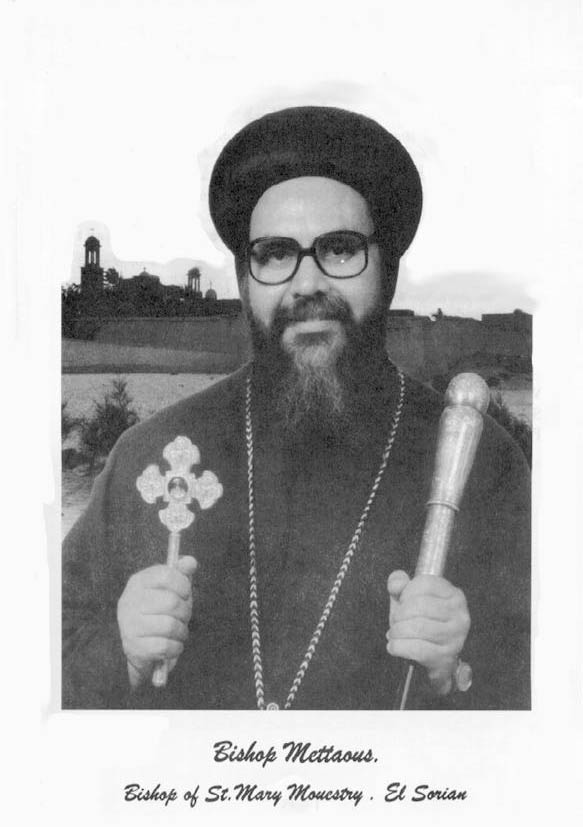
Bishop Mettaous, Bishop of St. Mary Monestry, El Sorian.
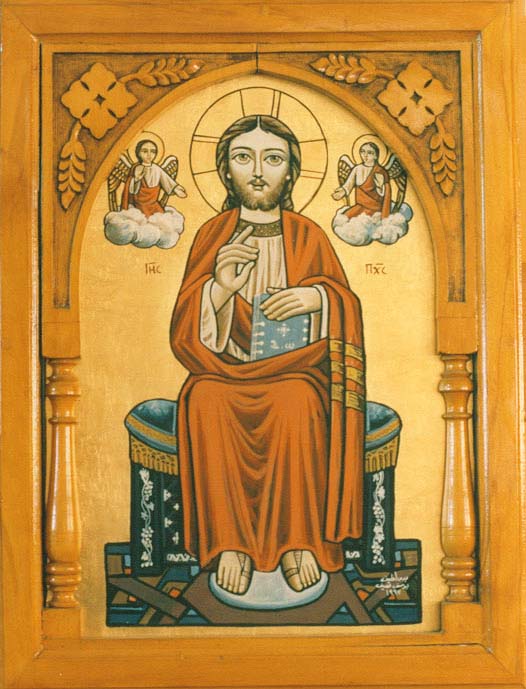 Our Lord and Savior Jesus Christ King of Kings and
Lord of lords
3
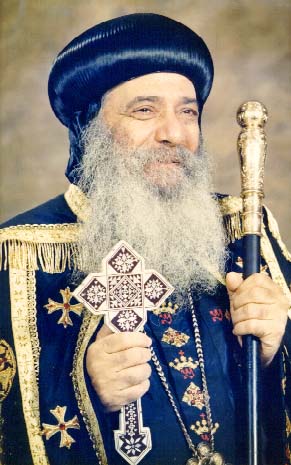 H.H. Pope Shenouda III, 117th Pope of
Alexandria and the See of St. Mark
4
- THE SPIRITUALITY OF THE RITES OF THE HOLY LITURGY
- Introduction
- THE SPIRITUALITY OF THE RITES OF THE HOLY LITURGY
- GOD ENDORSES THE RITES OF THE CHURCH
- OUR LORD JESUS AND THE RITUALS
- THE APOSTLES AND THE RITES
- RITUALS AND THE HOLY SCRIPTURES
- THE COPTIC CHURCH AS A CHURCH OF PRAYER
- THE HEAVENLY EMBASSY
- RITUALS AND CHURCH STABILITY
- 1. Raising of Incense
- THE RITUAL OF THE RAISING OF INCENSE
- DETAILS OF THE RAISING OF INCENSE
- THE THANKSGIVING PRAYER
- PERPETUAL PROSTRATIONS
- THE MYSTERY OF INCENSE PRAYERS
- THE MYSTERY OF VESPERS INCENSE
- THE MORNING (MATINS) INCENSE PRAYER
- THE BLOOD SACRIFICE - ITS ORIGIN, MEANING AND CESSATION
- THE THREE MAJOR LITANIES
- THE THREE CIRCUITS OF INCENSE
- THE LITANY OF THE DEPARTED
- THE LITANIES OF THE SICK, THE TRAVELERS AND THE OFFERING
- THE PROCESSION OF INCENSE
- THE VIRGIN'S INCENSE
- THE HEAVENLY INCENSE
- ST. JOHN THE BAPTIST'S INCENSE
- THE OFFERING OF INCENSE TO HOLY RELICS OR A HIGH PRIEST
- PROSTRATION
- THE OFFERING OF INCENSE TO A HEGOMEN
- THE OFFERING OF INCENSE TO A PRIEST
- THE INCENSE CIRCUIT OUTSIDE THE ALTAR
- THE FIVE INSPIRING CONTEMPLATORY VERSES
- THE MYSTERY OF CONFESSION
- FURTHER REMARKS ON THE INCENSE CIRCUIT
- THE PRAYER OF EPHNOTI NAI NAN - LORD HAVE MERCY UPON US’
- THE LITANY OF THE GOSPEL
- THE FIVE MINOR LITANIES
- THE ABSOLUTIONS
- THE BLESSING
- THE DISMISSAL
- 2. The Offertory
- THE RITUAL OF THE OFFERTORY
- WEARING THE VESTMENTS
- CLOTHING THE ALTAR/THE PRAYER OF PREPARATION
- PREPARING THE ALTAR
- PRAYER AFTER PREPARATION
- PRAYING THE PSALMS
- THE METHOD OF PRAYING THE HOURS
- THE WASHING OF HANDS
- THE SELECTION OF THE LAMB
- BAPTIZING THE LAMB
- THE PRAYER OF COMMEMORATION
- THE PROCESSION OF THE LAMB
- THE LITANY OF OFFERINGS
- THE GREATNESS OF THE HOLY SACRAMENTS
- THE ABSOLUTION FOR THE SON
- THE ABSOLUTION OF MINISTERS
- 3. Liturgy of the Word
- LITURGY OF THE WORD
- THE CIRCUIT OF THE PAULINE INCENSE
- THE FIRST MYSTERY OF THE PAULINE INCENSE
- THE INCENSE OF THE PRAXIS
- THE PRAXIS CIRCUIT
- THE SECOND MYSTERY OF THE PAULINE INCENSE
- MYSTERY OF THE CATHOLIC EPISTLES
- THE MYSTERY OF THE PRAXIS
- THE SYNAXARIUM
- CONSECRATION OF THE PATRIARCH AND BISHOPS
- THE PROCESSION OF THE RESURRECTION ICON
- THE CHURCH'S ADORATION AND DEEP RESPECT FOR THE GOSPEL
- THE LITANY OF THE GOSPEL
- THE MYSTERY OF THE GOSPEL
- THE LECTREN OF THE DAYS
- SUNDAYS LECTREN
- THE MYSTERY OF THE VEIL
- 4. The Three Great Litanies
- THE THREE GREAT LITANIES
- THE CREED
- WASHING THE HANDS
- 5. Prayer Of Reconciliation
- PRAYER OF RECONCILIATION
- 6. The Heavenly Hymn
- THE HEAVENLY HYMN
- HOLY (AGIOS)
- 7. The Consecration
- THE CONSECRATION
- INCENSING THE HANDS
- THE INVOCATION OF THE HOLY SPIRIT
- ANAMNESIS
- THE WORDS OF THE INVOCATION
- 8. Litanies And Commemorations
- THE SEVEN MINOR LITANIES
- COMMEMORATION OF THE SAINTS
- THE DIPTYCH
- 9. Fraction and Communion
- FRACTION AND COMMUNION
- THE FRACTION
- THE TWO METHODS OF DIVIDING THE HOLY BODY
- PRAYERS OF ABSOLUTION AND SUBMISSION
- PRAYER OF SUBMISSION TO THE FATHER
- THE ABSOLUTION TO THE FATHER
- THE SIGNINGS BEFORE CONFESSION
- THE CONFESSION
- DISTRIBUTION OF THE HOLY SACRAMENTS
- THE HONORED BODY
- DISTRIBUTING THE HONORED BLOOD
- WASHING THE UTENSILS
- THANKSGIVING PRAYER AFTER COMMUNION
- DISMISSING THE ANGEL OF THE SACRIFICE
- DISMISSING THE CONGREGATION
- THE CODE OF BENEDICTION
- THE PSALM OF JOY
- THE WASHING OF HANDS
- THE DISTRIBUTION OF EULOGIA; MORSEL OF BLESSING
" In the name of the Father, and of the Son, and of the Holy Spirit, one God, Amen. "
This book which is in your hands explains the rituals used in our Holy
Coptic Liturgy, and so gives us a unique opportunity to learn, benefit and take
part in our church's holiest form ofworship, which is all for
Emmanuel our God.
May the book be a blessing to al1 those who read it, giving them a deeper understanding and wisdom and admiration of our wonderful liturgical rituals which are deeply enriched with spiritual and theological meanings.
We ask this through the pleadings of our pure mother the Virgin Saint Mary, and the prayers of our honoured father His Holiness Pope Shenouda III.
Bishop Mettaous
Bishop of St. Mary Monestry,
El Sorian.
THE SPIRITUALITY OF THE RITES OF
THE HOLY LITURGY IN THE COPTIC
ORTHODOX CHURCH
The word `rites' in Arabic is pronounced `tuks' which is
derived from the Greek word `taxis', meaning `a system'. In
the church this refers to the system of the Holy Service, that
is, the recitation of verbal prayers and the performing of the
holy symbolical movements. Such symbols include the shape
of the church, the utensils, the ranks of the priests and the
garments they wear. Every motion and/or action during the
worship, every action in and out of the Apostolic Orthodox
Church carries with it high spiritual meaning, some of which
may not be instantly apparent to everyone. Each rite carries
within itself a profound spiritual and doctrinal meaning for
the faithful to taste and experience during their public
worship.
GOD ENDORSES THE RITES OF THE CHURCH
God has set an order for everything, especially in the worship
offered to Him by man, as seen in the quotation,
"For God is not the author of confusion but of peace"
(1Cor.14:33),
8
"Let all things be done decently and in order"
(1Cor.14:40).
The use of rites during worship has been a practice since
long ago. We read that Noah, after the Flood, built an altar
for the Lord and took from every clean animal and every
clean bird and offered Burnt Offerings on it... "And so, the
Lord smelled a soothing aroma" (Gen.8:20-21).
We may also read about the altar in the life of Abraham, the
beloved of the Lord, who built an altar for the Lord
wherever he went, calling on the Name of the Lord and
presenting Him with Burnt Offerings (Gen.12:7-8;13:18).
When the Lord asked him to offer his son as a sacrifice, he
went to the appointed place, built an altar, and placed wood
on it. He then bound Isaac his son and laid him upon the
wood on the altar, according to the rites of offering an
animal sacrifices at the time (Gen.22:9).
There are stories about ritualistic worship and the building of
altars in the life of Jacob, who, after coming back from
Haran, lived in Saccoth where he built an altar, calling it
`El Elohe Israel'(Gen.33:20).
He also built another altar in Luz, that is, Bethel (Gen.35:6).
In the days of Moses, God Himself established the rites of
worship. A great portion of The Book of Exodus and all of
the Book of Leviticus is dedicated to the explanation of rites;
God explained to Moses and Aaron all such details relating
to the rites of worship. His command was very strict and
whoever disobeyed it would not escape the heavenly
Aaron - Nadab and Abihu - who disobeyed the rites, and
instead offered profane fire in the censer. The Lord sent fire
down from heaven to consume them and they died before the
Lord (Lev.10).
There is also the story of Uzziah the king.
"When he was strong his heart was lifted up, to his
destruction, for he transgressed against the Lord his God
by entering the temple of the Lord to burn incense on the
altar of incense" (2Chr.26:16).
The priests therefore went in after him saying,
"It is not for you, Uzziah, to burn incense to the Lord, but
for the priests, the sons of Aaron, who are consecrated to
burn incense. Get out of the Sanctuary" (2Chr.26:18).
When Uzziah became furious and refused to get out, leprosy
broke out on his forehead, "so they thrust him out of that
place ... King Uzziah remained a leper until the day of his
death. He dwelt in an isolated house, because he was a
leper; for he was cut off from the house of the Lord"
(2Chr.26:20-21).
In the days of David, a man called Uzza put out his hand to
hold the Ark of the Covenant. No one was allowed to touch
the Ark of the Covenant except the priests, who carried it on
poles. The anger of the Lord was therefore aroused against
Uzza and he died there before God. This incident convinced
David to go back to the original rite, which the Lord Himself
instituted, in carrying the Ark of the Covenant. Three months
Covenant to the city of David, he gave orders saying,
"No one may carry the ark of God but the Levites, for the
Lord has chosen them to carry the Ark of God and to
minister before Him forever" (1Chr.15:2).
He then said to the chiefs of the Levites, "'You are the heads
of the fathers' houses of the Levites; sanctify yourselves,
you and your brethren, that you may bring up the Ark of the
Lord God of Israel to the place I have prepared for it. For
because you did not do it the first time, the Lord our God
broke out against us, because we did not consult Him about
the proper order.
"So the priests and the Levites sanctified themselves to
bring up the ark of the Lord of Israel. And the children of
the Levites bore the ark of God on their shoulders"
(1Chr.15:12-15).
Solomon also strictly followed the rites when he moved the
Ark of the Covenant from the tabernacle to the most holy
place in the Sanctuary, which he had built (2Chr.6). It is
written in the Bible that the Lord spoke in detail about such
places of deliverance and their specifications, even more than
He did about the creation in the Book of Genesis, which was
only briefly mentioned. He exhibited great care in detailing
the acceptable types of sacrifices, the ways of offering them,
and when they were to be offered. He also dedicated Aaron
and his sons as priests through whom the Liviticus
priesthood descended. The rest of the tribe of Levites, many
as they were, were devoted to minister to the tabernacle and
the rites of worship in it.
the Sanctuary. The Lord deliberately repeated such details to
ensure that no single detail would be neglected. This
indicates how highly regarded by the Lord the rites are, as
they reflect the glory of worship and the sentiment of
reverence for the House of God and the Holy Sacraments.
Such rites refresh the spirit of the worshipper and simplify
the facts surrounding religion and theology so that even the
laity may appreciate them. Without such rites, worship
would be dry and boring.
OUR LORD JESUS AND THE RITUALS
The Lord Jesus Christ, although He is the Law Maker and
the Author, respected the rites of Moses. The Lord Jesus
respected the rite of circumcision, being circumcised on the
8th day, and was called Jesus, the name given by the angel
before He was conceived in the womb (Luke 2:21). He also
obeyed the laws of purification when His parents took Him
to Jerusalem to present Him to the Lord,
"(As it is written in the law of the Lord, `Every male who
opens the womb shall be called holy to the Lord'), and to
offer a sacrifice according to what is said in the law of the
Lord `a pair of turtle-doves or two young pigeons'. (Luke
2:22-24).
The Lord Jesus respected and participated in all of the feasts
and assemblies, as seen in the following quotes:
"Now the Passover of the Jews was at hand, and Jesus
went up to Jerusalem...and many believed in His Name
when they saw the signs which He did" (John 2:13-
hand...but when His brothers had gone up, then He also
went up to the feast, not openly, but as it were, in secret....
Now about the middle of the feast Jesus went up into the
temple and taught" (John 7:10-14), "And the Passover of
the Jews was near, and many went from the country up to
Jerusalem before the Passover, to purify themselves. Then
they sought Jesus, and spoke among themselves as they
stood in the temple, "What do you think - that He will not
come to the feast?", meaning, shall He do something
different this year? (John 11:55-56).
Although the chief priests and the Pharisees had given orders
to seize Christ (John 11:57), He entered Jerusalem in a great
ceremony on Palm Sunday and repeatedly went to the temple
until they arrested Him. When He wanted to institute the
Sacrament (the Mystery) of the Lord's Supper, He first
celebrated the rites of the Jewish Passover with His disciples,
and then He instituted the Eucharist (The New Passover).
After cleansing the leper the Lord Jesus instructed him to go
and show himself to the priests and offer the gift that Moses
commanded as a testimony to them (Matt.8:4). In doing this
He wanted to show the priests, the keepers of the law, that
He didn't come to break the law but to complement its
shortcomings and to make its rituals spiritually alive. He also
asked ten lepers to go and show themselves to the priests
and on the way they were cleansed (Luke 17:14).
Our beloved Lord Jesus Christ was the first to establish the
rituals of the Christian Church when He prepared the Upper
Room of Zion. He held the bread with His hands and mixed
the water and the wine. The Lord taught His disciples many
things, much of which was not revealed until after His
Scriptures but were handed to the disciples by word of
mouth,
"...to whom He also presented Himself alive after His
suffering by many infallible proofs, being seen by them
during forty days and speaking of the things pertaining to
the kingdom of God" (Acts 1:3).
The Holy Church is the earthly Kingdom of Heaven, and the
pillar and foundation of truth.
THE APOSTLES AND THE RITES
The Apostolic Fathers established the rituals of the Church
as they were handed down to them by the Lord Jesus Christ;
as the Apostle Paul says,
"For I received from the Lord that which I also delivered
to you" (1Cor.11:23),"...And the rest I will set in order
when I come" (1Cor.11:34).
St. Paul also instructed his disciple, Timothy, to ensure that
the precious rituals and doctrine are passed down through
the generations, saying,
"And the things that you have heard from me among
many witnesses, commit these to faithful men who will be
able to teach others also" (2Tim.2:2).
He also instructed his disciple Titus, saying,
order the things that are lacking, and appoint elders
(priests) in every city as I commanded you..." (Titus 1:5).
He was also very particular about establishing order within
the Church, as he said,
"Let all things be done decently and in order"
(1Cor.14:40),"...For God is not the author of confusion
but of peace, as in all the churches of the saints"
(1Cor.14:33).
RITUALS AND THE HOLY SCRIPTURES
The beauty of the Coptic Church is in its scriptural
foundation; she lives the spirit, and practices according to the
Words of the Holy Scriptures. Her prayers are biblically
founded and are organized according to the guidance of the
Holy Spirit. Every word in the book of the Holy Liturgy (the
Kholagy) has its origins in the Scriptures. Below are a few
examples; a prayer from the Liturgy is stated first, followed
by a reference from the Scriptures:
"O Great and Eternal God...", comes from,
"You show loving kindness to thousands - the great, the
Mighty God, whose name is the Lord of Hosts"
(Jer.32:18), and also, "For the Lord your God is God of
gods, and Lord of lords, the Great God, Mighty and
Awesome" (Deut.10:17).
of the devil...", refers to,
"As God created man in incorruption, in His image, and
through the envy of the deceiver, death entered into the
world" (The Wisdom of Sirach 2:23-24).
"...You have destroyed death by the life giving manifestation
of Your Only Begotten Son, our Lord, God and Savior Jesus
Christ...", refers to,
"According to the promise of life which is in Christ Jesus"
(2Tim.1:1), "And without controversy great is the mystery
of godliness: God was manifested in the flesh, justified in
the Spirit, seen by angels, preached among the Gentiles,
believed on in the world , received up in
glory" (1Tim.3:14), "...Once at the end of the ages He has
appeared to put away sin by the sacrifice of Himself..."
(Heb.9:26).
"...Glory to God in the highest, peace on earth and goodwill
toward men...", comes from,
"Glory to God in the highest and peace on earth and
goodwill toward men" (Luke 2:14).
"...and make us all worthy, O our Master, to greet one
another with a holy kiss...", is taken from,
"Greet one another with a holy kiss. The churches of
Christ greet you" (Rom.16:16), "All the brethren greet
you. Greet one another with a holy kiss" (1Cor.16:16),
and, "Greet one another with a holy kiss" ( 2Cor.13:12).
without falling into condemnation...", refers to,
"For as often as you eat this bread and drink this cup, you
proclaim the Lord's death till He comes. Therefore who
eats this bread or drinks this cup of the Lord in an
unworthy manner, will be guilty of the Body and Blood of
the Lord...For he who eats and drinks in an unworthy
manner, eats and drinks judgment to himself, not
deserving the Lord's Body" (1Cor.11:27-32).
"...In Jesus Christ our Lord...", refers to,
"And in that day you will ask me nothing. Most assuredly
I say to you whatever you ask the Father in My Name, He
will give you. Until now you have asked nothing in My
Name. Ask and you will receive that your joy may be full"
(John 16:23-24).
The Holy Liturgy is a living display of the Holy Scriptures.
The full edition of the Khology has been annotated to show
the Scriptural reference to each and every sentence in the
Liturgy.
THE COPTIC CHURCH AS A CHURCH OF PRAYER
The rituals of the Holy Liturgy are profoundly spiritual. On
the evening before for the Holy Mass the beautiful hymns
and praises of the Vespers Prayers are performed in
preparation for the following day's service. Psalms are
prayed, and praises and doxologies are sung. Then at dawn
its three services, followed by the Midnight Praise which is
chanted in about fifteen beautiful Coptic tunes. The Morning
Prayers are then prayed at sunrise, while the sun is spreading
its golden rays over the world, reminding us of the `Sun of
Righteousness', our Lord Jesus (Mal.4:2). During this time
we recite, "When the morning hour approaches, O Christ our
God, the True Light...." The morning doxologies greet Saint
Mary, the angels, the martyrs and all of the saints, all of
whom are felt to be present in the Church. Following this we
then raise the Incense of the Prime. (The Raising of Incense
is discussed in later chapters.)
From the time the priest enters the church his continuous
prayers begin, some spoken aloud, but many of which are
prayed in silence. In this way, the priest is kept busy in
prayer at every moment, lest his mind should wonder to any
earthly matters. Below are some of these prayers:
In Vespers during the Raising of Incense the priest
repeats, "The holy blessing of the Vespers Incense be with
us, Amen."
In the raising of the Morning Incense he repeats, "The
holy blessing of the Prime Incense be with us, Amen."
And so too, during the raising of the Pauline Incense he
repeats, "The holy blessing of Saint Paul, the Apostle of
Jesus Christ, be with us, Amen. "
And in the Praxis Incense (the Book of Acts) he repeats,
"The holy blessing of our fathers, the Apostles, be with us,
Amen."
the reply, "Have mercy upon us, O God", during which
time the priest prays the second litany of Saint Gregory,
"Healing for the sick, and comfort to the needy..." (Saint
Gregory Liturgy). Whilst praying, the priest raises the cross,
which is illuminated with three candles.
The Church constantly prays for the whole world; the sick,
the reposed, the orphans, the needy, the widows, the
travellers, the rulers, as well as the animals, plants and
vegetation, and the waters. Just as the Church advocates
intercession, we intercede for the whole world to her
Beloved Bridegroom, the Lord Jesus Christ. The prayer of
the Midnight Absolution is a living example of a Church
which is concerned about every facet of the world, no matter
how small.
THE HEAVENLY EMBASSY
The Church, being a heavenly embassy, is the icon of heaven
on earth. All Church rituals and symbols are an earthly
representation of the heavenly world. According to the rites
of the Coptic Church, the entrance into the church should be
from the west so that when we enter we proceed to the East.
The reason for this is that the west symbolises darkness, the
place where the sun sets, but the east is the place of light.
Therefore, upon entering the church we are being
transformed from the darkness of sin to the True Light which
is Jesus Christ, our Lord. The curtain at the front of the
church represents the barrier of our sin; this is why, as the
priest pulls aside the curtain at the beginning of each prayer,
he says, "Have mercy upon us, O Father the Almighty, O
us for we have no other supporter in our tribulations but
You."
It is interesting to note that the Temple of Jerusalem had its
entrance to the East, while the worshippers faced the West;
this symbolised the destiny of all prior to the incarnation and
the death of Christ our Lord.
"'But to you who fear My name the Sun of Righteousness
shall arise with healing in His wings; and you shall go out
and grow fat like stall-fed calves. You shall trample the
wicked, For they shall be ashes under the soles of your feet
on the day that I do this,' says the LORD of hosts"
(Mal.4:2).
RITUALS AND CHURCH STABILITY
It is obvious that Christian groups who want to maintain
continuity and stability in the church adapt a certain order for
their worship. Some splinter or extremist groups worship
with no order whatsoever and, as a result, lose their direction
and stability. If worship is shaped according to the moods
and fashions of the congregation, the church will inevitably
lose its stability. Such continuous erosion of the holistic
apostolic content eventually leads to the tragic neglect of the
needs of some members of the church. The apostolic system
of our church is permanent and unchangeable, fulfilling the
needs of all people at all times. Today we are observing that
members of many Christian denomination are starved of
spirituality. It is sad to see some of them focusing on non-
Christian sources to supplement their deficient spiritual diet.
We hope that Orthodoxy is rediscovered by these
communities before matters get worse.
INCENSE
The use of incense in the church is not a pagan ritual but a
Biblical fact which represents the prayers and praises of the
saints and angels, as seen in Revelations 8:3;
"Then another angel, having a golden censer, came and
stood at the altar. And he was given much incense, that he
should offer it, with the prayers of all the saints upon the
golden altar, which is before the throne."
Incense is raised during Vespers and Morning Prayers before
every liturgy, except those during the Great Lent which are
concluded late, and hence, incense is only raised during
Vespers on the Saturday night.
The Raising of Incense is an introduction and preparation for
the Liturgy, consisting of a collection of prayers, praises and
Thanksgiving prayers which request the Lord's blessings
upon the sacramental service. The Raising of Incense may be
performed on its own, not just as an introduction to the
Liturgy, but as an offer of the sacrifices of prayer and praise
to God through its sweet incense. However, the Raising of
Incense is mandatory prior to the Liturgy (except, of course,
during Lent, as just stated above), the minimum requirement
being the raising of the Prime Incense after the midnight
praises. The raising of Incense can be found in the Old
Testament. The Temple of Jerusalem contained a separate
altar for the raising of incense called the Incense Altar which
was different to the Altar of Offertory.
The priest enters the Church and opens the curtain saying,
"Have mercy upon us, O Father the Almighty, O Holy
Trinity have mercy upon us, O Lord of Hosts be with us for
we have no other supporter in our tribulations but You." He
then prays The Lord's Prayer and prostrates before the altar
saying, "We worship You, O Christ, with Your Gracious
Father and the Holy Spirit, for You have come/risen and
saved us." He then prostrates before the other priests and the
congregation saying, "Accept my prostration. Bless me and
forgive me." He exchanges a holy kiss with the other priests
as a sign of love, peace and reconciliation. He also turns to
the congregation and says, "Forgive me, I have sinned."
The absolution from the other priests, and the forgiveness
from the congregation is very important before starting the
prayers, for our beloved Saviour said,
"And whenever you stand praying, if you have anything
against anyone, forgive him, that your Father in heaven
may also forgive you your trespasses" (Mark 11:25).
Also the Apostle Paul says,
"Therefore I desire that men pray everywhere, lifting up
holy hands, without wrath and doubting" (1Tim.2:8).
The priest then stands reverently before the altar with his
hands raised, the cross in his right hand. The deacon stands
Prayer.
THE THANKSGIVING PRAYER
Our church begins every prayer session with the Prayer of
Thanksgiving, whether it be a liturgy, wedding, funeral,
baptism, or anything else. We thank the Lord on every
occasion, in every condition and for all things, in happiness
and in sadness, as well as in sickness and in health. We thank
Him, and believe that every circumstance is the Lord's will
and occurs with His permission, as it is said in Romans
(8:28),
"And we know that all things work together for good to
those who love God, to those who are the called according
to His purpose."
The priest prays audibly up until the phrase, "...and all the
powers of the devil...", then he must prays the inaudibly part-
as this part contains the Name of Christ; through Whom
every prayer is accepted, as He promised when He said,
"Most assuredly I say to you, whatever you ask the Father
in My Name He will give you" (John 16:23).
PERPETUAL PROSTRATIONS
After praying the Prayer of Thanksgiving, the priest
prostrates and kisses the entrance of the sanctuary. He then
enters the sanctuary with his right foot, as he is entering the
kisses it. He prostrates as a humble request that God accept
his prayers, pleadings and sacrifices. Leaving the sanctuary
from the left side, he steps out with his right foot, his left
foot still facing the altar.
THE MYSTERY OF INCENSE PRAYERS
The priest stands before the altar and the deacon brings the
censer to him from the right side of the altar. The priest
places five spoonfuls of incense in the censer while making
the sign of the cross three times, thus consecrating the
incense to the Only One Holy God (not to idols or strange
gods), as it is written,
"From the rising of the sun, even to its going down, My
Name shall be great among the gentiles, in every place
incense shall be offered to My Name, and a pure offering"
(Malachi 1:11).
These five spoonfuls of incense represent the five righteous
men of the Old Testament who offered acceptable sacrifices
to the Lord, and the Lord smelled their pleasing aroma.
These men are:
1-ABEL, who offered the first born of his flock.
"Abel also brought of the firstlings of his flock and of
their fat. And the Lord respected Abel and his offering"
(Gen.4:4).
every pure animal and bird.
"Then Noah built an altar to the Lord, and took of every
clean animal and of every clean bird, and offered burnt
offerings on the altar. And the Lord smelled a soothing
aroma, then the Lord said in His Heart, `I will never again
curse the ground for man's sake'." (Gen.8:20-21).
3-MELCHIZEDEK, who offered bread and wine, a non-
blood sacrifice, and blessed Abraham. (Gen.14:18)
4-AARON, who offered sacrifices for himself and his
people,
"...and the fire came out from before the Lord, and
consumed the burnt offering and the fat on the altar," as a
sign that the Lord accepted the sacrifice (Lev.9:24).
5-ZACHARIAS, who entered the Sanctuary to offer
incense, and
"...the angel of the Lord appeared to him, standing on the
right side of the altar, and announced to him the birth of
John" (Luke 1:8-22).
After placing the five spoonfuls of incense in the censer, the
priest receives the censer from the deacon with his right
hand. He places the hook of the censer on his little finger,
then holds the censer from the middle of its chain, also
holding the cross in his right hand.
reciting either the Mystery of Vespers prayer (evening), or
the prayer of the Morning Incense (Matins). The priest holds
the cross and the censer during the prayers and Bible
readings, unless a bishop is present, in which case, he is the
one who holds the cross and blesses the people with it.
THE MYSTERY OF VESPERS INCENSE
This special prayer is a deep spiritual prayer which the priest
is directing to our Lord Jesus Christ, the True Sacrifice and
the Lamb, Who is bearing the sins of the whole world. It
consists of verses from both the Old and New Testaments, as
seen below:
"O Christ our God, You are Great and Feared and True", as
mentioned in the book of Daniel (9:4),
"And I prayed to the Lord my God and made confession
and said, O Lord, Great and Awesome God, Who keeps
His covenant and mercy with those who love Him."
"...You are the Only Begotten Son...", as mentioned in the
Gospel of John (1:1),
"No one has seen God at any time, the Only Begotten Son
who is in the bosom of the Father, He has declared Him."
"...The Logos (Word) of God the Father...", as written,
" In the beginning was the Word, and the Word was with
God, and the Word was God" (John 1:1). The disciple
His name is called the Word of God" (Rev.19:13).
"...Your Holy Name is fragrance poured forth...", as
Solomon mentioned in the Book of Songs (1:3),
"Your Name is ointment poured forth, therefore the
virgins love You."
"...And in every place, incense is offered before You...", as a
pure offering, as written in Malachi (1:11),
"For from the rising of the sun even to its going down, My
Name shall be great among the gentiles, in every place
incense shall be offered to My Name and a pure offering.
For My Name shall be great among the nations, says the
Lord of Hosts."
"...O Lord we ask You to accept our prayers, as incense
rising before You...", as mentioned in Psalm 140:2,
"Let my prayers be set before You as incense, the lifting
up of my hands as the evening sacrifice."
"...For You are the True evening sacrifice Who sacrificed
Yourself on the honoured cross for our sins...",as seen in
Ephesians (5:2), where the Apostle advises his children,
saying,
"And walk in love, as Christ also has loved us, and given
Himself for us as an offering and a sacrifice to God for a
sweet smelling aroma," and again in Hebrews (7:27),
"...who does not need daily, as those high priests, to offer
up sacrifices, first for His own sins and then for the
Himself."
"...According to the Will of Your Good Father...", as
mentioned in the Gospel of St. John (3:16),
"For God so loved the world that He gave His Only
Begotten Son, that whoever believes in Him should not
perish but have everlasting life,"
and in Romans (8:32),
"He Who did not spare His own Son, but delivered Him up
for us all, how shall He not with Him also freely give us
all things."
"...He with Whom You are Blessed, and with the Holy
Spirit, the Life Giver, Who is of One essence with You now
and forevermore. Amen."
THE MORNING (MATIN) INCENSE PRAYER
In the prayer of the Morning Incense, the priest asks the
Lord to accept the incense offered to Him as He accepted
the offerings of the righteous Abel, the sacrifices of Noah
and Abraham, and the incense of Aaron and Zacharias. The
biblical references for each are detailed below:
"O God Who accepted the offerings of Abel the
righteous...", as seen in Genesis (4:4-5),
their fat. And the Lord respected Abel and his offering, but
He did not respect Cain and his offering. And Cain was
very angry, and his countenance fell."
"...The Sacrifice of Noah...", as seen in Genesis (8:20-21),
"Then Noah built an altar to the Lord, and took of every
clean animal and of every clean bird, and offered burnt
offerings on the altar. And the Lord smelled the pleasing
aroma."
"...And Abraham...", also mentioned in Genesis (22:2), when
Abraham willingly offered his son, Isaac, as a sacrifice, just
as the Lord had commanded him. When the Lord found
Abraham obedient, He stopped him from sacrificing his son
and told him to offer a ram that was tied by the horns to a
tree. The Lord accepted the offering and bestowed great and
valuable blessings on Abraham.
"...And the incense of Aaron...", as seen in Exodus (30:1-8),
when the Lord ordered Moses, saying, "You shall make an
altar to burn incense on...Aaron shall burn on it sweet
incense every morning when he tends the lamps, he shall
burn incense on it. And when Aaron lights the lamps at
twilight, he shall burn incense on it, a perpetual incense
before the Lord throughout your generation."
"...And Zacharias...", as in Luke (1:5-13),
"So it was, that while he was serving as priest before God
in the order of his division, according to the custom of the
priesthood, his lot fell to burn incense when he went into
the temple of the Lord. Then an angel of the Lord
incense...the angel said to him...'for your prayer is heard
and your wife Elizabeth will bear you a son'...."
"...Accept this incense from our hands, us sinners...", the
priest thus asking God to accept the incense offered to Him,
as He had accepted the offerings and sacrifices of the five
righteous men, and also as He accepted the atoning sacrifice
of Christ as a pleasing aroma, as spoken by the Apostle Paul
in Ephesians (5:2) when he said,
"Walk in love as Christ also has loved us, and given
Himself for us an offering and a sacrifice to God, for a
sweet smelling aroma."
"...For the forgiveness of our sins with the rest of your
people...", which asks for the remission of his own sins and
those of his congregation, as he is our intercessor before the
throne of Heavenly Grace.
"...For Blessed and full of Glory is Your Holy Name, O
Father, Son and the Holy Spirit, now and forevermore,
Amen."
THE BLOOD SACRIFICE - ITS ORIGIN, MEANING
AND CESSATION
Biblical scholars say that when Adam and Eve fell God told
them to offer a blood sacrifice of an animal without blemish.
This sacrifice was to be an archetype of the blood of Christ,
Who crushed the devil, for as it is written in the book of
Hebrews (9:22),
After Adam offered his sacrifice, "The Lord God made
tunics of skin, and clothed them" (Gen.3:21),
to protect them from their shame and nakedness, through
which they would realise the need of a Saviour to shed His
Blood and redeem them. In His death, the Lord was hung
naked on the cross so that with His holy resurrection, He
would clothe us in purity and righteousness.
From time to time, Adam offered such blood sacrifices after
being banished from Paradise so that the Lord might have
mercy upon him and forgive him. His obedient son, Abel,
learnt these rituals from his father, and when he offered a
blood sacrifice of the first born of the best of his sheep the
Lord accepted his sacrifice because it was offered according
to the law.
God rejected the offering of Cain, because his sacrifice was
not according to the law. By not offering a blood sacrifice,
he showed that he did not feel the need for atonement. God
also rejected his offerings because of his evil deeds.
In the New Testament, our offerings are no longer a blood
sacrifice but are from the fruits of the land and its produce.
God accepts them because, through His Incarnation and
death, the curse was taken away from the land. At His Birth,
the angels were singing
"Glory be to God in the Highest, Peace be on earth, and
good will towards man" (Luke 2:14).
During His Incarnation, He walked on the land and purified
it. When He died He was buried in a
"To the pure all things are pure" (Titus 1:15).
THE THREE MAJOR LITANIES
The priest then goes around the altar three times with the
censer, silently praying the Three Major Litanies, namely, the
`Litany of the Peace of the World and Church', the
`Litany of the Fathers', and the `Litany of the
Gatherings', while the congregation sings the Verse of the
Cymbals. Facing him on the opposite side of the altar is the
deacon who holds the cross and responds. The following is a
summary of what the priest does around the altar. This is
known as the Incense Circuit.
THE THREE CIRCUITS OF INCENSE AROUND THE
ALTAR
After concluding the prayers of the Mystery of the Incense,
the priest stands before the altar, facing East, and praying
the introduction to the Litany of Peace, saying, "Remember
O Lord the safety of Your Holy, Apostolic Church...", while
continuing to raise incense. Firstly, the priest raises incense
over the altar towards the right of the throne (where the
chalice is kept), then on the left side of the throne, and finally
in front of the throne. He then swings the censer in a full
circle before the altar, from left to right. This is done
carefully so that no embers from the censer fall onto the
floor. This motion of offering three times over the altar, then
Essence.
While the priest is raising incense and praying the
introduction to the Litany of Peace, the deacon stands
opposite him on the other side of the altar and says, "Pray
for the peace of the One, Holy, Universal and Apostolic
church of God." The priest, incensing in front of the altar,
then proceeds to the right of the altar; while walking, he
says, "That which exists from one end of the world to the
other."
It is worthy of note that the priest must not offer incense
unless he is facing due East or due West.
As he proceeds from the West side of the altar to the East,
the priest prays, "Remember O Lord the safety of Your
Church...remember our gatherings. Bless them." Then as he
faces due West, looking at the clergymen and the
congregation, he offers prayers for them saying, for example,
"Remember O Lord our Patriarch.... Let Your people be
thousands and thousands...." Then the priest stands to the
East of the altar while facing West, raising incense and
saying, "Remember O Lord our honourable Pope Abba
(Shenouda III)...and his brother in the apostolic ministry, our
father the honoured Metropolitan (or bishop) Abba...." The
deacon stands in the opposite direction (West facing East),
raises the cross and replies, "Pray for our Pontiff Pope
Abba...Pope and Patriarch of the great city of Alexandria,
and his brother in the Apostolic ministry, our father
Metropolitan (or bishop) Abba...and for our Orthodox
bishops." The priest then raises incense to the South saying,
"Preserve them for many years to come." He then moves to
saying, "Remember, O Lord, our gatherings. Bless them."
The deacon stands in front of him, East of the altar, saying,
"Pray for this holy church, and all our gatherings." The priest
moves to the right of the altar and says, "Grant that they may
be unto us without obstacle or hindrance, that we may hold
them according to Your holy and blessed will." Again the
priest moves to the East of the altar, and raising incense
towards the West says, "Houses of prayer, houses of purity,
houses of blessing, grant them unto us O Lord, and Your
servants, who shall come after us forever." The term `house
of prayer' also should describe our own home if it is worthy
of such a holy description in that it is not defiled with
unclean acts.
The deacon completes his activity around the altar in silence.
Moving to the West of the altar, he raises incense, saying,
"Arise O Lord God. Let all Your enemies be scattered and
flee before Your face." Moving to the East of the altar, he
raises incense towards the West, facing the congregation,
and says, "But let Your people be in blessing, thousands of
thousands and ten thousand times doing Your will." Moving
West of the altar and raising incense toward the East, he
says, "By the grace, compassion and love of Your Only
Begotten Son, our Lord, God and Saviour Jesus Christ,
through Whom glory, honour, dominion and power are due
unto You, with Him and the Holy Spirit the life-giver, Who
is of one essence with You, now and at all times and unto the
age of all ages, Amen." The priest kisses the altar, and comes
out from the sanctuary without turning his back on the altar.
He steps out of the altar with his left foot, while still facing
the altar.
diagram.
After leaving the sanctuary, the priest raises incense before
the sanctuary three times; the first time saying, "We worship
You O Christ our God with Your gracious Father, and the
Holy Spirit for You have come and saved us." The second
time he says, "But as for me, I will come into Your house in
the multitude of Your mercy, in fear of You I will worship
toward Your holy temple" (Ps.5:7). The third time, he says,
"I will praise You with my whole heart. Before the angles
I will sing praises to You" (Ps.137:1-2).
He then raises incense once to the North of the sanctuary
where the icon of St. Mary is displayed, and says, "We hail
you with Archangel Gabriel. Hail to you highly favoured one,
the Lord is with you. Blessed are you among women" (Luke
1:28).
Then he turns and raises incense towards the West, saying,
"Hail to the hosts of angels, hail to my fathers the apostles,
the martyrs and all the saints."
He At this point the priest faces the congregation who are
standing together in rows, resembling the Heavenly
Jerusalem where the angels and saints dwell, then raises
incense to the South of the sanctuary where the icon of John
the Baptist is always placed, and says, "Hail to John, son of
Zacharias, hail to the priest the son of the High Priest."
The priest then raises incense once more towards the East,
thus ending the procession in the name of the Lord, saying,
"Let us worship our Saviour, the beloved of mankind,
East and waits until the congregation finishes chanting the
Verse of the Cymbals, then starts praying the appropriate
litanies. The priest, standing at the door of the sanctuary,
raises incense in all four directions, signifying that God is
Omnipresent and can hear our prayers.
THE LITANY OF THE DEPARTED
The Litany of the Reposed is always prayed during the
raising of the Incense of Vespers.
Praying for the departed is very important and a well
established teaching in the Coptic Church for numerous
reasons:
It declares that the souls of those who have passed
away are still alive, unlike the animals, because God
said, "I am the God of the living, not of the dead," so
we have to remember those living souls whenever we
pray, striving to help them attain eternal happiness.
It confirms the Resurrection; we ask God to raise
their bodies on the Judgment Day and forgive their
petty mistakes which they may not have had a chance
to repent and confess before dying.
It verifies the Day of Judgment; through our prayers
for the reposed, we confess the day of reckoning,
reminding some, and teaching others, to be watchful of
their deeds.
It ensures that nobody has yet received their full
reward, as written in the book of Hebrews (11:39),
faith, did not receive the promise."
It helps us to always remember that the reposed are
our brethren and we should remember them, for it is
written,
"The righteous will be in everlasting remembrance"
(Ps.112:6).
It comforts the living in knowing that we shall
receive everlasting life, and grants us patience.
It fulfils our debt towards the reposed, for God
ordered us, as mentioned by the Apostle James,
"pray for one another" (James 5:16).
St. Dionisious, a disciple of St. Paul, said, "The prayers of
the righteous benefit the reposed. If the reposed's sins were
trivial there would be great benefit from what was done for
him after his departure. However, if his sins were serious and
heavy, the Lord has already closed the door."
THE LITANIES OF THE SICK, THE TRAVELLERS
AND THE OFFERING
When raising the Morning Incense during weekdays, the
priest prays the Litanies of the Sick and of the Travellers, but
on Sundays and on holy feast days, the Church anticipates
that no one would be travelling, but rather, they are
attending the Liturgy or celebrating the feast, bringing their
offerings and oblations. Therefore the Litany of the Offerings
is prayed instead of the Travellers on these days.
A beautiful section of the Litany of the Offerings is a plea to
God, which says, "And those who are desiring to offer but
they have nothing, give them the incorruptible instead of the
corruptible, the heavenly instead of the earthly, the
everlasting instead of the transient. Fill their houses and
stores with good things." The Church perpetually prays for
those who wanted to offer, but were unable to due to lack of
means.
In this litany it becomes apparent that the Church raises the
standing of the offerings to the level of a sacrifice, saying,
"Accept them on Your holy, heavenly altar as a fragrance of
incense", as the Apostle Paul teaches us,
"Do not forget to do good and to share, for with such
sacrifices God is well pleased" (Heb.13:16).
Good deeds are a sacrifice of love and kindness which one
offers to others, resembling the sacrifice of the Lord Jesus
Christ on the cross Who died for our salvation,
"For God so loved the world that He gave His Only
Begotten Son, that whoever believes in Him should not
perish, but have everlasting life" (John3:16).
The Apostle Paul says,
"And walk in love, as Christ loved us and gave Himself up
for us, a fragrant offering and sacrifice to God" (Eph.5:2).
The priest prays the Litany of Offerings at the altar, facing
East, not at the door of the sanctuary where the rest of the
litanies are prayed.
present in the church, that is, during weekdays. On Sundays
and the Lordly feasts, however, the Litany of Offerings is
prayed even if the Lamb is not present in the church.
On Saturday mornings, the Litany of the Reposed is said, in
commemoration of our Lord Jesus Christ in the tomb on
Easter Saturday.
Some Points About the Litanies
The Litany of the Reposed is prayed during
Vespers, that is at sunset, to remind the believers that
our lives on earth shall one day come to an end.
The Litany of the Sick is said in the morning
because the church is like a hospital which opens its
door for the sick and wounded and cures them, as St.
John Chrysostom described it.
The Mystery of Anointing the Sick is said in the
morning when the priest, deacons, and those who are
sick are all fasting.
The Litany of the Travellers is prayed in the morning
because, in the past, people would only travel in the
morning light when it was safe to do so. David the
Psalmist says,
"While the sun rises man goes out to his work and to his
labor until the evening" (Ps.104:22-23).
After the priest finishes praying the litanies at the door of the
sanctuary he enters the sanctuary, saying, "By the grace,
compassion, and love of mankind of Your Only Begotten
Son, Our Lord, God and Saviour, Jesus Christ, through
Whom glory, honour...." He then puts one spoonful of
incense into the censer and makes a sign of the cross, saying,
"Glory and honour, honour and glory to the Holy Trinity, the
Father, the Son and the Holy Spirit now and forevermore,
Amen." Then he offers incense over the altar three times;
The first time he says, "We worship You O Christ
our God, with Your gracious Father and the Holy
Spirit, for You have come and saved us."
The second time he says, "But as for me, I will
come into Your house in the multitude of Your mercy.
In fear of You, I will worship towards Your holy
temple."
The third time the priest says, "Before the angels I
will sing praises to You. I will worship toward Your
holy temple." (Psalm 138:1-2)
THE VIRGIN'S INCENSE
The priest then turns to the North and stands before the icon
of St. Mary. The tradition of the Coptic Church is to place
the icon of St. Mary to the right of the temple's veil,
according to the verse,
Your right hand stands the queen in gold from Ophir"
(Ps.45:9).
Raising incense before her, the priest says, "We greet you
with Gabriel the angel, saying, `Peace be with you, O full of
grace, the Lord is with you'."
THE HEAVENLY INCENSE
Then the priest turns towards the West and, raising incense,
says, "Hail to the hosts of angels and my fathers the apostles,
the martyrs, and all the saints."
While facing West the priest views the worshippers standing
in their rows, appearing to be in awe and reverence,
reminding him of heaven where hosts of angels, apostles and
saints are standing before the Lord's throne, praising Him
endlessly. The priest then offers incense to the congregation.
ST. JOHN THE BAPTIST'S INCENSE
Moving to the south of the sanctuary door, the priest then
stands before the icon of John the Baptist, son of Zacharias,
and says,
"Hail to John, son of Zacharias, hail to the priest the son of
the High."
The icon of John the Baptist is placed on the Southern side
of the sanctuary's door, next to the icon of our Lord Jesus
Christ. We notice during the procession of Palm Sunday and
the Baptist is read to the South of the sanctuary door.
The priest once again raises incense towards the
East, saying, "Let us worship our Saviour, the Good Lover
of mankind, because He has had compassion upon us and has
come and saved us."
In raising the incense towards the East, the priest has
completed a full circle, signifying that the start and the end of
the offering is to God alone, for He is the beginning and the
end, "the Alpha and the Omega" (Rev.22:13).
He then offers the incense to the Lectionary (Coptic first),
then the (Arabic/English), while saying, "We worship the
Gospel of our Lord Jesus Christ to Whom is the Glory
forever, Amen.".
He takes the blessings of the Bible by touching it with his
hand and then kisses it. The `Katameros' (the lectionary)
should be opened to the correct readings, while the priest is
offering this incense.
THE OFFERING OF INCENSE TO HOLY RELICS
OR A HIGH PRIEST
If there are holy relics of saints in the church, the priest is to
offer them incense.
If the Pope, a Metropolitan or Bishop is present, the priest
bows before them, offering incense three times;
life of our Pope / Metropolitan / Bishop...."
The second time saying, "Preserve him, O Lord, for
many years and safe periods."
The third time saying, "Bring all his enemies under
his feet quickly." He then kisses the cross and the hand
of the Pope, Metropolitan or Bishop and says, "Ask
God to forgive us our sins."
There is no formal written note as to what the Pope or
Bishop says in response to being offered incense, however,
the author has heard a Bishop respond with the same prayer
as that with which a priest responds, saying, "The Lord
preserve your priesthood like Melchizedek, Aaron, Zacharias
and Simeon the priests of the Most High God, Amen." The
prostration and offering of incense before a high priest is not
done because we worship the priest himself (as some people
might think) but to offer him incense, being our spiritual
leader, so that he can plead for us (intercede) and raise the
incense to God on our behalf. This tradition can be seen also
in public life, whereby appropriate people are chosen to
present to a king or a leader the gifts or messages on behalf
of others. In doing this, they show their respect and
reverence to the king or leader, while, at the same time,
securing acceptance of the gift, or the consideration of the
petition. It is for these reasons that incense is offered to the
Patriarch or the Bishop. Because he has the seniority in
priesthood, the incense is offered to him which he then offers
with his prayers to the Lord, praying to the Lord on behalf of
the people and the clergy. The priest asks the Patriarch or
Bishop to intercede for us when he says, "Pray for us to the
Lord Jesus to forgive our sins." This explanation therefore
before the Pope or a Bishop.
PROSTRATION
The Coptic Church, in its humble and meek spirit, teaches
her children three types of prostration, or metanias (bowing).
These are:
1. Prostration of Worship
These are the prostrations offered to God during our
individual or public worship, such as at the beginning of each
of the hourly prayers when we say "Lord have mercy...." St.
Isaac said about such prostrations, "Bow at the beginning of
your worship, asking God from your heart, with humiliation,
to give you patience and control over your thoughts during
prayers." Mar John Casian said about the monks in Egypt, "I
saw them in prayer. When they have finished reciting the
Psalm they do not prostrate themselves in a hurry, as if it is a
duty they want to get out of the way, like many of us do. On
the contrary, they stand for a while to raise a short prayer,
then they prostrate themselves in awe and great devotion.
After that, they get to their feet in a brisk manner, standing
uprightly with all their thoughts absorbed in prayer."
The Church's Canon define the number and arrangement of
such prostrations by saying, "the worshipper starts his prayer
either with one or three prostrations. He should kneel down
after each psalm or praise, or whenever the words "kneeling
down" are contained in the prayer." Believers (and in
particular monks) who prostrate themselves as a daily
prostration is to offer thanks to the Lord for His great
mercies, or for His help in a certain matter. These are known
as thanksgiving prostrations.
Another aim of prostrating in prayer is to implore the Lord
to grant us certain virtues or to pray for other people, saying
such things as,
"Thank You my Lord Jesus Christ, for You...", or,
"Grant me, O Lord, the life of purity", or,
"Grant me, O Lord, the life of patience and
tolerance", or,
"Grant me, O Lord, the life of complete love", or
focusing on any of the other virtues.
Also a person may devote a number of prostrations on behalf
of those who have asked him to pray for them. He may be
motivated to offer worships for them without their
knowledge through his love for them and his awareness of
their needs. One may also devote some prostrations to the
Lord for the Church and its fathers, or for the safety of the
world and its leaders, and so on.
On the topic of prostration in prayer, Mar Isaac said,
"Do not think that prostrating yourself before God
is a light matter. None of all the good deeds equals
persevering in completing prayers with prostrations."
He also said,
"Compel yourself to kneel down before God, for
this invigorates the spirit of prayer." Also,
will give the vigilant worshipper the ideal atmosphere
for worshipping." And also,
"A love for continual prostration before God during
prayer is an indication that the soul has died to the
world and has realised the mystery of the new life."
The Church does not allow prostration on Saturdays and
Sundays or during the fifty days of Pentecost or after having
Holy Communion.
2. The Prostration of Repentance
There are two types of these prostrations:
Offering metanias to God, asking Him to have
mercy on us, to give us the life of repentance and to
forgive us our sins. These prostrations may be given as
a task from our father of confession for the repentance
of a certain sin, either for practice or as a corrective
measure.
Offered by a person to his brethren after a meeting
of discussion or reconciliation. The other party should
accept these metanias and offer a similar metania in
return, then they should shake hands in love,
reconciliation and forgiveness, as it is written in the
Bible,
"Take heed to yourselves. If your brother sins against you,
rebuke him; and if he repents, forgive him. And if he sins
against you seven times a day and seven times a day
(Luke 17:3-4).
The word "metanoia" is a Greek word which means
repentance, that is, to change the mind from that which is
wrong to that which is right. St. Paul says,
"And do not be conformed to this world, but be
transformed by the renewing of your mind, that you may
prove what is that good and acceptable and perfect will of
God" ( Romans 12:2).
Prostrations offered from the heart are a powerful action in
attempting to attain the forgiveness of those whom you have
transgressed against. If sincere, they can wipe out all effects
of insult or transgression, and refill the heart with a love
greater than it felt before.
In "The Paradise of the Fathers" a famous spiritual book
on the life and sayings of the desert fathers, there is a story
about two brothers who were devout monks living in the
wilderness of Sheheet. The devil became keen to drive a
wedge between these two brothers. One day the younger
brother lit a lamp and put it on its stand, but through Satan's
trickery, the lamp fell down and was extinguished. The older
monk became very upset and hit his brother. At this, the
younger brother bowed down and said, "Do not get upset
my brother. Just be patient and I will light the lamp again",
repeating himself many times. When God saw how meek the
younger brother was He tortured that devil until morning.
The devil then went to the leader of demons, and told him
what had happened. A priest of the idols who served the
demons heard this story, and upon hearing it, left everything,
believed, and joined the order of the monastic life. Right
used to say, "Humility can overcome, dissolve and suppress
all the power of the enemy.
He once said: "I once heard demons say to each other,
`Every time we are found between monks, we see them
offering metanias to each other, suppressing our powers'."
Prostrations and repentance are signs of humility, a fear of
God, and the following of the commandments by the
worshipper. Such virtues cannot be tolerated by the devil, as
it burns him.
3. Prostrations of Honour
There are two kinds of these prostrations:
i. Metanias offered before the bodies of the martyrs and
saints to honour their bodies because they endured devotion,
hunger, thirst, tears and sweat on account of their great love
for our Lord, Jesus Christ. Through this they became a
dwelling place for the Holy Spirit. We honour them
according to the promise of our Lord, Who said,
"For those who honour Me, I will honour, and those who
despise Me, shall be lightly esteemed" (1Sam.2:30).
With such prostrations we also honour God, Who worked in
them and led them to the shores of eternal peace. Through
honouring the saints we also ask for their prayers and
intercessions, as they reflect the Light of Christ. As the saints
are a mirror image of the Light of Christ, this Light is then
transmitted to us.
power and blessing, working in favour of our salvation and
spiritual well being. In heaven the saints fulfil the Lord's Will
by caring and supplicating for us. Here on earth, we too fulfil
God's will by honouring their commemorations and
glorifying their relics and icons. We also ask them to
envelope us with their love and prayers of intercession.
There are no barriers between heaven and earth, but instead,
a strong communication between us and the saints, based on
supplication and prayers.
His grace Abba Gregorious, Bishop of Higher Studies and
Research, was asked, "Would your Grace shed some light on
the church's teachings regarding honouring the saints'
relics?", to which he answered, "The relics of the saints have
engravings on them, telling their life stories; of their strife
and their virtues. Didn't the Apostle Paul say,
`I bear on my body the marks of Lord Jesus'? (Gal.6:17)
Every strain that was felt by St. Paul left a mark on his body.
This happens to everyone. When an autopsy is performed on
someone's skull, they find that his knowledge, his feelings
and sensations, and his spiritual, mental and carnal
experiences have all left marks on his brain. These marks are
known as wrinkles. Affected also are most of the body's
organs."
The struggles of life leave marks not only on the outside of
the body, but also on every cell inside the body. This is why
the same body that slept will rise in resurrection; whatever
one sews he will reap. Each body therefore differs from
every other body. In resurrection, the molecules of one body
will not be mixed with those of other bodies, despite
between bodies because each individual body will have the
marks of his own life, and that will distinguish it from all the
others. For this reason we honour the relics of the saints. We
realise and we believe that those relics were the dwellings of
the saints, and on every part of these relics are the marks of
their lives. Every bone of St. Athanasious, for example, bears
the qualities of St. Athanasious. Every molecule of his
organs or his bones summarise his whole life.
ii. Metanias offered to the fathers of the Church, the
Patriarch or bishops, are the second type of Prostrations of
Honour in which we honour them as a sign of our love and
obedience as they are ambassadors for Christ and successors
of the Apostles in the holy Church. We also prostrate in
worship to the Holy Spirit which dwells in them, through
which they consecrate altars and ordain priests and deacons.
The Holy Bible is full of evidence that Prostrations of Honor
to the clergy are proper. Here are just four examples taken
from many.
Firstly, Joshua bowed to the commander of the
Lord's army (Joshua 5:14).
Secondly, the man who came to inform David about
the death of both Saul and Jonathan bowed before him
(2 Sam 1:2).
Thirdly, the third captain of fifty men fell on his
knees before Elijah (2 Kings 1:13).
Finally, King Nebuchadnezzar fell on his face before
Daniel (Dan.2:46).
thought he was one of the good Jewish teachers and ran and
knelt before Him, asking Him,
"O Good teacher, what should I do to inherit the eternal
life?" (Mark 10:17).
His kneeling to Christ was therefore not to worship Him, as
he did not know of His Divinity, but rather for honoring as
he was used to doing with his Jewish teachers. There was
also a woman who, upon approaching Christ,
"...came and fell at His feet and...kept asking Him to cast
the demon out of her daughter" (Mark 7:25,26).
Once again a prostration of honour and not of worship. The
father of the epileptic boy bowed to Jesus to honor Him, as
the man knew nothing about His Divinity,
"and when they came to the crowd, a man came up to Him
and kneeling before Him said, "Lord, have mercy on my
son" (Matt.17:14-15).
Honouring the fathers of the Church is a holy obligation. St.
Paul the Apostle teaches us this, saying,
"Let the elders who rule well be counted worthy of double
honour, especially those who Labor in the word and
teaching" ( 1Tim.5:17).
As for the kneeling of Cornelius (the centurion in the Roman
army) before Peter (Acts 10:26), it seemed that the pagan
Roman officer bowed in worship as he had been accustomed
to do before the Roman emperors, who considered
Peter from a holy Angel in a divine vision. The Angel said
nothing to Cornelius concerning his salvation; he left that to
St. Peter, saying,
"Simon Peter will tell you what to do."
Cornelius over-reacted and exaggerated in his honor for St.
Peter, who stopped him before he went too far. The Apostles
Paul and Barnabas did a similar thing in Lystra when the
priest of Zeus brought oxen and wreaths to their gates and
wanted to offer sacrifices with the people, saying,
"The gods have come down to us in the likeness of men"
(Acts 14:13).
History also tells us that Abba Antonious the Great, father of
all monks, used to honour the clergymen. Apostolic St.
Athanasious, wrote in his famous book, `The Life of Abba
Antonious', "...moreover, he was docile and meek with a
humble spirit. Although he had reached very high standards
himself, he still strictly observed the Church Canon and
tended to honour all clergymen more than himself. He never
shunned away from bowing before Bishops of priests.".
In the biography of Apostolic Patriarch Athanasious, the
twentieth Pope of Alexandria, we read, "When Abba
Macidonious, Bishop of Phyla Island in Nuba, slept in the
Lord, the people chose priest Marcus, one of his disciples to
take his place. A deputation of the people accompanied
priest Marcus, the Bishop Designate, to Alexandria to see
Pope Athansious regarding the consecration. When they
arrived in Alexandria and asked for the Pope, he was
nowhere to be found in the Patriarchate or in the church as
calmness. Someone told the delegation that the Pope had
been hiding in a small monastery west of Alexandria and he
volunteered to take them there. As the delegation
approached the monastery, a deacon came out to meet them
and they told him of the delegation's mission. The deacon
went back inside the monastery and told the Pope. The
delegation went inside and fell down on their knees to the
ground at the sight of the Pope. The Holy Spirit had already
revealed to the Pope the reason for the delegation's mission
and of the selection of Marcus as successor to Abba
Macidonious before they had even arrived."
In the Sinaxarium (20th Toot) is the story of St. Theobesty,
who, although her husband had died while she was still in the
prime of her life, she pledged to wear the robe of monks. She
went to see Abba Maccari, Bishop of Nicea (in the province
of Menoufia, Egypt) and knelt down before him. After
receiving his blessings she asked him to pray over her and
dress her in the robe of monks. These examples show us that
Prostrations of Honor before the Patriarchs and the Bishops
is an old and established tradition in the holy church.
THE OFFERING OF INCENSE TO A HEGOMEN
This procedure occurs during the raising of the Morning or
Vespers Incense, and also in the Liturgy. After the priest
offers the incense to the attending Patriarch or Bishop he
incenses to the priests who are present. The priest who
performs the Incense Round opens the palms of his hands,
the censer still hanging from the little finger of his right hand.
He then says to the hegomen, "I ask you, my father the
Jesus may forgive me my numerous sins." The hegomen
places his right palm on the open left palm of the serving
priest and then turns his hand over with the back of his hand
touching the priest's palm. Moving his hand, he then does
the same thing on the priest's right palm. He performs the
whole procedure twice through, after which the two of them
hold hands and prostrate before each other, kissing each
other's hand. At this time, the hegomen responds to the
priest's request by saying, "May the Lord preserve your
priesthood like Melchizedek, Aaron, Zacharias and Simeon,
the priests of the Most High God, Amen."
The above procedure takes place when the priest who is
incensing is the associate priest and not the serving priest
(the one offering the sacrifice). If the incensing priest is also
the serving priest, the hegomen says, "May the Lord accept
your sacrifice like Melchizedek, Aaron, Zacharias and
Simeon, the priests of the Most High God, Amen", the word
sacrifice being substituted for the word priesthood.
THE OFFERING OF INCENSE TO A PRIEST
The procedure is the same as that stated above, whereby the
priest who is to perform the Incense Circuit opens the palms
of his hands, the other priest responding in the same way as
in the case of a hegomen (as seen above), his response being
guided by whether or not the priest is offering the sacrifice.
Some Points on Offering Incense to the Clergy
general, is to involve them all in the offering of incense
and in raising their prayers and supplications to the
Lord. This intention can be seen in the incensing
priest's request of his associate which asks the
associate to pray for him, while they offer incense to
the Lord together, coupled with a supplication for the
Lord's assistance. This is known as the `Fellowship of
Incense'. Such `fellowship' can be seen in the Bible
when the Apostle Paul said,
"They gave me and Barnabas the right hand of
fellowship" (Gal 2:9),
referring to the Apostles who gave them fellowship
as they were fellows in the ministry.
Incense is offered three times before a bishop, twice
before a hegomen, and once before a priest. The
priestly kiss that is exchanged between a priest and a
hegomen is called `The Oath of the Community', that
is, the community of `incense'.
The tradition of offering incense to the clergy is still
followed in some other orthodox Churches.
The detail given in the Liturgy to describe the
offering of incense to the clergy is evidence of its
importance as being a proper rite of the church.
It is stated here that the offering of incense to a
Bishop is the same as offering it to a priest, except for
the difference in the number of hands offered (3 to the
bishop, 2 to the hegomen and 1 to the presveter).
After incensing before the clergymen, the Incense Tour
around the Church begins. Most churches nowadays have
four rows of pews, with three aisles between them; to the
North, south, and central. When the community of Incense
finishes, the priest walks to the North of the sanctuary door
to the iconostacis and offers incense before the icons of the
angels, the apostles and saints. Here he prays such prayers
as:
"Hail to Archangel Gabriel", while standing before
Archangel Gabriel's icon,
"Hail to the martyr, St. George", before the icon of
St. George,
"Hail to the martyr, Saint Mina", before the icon of
Saint Mina, or
"Hail to the Saint Abba Antonious", before the icon
of Abba Antonious.
He continues as such until he reaches the door of the
northern sanctuary where he bows and raises incense saying,
"Hail to the sanctuary of God the Father."
He then continues offering incense before the icons on the
North side of the iconostacis.
After offering incense before the icons to the North of the
sanctuary the priest proceeds Westward among the
congregation, offering incense and blessing them, saying,
Vespers incense be with us, Amen."
During Morning Incense: "The blessing of the
Morning incense be with us, Amen."
He then walks to the North-West corner of the Church
behind all the seats at the back and then walks South until he
reaches the centre walkway. He walks down the centre
walkway towards the East until he reaches the middle
sanctuary door, then he turns South to the iconostasis and
offers incense to the icons there. He continues incensing
before the icons on the South side of the iconostacis until he
reaches the Southern sanctuary door where he bows and
offers incense to the icons.
Moving from the Southern door the priest then he proceeds
Westward down the Southern-most aisle of the Church,
offering incense to the congregation and blessing them while
repeating the phrase, "The Holy blessing of Vespers
Incense/Matin Incense be with us, Amen.".
The congregation respond with silent words of repentance,
such as, "Lord Jesus Christ forgive me my sins of which I am
aware, and those of which I am unaware", or maybe, "O
God, forgive me for I am a sinner", or they may pray the
Repentance Psalm (Ps.51), which begins, "Have mercy upon
us O God...." The priest continues down the Southern
walkway in a Westerly direction, until he reaches the back of
the Church where he then turns North and travels behind the
pews to the centre aisle. Again, he walks down the centre
toward the East, while offering incense and blessing the
congregation as before.
In ancient churches the words, "Hail to the sanctuary of
God the Father", was written on the front of the sanctuary
door. The Church insists on calling it the sanctuary of "God
the Father" for three reasons:
The Liturgy that is celebrated in the sanctuary is for
God the Father.
The sacrifice of the Liturgy is the Body and Blood
of God the Son.
God, also being The Holy Spirit, sanctifies the
mysteries and turns them into the True Body and
Blood of Christ.
The priest offers incense to the icons of the martyrs and
saints, believing that they are with us in spirit and praying
with the priest. The martyrs and saints accept the incense and
support us with their prayers and supplications exactly as
though they were living; as they are now living in the unseen
victorious Church while we are living in the struggling
Church on earth.
Incense is only offered before icons that have been
consecrated by the holy Mayroun oil. There is a special ritual
for consecrating the icons which is performed by a
bishop.<$FOn the issue of offering incense to the Icons of
our Lord, God and Saviour, Jesus Christ, there are two
opinions; one is that we should say, "Holy God", both for the
regular offering and on a special occasion, and the other is
that we should say, "Hail to the cross of our Lord Jesus
Christ", for the crucifixion icon, "Hail to the Resurrection of
Ascension of our Lord Jesus Christ", for the ascension icon,
and so on.
THE FIVE INSPIRING CONTEMPLATORY VERSES
Before he reaches the place of the Passover (Holy Week)
Prayers, the priest recites the first verse of the Five
Contemplatory Verses, saying, "Jesus Christ is the same,
yesterday, today and forever. He, being one Hypostasis, we
worship and glorify Him." This prayer glorifies the Lord
Jesus, Who was crucified for us and saved us through His
Honoured Blood, being taken from the Book of Hebrews
(13:8), where St. Paul says, " Jesus Christ is the same
yesterday, today and forever".
When the priest reaches the place where the crucifixion icon
is usually placed on Good Friday, he stops and completes the
other four verses. Incensing towards the East, he says the
second verse, "This is He Who raised Himself as an
acceptable sacrifice on the cross for our salvation", referring
to Christ, Who sacrificed Himself so that no one who
believed in His Name might perish, but would live forever.
The Righteous died for us to save us from the yoke of sin,
and to transfer us to the glorious freedom that belongs to
God's children, and to the Kingdom of Heaven. The Apostle
Paul says, "As Christ also has loved us and gave Himself up
for us, a fragrant offering and sacrifice to God" (Eph.5:2).
Jesus Christ is the Perfect Priest and, at the same time, is
also the Perfect Sacrifice.
third verse, "So His Good Father smelled it on Golgotha in
the afternoon." This refers to God the Father smelling the
sweet aroma when He saw the Son on the cross; through His
Crucifixion, the Son gave the Godly righteous His right. He
Who is without sin, became a sacrifice of sin, so we become
righteous through Him. The Father accepted the sacrifice of
Golgotha for the sins of the whole world as "a fragrant
offering" (Eph.5:2), the fragrance of satisfaction.
The priest then raises incense towards the West while facing
the main Western door of the church (a symbol for the door
of Paradise) and says the fourth verse, "He opened to us the
gates of Paradise and returned Adam to his rightful place."
He then he raises incense toward the South while saying the
fifth verse, "Because of His cross and Holy Resurrection, He
returned man once more to Paradise". All five of these verses
are a glorification for Christ, Who was crucified for our sake,
and gave us salvation. All mention the crucifixion, which is
why they are said in the crucifixion icon place of Good
Friday.
The priest then continues walking Eastward down the centre
aisle, all the time offering incense to the congregation and
blessing them, until he reaches the sanctuary door. Standing
at the altar, he puts one spoonful of incense into the censer,
saying, "Glory and honour, honour and glory to the Holy
Trinity, the Father, the Son and the Holy Spirit."
With the penitent prayers and collective repentance that is
offered by the congregation during the incense tour, the
priest goes back to the altar and prays The Mystery of
Confession.
This mystery is also called The Mystery of the Return, as the
priest says it after he returns from the Incense Tour. Here he
raises incense over the altar while saying the Mystery of the
Congregation's Confession, saying,
"O God, as You accepted the repentance of the thief on
Your right while on the cross, accept the confession of Your
people. Forgive all their sins for the sake of Your Holy Name
which is called upon us, and according to Your mercy and
not on account of our sins." In this prayer the priest asks
God to accept the confessions and repentance of his people,
just as He accepted the confession and repentance of the
thief at Golgotha. He also asks the Lord that He may prepare
the congregation to partake of His Mysterious Dinner. He
then goes once around the altar, raising incense, before
departing via the sanctuary's main door. Standing before the
sanctuary door the priest again raises incense in the four
directions (as he has done previously) then offers incense to
the Holy Bible and the senior clergymen.
Having done this, the priest then hangs the censer in its
place. It is preferable to follow the authentic Coptic tradition
of hanging the censer by its chain in the centre of the
Sanctuary's entrance, as was done in the ancient Coptic
churches. This ascending incense gives comfort to the spirit
and soul of the congregation through its sweet fragrance, as
it represents the prayers that are rising to the Throne of
Grace which the Angel offers to the Divine Glory, as in the
quote,
golden censer; and he was given much incense to mingle
with the prayers of all the saints upon the golden altar
before the Throne. And the smoke of the incense rose with
the prayers of the saints from the hand of the Angel before
God" (Rev. 8:3-4).
The priest worships the Lord before the altar, then stands to
its right side until the end of the Doxologies and the Creed.
FURTHER REMARKS ON THE INCENSE CIRCUIT
A lovely old tradition which is still occasionally followed
today sees the priest place his hand on each individual's head
while he is incensing among the congregation.
The reason for doing this is threefold. Firstly, it is to give
them blessings; secondly, to recognise the attending
congregation and understand their spiritual standing during
the mass; and thirdly, to receive a brief confession from those
who might have trespassed after their last confession. Today
it is left up to each individual to pray the following short
prayer while the priest is touring with the incense, saying,
"Lord Jesus Christ, forgive me my sins of which I am aware,
and those of which I am unaware".
HAVE MERCY UPON US'
After the Doxology and the Creed, the priest holds the cross
with three lit candles to signify that He Who was crucified is
the Light of the world, sacrificing Himself to give light to
those who live in darkness and in the shadow of death. The
priest stands in reverence in front of the Sanctuary. He
spreads both his arms, holding the cross with the three lit
candles in his right hand, while the left hand is being opened
in supplication and humility.
While facing due East, and without signing Without Making
The Sign of the Cross, he chants, "Lord have mercy,
establish Your mercy upon us." Still facing East, he then
makes the sign of the cross, and says, "Have compassion
upon us." He turns to face the North and, while signing the
cross, says, "Hear us." Then he turns towards the West,
gives the blessings to the congregation, and says, "Bless us."
The congregation bow their heads to receive the blessings.
The priest then turns to the South and says, "Protect us,"
while making the sign of the cross. He then turns to the East
once more, and with the sign of the cross, he says, "Support
us." Still facing East, he completes the Litany without
signing, saying, "Take Your wrath away from us, tend to us
with Your salvation and forgive us our sins."
Some Points on the Prayer Of `Ephnoti Nai Nan'
During Vespers Incense the priest chants this Litany
in the `long tune', but in the Morning Incense he uses
the `short tune' because the service is too long.
the congregation responds by singing "Lord have
mercy" three times, also using the `long tune'. During
the congregation's response the priest remains facing
East with his hands raised, being absorbed in a warm
prayer of pleas for mercy. Some Liturgy Books state
that during this time the priest prays inaudibly the
second litany in the Gregorian Liturgy, which begins,
"Healing for the sick, comfort for the needy".
THE LITANY OF THE GOSPEL
At the end of the congregation's response, the priest makes a
sign of the cross over the congregation with the cross and
the lit candles, and says, "Let us pray", followed by, "Peace
be with you all."
He then blows out the candles and gives them to the deacon,
crosses the box of incense, and puts another spoonful of
incense into the censer while saying the Litany of the Gospel.
Standing before the sanctuary, he then offers incense to the
Bible while saying, "We worship before the Gospel of our
Lord Jesus Christ, through the prayers of David the Psalmist
and Prophet. O Lord grant us the forgiveness of our sins."
Entering the sanctuary with the censer, the priest then goes
around the altar performing the Round of the Gospel while
saying, "Lord, now You are letting Your servant depart in
peace." Then the Gospel is read in Coptic and in Arabic or
English.
Having put one spoonful of incense in the censer, the priest
stands before the door of the sanctuary and prays the Five
Minor Litanies concerning Safety, the Church Fathers, the
Holy Places, the Weather and Vegetation, and the
Congregations.
THE ABSOLUTIONS
The priest then takes the cross from the deacon and recites
the three absolutions; two of them are prayed in silence while
facing the East, and the third is said audibly while facing the
congregation (West). While the priest is saying the third
absolution, the congregation bow their heads, asking for
absolution and forgiveness. These three absolutions are the
same prayers that our spiritual father prays on us after
confession.
The First Absolution:
This prayer is called a Prayer of Submission to the Son, as
stated below with its Biblical references: "
O Lord, Who has given authority unto us to tread upon
serpents and scorpions and upon all the power of the
enemy...", as Christ gave to His disciples when He told them,
"Behold I give you the authority to trample on serpents
and scorpions and over all the power of the enemy, and
nothing shall hurt you" (Luke10:19). "
prayed on behalf of the Romans (16:20) when he said,
"And the God of peace will crush Satan under your feet
shortly." "
May You destroy all his evil thoughts that are against us...",
as such evil thoughts, vicious fights and deceptive sights are
planted in our minds by the devil in an attempt to occupy our
thoughts. The priest prays to the Lord that He disperse these
away from himself, and from us all, saying, "...For You are
our King...."
The Second Absolution:
This is also a Prayer of Submission to the Son: "
For You O Lord who descended from the heavens...", as the
Lord of Glory said about Himself,
"For I have come down from heaven not to do My will but
the will of Him who sent Me" (John 6:38). "
..You became man...", as the Apostle stated,
"But He made Himself of no reputation, taking the form
of a servant and coming in the likeness of men, He
humbled Himself and became obedient unto death, even
death on a cross" (Phil.2:7-8 ). "
To save mankind...", as the Bible says,
that Christ Jesus came into this world to save sinners, of
whom I am chief" (1Tim.1:15). "
You are He who sits upon the Cherubim and the Seraphim,
beholding those who are lowly...", as mentioned in First
Chronicles(13:6), which says,
"To bring up from the ark of God the Lord Who dwells
between the Cherubim",
and also, Isaiah the Prophet (6:1-2) says,
"I saw the Lord sitting on a throne, high and lifted up,
and the train of His robe filled the temple. Above it stood
Seraphim; each one had six wings: with two he covered
his face, with two he covered his feet, and with two he
flew". "
Now also our Master, we lift up the eyes of our hearts to
You, Who forgives sins and saves our souls from
corruption...", as stated in the Book of Psalms (102:3-5)
which says,
"Hear my prayer, O Lord...for my days are consumed like
smoke, and my bones are burnt like a hearth. My heart is
strickened and withered like grass, so that I forget to eat
my bread. Because of the sound of my groaning my bones
cling to my skin." "
We worship Your unutterable compassion, and ask You to
give us Your peace, as You have given all things unto us...",
which repeats Isaiah's prayer,
done all our works in us" (Is.26:12). "
Acquire us unto Yourself, God and Saviour, for we know
none other than You, for Your Holy Name we do utter..."
The church is the bride of Christ which He acquired with His
blood, and so the elders of the church are advised to, "take
heed to yourselves and to all the flock among which the Holy
Spirit has made you overseers, to shepherd the church of
God which He purchased with His own Blood" (Acts 20:28).
Paul the Apostle says,
"But you are a chosen generation, a royal priesthood, a
holy nation, His own special people, that you may
proclaim the praises of Him Who called you out of
darkness into His marvellous light" (1Pet.2:9)
. If the Lord acquires us with His Blood, we are His own,
we love Him, and are faithful to Him, as we say in the Litany
of Safety, "We do not know anyone other than You, we say
Your Holy Name.""
So fill us, O Lord, with Your fear, for our only desire is for
You. Rejoice that we abide in Your goodness, and those
who revere You, exalt them in their ways of life and adorn
them with virtues. And may we all be worthy of Your
Heavenly Kingdom, through the goodwill of our Gracious
Father, with Whom You are blessed together with the Holy
Spirit...."
Through this absolution the priest is therefore asking the
Lord to grant us His peace which we have lost because of
our sins, for sin destroys peace, as seen in the quote,
48:22).
The priest also prays that we are filled with God's fear, for
the fear of God is very important in one's spiritual life. It
may be noted that when the priest asks for peace, he says,
"Give us Your peace", but when he asks for fear, he says,
"Fill us with Your fear."
St. Antonious, father of all monks, said, "The crown of
wisdom is the fear of God. Just as light disperses darkness
and illuminates a dark house, so does the fear of God when it
enters a man's heart. It drives ignorance away and brings
every virtue and wisdom." The priest is also praying to direct
us towards a desire for God. Our taste for spirituality
changes because of sin, just as good food tastes different in a
sick person's mouth. As a result of sin, our yearning to God
becomes tepid. The priest therefore asks the Lord to give us
back our longing for Him, as in the saying, "Draw me after
you, let us make haste" (Song of Songs 1:4), lest we be
drawn to sin and die.
The Third Absolution:
The priest prays this absolution while facing the West and
bowing his head:"
O Lord Jesus Christ the Only Begotten Son...", as the Lord
Jesus said about Himself, "He is the Only Begotten Son in
the Bosom of the Father" (John 1:18)."
...And the Word of God, the Logos...", as St. John saw Him,
called the Word of God" (Revelation 19:14)."
...Who rid us from the bondage of sin through His death on
the cross. You breathed into the face of Your holy and
honoured disciples and saintly Apostles saying, `Receive the
Holy Spirit. Whose sins you will remit, they are remitted to
them, and those which you will retain, they shall be
retained'...", as mentioned in John (20:21-23), which says,
"Then Jesus said to them again, `Peace to you! As the
Father has sent Me, I also send you'. And when He said
this, He breathed on them , and said to them, `Receive
the Holy Spirit. If you forgive the sins of any, they are
forgiven them. If you retain the sins of any, they are
retained." "
Now also, O our Master, through Your holy Apostles, as
You gave grace to those who laboured in the priesthood in
Your holy church to forgive sins upon the earth, and to bind
and to loose every bond of iniquity, we also ask and entreat
Your goodness, O lover of mankind, to remember Your
servants...(Here the priest makes the sign of the cross on the
congregation twice, saying,)...my fathers and brethren...(then
on himself, saying,)...and my weakness. Those who bow
their heads before Your Holy glory, grant unto us Your
mercy and loose every bond of our sins. If we have
committed any sin against You, whether knowingly or
unknowingly or through anguish of heart, O Master Who
knows the weakness of men, grant us the forgiveness of our
sins, You great and merciful God."
The priest makes a sign of the cross on Himself, on the
deacons, and then on the congregation saying, "Bless us,
with Your fear and help us to live according to Your Holy
good will, for You are our God to Whom be glory, honor
and dominion, now and forevermore, Amen."
In this absolution we gain forgiveness for the sins for which
we have actually repented. We should note that this
absolution covers all sins; those which we know about, and
those we do not, whether a sin by word of mouth, or by
deed.
As each person here is bowing in reverence they should pray
silently a secret prayer, such as, "I ask You Lord to forgive
my sins, because You are not pleased with the death of a
sinner, but to return and live. Forgive my sins, O Lord, and
whiten my clothes in the Blood of Your Beloved Son, Who
became a sacrifice for my sins. Let me be a partner to those
who repented, grant me tears to weep for my iniquities,
grant me grace to abide in my repentance, and never go back
to sin." They should also silently pray Psalm 50, which
begins, "Be merciful to me O Lord according to the
multitude of Your tender mercies...", ending with The Lord's
Prayer. At the end of the absolution, the congregation
proceeds towards the priest to kiss the cross, the Bible, and
the priest's hand.
THE BLESSING
Some priests leave the blessing out because it is too long.
The priest says the blessing while facing the West. The
following is a brief blessing, but the name of the church's
patron saint, or the saint whose feast is being celebrated,
bless us, make His face to shine upon us, and have mercy
upon us. Lord save Your people, bless and uplift the
Christians everywhere, through the supplications and prayers
of the Lady of us all, the holy Theotokos St. Mary, and the
holy Archangels Michael, Gabriel and Raphael, and all the
heavenly hosts, and our fathers the Apostles, the martyrs, the
saints and the crossbearers, and the blessed saint and angel of
this day. May their holy blessings, their grace, their favour,
their love, and their support be with us all forever, Amen."
The priest then says, "Christ is our God", and the
congregation responds with, "Amen, let it be so." Facing the
East, the priest continues, "O King of Peace, grant us Your
peace and forgive us our sins, for unto You is power,
glory.... Amen." He also asks the angel of peace to
accompany each member of the congregation as they leave
the church, until they arrive at their homes. Then together
with the congregation, the priest prays The Lord's Prayer.
THE DISMISSAL
During the raising of the Vespers Incense, or if the Holy
Liturgy is to be held late after raising the Morning Incense,
the priest dismisses the congregation saying, "Go in peace,
the Lord be with you all, Amen", and the congregation
respond, saying, "And also with you." Under normal
circumstances, however, the holy liturgy is celebrated
immediately after the raising of the Morning Incense, and
therefore the Dismissal not said. In this case, the deacons
proceed into the sanctuary to put on their white garments of
service.
WEARING THE VESTMENTS
While putting on the service garments the priest should go
over his thoughts and find himself pure and reconciled with
everyone, remembering the Apostle's words, "Therefore if
you bring your gift to the altar and there remember that your
brother has something against you, leave your gift there
before the altar and go your way. First be reconciled to your
brother and then come and offer your gift.
Agree with your adversary quickly while you are on the
way with him" (Matt.5:23-25).
His body and clothes should be clean and ready for service.
He should make sure that the Lamb (the Holy Bread) is
prepared, and also that the flask is full of good wine. He
begins by doing the sign of the cross on his service garments,
and on the deacons' garments, before wearing them. While
this is taking place Psalms (29) 30 The Orthodox
Translation of the Psalm Gives the Psalms slightly different
numbers. and (92) 93 are read. The significance of each
Psalm is seen below:
Psalms 30
I will extol You O Lord for You have lifted me up and
have not let my foes rejoice over me..."
honourable service because no one can claim this rank or this
ministry for himself, but must be chosen by the Lord, as was
Aaron, the brother of Moses. He thanks God for adopting
him like a son and giving him the priestly office, thus
becoming the Lord's possession. The Lord has assigned the
priest to reside in His house like an obedient son in his
father's home, making him a shepherd for His holy flock and
a minister to His Holy Sacraments. The priest puts on the
tunic which covers and shrouds his body as if it hugs him
symbolising the Divine embrace which accepts and encloses
the repentant who have returned to the Lord through heart-
felt penitence.
Lord Jesus is the Good Shepherd,
"Like a shepherd He will gather the lambs in His arms,
He will carry them in His bosom, and gently lead those
that are with young" (Isaiah 40:11).
In His love, "He goes after the one which is lost until He
finds it. And when He has found it, He lays it on His
shoulders, rejoicing and brings it home" (Luke 15:4-6). Jesus
also took the children in His arms, laid His hand upon them
and blessed them (Mark 10:16).
There is a curvature in the Eastern Wall of the Sanctuary,
known as The Eastern of the Sanctuary, which symbolises
the Lord's embracing bosom, His compassion and His care.
The lit lamp that is always hanging there represents the
Lord's watchful eye which beholds and guards the whole
world, especially those who call His Name and throw
themselves into His bosom;
whole earth, to show His might on behalf of those whose
heart is blameless toward Him" (2Chron.16:9)."
Weeping may endure for a night, but joy comes in the
morning..." (Psalm 30:5).
Since the priest is going to serve the sacraments and partake
of the Holy Communion he should be prepared, that is,
repentant. Therefore, on the night before a Holy Mass he
should offer true repentance to God, weep, and ask
forgiveness of his sins so that in the morning when he wears
the white garments his heart is as white as his clothes, being
full of joy and happiness. The evening and night time
represent a life of darkness and sin when a person becomes
weary in heart and mind but the life of purity and repentance
is clear and white like the daylight when a person feels happy
and joyful in heart and mind."
You have turned my weeping into joy. You have torn down
my sack cloth and clothed me with gladness, so that my
soul praises You and my heart laments no more..."
(Ps.30:11),
As the priest has offered true repentance and a humble heart
to the Lord, He has turned his weeping, his tears and his
sadness into gladness and great joy. The Lord has removed
the sackcloth of sadness and dressed him in the magnificent
priestly robes, to serve the Him in honour and glory. He
raised him from the dust and humbleness of penitence, and
sat him down with the elders of His people. He appointed
him as shepherd to His holy flock and as minister to His
Divine and Immortal Mysteries. The priest's soul praises the
strength through the Holy Communion to fight and
overcome sin. "
O Lord, my God, I confess to You forever" (Ps.30:12).
For all the blessings the Lord has bestowed upon him the
priest gives thanks to the Lord and acknowledges His favors
for the rest of his life. "My soul blesses the Lord and
remembers all His benefactions. He forgives all her sins,
cures her ailments, He redeems her life from the pit, covers
her with mercy and compassion, He fills her days with
goodness and her youth is renewed like the eagle's"
(Ps.103:1-5).
Psalm 93
The Lord reigns, He is clothed with majesty, the Lord is
clothed, and girded Himself with strength..." (Psalm 93).
As the priest puts on his liturgical garments for the service of
the altar of God he confesses that the Lord is His King, his
authority coming from God Who is perfect in power and
greatness. He serves the Lord as a soldier serves his king -
dressed in full uniform. When the priest puts on the priestly
white robes he confesses that the Lord is clothed with
majesty and has girded Himself with strength; He is the King
Who reigns over the whole earth, the priest being like one of
the serving angels who stood by the door of the tomb "in
white clothes" (John 20:12). He puts on the white garments
to serve and partake of the Sacraments so that he may gain
power in his struggles as stated in the promise,
(Rev.3:5).
The priests and deacons clothed in their beautiful white
garments resemble the revelation of the heavenly multitude
as seen by St. John, who said,
"After these things I looked and behold, a great multitude
which no one could number of all nations, peoples and
tongues standing before the throne and before the Lamb,
clothed with white robes with palm branches in their
hands and crying out with a loud voice saying, "Salvation
belongs to our God who sits on the throne and to the
Lamb" (Rev.7:9-10)."
The floods have lifted up, O Lord, the floods have lifted up
their voices, the floods lift up their waves" (Ps.93:3).
"He who believes in Me, out of his heart will flow rivers of
living water" (John 7:38).
The word `river' refers to the Spirit of God and His work in
the human soul, as the quote refers to the Holy Spirit which
the believers were about to receive. It also refers to the
children of God, in whom and through whom the Holy Spirit
works vigorously.
The priest is addresses God saying, "O Lord, we are Your
children, anointed with Your Holy Spirit; we ask for Your
help, we cry amidst the troubles and hardships facing us in
this world. We seek refuge in You O Lord `escaping the
corruption that is in the world through lust' (2 Peter 1:4), we
resort to You, O Lord, in Your heavenly house, exactly as
from the destroying deluge."
The tunic which is worn during the service becomes a
spiritual weapon as it protects and contains the wearer. The
priest continues, saying, "O Lord, give us comfort to our
troubled souls, which are trembling with fear from the
adversaries who want to swallow us alive, when their anger
kindles against us, the floods may sweep us away and the
torrent may go over us. We seek refuge in You O Lord,
crying with the Psalmist, `Save me, O God, for the waters
have come up to my neck. I sink in deep mine where the
floods overflow me. I am weary with my crying, my throat is
dry, my eyes fail while I wait for my God, those who hate me
without a cause are more than the hairs of my head'."
(Ps.69:1-4). "Rescue me and deliver me out of great waters,
from the hands of foreigners" (Ps.144:7).
When we find refuge in the Lord we feel He is very close to
us, we feel His care, according to His Divine promise;
"Because he has set his love upon Me, therefore I will deliver
him, I will set him on high because he has known My name.
He shall call upon Me, and I will answer him. I will be with
him in trouble,
I will deliver him and honour him and show him My
salvation" (Ps.91:14-16).
In experiencing the truth of these promises, we shall sing
together with the bride in the Song of Songs, saying,
"His left hand is under my head, and His right hand
embraces me" (Songs 2:6),
"He drew me out of many waters, He delivered me from
my strong enmity, from those who hated me, for they were
too strong for me. They confronted me in the day of my
calamity but the Lord was my support" (Ps.18:16-19),
and with the Prophet Isaiah, who said,
"When the enemy comes like a flood, the Spirit of God will
lift up a standard against him" (Is.59:19).
When the children of God achieve victory they rejoice, as the
Psalm, which states,
"all rivers will applaud and mountains will rejoice in the
Lord" (Ps.98:8).
If the waves of the sea are high and fearful do not be afraid,
because,
"...The Lord on high is mightier than the noise of many
waters, than the mighty waves of the sea. Your testimonies
are very sure..." (Ps.93:4-5).
The Lord is more powerful than all of our enemies. He can
easily give us victory and set us free. In His strength there is
marvellous comfort and care. He gave us His Holy Body and
Honoured Blood in a mysterious and incomprehensible way;
becoming spiritual food and drink which will allow us to live
forever if we partake of them with merit, repentance and
humility. From them we draw the strength that enables us to
face the torrent that tries to sweep us away and we can stand
through Jesus Christ, Who is within us.
The Lord's testimonies are true; His words are clarified like
gold and silver which are purified seven times. Therefore, we
firmly believe that what we eat is His Holy Body and what
we drink is His Honoured Blood, as He Himself said,
"This is my body which is given for you. Do this in
remembrance of Me...This cup which is poured out for
you is the new covenant in My Blood" (Luke 22:19-21)."
...Holiness befits Your house, O Lord, forevermore"
(Ps.93:5).
The church is the house of God; it is where the sacraments
are officiated and where we partake of the Holy Body and
Blood of our Lord. For this reason the church is to be
revered and respected, as David says,
"For a day in Your courts is better than a thousand of my
own choosing, I would rather be a door keeper in the
house of my God, than dwell in the tents of wickedness"
(Ps.84:10), "Oh worship the Lord in the beauty of
holiness" (Ps.96:9).
The priests and deacons who are celebrating the Holy Mass
in their white vestments resemble the angels who praise and
chant before the throne of God, the church thus becoming
the Heavenly Jerusalem on earth. They praise God, sanctify
the church through their prayers, and partake of the Holy
Communion.
PREPARATION
The priest wipes any dust that may be on the altar, then
unwraps the utensils that are used for the Holy Communion.
At this time, these utensils are enclosed in a special cloth,
and tied with three knots. As the priest unties each knot, he
does the sign of the cross on it, and then begins the Prayer of
Preparation which is stated below with adjoining references:"
O Lord who knows the hearts of all...". David the Psalmist
says,
"For He knows the secrets of the heart" (Ps.44:2)..
"The Lord looks from Heaven, He sees all the sons of
men. From the place of His habitation, He looks on all the
inhabitants of the earth. He fashions their hearts
individually, He considers all their works" (Ps.33:13-15)."
..The Holy dwelling in His Saints...". God who is all Holy
cannot bear seeing evil and cannot abide in evil doers. For
this reason the Lord only dwells with those who are
righteous."
...He who is without sin is mighty to forgive our sins...", as
Jesus told the paralytic,
"Son, be of good cheer, your sins are forgiven." When the
scribes murmured accusing Him of blasphemy,
He assured them, saying,
forgive sins" (Matt.9:2-6)."
...You Lord know my extreme unworthiness, unpreparedness
and my undeservedness for this holy service, which is for
You, I have no merit to draw near and open my mouth
before Your Holy Glory...". Truly this is an awesome and
blessed service bestowed upon the weak, sinful human, that
he should stand before the Holy Altar of God, interceding for
his people, and to carry the Holy and Precious Body and
Blood of the Lord, seeing that which the angels desire to
see."
But according to the multitude of Your tender mercies,
forgive me for I am a sinner...". Here the priest resembles the
tax collector who could not raise his eyes up to heaven, but
kept beating his chest saying,
"God be merciful to me, a sinner" (Luke 18:13)."
...And grant unto me that I may find grace and mercy at this
hour and send me strength from above...".
The priest begins wiping the utensils and a large covering is
placed over the altar. This covering is placed beneath the
throne so that the paten does not fall accidentally during the
service or when the priest kneels.
On top of this large covering he puts another cover, (usually
of a red or blue colour), which serves the purpose of
showing up any tiny particles of the precious Body which
may have fallen during the Fraction or while the Holy
Sacrament was being given out. The priest then places on
over the manger at the birth of our Saviour.
Over the dome, the priest places two small veils. The first
veil is used to cover the paten after the Offertory Litany, and
the second is used to wipe the chosen lamb. It is the second
veil that is used to wrap the Lamb during the procession
around the altar, and is later placed on top of the `Prosfarine'
to symbolise the seal on the Lord's tomb. The priest carefully
wipes the chalice and places it inside the throne. The throne
is also covered with a special veil that has an opening at the
top. He then places the spoon (Masteer) upside-down on the
right side of the chalice, the spoon's scooping head should be
pointing to the East. He then covers the chalice and the
spoon with another veil. All of this is done during the
Preparation Prayer, which continues..."
...That I may begin and be made fit and may finish Your holy
service according to the good pleasure of Your will, for a
sweet aroma of incense...". This phrase echoes the reverent
verses that are said during Raising of the Incense, which
states, "He Who gave Himself up an acceptable sacrifice on
the cross, for the salvation of mankind. His Good Father
smelt the aroma at evening on the Golgotha." and as St.
Paul said, "
As Christ also has loved us and given Himself for us a
fragrant offering and a sacrifice of God for a sweet
smelling aroma" (Eph.5:2)."
...O our Lord be with us, take part with us in this service,
bless us...". Here he asks for the Lord's help and blessings so
that he might complete the service and partake of the Holy
Communion without condemnation."
souls, and our strength and confidence in our lives...". God is
everything in our lives; our lives are centred around God, for
He is the One Who gives us strength."
For unto You we ascribe praise, glory...."
PREPARING THE ALTAR
(1) Preparing the altar symbolises the Upper Room in Zion,
"A large Upper Room furnished and prepared" (Mark
14:15),
to which our Saviour sent a couple of His disciples to
prepare for the celebration of the Passover. In this same
manner, the heart of every Christian approaching the Holy
Sacraments should be pure and raised above all lowly, bodily
and earthly matters. It should be a tolerant, forgiving and
loving heart that has been prepared and cleaned of every sin
and displeasing thought and is adorned with repentance and
confession from a good spiritual life. Such a blessed heart is
a sanctuary to the Lord Jesus Who finds comfort in His
Saints. In such a heart the Lord can celebrate the Passover
with His disciples.
(2) The altar coverings should remain until the end of the
Holy Communion as taking the coverings away before the
end of the Liturgy would be inappropriate; it would be like
removing the ornaments before a visiting king left his palace.
The priest says the following prayer after he finishes
preparing the altar: "
You ,O Lord, have taught us this great mystery of salvation.
You have called us who are lowly and unworthy servants to
be servants of Your holy altar. O You, our Lord, make us
worthy to finish this service so that without falling into
condemnation before Your Great Glory, we may offer up
unto You a sacrifice of praise, glory and great beauty in
Your sanctuary. O God, Who gives grace and sends forth
salvation and works all in all...". According to St. Paul,
"There are diversities of activities, but it is the same God
who works all in all. But the manifestation of the spirit is
given to each one for the profit of all" (1Cor.12:6-7)."
...Grant that our sacrifices, O Lord, may be accepted before
You for my sins and for the ignorance of Your people...".
In the Old Testament it states that the priest offers up
sacrifices first for his own sins and then for the people's
(Hebrews 7:27). The high priest in the Old Testament
entered the most holy place once a year to
"offer with blood for himself and the ignorance of his
people" (Heb.9:7).
Through this the church teaches the priest the spirit of
penitence and humility, making him take all grave matters
ignorance to the people.
This teaching is in accordance with the spirit of the Bible,
which states,
"And that servant who knew his master's will and did not
prepare himself or o according to his will shall be beaten
with many blows. But he who did not know yet committed
things worthy of stripes shall be beaten with few. For
everyone to whom much is given, of him much be
required, and to whom much has been committed, of him
they will ask the more" (Luke 12:47-48).
In Leviticus we read,
"If it is the anointed priest who sins, thus bringing guilt on
the people then let him offer for the sin which he has
committed a young bull without blemish to the Lord for a
sin offering" (Lev.4:3)..."If anyone of the common people
sins unwillingly in doing any one of the things which the
Lord has commanded not to be done, he shall bring for his
offering a goat, a female without blemish for his sin which
he has committed" (Lev.4:27-28).
So the common people offer a female goat for their sins
while the priest offers a bull suggesting that common
people's sin is therefore lighter than the priest's because their
comprehension of the commandments and their requirements
is much simpler than that of the priest. It is a matter of
measuring the knowledge and appreciation of the work of
Jesus, as well as the sensitivity of the conscience and the
profundity of self condemnation. "
Spirit through Jesus Christ, our Lord..." The priest then
kisses the altar in awe and reverence.
PRAYING THE PSALMS
The Psalms are read before offering the lamb as they are
prophecies about the incarnation of the Lord Jesus for the
salvation of the world. For this purpose, the priest must
ensure that the basket containing the offertory bread and the
decanter of wine is ready before praying the Psalms.
Otherwise the Psalms shall be repeated again if the bread and
wine were not present.
On Saturdays and Sundays and during non-fasting periods
the church prays the Third and Sixth Hour prayers before
beginning the mass. During periods of fasting, the church
also reads the Ninth Hour, and during Holy Lent and Jonah's
Fast the Eleventh Hour is also prayed. (In the monasteries,
they also pray the Prayer of the Veil.)
If any of the major or minor Lordly feasts or any of the
Feasts of the Cross fall on a Wednesday, a Friday or during
any of the fasts it is treated as though it is a Sunday, having
the morning Liturgy and the reading of the Third and Sixth
Hours only. In this case there is no abstination and the tunes
that are sung are happy tunes or Palm Sunday tunes,
especially on the two Feasts of the Cross.
If the Feast of Nativity falls on the 28th Kiahk and on a
Tuesday or Thursday then the following day which is the
29th Kiahk is not fasted even though it is a Wednesday or a
Friday. This is because the actual date for the Nativity is the
29th Kiahk. However, if the feast falls on its actual date, the
29th Kiahk, and this is a Tuesday or a Thursday then the
following day is fasted.
THE METHOD OF PRAYING THE HOURS
If the priest is praying only the Third and Sixth Hour Psalms
he starts by reading the Third Hour Psalms then follows with
the Sixth Hour. He then reads the Gospel of the Third Hour
and its parts, followed by "Holy God...", The Lord's Prayer,
and, "Peace to you...." Then he prays the Gospel of the Sixth
Hour and its parts, followed by, "We glorify you Mother of
Light...", The Creed, then "Keryalison" is said during the
choosing of the Lamb.
During fasting periods when the Ninth Hour is also prayed
the church prays the Third Hour prayers completely separate,
consisting of the Psalms, the Gospel, the Parts, "Keryalison"
repeated forty-one times, "Holy Holy", The Lord's Prayer
and the Third Hour Absolution. The Sixth and Ninth Hour
prayers are then prayed following the same structure as that
of the Third and Sixth Hour prayers during a non-fasting
period.
offer the lamb without first praying the Psalms as the holy
Liturgy is celebrated at night.
The serving priest should read the following Psalms each
hour;
+ In the Third Hour he should read, "May the Lord answer
you...", "I will exalt You...", "My heart is overflowing...",
and, "Oh clap your hands all you people...".
+ In the Sixth Hour he should read, "Save me O God by
Your name...", "Lord You have been favourable to Your
land...", and, "The Lord reigns...."
+ In the Ninth Hour he should read, "Oh sing to the Lord a
new song...", "The Lord said to my Lord...", and, "I
believed, therefore I spoke...".
When beginning to pray the Psalms of the Third Hour the
priest and the congregation prostrate while the priest says,
"Lord have mercy, Amen. Alleluia. Glory be to the Father,
the Son and to the Holy Spirit, now and forevermore, Amen.
The prayer of the Third Hour of this blessed day is offered to
Christ our King and our God beseeching Him to forgive our
sins. From the Psalms of our teacher David the Prophet and
King, may his blessings be with us all, Amen."
When praying the afternoon prayers from the Agbia or those
during Vespers we should not prostrate but rather bow our
heads reverently and do the sign of the cross. Prostrations
are always associated with abstinence from food. For this
reason, during Passion Week the Morning Litanies are
are associated with bowing or kneeling.
On Saturdays, Sundays, Pentecost and Feast days the hourly
prayers that are said before the liturgy are prayed without
prostration.
The deacon then distributes the Psalms, after which the priest
says the introduction to the Gospel, saying, "Glory be to
You O Lord. A chapter from the Holy Gospel according to
our teacher St. (Matthew, Mark, Luke or John) the
Evangelist, may his blessings be with us all, Amen."
One of the deacons prostrates before the sanctuary and
kisses the cross and the priest's hand and then reads the
Gospel. The priest says, "Let the sayings of God be
completed in peace. Glory be to God forever and ever,
Amen. We worship You O Father, with Your Gracious Son
and the Holy Spirit, for You have come<$FOn regular days
of the year and during fasting periods it is said "...have
come..."<R>From Nativity Paramoun until the end of the
Circumcision Feast it is said "...were born..."<R>For the
Epiphany Paramoun (10th Tuba - 12th Tuba) it is said
"...were baptized..."<R>On the two Feasts of the Cross
(17th Toot - 10th Baramhat) and during Passion Week and
funerals, it is said "...were crucified..."<R>During all the
days of the Pentecost, from Easter Eve till the end of the 50
days, also on Sundays from the Apostles fasting until the 4th
Sunday of Hatour, and on the commemoration of the
Annunciation Feast, Christmas and the Resurrection, which
is the 29th of each Coptic month (except Touba and
Amsheer, as they symbolize the law and prophets of the Old
Testament, falling before the Easter) it is said "...have
"...and saved us, have mercy upon us." and saved us."
The phrase, "Let the sayings of God be completed in
peace", means that the word of God which has just been read
from the Holy Bible should be fulfilled in our lives in a
practical way; we should believe in them and live each word
from day to day, as St. James said,
"Be doers of the word and not hearers only deceiving
yourselves. For if anyone is a hearer of the word and not
a doer, he is like a man observing his natural face in a
mirror; for he observes himself, goes away and
immediately forgets what kind of man he was. But he who
looks in the perfect law of liberty and continues in it and is
not a forgetful hearer but a doer of the word, this one will
be blessed in what he does" (James 1:22-25).
The Lord Jesus blesses those who hear and act according to
the word not those who merely know the word, as He says,
"If you know these things, happy are you if you do them"
(John 13:17).
The priest then reads the three parts of the Third Hour which
follow the Gospel; "O Lord, do not take Your Holy
Spirit...", "O Lord Who sent Your Holy Spirit...", and, "O
Mother of God...". Then the priest says, "We ask You Lord
to hear us and have mercy upon us and forgive us our sins,
Amen." Then together with the congregation, "Keryalison"
is repeated forty-one times, followed by "Holy, Holy,
Holy...", The Lord's Prayer and the Third Hour Absolution
prayer.
The serving priest should lead the Psalms even if a
higher ranking priest is present. If a bishop is present,
he should do the sign of the cross on the service
vestments of the priests and deacons. He should also
choose the Lamb and then gives it to the serving priest.
The serving priest should read the first three parts
of the Third Hour prayer then distribute the rest; he
should distribute firstly to the other priests who are
participating in the service, then to other priests
present in the church and whatever is left is to be given
to the deacons to read.
"Keryalison" is repeated forty one times because the
Lord was whipped thirty nine times (2Cor.11:24), was
struck with the crown of thorns on His head
(Matt.27:30), and was pierced in His side with a spear
(John 19:34). During this powerful and precious
contemplative prayer we ought to remember the
sufferings of the Lord which He tolerated for our
salvation, remembering the scourges, the thorns, and
how His precious blood was shed for the purification
of the whole world.
Following the Gospel we say, "We worship You O
Christ, with Your Gracious Father and the Holy Spirit,
for You have come and saved us. Have mercy upon
us."
The priest washes his hands three times. On the first washing
he says,
"Purge me with hyssop and I shall be clean, wash me and
I shall be whiter than snow" (Ps.50:7).
On the second washing he says,
"Make me to hear joy and gladness that the bones which
You have broken may rejoice" (Ps.50:7).
On the final washing he says,
I shall wash my hands in innocence so I will go about
Your altar, O Lord, that I may proclaim the voice of
thanksgiving, Alleluia"(Ps.25:6-7).
Please Note
The priest does not enter the Sanctuary with dirty
hands that need to be washed or cleaned, but rather,
these ritual washings are a symbol of the purification of
the heart through repentance. The first and second
verses are taken from Psalm 51 (the Psalm of
Repentance). In these verses the priest beseeches the
Lord to purify him from every sin and every evil so
that his heart becomes pure and whiter than snow and
he becomes worthy to stand before God and to offer
the bloodless sacrifice. In the third verse, he pleads
again with the Lord that He purifies him, both inside
and recite the prayers and praises of the Holy Liturgy,
and that the Lord may hear his prayers, without any
hindrance. St. Kyrillos, the Bishop of Jerusalem, said,
"Washing hands with water is not because of defiled
bodies, for if our bodies were defiled, we should have
not entered the church at all. This washing is an
indication that we should be pure of every sin. Hands
are for work, and with washing them, we think of
purity and staying away from any wrong-doing."
It is a fact that sin is a barrier between God and us
that can hold back our prayers from Him;
"If I regard iniquity in my heart, the Lord will not hear"
(Ps.66:18)...
"When you spread forth your hands, I will hide my eyes
from you, even though you make many prayers, I will not
listen, your hands are full of blood. Wash yourselves,
make yourselves clean, remove the evil from your doings"
(Isaiah 1:15-20).
The Apostle Paul advises us, saying,
"Let us draw near with a true heart in full assurance of
faith, with our hearts sprinkled clean from an evil
conscience and our bodies washed with pure water"
(Hebrews 10:22).
The priest then dries his hands on a clean white linen towel
then takes a veil from the paten and puts it inside his sleeve
on his left arm or on his head.
He then holds the cross with his right hand and stands by the
sanctuary door facing the West as the Lamb and the wine are
presented to him. The holy bread which is to become the
lamb should be presented by the highest ranking person
present as an honour to the lamb.
The priest puts the decanter of wine on the nearest bread loaf
and does the sign of the cross on himself saying, "In the
Name of the Father, the Son and the Holy Spirit, One God,
Amen." He then does the sign of the cross on the bread and
wine three times saying, "Blessed be the Father, God
almighty, Amen. Blessed be His Only Begotten Son Jesus
Christ our Lord, Amen. Blessed be the Holy Spirit, the
Comforter, Amen." He then does the sign of the cross on the
bread with the decanter of wine saying, "Glory and honour,
honour and glory to the Holy Trinity, the Father, Son and the
Holy Spirit, now and forevermore Amen."
Next the priest examines the bread to choose the most
suitable one for offering. Then he, the associate priest, and
the deacon who is to hold the decanter, smell the wine to
make sure that it is pure and not vinegary and is NOT
distilled wine.
He then hands the decanter to the deacon. When choosing
the most suitable bread which is to become the Lamb, he
the tray in the shape of a cross, as Jacob did when he blessed
the sons of Joseph (Genesis 48:8). While doing this the priest
says, "May the Lord choose a lamb without blemish."
He holds each bread in his hands and examines them
carefully to choose the best. If the one in his right hand is the
best, he puts the one in his left hand back in the basket. Then
he takes another one in his left hand and compares it with the
one in his right. If the one in his left is best, he takes it in his
right hand and holds the other bread in his left hand.
He must ensure that the best bread is always on top, putting
the other bread back in the tray and picking another one to
compare with the one in his right hand. He compares all of
the bread in the basket until he finds the best one, being the
best in appearance, with a perfect Spadikon, the right
number of pierced holes. Nothing should be sticking to it and
it should not have cracks; it should be without blemish, just
like the Passover lamb (Gen.12:5).
The priest then touches each of the other breads in the basket
with the back of the chosen bread, which is still in his right
hand, and places them back in the basket. He then wipes the
chosen bread carefully with the small veil, taking care not to
turn it upside down. Holding the chosen bread in his left
hand so that the three pierced holes are on the right side of
the bread, he then dips his right thumb into the wine decanter
which the deacon is holding and makes the sign of the cross,
once on the face of the chosen bread in his left hand while
saying, "Sacrifice of Glory", and then on the rest of the bread
in the basket, saying, "Sacrifice of blessing...Sacrifice of
Abraham ... Sacrifice of Isaac ... Sacrifice of Jacob." He
again signs over the chosen bread, and says, "Sacrifice of
from those around him, before entering the sanctuary.
Further Remarks on the Selection Of The Lamb
Touching the remaining breads with the chosen
bread symbolises that all the sacrifices of the Old
Testament pointed to the Sacrifice of the Cross, and
that the Sacrifice of the Cross was in turn the aim and
the objective of all the Old Testament sacrifices.
Holding the chosen sacrifice in his right hand,
keeping it on top while touching the other breads, and
making sure it is never upside down emphasises the
superior honour and glory that the sacrifice of the New
Testament had over those of the Old Testament.
The final sign of the cross is done over the chosen
bread with the intention of revealing that the sacrifice
of the New Testament resembles, to a great extent, the
sacrifice of Melchizedek which was a sacrifice of bread
and wine and not a sacrifice of blood.
The sign of the cross is done firstly and lastly on the
chosen bread as it will be transformed into the real
Body of the Son of God, Who said about Himself,
"I am the Alpha and the Omega, the beginning and the
end, the first and the last" (Rev.22:13).
The bread is round in shape and around its
circumference is imprinted in Greek `Holy God, Holy
Almighty, Holy Immortal'. It is as round as the sun to
symbolise the True Lamb, the Sun of Righteousness,
Jesus Christ, having no beginning or end as Christ is
the Eternal Son of God.
The imprint on the bread has twelve small squares, a
square for each of the twelve disciples, and within each
square is a cross. Encircled by these twelve small
squares is a large square with a large cross inside of it.
This middle part is called the `Spadikon', a Greek
word meaning `The Lord'; the large centre square
symbolising Jesus Christ, Glory be to Him. Around the
Spadikon are five holes which have been pierced into
the bread, representing the sufferings of our Lord:
three nail wounds, the crown of thorns, and the
piercing of His side. These holes should be placed so
that three holes are on the right side of the Spadikon
and two holes are on the left. Whenever the priest
holds the Bread the three holes should be on the right
side.
The number of holy breads in the basket from which
the priest chooses the Lamb should always be an odd
number (for example 3, 5, 7). The spiritual significance
of this is that the number three signifies the Holy
Trinity and choosing one of them reminds us that the
Eternal Word was Incarnated to forgive the sins of the
world. It also declares that the three Hypostasis - the
Father, the Son and the Holy Spirit - are all sharing in
the salvation process. The number five signifies the five
sacrifices of the Old Testament :
The Burnt offering The Sin offering The Inequity Offering
The Peace offering The bread offering
These sacrifices were performed using one of five
pure living creatures; sheep, cows, goats, pigeons or
the five types of sacrifice, as stated above, plus the two
birds that were sacrificed to purify the leper
(Lev.14:4). All of these sacrifices were archetypes of
the sacrifice of the cross and therefore also of the
sacrifice of the Holy Liturgy.
Since our Master, Jesus Christ carried our sins
within His Body on the cross as He offered Himself as
a sacrifice for sin, so the bread offered in the Holy
Liturgy should be made with yeast to symbolise these
sins that Christ bore. The Coptic Orthodox Church, led
by the Holy Spirit, makes its holy bread with yeast,
which should then be baked so that the yeast perishes
just as sin perished in the Resurrected Body of Christ.
The yeast is still present in the bread but is dead
because of the fire. As the fire spoiled the effect of the
yeast, so Christ had ended the effect of sin through
offering His Body as a sacrifice; "God...by sending His
own Son in the likeness of sinful flesh on account of
sin, He condemned sin in the flesh" (Rom.8:3).
BAPTIZING THE LAMB
After putting the veil on the altar the priest then carries the
Lamb and wets his right index finger and makes the sign of
the cross on the bread from the top of the bread to the
bottom, then around the bread from the left side to the right.
This action symbolises the baptism of Christ by St. John in
the River Jordan. While doing this, the priest prays "
Let our sacrifice be accepted before You Lord for the
forgiveness of my sins, and the ignorance of Your people.
Lamb.", asking the Lord to accept this sacrifice as a sacrifice
for his own sins in particular, and also for the ignorance of
the congregation. He places all the burdens of his
congregation, the Church and the whole world on this Lamb
which carries the sins of the whole world.
Then he prays silently a deep prayer called the Prayer of
Commemoration.
THE PRAYER OF COMMEMORATION
He places upon the Lamb that is about to be slain for us, all
the hardships, tribulations and diseases of His people. He
pleads for forgiveness for the sinners, the raising of the
fallen, steadiness for the righteous, healing for the sick, relief
for the troubled, a safe return for the travelers and reposal
for those who have slept. With these remembrances he
mentions people by name, which have often been written on
a piece of paper and placed on the Altar in front of him.
He then prays for all Christians in general and for his
relatives in particular, saying, "Remember O Lord, Your
servants, the Orthodox Christians, everyone in his name,
remember, O Lord, my father, my mother, my brothers and
my relatives in the flesh. My spiritual fathers, guard the living
with Your angel of Safety, and repose those who have
slept." After giving priority to everyone else by praying for
them first, he then mentions himself last, saying, "Remember,
O Lord, my weakness, I, the poor, and forgive my many
sins."
The priest mentions himself last as an act of self
denial, as if he says with the Apostle Paul,
"Last of all, as to one untimely born, He appeared also to
me. For I am the least of the Apostles, unfit to be called
an apostle" (1Cor.15:8-9).
The priest prays these remembrances and pleadings
for his people, for if he succeeds in accomplishing his
mission with the Lord as an advocate and intercessor,
he can heal the sick, solve the problems and eliminates
the hardships of the people, and can then rejoice with
his congregation like a father does with his children,
saying with the Apostle,
"Even if I am to be poured as a libation upon the
sacrificed offering of your faith, I am glad and rejoice
with you all. Likewise you also should be glad and rejoice
with me" (Phil.2:17-18).
He then briefly says the three Major Litanies;
"Remember, O Lord, the peace of Your One, Holy,
Universal and Apostolic Church...."
"Remember, O Lord, our Pontiff Pope Abba
Shenouda III, and his brother in the apostolic ministry
Abba Ignatious Zakka ...."
"Remember O Lord our gatherings, bless them...."
The priest wraps the Lamb in the same veil he used during its
selection. He puts the cross on top of it and, bending a bit (as
Christ bent while holding the Cross going to Golgotha), he
holds the lamb in reverence against his head while standing at
the door of the sanctuary saying, "Glory and honour, honour
and glory...."
Some Points on the Procession of the Lamb:
The priest prays the prayer "Glory and honour..."
while standing at the door of the sanctuary for three
reasons. Firstly, everyone can hear the whole prayer
instead of missing parts of it, which can sometimes
happen if the priest is moving around the altar.
Secondly, it then gives the priest more time when he
does move around the Altar to pray the important
inaudible prayer of "Remember O Lord all those who
have asked us to remember them in our prayers, may
the Lord remember them in His Heavenly Kingdom",
in which he mentions all those whom he mentioned
before, and maybe those who he forgot to mention.
And thirdly, it gives the deacon a chance to respond, as
he proceeds around the Altar saying, "Pray for these
sacred and worthy oblations, and for our sacrifices, and
for those who offered them."
When the priest carries the Lamb with both hands
and holds it against his head, he re-enacts what Simeon
the Elder did when he carried the child Jesus and
proceeded around the altar of God. Just as Simeon
blessed the salvation of the Lord which He prepared
Altar glorifying God, Who sent His Son for our
salvation.
The procession of the Lamb goes around the Altar
only once, to symbolise the Saviour being taken to the
temple by his parents to fulfil the requirements of the
law. It also represents that Christ would offer Himself
only once as a sacrifice for the whole world.
At the end of the round the priest stands at the left hand side
of the Altar, unwraps the oblation and lays it on his left palm.
He moves the wine decanter near it and prays loudly while
signing the cross three times over the bread and
wine. He then puts the bread in the paten under the star with
its three holes to the right, completing the three signings,
saying, "Glory and Honour...."
Next the priest uncovers the chalice and makes sure that it is
clean by wiping it with the veil in his right hand.
He takes the decanter from the deacon and after the response
is said by the congregation he says, "Pray." He signs the
congregation with the wine while saying, "Peace be to you
all" and follows with the Thanksgiving prayer.
He pours the wine in the chalice. Then the deacon pours
some water in the decanter which is carried by the priest
(around 1/4 or 1/3 full, but not exceeding 1/3 and not less
than 1/10). The priest then shakes the decanter and pours it
into the chalice. He gives the deacon the decanter upside-
down in order that it dry properly as it must fast in
preparation for the next liturgy, completing these tasks while
praying the Thanksgiving prayer. The priest then holds the
Prayer and the Offertory.
Remarks:
It is preferable when pouring the wine and water in
the chalice, to pour it in the sign of the cross to remind
us that the cross became our strength and pride.
Mixing the wine with water reminds the believers of
the blood and water that gushed out when Christ our
Redeemer was pierced in His side. As they offer a
sacrifice of thanksgiving the believers should remember
that their Christ is alive in His Divinity although He
died in the flesh and gave up His humanly Spirit to the
hands of His Father. The proof that He is alive in His
Divinity, even after He bowed His Head, came when
they pierced His side with a spear and blood and water
ran out of His side (John 19:34). It is medically
impossible for a dead person to blead liquid blood. It is
a known fact that when someone dies his blood clots.
To ascertain the death of a person a physician sticks a
pin in his body. If there is no flow of blood then the
person is dead. Even if they stab the heart of a dead
man with a dagger only few drops of yellowish fluid
(known as plasma) come out of the wound. When they
pierced Christ in the side after His death blood and
water, still distinguishable from each other, gushed out
of His side. This is a proof that although Jesus died in
His Humanity, His Divinity never departed His Body,
protecting it from decay or corruption. This is to say
that Christ died with His Humanity but was alive
through His divinity.
After the Thanksgiving Prayer the priest prays the Litany of
Offerings inaudibly while holding the Cross. Below is a
summary of the prayer with some Biblical references:"
Master and Lord Jesus Christ, the Logos of the Eternal
Father, You are of one essence with Him and the Holy Spirit.
You are the Living Bread which came down from heaven...".
Jesus said about Himself,
"I am the Living Bread which came down from heaven. If
anyone eats of this bread he will live forever" (John
6:51)."
...For You offered Yourself as an unblemished Lamb, as a
sacrifice for the life of the world...". Isaiah the Prophet wrote
about Him saying,
"He was oppressed and He was afflicted yet He opened not
His mouth. He was led as a lamb to the slaughter and as a
sheep before its shearer in silence" (Is.53:7).
John the Baptist, when he saw Christ coming to him, said,
"Behold! The lamb of God who takes away the sins of the
world" (John 1:29).
The Lamb of the Passover that was without blemish was a
symbol of Jesus Christ, Who was slain on the Cross for the
sins of the whole world."
mankind...", and pointing to the bread on the paten says,
"Shine Your face upon this bread...", then points to the
wine in the chalice saying, "And upon this cup which we
have set upon (pointing to the altar he says,) this priestly
table which is Yours." He then makes the sign of the Cross
three times over the bread and wine.
At the first signing of the cross he says, "Bless them." At
the second signing of the cross he says, "Sanctify them",
and at the third signing of the cross he says, "Purify them
and transform them."
He points to the bread with both hands praying, "May this
bread indeed become Your Holy Body." Then pointing to
the chalice he says, "And the mixture in this cup may
become indeed Your Honoured Blood and may they
become for all of us partaking, the healing and salvation
for our souls, bodies and spirits."
THE GREATNESS OF THE HOLY SACRAMENTS
How great is the Holy Communion! It is not only given for
the forgiveness of sins, but also for the healing of our bodily
and psychological diseases when received with a repentant
and contrite heart.
The opposite will result, however if the Holy Communion is
taken in an unworthy manner, for St. Paul the Apostle says,
"For he who eats and drinks in an unworthy manner eats
and drinks judgment to himself not discerning the Lord's
and many sleep" (1Cor.11:29-30).
The priest then continues, saying, "For You are our God and
glory is due unto You...". The priest then covers the paten
and the chalice. Covering the paten and the chalice
symbolises the shrouding of our Lord Jesus Christ after His
death on the cross.
The priest takes hold of the top two corners of the
`Prosfarine' (large altar veil) and the deacon on the opposite
side of the altar takes hold of the bottom two corners of the
veil and together they cover the Holy Mysteries. The
`Prosfarine' represents the stone which was rolled against the
entrance of the tomb. Having covered the Holy Mysteries the
priest places a small triangular shaped veil on the top of the
`Prosfarine'. This small veil represents the seal on the
tomb's door.
The priest and the deacon who faces him, both in their white
clothes, symbolise the two angels that Mary Magdalene saw
in the tomb where the body of Jesus was laid, one standing at
His head and one at His foot (John 20:11).
THE ABSOLUTION FOR THE SON
During this time, before coming out of the altar, the priest
silently prays the Absolution for the Son saying, "O Master
and Lord Jesus Christ the Only Begotten Son" This is the
third absolution that is said at the end of the Vespers or
Morning Incense. He then kisses the altar, kneels before it,
stands up and kisses it again. On the right of the altar he
do the same, and together they exchange a holy kiss with
each other before leaving the Sanctuary in preparation for
the absolution.
THE ABSOLUTION OF MINISTERS
The serving priest gives the cross to the most senior priest
present. The senior priest faces East standing behind the
other priests and deacons who are kneeling on the floor in
front of the sanctuary's door. With five signings of the cross
the senior priest says the Absolution of Servants, as seen
below: "
May your servants, the ministers of this day...". First he signs
to the East, crossing the priests serving with him. If a
hegomen (protopriest) is present, he would say, "...the
hegomen...", and if a priest is attending he would say "...the
priest...". He then crosses the deacons saying, "...and the
deacons...". If only one deacon is present he says, " ... and
the deacon...". He then turns to the left and does the third
sign of the cross towards the rest of the servants saying,
"...and the clergy...". He turns to the West and crosses the
congregation saying, "...and all the congregation...". Finally
he turns towards the East and crosses himself saying, "...and
my weak self...".
The Absolution continues with the saying, "...Be absolved
from the mouth of the Holy Trinity, the Father and the Son
and the Holy Spirit, and from the mouth of the one, holy,
universal and Apostolic church...".
exchange of prostrations has a profound significance in that
the serving priest shows humility and respect by bowing
before the senior priest and asking that he may be absolved,
and the senior priest pays back his respects at the end of the
absolution by bowing before the serving priest and also
requesting to be absolved, asking that he may remember him
in his prayers.
Notes On The Absolution Of Ministers:
If there are priests who are not participating in the
service but are present in the church the eldest should
say the absolution of ministers. If all of the priests are
serving then the eldest should say the absolution. If
only one priest is serving then he is the one to say the
absolution.
The priest includes the congregation in the
Ministers Absolution as they are considered to be
serving and partaking in the Holy Liturgy with the
deacons and priest, and are not considered mere
spectators. The congregation have their own role with
responses and hymns throughout the whole Liturgy. It
is the participation of the whole - the congregation, the
priests and the deacons - that gives strength as the
whole church becomes one heart and soul worshipping
and praying in spirit and in truth.
THE CIRCUIT OF THE PAULINE INCENSE
After the Absolution the serving priest enters the Sanctuary,
takes the box of incense and bows before his brethren asking
them to bless the box with him. In love and humility they
bow in return saying, "You Bless." Then he puts five
spoonfuls of incense into the censer.
A Point On The Round Of The Pauline Incense
If the Patriarch, a Metropolitan or a Bishop is
present he alone should bless the box of incense since
he is the Archpriest. On the second signing of the cross
he places the incense in the hands the other priests and
they put it in the censer. He then completes the rest of
the signings.
The incense is placed in the censer which is carried
by the deacon who stands towards the right of the
altar. The priest then does the sign of the cross on the
congregation saying, "Let us pray", then after the
response of the deacon he says, "Stand up for prayer."
The priest then says, "Peace be with you all",
signifying the introduction to the Pauline Readings.
The priest then takes the censer from the deacon and
says the first Mystery of the Pauline Incense.
The church has prepared five readings for each Liturgy; the
Pauline Epistle, the Catholic Epistle, the Acts (Praxis), the
Sinaxarium, and the Gospel. These readings provide an
opportunity for Biblical contemplation and teaching. These
readings are in addition to the readings said during the
raising of Vespers and Morning Incense. During periods of
fasting and feasts prophecies are also read. The priest also
prays some silent prayers that the Lord may enlighten His
congregation and grant them the grace to apply the words
that they hear to their own spiritual lives. He then prays the
First Mystery of the Pauline Incense, saying:"
O God, the great...", of whom Moses said to his people,
"For the Lord Your God is God of gods and Lord of lords
the great God Mighty and Awesome, who shows no
partiality nor takes a bribe" (Deut.10:17),
and Jeremiah the Prophet said,
"And the Great the Mighty God whose Name is the Lord
of Hosts."
...The Eternal God who is without beginning and without
end, who is great in His counsel and mighty in His works...",
as Jeremiah the Prophet said,
"You are great in counsel and mighty in works"
(Jer.32:19).
He made His servant Moses to be,
"mighty in words and deeds" (Acts 7:22)."
...He Who is present everywhere, with everyone, be with us
also, Our Master, in this hour. Stand amidst all of us. Purify
our hearts, sanctify our souls and cleanse us from all sins
which we have done willingly and unwillingly...".
Here the priest confesses that the Lord is a blessed God Who
is Almighty and omnipresent. He then asks the Lord in
humility to be in the midst of His people so that His people
will be blessed and the Church will prevail against her
enemies, as it is written in the Psalms,
"God is in the midst of her and shall not be moved. God
shall help her just at the break of dawn...The Lord of hosts
is with us; the God of Jacob is our refuge" (Ps.46:5).
The priest then asks the Lord to purify both himself and His
people so that they all may be worthy to partake of the Holy
Communion."
...Grant us to offer before Your uttering sacrifices, offerings
of blessings and a spiritual incense, entering within the veil in
the Holy Place of your Holies...",
"Where the forerunner has entered for us even Jesus
having become high priest forever according to the order
of Melchizedek" (Heb.6:20).
The priest then proceeds around the altar three times while
praying the Three Major Litanies of Peace, the Fathers, and
his left foot first without putting his back to the altar. The
Round of the Pauline Incense is similar to that of the Vespers
and Morning Incense (explained previously in The Raising of
Incense), the only difference being that the priest in the
Pauline Round says, "The blessings of Paul, the Apostle of
Jesus Christ be with us all, Amen", instead of, "The blessings
of the Vespers/Morning Incense be with us all, Amen."
Some Notes On The First Mystery Of The Pauline
Incense:
It is preferable for the serving priest to do all of the
Pauline Round, but if the Pope, a Metropolitan or a
Bishop is serving, he performs the round inside the
sanctuary then gives the censer to the serving priest to
continue around the church. The `Diskolia', which is the
book of Apostolic Teachings, says that, "The Bishop
carries the incense around the altar three times, then
gives the censer to the priest who proceeds around the
church with the incense." In doing this the Bishop inside
the Sanctuary symbolises our beloved Lord Jesus Christ
in heaven, and passing the censer to the priest who then
proceeds around the church with the incense signifies
the Lord commissioning His Angels and His saints to
care for and serve mankind; the angels being serving
spirits who are sent to serve the believers on earth. It
also refers to Moses asking Aaron to incense among the
congregation so that God's wrath might be removed
from the people.
In the Pauline Round Of Incense the priest proceeds
around the whole church in remembrance of St. Paul
who exerted himself exceedingly in his travels to preach
other Apostle. About this the Apostle says,
"But by the Grace of God I am what I am and His grace
toward me was not in vain. On the contrary, I worked
harder than any of them" (1Cor.15:10).
When he had to count his toils to convince the
Corinthians of the legitimacy of his Apostleship he said,
"Are they servants of Christ? I am a better one. I am
talking like a madman with far greater labors far more
imprisonments, with countless beatings. I have been adrift
at sea on frequent journeys..." (2Cor.11:23-28).
In his Epistle to the Romans, St. Paul says,
"From Jerusalem and round about to Illyricum, I have
fully preached the Gospel of Christ" (Romans 15:19).
Illyricum is a city West of Greece. St. Paul is famous for
his four preaching journeys on both sea and land in which
he endured hardship and tribulation.
In the Pauline Round the priest offers incense from
the left side of the church and proceeding to the right
indicating that through the faith preached by St. Paul
we were taken from darkness to God's great light.
If the Pope, a Metropolitan or a Bishop is serving
and needs to consecrate the church's altar, utensils of
the altar such as the censor, paten and chalice, or
consecrate the icons of the church, he does so during
the readings of the Pauline Epistles.
fellow priest, they exchange a kiss like the one
exchanged during the Incense of Fellowship (but
without saying anything) and then the censer is
passed. The same procedure is followed when the
censer is given back to the serving priest.
THE INCENCE OF THE PRAXIS
THE PRAXIS CIRCUIT
There is no round of incense during the readings of the
Catholicon, during which time the priest remains in the
Sanctuary according to the Lord's command to His Disciples
that they should not depart Jerusalem before the coming of
the Holy Spirit. After the round of the Pauline and the Arabic
(English) reading the priest starts the prayers and mysteries
of the Praxis Round.
THE SECOND MYSERY OF THE PAULINE
INCENSE
This Mystery comes after the Pauline readings and not
during its reading as it was in the ancient Liturgy Books.
(The ancient books are now kept in the Library (of the
Syrian Monastery)."
The priest prays the following prayer which is given with
Biblical references below:"
light the hidden things of darkness...", just as Job said,
"He uncovers deep things out of darkness and brings the
shadow of death to light" (Job 12:22),
and Daniel says,
"He reveals deep and secret things, He knows what is in
the darkness and light dwells with Him" (Dan.2:22),
"And gives the word to them that preach the gospel with
great power" (Ps 67:11)"
...Who, of Your Goodness, has called upon Paul to be a
chosen vessel, who was for some time a persecutor...", for it
is written that he was
"still breathing threats and murder against the disciples of
the Lord of Damascus, so that if he found any who were of
the way whether men or women he might bring them
bound to Jerusalem" (Acts 9:1-2)
The Apostle says about himself,
"I persecuted the church of God beyond measure and tried
to destroy it" (Gal.1:13).
"...But he found favour with You, O Lord, that he should
become Your chosen apostle and preacher of the Gospel, O
Christ Our Lord...", and the Lord was pleased with him and
called Paul to His service, who said,
mother's womb and called me through His grace to reveal
His Son to me, that I might preach Him among the
Gentiles" (Gal.1:15-16). "
With that you were pleased that he would be called Apostle
and preacher to the Gospel of Your Kingdom, O Christ our
Lord", being called a servant of Jesus Christ, as he said,
"Paul, a servant of Jesus Christ called to be an Apostle
separated to the gospel of God" (Rom.1:1).
It is written in the Book of Acts,
"As they ministered to the Lord and fasted, the Holy Spirit
said, `Now separate for me Barnabas and Saul for the
work to which I have called them.' Then having fasted
and prayed and laid hands on them they sent them away"
(Acts 13:23). "
...Also now we ask You, O lover of mankind, to graciously
grant us and all your people, pure minds and wisdom so that
we may learn and understand how profitable Your Holy
teachings, which are being read to us are...".
While the congregation listens to the Pauline epistle, the
priest goes inside the sanctuary and prays deeply, pleading
with God to bestow upon His people a mind that is not
preoccupied with the world and its anxieties, for these
preoccupations are like thorns which poison the Word of
God. He also entreats the Lord to give them, as well as
himself, a pure understanding, a clear mind, knowledge and
wisdom, and to reveal to them the deep spiritual meanings
that are behind the words being read.
to be like him in deed and faith...".
St. Paul imitated the Lord Jesus as much as his human nature
could bear. In imitating his humility St. Paul said,
"I know how to be abased" (Phil.4:12).
He claimed to be the least of all the apostles, unworthy of
the term `apostle'. St. Paul travelled to many countries to
preach the word of God, enduring many trials and was
tortured many times because of his love for the Lord Jesus
Christ
"Who is weak and I am not? Who is made to stumble and
I do not burn with indignation?" (2Cor.11:29).
He also followed the Lord in sufferings, as seen in these
accounts, which state,
"They stoned Paul and dragged him out of the city
supposing him to be dead" (Acts 14:19)...
"I now rejoice in my sufferings for you, and fill up in my
flesh what is lacking in the afflictions of Christ for the
sake of His body, which is the church, of which I became
a minister according to the stewardship from God, which
was given to me for you to fulfil the word of God"
(Col.1:24-25)
The priest pleads with the Lord, on behalf of the people and
himself, to be like the Apostle Paul in his deeds and faith,
heeding the words of St. Paul when he said,
Nevertheless, I am not ashamed, for I know whom I have
believed and am persuaded that He is able to keep what I
have committed to Him until that day" (2Tim.1:12)."
...That we may glorify Your Holy Name O Lord, and have
pride in Your cross at all times...".
St. Paul the Apostle used to glorify the Lord at all times, and
attributed all glory to Him, considering himself weak, as
mere dust. He was always proud of the cross and its victory
saying,
"But God forbid that I should glory except in the cross of
our Lord Jesus Christ by whom the world has been
crucified to me and I to the world" (Gal.6:14)."
...And unto You we give glory..."
MYSTERY OF THE CATHOLIC EPISTLES
The priest says the Mystery of the catholic Epistle inaudibly
saying, "
O Lord God who has revealed unto us through Your Holy
Apostles the mystery of the glory of Your son Jesus
Christ...". St. Paul asked the Ephesians to pray for him,
asking,
mouth boldly to make known the mystery of the gospel"
(Eph.6:19).
The word `catholic' is a Greek word which means
`universal'. The seven epistles following St. Paul's epistles
are called the catholic Epistles, commencing with the Epistle
of St. James. They were called the `universal' epistles
because they were written to all the nations and not to a
particular person or a certain group of people, as were the
Pauline Epistles. The Gospel of Christ, as taught by the
Apostles, is the doctrine of heaven. If we follow it, it will
lead us to a happy eternal life. "
...And has given unto them according to the power of the
infinite gift of Your Grace, that they should proclaim among
all nations the glad news of the unsearchable riches of Your
mercy...".
The Lord chose His disciples so that they may preach to the
nations about the riches of the Kingdom of Heaven, and of
the salvation of Christ, through His death on the Cross and
His Glorious Resurrection. St. Paul says,
"To me who am less than the least of all the saints, this
grace was given that I should preach among the Gentiles
the unsearchable riches of Christ, and to make all people
see what is the fellowship of the mystery, which from the
beginning of the ages has been hidden in God who created
all things through Jesus Christ" (Eph.3:8-9)."
...We ask You Our Lord make us worthy to have a share and
an inheritance with them. Graciously grant us to always walk
in their footsteps and to imitate their struggle and to have
sake...". Here the priest asks for himself and for his people
that the Lord makes them worthy to inherit the eternal life
with Christ, together with the saintly Apostles.
The Lord had written their names in His Heavenly Kingdom
and prepared a place for them to be with Him, keeping His
promise that,
"If anyone serves Me, let him follow Me and where I am
there My servant will be also. If anyone serves Me, him My
Father will honour" (John 12:26).
Before gaining such an inheritance with the Apostles we
must follow in their footsteps, contemplate on their lives and
imitate their faith, deeds, struggles, and sacrifices, which
were all done in the Name of Jesus Christ. The apostles were
martyred and shed their blood for His Name, enduring much
persecution and torture in the course of preaching Christ."
...Watch over Your holy Church, O Lord, which You
founded through them...".
The church is the group of believers,
"Having been built on the foundation of the Apostles and
Prophets, Jesus Christ Himself being the chief corner-
stone in whom the whole building, being joined together,
grows into a holy temple in the Lord" (Eph.2:20-21).
The Apostle Paul who is one of the founders of the Church
speaks to the believers saying,
you are God's building...For no other foundation can
anyone lay than that which is laid, which is Jesus Christ"
(1Cor.3:9-11). "
...And bless the lambs of Your flock...". The believers are the
flock of the Good Shepherd, our beloved Lord Jesus Christ,
who sacrificed Himself for His sheep,
"So we, Your people and sheep of Your pasture, will give
You thanks forever, we will show forth Your praise to all
generations" (Ps.79:13)."
...And may this vine which You have planted, grow and be
fruitful...". The Church is the vine and the Lord Jesus Christ
is the vinedresser Who cares for the vine so that it may grow
and increase in its fruitfulness, as seen in the Psalm,
"Return, we beseech You, O God of hosts, look down from
heaven and see and visit this vine and the vineyard which
Your right hand has planted" (Ps.80:14-15)"
...Through Jesus Christ our Lord...."
THE MYSTERY OF THE PRAXIS
The priest prays the Litany of Oblation, not the Litany of
Travellers which is prayed in the morning. If he has already
said the Litany of Oblation then he does not repeat it. After
the Mystery of the catholic Epistle the priest prays the
Mystery of the Praxis. Having put one spoonful of incense in
the censor, he says:"
for him a lamb in place of Isaac...". Isaac, despite the fact
that he was a strong youth, did not resist his father or flee
when Abraham was offering him as a sacrifice on the altar to
the Lord; for this reason the Lord accepted this sacrifice. The
sacrifice of Isaac is the archetype of the sacrifice of our
beloved Lord Jesus Christ who was sacrificed for the
forgiveness of our sins."
...Likewise, O Lord, accept this sacrifice of incense and send
down upon us in return Your abundantly rich mercy and
purify us from all corruption of sin and make us worthy to
serve in holiness and righteousness before Your goodness all
the days of our life..."
If we raise before the Lord pure and undefiled hands, a
sanctified heart and eyes full of innocence and yet
illumination, the Lord will accept our offering as a sweet
aroma of incense. The church here repeats what Zachariah
the priest said,
"We serve Him in holiness and righteousness before Him
all the days of our life" (Luke 1:75).
Notice that the priest calls the incense `a burnt offering',
meaning a sacrifice, just like the sacrifice of fasting, the
sacrifice of prayer, the sacrifice of raising hands during
worship, and the sacrifice of praise. As mentioned
previously, in the Old Testament temple there was a special
altar named the Altar of Incense, where the sacrifice of
incense was offered. At the right hand side of the Altar of
Incense the angel appeared to Zachariah and announced the
birth of his son John.
praying the Three Minor Litanies then comes out of the
sanctuary and offers incenses as mentioned in the Round of
the Pauline. He then offers the Gospel Incense before
exchanging a holy kiss with his fellow fathers and asking
them to pray for him.
He then proceeds to offer incense to the icons on the
Southern side of the sanctuary's door, then proceeds
towards the Northern side of the sanctuary. He walks among
the congregation down the centre aisle saying, "Let your
people through blessing be thousands upon
thousands...", and he blesses the congregation while saying,
"The blessings of my masters, the Apostles Peter and
Paul...". He does not proceed as far as the Western end of
the church but returns to the door of the sanctuary while
saying the Mystery of the Confession of the congregation.
Some Remarks Concerning The Round Of The Praxis:
In coming out of the sanctuary to offer incense in
the whole church the priest symbolises the Apostles
when they left Jerusalem to preach Christianity
throughout the whole world. The priest does not go
around the whole church as in the round of the Pauline,
which signifies the fact that the Apostles limited their
preaching to Judea and the cities of Judah, whereas St.
Paul preached Christianity to the whole world, and
therefore encountered more tribulations during his
travels than his fellow apostles did.
The priest offers the incense from right to left to
indicate that the Apostles returned from the Mount of
Olives to Jerusalem after the Ascension of the Lord.
Round of the Pauline from left to right, he starts the
Round of the Praxis from right to left, indicating that
both are equal.
After finishing the Round of the Praxis the priest
does not enter the sanctuary. This is for two reasons.
One is due to that fact that the Apostles did not return
to Jerusalem but were martyred in the country where
they last preached; and the other is that by the end of
the three rounds after reading the Praxis the priest has
completed seven rounds, these being the three rounds
after the First Mystery of the Pauline, one round after
the Mystery of the Congregation's Confession and the
three rounds after the Praxis. These rounds are a
representation of the children of Israel and the Ark of
Covenant who circled Jericho seven times before the
walls tumbled down. As the priest proceeds around the
altar offering incense and raising prayers and pleadings
to the Lord the walls of evil and sin tumble down.
THE SINAXARIUM
After the Praxis the priest reads from the Sinaxarium which
is the book containing the daily commemoration of saints.
`Sinaxarium' is a Greek word meaning, `The News'; the
chronicles of the fathers, prophets, patriarchs, bishops, saints
and martyrs. It narrates their lives and spiritual struggles and
how the Lord put an end to their toils by rewarding them
with the crown of glory and eternal life in the Heavenly
Kingdom; a place where Christ wipes away every tear from
their eyes. The objective of reading the Sinaxarium is to
savoir the personal account of such champions and to learn
men and women have endured for the church; the types of
pain and hardships endured for the sake of keeping the faith.
The striving, the fasting and asceticism of the saints was all
with the aim of venerating the Kingdom of Heaven, about
which the Lord said, "The Kingdom of Heaven suffers
violence, and the violent take it by force" (Matt.11:12). The
church urges the people to follow in the footsteps of the
saints, as it says in the Bible,
"Consider the outcome of their life, and imitate their
faith" (Heb.13:7).
The Church celebrates the martyrdom of the martyrs, and the
departure day of the saints (not their birthdays) as it is the
end of their lives which holds significance. In Solomon's
words,
"Better is the end of a thing than its beginning" (Ecc.7:8).
The Church calls the departure day of the martyrs and saints
a Feast Day because it is on their day of departure from this
world that they are joined to the Heavenly Bridegroom, the
Bridegroom Who they loved even to their death. On this
glorious day all the saints and angels will be present
witnessing the event, and there will be great joy! In the
Psalms David says,
"Death of the righteous is dear in the eyes of the Lord"
(Ps.116:10),
and in the book of Proverbs Solomon writes,
"The memory of the righteous is a blessing" (Prov.10:7).
continuously lives in festivities, such as the major and minor
Lordly feasts, the feasts of the Blessed Virgin Mary, the
commemoration days of angels, and feast days of the saints
and martyrs.
It is customary that the priest himself reads the Sinaxarium,
to give the message an educational and spiritual strength.
After reading the story of the saint of the day, the priest may
refer to his or her life story in the sermon, offering a
contemplation so that the congregation may benefit and learn
from the saint's example.
The priest may also use the Sinaxarium as a means of
proving the authenticity of the Holy Bible and the promises
of the Lord which are fulfilled in the lives of His faithful
saints who accepted the Bible in truth. They applied the
teachings of the Bible to their lives, becoming themselves a
living Bible.
CONSECRATION OF THE PATRIARCH AND
BISHOPS
The author of the Book of Acts wrote about the deeds of
only two apostles, namely Peter and Paul. The author did not
conclude the Book of Acts with "Amen" like the other books
of the New Testament, but left it without ending, the reason
being that the service and ministry of the Church which
began with the Apostles has no ending but is a continuous
ministry for as long as the church exists on earth.
successors as the patriarchs, the bishops, the martyrs and the
saints. In fact, all those who strive within the church and
shape its history will be annexed to the Book of Acts. This
history is recorded in the Sinaxarium and that is why the
Sinaxarium is read straight after the Praxis.
The Church, in her wisdom, has designated the period after
reading the Praxis and the Sinaxarium to consecrate the
Patriarch and Bishops as they continue the works and acts of
the Apostles. These apostolic successors present a new
chapter in the history of the church and an extension of the
Kingdom of Heaven on earth.
The Sinaxarium is read all year round, but as a tradition it is
not read during Eastertide so as not to mix the joys of the
Resurrection with the grievances of the martyrs' sufferings.
The festivities of the Resurrection are also superior to the
feasts of martyrs and saints and subsequently ought to be
foremost in the hearts and minds of the believers. The
procession of the icon of the Holy Resurrection, sung in its
festive tunes, replaces the readings of the Sinaxarium during
this time. In the days between the Ascension and the
Pentecost there is no procession and therefore the
Sinaxarium is read, except for the Sunday when the Praxis
tour is done with the icon of the Resurrection.
THE PROCESSION OF THR RESURRECTION ICON
After reading the Praxis they chant the hymn, "Come all you
Heavenly Hosts", while the icon of the Resurrection is
prepared. A deacon carries the icon together with two
candles go before the icon together with the chanting
deacons.
The priests enter the Sanctuary carrying censers, crosses and
candles, and after the hymn they go around the altar three
times, then they circle three times around the church, and
finally one more time around the altar, making a total of
seven rounds, while chanting hymns of the Resurrection,
such as "Christ has Risen". As previously stated, the seven
rounds represent the seven times the Israelites marched
around the city of Jericho with trumpets, while the priests
carried the Ark of the Covenant,
"So the people shouted when the priests blew the
trumpets...The people shouted with a great shout that the
wall fell down flat. Then the people went up into the city,
every man straight before him and they took the city"
(Josh.6:20).
Through the seven rounds of the icon of the Resurrection the
stronghold of sin will collapse and the believers will be
victorious, rejoicing with the Lord Who has risen from the
dead.
After the procession the deacon who is holding the icon of
the Resurrection stands facing the West and the priests
proceed in order of rank to offer incense to the icon; each
priest offering three spoonfuls of incense. With the first
spoonful he says, "We worship you O Christ Our God and
Your life-giving Resurrection, for You have risen and saved
us from our sins." With the second spoonful he says, "O my
Lord Jesus Christ Who rose from the dead, crush Satan
under our feet speedily." And with the third spoonful he
dead and saved us from our sins."
After offering the incense each priest kisses the icon and
gives the censer to the next priest. The icon is then placed in
the Eastern side of the sanctuary with two lit candles
surrounding it. If a feast of St. Mary, a martyr, saint or angel
falls during Eastertide, the icon of that saint (or angel)
should accompany the icon of the Resurrection during the
procession but incense is offered only to the icon of the
Resurrection. On the Ascension Feast, the procession is done
with the icon of the Ascension, but on the Sunday between
the Ascension feast and the Pentecost the icon of the
Resurrection is used in the procession. In the feast of
Pentecost, the procession is done with the icon of
Resurrection, because the Lord's Resurrection is the
cornerstone of our Christian belief.
The procession is done during the raising of Morning Incense
and after chanting "Lord have mercy". In their ministry, the
Apostles' most important work was to testify about the
Resurrection of the Lord. When they wanted to choose an
apostle to replace Judas Iscariot, Peter stood amidst the
disciples and said,
"Therefore of these men who have accompanied us all the
time that the Lord Jesus went in and out among us,
beginning from the baptism of John to that day when He
was taken up from us, one of those must become a witness
with us of His Resurrection" (Acts 1:21-32).
When St. Paul went to Athens he preached to the
philosophers there about Jesus and his Resurrection (Acts
teachings, saying to the Corinthians,
"And if Christ is not risen your faith is futile, you are still
in your sins" (1Cor.15:17-19)..."But now Christ has risen
from the dead and has become the first fruits of those who
have fallen asleep" (1Cor.15:17-20).
THE CHURCH'S ADORATION AND DEEP RESPECT
FOR THE GOSPEL
The Church highly honours and respects the Gospel as it is
the sayings and deeds of our Lord and Saviour Jesus Christ,
the Incarnated God. This is why there are many prefaces and
notices before reading the Gospel.
During the reading of the Gospel the priest prays a deep
prayer called the Mystery of the Gospel, praying that that the
Word of God may work in the hearts of the listeners. After
reading the Gospel a sermon is given. It is usually based on
the Gospel of the day as it is the focus of the day's readings.
All the readings before the Gospel - the Pauline Epistle, the
catholic Epistle, the Praxis, the Sinaxarium and the Psalms -
are related to the Gospel and based upon it's reading. The
following are quotes from the Gospel readings in the Liturgy
which indicate its great importance within the church,
followed by their respective Biblical references.
After saying the Trisagion, the priest puts one spoonful of
incense in the censer, and stands by the door of the sanctuary
praying the Litany of the Gospel, saying,
"O Master and Lord Jesus Christ Our God...." The priest
addresses the Lord Jesus saying, "O Master...who said to His
saintly and honoured disciples and pure apostles,
`Many prophets and righteous men have desired to see the
things which you see and have not seen them and to hear
the things which you hear and have not heard them. But
blessed are your eyes for they see and your ears for they
hear'." (Matt.13:16-17).
This quote states that certain facts of the Gospel were
revealed to a few of the righteous men of the Old Testament
who earnestly desired to see and behold the Word of God
but could not. They died with their faith, believing in the
coming of the Redeemer, as it says,
"These all died in faith not having received the promises,
but having seen them afar off they were assured of them,
embraced them, and confessed that they were strangers
and pilgrims on the earth" (Heb.11:13).
They wished to see the Messiah, the Great Saviour, and to
hear the words of grace coming out of His Divine Mouth.
Our beloved Lord Jesus once said to the Jews,
it and was glad" (John 8:56).
Jacob said,
"I have waited for Your salvation O Lord" (Gen.49:18).
Job, through the eyes of faith, saw the Lord Jesus coming,
as he said,
"For I know that my Redeemer lives and He shall stand at
last on the earth" (Job 19:25).
Isaiah the Prophet saw Him being born of a Virgin in a
miraculous divine way when he said,
"Behold the Virgin shall conceive and bear a Son and
shall call His Name Emmanuel" (Is.7:14).
Isaiah also prophesied about the pains which our Lord
tolerated in silence for our sake when he said,
"Surely He has born our grief and carried our sorrows yet
we esteemed him stricken, smitten by God and afflicted.
But he was wounded for our transgressions, He was
bruised for our iniquities. The chastisement for our peace
was upon Him and by His stripes we are healed. And we,
like sheep, have gone astray. We have turned everyone to
his own way, and the Lord has laid on Him the iniquity of
us all. He was oppressed and He was afflicted, yet He
opened not His mouth. He was led as a lamb to the
slaughter and as a sheep before his shearers is silent, so
He opened not his mouth. Because He poured out his soul
unto death, and He was numbered with the transgressors
the transgressors" (Isaiah 53:4-12).
Zachariah saw Him entering Jerusalem as a Great King. He
prophesied hundreds of years before the actual time of the
coming of Christ saying,
"Rejoice greatly O Daughter of Zion! Shout O Daughter
of Jerusalem! Behold Your King is coming to you. He is
Just and having salvation, Lowly and riding on a donkey.
A colt the foal of a donkey" (Zachariah 9:9).
David saw Him coming to the world as a Redeemer and
Saviour, saying,
"Surely the salvation is near to those who fear him that
glory may dwell in our land" (Ps 85:9).
He also saw Jesus' sufferings on the cross more than a
thousand years before, and described it as though it was an
eye-witness account in Psalm 22.
All of these men, and many others, saw Christ through their
faith, longing to see Him personally and listen to His words,
yet could not. The saintly Apostles saw Jesus and lived with
Him. They heard the words of grace and the mysteries of the
Gospel direct from His mouth, being therefore justified in
their elation through such blessings.
We, the children of the New Testament have a big share in
these blessings as we see Christ every day on the Altar
slained for the sake of our sins. We partake of His Holy
Body and Blood for the forgiveness of our sins and the
healing of our souls, bodies and spirits.
miracles and discover His divine Love through His
Incarnation. The eyes and ears of the least trusting believer
who sees and hears these things and enjoys the mysteries of
the New Testament are still greater in blessings than the eyes
and ears of the most distinguished prophets and righteous
men of the Old Testament.
"Assuredly, I say to you, among those born of women,
there has not risen one greater than John the Baptist, but
he who is least in the kingdom of Heaven is greater than
he" (Matt.11:11).
The eyes and ears of the most feeble believer who
experiences the Grace of Christ and the might of the Bible's
promises listens to the Lord's Words and relishes life with
Him. Such believers are therefore considerably more blessed
and joyous than those of the greatest scientists who are
separated from God.
True happiness relies on understanding the mysteries of the
Bible and benefiting from its promises.
The eyes that today can see the Lord face a mystery like the
mystery of the mirror (1Cor.13:12), and the ears that hear
His words, believe them, and try to utilize them in their lives
shall attain the full blessings when they see Him face to face
and hear His joyous voice, as He says,
"Come, you blessed of My Father, inherit the kingdom
prepared for you from the foundation of the world"
(Matt.25:34).
us to give thanks, urge us to apply ourselves and invite us to
contemplate the means of Grace, which we enjoy, and the
revelations of the New Testament. We should realize that the
benefits given to us ought be in accordance with the
privileges we receive, otherwise they become our debts;
"To whom much has been committed, of whom they will
ask the more" (Luke 12:48).
That is why the priest continues the litany saying, "May we
be worthy to hear and to act according to Your Holy
Gospels through the prayers of your saints", as he asks
for the assistance and grace of God to help us to listen to the
words of the Gospel and act upon them so that every
believer might become a fifth Gospel.
"You are our epistle written in our hearts known and read
by all men, you are manifestly an epistle of Christ,
ministered by us, written not with ink but by the Spirit of
the living God, not on tablets of stone but on tablets of
flesh, that is, of the heart" (2Cor.3:2-3).
The pleadings and prayers of the saints help and support us
in our struggle to please the Lord and keep His
commandments till the last breath, as the saints themselves
did, and so we may gain a share with the saints.
While reading the Litany of the Gospel, a deacon stands
behind the priest holding the "Gospel Container", which is
the four Gospels in a book covered with silver or velvet. He
puts the cross on it and raises them in honour to the top of
his head.
saying, "Pray for the Holy Gospel", asking that the Holy
Gospel be spread throughout the world and that all should
listen and act according to it in the aim of winning eternal
life.
The congregation responds by saying, "Lord have mercy."
Then the priest continues, "Remember also, O Our
Master...". At the end of the litany he offers incense to God
before the sanctuary saying, "And to You we send up the
glory, honour...". Remaining there, he then offers incense to
the Gospel saying, "Bow to the Gospel of our Lord Jesus
Christ through the prayers of the chanter David the Prophet.
O Lord grant us the forgiveness of our sins." Then the Psalm
is read in Coptic.
Some Points on the Litany of the Gospel:
The priest asks David the prophet to intercede for us
as we read one of his Psalms.
Psalms are prophecies about Lord Christ, Glory be
to Him, which is why the Reading of the Psalm is
before the Gospel. The Psalms are an annunciation of
the perfect light, `The light of the Gospel'.
The priest and the deacon enter the sanctuary and the priest
puts a handful of incense in the censer while saying, "Glory
and honour... ." He then holds the "Gospel Container" with
the cross on it while the deacon faces him, holding onto them
also.
Together they go around the altar, the deacon walking
backwards, while the priest says,
according to Your word, for my eyes have seen your
salvation which You have prepared before the face of all
people. A light to bring revelation to the Gentiles and the
glory of Your people Israel" (Luke 2:29-32).
During this procession the priest offers incense to the
"Gospel Container".
Further Remarks:
Going around the altar holding the Gospels and the
cross represents the spreading of Christianity to the
whole creation and announcing that our salvation was
completed through the Cross.
The prayer of Simon the elder has two meanings:
i.) This prayer ends at approximately the same time as the
Psalm ends, then the Gospel of the New Testament is read.
This is exactly what Simon did when he saw Christ the
Saviour of the whole world and asked to depart from this
world (representing the Old Testament).
ii. Nobody can ask for departure from this world except he
who is ready, and here the priest and the Church announce
their readiness to listen to the Gospel and to accept the
Kingdom of God, as St. Paul says.
"And having shod your feet with the preparation of the
gospel of peace" (Eph.6:15).
Container" on his head in honour and stands to the left side
of the sanctuary facing West. The deacon raises the Cross on
his head and stands by the right side of the sanctuary's door
also facing the West, and when the response of the Psalm
finishes he says, "Stand up in the fear of God and let us listen
to the Holy Gospel", drawing the congregation's attention
and asking them stand up in awe and piety to listen to the
Holy Gospel, the Word of God and the Constitution of
Heaven.
Then the priest, facing the East, comes out from the
sanctuary without putting his back to the altar, stepping with
his left foot while saying, "Blessed is He who comes in the
Name of the Lord. A chapter from the Holy Gospel
according to St. (Matthew, Mark, Luke or John)." The verse
"Blessed is He who comes in the Name of the Lord" was
said to Christ when He entered Jerusalem in a great
procession, and later when He was in Jerusalem, when..."He
was teaching daily in the temple" (Luke 19:47).
Today we are experiencing the same situation whereby Jesus
has come to teach us through His life-giving words in the
Gospel. We believe that the Lord Jesus stands by all His
Words and promises for those who whole-heartedly believe
He fulfils these promises. He said through Jeremiah,
"I am ready to perform my word" (Jer.1:12).
The other priests kiss the Gospel, then the serving priest
kisses it. The deacon reads the Arabic/English Gospel saying,
"Stand up in the fear of God and listen to the Holy Gospel, a
chapter from the Holy Gospel according to St. (Matthew,
with us all."
The priest hands the censer to the deacon, as he starts the
Coptic reading of the Gospel, starting with, "Our Lord, God,
Saviour and King of us all Jesus Christ, Son of the Living
God to Whom is Glory forever...".
During the reading of the Gospel, two deacons holding lit
candles stand on both sides of the lectern; this symbolises
that the Gospel enlightens our path in life, the Gospel being
the life and words of the Lord Christ who said,
"I am the Light of the world. He who follows Me shall not
walk in darkness but have the light of life" (John 8:12).
An abundance of light also represents joy and happiness and
the Gospel is the Lord's joyous tidings.
After reading the Gospel, the priest bows and kisses it in
honour and reverence while saying, "Glory be to our God
forever...Amen", as St. Paul says,
"Now to our God and Father be Glory for ever and ever
Amen" (Ph.4:20).
The priest then kneels down to God before the Sanctuary
then stands back up. The archdeacon, or a senior deacon
who can read properly, begins the Arabic/English reading.
The Priest takes the censer and, while standing in awe before
the Gospel, he incenses and prays the Mystery of the Gospel.
He implores the Lord to make him and His people worthy to
hear the Holy Bible, which many prophets and righteous
could not hear it. He also pleads that they become not just
listeners, deluding themselves, but hearers and doers of its
commandments and admonitions for the sake of their
salvation.
During this time the congregation stand up in awe and
devotion listening to the Holy Bible, the word of life. They
learn this devotion and respect for the Holy Gospel from
their priest whom they see standing before the Bible in
reverence and adoration while he offers incense and prays
the Mystery of the Gospel with dedication.
THE MYSTERY OF THE GOSPEL
The priest prays silently, "O You, Who are long suffering,
abundant in mercy and truth...", as the chanter says,
"But You, O Lord, are a God full of compassion and
gracious Long suffering and abundant in mercy and
truth" (Ps.86:15). "
Receive our prayers and supplications, accept our petitions,
repentance and confession upon Your Holy Undefiled Altar
in heaven. May we be worthy to hear Your Holy Gospel and
may we keep your precepts and commandments and bring
forth fruit, therein, a hundred fold, sixty fold and thirty
fold...".
Here he asks the Lord to purify his heart, and the hearts of
his people, and remove from them the thistles and thorns of
the false concerns and attacks of devil which strangle the
live the words of the Gospel and to bring forth fruits "...In
Christ Jesus Our Lord...".
The priest asks for all these blessings in Jesus Christ's Name
as Jesus taught us in saying,
"Most assuredly I say to you whatever you ask the Father
in My Name, He will give you...Ask and you will receive,
that your joy may be full" (John 16:23-24).
The Apostle also teaches us saying,
"Therefore, by Him let us continually offer the sacrifice of
praise to God, that is the fruit of our lips, giving thanks to
His Name" (Heb.13:15)...
"having boldness to enter the Holy place by the Blood of
Jesus" (Heb.10:19)...
"Therefore He is also able to save to the uttermost those
who came to God through Him, since He ever lives to
make intercession for them" (Heb.7:25).
It is very important to always ask in the Name of Jesus
Christ; He intercedes for us so that our prayers can enter the
Holies and meet acceptance with God. The church has
realised this important point and has therefore added to the
Lord's Prayer the words, "Through Jesus Christ our
Lord", to assure that all prayers, glorifications and
supplications be raised to God in the Name of Christ,
through His endless merits. No prayer or litany in the Church
is without the Name of Jesus, whether at its beginning or
end. The Thanksgiving Prayer, the prayer with which all
the beneficent and merciful God, the Father of our Lord,
God and Saviour...." It ends like most Church's litanies with
the comforting conclusion, "...through the Grace, mercy and
love of mankind of Your Only Begotten Son, our Lord, God
and Saviour, Jesus Christ ...".
It is regrettable that some priests ignore this conclusion,
being satisfied with what is prayed loudly, not knowing the
vital importance of that conclusion. It is the stamp and the
seal that gives validity to the prayer and makes it acceptable
in Heaven. It includes two important factors which are
essential for the acceptance of the prayer: one being that we
ask `through grace and compassion', for without the Lord's
Grace which flows with compassion for us the weak prayers
of our defiled lips would never be accepted; the other being
the Name of Christ, Who admonished us to always ask in His
Name and His merits in order to receive all that we ask for.
In one of Jesus' homilies He stressed the importance of this
requirement by stating the phrase, "In my Name", six times
(John 14:13-14, 15:16-24, 26). It is more than just a
requirement, it is a promise and an inspiration, as the
commandments of the Lord Jesus have the Divine power for
fulfilment. If:
"A letter which is written in the king's signet ring no one
can revoke" (Est.8:8),
then how much more irrevocable is the prayer that is raised
in the Name of Christ through the Holy Spirit, Who
intercedes on our behalf with words unutterable.
It is also stated in the Psalm,
satisfied with marrow and fatness" (Ps 63:4-5).
The Wise Man says,
"The name of the Lord is a strong tower, the righteous run
to it and are safe" (Prov.18:10).
The Apostle says,
"Nor is there salvation in any other, for there is no other
name under heaven given among men by which we must
be saved." (Acts 4:12).
Therefore, praying in the Name of Christ is a request that
Jesus has acquired with His Blood. There is no admission to
the Holiest of the Most High except through Him, nor is
there acceptance for prayers raised to God in any name other
than the Name of the Lord Jesus Christ.
"Having boldness to enter the Holiest by the Blood of
Jesus" (Heb.10:19).
An old manuscript states that if a Bishop was present, he
would be the one to say, "Through the Grace, compassion
and..." which indicates its importance. This is the custome in
the Byzantian Tradition.
Then the priest completes the Mystery of the Gospel with the
following prayers:
at them with mercy and compassions. Heal them.
Remember, O Lord, our fathers and brethren who
are travelling, bring them back home in safety and
soundness."
Remember, O Lord, the wind of the sky and the
crops of the land, bless them.
Remember, O Lord, the plants, and the vegetation
of the land, bless them.
Remember, O Lord, the safety of the people and the
livestock.
Remember, O Lord, the safety of this Holy place of
Yours, all places and monasteries of our Orthodox
fathers.
Remember, O Lord, the head of our state, Your
servant ...., preserve him in safety, equity and power.
Remember, O Lord, the captives, save them all.
Remember, O Lord, our fathers and brothers who
slept in the Orthodox faith, repose all their souls.
Remember, O Lord, those who have offered those
oblations, and those on whose behalf they are offered,
and those who are presenting them, grant them all a
heavenly reward.
Remember, O Lord, those distressed in hardships
and tribulations, save them from every adversity.
Remember, O Lord, the catechumen of your people,
have mercy upon them, confirm them in Your faith and
cast out of their hearts all traces of idolatry.
Your law, Your fear, Your commandments, Your
rights and Your Holy doctrines, establish in their
hearts, and grant them to realise the strength of the
be worthy of rebirth, which is for the forgiveness of
their sins, as You prepare them a temple of Your Holy
Spirit. Through the Grace, Compassion ...."
If there is an associate priest, he prays the Litany of the
Gospel then moves around the Altar and stands by the door
of the Sanctuary, as previously stated.
After the deacon finishes stating, "Stand up in the fear of
God...", the serving priest, who has to read the Gospel in
Coptic, says, "Blessed is He who comes in the Name of
God." The associate priest walks out of the Sanctuary
backwards, and he too prays silently, saying, "Blessed is He
...", then, "Our Lord, God, Saviour and king of us all Jesus
Christ ...". The serving priest then says (aloud) the
introduction to the Gospel and then reads the Gospel in
Coptic.
During the reading, the attending priests kiss the "Gospel
Container", which the associate priest holds. He stands
facing the Gospel and offering incense to it while silently
praying the mystery of the Bible, standing in awe and
reverence.
After the Coptic reading of the Gospel a senior deacon reads
it in Arabic/English. Then the congregation sits quietly while
one of the priests gives the sermon, which is usually based,
firstly, on the Liturgy's Gospel, and secondly, on the other
readings which are thematically similar.
During the sermon much care must be taken as to the
interpretation of all verses of the Liturgy's Gospel and the
spiritual, religious and ritual connotations therein. It should
to her children, through all the readings of the day of which
the Gospel is the most important. The sermon also may refer
to the saints of the day, as read in the Sinaxarium, saving the
preacher from using unrelated or remote stories. The priest
also should not concentrate on just one verse of the Bible,
using it as the only frame of reference for the sermon, (like
the Protestants do). The sermon should contain many
references, linking one verse to another, and explaining the
main purpose of the day's readings. This was the most
important objective the church had in mind when arranging
the readings throughout the year.
Some Points on the Reading of the Gospel:
In the old Coptic churches there used to be an
elevated platform for reading the Gospel and giving the
sermon to make it easier for the people to see and hear
the reader. Reading the Gospel from an elevated
position suggested the respect and great reverence that
is given to the Word of God. It also indicated that the
Gospel contains heavenly mysteries and honourable,
superior teachings. Christ advised His disciples, saying,
"What you hear in the ear, preach on the housetops"
(Matt.10:27)
Isaiah the Prophet says, "O Zion, you who bring good
tidings, get up into the high mountain. O Jerusalem, you
who bring good tidings, lift up your voice with strength"
(Is. 40:9).
to the people from the law of Moses after they had returned
from captivity,
"So Ezra the scribe stood on a platform of wood which
they had made for the purpose,...And Ezra opened the
book in the sight of all the people, for he was standing
above all the people (meaning that he was standing on an
elevated platform), And when he opened it, all the people
stood up" (Neh.8:4-5).
On the same platform the Levite priests stood to explain the
laws to the people,
"And the Levites helped the people to understand the law,
and the people stood in their place, so they read distinctly
from the book, in the law of God, and they gave the sense,
and helped them to understand the reading" (Neh.8:7).
The Mystery of the Gospel is only said when
reading the Gospel of the Liturgy. The priest reads the
Gospel of the Morning and Vespers Incense without
the mystery, but he still incenses to the Gospel.
We notice in Coptic Churches that the Coptic
lectern is placed in the Northern side (left hand side)
and faces East, while the Arabic lectern is in the
Southern side (right hand side) and faces West. The
reason why the Coptic lectern faces East is that the
priest, when reading the Coptic Gospel, is praying a
part of the Liturgy, and prayers are always directed
towards the East.
In the past when the people spoke the Coptic
language fluently there was no need for a second
Arabic. During this time there was only one lectern
facing West towards the people. After the Coptic
language became more obscure the Church had to put
another lectern in the Southern side facing West
towards the people, being used for the Arabic
interpretation of the Coptic readings so that the people
could understand and benefit from it.
THE LECTREN OF THE DAYS
The readings of the week days, the Epistles and
Gospel, are based on the Sinaxarium of the day. The
readings regarding the commemoration of the prophets
are different from those of the Apostles and those of
the saints. To avoid repetition, some days readings are
substituted from, the readings of other days; the first
are known as `referred days', the latter as `special
days'. Some examples of these are:
In the Prophets' Commemorations of the 8th Toot
we read the commemoration of Moses.
In the Commemoration of the Twelve Apostles, the
readings are those of 5th Abib which is Martyrdom day
of Saints Peter and Paul.
In the Commemoration of the Seventy Disciples, the
readings are those of 1st Tuba which is the
Martyrization day of St. Steven, the Archdeacon.
In the Commemoration day of the universal
Church's Martyrs, the readings are those of 25th
Hatour, the Martyrdom day of St. Marcorious, the
Two Sworded.
the readings are those of 15th Hatour, the Martyrdom
day of Mar Mina, the marvels performer.
In the Commemoration days of the Patriarchs of
Alexandria, the readings are those of 29th Hatour, the
Martyrdom day of Abba Peter, the seal of martyrs.
In the Commemorations of Monks, the readings are
those of the departure day of Abba Antonious, the
father of all monks, and so on.
SUNDAYS LECTREN
The Church, guided by the Holy Spirit, thought that all
Sunday readings throughout the year should revolve around
one topic which is `The work of the Holy Trinity in the
Church'; meaning, His Holy influence in arranging her affairs
and redeeming, saving, guiding and supporting her. In
examining the Sunday readings it becomes apparent that the
readings of each of the four Sundays in every Coptic month
revolve around one issue and one aspect of the gracious
favours of the Holy Trinity to the Church.
Further Points:
If a major or minor Lordly feast falls on a Sunday,
the passages of the feast are read and not those of the
Sunday. This applies to the two Feasts of the Cross
and the Coptic New Year's day.
In Ebn El Assal's book, "Main Acts in the Church's
Culture", the following point is made, stating that, `If
someone arrives at the church late, that is, after the
listening to it, he should refrain from having
Communion.' This indicates the importance that the
Church puts on the Bible, making a great effort to
encourage her children to hear it, as well as the
sermon that is based upon it, listening in awe and
reverence, in order to nourish their souls and comfort
their spirits.
The word of God can be consumed in two senses.
In one sense it can be devoured intellectually; the word
(the Bible) being comprehended, absorbed and
becoming part of the mind. In the second sense, the
Word, that is Jesus Christ, is actually eaten and
swallowed as the Eucharist, becoming united with us.
Professor Origanos says, "We say that we drink Jesus'
Blood, not only through the mysterious ritual, but also
through His Words which carry life in them."
"The words that I speak to you are spirit and they are life"
(John 6:63).
St. Peter said to Lord Christ,
"Lord, to whom shall we go, you have the words of eternal
life. Also we have come to believe and know that You are
the Christ, the Son of the living God" (John 6:68-69).
As a matter of fact, the Church ask her children, specially
those who intend to partake in the Holy Communion, to
attend the Liturgy from the time of the raising of the incense,
being in attendance during the introductory prayers and the
absolution. If this is not possible then they should at least be
there when the Ministers' Absolution is prayed to get the
benefit from it. If they cannot attend the Ministers'
reading. Hearing the Bible, the Word of life, and listening to
the sermon is the minimum requirement for those who want
to have Communion. One should attend the Mass right from
the beginning to gain the blessings and the benefits of the
Holy Communion, as he then will be receiving it after long
prayers, and extended spiritual preparation.
The book called `The Lord's Table' emphasises the
importance of attending the mass in saying, "The communal
thanksgiving prayer in the first church, was also Eucharistic."
St. Severus, Ibn El Moqaffa, says, "He who does not attend
the readings and the sanctification of the oblations, shall
receive the same punishment as Judas Iscariot, as they
partakes in the Holy Communion with an impure soul. The
readings and the Liturgy are performed before the
communion to sanctify the soul and the body of him who
partakes of the mysteries, thus he becomes worthy of the
Holy Communion."
The book entitled `Paradise of the Fathers' tells a true story
which confirms what St. Severus says, showing how the
readings are effective in purifying the soul and leading it to
repentance. As the story goes...It happened that St. Paul the
simple, St. Anthony's disciple, went to the monastery to visit
the brethren as his custom was. As they were entering the
church, he was watching them to examine each one's
attitude. He saw them rejoicing and saw their happy Angels
following them. But one of them had his face blackened and
hateful demons were dragging him, while his Angel followed
at a distance with a frowning face. When the Saint saw that,
he wept, hit his chest many times and went out of the church.
The brethren went after him and asked why he was crying,
they asked him to go back and attend the Liturgy, but he
they came out of church after the Mass he, again, watched
them to examine their condition. He saw the brother, who
had entered the church in a sorrowful condition, coming out
with a shining face and a radiant body. His Angel was very
happy as he followed him, while the demons kept at a
distance with saddened faces. St. Paul clapped his hands
merrily and in great joy blessed the Lord, the Father of
Goodness, and shouted, "Come, and see the works of our
Good Lord who wishes the salvation of all the people. Come
and look at His love to mankind, which is unspoken of. Let
us prostrate ourselves and say, `You alone, O Lord, can
wipe away every sin'." All of the other brothers gathered
around him and he told them what he had seen. They asked
the brother how the Lord changed his condition, and he
confessed before all of them saying, "For a long time I have
been living in extreme defilement, and when I saw the father
crying bitterly, my heart started to develop some feeling, so I
listened carefully to the readings and I heard Isaiah saying,
`Wash yourselves, make yourselves clean, put away the
evil of your doing from before my eyes. Cease to do evil.
Learn to do good, seek justice, reprove the oppressor,
defend the fatherless, plead for the widow. Come now, and
let us reason together, says the Lord, through your sin are
like scarlet, they shall be as white as snow' (Is.1:16-17)
. When I, the sinner, heard those words my heart pounded
and I said to the Lord, `You are the compassionate God who
came to save the sinners. You, who said, there shall be
rejoicing in heaven, before God's Angels, when one sinner
repents. Now, O Lord, what you have promised through
Your prophets, fulfil in me, the sinner, and accept me again
to You. From now on, I shall do nothing of the evils I have
On this pledge I left the church". On hearing that all the
brothers shouted in one great voice, "How magnificent Your
works are, O Lord, they all are done prudently."
From that time onward, that brother lived in purity and
pleased the Lord with his devout life. Lord Jesus Christ said
to His disciples,
"You are already clean because of the word which I have
spoken to You. Abide in Me and I in you" (John 15:3-4).
Hearing the word of God cleans the mind from the evil
thoughts and intentions. It defines the straight and Divine
path which we ought to follow.
When the Gospel is read, we should listen carefully,
in fear, awe and in contemplation because it is the
word of life. We listen like Virgin Mary used to do
when she witnessed the events of the marvellous and
Divine Nativity and heard the words of the Angels and
the shepherds, the words of Elder Simeon, Hennah the
Prophet, and what Joseph the devout told her
regarding the visions about her Divine Child. The Holy
Book says about her, "But Mary kept all these things
and pondered them in her heart" (Luke 2:19).
We should also do as Mary, Lazarus' sister did when Jesus
went to their house, listening to Him in full attention and
deep contemplation in order that she comprehend what He
said to her. In the Bible, "And she, Martha, had a sister
called Mary, who also sat at Jesus' feet and heard His word"
(Luke 10:39). That was why the Lord blessed her, saying,
away from her" (Luke 10:42).
The book of the Apostles' Teachings (the Diskolia) says,
"When the Gospel, Liturgy's Gospel is read, all the priests,
deacons and congregation shall stand up quietly and in
complete silence as it is written, `Be silent and listen, O
Israel', and also, `You stand up and listen'."
What has been said about the Gospel of the Liturgy also
applies to all Gospel readings in the Church, whether it is
Vespers or the morning or hourly prayers. In order to
maintain quiet inside the church and to avoid distraction
while the Gospel is being read, everyone who arrives at the
church during this time should wait quietly at the door and
listens carefully until the reading is finished. He can then
walk, kneel down in front of the Sanctuary, kiss the priest's
hand and settle quietly in his place.
In the book called `Trinity's Mystery in Priesthood' we read,
"If someone steps inside the church's door while the Gospel
is being read, he shall stop there and not move till the reading
is finished."
THE MYSTERY OF THE VEIL
When Moses read the law to the people of Israel, they
bowed their heads in order to avoid seeing the light that
shone from his face, as he used to unveil his face when he
read the law. After the sermon, while chanting the Gospel's
response, the serving priest stands in front of the Sanctuary
submission and humility, prays the Mystery of the Veil. This
prayer deep, strong and important prayer is outlined below
with some Biblical references:"
O Lord, Who, for His unspoken love to mankind, sent His
Only Begotten Son into the world to bring back the lost
sheep...", as spoken by the Apostle, who said, "In this the
love of God was manifested toward us, that God has sent
His Only Begotten Son into the world, that we might live
through Him. In this is love, not that we loved God, but that
He loved us, and sent His Son to be the propitiation of our
sins" (1John 4:9-10). Christ is the Good Shepherd, Who
came to seek and deliver those who were lost. He left the
glories of heaven and descended to the world in search of the
lost sheep - the children of Adam who have strayed in the
world. Our beloved Lord Jesus forsook the praises of the
angels and all the heavenly hosts in order to descend to earth
for the salvation of His Hands' creation. He said to Himself,
"What have I here (in heaven) that my people are taken away
for nothing?" (Is.52:9). He descended from the heights and
sought the lost sheep until He found them, redeemed them
and returned them back to the Father's bosom, as in the
saying,
"For you were like sheep going astray, but have now
returned to the Shepherd and Overseer of your souls" (1
Pet 2:25)."
...We pray O Lord that You not reject us as we draw near to
Your awesome sacrifice, for we do not rely on our own
righteousness, but on Your mercy by which You gave life to
our race...". Here the priest asks the Lord to make him
worthy of touching the Holy Sacraments without falling in
approach the Holies with no merit; a sin which subjects the
person to the Divine wrath, and hence, retribution where
man can be cast out and thrown into darkness where there
will be weeping and gnashing the teeth. Because man is
never sinless, no matter how hard he may try to purify
himself, the Apostle says,
"For I know nothing against myself, yet I am not justified
by this" (1Cor.4:4)...
"Even if one was righteous, his righteousness would not
save him" (Ezk.33:12)..."
But we are all like an unclean thing, and all our
righteousness are like filthy rags" (Is.64:6).
The Lord commands us not to depend on our piety saying,
"When you have done all those things which you are
commanded, say, `We are unprofitable servants. We have
done what was our duty to do'." (Luke 17:10).
Hence, the priest relies on the great mercies of God and
approaches the sacraments in fear and awe, saying with the
Prophet Daniel,
"O my God, incline Your ear and hear. O Lord, hear, O
Lord, forgive, O Lord, listen and act" (Dan.9:18-19)."
We ask and entreat Your Goodness, O Lover of mankind,
that this Mystery which You have instituted for our
salvation, does not become condemnation to myself or to
Your people, but given for the remission of our sins".
Honoured Blood in the Eucharist, so that we may be
cleansed of our sins, if we partake of them in repentance and
readiness. In the Confession part of the Liturgy, the priest
says, "...Given for the salvation, remission of sins, and for an
eternal life to those who partake of them". In order to be
prepared to partake of the Holy Sacraments, we must
continually live a life of repentance and confession.
As the Apostle Paul teaches us, those same sacraments
which are given for the salvation, remission of sins and for
eternal life, can become condemnation, weakness, illness and
even death to those who risk approaching them without
repentance. He says,
"Therefore whoever eats this Bread or drinks of this Cup of
the Lord in an unworthy manner will be guilty of the Body
and Blood of the Lord. But let a man examine himself, and
so let him eat of that Bread and drink of that Cup. For he
who eats and drinks in an unworthy manner, eats and drinks
judgment to himself, not discerning the Lord's Body. For
this reason many are weak and sick among you, and many
sleep. For if we would judge ourselves, we would not be
judged. But when we are judged, we are chastened by the
Lord" (1Cor.11:27-32).
The priest must carefully consider those who approach the
Holy Communion, especially those personally unknown to
him. He must ask such questions as, "Do you have a
confession father?", or, "When was your last confession?",
"Are you spiritually prepared for the Holy Communion?" If
someone receives the Sacraments without repentance and
readiness, he will fall in condemnation and the priest would
Lord without considering his spiritual state.
Abba Gregorios has an interesting view about this matter. He
likens the priest to a bank cashier (teller), who becomes fully
responsible before the bank if he cashes a cheque without
properly identifying the cheque bearer. For this reason, the
church admonishes new priests during ordination to be extra
careful when giving the Sacraments.
The Command which the bishop reads on the ordination day
says, "It is your duty, above all other church commands, and
before all other Apostolic instructions, to apply the utmost
care for the distribution of the Lord's life-giving sacraments.
You shall administer this diligently and fervently. Rest
assured that the Seraphim and Cherubim are standing around
the Altar, with fear and awe. Be always aware of the high
esteem of Him, Who is slain in your hands. He is Christ,
Emmanuel, Who gave Himself up for you. Be always aware
that you fraction His Incarnated organs, and that you carry
on your hands Him, Whom Simeon the Elder carried with
honor and majesty. And that this chalice is His Blood, shed
for our sins with which He saved all captives from Hades.
The Blood which flowed from the true vine, His blessed
side, after He had given up His soul on the cross. O what a
Mystery! This is the Holy Body and the Honoured Blood
with which the creation has been saved, this is the Lamb of
God Who carries the sins of the world and brought man to
the light of the truth. So, be always on the alert, O son, pay
the utmost attention and guard these jewels like the
Cherubim guarded the Tree of Life. Be always vigilant
regarding those sacraments so as to be saved from grave
matters. Do not give them except to people who are living
rightly, with good fame and pure souls. Beware of
world does not deserve even the smallest molecule of them.
Let your distribution be in good order, quietness, silence and
extreme carefulness. Examine the holy utensils closely, and
let those with sharp eyesight check them, twice and three
times for any particles sticking to them. If you do all this,
your service will be acceptable, your intercession
honourable, your prayer beneficial and the Lord's Grace to
you will be abundant."
In the ritual procession that is performed for the new priests
in the church on the fortieth day of their ordination, they are
given the following advice, which states, "Give all the care to
distributing the Divine Mysteries. Do not give them unless
you assert the merit of those who seek them. For if you take
this matter lightly, and in negligence give them to unworthy
persons, your judgment will be enormous, as the punishment
to negligent priests is so severe." Besides urging priests to
give the utmost care when distributing the Holy Sacraments,
the church also advises the people about the absolute
necessity for preparedness, repentance, confession and
internal and external cleanliness before the Communion. It is
our view that priests, preachers and ministers should not stop
advising, guiding and cautioning the people through their
sermons about this vital matter.
The church also performs the `Washing of Feet' before
Maundy Thursday's Mass, emulating the Saviour Who
washed His disciples' feet before giving them the Mystery of
Thanksgiving. The Church's aim here is to teach the people
the absolute necessity of washing their souls with repentance,
before approaching the Sacred Table. The reason why Jesus
washed their feet was to tell them that he who has been
cleansed by Baptism, needs only to wash his feet, the only
a clear indication that after being wholly cleansed through
submersion in the baptismal font, one does not need to go
into it again before approaching the Holy Communion. All he
needs is repentance, as the priests washes him with its rites,
and he is cleansed from the sins which he has confessed. But
he who receives the Holy Communion without repentance,
shall face what Judas Iscariot faced; after he took the bread
from the Saviour, Satan entered him. By drying the disciples
feet after He washed them, the Lord proclaimed the need to
be extremely cautious regarding sin every time we approach
and receive His life-giving Mysteries.
In his book `The Confession Sacrifice', St. Severus, Bishop
of Ashmonians and a great saint of the Church, explains the
relationship of the mysteries of repentance and confession
with the Holy Communion, and the necessity of preparedness
before Communion. Under the heading `Beware not to have
Communion without Confession' he writes, "Confession is
essential and necessary. Don't you know what the Lord
means when He says about the unrepentant sinner, `From
now he shall be condemned'. Also read the Apostle's words,
`For he who eats and drinks in an unworthy manner, eats and
drinks judgment to himself' (1Cor.11:29). Because he has
not judged himself first on the hands of the priest, he shall
get the Lord's judgment, which He has brought upon
himself, by receiving the Holy Body and the Honoured
Blood of the Lord unprepared.
Eating the Holy Body without merit is like Adam eating of
the fruit of the Tree of Knowledge, for the Lord created the
tree so that Adam might eat of it when the Lord allowed him
to; so that he might live. But when he ate of it without the
Lord's permission it brought about his death and destruction.
eternal life to him who eats of it according to His command;
but if anyone eats of it in an unworthy manner, it will result
in his death. For the Apostle says, "Whoever eats this bread
or drinks this cup of the Lord in an unworthy manner, will be
guilty of the Body and Blood of the Lord" (1Cor.11:27).
This means he will be guilty of shedding this honourable
Blood, exactly like those who shed it on the Cross. This sin
of daring to eat the Body of the Lord without confession is
greater than adultery, murder and idolatry; it is the greatest
of all sins, as the Apostle says, "He will be guilty of the Body
and Blood of the Lord". No doubt, the offence against the
Body and Blood of the Lord is greater than the offence of
adultery, murder or idolatry.
We also read the Apostle's words, "Anyone who has
rejected Moses' Law dies without mercy on the testimony of
two or three witnesses. Of how much worse punishment, do
you suppose, will he be thought worthy who has trampled
the Son of God underfoot, counted the blood of the
covenant by which he was sanctified a common thing, and
insulted the Spirit of Grace. For we know Him who said,
`Vengeance is mine, I will repay, say the Lord'."
(Heb.10:28-30).
The Lord gave us these Holy Sacraments to give us the
strength to reject sin and hasten to live repentant lives. He
who claims that the Lord forgives his sins through the Holy
Communion without confession is blaspheming by putting
the Lord in the situation of approving of sin and accepting
disobedience. For such a person, sin becomes easy because,
to them, eternal life is effortlessly achievable. That is why
God says that the Holy Sacraments are "forgiveness and
"condemnation and eternal death" if received unworthily. St.
Macarius, in one of his sermons, said, "Purify your hearts
from every defilement, in order to be worthy to receive the
Sacred Body and Blood of Christ, so that He may abide in
you and you in Him, and you will be protected from all
adversities." Accordingly, he who takes this matter lightly,
either receiving the Sacraments without merit or not
receiving them at all, will be overcome by the forces of
darkness, and thus banish himself by his own will from life.
Let us approach Holy Communion in awe and fear, and in
true faith, so that the Lord may cast the fear of the enemy
away from us, through the power of our Lord Jesus Christ,
to Whom is the Glory forever, Amen. "
Honour and Glory be to Your Holy Name, O Father and Son
and Holy Spirit, now and forever, Amen."
If all things related to receiving Holy Communion went
according to the rites, and everyone believed that what is in
the paten and chalice are the Body broken and Blood shed
for the life of the whole world, and if the deacons and
congregation were prepared and having confessed their sins,
and if the priests were pure on the inside and outside and
distributing the Sacraments in awe, fear and caution, and if
the people approached the Holy Communion in reverence
and devotion, it would indeed be a moment from Heaven.
"To him who overcomes, I will give some of the hidden
manna to eat" (Rev.2:17), and
"To him who overcomes I will give to eat from the tree of
life" (Rev.2:7).
"fall down on his face, he will worship God and report
that God is truly among you" (1Cor.14:25).
He will give glory to the Lord with the twenty four heavenly
priests saying,
"You are worthy, O Lord, to receive Glory and Honor and
Power, for You created all things and by Your will they
exist and were created" (Rev.4:11).
Great Litanies
The priest prostrates before the Sanctuary, and then before
other priests and finally to the congregation. He asks the
priests for absolution and exchanges a holy kiss with them,
requesting their prayers. Then he asks the congregation for
forgiveness, in accordance with the Saviour's command,
"Therefore, if you bring your gift to the Altar, and there
remember that your brother has something against you,
leave your gift there before the Altar and go your way.
First be reconciled to your brother, and then come and
offer your gift" (Matt.5:23-24).
The priest then proceeds towards the altar, kisses it and then,
with a submissive heart, begins praying the Major Litanies of
`Safety', `the Church Fathers' and `Our Gatherings'. He
offers incense, as detailed in the Liturgy Book, and at the
end of each litany he says, "Through the Grace and
Compassion...". He lifts the front of the Eprospharine to
offer incense to the covered Mysteries, in remembrance of
the time when the three Mary's came to Christ's tomb at the
dawn of Sunday, as seen in the quote,
"Now on the first day of the week, very early in the
morning, they and certain other women came to the tomb
bringing the spices which they had prepared" (Luke 24:1).
In the days of old, the catechumen would attend up until the
end of the third litany, and leave the church at the reading of
the Creed. This was because their faith was weak and they
lacked knowledge of the Christian faith. For this reason the
deacon calls out before the Creed, "Attend to God with
wisdom, Lord have mercy, Lord have mercy. Truly we
believe in one God...". The deacon calls upon the people to
maintain reverence while saying the Creed. The Creed must
be said audibly and in harmony and unity.
A Point on the Creed:
In the rites of the liturgy reciting the Creed is of
great importance as there are two essential conditions
that have to be met before offering the bloodless
oblations and receiving the Holy Communion; these
are:
i. Faith, without which we cannot please God, for he who
comes to God must believe that He is the goal, and will
reward those who diligently seek Him (Heb.11:6).
"Faith is the substance of things hoped for, the evidence
of things not seen" (Heb.11:1).
We declare this strong faith in our Lord by reciting the
Christian Creed. We declare it from our
hearts so that it may be acceptable and pleasing to the Lord.
we exchange holy kisses with one another during the
Reconciliation Prayer, "Exchange a holy kiss with one
another...."
And so, by reciting the Creed we declare our orthodox faith
in the one God with three Hypostases. We announce our
hope and anticipation in the Resurrection from the dead
when Christ will come again to judge the world. We also
hope for the eternal life of the world to come with all the
happiness and joy for those who are righteous, and declare
misery and sorrow for the unrighteous.
By exchanging holy kisses we show love towards each other
and subsequently to God, according to the blessed Apostle'
words,
"If someone says `I love God' and hates his brother, he is
a liar, for he who does not love his brother, whom he has
seen, how can he love God whom he has not seen? And
this commandment we have from Him that he who loves
God must love his brother also" (1John 4:20-21).
Hence, by saying the Creed and exchanging holy kisses we
have obtained the three great Christian virtues;
`Faith, Hope and Love' (1Cor.13:13),
and the Lord will accept our prayers and offerings. As we
lead a life of repentance we will approach the Holy
Sacraments with a pure heart.
While the Creed is being read the priest washes his hands
three times, as he did before choosing the Lamb. He stands
by the Sanctuary's door, facing West, and shakes his hands
before the people. This action cautions and warns people to
be prepared before receiving the Holy Communion. He
repudiates the guilt of him who dares to receive Communion
undeservedly, as if he is reminding them of St. Paul's fearful
words, "Therefore whoever eats this bread or drinks this cup
in an unworthy manner, will be guilty of the Body and Blood
of the Lord. But let a man examine himself and so let him eat
of that bread and drink of that cup. For he who eats and
drinks in an unworthy manner, eats and drinks judgment to
himself not discerning the Lord's Body" (1Cor.11:27-30).
By shaking his hands the priest is signifying, "I am innocent
of the blood of whoever undeservedly partakes of the Holy
Sacraments, without letting me know", after which he dries
them on a white clean towel.
A Point on the Washing of the Hands:
The priest washes his hands before the Prayer of
Reconciliation in preparation to touching and fragmenting
the Holy Body with his undefiled hands, just as the Savior
purified His disciples before the Lord's Supper by washing
their feet and drying them.
Reconciliation
The first part of the Reconciliation Prayer is a contemplation
on the Lord's creation of the uncorrupted man who then fell
into sin through the envy of Satan, resulting in the death of
man. God saved us by the life-giving manifestation of our
Lord, God and Saviour Jesus Christ when He reconciled us
with the Father through His shedding of blood on the cross.
"God was, in Christ, reconciling the world to Himself, not
imputing their trespasses to them, and has committed us to
the word of reconciliation" (2Cor.5:19).
This is why the Liturgy for the believers begins with the
Prayer of Reconciliation, as it symbolises the reconciliation
between us as sinners and God. This reconciliation is
important before approaching the Holy Sacraments.
Further Discussion on the Prayer Of Reconciliation
The Reconciliation Prayer is not prayed on Maundy
Thursday as an indication that the true reconciliation
will not be accomplished until the crucifixion of Christ
on Friday.
In the second part of the Reconciliation, the priest
prays to God to fill the hearts of the people and himself
with His heavenly peace. This wonderful and precious
peace which Christ has given us is to be enjoyed by all
believers until it is perfected in heaven. When He gave
His peace to the disciples, and to the church after
them, He said,
your heart be troubled, neither let it be afraid" (John
14:27).
Every day, at the end of the Doxology, we pray that
we may be worthy of that Heavenly Peace, saying, "O
Christ, the Word of the Father, the Only God, grant us
Your peace which is full of joy. As when You gave it
to your holy Apostles, so also say unto us what You
said to them, `My peace I give to you...My peace
which I have taken from My Father, I now leave with
you until the end of the ages'." The peace which
Christ gives us and which the world cannot give is the
peace that comes from the cross, from the forgiveness
of sins and from the Reconciliation with God. He is
our peace (Eph.2:14).
The Reconciliation Prayer in all of the three
Liturgies prayed in the Coptic Church emphasise this
peace. In the liturgy of St. Basil, the priest prays,
"With Your Goodness, O God, fill our hearts with
Your peace." In St. Gregory's liturgy he prays, "You
have become our mediator with the Father, and have
brought down the dividing wall of hostility, and
reconciled the earthly with the Heavenly making the
two of them one." In St. Cyril's liturgy he prays,
"Make us worthy of the heavenly peace which befits
Your Divinity, and make us worthy to exchange a holy
kiss with one another." As the priest entreats the Lord
in the Reconciliation Prayer to fill his heart and the
hearts of His people with the Heavenly peace, he also
prays that He may cleanse them from defilement, evil
doings, quarrels and feuds so that they may be able to
become worthy of partaking of the Divine and Life-
giving Mysteries.
On Maundy Thursday, the Reconciliation is not
prayed and exchanging the holy kiss is not done, to
remind us of Judas Iscariot's fraudulent kiss. Here the
church urges her children not to emulate his
dishonesty, treachery and love of money,
"For the love of money is a root of all kinds of evil, for
which some have strayed from the faith in their
greediness, and pierced themselves through with many
sorrows" (1Tim.6:10).
In some old Liturgy's Books the Reconciliation is
called the Prayer of Exchanging Holy Kisses because at
the end of the Reconciliation Prayer the deacon calls
out, "Exchange a holy kiss with one another." Men
exchange kisses with other men, and women with other
women; they are kisses of reconciliation, peace and
love. "God has reconciled us to Himself through Jesus
Christ and has given us the ministry of reconciliation,
that is, that God was in Christ reconciling the world to
Himself, not imputing their trespasses to them, and has
committed to us the word of reconciliation"
(2Cor.5:18-19), meaning that Christ has reconciled us
with the Father through shedding His precious blood
on the cross. He has become our mediator with the
Father and has broken down the dividing wall
(Gregorian Reconciliation). Likewise, we ought to be
reconciled with each other, and forgive each other with
the kiss of reconciliation, peace and love according to
the Apostle's advice, "Bearing with one another, and
against another, even as Christ forgave you, you also
must do.
But above all these things put on love which is the bond of
perfection" (2Cor.3:13-14).
Since peace is the fruit of love, reconciliation and
forgiveness, the Apostle added,
"And let the peace of God rule in your hearts, to which
also you were called in one body and be thankful"
(Col.3:15).
While praying the second part of the Reconciliation Prayer
the priest holds up the triangular veil which is on top of the
Eprospharine, which symbolises the seal on the Saviour's
sepulchre. The lifting up of this cloth symbolises the breaking
of the seals on the tomb's door. When lifting this veil, the
priest holds its corners and raises it before his face in the
same triangular shape, as it had been when on the top of the
Eprospharine, and it remains in this triangular shape until the
end of the Reconciliation Prayer when the priest places it on
the left side of the Altar, ready to take it in his left hand after
lifting the Prospharine.
When the deacon says "Prospharine, "Prospharine!",
(meaning "Come forth!"), at the end of the Reconciliation,
the priest, with the help of the deacon, raises the Prospharine
while creating a vibration. Raising the Eprospharine signifies
the rolling away of the stone from the sepulchre's entrance,
and also to the return of the Saviour's soul to His Body at
His rising from the dead. The vibration symbolises the quake
tomb's entrance. However, the Saviour had risen in absolute
quietness and left the sepulchre while the stone was still
blocking its entrance with the seals still intact and the armed
soldiers still guarding the tomb. Jesus coming out of the
tomb while it was left intact is symbolic of how He was born
of Virgin Mary while her virginity was still untouched, and
also of when He entered the Upper Room where His
disciples were while the doors remained locked.
Throughout the Reconciliation Prayer and until the end of
the Fraction, the priest bows his head before the Altar. At
the end of each sentence he kneels down folding his arms on
his chest. When alternating service between praying priests,
the priest standing before the altar must not leave it before
the other priest takes his position before the altar. It is
forbidden to leave the altar unattended by a priest for even a
moment while the Sacred Sacrifice is present.
After the praying of the Reconciliation and before the lifting
of the Prospharine is when the ordination of readers,
subdeacons, deacons, archdeacons, priests, and protopriests
takes place in the presence of the Pope or a bishop. It is done
during this time to represent that reconciliation has lifted the
barrier that was placed before the Holy of Holies in the Old
Testament, (now the Sanctuary), from which all were
forbidden to enter except to the high priest who was allowed
to enter only once a year (Lev.16:34). These days anyone
with a priestly rank, whether high or small, can enter it once
he has been ordained, as we are now in the days of grace and
intimacy with God. Another reason for the ordination to take
place at this particular moment, is so that the newly ordained
priests and deacons can participate in the mass from the
beginning.
"Exchange a holy kiss with one another", and the people do
so with an action of their hands, showing love and
forgiveness. The whole Church becomes one heart and one
thought, and are prepared to attend to the Holy Liturgy
which begins with the priest saying, "The love of God the
Father and the grace of His Only Begotten Son Jesus Christ,
and the gift and fellowship of the Holy Spirit, to be with you
all", meaning that if we have love for one another, then the
love of God will abide within us also.
Hymn
The priest, with the help of the deacon facing him, lifts up
the Prospharine and the deacon folds and places it behind the
throne of the chalice until the end of the Mass. The priest
then holds the small triangular veil that he placed on the left
side of the altar in his left hand and the small veil that is
placed on the paten he takes in his right hand in order to
bless the people with the sign of the cross saying,
"The Lord be with you all", which is taken from St. Paul
the Apostle in (2Thes.3:16).
The congregation responds, saying, "And also with your
spirit." Here the priest and the congregation mutually pray
for each other, heeding the words of St. Paul who said,
"You also helping in prayer for us" (2Cor.1:11).
This is a great way to carry out the Apostle's advice which
states,
"Pray for one another that you may be healed" (James
5:16).
The priest prays for the people and blesses them, and the
people pray for the priest, requesting that the Lord bless his
fatherly and compassionate spirit. Truly this is a blessed and
joyful action, it will soften the Lord's heart towards us.
The priest then does the sign of the cross towards the
servants on the East while he says,
actually lift up their hearts and forget the earthly concerns
and the worldly worries. About this topic the Apostle says,
"If then you were raised with Christ, seek those things
which are above, where Christ is, sitting at the right hand
of the Father. Set your minds in things above, not on
things on earth" (Col.3:1-2).
And the Lord also says,
"For where your treasure is, there your heart will be also"
(Matt.6:21).
Since our true treasure, the Lord Jesus Christ, is in heaven,
then to heaven we must lift our hearts, minds and senses.
The Congregation responds, saying, "They are with the
Lord." Before responding, we must ensure that our hearts
are truly uplifted. We must put our minds and hearts in the
words and the meaning of the response because if we utter it
and our hearts are not uplifted and our minds are not focused
on praying then we are lying to the priest and at the same
time being dishonest to God. And what a grave sin it is to lie
to God who searches the heart and examines the mind. It is
better to be silent and not to utter this response if we think
that our minds are not centred on praying. Let us first learn
and practice how to pray in spirit and truth, then we can truly
say that our hearts `are with the Lord'. Let us remember the
Psalm which says,
heart be acceptable in Your sight O Lord, my strength and
my redeemer" (Ps.19:14).
Let us fear the Lord's reproof, and heed the words,
"These people draw near to Me with their mouth, and
honour Me with their lips, but their hearts are far from
Me" (Matt.15:8).
We should ask the Lord at the beginning of every Liturgy to
give us this Grace and let our hearts be with Him and be
focused on Him, alone, throughout the Mass.
The Priest then crosses himself saying, "Let us give thanks to
the Lord." He kisses the Cross and then puts it on the altar.
Let us give thanks to the Lord who made us worthy to enter
His House, and to stand in His Presence, and participate in
serving Him and lifting our hearts towards the Throne of
Grace. The priest here emulates the Twenty Four Heavenly
priests about whom the Revelation says,
"And the Twenty four Priests who sat before God on their
thrones fell on their faces and worshipped God, saying
`We give You thanks, O Lord God Almighty, the One Who
is and Who was and Who is to come, because You have
taken Your Great Power and reigned'." (Rev.11:16-17).
The people respond with, "It is Right and Worthy." This
response is a confirmation of the thanksgiving offered by the
priest to God, Who is worthy of every thanks and every
praise, for He is full of goodness and His mercy remains
forever. The response also carries out the priest's instruction
of, "Let us give thanks to the Lord." The priest then raises
God with his eyes and feet covered by his wings because of
the imperceptible and unspoken majestic glory of God
(Is.6:2).
Then the priest prays the following three passages: "Right
and Worthy...", "Before Whom stand...", and "Around You
stand...".
HOLY (AGIOS)
The priest places the small veil which is in his right hand on
the left side of the altar, and with his right hand he lifts the
veil which is placed over the chalice and replaces it with the
one in his left hand. With his left hand he then picks up the
veil which he put on the left side of the altar. He holds the
cross within the small veil held in his right hand and does the
sign of the cross three times saying, "Holy (Agios)." The first
sign of the cross he does on himself, the second sign of the
cross is on those who are serving with him, and the third sign
of the cross is on the congregation.
The word `Holy' alone is a most powerful and deep prayer,
for it is the greatest defence against Satan who is the enemy
of holiness. It carries all implications with which we wish to
honour God; He is Holy for He is merciful, loving, almighty,
most high and without sin, and so on. We should note that
the word `Holy' refers only to God. For those who are
righteous we use the word `saintly' because their piety
comes from the Lord, Who is the origin and the source of
every holiness; He is
"The Most Holy" (Dan.9:24).
As we praise the Lord with the word `Holy' we join the
Cherubim and Seraphim as they cry to one another saying,
"Holy, Holy, Holy is the Lord of hosts, the whole earth is full
of His Glory" (Is.6:3). The angels' praise centres around the
word `Holy' as it glorifies God, Who is the source of every
holiness. As we join the heavenlies in glorifying God we
must be saintly like Him Who is Holy, for
"Without holiness, no one will see the Lord" (Heb.12:14).
In this sense, it is the minimum requirement for being in the
presence of the Lord, to see Him and enjoy Him. Without
holiness we do not deserve to partake of the Liturgy's Holy
Sacrifice; as the Liturgy gathers together the assembly of the
devout, and the Holies are for the holy.
Some Remarks on the Start of the Liturgy:
Uncovering the paten by lifting the small veil from it
saying, "The Lord be with you", while the Chalice
remains covered represents Christ's appearance to
Mary Magdaline while His identity was concealed to
her.
Uncovering the chalice when saying, "Agios",
indicates that He revealed Himself afterwards to Mary
Magdaline and she then recognised Him.
Covering the chalice again after it was uncovered
symbolises Jesus showing Himself to the two disciples
from them.
When the priest first does the sign of the cross with
the veil that was on the paten saying, "The Lord be
with you all", and then when he does the second sign
of the cross with the veil that was on the chalice
saying, "Agios", indicates the equality between the
Body and the Blood, and the need to get the blessings
of them both. These actions also honour both the Body
and Blood.
The veils, or wrapping cloths, represent the shrouds
that wrapped the Saviour's Body at His burial. The
direction of the shifting of the veils is performed in the
same order in which the Lord Jesus unwrapped
Himself and took them off His body during His
Glorified Resurrection. The veils are also placed on the
altar in a similar order to the way the shrouds were
placed in the tomb when found by Peter and John as
they entered the sepulchre (John 20:4-7). This proves
that the Saviour's body was not stolen from the tomb
as the Jews alleged, as a robber, in his rush and
confusion while committing his crime, would leave
everything in disarray, and not in the perfectly
organised manner in which Christ left the shroud.
The action of the priest moving the veils around on
the altar represents the movement of the Cherubims'
wings.
Taking the veil from the top of the Chalice Throne
and replacing it with another represents that this
Mystery has been instituted for the rise and the fall of
many. (Luke 2:34). It also means that we have been
exalted to take the place of the fallen angels.
"Holy, Holy, Holy, Truly You are Holy O Lord Our
God...", followed by,
"He was incarnated and became Man and taught us the
way of Salvation...".
While saying, "He was incarnated and became Man" the
priest adds a spoonful of incense to the censer so that the
fragrance of the incense, as it is diffused, reminds us of the
incarnation of the Lord Jesus in the womb of Virgin Mary,
who is the Golden Censer. The burning embers symbolise the
fire of Divinity. At the end of the passage the priest says,
"He descended into Hades through the cross." The priest
then bows in reverence, placing his hands on his chest in the
shape of the cross, then kisses the altar.
He then says, "He rose from the dead on the third day." At
the end of this passage when the priest says, "He will appear
to judge the world in equity and reward each one according
to his deeds", he beats his chest three times in awe and
remorse for his sins, recalling the horrifying day of reckoning
when the people will gather and the angels will open the
books which reveal the deeds and examine the minds of all;
the righteous proceeding to eternal life, while the wicked to
shame and everlasting contempt. (Dan.12:2)
Further Remark With Respect to Maundy Thursday and
the Saturday of Light
In the Liturgies of Maundy Thursday and Easter
Saturday (Saturday of Light), some favour the opinion of
says, "You came to the slaughter...", to the passage, "He
rose from the dead...", for at that particular time Christ
had not yet risen.
INCENSING THE HANDS
The priest points to the bread and the wine with his hands
which are covered with the veils, and says, "He instituted this
great mystery of godliness for us...". He puts the veils on
both sides of the Throne then incenses his hands over the
censer in preparation to touch, consecrate, fragment and
distribute the Holy Sacraments. He then moves his hands
away from the censer and says, "...Since He was determined
to surrender Himself to death for the life of the world."
Some Points on the Incensing of the Hands:
Some priests transfer a handful of incense smoke
and put it on the bread, others transfer it to both the
bread and the chalice. Some do this action only once,
and others three times. They transfer the incense
smoke on the Sacrament as a symbol of the spices
which Joseph of Arithmea and Nicodemos put on the
Saviour's body at His burial, but the old liturgy books
limited its explanation by saying, "Incensing the hands
is done in preparation for touching what is before him
and holding it within his hands."
When this is done the priest takes the oblation with his right
hand and places it in his left hand, then takes the veil which
was in the paten, kisses it and puts it on the altar saying,
"...He took the bread upon His pure, spotless, undefiled,
blessed and life-giving Hands...". It is desirable at this
moment, that every priest compares the pure, spotless,
undefiled and life giving Hands of the Lord with his own
sinful hands. If he does this he will be filled with contrition,
humility and shame towards the great mercies of the Lord,
Who has chosen him to officiate and consecrate the
sacraments, just as the Lord also consecrated the sacraments
before him.
Remarks on Lighting the candles:
From the moment the priest handles the bread the
deacons around the altar hold lit candles to illuminate
the area around the bread and the chalice. The candles
are lit until the priest says the phrase, "He tasted and
gave it ...". The lighting of candles signifies the
awesome moment of transformation when the deacon
calls out, "Attend to the Lord in awe and reverence"
after which the priest invocates the Holy Spirit to
transform the bread into the Body of Christ and the
wine into His Blood.
The priest puts his right index finger on the bread
which sits on his left palm and, looking up, he says,
"He looked up towards heaven, to You, O God, His
Father and Master of all...", then, doing the sign of the
cross on the bread three times he says,
"Took bread, gave thanks and broke it" (Luke 22:19).
"Took bread, blessed it and broke it" (Mark 14:22).
He sanctified it because, with His power and words
of sanctification, He consecrated the bread, thus
transforming it into His Holy Body. After each
sentence and signing of the cross, the congregation
together with the deacons respond saying "Amen."
The Priest then breaks the bread into three parts,
from the top to the bottom, without separation. He
places one-third of it on his right hand and the two-
thirds of it on his left, saying, "He broke it...".
He opens the bread slightly and breathes the Holy
Spirit onto it, then continues saying, "...and gave it to
His holy disciples and pure Apostles saying...", as he
breaks the top and the lower part of the bread, still
without separating them.
The broken parts are the parts above and below the
Spadikon; breaking it this way the bread is divided into
four sections making the shape of the Cross. During
this time the priest continues saying, "Take, eat of it
you all, for this is My Body...".
The priest then puts the bread in the paten and clears his
hands from any particles of the bread that might be on his
fingers.
"Likewise, after supper He took the chalice, mixed it with
wine and water, He gave thanks,
He Gave Thanks, He Blessed It, He Sanctified It
The deacons and congregation respond with "Amen" after
each sentence and signing, as they did with the Bread. He
then touches the rim of the chalice and says, "He tasted it...".
The priest then breathes over the chalice as he did with the
bread and continues, saying, "...and gave it to His holy
disciples and pure Apostles saying...". The priest lifts the
chalice slightly and moves it in the sign of the cross; he first
tilts it Westward, then Eastward, to the North (left), then to
the South (right), whilst saying, "Take, drink of it you all, for
this is my Blood...".
Further Remarks on the Invocation of the Holy Spirit:
Moving the chalice from West to East symbolises
that we, who were once alienated from God and living
in darkness, (the west symbolising alienation from
God), have been transformed to the light and to the
grace of God through the Bloodshed and death of
Christ on the cross,
"But now in Christ Jesus you who once were far off have
been made near by the Blood of Christ" (Eph.2:13).
Moving it from the left to the right signifies that we
were once rejected and separated from God but
through the precious blood of Christ shed on the cross
we have been moved to the right hand of the Father to
Christ.
Moving the chalice in the shape of the Cross
indicates that Christ shed his Blood on the Cross for
the Salvation of all mankind;
"And He Himself is the propitiation for our sins, and not
for ours only but also for the whole world" (1John 2:2).
ANAMNESIS
The priest points to the Bread and the Chalice saying, "For
every time you eat of this Bread and drink of this Cup you
preach My death, confess My Resurrection and remember
Me till I come." These are the very same words that Jesus
said when instituting the Eucharist (Matt.26:26-28), and
Apostle Paul also said,
"For as often as you eat this bread and drink this cup, you
proclaim the Lord's death till He comes" (1Cor.11:26).
Therefore, every time we perform the Mystery of
Thanksgiving and partake of the Holy Sacrifice we preach
the Lord's Death in our own inner Jerusalem, inviting our
souls to die with Christ so that we may also rise with Him;
"For if we have been united together in the likeness of His
death, certainly we also shall be in the likeness of His
resurrection. Now if we died with Christ, we believe that
we shall also live with Him" (Rom.6:5-8).
quote, "Reckon yourselves to be dead indeed to sin, but
alive to God in Christ Jesus our Lord" (Rom.6:11).
Further Points on the Anamnesis:
Here remembrance means the living memory rather
than just remembering. The word `Anamnesis' is a
Greek word, meaning `recalling' and `re-enacting'.
We `remember' Christ, Who died for us and Rose
from the dead, not merely as an historical event, but as
an existing, true sacrifice. In other words, it is an
effective memory because what we offer on the altar is
the same sacrifice that was offered up for us on the
cross.
This type of remembrance can be likened to the
manna which Moses put in a golden container and kept
in the Ark of the Covenant inside the Holy of Holies in
remembrance of the Manna the Israelites ate in the
desert of Sinai. Remembrance can also consist of
something that the mind can conceive but the senses
cannot perceive.
God exists everywhere, but we still say that the
devout will always remember Him, as the Psalmist
says; "His remembrance is to the age of ages." It is
therefore absolutely correct to say that this Mystery is
in remembrance of Christ's Death, because He is
present in It in a mysterious, invisible and
imperceptible manner.
The priest then says, "As we too commemorate His Holy
passion, His Resurrection from the dead...".
ascend to Him Who was sent as a lamb to the slaughter. We
contemplate on Him who endured the iniquity of the wicked,
was scourged, had his face slapped and did not turn his face
away from those who spat on Him (from the Liturgy of St.
Gregory). We contemplate on Him Who
"Gives His cheek to the one who strikes Him and be full of
reproach" (Lam.3:30),
"He has filled me with bitterness. He has made me drink
wormwood" (Lam 3:15).
When we remember His life-giving sufferings on the Cross,
we remember also His descent into Hades to redeem Adam
and all his children who died in the hope of the Redeemer.
Today, in partaking of the Holy Communion, the Slain One
descends from the Altar into our hearts, into our bodies and
into our souls, to set us free, and to save us from the
captivity of the world and Satan.
At the end of the sentence, the priest kneels down before the
altar in piety and respect to pray the Mystery of Invocation.
The deacon calls out to the people, "Attend to the Lord in
awe and reverence."
Some Remarks on the Invocation:
At the end of the Litany of Invocation the priest
says, "We offer You these oblation from what is
Yours, on every occasion, in every condition, and for
all things."
Conditions
Now the priest comes to the crucial moment of
intercession. This very moment manifests his office as a
priest and an intercessor on behalf of the whole of
creation, as he offers the oblations and the bloodless
sacrifice on behalf of everything and everyone in the
world.
While the priest is kneeling down before the altar to
pray the Invocation of the Holy Spirit, the deacon then
says, "Attend to the Lord in awe and reverence." He
then also kneels down beside the altar but keeps an eye
on the Oblation, lest any fly or insect comes near It,
for he too is responsible for the Sacrifice as he is the
servant with the priest.
When the deacon alerts the congregation to kneel
before the Lord in awe and reverence he has to set an
example of that fear and reverence.
His kneeling down beside the altar must show the
utmost piety and respect for this precious moment,
which is the most awesome moment of the whole
mass, the moment when the Holy Spirit comes down
on the Bread and the Wine to transform them into the
Body and Blood of Christ.
Some Remarks on the Deacon's Service:
When the Apostle speaks about the requirement of
deacons, he says,
not given too much wine, not greedy for money, holding
the mystery of the faith with a pure conscience. But let
these also first be proved, then let them serve as deacons
being found blameless" (1.Tim.3:8-10).
The rank of deacon is not insignificant in the church
of God, for the Apostle says,
"For those who have served well as deacons obtain for
themselves a good standing and great boldness in the faith
which is in Christ Jesus" (1Tim.3:13).
A deacon once asked St. Barsonophios (in the 16th
Century),
"Tell me father, since you have instructed me to serve the
Holy Altar, what thing should occupy my mind while I am
serving, especially if I am holding the honourable Chalice,
and should I have a special robe for serving the Altar?"
St. Barsonophios answered, saying, "My son, these are
spiritual matters, the deacon must be like a Cherubim, all
eyes and all mind, thinking of what is above and observing
what is high. With fear and awe he praises God, because he
holds the Blood of the Eternal King. He is like the Cherubim,
shouting with praise and fanning over the awesome
Mysteries just like those in Heaven fan with their wings. And
remember that those wings indicate the ascension of the
mind away from the heavy earthlies to the heavenlies.
He chants within his innerself the praise of triumph to the
majestic glory of our Lord, and in awe says, `Holy, Holy,
Glory!' Satan will then flee in terror at these words, for he
becomes frightened from the soul which is captivated with
love and praise toward God. His evil forces also run away in
humiliation, leaving that soul liberated from their bondages.
After that the soul sees the true Light and enjoys the
fascination of the Glory of the Eternal God. Here the soul
hears the Prophet David calling out in a great voice, `See and
taste, how sweet is the Lord Christ'. Then the soul becomes
pure and rejoices with the Holy Blood which abides in her,
and protects her from every pain and grief. In this, you
should ponder when you attend to the Holy Sacraments and
in your responsibility with the sacred censer, the service
vestments and organising the altar and its vessels.
When you accompany the priest while taking the Holy
Sacraments to a sick person, again you have to think about
those same matters, and let it be known to you that you are a
cherub committed to deaconship. Attain a spiritual robe,
with which you please God."
The deacon asked again,
"Father, you told me that a deacon must be like a Cherubim,
but I am a sinner, what can I do so that being a deacon is not
for my condemnation?"
St. Barsonophios answered,
"Always remember the fact that you are a sinner and ponder
upon the ways a deacon should act.
Remember death always, and how to please God. Judge
yourself and let your heart be filled with awe and repentance;
said through His prophet, `Confess the pretence of your
heart and I shall forgive it to you'.
The Lord then will commend you, for he who humbly resists
his selfish self in every regard will be saved, and he who
does not satisfy his desires nor wrongs others, but rather
reproaches himself for everything, will find mercy from the
Lord.
Do not let your past sins break your heart and do not refrain
from serving the altar and let this be in fear, in supplication
and in contemplation. Take the remedy from your spiritual
father and obey whatever he orders you, do not impose
yourself on serving the liturgies without his permission. Ban
yourself from whatever he forbids you. The outcome of
priesthood is immensely great."
Upon hearing the deacon call out, "Attend to the Lord in
awe and reverence", the congregation kneel in awe and
respect. This is a formidable moment when the Holy Spirit
comes down on the mysteries to consecrate and transform
them. The whole church kneels down and says, "We praise
You, we bless You, we serve You O Lord, and we worship
You." These are fearful moments when every one in the
church should be worshipping in awe, awaiting the descent
of the Holy Spirit upon the Mysteries to sanctify and
transform them into the works and gifts of the Holy Spirit
(Acts 2).
The priest kneels down with his hands on the altar and
silently prays the Litany of the Invocation of the Holy Spirit
with an air of contrition, saying,
"We, the sinners and unworthy servants, ask You, O Lord
our God as we kneel down before You, through the pleasure
of Your Goodness, that Your Holy Spirit may come down
upon us (pointing to himself), and on these oblations
(pointing to the bread and the wine), to sanctify them,
transform them and manifest them holy to Your saints."
The deacon then says, "Let us attend. Amen", calling for
absolute silence and utter stillness during the moments of the
descent of the Holy Spirit..
The priest rises and quickly does the sign of the cross three
times and says in a loud voice,
"And this Bread, He makes into His Holy Body." He then
kneels again and in reverence praying silently, "Our Lord,
God and Saviour, Jesus Christ, this Holy Body given for the
forgiveness of sins and eternal life to those who receive it."
This phrase explains the previously spoken phrase, "And
This Bread He makes into His Holy Body", in telling us that
the Body of our Lord, God and Saviour, Jesus Christ, is
given for the forgiveness of sins, and an eternal life to those
who partake of it.
into His Honoured Blood of the New Testament."
The priest kneels down again and prays silently, "Our God,
Lord and Saviour Jesus Christ, this Holy Blood given for the
forgiveness of sins", this sentence also explaining the nature
of the sacrament like the previous statement. Then he says
out loud, "An eternal life to those who partake of it." The
congregation rises and responds saying, "Lord have mercy,
Lord have mercy, Lord have mercy."
The bread has now has become the Body of Christ and the
wine has become the Blood of Christ, and remains so for the
rest of the Liturgy.
Some Remarks on the Litany of the Invocation of the
Holy Spirit
The Liturgy book states that the priest does the sign of the
cross three times quickly on the bread and likewise on the
Chalice. The reason for the swiftness is that, as he utters the
words "He makes it into His Holy Body", it immediately
becomes the Body of the Lord which He took from Virgin
Mary, and which He gave to His pure disciples; the Body
which received the life-giving sufferings and was shrouded
and buried; the Body which rose from the dead, in which He
ascended to heaven, and in which He will come again to
judge the living and the dead. Similarly, as he says, "His
Honoured Blood of the New Testament" the wine
transforms into the Lord's Blood which was shed on the
cross for the salvation of Adam and his offspring.
After the transformation the blessings can come only from
the Sacraments, therefore the priest can no longer do the
necessary as the action of doing the sign of the Cross on the
sacraments must be completed before the priest finishes the
sentences, "He makes it into His Holy Body... and His
honoured Blood of the New Testament." In other words, the
signings of the cross must be confined to the words "...this
bread...", in the first instance, and, "...this chalice too...", in
the second instance. The priest may need to say the words
slowly in order that the signs are completed before the
transformation takes place.
Commemorations
After the Prayers of Consecration are completed the priest
picks up the two veils which he left on the altar when he
began doing the signs of the Cross, and, taking one in each
hand, he prays, "Make us all worthy, O Our Master, to
partake of Your Holies for the purification of our souls,
bodies and spirits, that we become one body and one
spirit, and may share the inheritance with all the saints
who have pleased You ever since the beginning."
He pleads for himself and the believers who intend to
approach the Holy Sacraments, that the Lord prepares them
for the partaking of His holy, pure and heavenly Mysteries
for the salvation and sanctification to their souls, bodies and
spirits in order to become one with Him, and abide in Him,
and share an inheritance with all the saints who perfected the
faith. Then he prays the Seven Minor Litanies:
The Litany of Safety: which asks for the safety of the
universal and the Apostolic Church, and for its protection
from the schemes of Satan and his forces.
The Litany of the Fathers: which asks the Lord to grant
the Pope and all the Orthodox Bishops strength, grace and
wisdom in their service, and that they maintain the right faith
which has been delivered by the saints.
The Litany of the Ministers: in which we pray for the
priests who assist the bishops in rightfully disclosing the
word of truth, and in shepherding, attending to and caring
for the people and the salvation of their souls.
mercy upon him and upon all the people, according to His
great mercies and abundant compassion,
"For with the Lord there is mercy and with Him is
abundant redemption" (Ps.130:7).
The Litany of Places: in which we pray for the safety and
security of the cities and monasteries where our church is
located, and for all the places, cities and monasteries in the
whole world, because, if the place where the church dwells is
in peace, then the children of the church will find their own
peace, as in the saying, "And seek the peace of the city ....
for in its peace you will have peace" (Jer.29:7), "That we
may lead a quiet and peaceful life in all godliness and
reverence" (1Tim.2:2). The Psalmist prays for his city saying,
"Peace be within your walls, prosperity within your places.
For the sake of my brethren and companions, I will say
`Peace be within you.' Because of the House of the Lord
our God , I will seek your good." (Ps.122:7-9).
In saying, "...And for those who are dwelling in it, in
God's faith...", the priest refers to the believers who dwell in
the places and monasteries, referring particularly to the
monks who live in the wilderness because of their strong
faith in God and His care. If it was not for these monks'
great faith and love for Jesus Christ they would have not
been able to survive such desolate wilderness and endure life
in remote monasteries, mountains, and caves, and in places
no one knows about. Although impoverished, distressed and
humiliated with asceticism and strife, in their vigilance and
love for our Lord. (If the priest wants to say the part "Your
people and Your church..." , it should be said after the
Litany of Places).
The Litany of the Waters, Sowing and Harvesting: which
refer to the season of the Nile's flooding when the flood
waters cover the cultivated lands and deposit abundant silt to
enhance its fertility, which occurs from the 12th of Baouna
to the 9th of Baba. Prayer for the plants, from the 10th of
Baba to the 10th Tuba, is the season for sowing the main
crops in Egypt after the flood waters subside. Prayer for the
winds, from the 11th of Tuba to the 11th of Baouna, is the
period of moderate winds which is suitable for the growth,
fruiting and ripening of crops, "That both he who sows and
he who reaps may rejoice together" (John 4:36). After each
one of these litanies the priest says, "Bring them up to their
measure according to Your Grace ...".
The Litany of Oblations: which refers to offerings in
general, including whatever the believers bring to church to
the needs of the church and its people; from flour for the
bread, to grape juice for filling the chalice; candles, curtains,
books, the Altar's utensils. When praying this litany, the
priest points to the Sacraments as they are the crown and
symbol of all what the believers offer.
COMMEMORATION OF THE SAINTS
The communion of saints represent the `cloud of witnesses'
which surrounds the believers and to which the Apostle Paul
referred to in saying, "Therefore we also, since we are
every weight, and the sin which so easily ensure us, and let
us run with endurance the race that is set before us, looking
unto Jesus, the author and finisher of our faith, who for the
joy that was set before Him endured the cross, despising the
shame, and has sat down at the right hand of the throne of
God. For consider Him who endured such hostility from
sinners against Himself, lest you become weary and
discouraged in your souls. You have not yet resisted to
bloodshed, striving against sin" (Heb.12:1-4).
As we mention the names in the "Communion of the Saints"
we remember their life stories and recall their virtues and
love towards our beloved Lord. They sacrificed themselves
for the Lord, and had no regard for the comfort of their
bodies, "And truly if they had called to mind that country
from which they had come out, they would have had
opportunity of return" (Heb.11:15), but they endured
everything for their great love to Christ the King.
Each of them offered himself as an oblation, in one form or
another, to God.
It was as though the heart of the Virgin Mary had been
pierced with a sword when she shared the sacrifice of her
Son on the Cross.
John, the forerunner, was beheaded because he preached
the coming of Christ and told the people to repent.
St. Mark served and preached the name of Christ to the
people until he was dragged along the streets of Alexandria
and was martyred.
the faith even to death.
St. Peter, the Seal of Martyrs, was slain for his people,
like He who had been slain for the world.
St. John Chrysostom was slain for his impartiality.
The three hundred and eighteen fathers assembled at
Nicea, the one hundred and fifty fathers assembled at
Constantinople, and the two hundred fathers assembled at
Ephesus were all a testimony to the Lord in defending the
Apostolic Faith.
Abba Anthony and Abba Paula left the world and
followed Jesus, enduring many spiritual hardships until the
end. They were dead to this world, living in the mountains
and the wilderness because of their great love for Jesus
Christ. Abba Macarius tolerated iniquity and humiliation until
death, like Jesus who endured disgrace.
The powerful Abba Moses the Black offered true
repentance and wrestled with sin until death. We give thanks
to God,
"Having provided something for us, that they should not
be made perfect apart from us" (Heb.11:40).
"And a white robe was given to each of them, and it was
said to them that they should rest a little while longer,
until both the number of their fellow servants and their
completed" (Rev.6:11).
THE DIPTYCH
If the priest so wishes, he says the diptych from St. Cyril's
Liturgy, which is said in an emotive, mournful tune. If the
priest does not pray this part he prays silently, after the
Commemoration, the following passage, saying,
"Remember, O Lord, all those who passed over to You; all
the clergy and all the laity, repose their souls in the bosoms
of our saintly father Abraham, Isaac and Jacob in the
Paradise of joy, in the place from which grief, sorrow and
sighing have fled, in the light of your Saints." He then adds a
spoonful of incense to the censer and mentions the names of
those whose souls are reposed, saying, "Those, O Lord,
who have passed over to You in the Paradise of
Delight..." This is the St. Basil diptych which is prayed
even if the St. Cyril diptych was prayed.
Some Points on the Diptych:
In Maundy Thursday's Liturgy neither the
Commemoration nor the Diptych are prayed as the
church is totally preoccupied in contemplating the
Lord's sufferings and death.
The above mentioned diptych, however, is not sung
using the Mourning Tune on Sundays, feast days or
Eastertide.
Some priests prefer to pray the passage that begins
with, "Remember O Lord...", from the Liturgy of St.
Feasts and Eastertide, instead of "Those O Lord...".
After St. Basil's Diptych the priest says, "Guide us into
Your Kingdom ...", and ending with, "Peace be with you
all."
All of this he says without doing the sign of the Cross on
the congregation because, as mentioned previously, after the
Holy Spirit has descended upon the Sacraments and as we
are in the presence of Christ, so it is not permitted to do
the sign of the Cross on the people or to look Westward,
facing his back to the Sacrifice.
Communion
The phrase, "Also let us give thanks to the Almighty God
...", begins the introduction to the Fraction. If there is more
than one priest attending, the serving priest should recite the
Fraction.
When it is finished the priest puts the two veils down on the
altar and does not take them into his hands again.
He takes the pure Body with his right hand and places it on
the palm of his left hand. He puts his right index finger on the
Body on the right side of the Spadikon where the Body is
broken and says, "The Holy Body." The congregation
then kneels and says, "We worship Your Holy Body."
He then lifts his index finger from the Body and dips the tip
of his finger in the Honoured Blood. He lifts his index finger
slightly and makes the sign of the cross once inside the
chalice saying, "And the Honoured Blood." The
congregation respond with, "And Your Honoured
Blood."
The priest gently shakes his index finger inside the chalice to
free it from the Blood, taking the utmost care to ensure it
does not drip after he takes his finger out of the chalice. He
brings the Body, which is on his left hand, closer to the
Chalice and puts his index finger with the Blood on it on the
Spadikon.
Then he lowers his hands over the paten and does the sign
of the cross on the Pure Body with the Honoured Blood.
upwards and then over the back of the Body, proceeding
towards the bottom and then up the front of the Body until
reaching the Spadikon. He then moves his index around the
Body from left to right until he comes back to the Spadikon,
thus forming a sign of the cross.
While doing this he says, "Those belonging to His Christ, the
Almighty, Our God."
The congregation respond saying, "Lord have mercy."
The priest then says to the people, "Peace be with you all",
to which the people reply, "And also with your spirit."
Some Remarks on the Introduction to the Fraction:
The three sentences, "...the Holy Body...", "...the
Honoured Blood...", and, "...belonging to His Christ
the almighty our God...", are a continuation of the
introduction to the Fraction. The whole passage states,
"We ask Him to make us worthy to share and offer His
Divine and Immortal Mysteries, which are the Holy
Body and The Honoured Blood belonging to His
Christ, the Almighty, our God."
Performing the sign of the Cross on the Body with
the Blood represents Christ's Body covered with His
Blood which spilled from the nails in His body, the
crown of thorns on His Head, and from where He was
pierced with a sword.
During this time the people cry, "Lord Have
Mercy", because this moment portrays the Crucifixion
of Christ and the shedding of His Pure Blood which He
world, and for the salvation of our souls.
The priest offers peace to the congregation at this
moment; the moment when the world was in great
turmoil; the sun was darkened and the earth shook, the
rocks cracked and all the people were horrified.
When the priest begins to handle the Sacraments the
deacons light candles to illuminate the area around the
Holy Body and Honoured Blood, keeping them lit until
the end of the Fraction.
There are two reasons for keeping the candles lit
during this time. One is to honour the Holy
Sacraments, the other being that the burning candle
sheds light upon others so that they may believe in
Him, as Jesus, whose Incarnated Body is being
fractionated by the priest, gave Himself up so that
whoever believes in Him will not perish but will have
eternal life.
The droplets of wax that fall from the burning
candle remind us of the sweat that dripped from the
Saviour's Body like drops of blood as He prayed in
Gethsemane, "And being in agony, He prayed more
earnestly.
And His sweat became like great drops of blood falling
down to the ground" (Luke 22:44).
They also remind us of the tears which He shed
during intense prayer,
"Who, in the days of His flesh, when He had offered up
prayers and supplications, with vehement cries and tears to
because of His godly fear" (Heb.5:7).
They also remind us of the drops of blood covering
His Pure Body when He was hanging on the Cross for
our salvation.
A lit candle represent to us the salvation which the Lord
Jesus made on the Cross for those who slept in hope. From
the Cross His soul descended to Hades to give light to those
who were living in darkness and in the shadow of death and
to bring them back to Paradise where there is light and joy.
"The Lord is my light and my Salvation (Ps.27:1).
THE FRACTION
The Fraction is a prayer of thanksgiving to God for His
inexpressible gift, as He gave us His Holy Body and
Honoured Blood as an eternal life to those who worthily
partake of them. It is also a supplication that He may give
purity to our hearts, souls and bodies so that we dare, in the
intimacy of His Divine love, partake of them.
The prayers of Fraction are numerous. Some Fractions are
prayed all year round and some are for Major or Minor
Lordly feasts, the Virgin's feasts, the angels or saints' feasts,
for periods of fasting, and so on. The fractionation of the
Holy Body signifies the sufferings which were inflicted upon
our Lord Jesus Christ.
BODY
The Direct & Brief Fraction:
This procedure is not commonly used, where the priest
divides the Body without separating it from the jewels.
The Body is divided but is still intact. The priest devides the
portion at his right (about one third) to four pieces
corresponding to the four Crosses on the right. This he does
without completely separating them.
The priest then divides the left portion (about one third), into
four parts around the four crosses on it. (again without
separation)
He then separates the Spadikon completely, lifting it out, he
kisses it, then puts it back in its place.
Then he puts the Holy Body in the paten and cleans his
hands, especially the finger he used in dividing it, to remove
any particles of the jewel that may have adhered to it.
The Comprehensive Fraction:
This method is more commonly used. The priest divided the
right portion (about one third) without separation. He the
lifts it and place perpendicular to the remainder (in the shape
of a Cross)
contains the Spadikon and puts it in the Eastern part of the
paten, which is known as the Head. He then takes another
gem from the lower part of the portion containing the
Spadikon and puts it in the Western side of the paten. This is
known as the limbs. He takes a piece from the right side of
the right portion (which is placed on top of the two thirds)
and puts it in the paten towards the right. He puts the rest of
that portion in the paten to the left. Having done this, he has
formed the shape of the cross. He then detaches the two
remaining portions, proceeding from the top to the bottom.
He then takes the contre portion that contains the Spadikon
and places it in the centre of the paten. He then starts
dividing the portion which is still in his hand, which is the left
side of the oblation. He divides it into four parts, without
separation, so that each part contains one of the four
Crosses.
The priest then removes the pieces he had previously placed
on the left side of the paten (which is most of the right third
of the oblation), and puts the left third that is in his hand in
its place.
The portion which he has taken from the paten he then
divides into three parts without separation, each part
containing a Cross.
When he finishes he puts it in the right side of the paten
beside the piece that was placed to the right at the beginning
of the Fraction. This way the right third is divided into four
parts like the left third. He then takes the centre third, which
he has previously placed in the middle of the paten, and
detaches the Spadikon (from below the crust with the soft
movements).
The rest of the centre portion remains joined together. The
priest puts the Spadikon back in its place in the middle of the
centre part, taking great care not to let it crumble, then he
puts it in the middle of the paten as it was before.
The priest then gathers all the divided jewels and puts them
back in their place; the oblation now looking intact with all
divisions in place as if the fraction never happened.
Here the skill of the priest is evident, as the Liturgy Book
states, "If the priest is keen and well organised, he fractions
the oblation, yet it is still whole and holds in his hands,
divided but intact, which is good." Having done this, the
priest then rubs his hands over the paten so that the smallest
particle does not adhere to them.
Remarks on the Fraction:
The great majority of priests do not remember the Fraction
prayers by heart so they must read from the liturgy book
during the fraction.
It is desirable that when the priest finishes each sentence that
he then starts dividing the Body, as in this case both his eyes
and his mind will be focussed on the Body, rather than the
book. When he stops chanting the congregation responds
with "Lord have mercy", that is an opportune time to look
intently and concentrated in dividing the Body, otherwise he
may start spilling portions of the Holy Body outside the
Paten
The priest prays silently,
"Yes, we ask You, Holy Father, the Good Who loves
goodness, to lead us not into temptation...", as Christ
taught us in the Lord's Prayer, "And lead us not into
temptation, but deliver us from the evil one" (Matt.6:13).
"...We pray that sin will not dominate us...", quoting the
Psalmist's words,
"And let not iniquity have dominion over me"
(Ps.119:133),
"...But deliver us from sinful deeds; its thoughts, its actions
and its feelings...". Here the priest pleads the Lord to save
him and the congregation from sinful deeds and wicked
thoughts and actions, and to protect their senses from every
evil. "...Abolish Satan, dismiss him, rebuke also his deeds
planted in us...", the priest says, pleading to the Lord to
abolish Satan's snares and influence that we can fall
under, such as killing, adultery, stealing and other sins.
"...Sever all means and medium which cause us to
commit sin...".
How important and fascinating this plea is. It is essential that
everyone, with the help of God, tries to sever every medium
which leads him to commit sin. The youth, for example,
should stay away from such places that may cause him to sin,
as well as avoid materials which may prove to be a stumbling
block, such as cheap songs, pornographic books and
result in immoral behaviour,
"...And delivers us, through Your holy power, through
Jesus Christ our Lord.
..'. We should diligently strive against sin, its causes and its
incitement, so that the Lord's holy powers and delivering
grace will save and protect us from stumbling.
The priest entreats all this in the Name of Christ, for,
"Whatever you ask the Father in My Name, He will give
you" (John 16:22).
The deacon then says, "Bow your heads before the Lord."
This is a call for a collective repentance before approaching
the Holy Sacraments. The people bow their heads before the
Lord in a moment of penitence and confession so as to be
worthy to receive the absolution from the priest's mouth.
What is required here is just bowing the head in accordance
with the deacon's call and not kneeling to the ground like
many people do. Full kneeling to the ground befits
worshipping and honouring the Lord, while bowing the head
suits confessing sins in contrition and humility, like the tax
collector who,
"Stood afar off, would not so much as raise his eyes to
heaven, but beats his breast, saying, `God, be merciful to
me a sinner'." (Luke 18:13).
"O God, I am too ashamed and humiliated to lift up my
face to You, my God, for our iniquities have risen higher
than our heads, and our guilt has grown up to the heaven"
(Ez.6:9).
Likewise, the Prophet Daniel says,
"We have sinned and committed iniquity. O Lord, to us
belongs shame of face because we have sinned against
You. To the Lord our God belong mercy and forgiveness,
though we have rebelled against Him" (Dan.9:5,8).
Prophet Jeremiah also says,
"We lie down in our shame and our reproach covers us,
for we have sinned against the Lord our God." (Jer.3:25).
And the Psalmist says,
"My dishonour is continually before me, and the shame of
my face has covered me" (Ps.44:15).
Everyone (including the clergy) bows their head and says,
"Before You, O Lord."
As the priest prays the absolution everyone should raise his
penitence to God saying, "O Lord, absolve, remit, and
forgive me my sins which I have committed willingly or
unwillingly ...", or he may pray another prayer of repentance.
The grace of the Only Begotten Son, Our Lord, God and
Saviour, Jesus Christ, has now been accomplished. We have
professed His redeeming sufferings, preached His death and
proclaimed His Resurrection".
Throughout the Liturgy, the reality of remembering the
sufferings, the death and the Resurrection of the Lord,
becomes evident in the priest's prayers and the people's
responses.
"The Mystery is Accomplished", this happened through
the transformation of the bread and the wine into the life
giving Body and the honoured Blood of our Lord Jesus
Christ. "
We thank You O Lord, the Almighty God..."The priest
now prays in the same manner as the Twenty Four spiritual
elders who, in their eternal praise, prostrate before the throne
of God, saying,
"We give You thanks, O Lord, God Almighty, the One
Who is and Who was and Who is to come, because You
have taken Your great power and reigned" (Rev.11:16-17).
"
...For Your Mercy upon us is so great, as You have prepared
for us what the angels crave to behold..."
This is as previously declared by the deacon earlier in the
Mass, "In entreaty, in thankfulness, in quietness and in
where the Body and Blood of Emmanuel are placed.
Angels and archangels attend, together with the six
winged Seraphim and the full eyed Cherubim, who
cover their faces because of the splendour of His unseen
and unspoken of Glory. ""
...We ask and entreat Your Goodness, O lover of
mankind, that you purify us all, as we are united with
You through the partaking of Your Holy Sacraments..."
The Church's main objective by praying collectively in the
Liturgy and concluding with the believers partaking of the
one Body of Christ is to unite all people in Jesus Christ. The
Church is one Body and the Liturgy is a collective prayer,
collective penitence and collective cleansing (through the
absolutions prayed over the congregation, that is, the
Absolutions of Vespers and the Mornings Incense, as well as
the Absolution of the Ministers, and the Absolution prayed
after the fraction).
The Mystery of Communion is a Mystery of communal
sharing of the One Body and One Blood. The essential aim
of the works of the Body and Blood, is to unite the
congregation to become one body and one soul, in
accordance with our Good Saviour who said,
"Holy Father, keep through Your Name those whom You
have given me, that they may be one, as we are...that they
all may be one, as Your Father is in Me, and I in You, that
they also may be one in us" (John 17:12-21).
Likewise, as the Apostle Paul says to the Galatians,
Unity with Christ is not a unity of nature or substance but a
unity of will and desire. Such unity cannot be achieved all at
once but is obtained through consistently partaking of the
Holy Sacraments in a worthy manner, which will unite him
with God. This fellowship with God develops gradually,
resulting in complete unity.
The first stage of this fellowship is to have a covenant
with God, as He said,
"Take it and drink from it, all of you, for this is My Blood
of the new covenant, which is shed for many for the
remission of sins" (Matt.26:28).
The second stage of this growing relationship is to abide
in the Glorified Christ. Our beloved Saviour says,
"He who eats My Body and drinks My Blood abides in Me
and I in him" (John 6:56).
It is at the third stage in which full unity with the beloved
can be achieved. At this stage, the believer totally abandons
his will and desires as he feels overwhelmed with God's will
and desire and is burning with the love of God. He believes
in Him totally, relies on Him totally, and submits to Him
totally in order to live a life of joy and happiness in the
Lord."
"...So that we become filled with Your Holy Spirit,
steadfast in Your true faith , and yearning to Your true
through Jesus Christ our Lord...".
Receiving the Holy Sacraments with worthiness fills us with
the Holy Spirit and gives us spiritual power which preserves
us steadfastly in the true faith without any inclinations
toward blasphemous thoughts and ideas. Having known the
Lord personally through the Holy Communion and
experiencing the strength with which we are victorious in the
fight against the body, the world and the devil, we couldnot
be allured into the trivialities of the heretics which allege that
these Mysteries are figurative, not real and non-effective.
As we experience the power in the Holy Sacraments we
become filled with the longing to approach them more
frequently in order to be united with God. This is true also of
the angels; the more they praise the Lord, the more they
yearn and burn with desire and enthusiasm to abound the
praise and prolong their being in the presence of God.
As we accumulate those personal experiences, we voice the
glory of the Lord at all times. "Saviour and see how sweet is
the Lord." We join those who preach the glory of God, of
whom the Psalmist says,
"They shall speak of the glory of Your Kingdom and talk
of Your power, To make known to the sons of men His
mighty acts and the glorious majesty of His kingdom"
(Ps.145:11).
While the people are bowing their heads, confessing their
sins and offering collective penitence, the deacon calls out,
"Attend to God in reverence"
absolution from the priest.
The priest then says, "Peace be with you all."
Before saying the absolution for the remission of sins, the
priest gives the congregation peace as a pledge and
introduction to the joy they are about to receive.
The congregation then responds with, "And also with
your spirit."
THE ABSOLUTION TO THE FATHER
The Priest then prays the Absolution to the Father, which
states, "O Master, God Almighty, Healer of our souls, bodies
and spirits, You are He Who said to the Apostle Peter,
through the mouth of Your Only Begotten Son, our Lord,
God and Saviour Jesus Christ,
"You are Peter, and upon this rock (meaning the rock of
your solid faith, through which you professed, saying,
"You are Christ, the Son of the Living God", I build my
church, and the gates of Hades shall not prevail against it.
And I will give you the keys of the kingdom of heaven, and
whatever you bind on earth will be bound in heaven, and
whatever you loose on earth will be loosed in heaven..."
(Matt.16:18-19).
and loose' as a reward for his zeal, He also gave it to all the
disciples by saying,
"Assuredly I say to you, whatever you bind on earth will be
bound in Heaven, and whatever you loose on earth will be
loosed in Heaven" (Matt.18:18).
Thus, Peter had no privilege over the rest of the disciples.
They were all brethren and partners in the Apostleship and
were equal in power to bind or loose. "
...Now, O Lord, let your servants, my fathers, my
brothers and my weak self, be absolved by my mouth
through Your Holy Spirit, O Good Lover of mankind...".
The Priest is only human, a weak sinner who asks absolution
for himself and for others. Although the absolution comes
from his mouth as an officiator and servant of the Lord's
Mysteries, this absolution originates from the Holy Spirit
which dwells in him, and which he received from the Bishop
who breathed in his mouth during his ordination as a priest.
During the ordination of a priest, after the Bishop takes the
Honoured Blood, before drinking water, he asks the new
priest to repeat the following sentence three times; "I open
my mouth to draw for myself a spirit." After each sentence
the priest opens his mouth and the Bishop blows into it the
breath of the Holy Spirit. This is the same breath which the
priest blows over the Mysteries when consecrating them,
over the Chrism when anointing the sick, over the water
when praying on it, in the sick person's face when praying
for him, and in the face of the baptised person at his baptism.
accept your servants' penitence, a light of knowledge
and a remission of sins...".
The Lord willingly accepts their repentance before they
approach the sacraments so that they are worthy to partake
of the Holy Communion without condemnation."
...For You are a compassionate and merciful God, who is
long-suffering, just, and abundant in loving kindness and
mercy...", just as the Psalmist says,
"For You Lord are good and ready to forgive and
abundant in mercy to all those who call upon You"
(Ps.86:5). "
...If we have trespassed against You, either by the word
of mouth or by action, forgive us our sins, O good Lord
and lover of mankind. O Lord, absolve us and absolve all
Your people from every iniquity, every curse, every
denunciation, every unfaithful oath and every encounter
with the heretics and idolaters. Bestow upon us, O Lord,
the intellect, the strength and the rationality to
effectively flee from every vile that is of the adversary,
grant us to please You at all times. Inscribe our names
with all the hosts of Your Saints in the Kingdom of
Heaven, through Jesus Christ, our Lord, to Whom is due
all glory...".
The priest mentions the names of those whom he wishes to
remember; those who are living, and the reposed before
praying for himself, just as he did when he baptized the
Lamb."
my many sins, for where sin increased, grace abounded
all the more...",
As the Apostle Paul says,
"Where sin abounded, grace abounded much more, so
that as sin reigned in death, even so grace might reign
through righteousness to eternal life through Jesus Christ
our Lord" (Romans 5:20-21).
Grace is essential to give us immunity against the many evils
happening around us. It also supports the repentant people
and strengthens them in their trial against iniquity so that
they may never go back to their old sins."
...Because of my own sins and the defilement of my
heart, do not deprive Your people of the Grace of Your
Holy Spirit..."
. The church does not believe there is any difference between
a saintly priest and a wicked one when it comes to the
fulfilment of the Holy Sacraments and the invocation of the
Holy Spirit to transubstantiate them. Repentance,
righteousness and virtues benefit the priest personally,
working toward the salvation of his soul. They also avail his
children through good example, guidance and good care.
The priest then prays the Litanies of Safety and of the
Fathers, silently praying, "Remember, O Lord, the peace of
Your One, Holy, Universal and Apostolic Church.
Remember, O Lord, our Patriarch, the honourable Pope
Abba....and his brother in the Apostolic Ministry, Bishop...".
uncovering the Chalice, saying, "Remember, O Lord, our
gatherings, bless them" (without doing the sign of the
Cross).
The deacon raises the cross while responding,
"You redeemed us by Your Spirit. Let us listen in the
fear of God."
The deacon hears the priest's repentance, "Remember O
Lord, my weaknesses and forgive me my many sins...", and
sees his contrition, his humility as he pours himself over the
sacrificed Lamb of God, who carries the sins of the whole
world. Hearing and seeing this, the deacon testifies
immediately to his penitence and reassures him saying,
"Redeemed indeed...".
Each repentant bowing during this prayer of repentance
benefits from this penitence as he is preparing himself to
accept the absolution.
This response of the deacon reminds us of what Prophet
Nathan said to King David after David had confessed his
sin;
"The Lord has put away your sin, you shall not die" (
2Samuel 12:13).
The people then implore the Lord for His tender mercies in
order to accept their repentance and make them worthy of
partaking of the Holies, saying, "Lord have mercy, Lord
have mercy, Lord have mercy."
The priest holds the Spadikon in his right hand, and while
bowing his head, he makes the sign of the Cross over the
chalice with the Spadikon saying, "The Holies are for the
holy."
Then he slightly dips the Spadikon in the Blood and raises it
again without letting any drops fall off it.
When bringing the Spadikon back to the paten he opens his
left palm underneath it in case any Jewel might fall from it or
in case the Blood drips. The priest then signs the Body with
the Spadikon that has been dipped in the Lord's Blood and
applies it to the wounds he made in the Body during the
fraction by putting the Spadikon on each wound all round
the Body while it lies in the paten. He does this while
praying,
"Blessed be the Lord Jesus Christ, the Son of God and
Hallowed is the Holy Spirit. Amen."
Some Points on the Signings
When the priest says, "The Holies are for the holy",
he is warning and cautioning those who intend to
approach the Sacraments that the Holies, which are the
Life Giving Body and the Honored Blood, are for the
holy people only, that is, the repentant who regret their
sins and who have confessed them before the priest
commandments. As the Apostle says,
"Only let your conduct be worthy of the Gospel of Christ"
(Phil.1:27).
One of the church's rules says, "After all the prayers
have been prayed, the priest shall say, through the
mouth of the archdeacon, "He who is pure, let him
approach the Holy Sacraments, but he who is impure,
let him not go near it lest he becomes burnt with the
fire of Divinity. And he who has wronged his brother,
or has unclean thoughts or, has been drunk with wine,
let him not approach."
Dipping the Body in the Blood teaches us that this
Body is for the Blood, and this Blood is for this Body.
Likewise, signing the Body with the Spadikon
absorbed in Blood indicates the unity of the Body and
the Blood with the Divinity, which has not parted from
His humanity even for a single instant or a twinkle of
an eye. Dipping the jewel in the Blood then removing it
refers to the Baptism of Christ; this baptism also
commemorating the Lord's death and Resurrection.
After signing the Body with the Spadikon absorbed
in Blood, the priest goes around the Body touching all
the wounds he made on the Body during the fraction,
in what is called `the dyeing of the wounds', as if he is
trying to soothe the wounds the Lord endured because
of our sins. However, the priest and the congregation
should realise that nothing dresses the wounds of the
Lord and heals them except if we return to Him in
repentance and submit our lives to Him, working hard
to please Him and obeying His commandments. This
words on the cross, when He said, "I thirst." He did
not thirst for water as much as He thirsted for the
salvation of our souls and our return to Him.
The congregation responds with, "One is the Holy Father,
One is the Holy Son, One is the Holy Spirit. Amen." To
the priest's cautioning,
"The Holies are for the holy", the people respond, "Far from
it. We are no saints, but rather unworthy sinners. Only God
is Holy with His three Hypostasis." We can say that the true
holiness and true worthiness of partaking of the feared
Mysteries of Emmanuel, Our Lord, is to rid ourselves of the
burden of sin and its bitterness, confessing it and striving not
to return to it, then approaching the Holy Communion in
reverence, with tears of repentance.
When the priest perceives the submissiveness and humility of
the people in daring to approach the Holiness of the Lord
and His awesome mysteries he gives them peace and
reassurance saying, "Peace be with you all", and so the
congregation responds with, "And also with you."
For the second time, the priest anoints the wounds of the
Body with the Spadikon saying, "The Holy Body, and the
True Honoured Blood of Jesus Christ, the Son of our God,
Amen." And the congregation in true faith responds with,
"Amen." For the third time, the priest anoints the wounds of
the Body with the Spadikon saying, "Holy and Honoured are
the True Body and Blood of Jesus Christ, the Son of our
Lord, Amen", and again the congregation responds with,
"Amen."
between his fingers, raises it to the Chalice making the sign
of the Cross over the Blood with it, then puts it upside down
in the Blood and says, "Truly this is the Body and Blood of
Emmanuel our God, Amen." The congregation says, "Amen,
we believe", confirming and affirming the priest's saying and
confession.
Further Remarks
Signing the Body three times with the Blood-
soaked Spadikon before raising it and placing its back
in the Chalice, refers to the three days that Jesus
remained in the tomb before His Resurrection on the
third day.
Turning the Spadikon and placing it upside down in
the Chalice to be immersed in the Blood symbolise the
act of crucifying Christ, the Lamb of God, who carries
the sin of the whole world, when they laid Him on His
back to nail Him on the cross. As they began to place
the nails in His hands and feet, the blood gushed out
and covered His Pure Body, His perpetrators acting
like a butcher when he slays a sheep, turning it on its
back and slitting its throat.
THE CONFESSION
Having done this, the priest then raises the paten carefully
and recites the confession, saying,
"Amen, Amen, Amen, I believe, I believe, I believe and
profess unto my last breath, that this is the Life-giving Body
Jesus Christ, took of our Lady and Queen of us all, the
Mother of God, the pure St. Mary...",
This is in accordance with what the Holy Bible teaches us
regarding His incarnation and His birth of the Virgin Mary.
The Apostle Paul says,
"When the fullness of time had come, God sent forth His
Son, born of a woman." (Gal.4:4)."
...He made it One with His Divinity without mingling nor
interchanging nor alteration. And declared the proper
confession before Pontius Pilate...",
This also being in accordance with what the Holy Bible tells
us in the narration of the trial of the Lord of Glory before
Pontius Pilate, the governor of Jerusalem at that time. The
Apostle Paul says,
"...Jesus Christ who witnessed the good confession before
Pontius Pilate" (1Tim.6:13)."
...And gave it up willingly on the Holy Cross on our behalf. I
believe that His Divinity never departed His Humanity, not
even a single instant or a twinkle of an eye. Given for the
salvation, remission of sins and an eternal life to those who
partake of them...",
for Jesus, Himself, said,
"Whoever eats My Flesh and drinks My Blood has eternal
life and I will raise him up at the last day. For My Flesh
55)."
...I believe, I believe, I believe that this is true. Amen."<$FIt
is worth noticing here how our Orthodox Church passes on
the correct faith to the priest on his ordination. The Patriarch
(or the Metropolitan or Bishop) places the centre part of the
Body in his hands and the new priest places his hands on it
while repeating the confession after the Patriarch, sentence
by sentence, in a loud voice. The priest remains honest to
this correct faith all his life.
The priest then puts the paten back on the Altar and covers
the chalice with a veil. He then kneels down before the altar
and silently prays, until the deacon finishes the confession,
saying, "Every honour, every glory and every worship
are due at all times to the Holy Trinity, the Father and
the Son and the Holy Spirit, now and forevermore...",
And secondly, "Absolve and forgive us our sins which we
have committed our Father...",
And finally, "Make us all worthy, O Lord, to partake of
Your Holy Body and Honoured Blood for the
purification of our souls, bodies and spirits and for the
forgiveness of our sins that we become one body and one
spirit with You. Glory be to You...".
These prayers are to give glory to God Who, in His modesty,
consented to give us His Body to eat and His Blood to drink.
The priest does this with humility, contrition and declaration
of unworthiness, then he beseeches absolution and
forgiveness before partaking of the awesome Mysteries.
Cross in his right hand, a lit candle in his left hand, and a veil
between the two of them. He holds this before his eyes while
saying the deacon's profession,
"Amen, Amen, Amen. I believe, I believe, I believe that
this is true, Amen. Pray for us and for all the Christians
who wished us to remember them in the house of the
Lord. The peace and love of Jesus Christ (is) with you
all. Sing a Psalm, Alleluia. Pray for the merit of
partaking of these Holy, Pure and Heavenly Mysteries.
Lord have mercy."
Further Remarks
In his profession, the deacon affirms and confirms,
on behalf of the people, all that was mentioned in the
priest's profession. He then asks the people to pray for
those approaching the Holy Sacraments, that they may
partake of them worthily, with a repentant heart, lest
they be condemned, for every person approaching the
holy sacraments should examine himself, as the Apostle
said. The words, "Pray for the merit of partaking of
these Holy, Pure and Heavenly Mysteries", emphasize
the importance of examining oneself before
approaching the Mysteries; is he really ready to receive
these Holy Sacraments? Is he complying with these
words?
As we hear the deacon's call, "Pray for the merit of
partaking of these Holy, Pure and Heavenly
Mysteries", we ought to lift our hearts to the Lord
and beseech His blessings and His mercies on all those
promise, which stated, "He who eats My Body and
drinks My Blood, abides in Me and I in him" (John
6:56). We should also pray that those who approach
the Sacraments may be worthy and not be condemned.
The reason why the deacon holds the cross in his
right hand, a lit candle in his left and a veil between
them, is because as a deacon cannot gaze at the
splendour of the Lord's glory so he covers his eyes like
the Seraphim who covers his face with two of his
wings from the brilliance of His Majestic Glory. As for
the priest, he does not hide his face because he has
been merited, through the sacrament of priesthood, to
fraction and hold in his hands the Body of Christ.
A devout person once said that he used to see his
guardian angel walking before him. After he had been
nominated and ordained as a priest he saw the angel
walking behind him, and so he asked him, "Why have
you changed?", to which the angel replied, "Through
your ordination as a priest you have attained eminence
which merits you to fraction and to hold the fearful
Mysteries of Emmanuel, Our Lord, which we, as
angels, covet to behold." In his amazement, the
devout priest gave glory to God.
The cross and the candle refer to Christ Who
endured the sufferings of the cross and sacrificed
Himself to give eternal life to the world like a candle
which burns itself to give light to the people. Likewise,
Christ had fractionated His Body and shed His Blood
on the cross to give light to those who live in darkness
and in the shadow of death, and to bring them out into
the brightness of His Kingdom.
with, "Glory be to You O Lord, Glory be to You." We give
glory to God who bestowed His Holy Sacraments for the
healing of the soul, body and spirit, for the forgiveness of
sins and for abiding in Him.
DISTRIBUTION OF THE HOLY
SACRAMENTS
THE HONOURED BODY
The priest rises from kneeling before the Altar and receives
absolution from his brothers the priests, by bowing and
saying, "I have sinned, absolve me." He also receives
forgiveness from the deacons and from the congregation by
saying while bowing, "
I have sinned, forgive me." Then he starts giving out the
Holy Communion. He begins with the Holy Body, so that he
communes himself with the front jewel of the Body (known
as the Head). He does this in his capacity as the serving
priest, and the head of the gathering. If an associate priest is
present, the serving priest takes the Masteer (spoon) from
the top of the throne of the Chalice and puts the back jewel
of the Body (known as the limbs) in it. The associate priest
approaches, bows before the Altar and the Mysteries which
are on it, kisses the Altar then takes the Masteer with his
hand which is covered with a veil. He brings his mouth close
to the paten and communes the jewel which is in the
Masteer.
ranks, from the right third of the Body, after fractionating its
four portions into small parts according to the number of
those who are partaking. When giving the Holy Body the
priest takes a small gem from the Body between the fingers
of his right hand and puts the palm of his left hand beneath it
until the jewel is put carefully in the partaker's mouth.
During this he says, "The Body of Emmanuel, Our God, this
is true. Amen." The partaker then replies, "Amen." After he
receives the gem in his mouth, the partaker covers his mouth
with a small cloth while he is chewing. This is because he has
attained a precious jewel and so is keen to hide and conceal
it. It is also to avoid accidentally dropping any part of it
while chewing.
The priest places the dome in the paten and covers it with a
large veil, making sure the edges do not get inside the paten,
and that no particle of the jewel sticks to it when it is
covered. The priest carries the paten with great care, and
from the left hand side he turns to the West and blesses the
congregation in the partakers area, while saying, "The Holies
are for the holy. Blessed is Lord Jesus Christ the Son of God
and Holy is the Holy Spirit. Amen." The people bow and cry
out, "Blessed is He who comes in the Name of the Lord."
The priest then puts the paten back on the Altar. The priest
carries the paten again, and from the right hand side he turns
West, blesses the people and says, "Holy Body and True
Honorable Blood of Jesus Christ, the Son of Our God.
Amen." The congregation cries out while bowing, saying
"Blessed is He Who comes in the Name of the Lord."
From the right side of the altar, the priest, carrying the paten
in his hands, goes to the men seeking the Holy Communion
in the Northern part of the Sanctuary. The deacon precedes
out, "Blessed is He Who comes in the Name of the Lord." If
another priest is attending, he takes the Chalice to give the
Blood to the partakers who have already received the Body.
If necessary, a deacon with the rank `Diacon', which is a full
deacon, is allowed to hold the Chalice and give the Blood to
the partakers, but if no one is available to give the Blood, the
priest leaves the Chalice in the Throne on the altar until he
finishes giving the last tiny gem of the Body left in the paten,
then he gives the Blood. When the priest is not attending to
the altar while giving out the Body, he charges a deacon to
stand before the altar holding a lit candle.
After the priest finishes giving the Sacraments to the men he
goes to the women's area. Having given the sacraments to
the ladies, he goes back to the altar and gives whatever
remains of the gems to himself, to associate priests and to
the deacons in order of their ranks.
When he finishes partaking of the Body he puts the paten on
the left side of the altar, removes the veil that had been
underneath it, and shakes it carefully inside the paten, then he
picks up the small molecules of the gems which had adhered
to the paten. He asks the associate priest or the deacon to
join him in looking closely inside the paten for any molecules
he may have missed. If the deacon sees anything, he points
at it with his finger without touching the paten and the priest
picks it up and eats it. The two of them look carefully until
they are both sure that the paten is absolutely free of gems.
The deacon then says, "Hail to the Cross." The priest makes
the sign of the cross inside the paten with his finger and says,
"Hail to the cross of Jesus Christ."
consuming all minute gems that remain in the paten is a very
important matter which the church greatly stresses to the
new priest. During an ordination the Bishop advises the new
priest, saying, "Let your distribution be in array, in order, in
quietness and calmness, and in caution and carefulness. Look
closely at the sacred utensils and ask one with sharp sight to
look twice and thrice until you are sure."
Further Remarks on the Distribution
It is of great importance that every partaker should
approach the Sacraments in preparedness, repentance
and confession, so that he does not take condemnation
to himself (1Cor.11:27). He has to clear his conscience
beforehand by avoiding errors, having confessed his
sins, having been reconciled with everybody and,
moreover, abstaining from eating and drinking for
required period of time; nine hours for adults, six hours
for children and three hours for sucklings. For the late
Liturgies, like those of the Great Lent, the abstinence
starts at midnight. The nine hours abstinence signifies
the Lord's nine hours of sufferings on the day of
crucifixion, from the beginning of the trial at 9 a.m.
until His burial at 6 p.m.
St. Macarius the Great once said, "Do not be
ashamed to regularly confess your sins to attain healing
from them so that you deserve to partake of the Lord's
Body and Blood and He may abide in you and you in
Him." For if the Lord has warned against eating the
Old Testament's animal offerings saying, "But the
person who eats the flesh of the sacrifice of the peace
offering that belongs to the Lord, while he is unclean,
(Lev.7:20), how much more is it essential to cleanse
the soul, recover its defilement, confess and repent
before partaking of the Divine Bloodless Offering.
Revelations (11:1) states, "Then I was given a reed
like a measuring rod, and the angel stood saying, `Rise
and measure the temple of God, the altar, and those
who worship there." Protopriest Abdel Messieh
Theophilis Nekhaili says in his interpretation of this
chapter, "The rod that was given to John indicates that
the ministers of Christ are given the authority to
measure and test the believers. The ministers absolve
him who deserves absolution and binds him who
deserves to be bound, so if the priest bans someone
from approaching the Holy Communion, this person
should not be enraged or furious, instead he shall listen
to the advice and accept the directive."
The priest covers the paten because it is not
befitting that those who are not partaking should
behold the Sacraments.
The congregation bow during this time to emulate
to Mary Magdalene and the other Mary's who bowed
before the Lord when He showed Himself to them
after the Resurrection; "Jesus met them and said
`Rejoice' and they came and held Him by the feet and
worshipped Him" (Matt.28:9). It also signifies the
disciples who worshipped Him, as they saw Him
ascending to Heaven (Luke 24:52). The bowing and
lowering of the heads of the congregation symbolises
the Seraphim who covered their faces with their wings
when they saw the Lord sitting on His throne, high and
lifted up, and the train of His robe filling the temple
(Isaiah 6:2).
in the Name of the Lord", indicates that what is in the
priest's hands is the same Body which Christ took of
the Virgin Mary and the same Body with which He
entered Jerusalem where the crowds welcomed Him
with the same outcry, saying, "Blessed is He who
comes in the Name of the Lord. Hosanna in the
highest" (Matt.21:9). It also signifies that Christ, who
was incarnated for our salvation, rose from the dead
and ascended in great glory to the Heavens, and will
come again in His Glory to judge the living and the
dead. At all times, we look forward to His coming
when His servants will rejoice and exclaim.
DISTRIBUTING THE HONORED BLOOD
After giving out the Holy Body and consuming all the
remaining jewels in the paten, as mentioned before, the priest
starts giving out the Honoured Blood. He uncovers the
Chalice, takes the veil that has been placed on top of it, and
places it in his left hand, taking the Masteer from the top of
the Throne and putting it inside the chalice.
He then raises the Chalice from the throne with his right
hand, taking the utmost care while doing so. The deacon
helps by holding the doors of the Throne open. When the
Chalice comes out of the Throne everyone bows in
glorification to the Honoured Blood which has been shed for
our salvation.
When the Chalice has been taken out of the Throne the priest
holds it in his left hand which is covered with the veil. He
Blood, after draining it from the precious Blood inside the
Chalice. He then partakes of the Blood.
If there is an associate priest he gives him the Chalice and the
Masteer inside it. The associate priest partakes of the Blood,
once or three times (his hand must be covered with the veil
when holding the Masteer).
After this, the priest gives the Blood to the deacons with the
Masteer, once or three times while saying, "The Blood of
Emmanuel our Lord. This is true. Amen." The partaker
responds with, "Amen."
Then he gives the Holy Blood to the congregation; first the
men, then the women. He then returns to the altar and drinks
what is left from the Blood straight from the chalice without
using the Masteer. In doing this he has to apply great care so
that none of the Blood rolls over the handle of the Masteer
(which is inside the Chalice) when he tilts the Chalice to
drink from it. If too much Blood remains after giving it to
the congregation the priest should take care not to drink it
quickly, but gradually, lest he chokes and the Blood splashes
out of his mouth.
Remarks on the holy Communion
When the partaker brings his mouth close to the
chalice he should imagine that he is approaching the
stab wound in the side of the Divine from which blood
and water flowed on the cross. He should offer thanks
to God for His inexpressible gift.
Thanksgiving Mystery separately, first the Body then
the Blood, for two reasons:
The Lord Christ Himself gave it to His disciples in the same
way when He instituted the Mystery of the Eucharist, "Jesus
took bread, blessed it and broke it, and gave it to the
disciples and said, `Take, eat, this is My Body'."
(Matt.26:27-28).
The Church wants us to never forget Christ's Blood which
gushed out of His Divine Side on the cross and was shed on
the ground for our Salvation. The Church collects it in a
Chalice, separate from the Body, because the Blood which
flowed from His side streamed, and still streams, for our
salvation. In its flow it saves all those who come to the
Father through it because it is alive and it intercedes on our
behalf with its redemption and saving merits.
"Nor is there salvation in any other, for there is no other
name under heaven given among men by which we must
be saved" (Acts 4:12).
The serving priest receives the Holy Communion
before all partakers, even if there is an older or higher
rank priest among them, (e.g. if a priest is serving and
there is a protopriest among the communicants), as the
serving priest is the Sacraments' minister. In
accordance with what our Glorified Saviour did during
the Last Supper, He first consecrated His Body, He
broke it and ate first, then gave His disciples. Likewise,
He sanctified the cup, tasted it first, then gave it to His
disciples.
who alone eats it whole without division or fraction,
because the word Spadikon means the `Lordly Part'
and it is impossible to divide or faction Master Christ.
The whole Sacraments must be communed. Nothing
is to remain for later or the next day. The command of
the Old Testament's law regarding the Passover lamb
says,
"You shall let none of it remain until morning"
(Ex.12:10)
This does not apply to the part of the Sacraments
which the priest keeps in the Gem's box to take
immediately after the Mass to a sick person. In this
case, the priest, without drinking water after the Holy
Communion, goes to the sick person when the Mass is
over to give him the Holy Sacrament. He then washes
the Gem's box thoroughly and gives some of the water
to the sick person to drink, before drinking the rest of
it himself.
When the Lord ascended to heaven the disciples
looked steadfastly towards heaven, even after He was
out of their sight, for a cloud received Him. They
remained staring towards the heavens until two men in
white clothes (angels) stood by them and said,
"Men of Galilee, why do you stand gazing up into heaven?
This same Jesus, who was taken up from you into heaven,
will so come in like manner as you saw Him go into
heaven" (Acts 1:4-12).
and the going of the Lord's Honoured Body and Blood
out of our sights. We should have our hearts drawn to
heaven, looking forward to His second coming, to take
us with Him on the cloud.
Every partaker should pray a thanksgiving prayer
after he has received the Sacraments to offer thanks to
God for the grace he has attained, and to plead that his
partaking of the Pure Body and Honoured Blood be a
blessing, a strength and purity to secure a favourable
acceptance before the feared Throne on the day of
Judgment, and not be for retribution or condemnation.
In this regard, one of the fathers said, "After we
receive this Holy Sacrament, we should not be hasty to
leave the church and we should not speak with other
people. Instead, we should stay for a few moments, on
our own and in silence, after the Liturgy, offering a
thanksgiving prayer to God, and to appreciate the
everlasting value which these moments bring to us, as
we become able to worship our Lord, and sense the
presence of the Divine Guest inside us, and pour our
hearts into His Divine heart. Thus we become a new
person, a person who has undergone an alteration, then
we can leave the church and mix with the people. The
people will realise that an unutterable mystery has been
fulfilled within us. It is the mystery of love which will
be manifested through our increasing love to others."
In the prayer book of the Hours, (the Agbia), there are
prayers to be said before and after partaking of the
Holy Communion.
After giving out the Honoured Blood, the priest starts
washing the utensils.
He washes the Masteer (spoon) inside the Chalice and drinks
the water. Then the deacon pours more water in the cup. The
serving priest gives it to the associate priest who drinks it.
Again, the priest thoroughly washes the inside of the Chalice
with his hand, and pours the water in the paten. He then
washes the outside of the Chalice, especially the spots which
he touched with his hands, this washing is done above the
paten.
Next, he washes the Masteer, the whole of it, then the whole
of the dome (or star) which sits upon the paten, paying
particular care to the ends which touch the paten.
He pours the washing water of the Chalice, Masteer and star
in the paten, washes the paten thoroughly with his hand, then
drinks the water. The deacon pours water in the paten which
is in the hands of the priest, which the deacons then drink to
resolve the Holy Communion.
The priest washes his hands up to the wrist and his lips, then
with that water he washes the paten and drinks the water. If
the associate priest has held the Chalice and has given the
Blood to the people, he also washes his hands in the paten
and drinks the water. A deacon then dries the utensils with a
clean towel used specifically for drying the altar utensils. He
then binds them together with the veils and the Prospharine,
making sure the wrapping is not too tight otherwise the
utensils might be bent. When tying the utensils, the deacon
and three knots on the upper one. This done so that when the
priest unwraps the bundle to dress the altar before the Mass,
he unties the top three knots with the familiar three signings
of the cross, and the lower two with the continuation of the
signings, saying, "Honour and Glory, Glory and Honour..."
THANKSGIVING PRAYER AFTER COMMUNION
After he has finished washing the utensils, the priest bows his
head before the Lord and prays the following Thanksgiving
Prayer:"
Our mouth is full of exaltation, and our tongue with praise,
because of our partaking of Your Immortal Sacraments, O
Lord...". This is similar to what David the Psalmist says,
"When the Lord brought back the captivity of Zion, we were
like those who dream. Then our mouth was filled with
laughter and our tongue with singing. Then they said among
the nation, the Lord has done great things for them.
The Lord has done great things for us, whereof we are
glad" (Ps.126:1-3)
. Here the Lord has brought back the captivity of inner Zion,
our souls, and freed us from the captivity of Satan, who had
trapped us within his will. The Lord has brought us back to
Himself, through repentance, and bestowed upon us the
greatness of His favours by giving us His Holy Body and
Blood. Through deservedly partaking of them we shall have
eternal life and steadfastness in Christ, this is why we rejoice
our God, Who is full of loving kindness."
...For what an eye has never seen, nor an ear has ever heard,
and what has never been perceptible to a human heart, You
have prepared, O Lord, to those who love Your Holy
Name...", as the Apostle Paul says,
"...Eye has not seen, nor ear heard, not have entered into
the heart of man the things which God has prepared for
those who love Him" (1Cor.2:9). Regarding the Holy
Sacraments,
one of the Fraction Prayers says, "
Granting those who depend on Him, with all their hearts, the
things that the angels covet to see." "
...You have revealed it to the young children of Your Holy
church. Yes Lord, because this is the pleasure which was
before You, for You are full of mercy...", just as Jesus, the
Lord of Glory, said to give thanks to the Father,
"I thank You Father, Lord of Heaven and earth, because
You have hidden these things from the wise and prudent,
and have revealed them to babes. Even so, Father, for so it
seemed good in Your sight" (Matt.11:25-26).
It is also like the Apostle Paul's saying,
"Eye has not seen, nor ear heard, nor have entered into
the heart of man, the things which God has prepared for
those who love Him. But God has revealed them to us
the deep things of God" (1Cor.2:9-10).
The babes referred to here are the simple and meek believers,
who straightforwardly and without confusion believe in the
Mysteries of the church, their effectiveness on their souls,
and the Lord's love, kindness and compassion on them.
Though they are not worthy of them, they rejoice and offer
thanks. They hear the Chanter saying,
"What shall I render to the Lord for all His benefits
towards me? I will take up the cup of salvation and call
upon the Name of the Lord. (Pray). I will pay my vows to
the Lord now in the presence of all His people"
(Ps.115:12-14)."
We send up to You Glory and Honour, O Father and Son
and Holy Spirit, now and forevermore..."
DISMISSING THE ANGEL OF THE SACRIFICE
After the Thanksgiving Prayer, the deacon pours some water
in the priest's hand who breathes on it three times while
saying the three signings of the cross. If other priests are
present they, too, blow on the water and repeat the second
signing.
The priest stands before the altar and dismisses the angel of
the Sacrifice by sprinkling some of the water on the altar and
sprinkling the rest upwards saying, "O angel of this offering
who ascends to the highest with this praise, remember us
before the Lord that He may forgive us our sins."
vestments of the service before the angel of the sacrifice is
dismissed or before the congregation have been dismissed.
DISMISSING THE CONGREGATION
After sprinkling the water and dismissing the Sacrifice's
angel the priest starts to dismiss the congregation. First he
places his hand, wet with water, on the Throne of the
Chalice, then on his own beard, then on other priests' beards.
He then places his hand on each deacon's head as a blessing
before dismissing them. Dismissing the congregation can be
done in two ways:
If only few people are in attendance, the priest
places his hand on each person's head.
If there are many people he dismisses them by
sprinkling water on them in an organised manner to
avoid any noise. During the sprinkling of water the
people should not leave their places. This is the most
recent way of dismissing the congregation and it seems
that this had to take place because of the growing
number of worshippers and the difficulty of giving
them the dismissal in the previous way.
Some priests find it necessary to sprinkle the
dismissal water after the Blessing Prayer, and give the
dismissal, "Leave in Peace", to avoid the disturbance
during the Prayer of Blessing.
The priest dismisses his brothers, the priests, by
placing his hand on their beards and not on their heads.
The Liturgy Book says that he wipes their faces with
his hand because placing the hand on the head indicates
giving a blessing and blessings are only given by the
senior to the junior, like the Apostle Paul says,
"Now beyond all contradiction, the lesser is blessed by the
better" (Heb.7:7).
As all the priests are brothers and none is less than
the other the priest does not give them the dismissal by
placing his hand on their heads but by wiping their
beards with his hand. Moreover, the beard is a sign of
their pledge and devotion to God, so it is a sacred and
respected thing.
The priest has to make sure that the sprinkled
dismissal water has reached each and every single
person in the church. The Coptic person is under the
conviction that even if he attends from the beginning of
the Liturgy, partakes of the Holy Communion and
attains many blessings but has not received his share of
the dismissal water with which he wipes his face, or
has missed out on the Eulogia, he considers the
benediction to be incomplete and leaves the church
unsatisfied and not filled with happiness.
Dismissal by placing the hand on every person's
head was the original way of dismissal carried out in
our church. It has many meanings and benefits. It
means that the priest attends to the congregation and
hence he should ask about them. After the Liturgy, he
can then go to visit his people as if they are his own
children, or as endeared sheep of the holy flock, which
deserve the care and attention of the shepherd.
If the Patriarch or one of the Bishops is present, but
not serving during the Liturgy, the serving priest does
not sprinkle the water but instead puts the water that
has been poured in his hands into the Patriarch's or the
Bishop's hands. The Patriarch breathes on the water
and sprinkles it upwards to dismiss the angel saying,
"O angel of this offering...". He then prays the
dismissal of the clergy and the congregation and says
the Blessing.
THE CODE OF BENEDICTION
At the conclusion of all the collective prayers, the
congregation chants "Amen Alleluia, Glory be to the Father
and to the Son and to the Holy Spirit." In the presence of
the Patriarch or a Bishop they add, "May you be bestowed
the blessing of Moses." After that, the priest stands by the
door of the Sanctuary facing West and says the usual
benediction, which is the same as what is said at the end of
raising the incense.
After the Lord's Prayer, the priest gives the dismissal saying,
"And now, the love of God the Father, and the grace of the
Only Begotten Son, our Lord God and Saviour Jesus Christ,
and the fellowship and the gift of the Holy Spirit be with you
all. Go in peace. The peace of the Lord be with you." The
people respond with, "And also with you."
The priest kisses the Altar and goes around it once while
saying Psalm 46, which says, "O clap your hands, all you
peoples...". The following provides a contemplation of this
splendid Psalm:"
O clap your hands all you peoples, Shout to God with the
voice of triumph...", as clapping the hands and shouting the
voice of triumph are signs of joy and happiness, and what joy
and happiness are greater than partaking of the Holy Body
and Blood of Christ, so that He may abide in us, and so we
receive the promise of eternal life. It is written that when the
disciples received the last blessing from the Lord at His
Ascension,
"They worshipped Him and returned to Jerusalem with
great joy, and were continually in the temple, praising and
blessing the Lord" (Luke 24:52-53).
Likewise, after receiving the last benediction of the Liturgy
which is partaking of the Life-giving Sacraments, and after
the Sacraments go out of our sight which symbolises the
Ascension of the Lord into heaven, we see the priest going
around the altar and, kissing its corners reciting the Psalm of
Joy, joining the disciples who were continually in the temple
praising and blessing the Lord.
Attending the Liturgy and partaking of the Divine Mysteries
is the same as attending the `Bridal Supper of the Lamb'.
The onlooker blesses those invited to the super saying,
of the Lamb." (Rev.9:19).
In the Book of Revelations, the marriage supper of the
Lamb is full of joy and jubilation,
"Let us be glad and rejoice and give Him glory, for the
marriage of the Lamb has come, and His wife has made
herself ready. And to her it was granted to be arrayed in
fine linen, clean and bright, for the fine linen is the
righteous acts of the saints" (Rev.19:7-8).
The wife of the Lamb is the Church, Christ's Bride, the
believers' souls which should be prepared and equipped with
repentance and self-examination, they should be adorned
with virtues ,and beautified with holiness and purity of heart,
so as to be worthy of going to the banquet of the Lamb's
marriage, and of receiving the awesome mysteries.
Christ's Sacrifice, of which we partake with repentance, with
a contrite spirit, having confessed our sins, is our joy and
jubilation as we are saved from sin and death. This sacrifice
is like the fattened calf which the compassionate father killed
when his lost son came back to him. After he embraced his
son, he ordered his servants, saying,
"Bring the fatted calf here and kill it, and let us eat and be
merry, for this my son was dead and is alive again, he was
lost and is found. And they began to be merry" (Luke
15:20-24).
In their gladness they used instruments of joy and dancing,
that is why the church chants Psalm 150 during the
the Psalm of praise; praise with the sound of trumpet, praise
with the lyre and flute, and praise with loud sounding
cymbals.
Then we chant, "Blessed are You", which is said in joyous
occasions. We also sing suitable hymns and praises to make
all those who are present feel that they really are attending
the banquet of the Lamb's marriage."
...For the Lord is the Most High and is feared, Great King of
the whole earth, subdued the peoples to us and the nations
under our feet...". The Lord is the most High and is feared
and He rules the whole world, yet He has humbled Himself
and given us His Holy Body and Honoured Blood. The
church calls the Mystery of Communion `The Fearful
Mysteries of Emmanuel, Our Lord.' We must not take these
Mysteries lightly and exploit the kindness of God; His
modesty, His love and His patience with us. Instead, we
must approach these Mysteries with fear, with awe, with
reverence and with thanksgiving to God for this inexpressible
gift. We must approach them with repentance, with
preparedness and with contrition, lest we be burned with the
fire of Divinity, and take dreadful condemnation to ourselves
in that great day.
By partaking of the Divine Mysteries we attain strength and
fortification with which we overcome our enemies, both the
hidden and the manifest. We can overpower demons who
fight us with desires and temptations and we can triumph
over our corrupt nature, our evil inclinations and desires. We
can be victorious over those who wish to harm or persecute
us with our tolerance, patience, love, serving and sacrifice, in
the same manner as the martyrs used to do with those who
them from aggressive swordsmen to saints and martyrs.
By partaking of the Holy Communion, we unite ourselves
with Jesus, thus we receive strength from Him and we know
that His strength is made perfect through weakness. When
we receive the Divine Mysteries and carry Christ inside us,
we can overcome the world, "Because He who is in you is
greater than he who is in the world." (1John 4:4), "And they
overcame him by the Blood of the Lamb" (Rev.12:11)."
...He has chosen us for inheritance. The excellence of Jacob
whom He loved...". What is greater than the Lord choosing
us to partake of the Divine and Life-giving Mysteries? He
has chosen us to attain the pledge of the Kingdom and to
experience life in unity with Christ. Life here is like a riddle,
or like looking into a mirror, and shall continue to be so until
we meet Him face to face and dwell in His house
forevermore. The Lord who loved Jacob for his spiritual
adornments, such as his tolerance in temptations, his
persistence in prayers, wrestling with God, not repaying evil
with evil, his humility, dependence and submission to God.
So, He also loves those fruits of the Spirit in us. He wants
them to grow and multiply until they reach the perfect
spiritual excellence, until they reached the perfect fullness of
the stature of Christ, whose radiant glamour excels all that of
the humans, and upon whose lips grace has been poured. He
loved righteousness and hated iniquity, and for that the Lord
God has anointed him with the oil of gladness and made His
Throne forever and the people fall under Him."
...The Lord ascended with a shout, God ascended with the
sound of a trumpet...". As mentioned before, the Holy
Sacraments disappear in the partakers mouths. The Body and
Communion, symbolising the ascension of our Lord Christ
into heaven in front of His disciples, and His departure from
their sight when He was taken up in the cloud. "
And they worshipped and returned to Jerusalem with joy,
and were continually in the temple praising and blessing
God" (Luke 24:52-53). The Lord's Ascension was coupled
with the disciples' joy on earth, and also with jubilation and
welcoming praise from all the heavenly hosts. Psalm 24 tells
us about the heavenlies' reception to their Creator at His
Ascension to heaven, and about opening the gates widely to
let in the Triumphant Lion from the tribe of Judah who went
out, overcame, and returned victorious. The Psalm says,
"Lift up your heads, O you gates, and be lifted up you
everlasting doors! And the King of Glory shall come in, Who
is the King of Glory? The Lord, Strong and Mighty. The
Lord Mighty in battle. Lift up your heads, O you gates, and
lift them up, you everlasting doors, and the King of Glory
shall come in. Who is the King of Glory? The Lord of hosts,
He is the King of Glory" (Ps.24:7-10). The Psalm does not
say "open your doors", but, "lift up your doors", so that
heaven can welcome her Lord and her God as He ascends
from earth after accomplishing the redemption and freeing
His people from captivity.
Psalm 18:1 says, when the Lord descended to earth, "He
bowed the heavens also, and came down." After He had
fulfilled His mission and ascended to heaven, He went up
with the jubilation of victory for He is the Strong and the
Mighty in battle. In the battle of the Cross, He bound Satan,
broke his thorn and abolished his authority over humans,
because in the Cross,
public spectacle of them, triumphing over them in it [the
cross]" (Col.2:15).
How great would it be if we do not just open our mouths to
receive the Body and Blood of the Lord, but also open our
hearts by lifting away our sins and lusts. Then, He can come
into us as a dwelling. He can reign over us and make us His
home, finding comfort inside of us. He can find a place in our
hearts to rest His weary Head, which has been moistened
with the night's dew, because of His waiting and knocking at
the doors of our hearts, and their long rejection to the
Blessed and Majestic Person."
Sing praise to our God. Sing praise to our King, sing praise
because the Lord is King over all the earth. Sing praise with
understanding for the Lord has reigned over all nations."
How wonderful is this Psalm which is full of joy, jubilation
and praises, for the splendour of the Lord's Ascension to
heaven. The Psalm repeats the words, "sing praise", five
times in two verses. We should feel the great, unutterable
and honourable joy when we partake of the Divine
Sacraments, submitting our lives to the Lord, depending
upon Him in all situations, yielding every thought to the
obedience to Christ so that He may reign over all people,
over our thoughts, senses, times, talents and lead us at all
times in the procession of His triumph.
The church does the correct thing in chanting the joyous
hymns during the distribution of the Sacraments, as the
people of the church stand in awe during such blessed
moments, meditating on the sacrifice of the cross and the
slain Lamb for the sins of the world. They listen and
participate in the hymns of the distribution. This has been the
the Apostolic instructions, "Let all believers sing praise until
all the oblation has been communed." Taking an example
from what happened when Jesus set the Lord's Supper in the
upper room in Zion, the Holy Bible says,
"And when they had sung a hymn, they went out to the
Mount of Olives" (Matt.26:30).
It is not right to give a sermon during the distribution, for the
songs of praise and jubilation will be silenced and the people
will be distracted from the Sacrifice and the significance of
the Communion. They will sit during moments when sitting
is strictly forbidden; at the time of distributing Jesus' Broken
Body and Shed Blood for our sins. During such a sermon,
the speaker would be giving his back to the Sacrifice and
teaching in the presence of the Greatest Teacher of all.
Those who give the sermon at the time of the distribution
violate the original rite that had been prevailing in the days of
the Apostles, according to the teaching of the Holy Bible,
"And they continued steadfastly in the Apostles' doctrine
and fellowship, in the breaking of bread and in prayers"
(Acts 2:42).
From this verse, we can see that the original arrangements
of the ceremony of the Thanksgiving Mystery was firstly,
teaching (nowadays this corresponds with the readings of the
Pauline, the Catholic Epistles, the Acts, the Sinaxarium and
the Gospel, and then the sermon), and then the fellowship in
partaking of the Lord's Body and Blood, and the
accompanying prayers and praises. Let us hope that the
church realises this mistake and avoids it so that the people
can feel the sacredness of the time of Communion and
life of the world.
St. Severes, son of Mokafaa, says, "He who approaches the
Sacraments must stand up in fear and in reverence, until
Christ has ascended from the altar. This ascension happens
after the whole Body has been communed and the oblation
has been lifted out of the church. It is when the people see
that He has ascended that they plead with Him to maintain
for them the Grace of the Holy Spirit, which He sent upon
His disciples after His Ascension."
It is important to note that he who attends the Liturgy and
leaves the church before the end of the distribution and
giving the dismissal receives the same share as Judas
Iscariot. Likewise, he who does not attend the reading of the
Gospel and the consecration of the offerings and then
approaches the Sacraments, gets the same punishment. He is
partaking of the Holy Communion with an unclean soul. The
reading of the Holy Books and praying the Liturgy were set
to be read before Communion to sanctify the partaker's soul
and body; then he becomes worthy of the offerings. "The
Lord sits on His Throne..." As the Lord sits on the Throne,
on the right hand of the Greatness, as He ascended to
heaven, He also sits on the throne of our hearts when we
unite with Him in faith during the Holy Communion. Thus
our hearts become thrones, our bodies become a heaven, and
our thoughts and all our lives become spiritual and
heavenly."
...The leaders of the people gathered together. The people of
the God of Abraham for the shield of the earth belong to
God. He is greatly exalted. Alleluia." When we approach
the Holy Sacraments, let us gather ourselves and meditate on
"Before Abraham was, I am" (John 7:58). It was He whom
Abraham saw from afar. He saw the day of redemption and
the sacrifice of the cross with an eye of faith hundreds of
years before their occurrence. He saw the day of the Lord
and the day of redemption, when God ordered him to slay his
son Isaac on Mount Morya. When Abraham obeyed,
arranged everything, and was about to slay his only son, the
Lord stopped him. Abraham raised his eyes and saw a ram
behind him tied in the bush by its horns, he took the ram and
offered it with great happiness for the redemption which the
Lord made. This redemption was a sign of the greatest
redemption the Lord would make on the cross in the fullness
of time, not for one person, nor for a number of people, but
a redemption for the whole world so that no one who
believes in Him would perish, but gain eternal life.
Let our senses be gathered at the time of receiving the
Sacraments to ponder the Lord's great mercies on us sinners,
for we did not love Him, but He loved us first. He loved us
in kindness and gave Himself up for our sake. Here,
Abraham is remembered because it was him to whom the
Lord gave the promise of the coming of Christ from his
offspring when He said,
"And in your seed all families of the earth shall be
blessed" (Gen.28:14).
The shields of the earth are the strong people who are
strong through His strength and those who depend on Him
and are exalted on earth. They are renowned for their
holiness and their strong life with God. People see their good
deeds and give glory to their Father Who art in heaven. For
God
He increases strength.... Those who wait on the Lord shall
renew their strength, they shall mount up with wings like
eagles, they shall run and not be weary, they shall walk
and not faint" (Is.40: 29-31).
Because the Lord is their strength and their refuge, "He is
the shield to all who trust in Him" (Ps.18:30).
THE WASHING OF HANDS
After reciting Psalm 46 and kissing the corners of the altar,
the priest washes his hands after giving the dismissal in
preparation for giving the congregation the Eulogia.
THE DISTRIBUTION OF EULOGIA; MORSEL OF
BLESSING
Eulogia is a Greek word which means `blessing'. In our
church, the word Eulogia is given to the `morsel of blessing'
which is distributed to the worshippers at the end of the
Liturgy. The Eulogia comes from the bread which remains
after choosing the Lamb. This bread was a potential offering
and could have become the Divine Body. For this reason
they have much honour and the priests and congregation
share them. It has been the custom in Coptic churches that
the priest distributes the Eulogia first to the believers in front
of the Sanctuary. He starts with his brothers, the priests, who
shake hands with him and break a morsel of the Eulogia. If
the Patriarch or a Bishop is present he distributes the
in his hand, then the people follow. The Patriarch, the Bishop
or the priest gives each of them a morsel of the blessing
which each person kisses, eats and then goes home. In doing
this, every believer will come out of the church thankful to
the Lord, comforted and asking for the continuation of this
grace for him and for all believers.
Some Points on the Eulogia:
The priest breaks the Eulogia over the Lamb's plate
which the deacon holds for him so that fragments of
the bread don't fall on the floor. At the end of the
distribution, the priest or the deacon collects the
fragments which have fallen in the plate and eats them.
The Eulogia must be kissed before eating it because it is a
morsel of blessing and has attended the Liturgy, and we
know that everything becomes sacred with the word of God
and with prayers.
If the morsel is too big and one cannot take it in one
mouthful, he then breaks it with his hands and not with
his teeth, making sure he does not drop any fraction on
the ground.
In the non-fasting days, the Eulogia must be eaten
before leaving the church.
In fasting days when the Mass is finished earlier
than the time of breaking the fasting, the Eulogia can
be kept until eating time and be taken before the meal.
The priest then takes off the vestments of service and puts on
his black clothes before leaving the Sanctuary, as he does
curtain of the Sanctuary saying, "Draw Your shield over us,
and let the door of Your church be opened in our faces,
throughout the ages and till the end of all times." He kisses
the curtain and goes in peace.
A Final Remark:
We should not prostrate or bow after partaking of
the Divine Sacraments because we are in a joyous
situation, carrying the Lord Jesus inside ourselves. The
church's rules prohibit kneeling to the ground after
receiving the Divine Sacraments.
